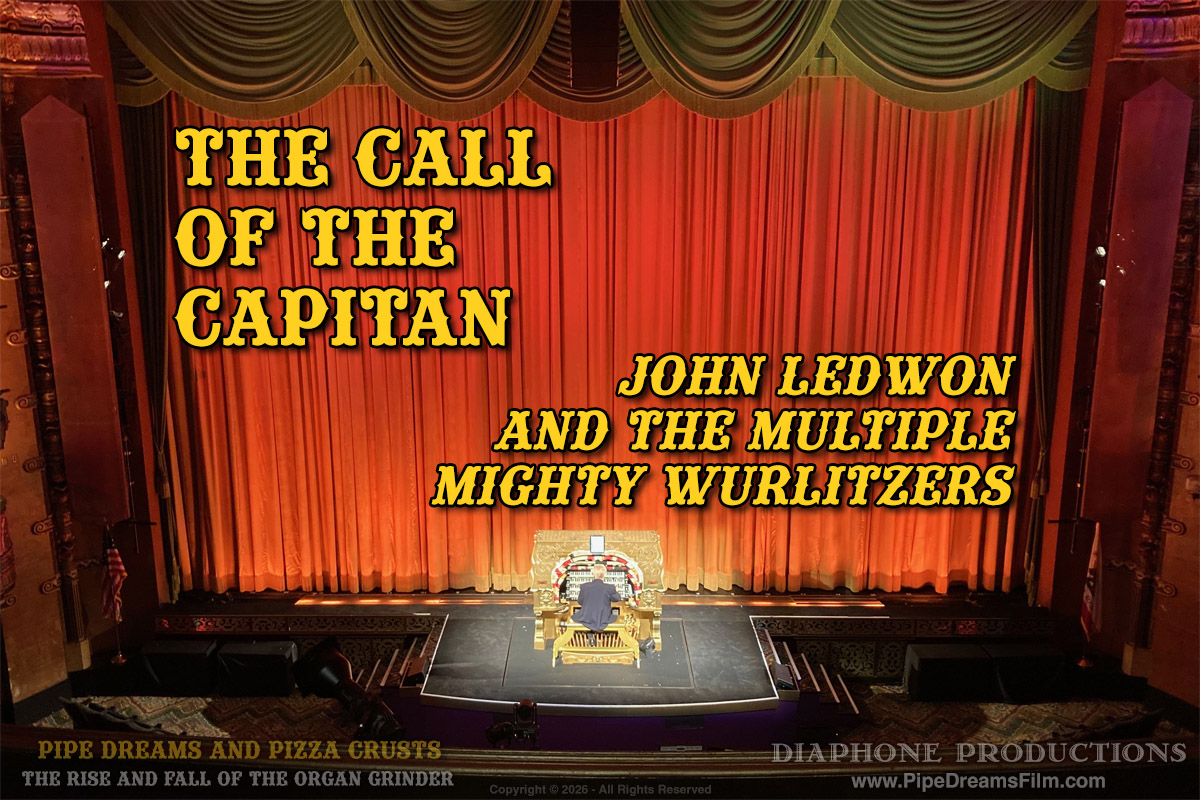
John Ledwon is a music educator, theatre organ enthusiast, and experienced performer. We caught up with John (no easy feat, as he often commutes between Henderson, NV and Los Angeles) in November during our Southwest Road Trip.
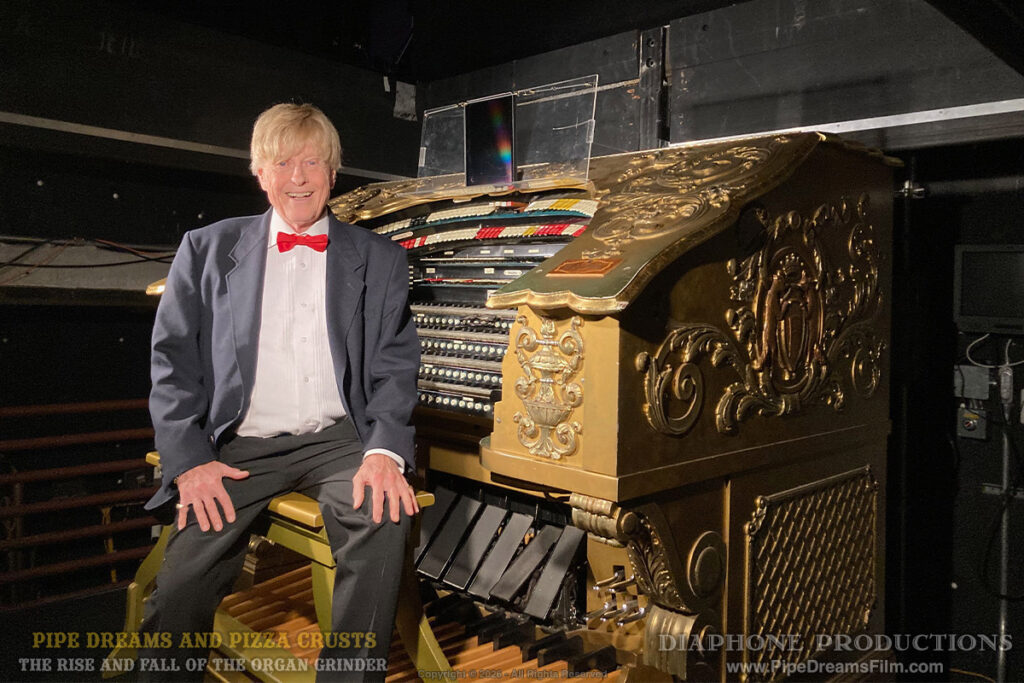
The interview took place at Old Town Music Hall in El Segundo, CA. (Special thanks to the board of this incredible venue – which is ornate, quirky, and fun, all at the same time – for providing a last-minute filming location for us!)
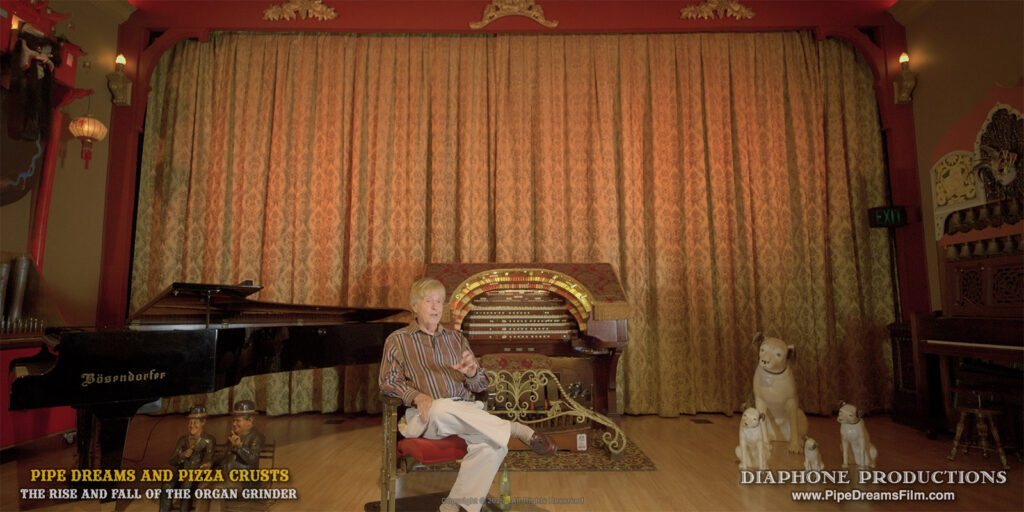
John’s involvement in music started at the age of 12, and the theatre pipe organ has always been a part of his musical world. His journey began on a Hammond B3 that his parents purchased.
His first gig was about the busiest you could get as an organist. (Except, perhaps, performing in pizza restaurants.) He became the in-house organist at a local wedding chapel at the age of fourteen, and joined the musician’s union at sixteen:
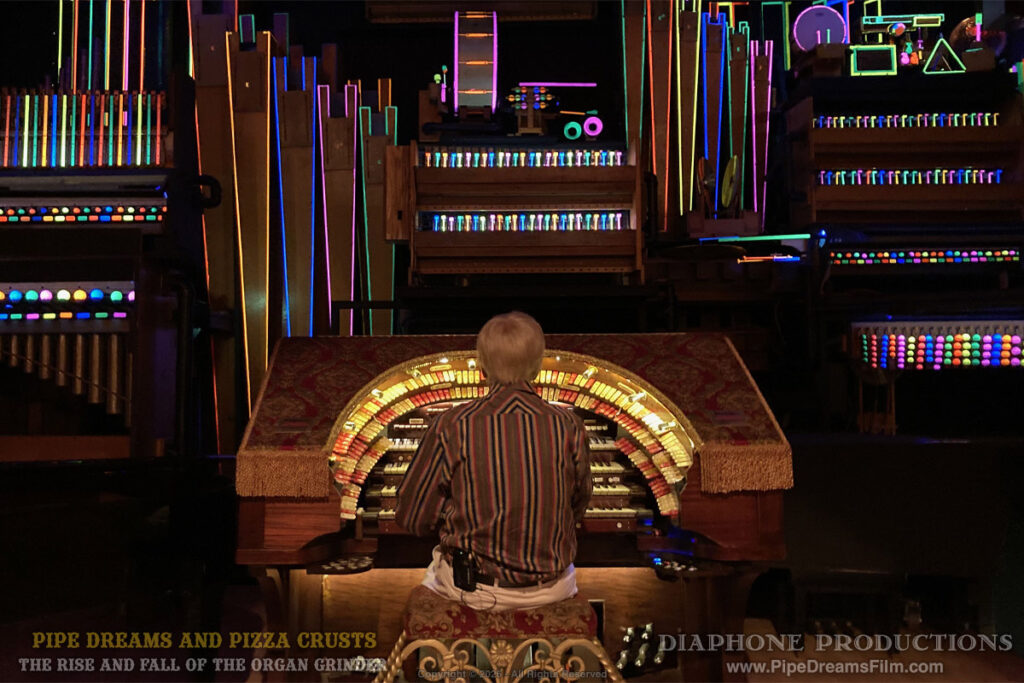
“I probably played well over five-thousand weddings. We had three organs and in three chapels—and another Hammond that we took around to several different garden areas we had. I think the most weddings we ever had in one weekend was thirty-two.”
“That was basically where I got a lot of knowledge in how to perform as a professional… I hated when they had a soloist and I had to be ready to sight read and I had to be able to transpose. I had to learn those tasks at a very early age just to stay there. But I stayed there until the place closed.”
For about 25 years, John taught high school theater arts, until getting the irresistible offer to move over to the Walt Disney Company as an organist at the El Capitan theatre in Los Angeles, which is a showcase venue for the company. John also taught special theatre organ classes at Pasadena City College – “I don’t think too many people have that on their résumé”, he said.
Although to some, the Hammond instrument has little to do with a theatre pipe organ, John is not a purist:
“Frankly I love a Hammond, I’ll be honest with you. I don’t think the theatre organ ever would have had the renaissance it had if it hadn’t been for the Hammond, Hi-Fi, and George Wright. Those three things got interest going again in the theatre organ.”
As more and more people became interested in theatre organs, it led to individuals who had the opportunity (and the means) to acquire them and put them into their homes. John is no stranger to this hobby – at about age 15, after getting to see a Wurlitzer Style D set up at a local organ builder’s shop, John and his father set out to find an instrument to restore at home, which started with a 3-manual, 12-rank Wurlitzer.
“I still have a couple pieces of that organ left after all these years, but that was basically what started the whole thing. It was a heck of a lot of amateur enthusiasts that got the theatre organ rolling again. I think that was probably the most important part of it.”
“These things were languishing for 20, 30 years in theaters, and nobody even bothered with them. And then some people started hunting them, and they found them. And in the beginning, they came out of theaters, but they didn’t go back in. They went into private homes, and after that, as more and more people got involved, they went to larger facilities. Then you had, somewhere along the line, when the San Francisco area pizza parlors came. Ye Olde Pizza Joynt was the first one, and then followed by several Captain’s Galley ones, and that basically started that whole craze.”
“Then you had all the others that followed along. The Organ Grinder in Portland was just immense. That was probably the best of them all for the longest time.”
Being a fully-booked performer didn’t stop John’s continuing education. John majored in organ performance from a classical perspective at UCLA.
“I actually have a degree in organ, which is somewhat unusual for a theatre organist. I was already a union musician. And I’m sure I must have been an absolute miserable person for my organ teacher, because I think I probably knew it all. And, of course, I knew nothing.”
John’s formal training brought discipline to his theatre organ style. “I did my senior recital as a classical organist. I think it affected my ability – what I could do. You become much more precise.”
“Another thing that I learned early on was that since I was doing all those weddings, I was very much exposed to contemporary pop music at the time. Most theatre organists [at that time], did not play music of the day, or even yesterday. They were playing music of, well, right now, what, 100 years old? 90 years old? And I have this philosophy, or my personal feeling, is that basically we go through our entire life with music that we’ve been familiar with from, say, 16 to, say, 30, kind of the golden age of our lives when we didn’t have an awful lot of cares and whatnot.”
“[Theatre organists] were playing from ‘The Great American Songbook’. Now these people that were, in 1930, in that age group, have been dead for a minimum of at least 10, 15 years. And the younger artists or younger audiences coming up, they go to these organ concerts if they happen to stumble on them, and there’s music that they don’t even know. So it turns them off. They don’t come back to future concerts… they are lost to the theatre organ community. You notice, when I’m at the El Capitan, now almost everything I play is within the last 15, 20 years. That’s old even, when you get right down to it, 20 years is an old time in pop music.”
John believes that playing contemporary music was a key to the success of the pizza restaurants: “That’s why they survived as long as they did, and they brought the crowds in.”
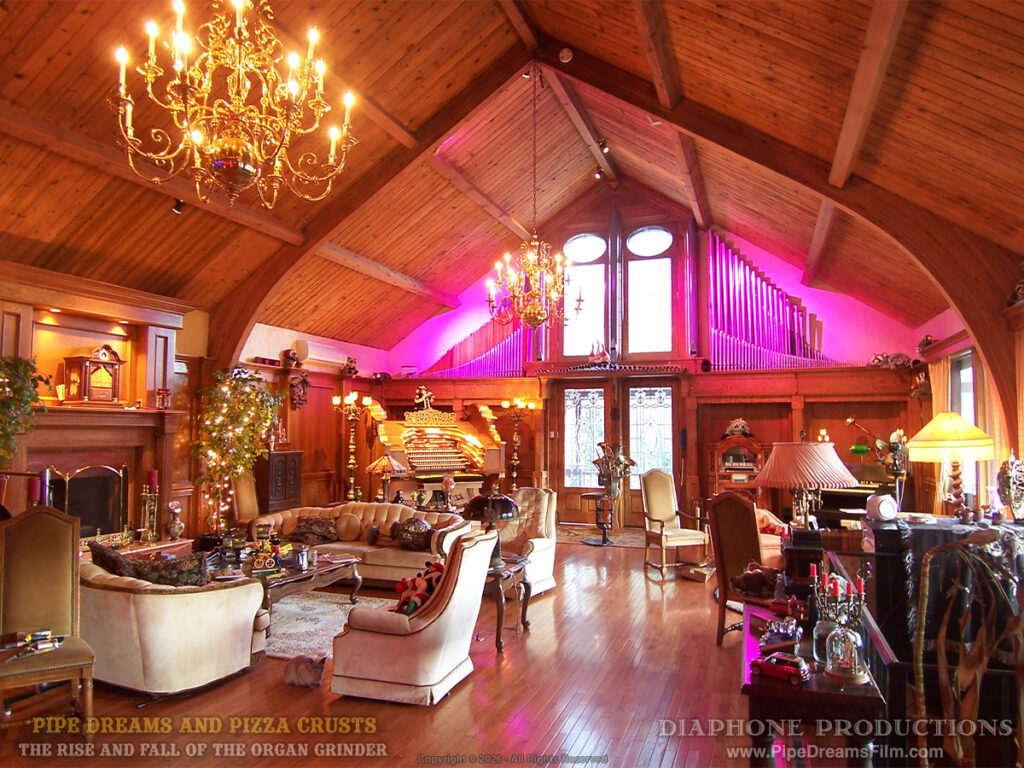
John is no stranger to immense theatre pipe organ installations. For many years in his home in Agoura, California, he cultivated a unique instrument, seeking out one of every kind of theatre organ rank, to have an example to show off of each time. (Something in common with the approach taken at Organ Grinder Portland.) “I even have a set of saucer bells that I paid through the nose for, just because they exist and they’re very, very rare.”
By this time, the instrument he started working on with his father had grown to 26 ranks (sets of pipes).
Year later, tragically, a Southern California brush fire engulfed the area and destroyed much of the home. A traditional lath-and-plaster sound isolation wall in the organ chamber helped mitigate the damage to the instrument, but it was still devastating:
“It got tremendous heat damage. It got so hot in the organ chamber that any pipe over maybe four feet high that was tin or lead, even the solder joints on the zinc pipes melted. There was pipe rubble all over the place.”
Further compounding the damage, the fire soon flared up again in the organ chambers, and the fire department had to be called to the house. This time, the already-damaged organ was completely soaked.
Instead of declaring defeat, a musical phoenix arose from the ashes: “I rebuilt that thing into a larger organ”, commissioning a custom 4-manual Wurlitzer-style console from builder Ken Crome – “Talk about a man who knew how to do things the right way. He was the one.”
“I had 14 ranks of strings, all different varieties, three tibias, which is the main theater organ rank. And then, basically, you name it, I had it. If I found a better rank than I had, I bought the better one, and sold off the one I had.”
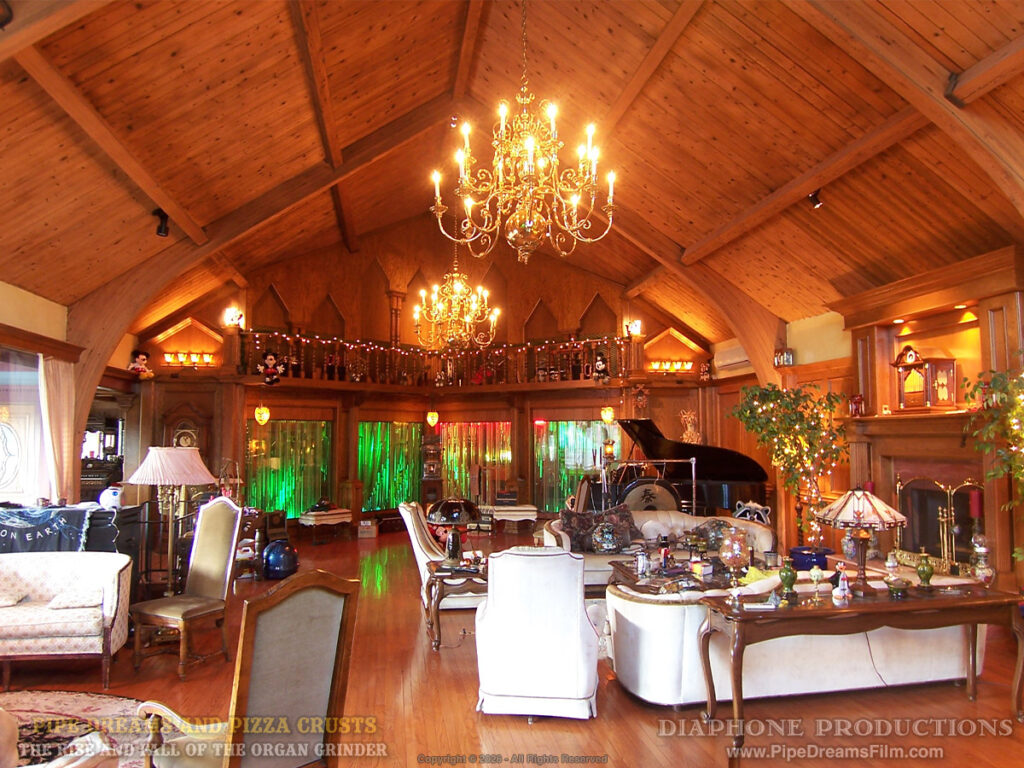
John’s home was in a geologically-precarious location, built on the side of cliff. Brush fires were not the only concern – so was rain and erosion. John had finally had enough of constant property maintenance. ‘So’, he finally said, ‘I’m selling it’. He sold the house, donated the organ, and moved to Henderson, Nevada.
The custom 4-manual console from Agoura was later sold to Carma Labs, where it is the nexus of a gigantic instrument that sees frequent performances and can be experienced by the public on multiple occasions throughout the year.
The Agoura instrument can actually be heard as part of the soundtrack to the film “I Heart Huckabees” (2004). The film’s composer, Jon Brion set up shop in John’s living room. Jon was familiar with keyboards, but not theatre pipe organs, and became enchanted with the musical effects that could be achieved. Some of the recording sessions can be seen in this Huckabees behind-the-scenes video on YouTube.
After moving to Henderson, John figured he was done with home pipe organ installations, but he couldn’t kick the habit.
“Doggone-it, I think it gets in your brain. I think it’s insanity. So I bought another pipe organ and put it in the house, and I still have it. This one, of course, is much smaller.”
In 1999, John had the opportunity for a recurring gig – in Los Angeles, which in a few years would become quite the commute from Henderson – at the world famous El Capitan Theatre, which had been purchased and fully restored by the Walt Disney Company.
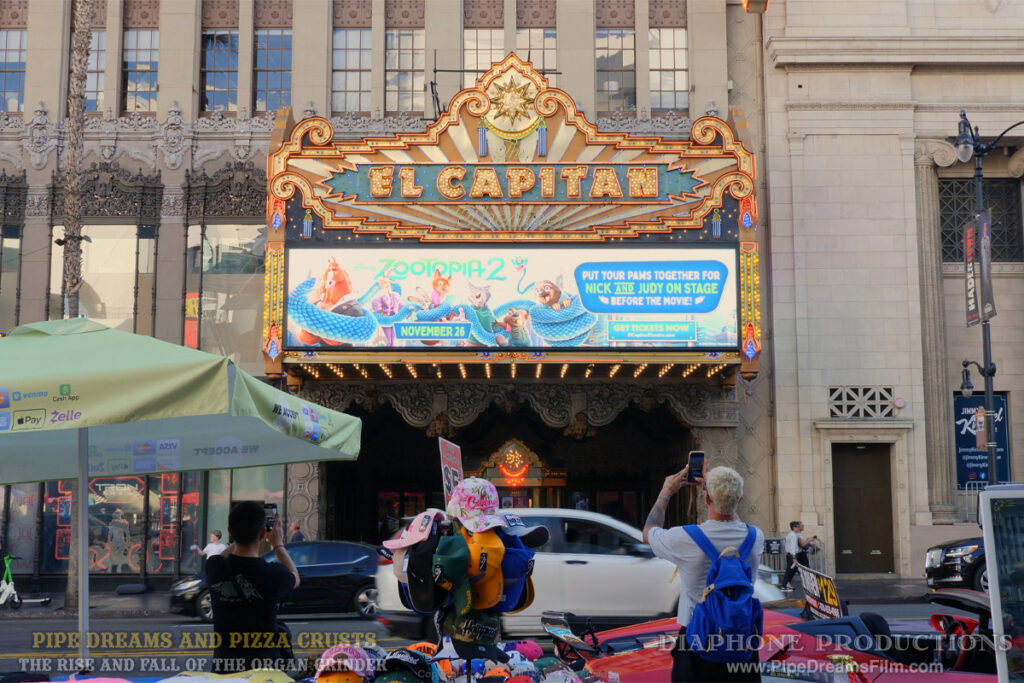
“I was asked to come down for an interview, and at the time I had six CDs on the Agoura organ, so I brought them with me. I said, here’s what I can do. There were three of us that were hired on. Two of us are still there.”
“I was hired on as number three because I had a full-time teaching job. At that point, I don’t think the Disney executives were sure that it was going to last. I remember my boss telling me, ‘don’t give up your day job’.”
But soon John realized he couldn’t have one foot in each world.
“When you’re doing theatre arts, there are a lot of rehearsals and everything else. I still think one of my favorite times of my life was being able to go in and develop a project from nothing, from paper to an actual show. But it became obvious I couldn’t do both, so I decided I would just resign from my position at Westlake High School. That was 1999, 27 years ago, and I’m still here.”
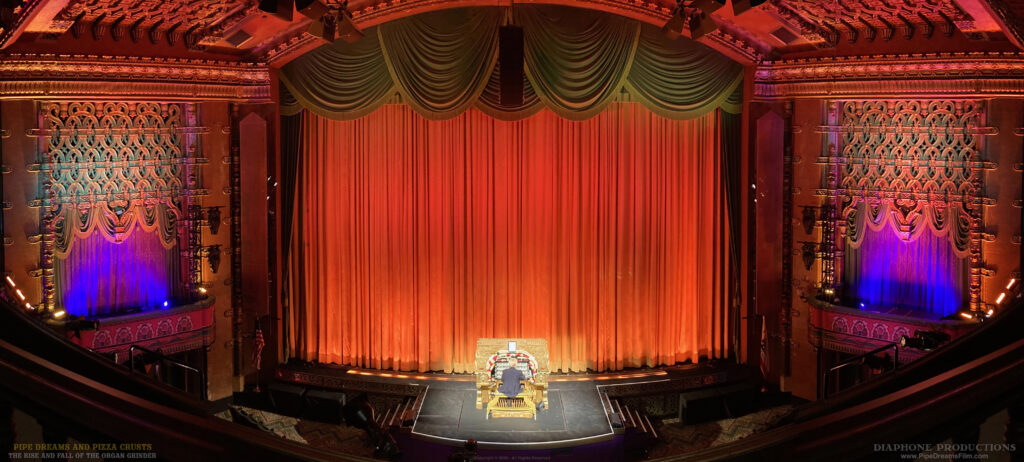
The El Capitan has so much to see that a single photo can’t take it all in. This panorama was stitched together from three separate images.
You can help support the project by purchasing from the Crowdfunding Shop.
Sign up for our email newsletter and receive updates about the project.