
Last Update: 2025-03-26 9:07am
Background: Over the course of this year, I had many phone conversations with performer Paul Quarino, who passed away on December 15th, 2024. We had become friends during those conversations, and Paul had relayed to me his concerns about losing his last storage unit, because he couldn’t keep up with the rent. He asked for my help in cleaning it out and finding homes for things.
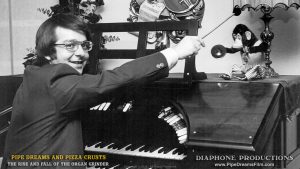
Unfortunately, Paul suffered a health crisis and a fairly rapid decline, including cognitively. During his hospitalization, I tried to relay to hospital staff that this storage unit was endangered, and that if Paul had a social worker, case manager, or guardian, they should be aware of it. Due to privacy rules, nobody at the hospital would talk to me about it. I also tried his church, and the people there were unaware of the unit.
After Paul was discharged to long-term care, I was put in touch with a close friend of his, who knew where the unit was located. By that time, the unit was multiple months behind on rent – over $1,500 – and about to go up for auction. We decided to take a chance, and wait for the auction. With the help of several of Paul’s friends, I won the unit (technically, the production owns it), and Paul’s friends paid for a month of rent on the unit, plus a 2nd unit to allow room for sorting (the main unit was packed wall-to-wall).
Most unfortunately, by that time, Paul was unable to understand what we had done for him – or that he even had this storage unit. Now that he has passed, the only path forward is to find homes for these items. Some may have immediate value (such as the Hammond organs) and I will try to sell those, but most of the items need some kind of care, or are large and difficult to move, and those will be made available for free for those who can genuinely do something with them.
If you are interested in any of these items, or know someone who would be, please contact me using the “Contact Us” form on this web site, or email bob at diaphoneproductions dot com.
– Bob Richardson
The remaining items are currently stored at a private home in NE Portland.
Must be picked up before March 27th, or after April 15th. By appointment only.
Items which have been claimed have been moved to the bottom of the page.
Unclaimed Items
Complete Instruments (More-or-Less)
Hammond Model G with rare Model G-40 tone cabinet
Status: Needs work, free
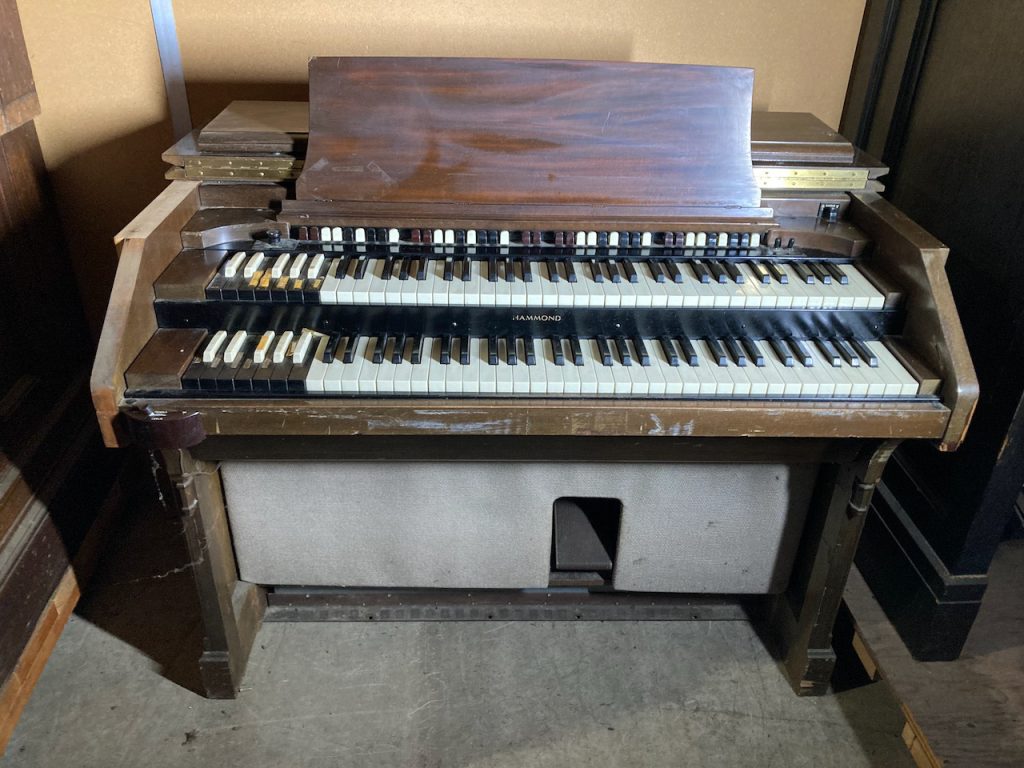
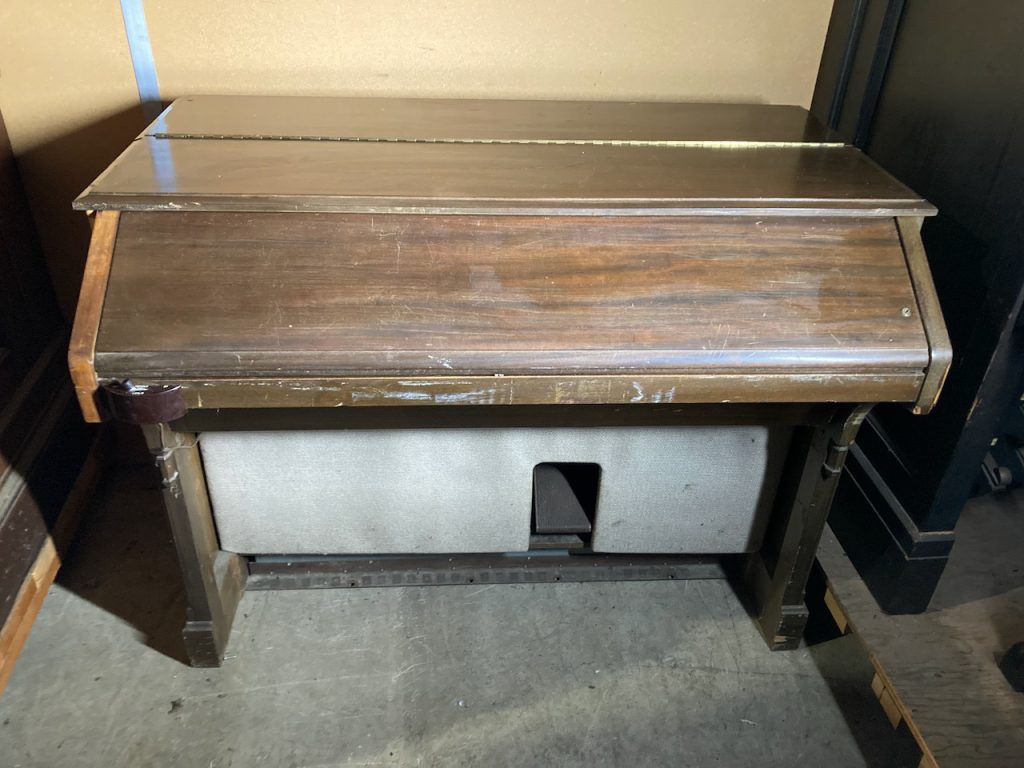
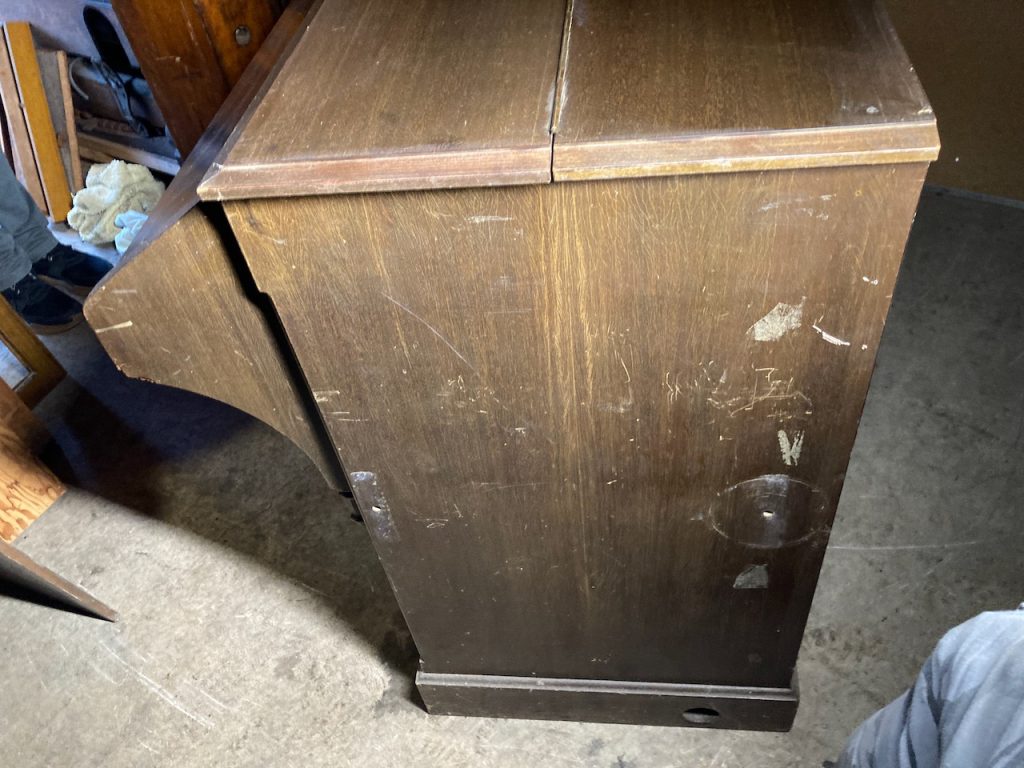
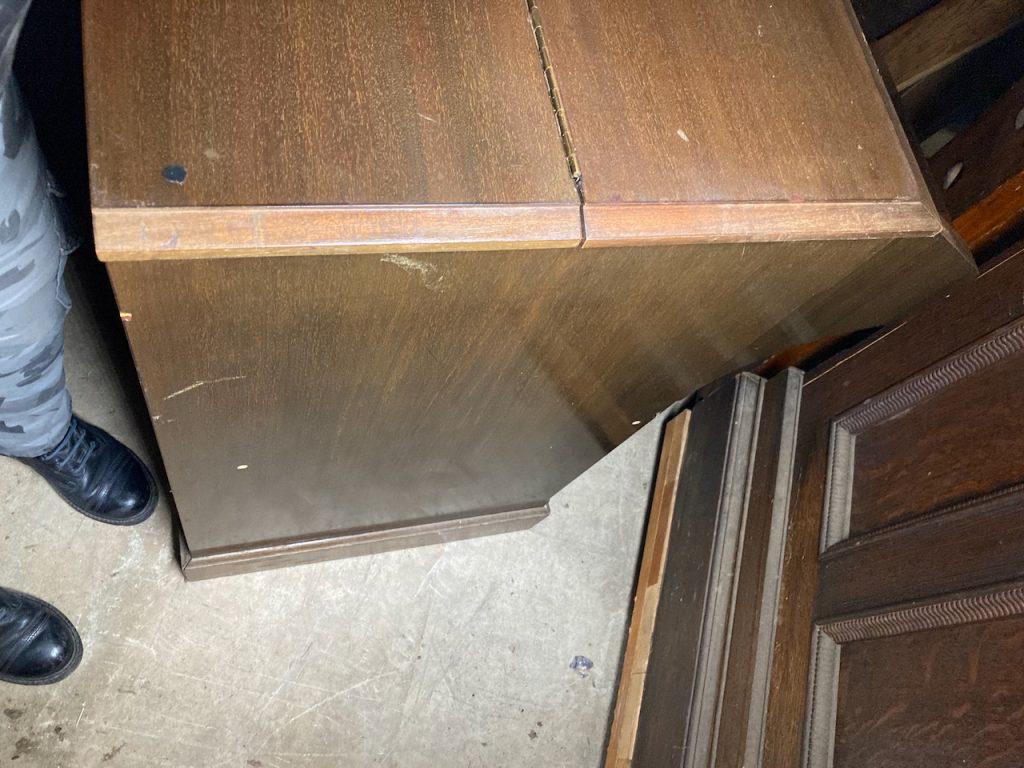
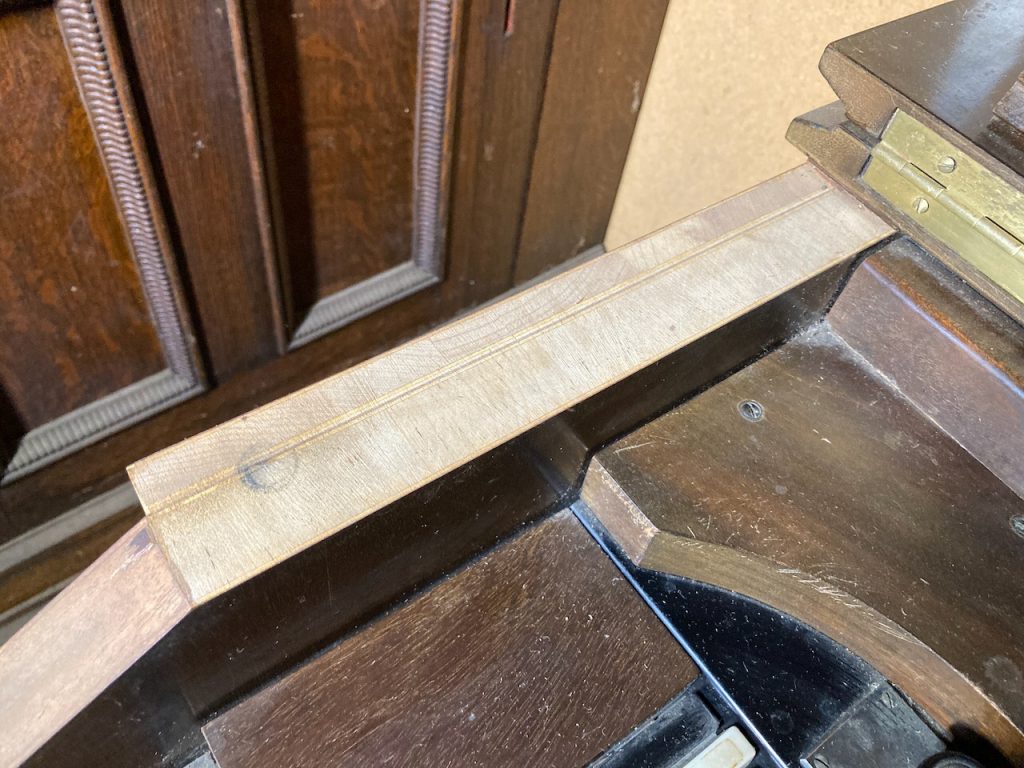
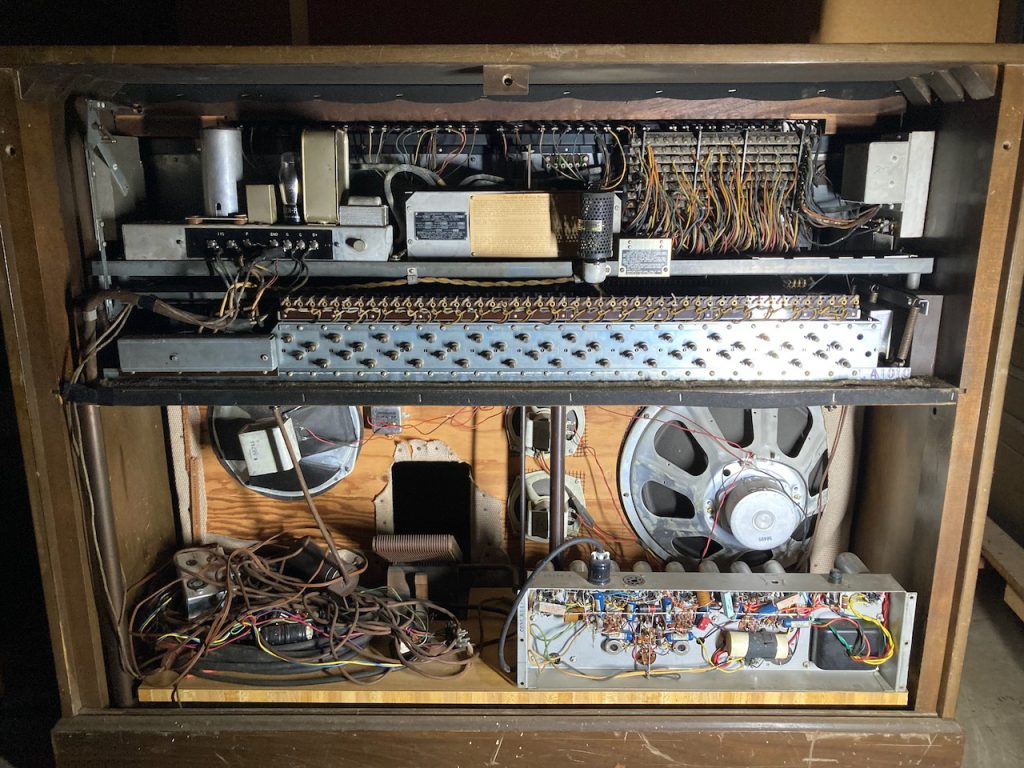
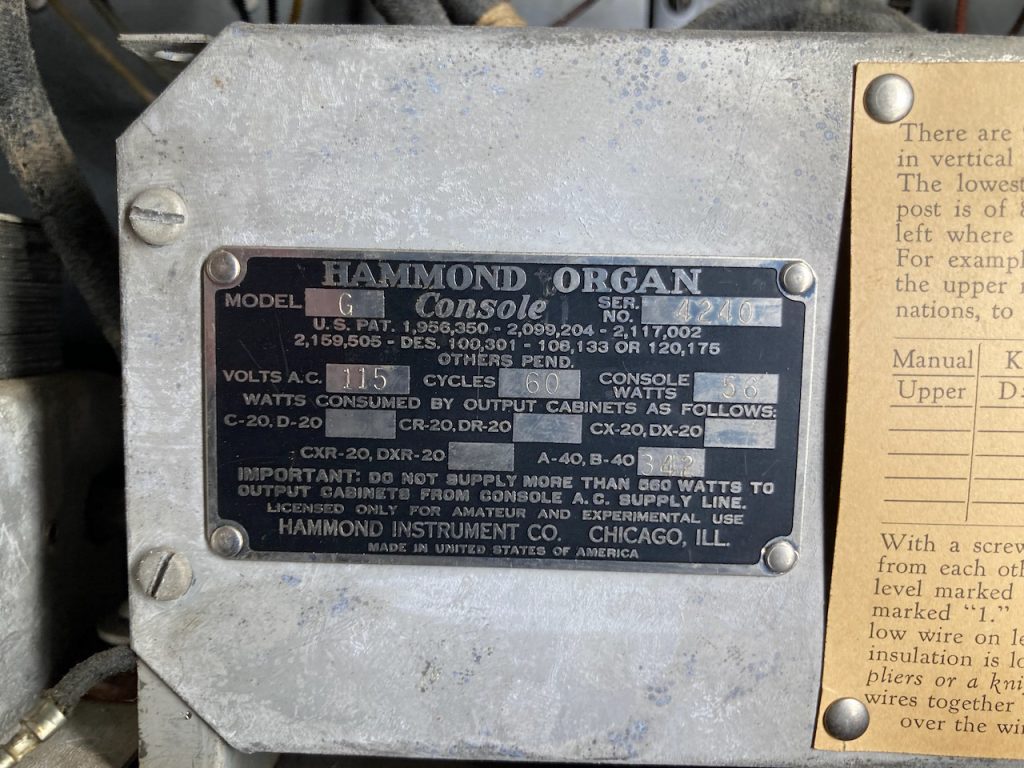
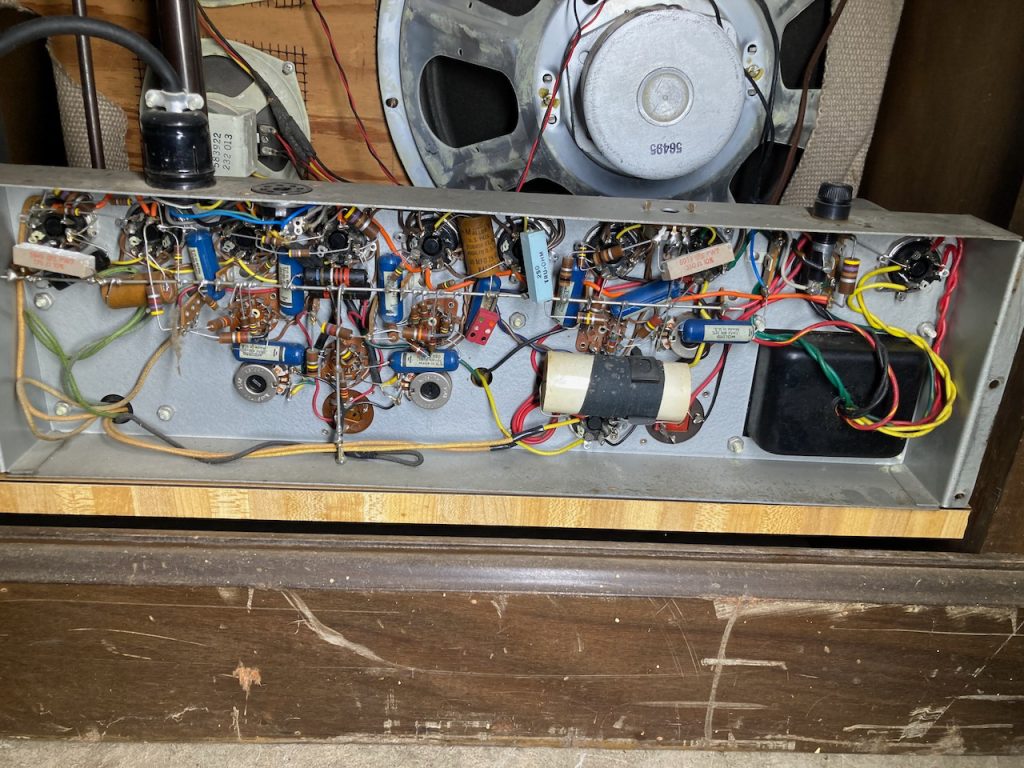
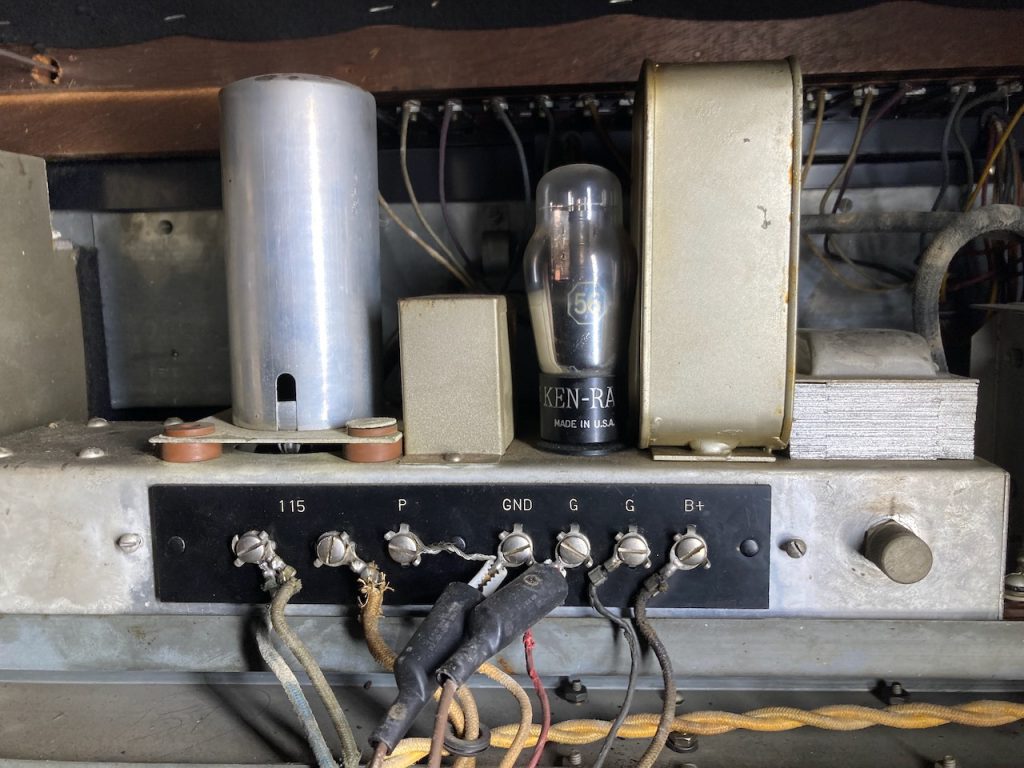
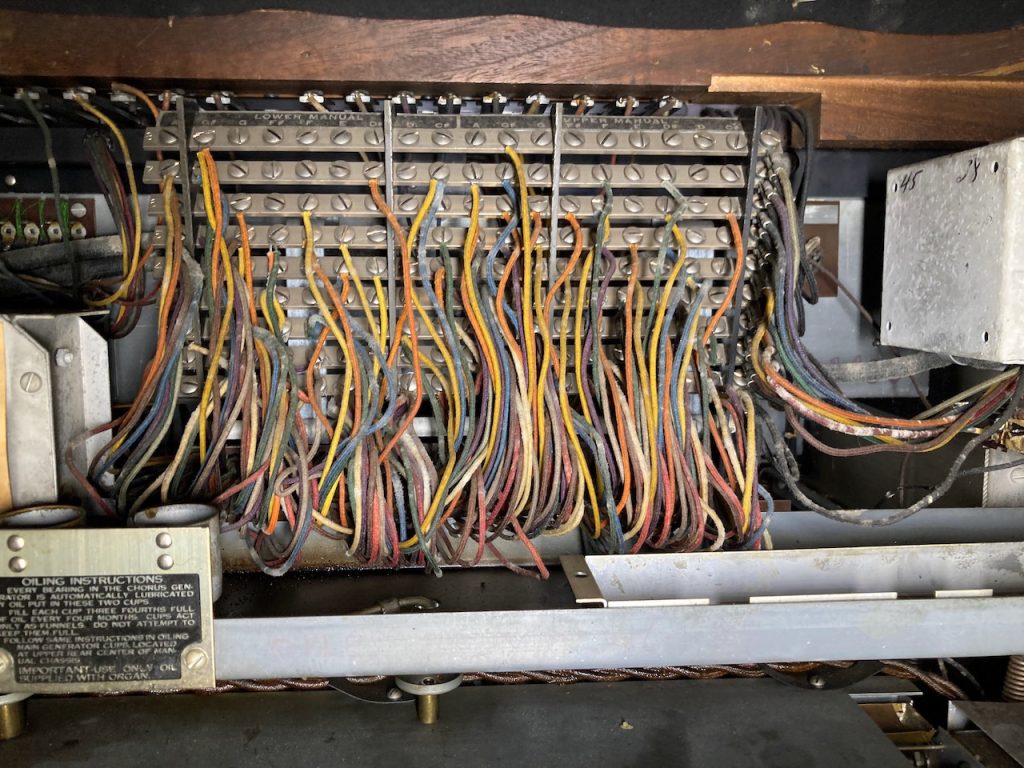
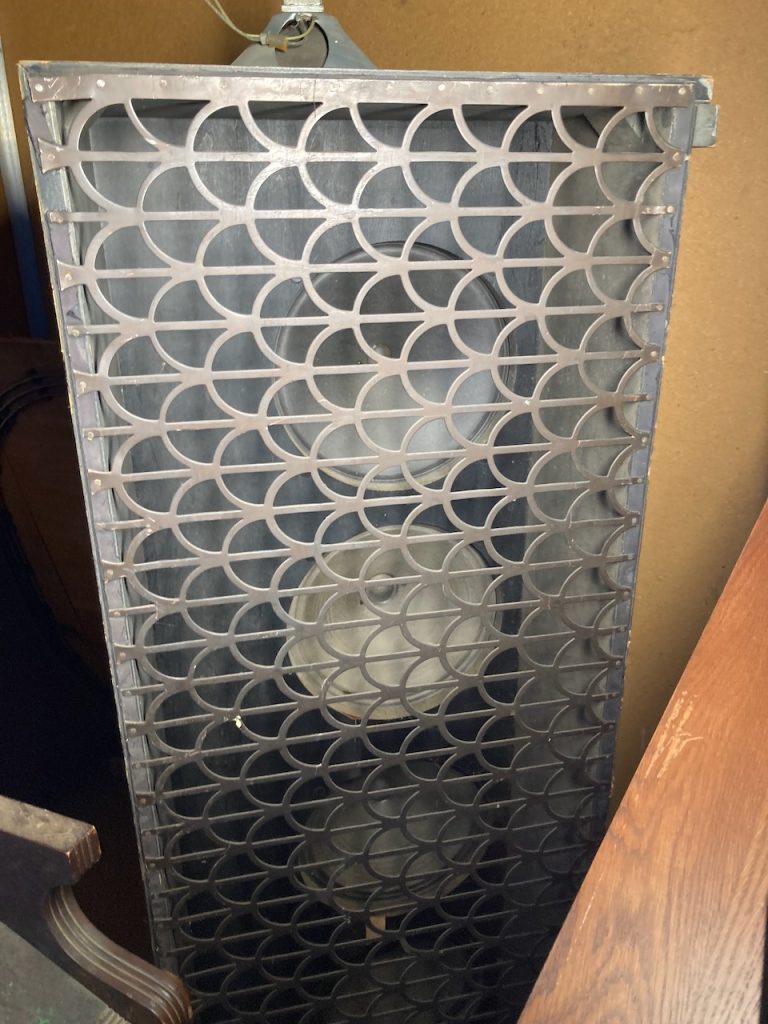
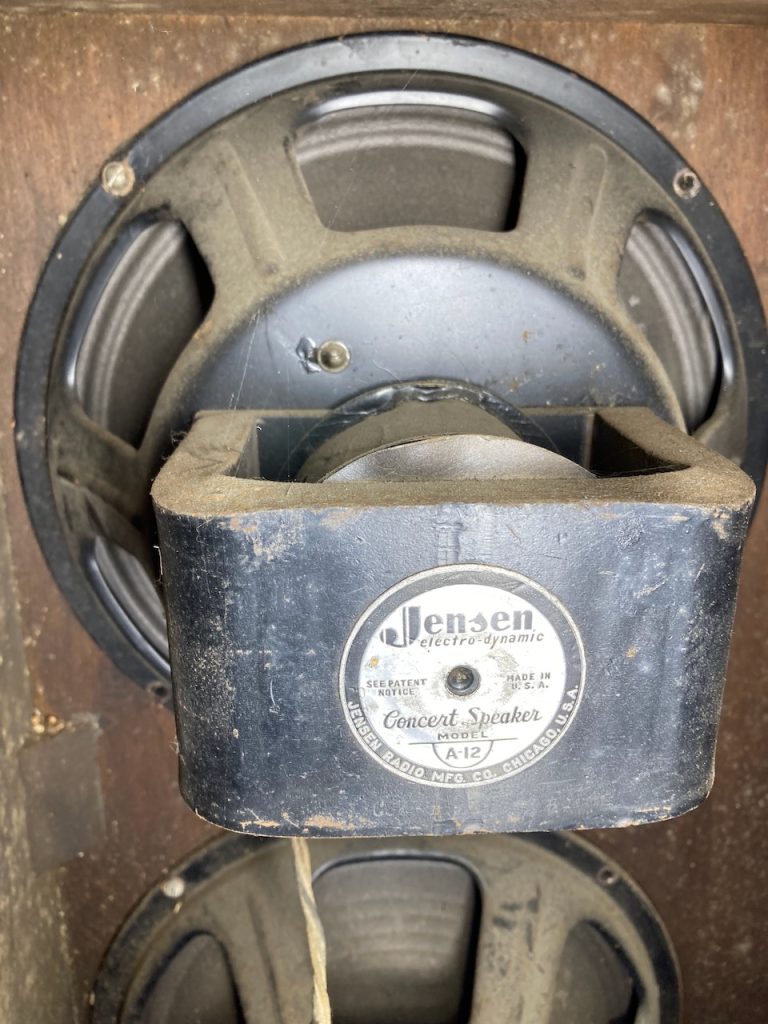
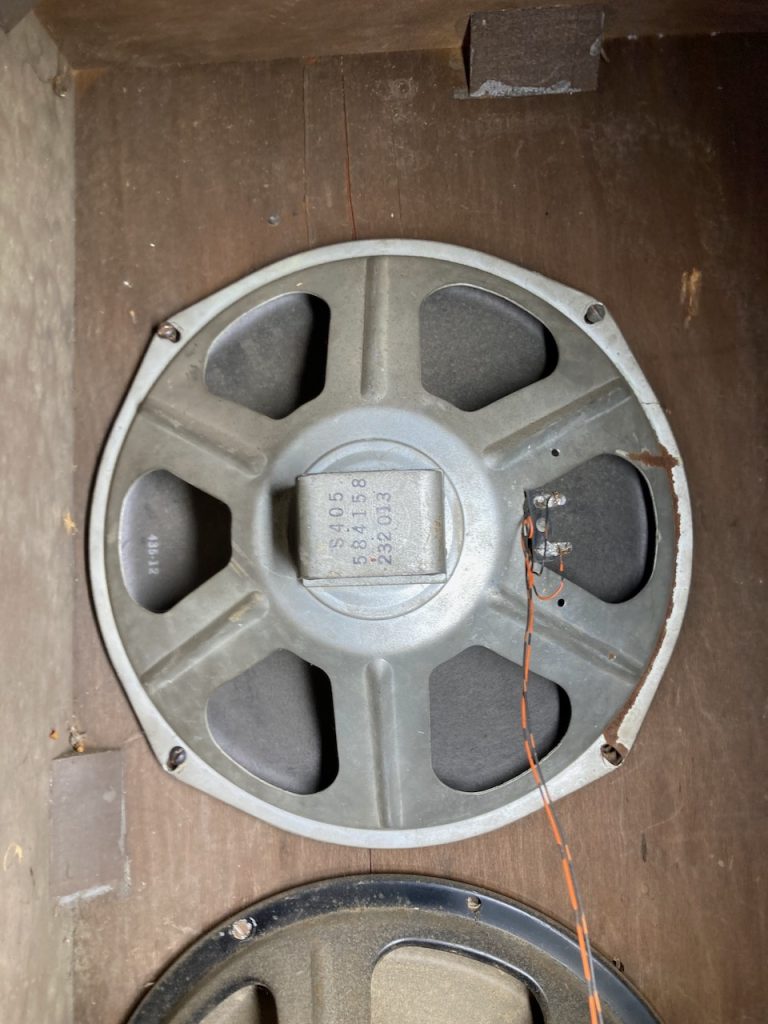

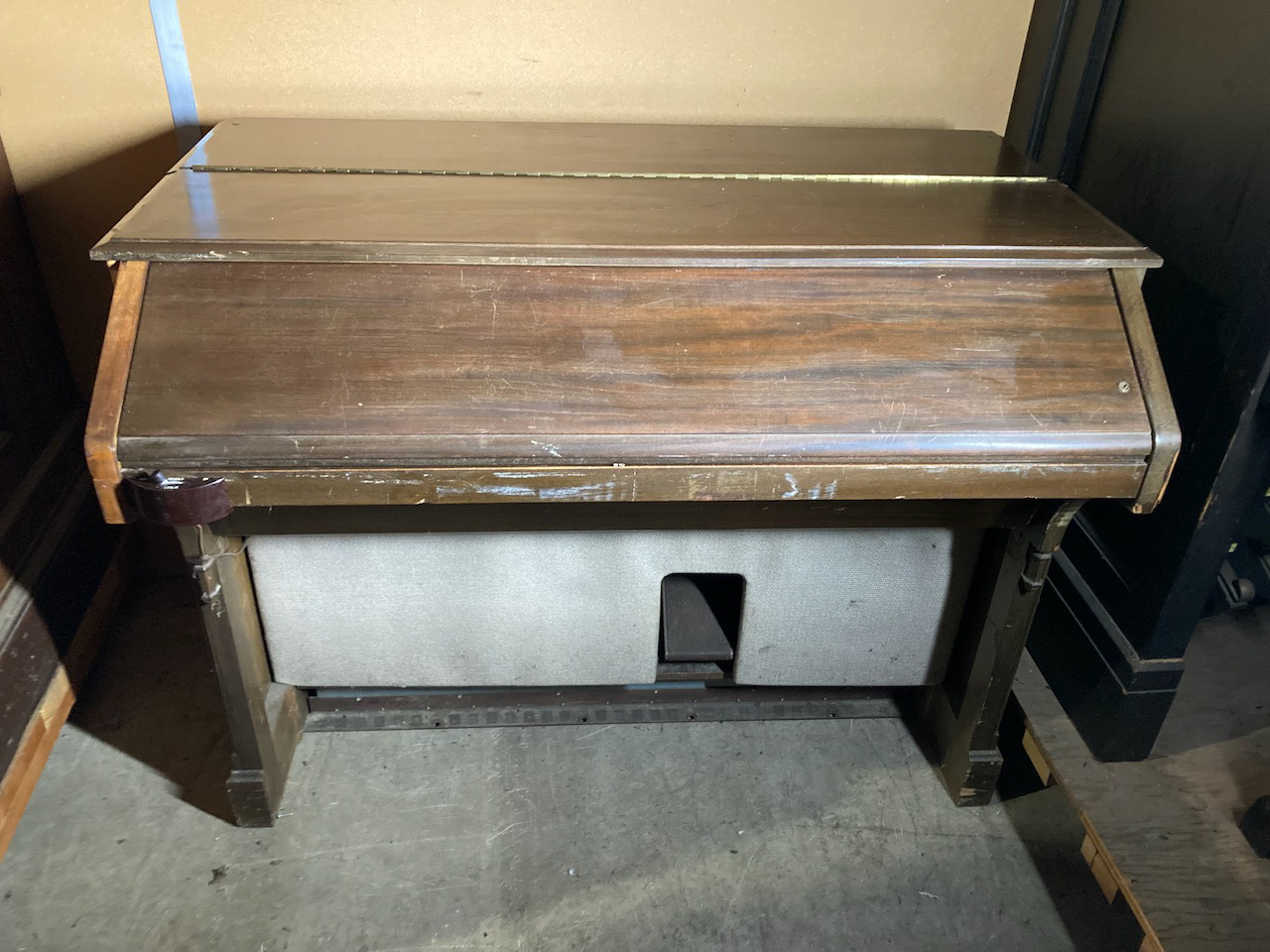
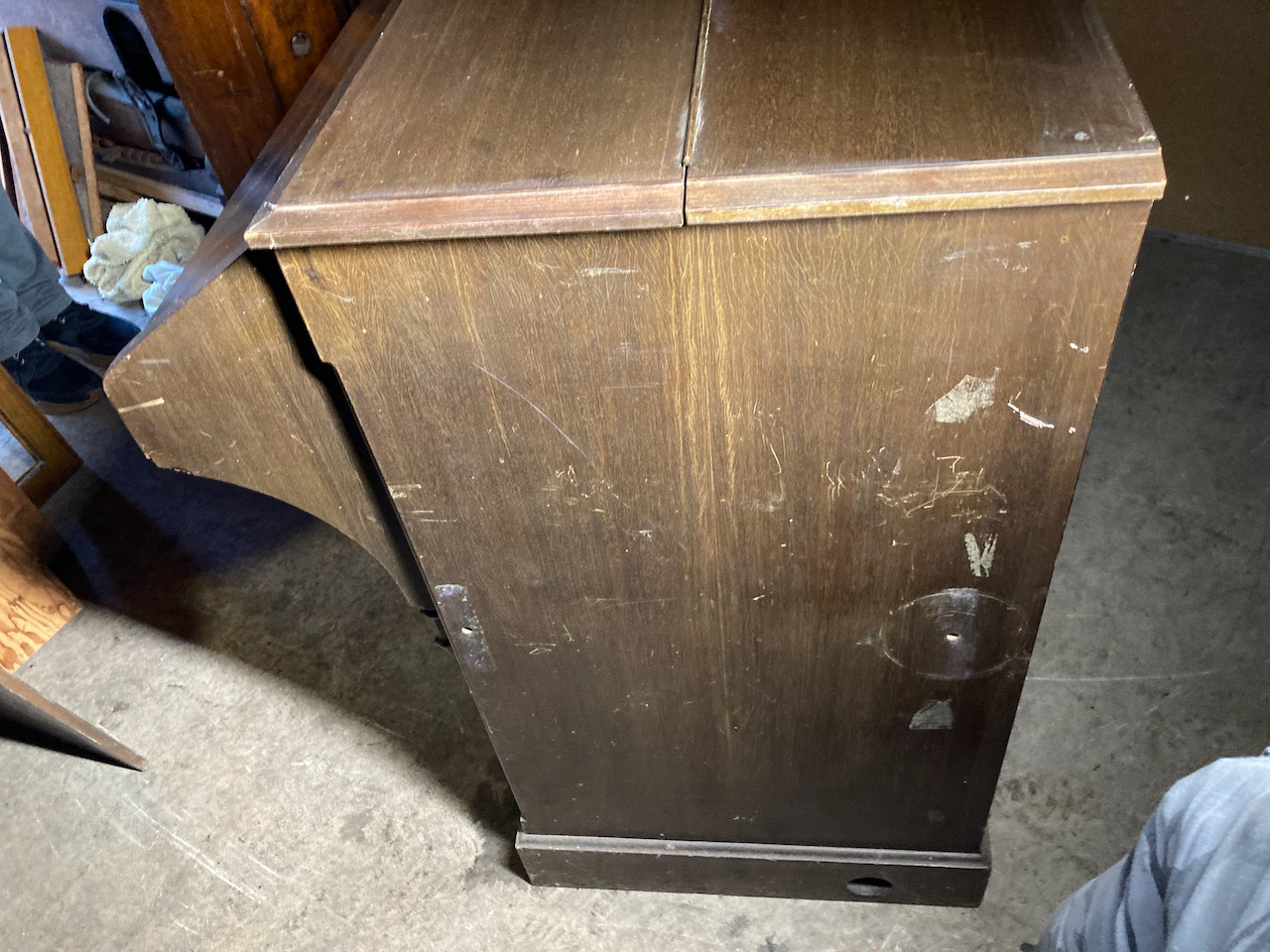

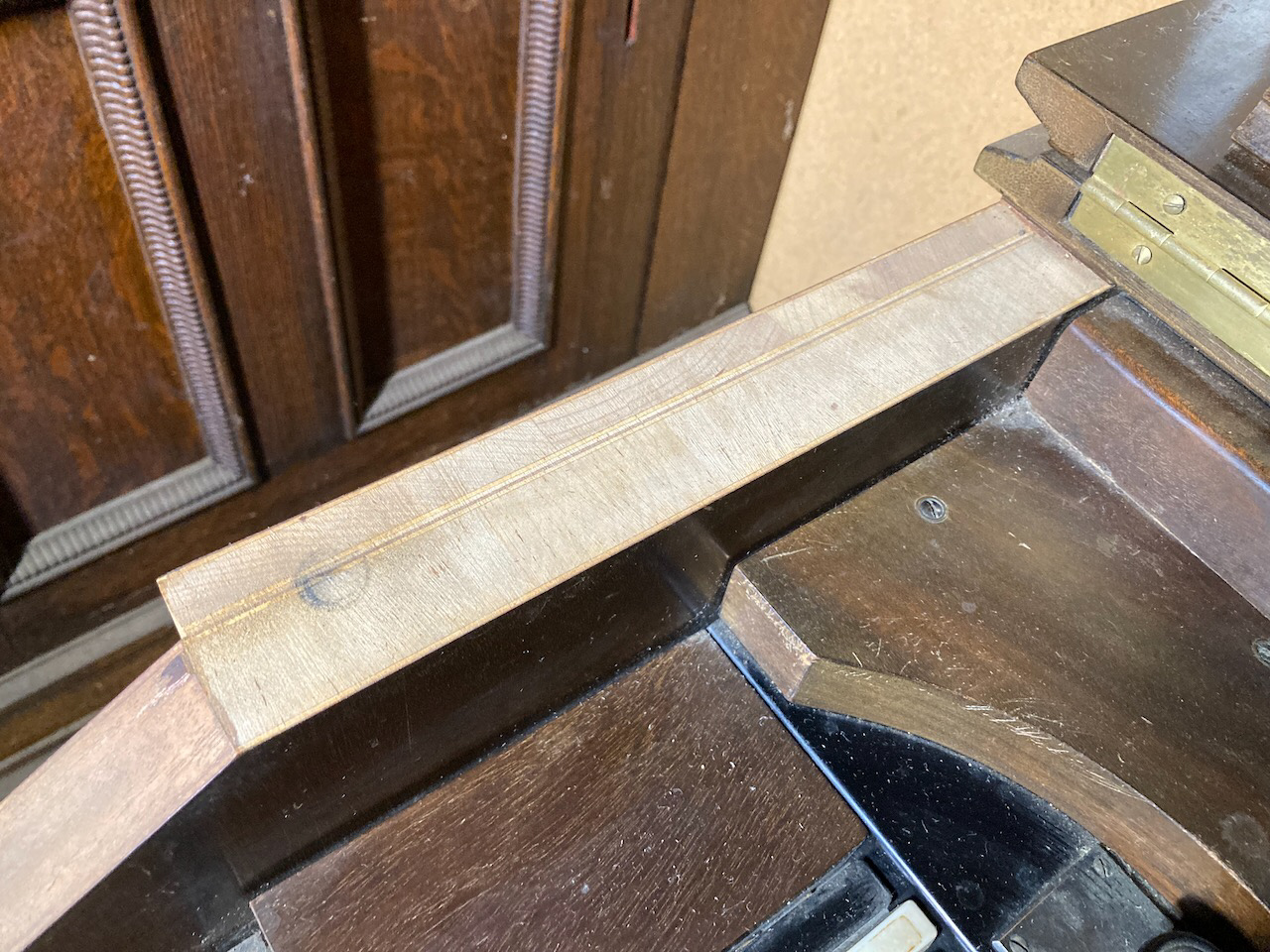
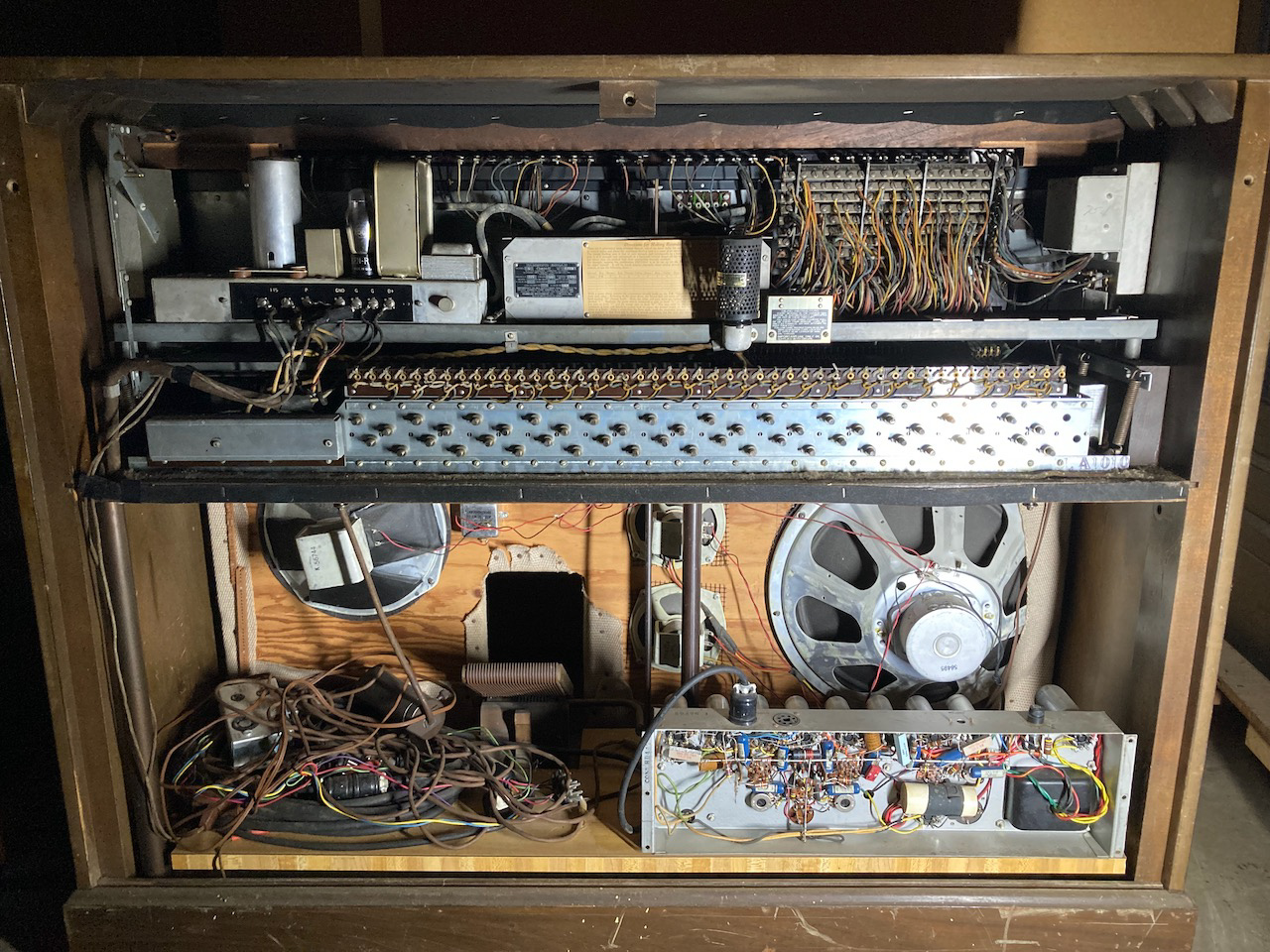
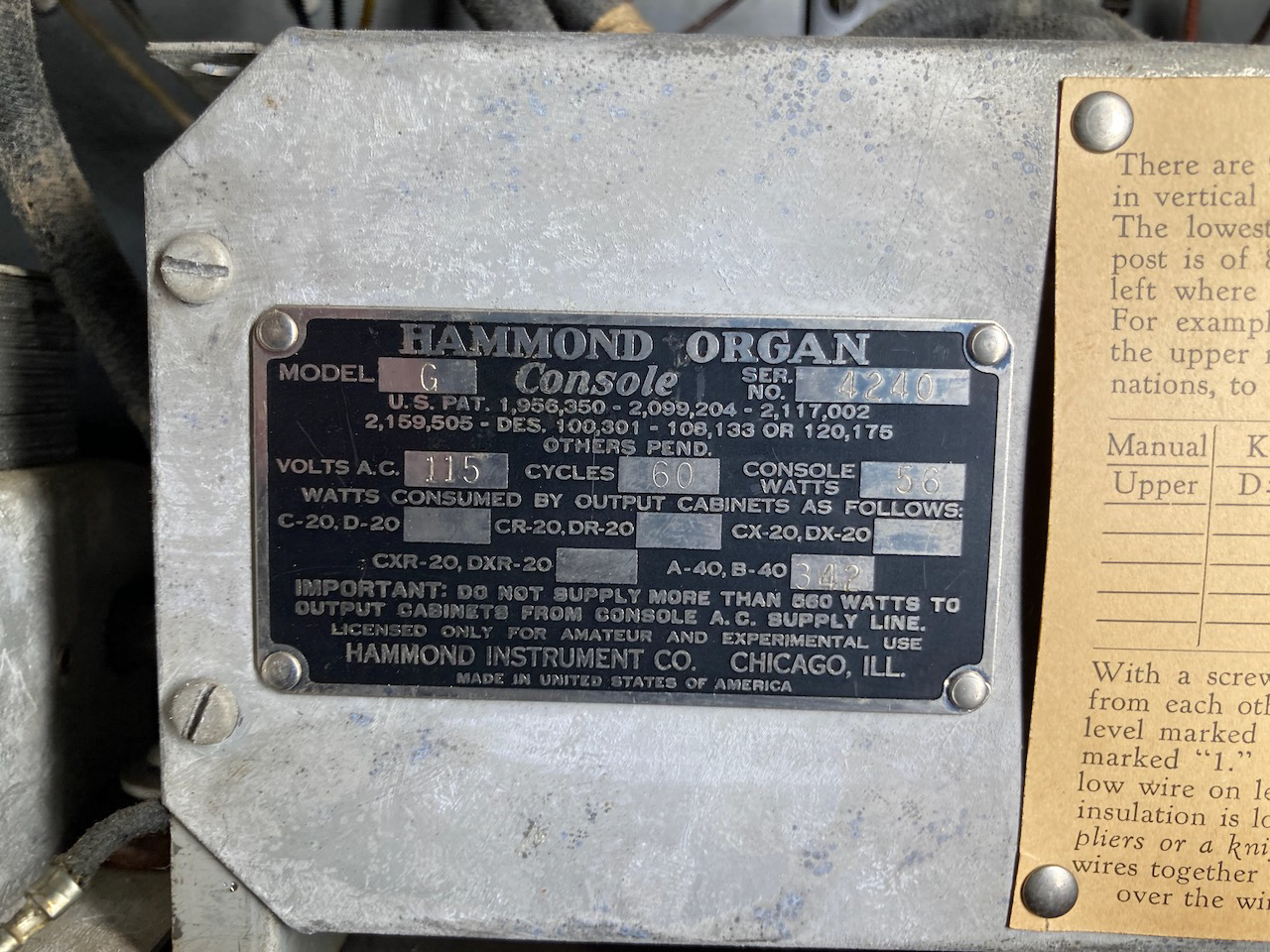
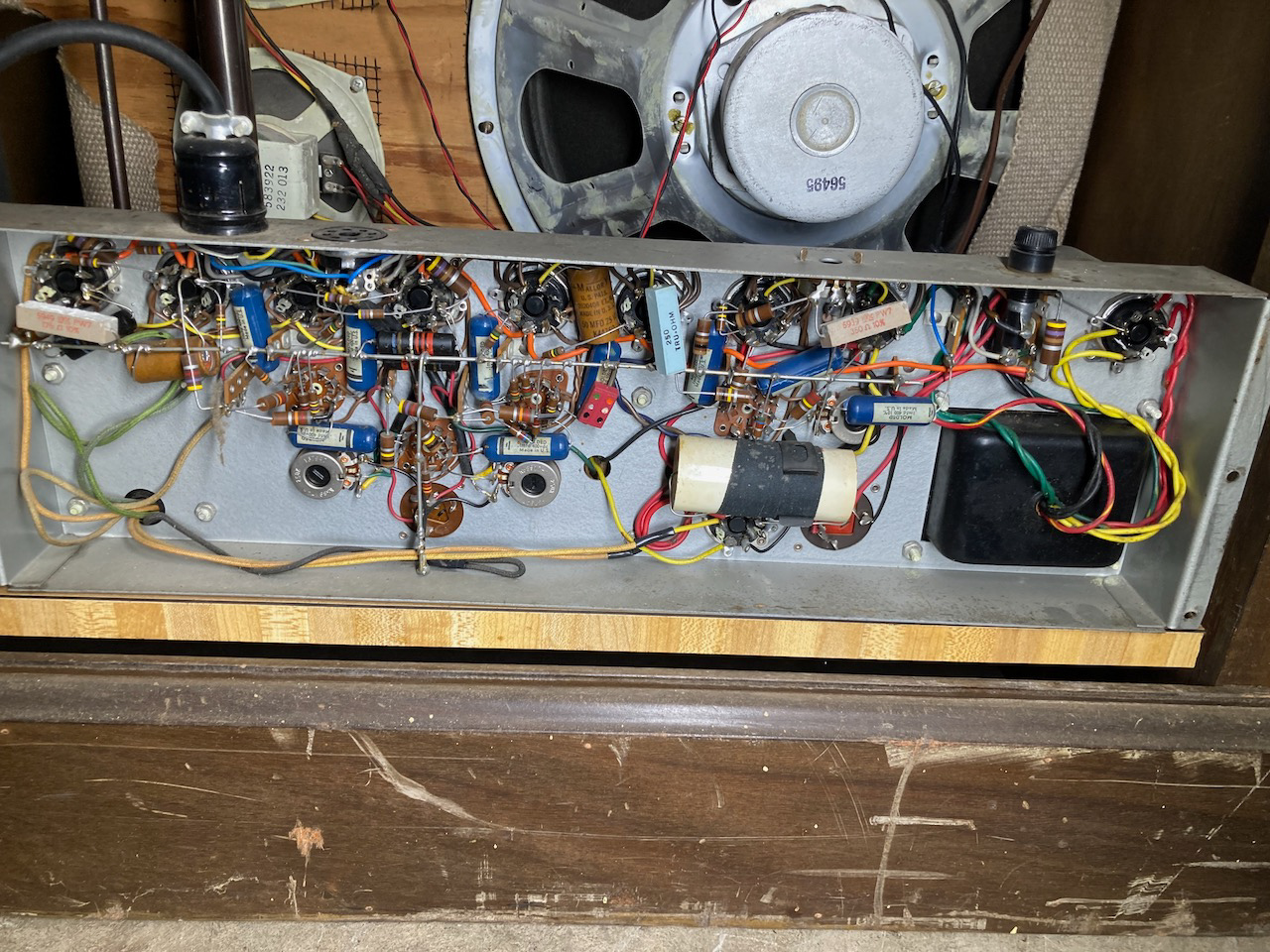
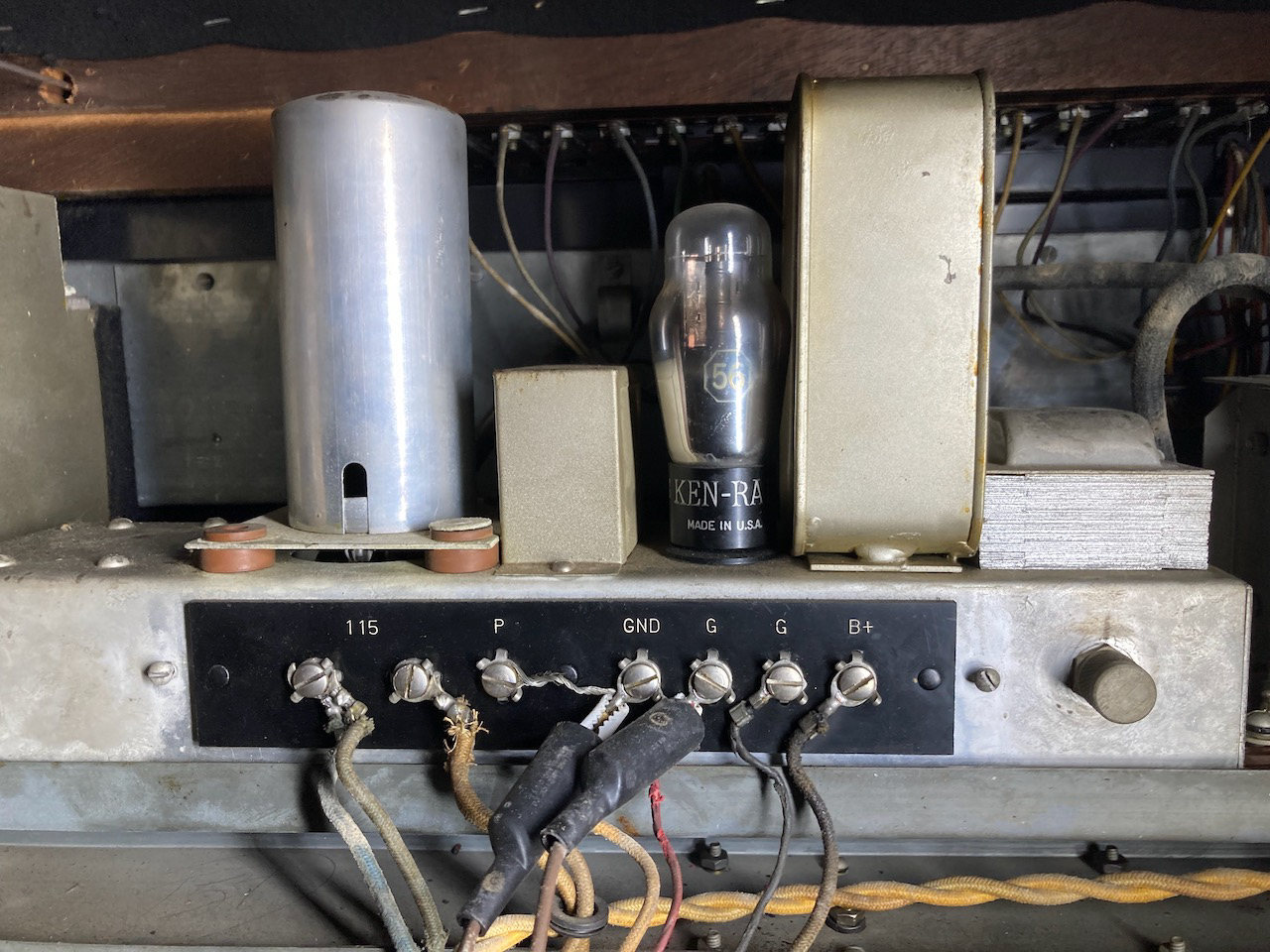
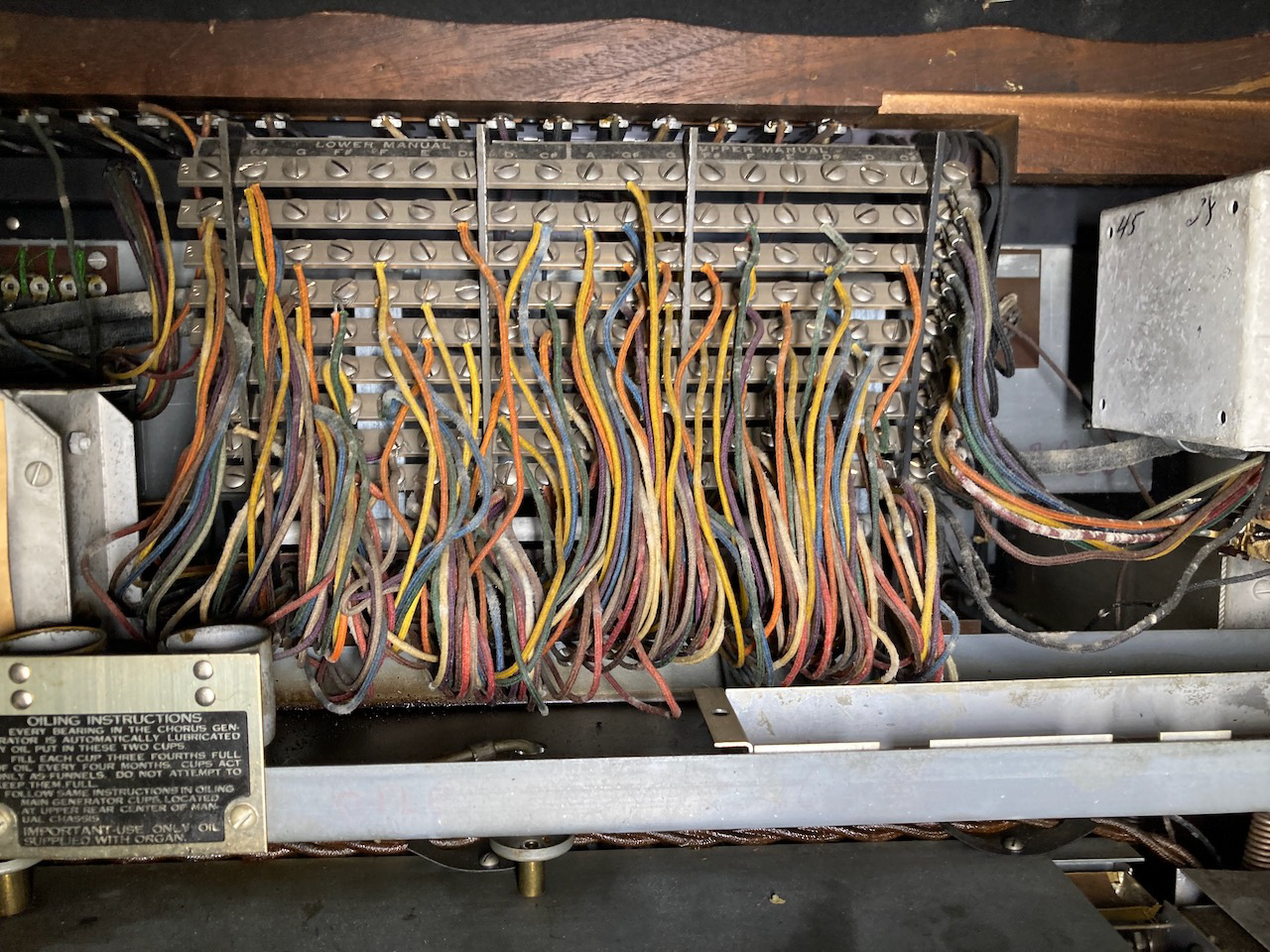
Notes: The Model G is similar to a Model D, with a 2nd tonewheel generator for a true chorus effect. The “G” stands for “Government”, these were sold to the military for use as chaplain’s organs.
Unique to the model G were carrying handles that could be mounted to the sides of the console. The carrying handles are included (not pictured, but we found them).
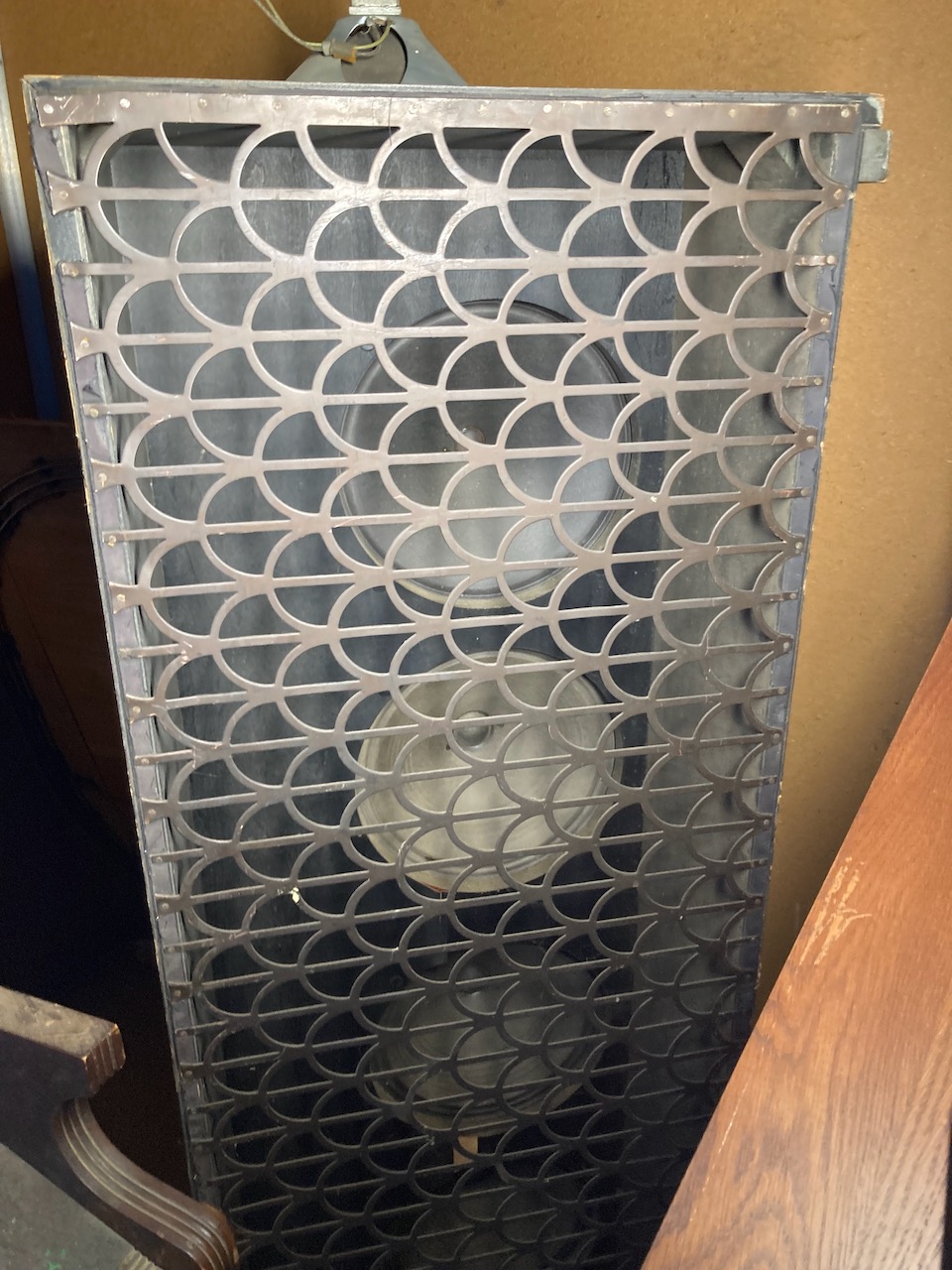
The tone cabinet is a G-40. Prior to this find, there were no pictures online of the G-40, only a mention in the service manual. It is similar to the B-40 cabinet, but instead of a square, 2×2 configuration, it is set up as a horizontal 1×4 layout. This may be the only G-40 cabinet still in existence. (Tone cabinet does not include amps or tubes.)
At some point in the past, the console was DIY-modified (but in a reversible way) to have a grille with internal speakers, similar in concept to an A-100. This was accomplished using a Conn organ amp, placed inside the console. The internal speakers and Conn amp are included if someone wants to keep that setup intact.
Current Condition (Please read carefully):
This instrument was in a storage unit for over 20 years. Although it was operational when stored, the tonewheel generators dried out and seized up over time. We have put fresh Hammond-compatible oil in the unit, and have used the naphtha (lighter fluid) trick to reduce gunk, with limited results.
Both start motors run, and engage/disengage from the TWGs correctly. The run motors, which initially were completely seized up, now spin freely but they do not maintain torque when the start motors are released. They do take much longer to spin down than they did initially, but there is no guarantee that they aren’t damaged – This may not be a “simple” clean-the-gunk and re-oil job.
The tubes in the preamp glow, but we have not tested the Conn amp yet.
The console also has the heater element Hammond included in some regions to prevent humidity from building up inside. It still works (but can be removed, it’s usually not needed).
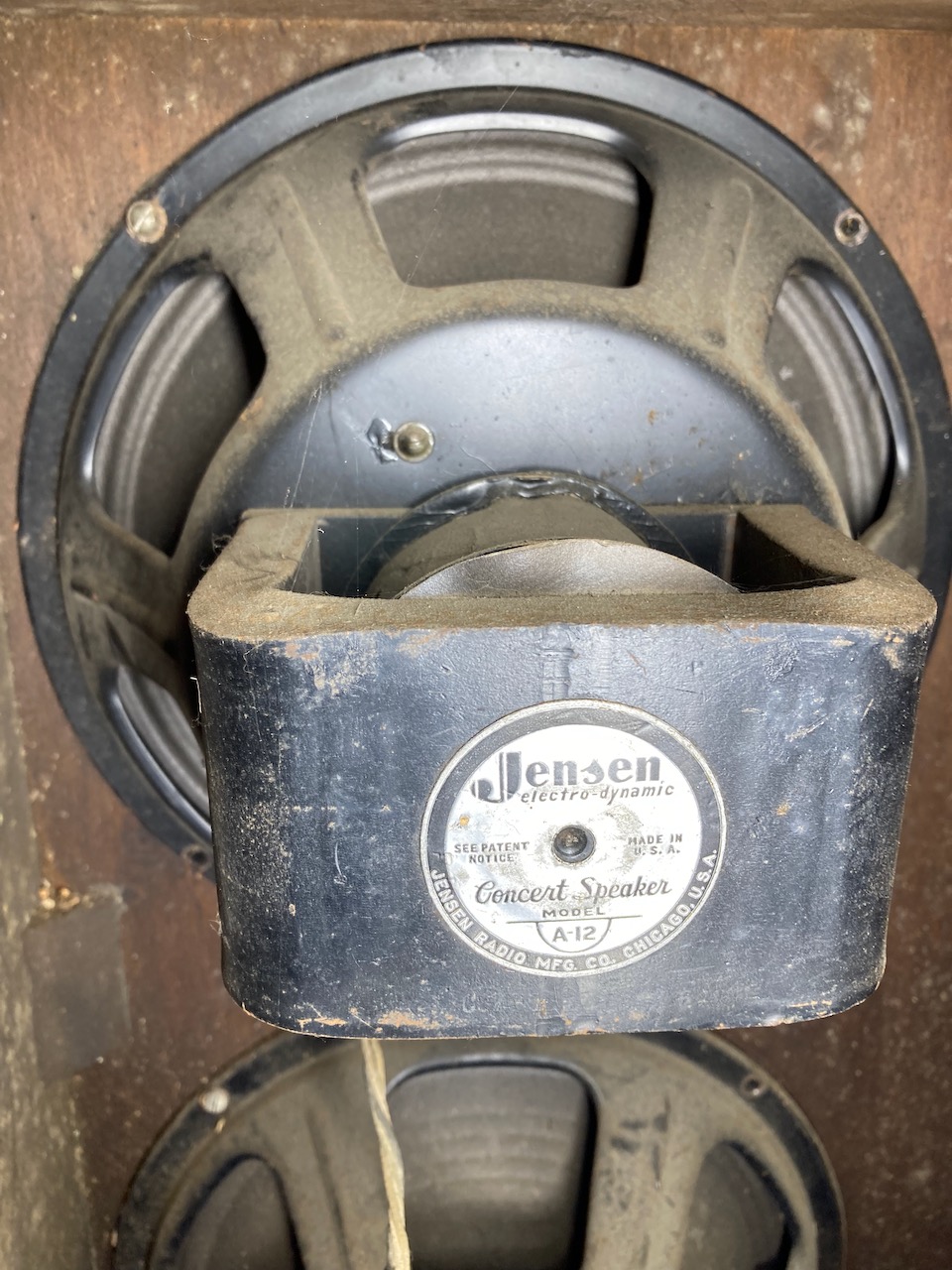
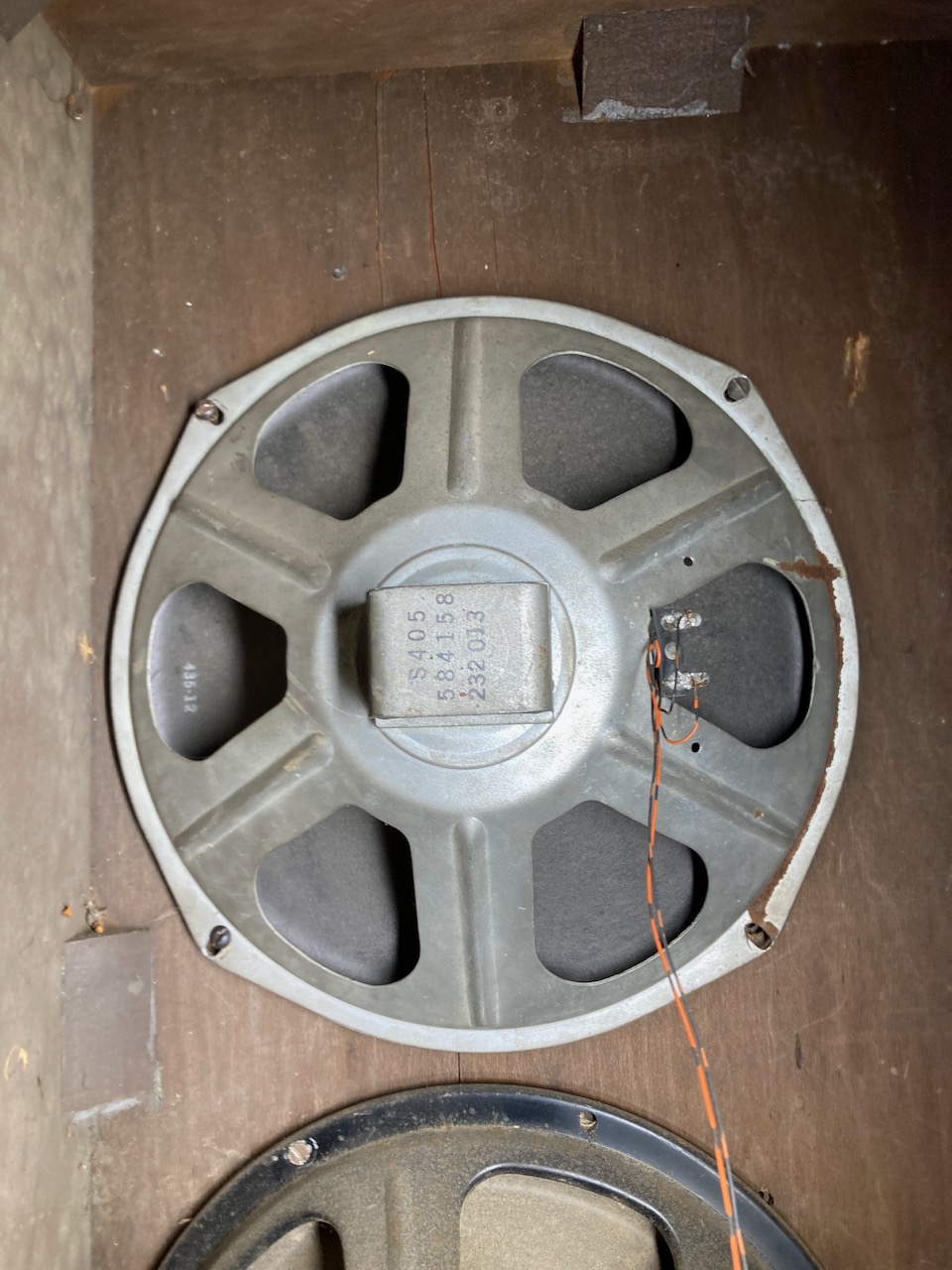
The tone cabinet has three Jensen A-12 speakers (which is expected for the G-40) and one no-name replacement speaker, but does not have its original amps.
The Leslie switch shown in the photos is not included.
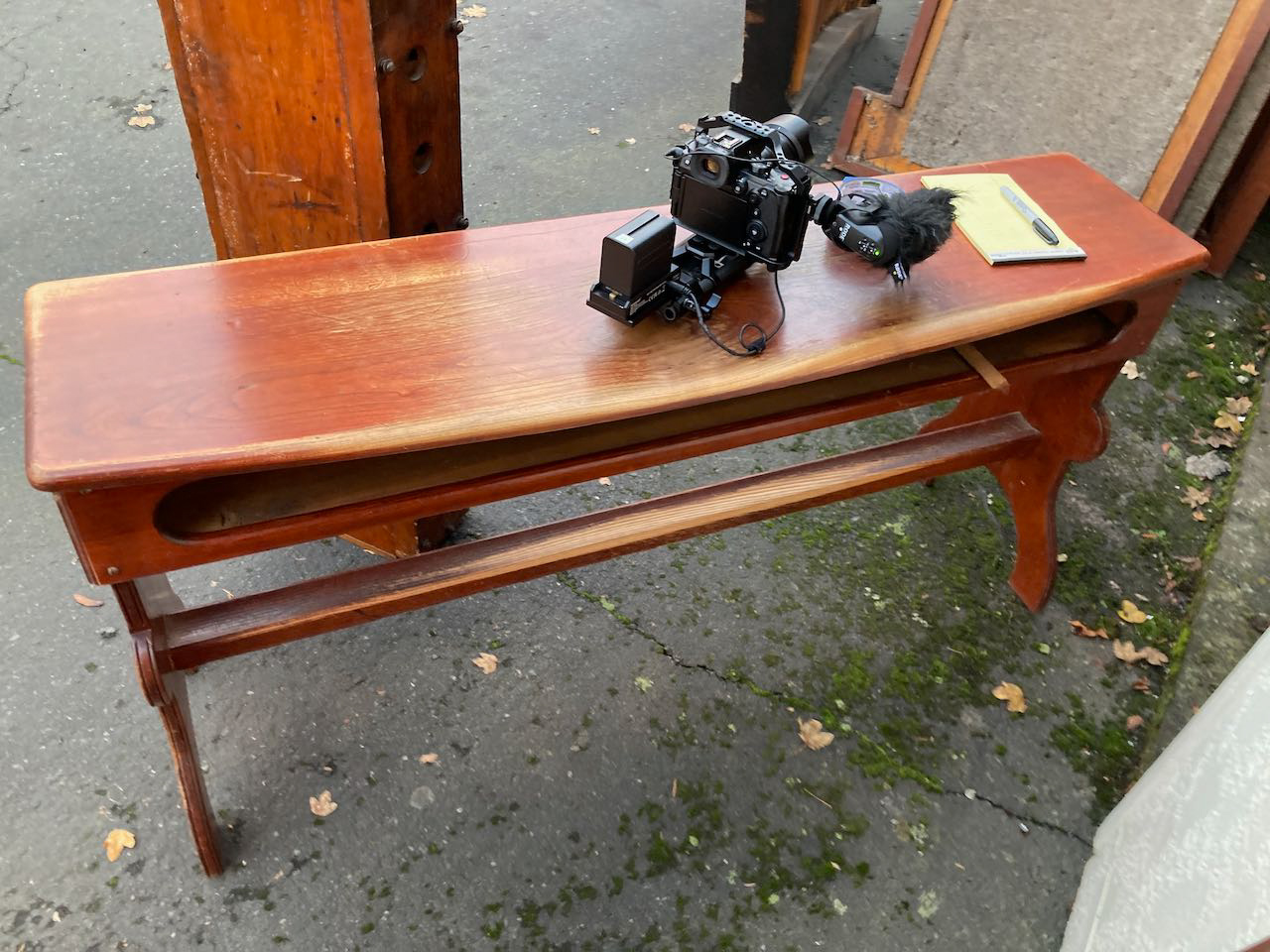
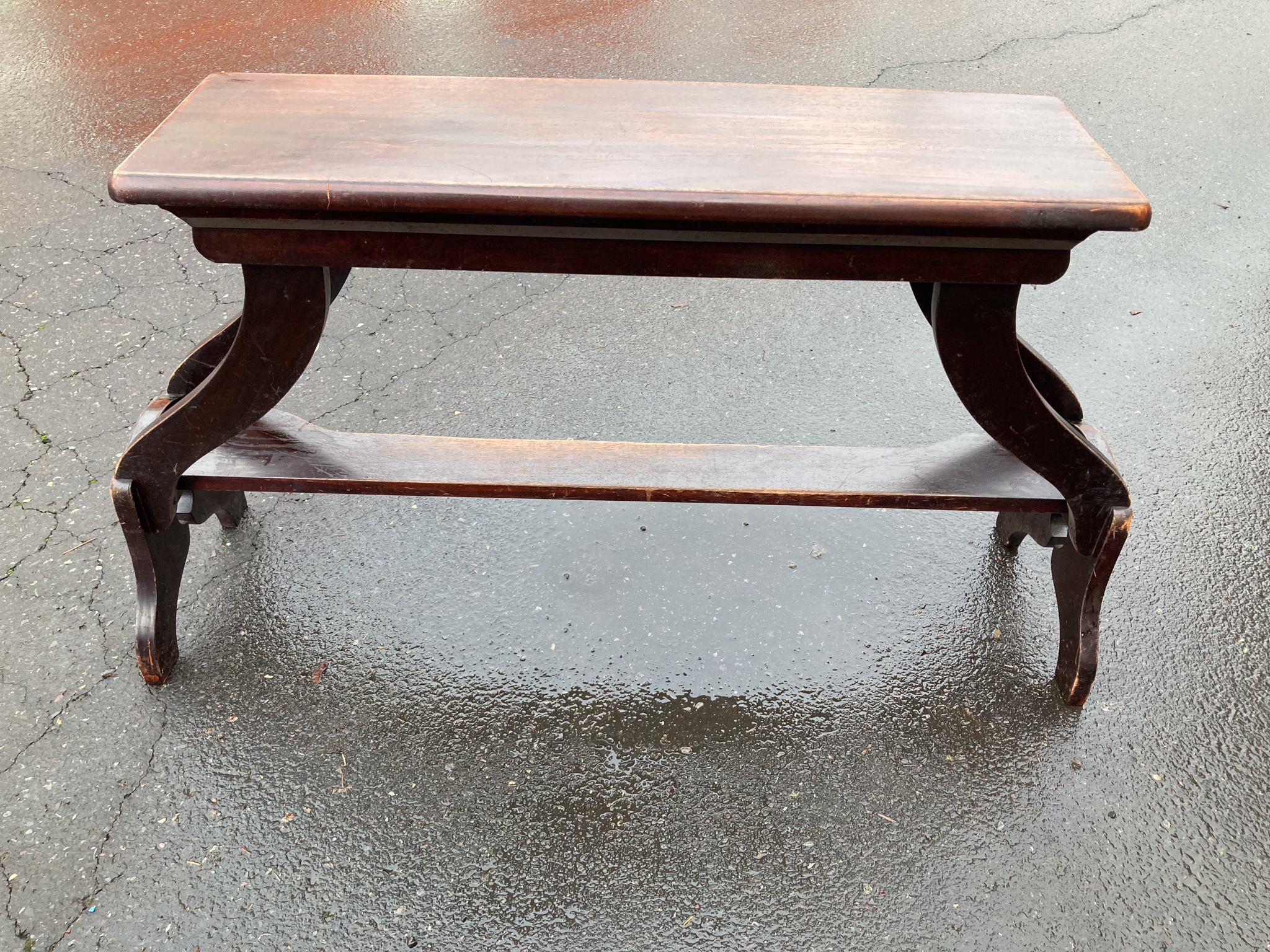
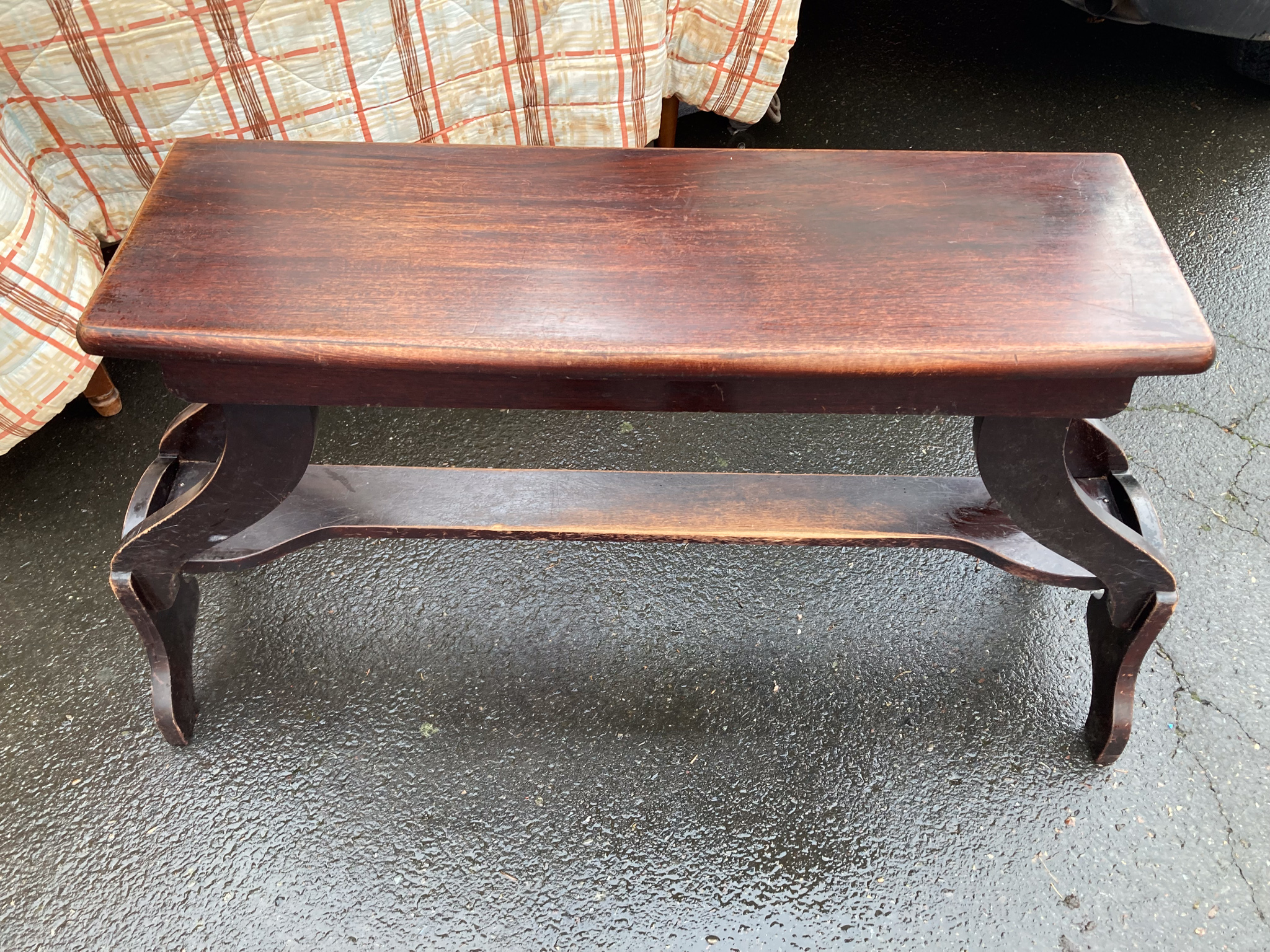
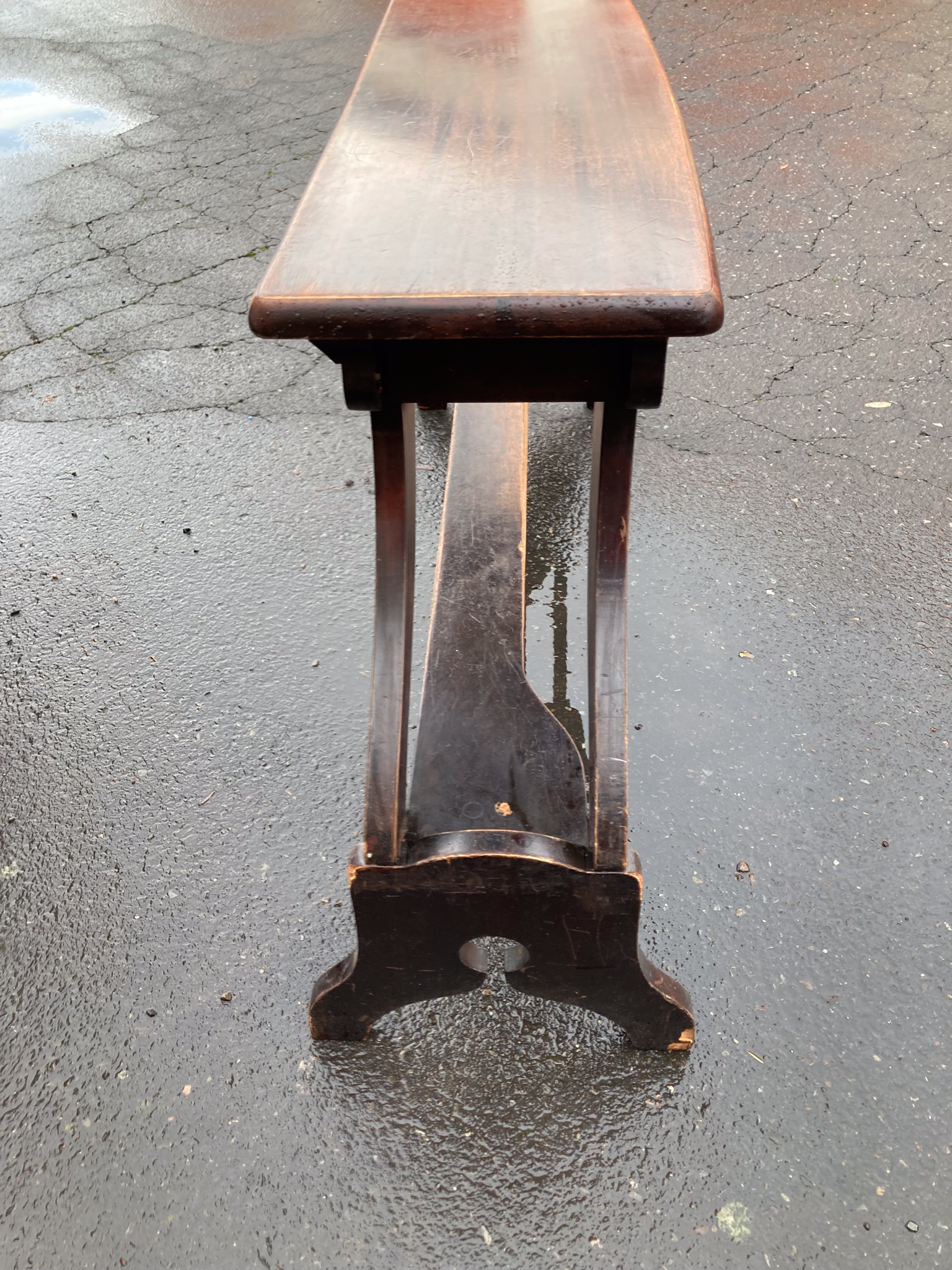
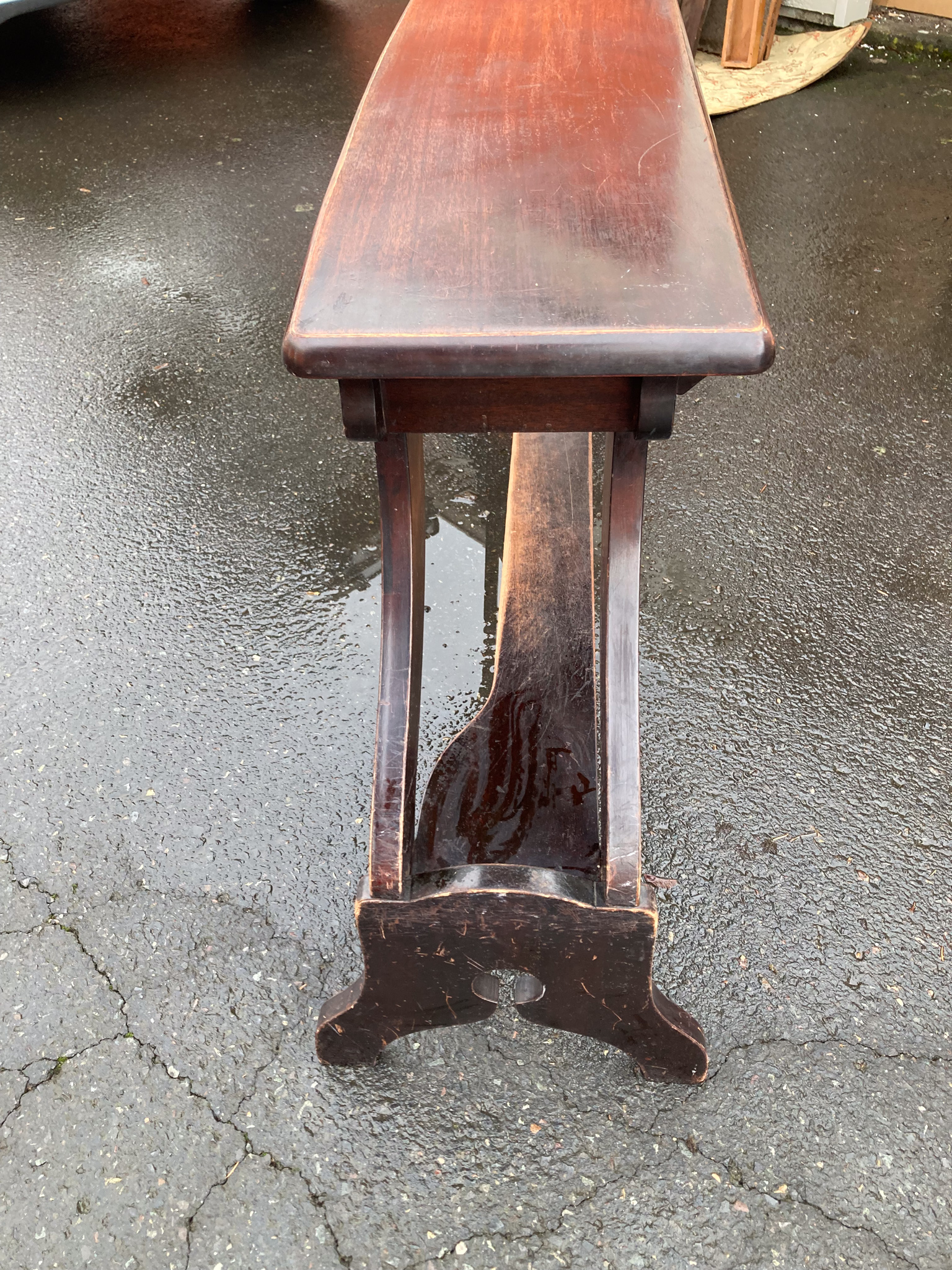
There are a lot of scratches and gouges on both the console and the tone cabinet. (Maybe they went to war?) There is veneer missing on the right side of the console – at the top and in the curved section. The bench may not originally have gone with this unit, as it has a lighter finish on it.
Since this is such a rare Hammond, I’m hoping a collector will be interested enough in it to take it and get it playing again.
FREE – the complete set:
Hammond Model G console (including its original two TWGs and preamp), side handles, G-40 tone cabinet with 3 Jensen A-12 and 1 no-name speaker (untested, and the cabinet does not have its amps), Hammond RA reverb (without preamp) (untested), DIY internal speakers and Conn amplifier (untested), pedalboard (untested), Hammond bench (may not be original to this set).
Buyer to remove from residential address in NE Portland (ground floor, no stairs). Dolly available for extra cost if you need one.
List of Hammond organ models on Wikipedia:
https://en.wikipedia.org/wiki/List_of_Hammond_organs
Reed Organs
Status: Available – No cost
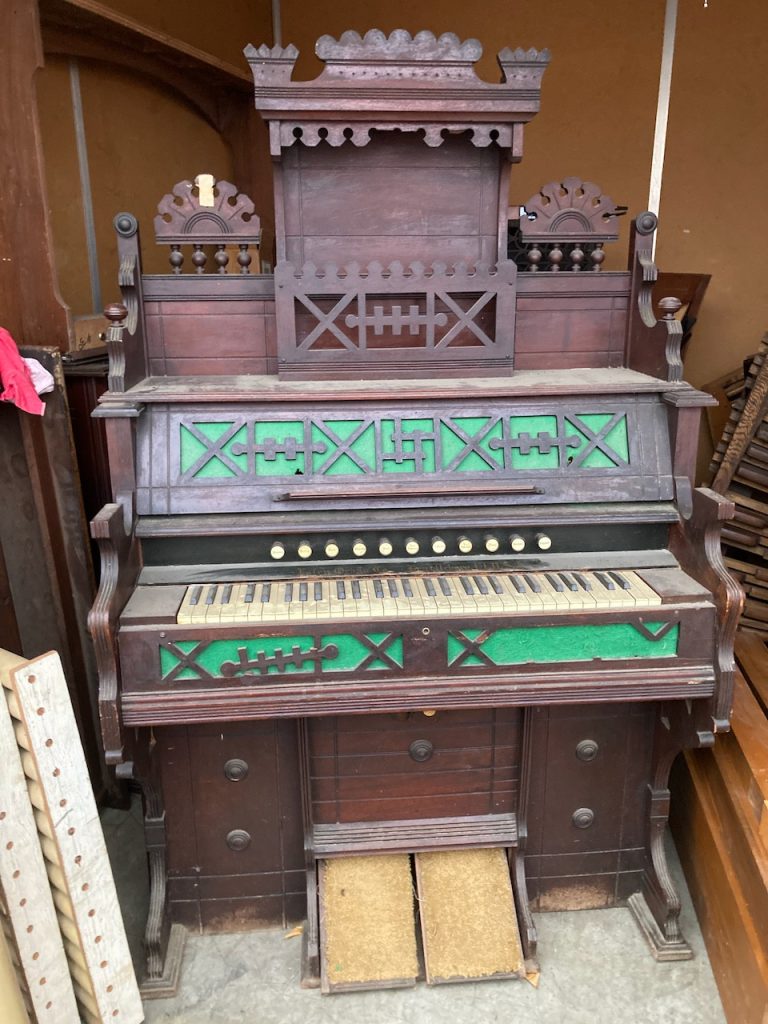
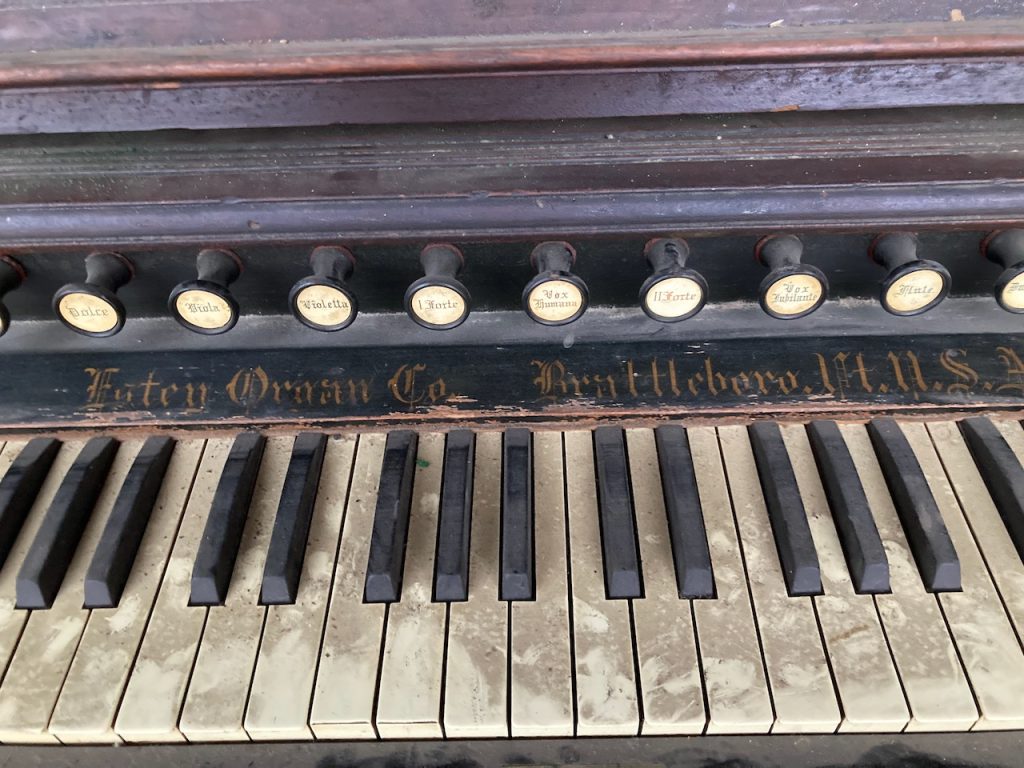
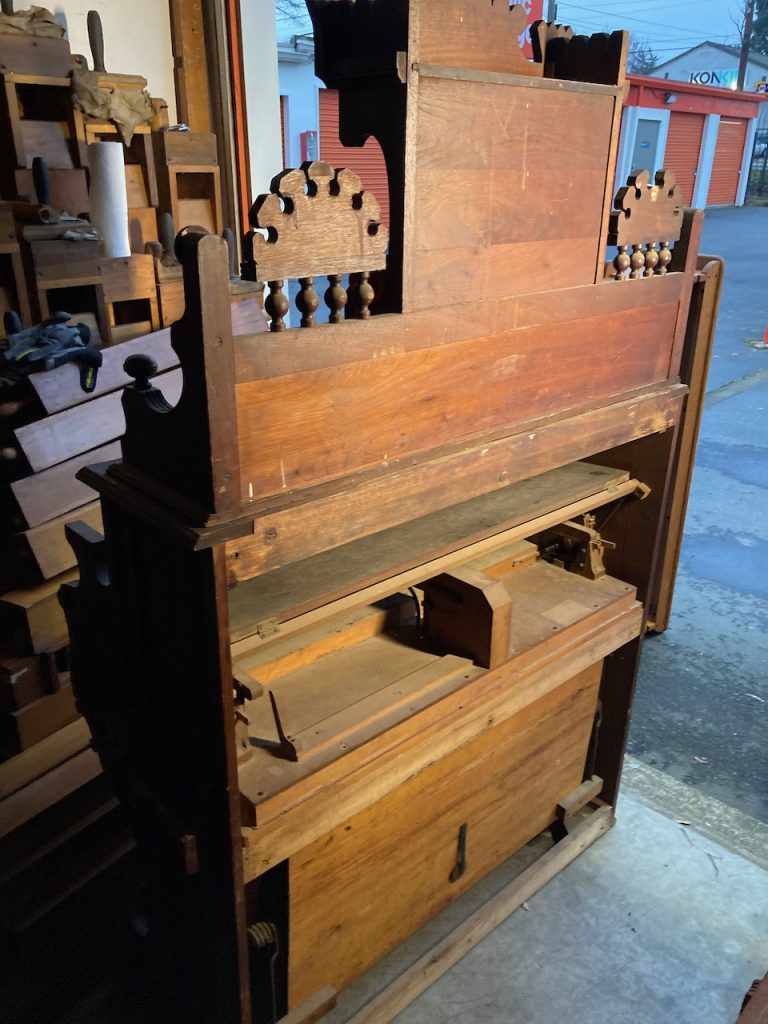
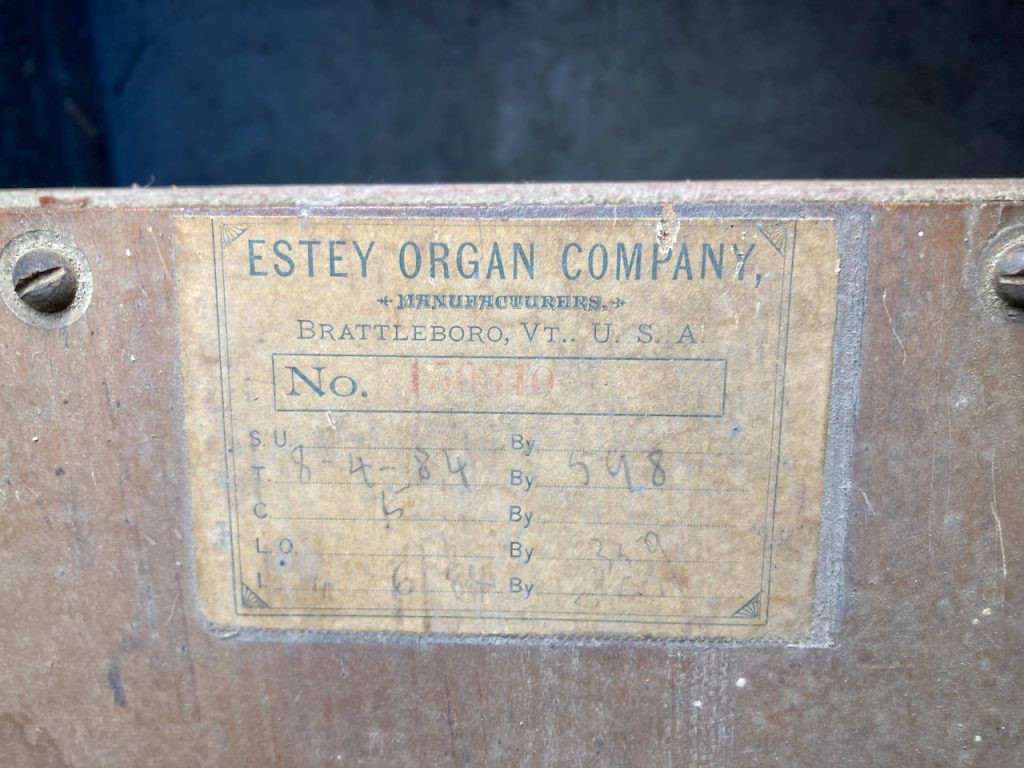
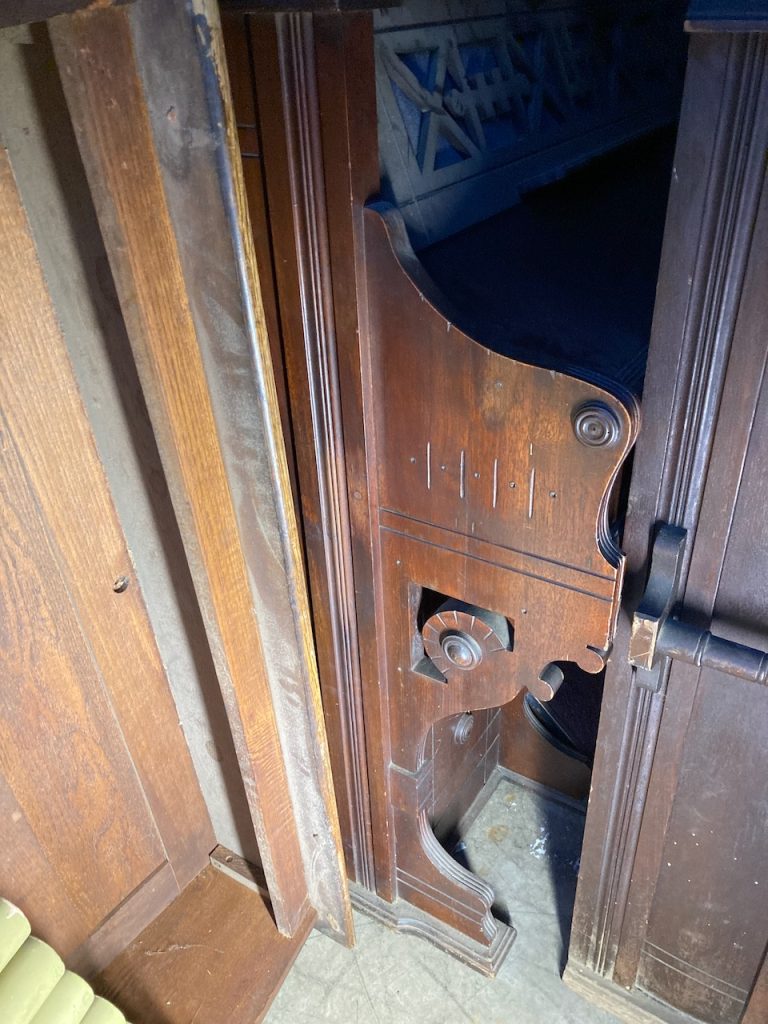
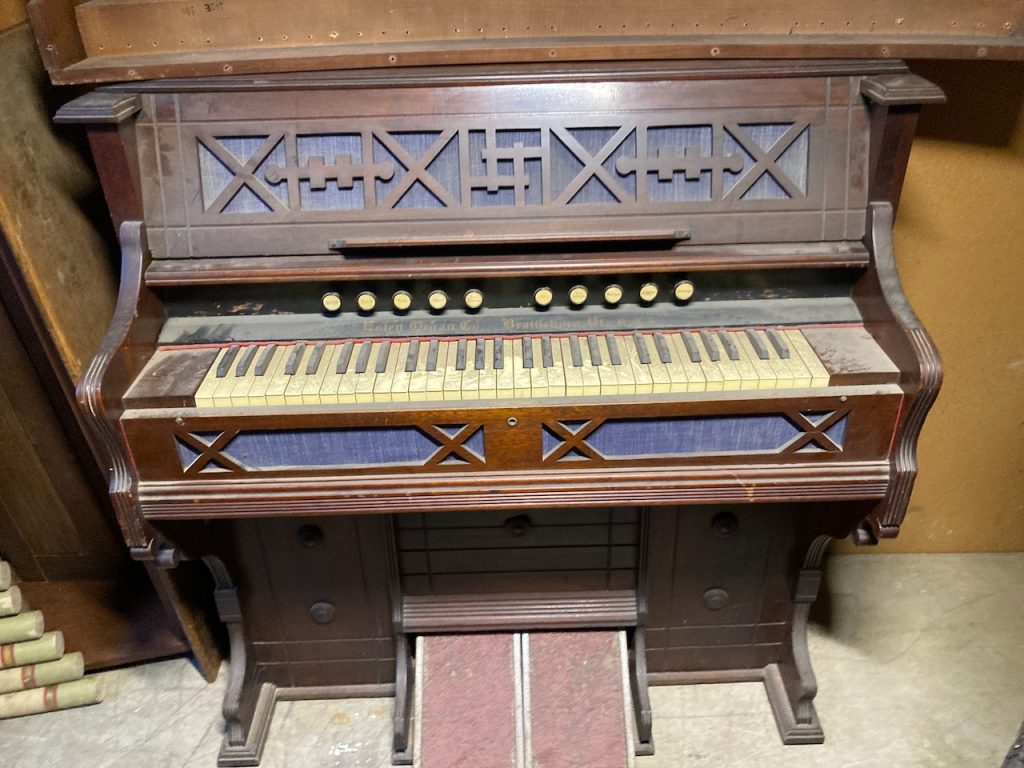
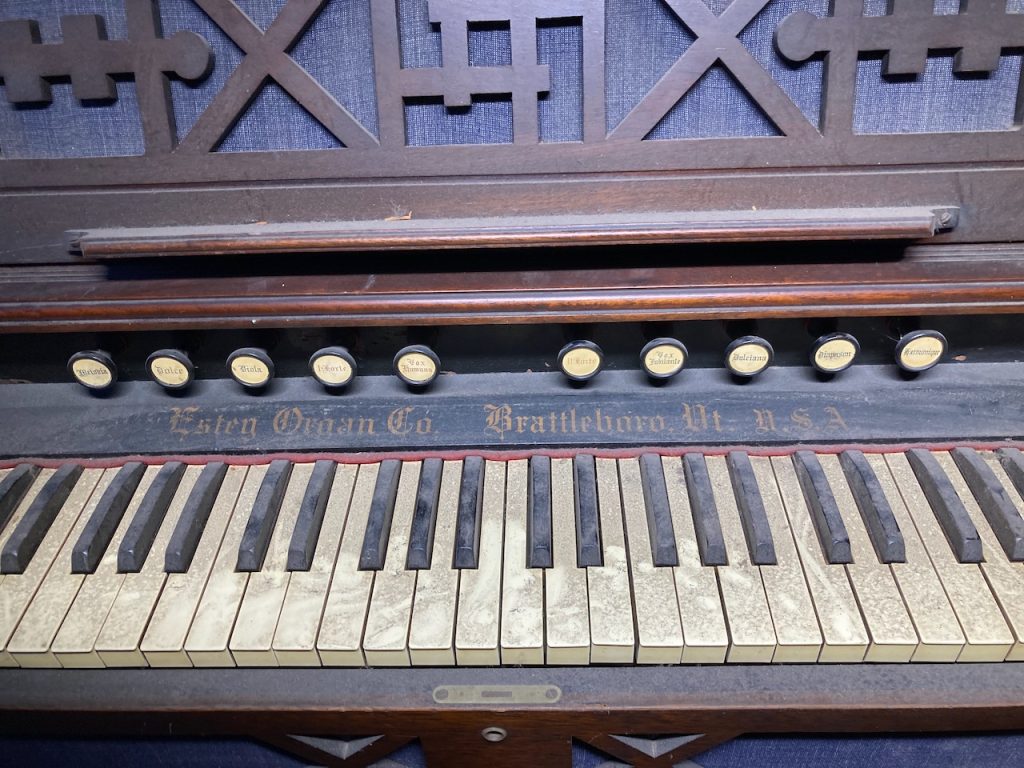
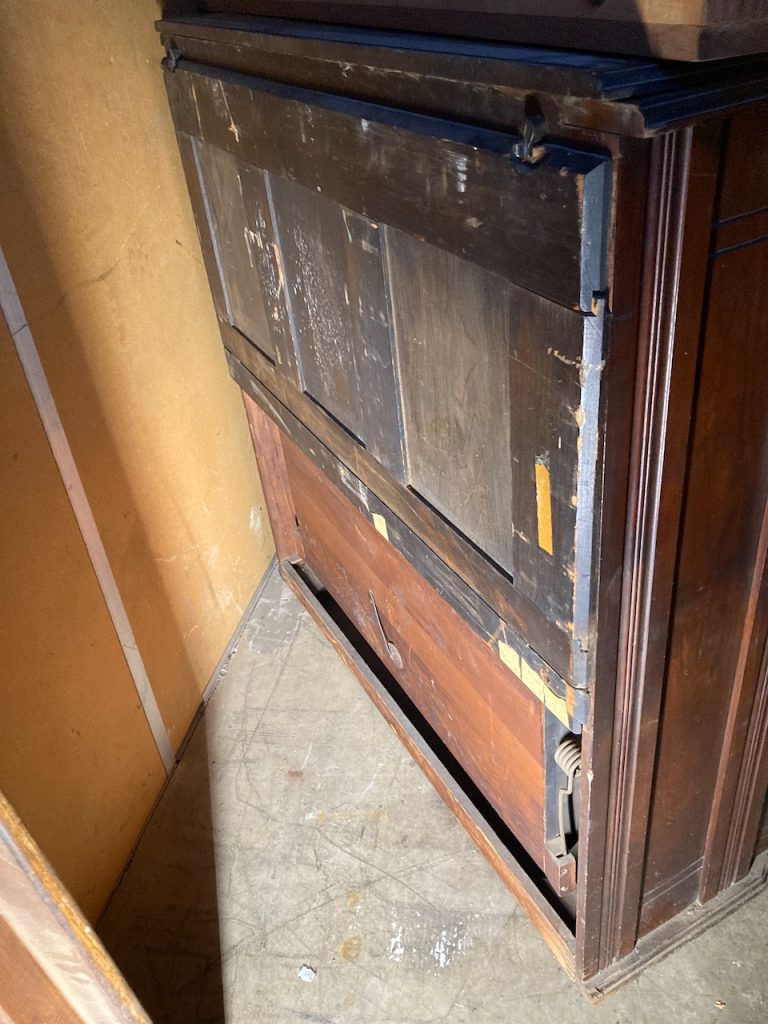
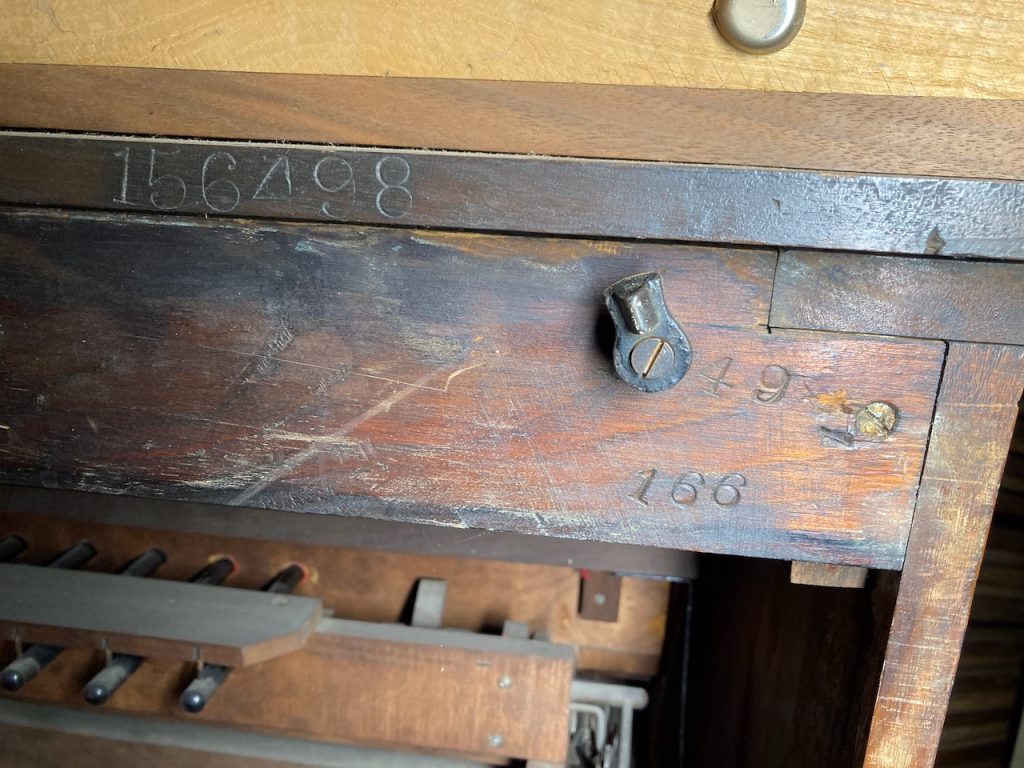
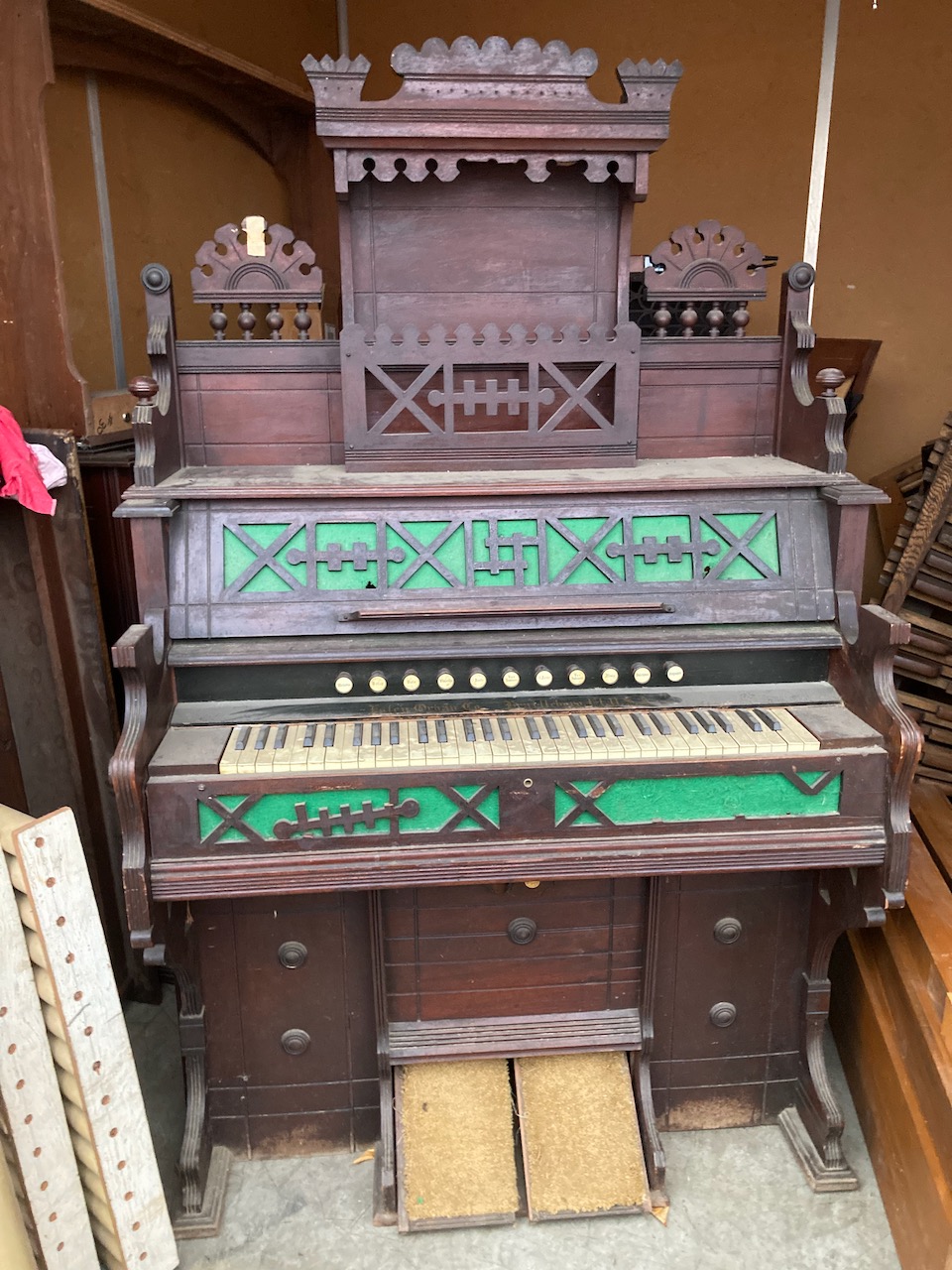
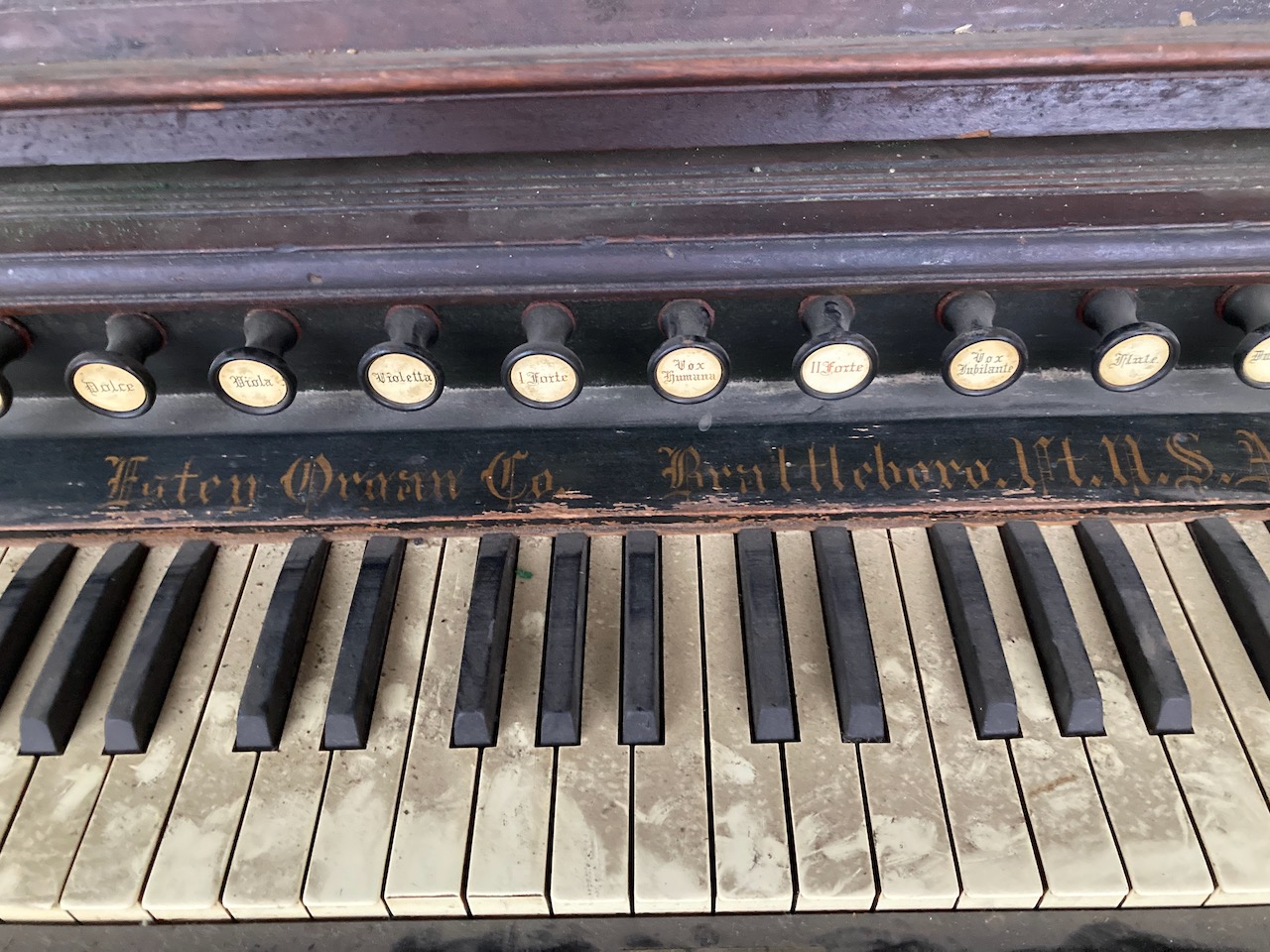
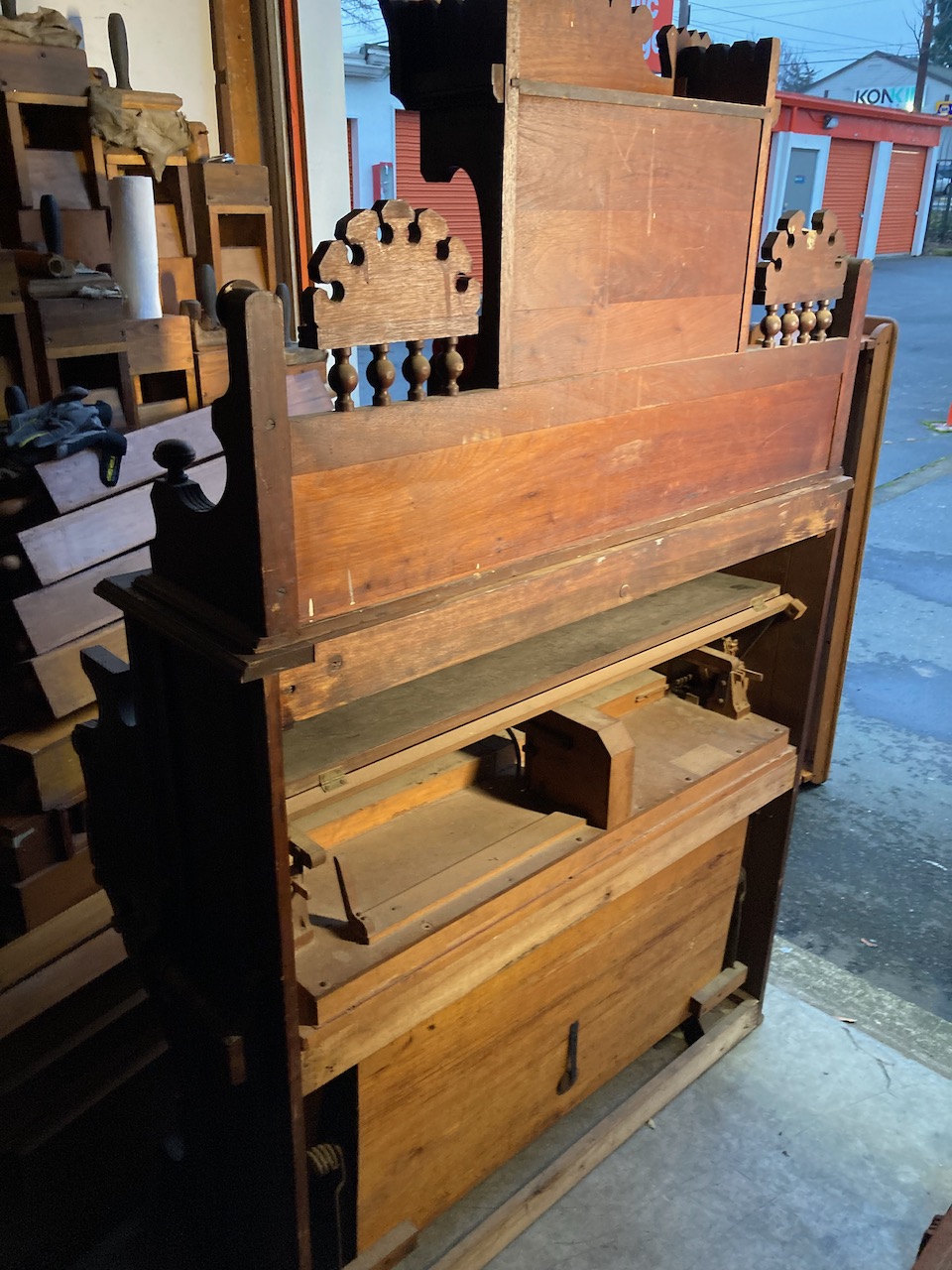
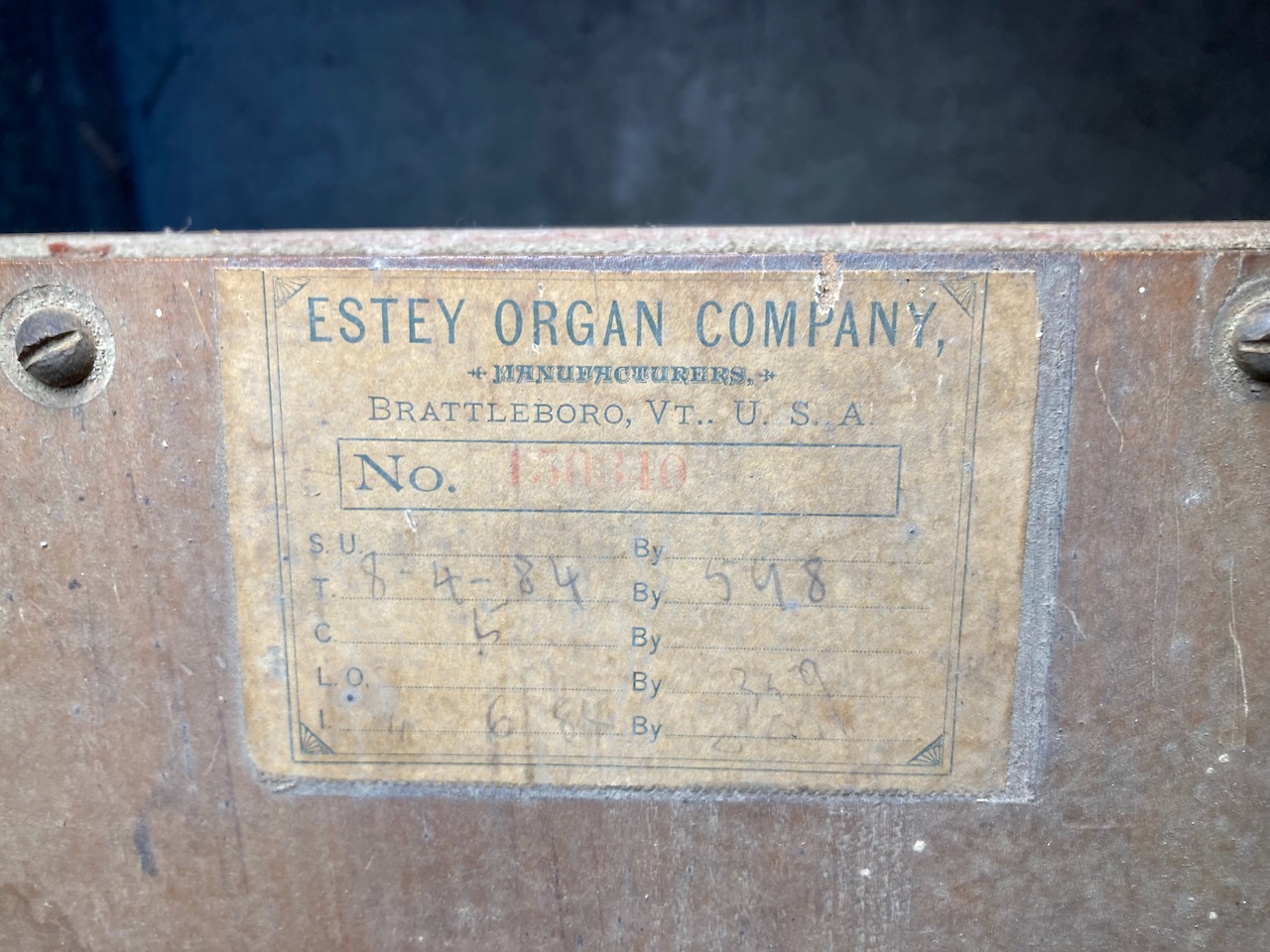
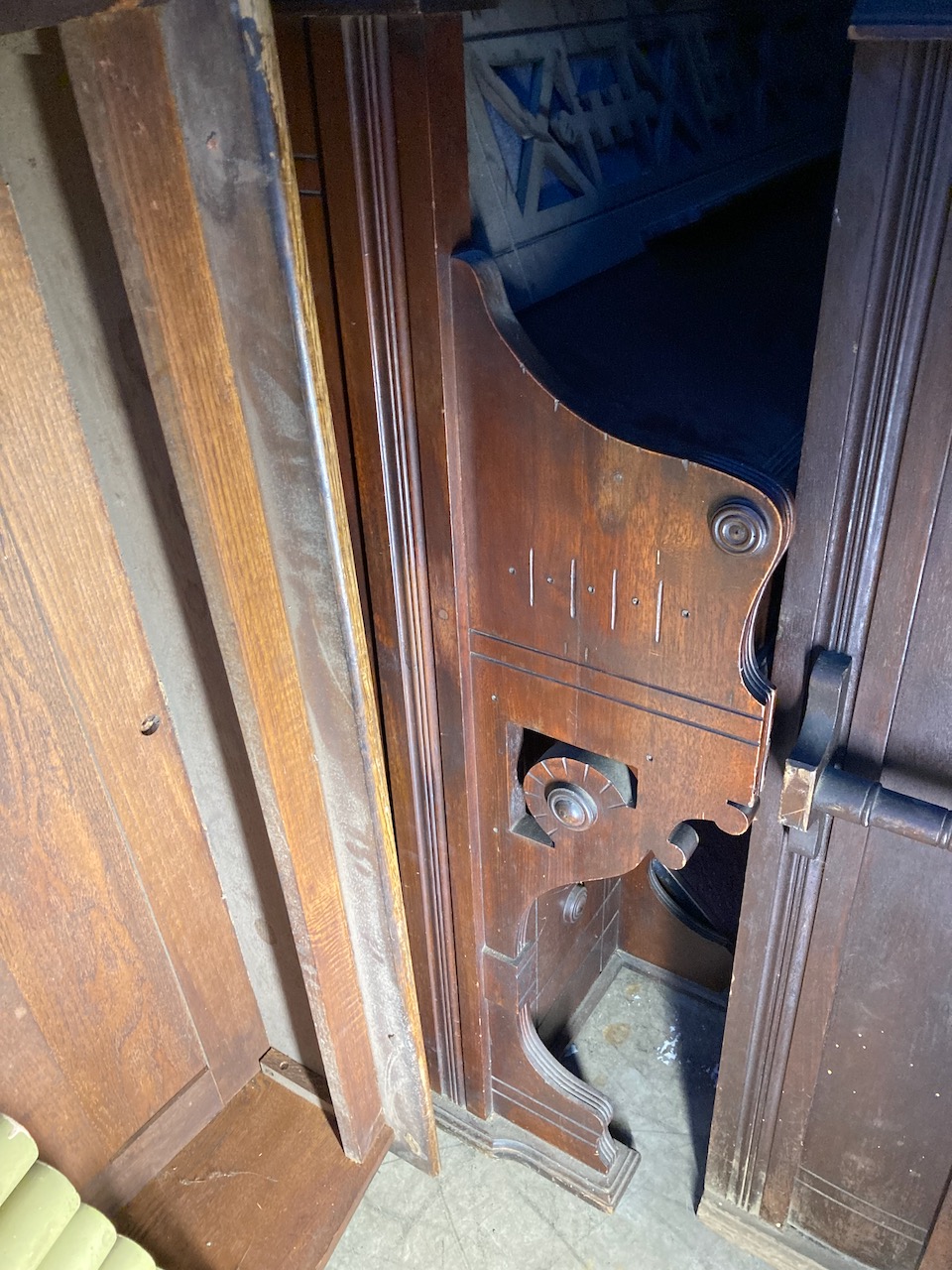
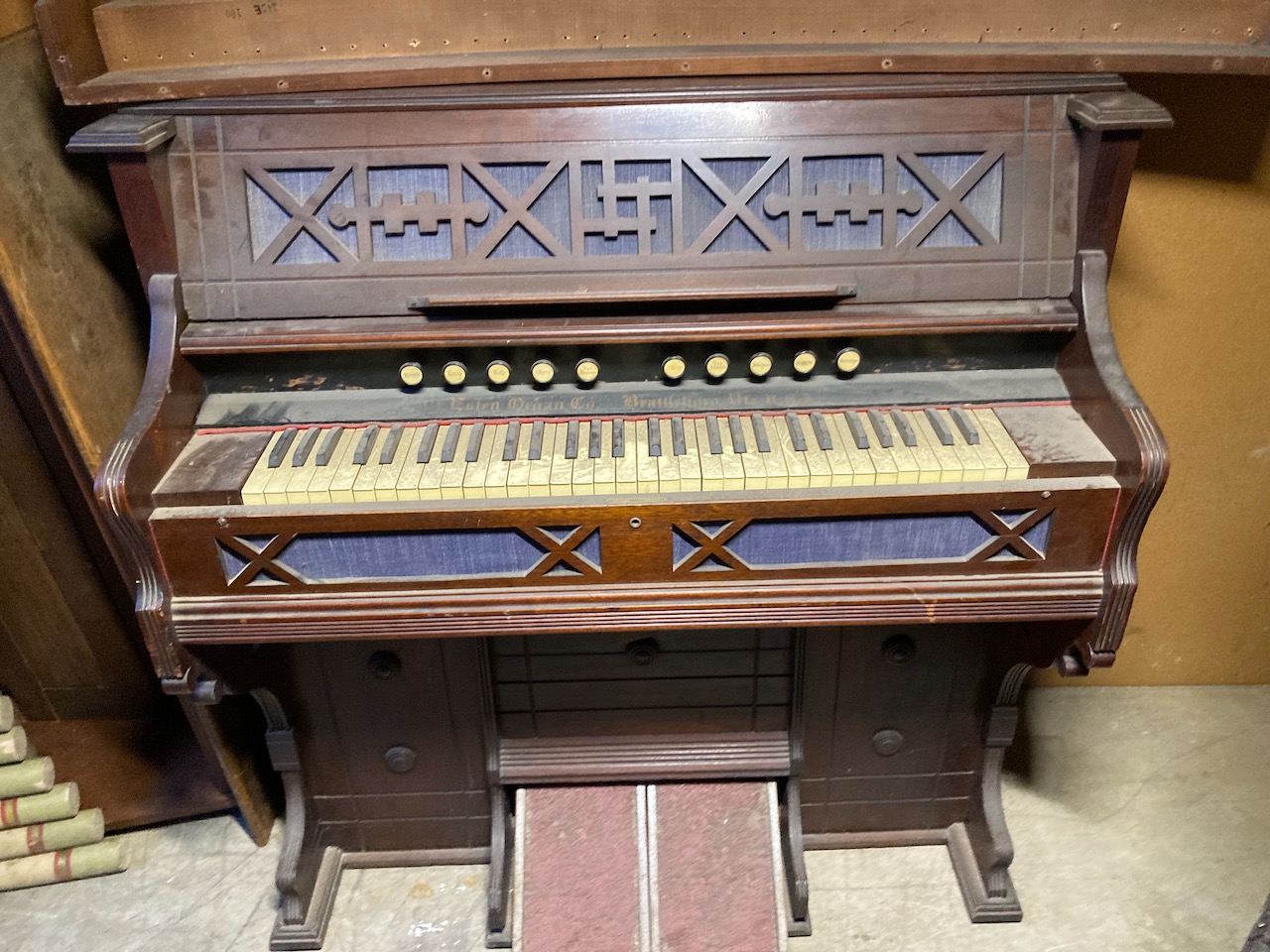
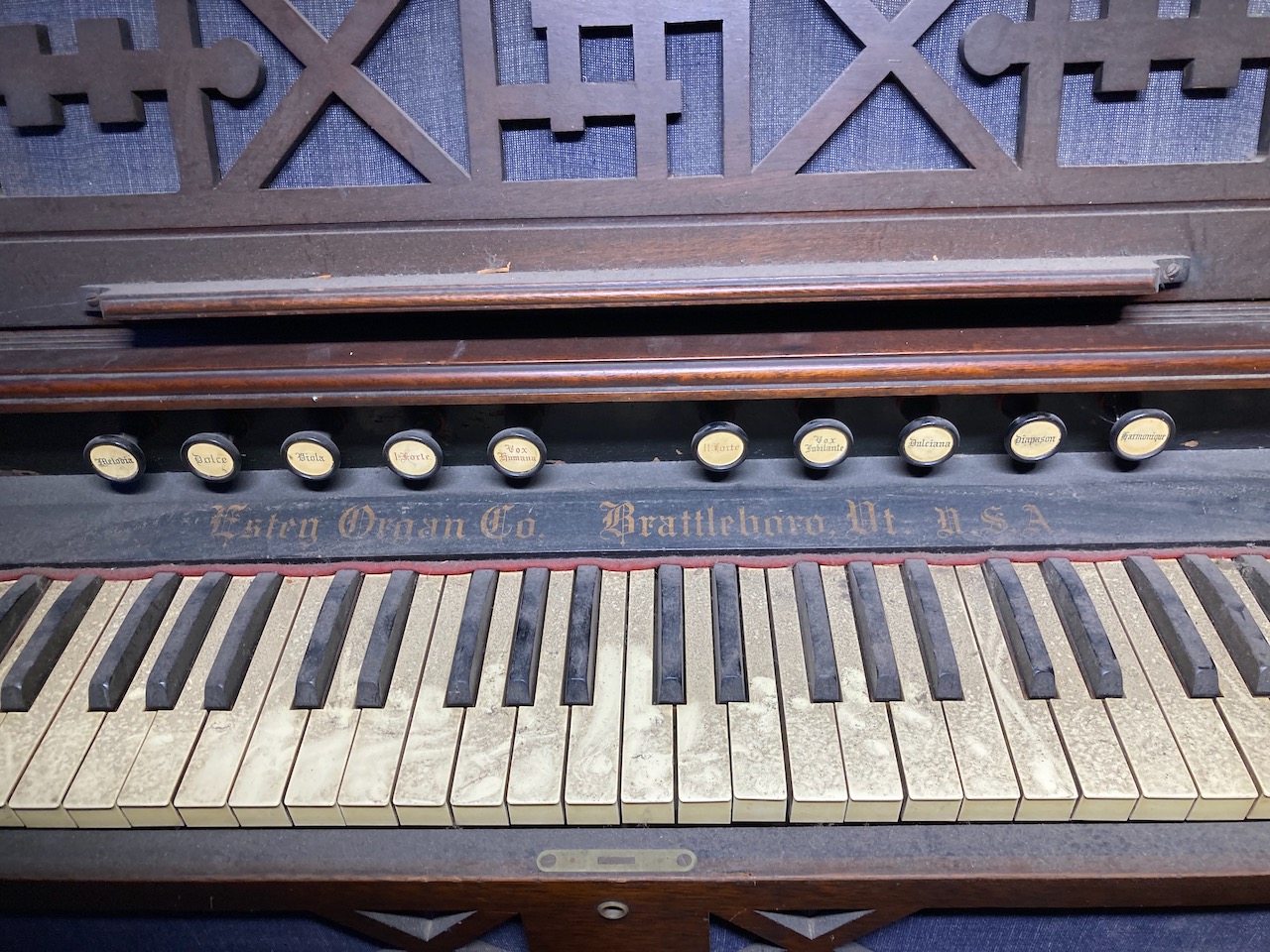
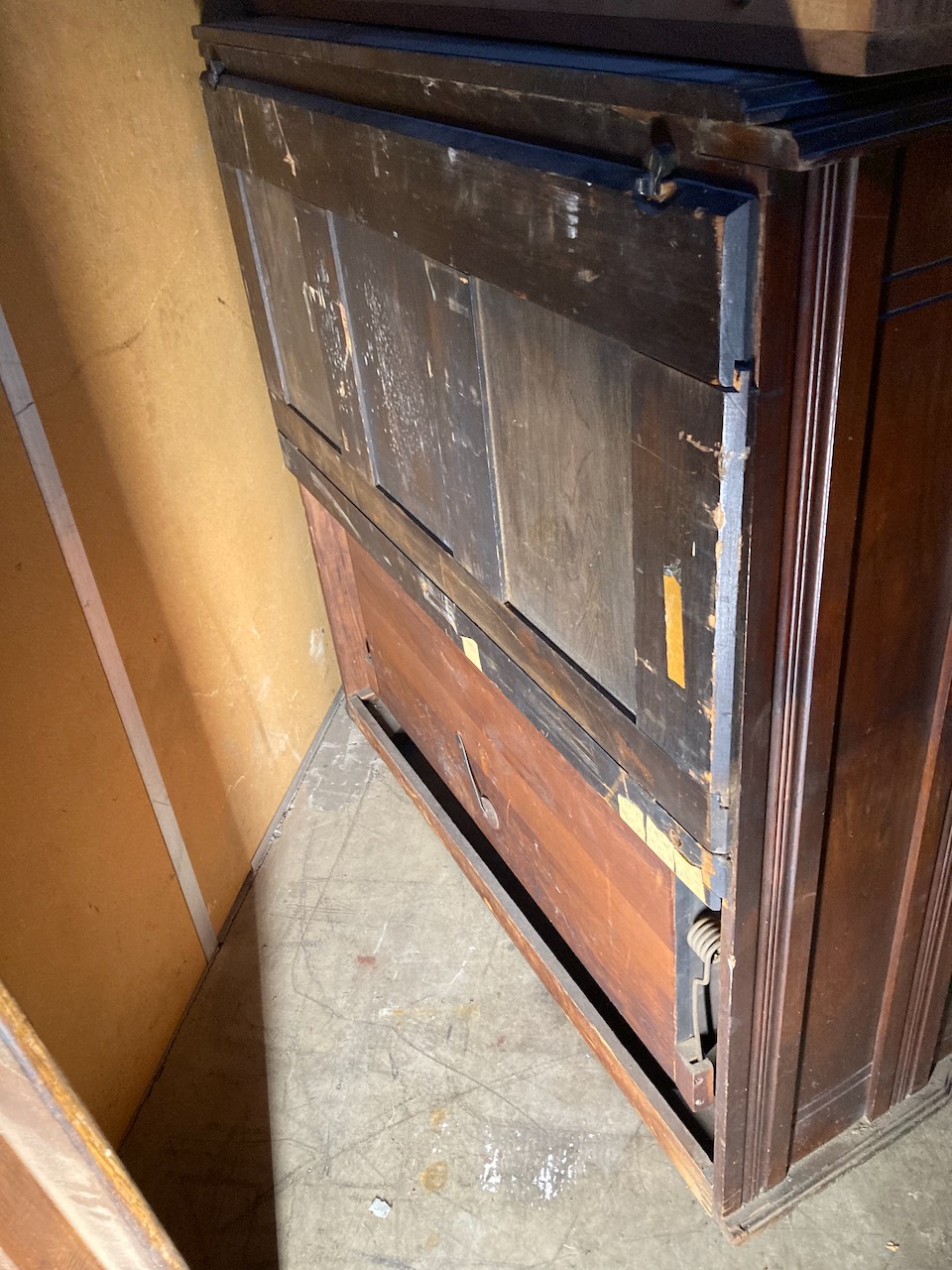
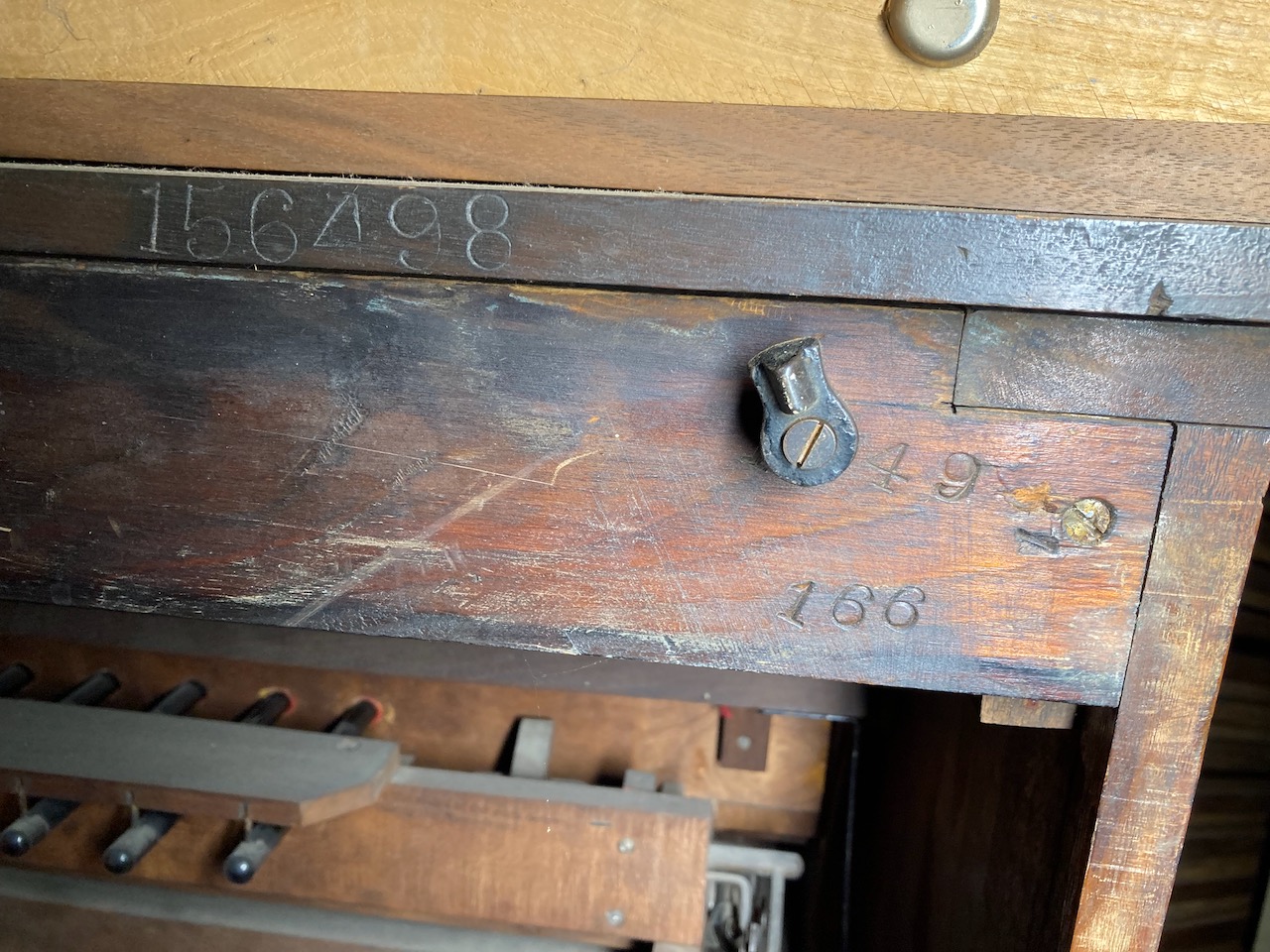
Notes: There are two small pump-style reed organs in the unit. One with a decorative top, one without
Both organs are by Etsey Organ Co. of Brattleboro, Vermont.
The one with the decorative top has green felt, the other has gray screening but is similar in style (minus the decorative top).
The green-felt one has problems, most stops and notes are not working, but a few notes do play on some stops. The finial with masking tape at the upper left is loose but can be re-glued. The missing scroll work that should be in front of the felt at the lower right may be present somewhere in the storage unit. There are boxes containing various trim pieces that need to be gone through. There is a manufacturer’s label with a serial number. A reed organ expert says that it is likely from the 1880s.
The gray-screen one seems to be mostly working. It does not have a manufacturer’s label but there is what could be a serial number stamped into the wood inside the back.
I am told that the green-felt one was a gift to Paul from his dad when Paul was in Jr. High. So, this could be one of the instruments that Paul learned to play on – perhaps someone would like it as a keepsake for that reason?
Decorative top notes: The top appears to fit either organ, but on close inspection the finish is just a tad closer to the one with the gray screening, which is the more operable instrument. The first person to claim one of the organs can choose if they want the top to go with it.
Tube-Based Amps/Electronics and Speakers
At this time, a local expert is evaluating the various tube-based items for functionality and market value. There are also speaker cabinets with speaker cones/drivers that need to be inventoried.
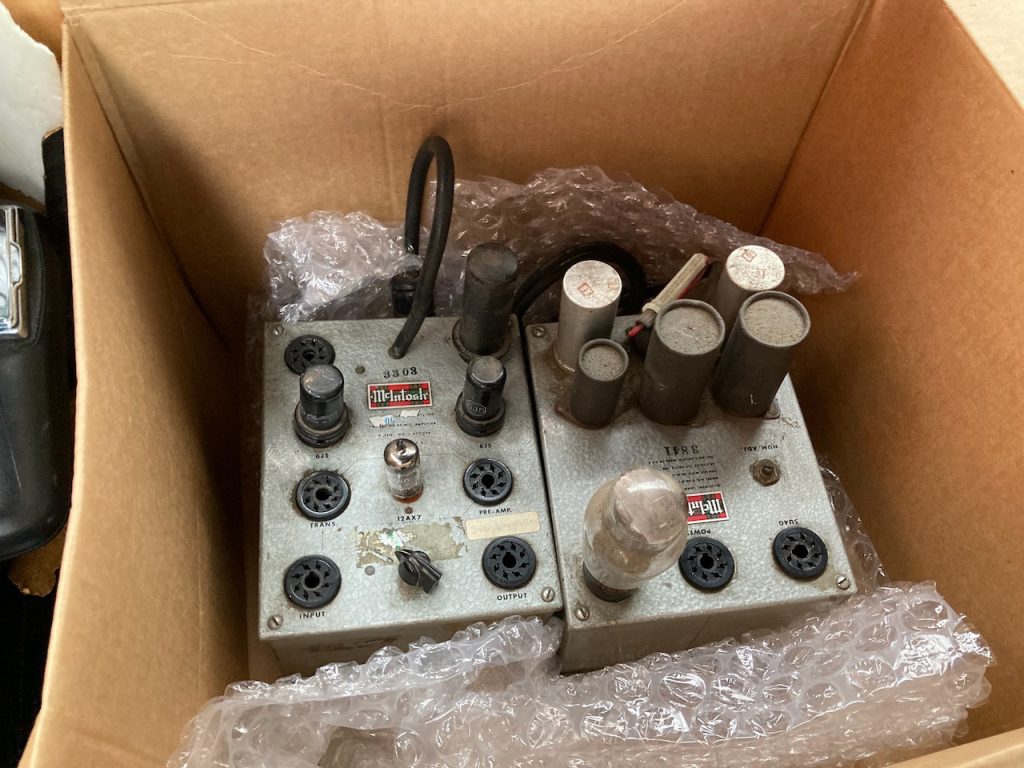
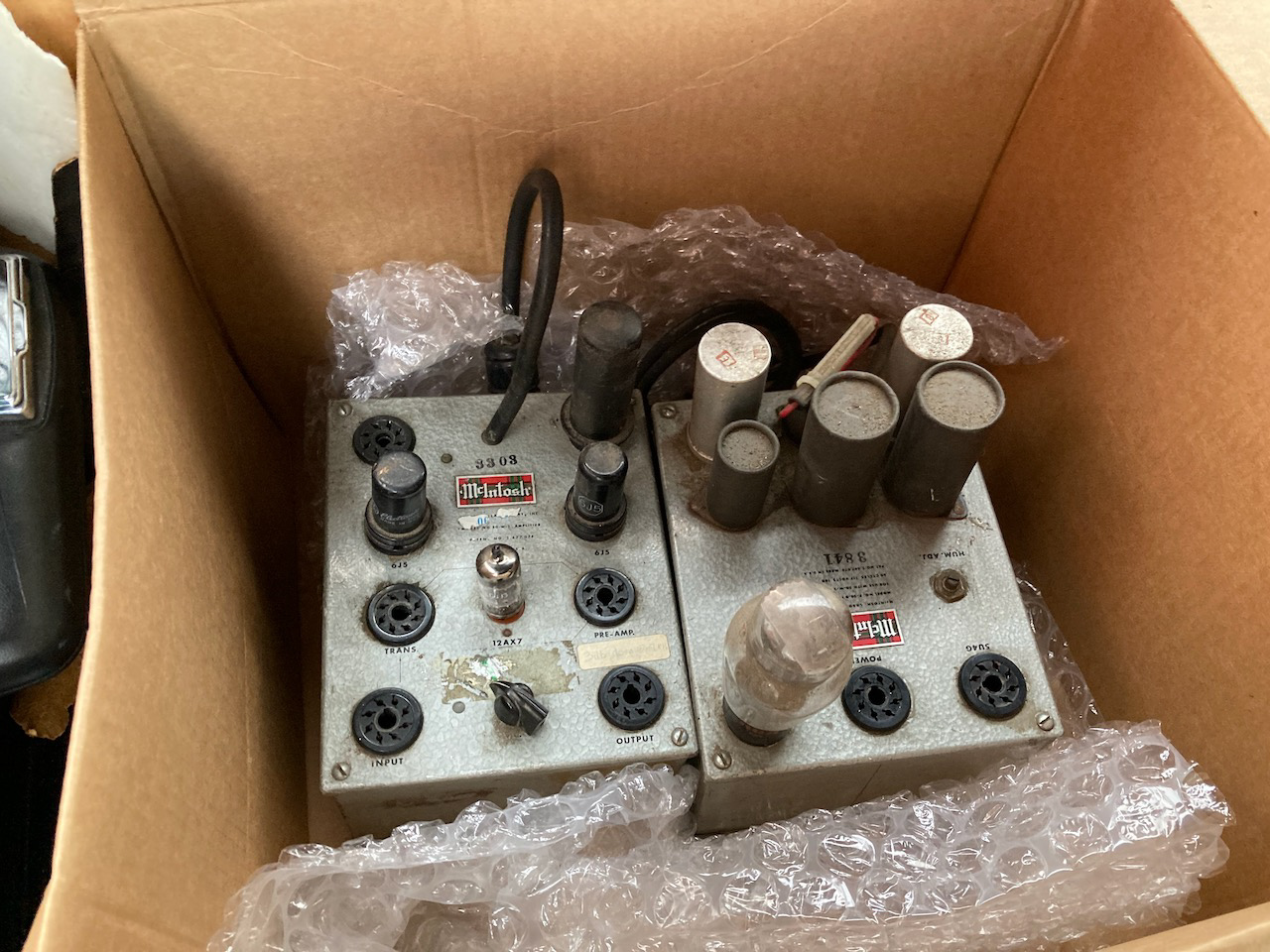
McIntosh Model 50-W-2 Amplifier and P-50-D Power Supply
Status: Stolen – If you see this turn up somewhere, please contact us.
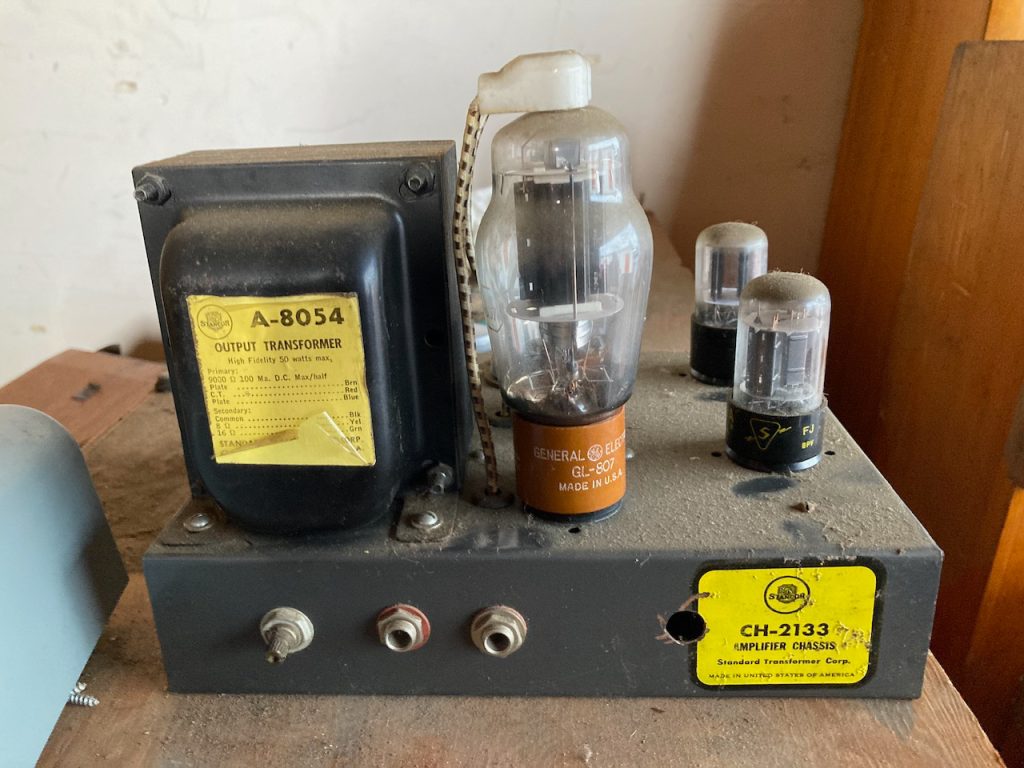
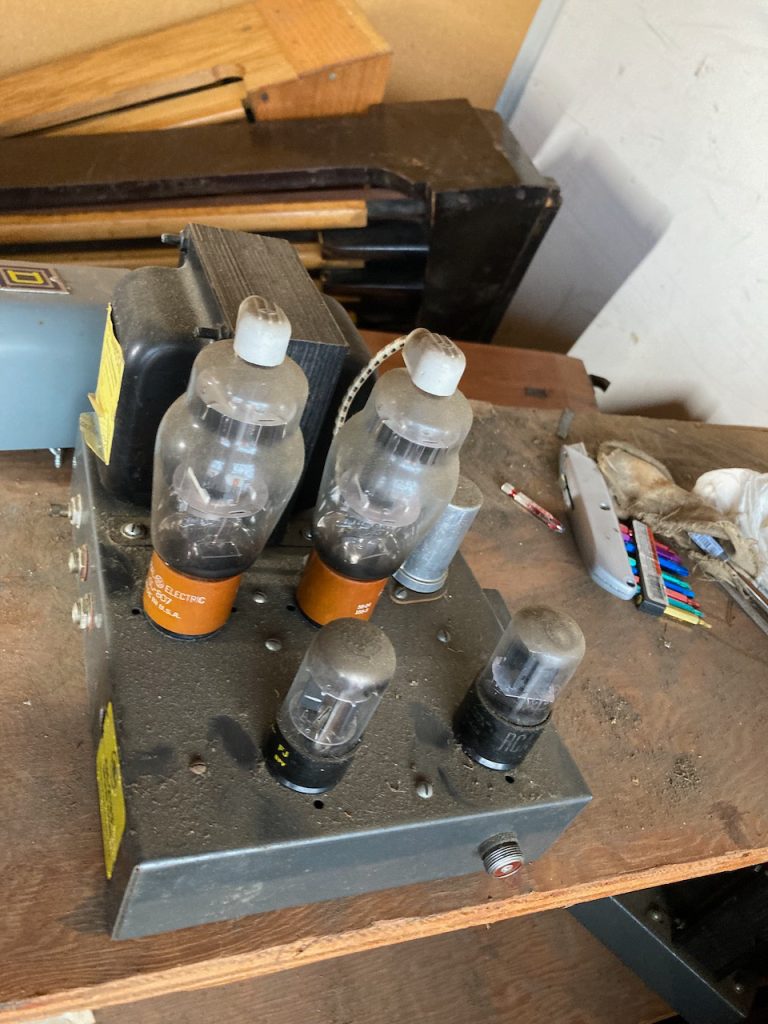
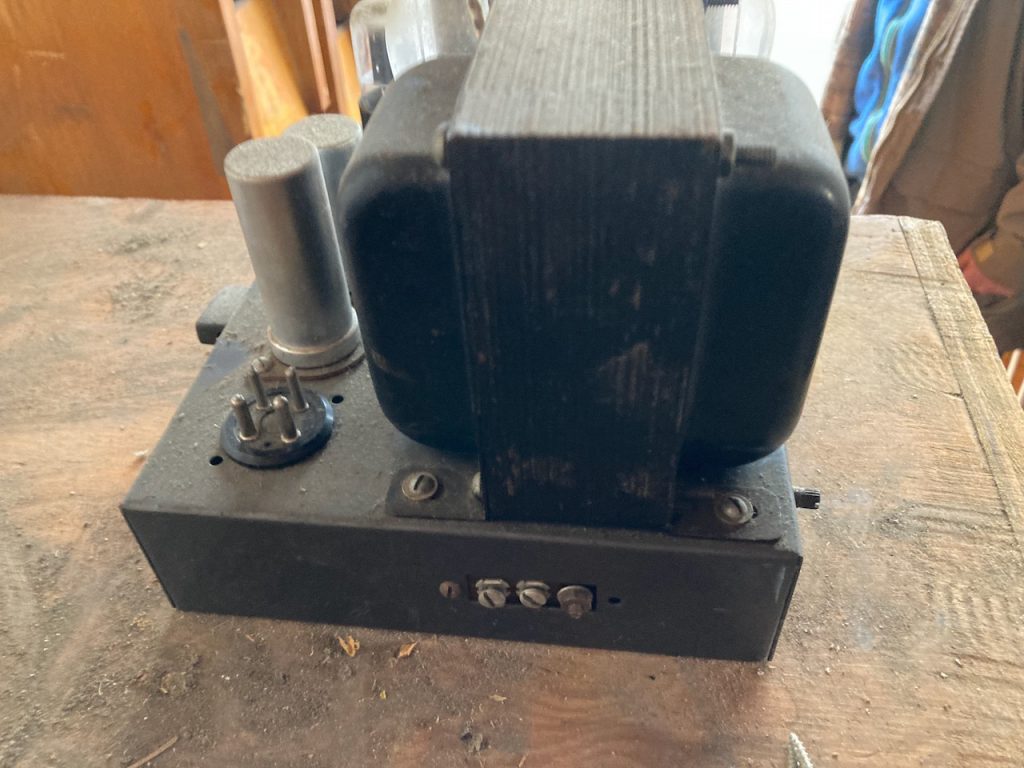
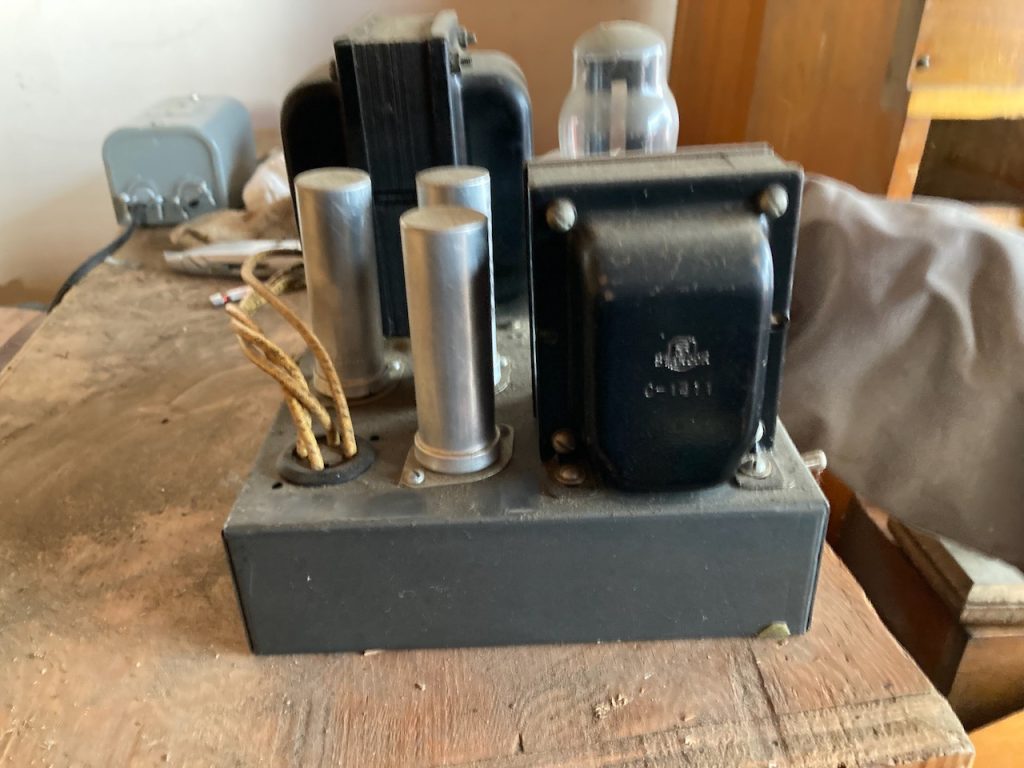
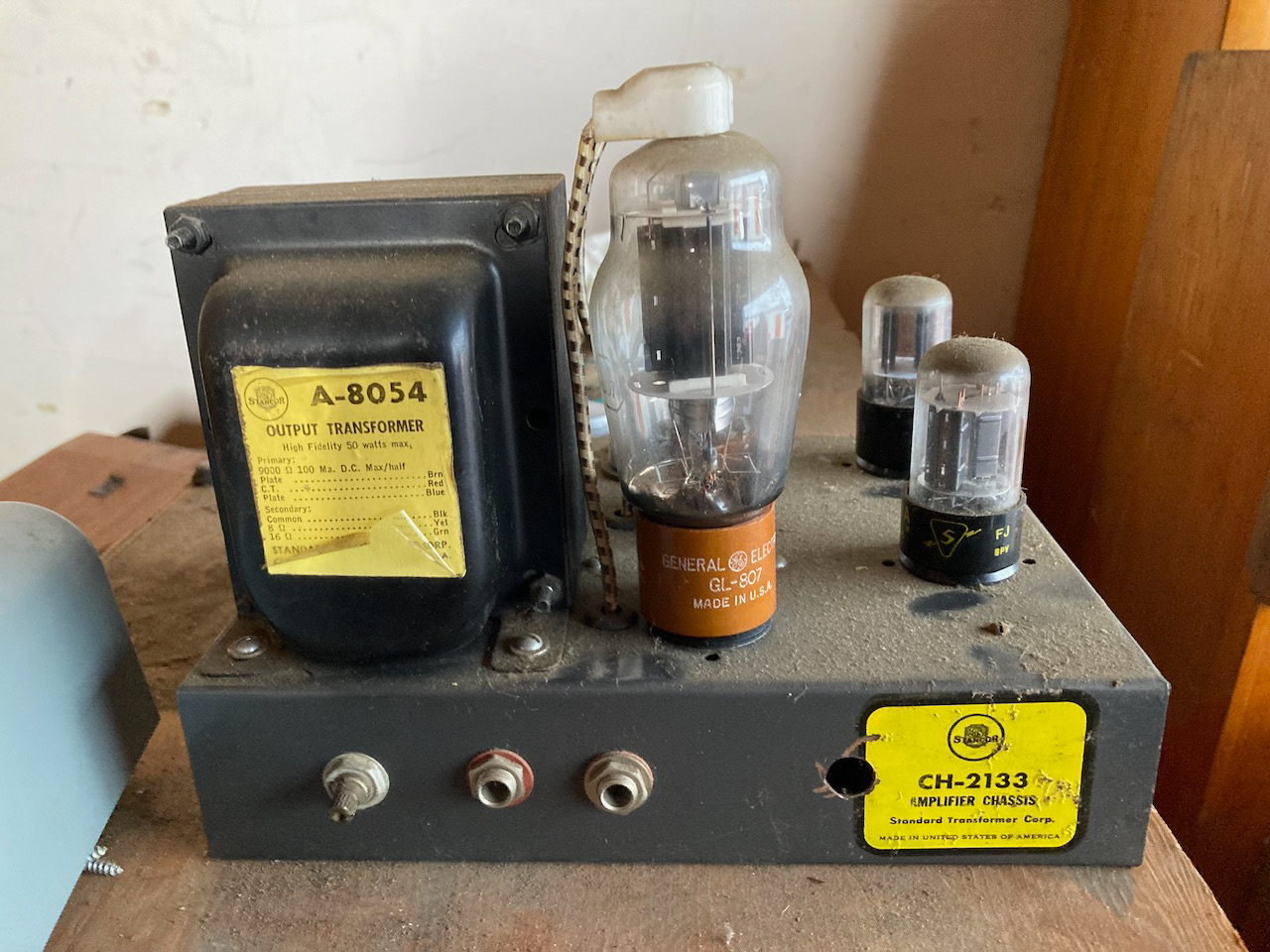
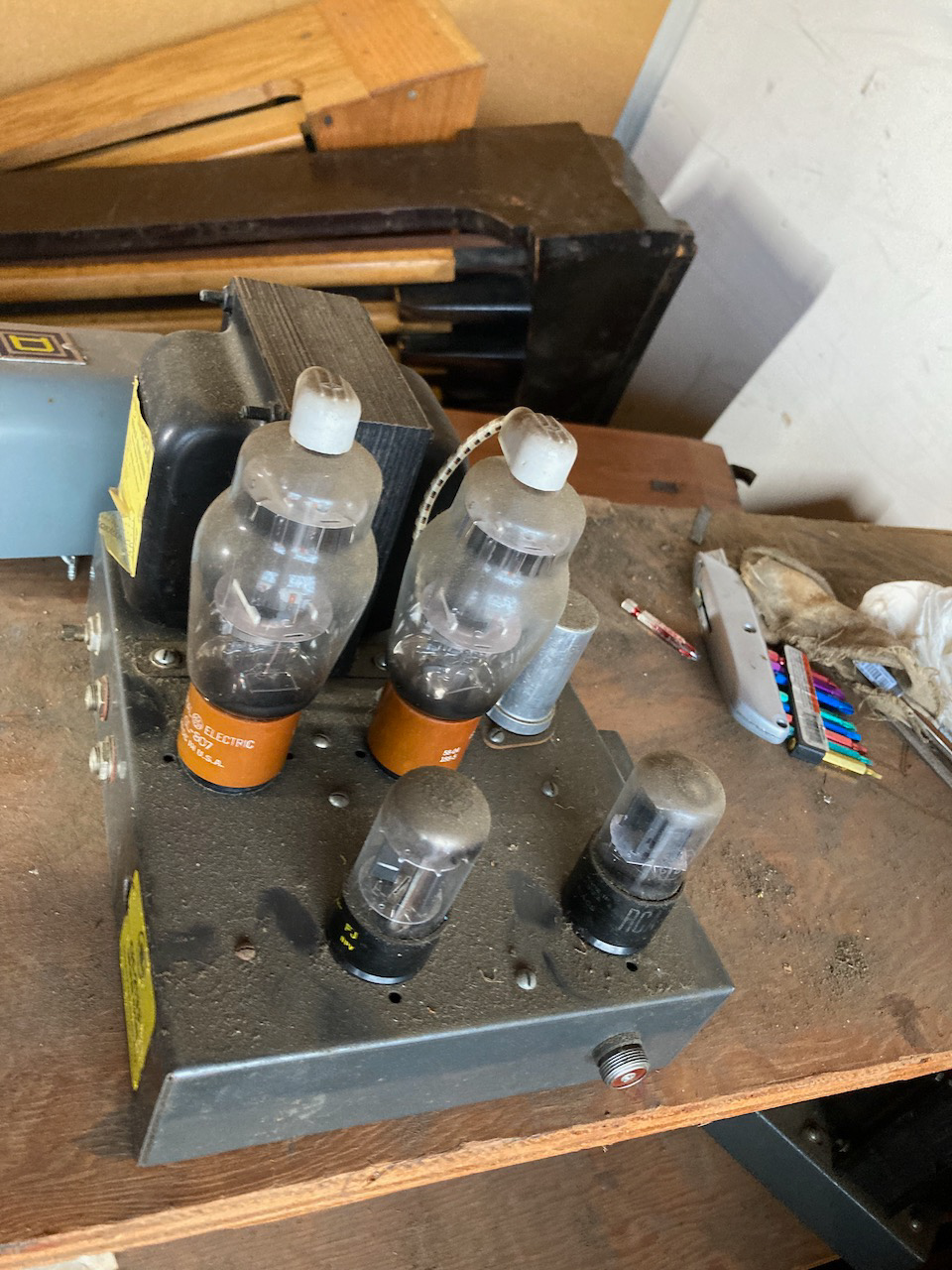
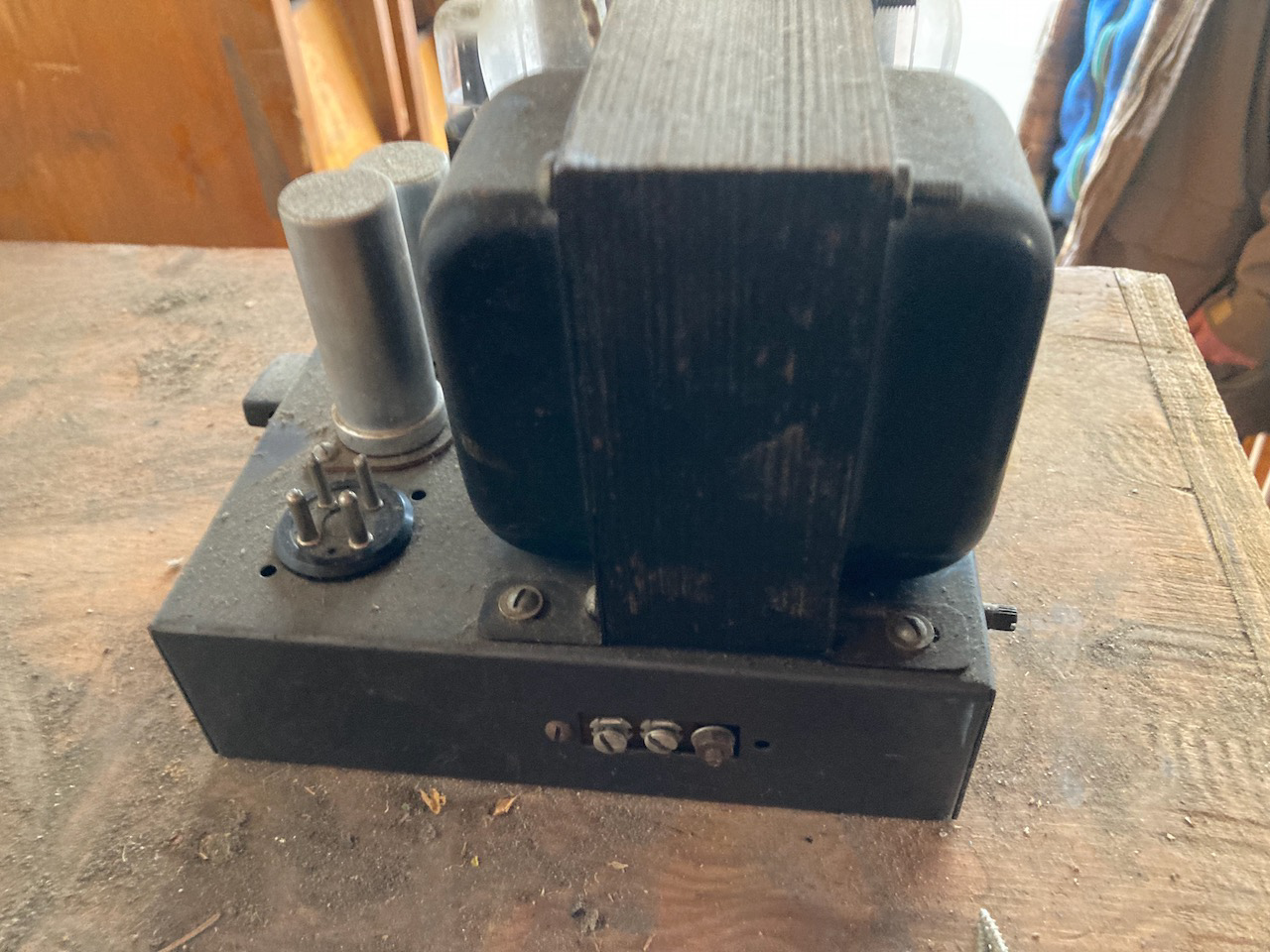
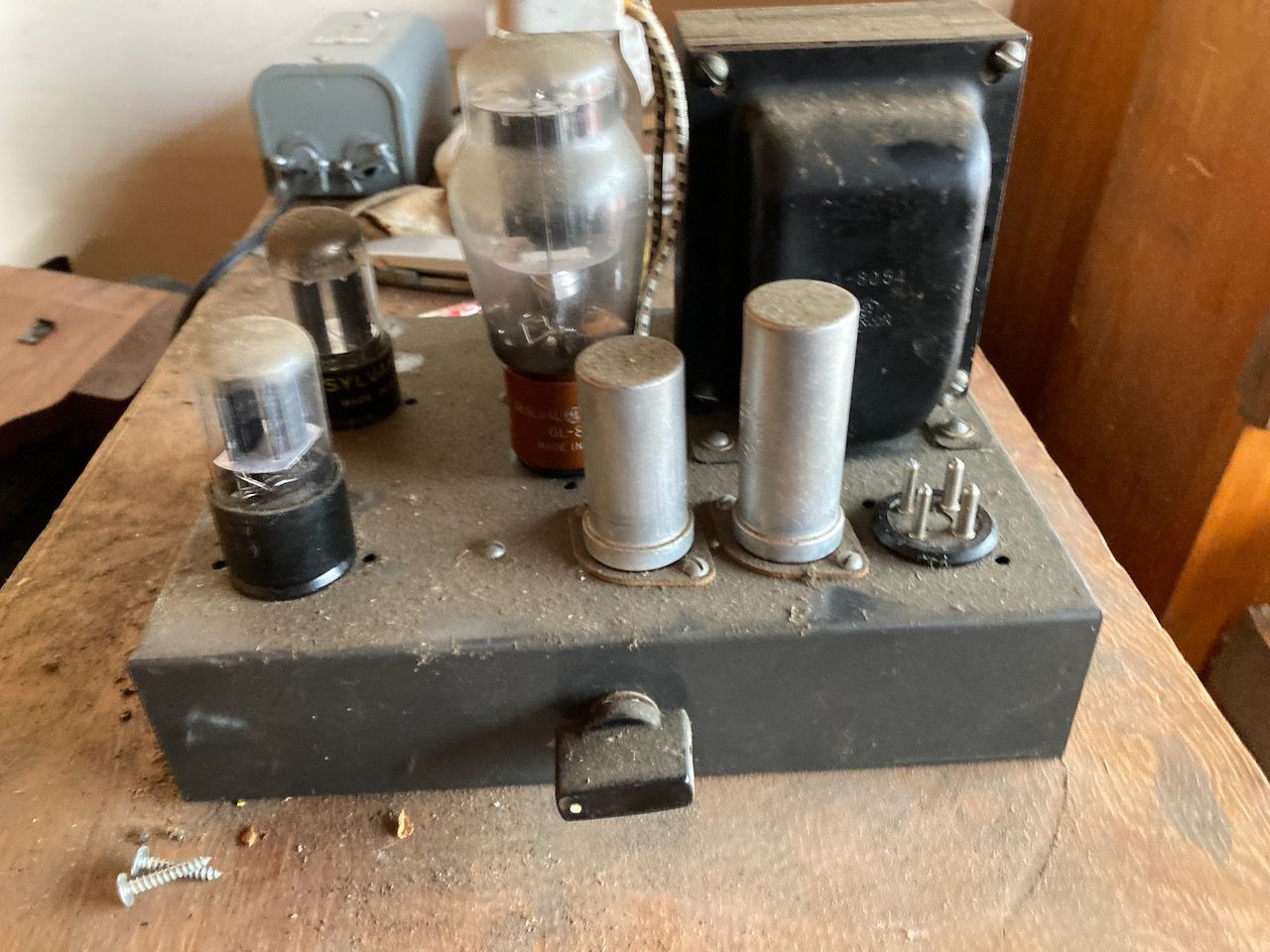
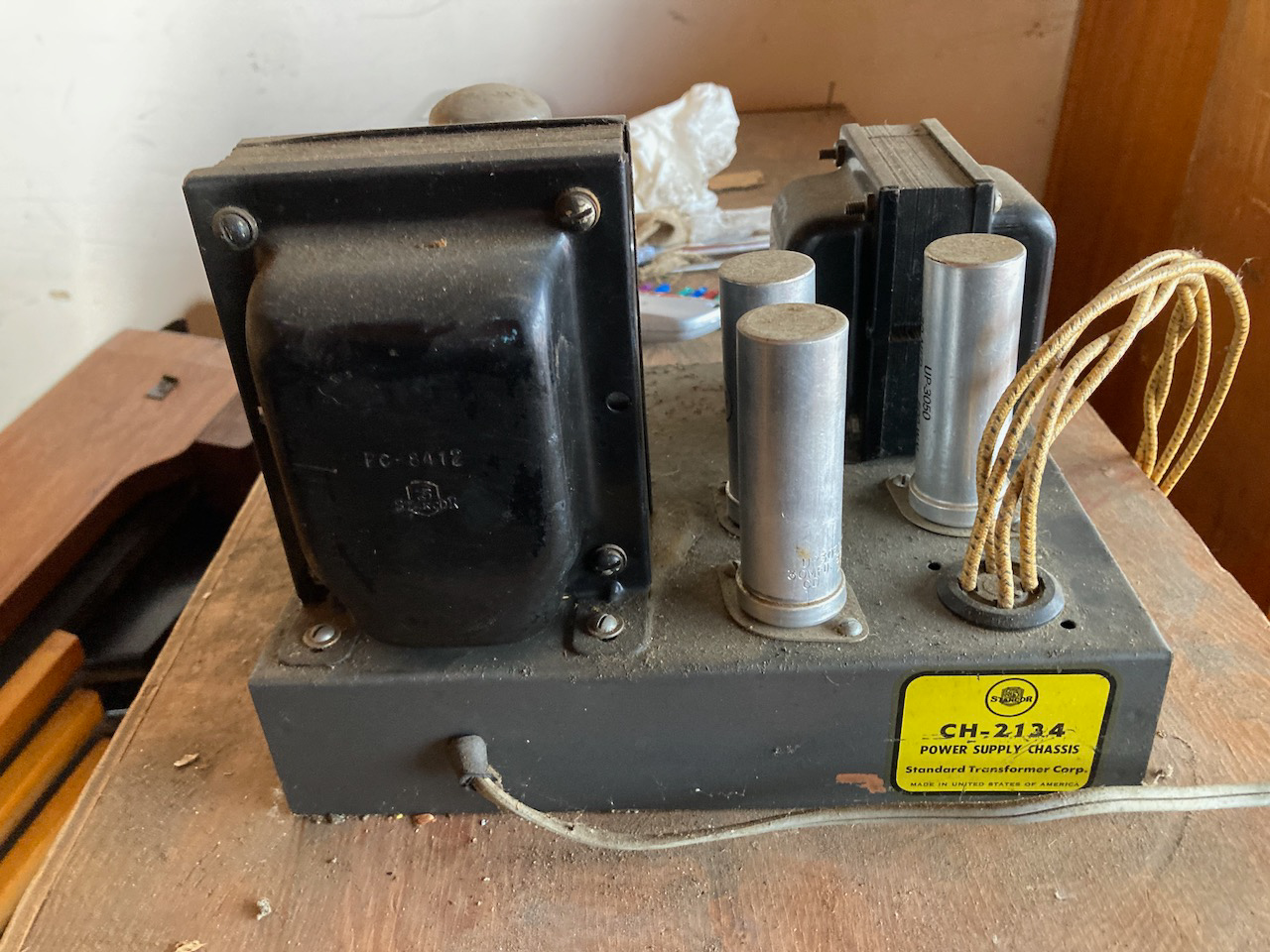
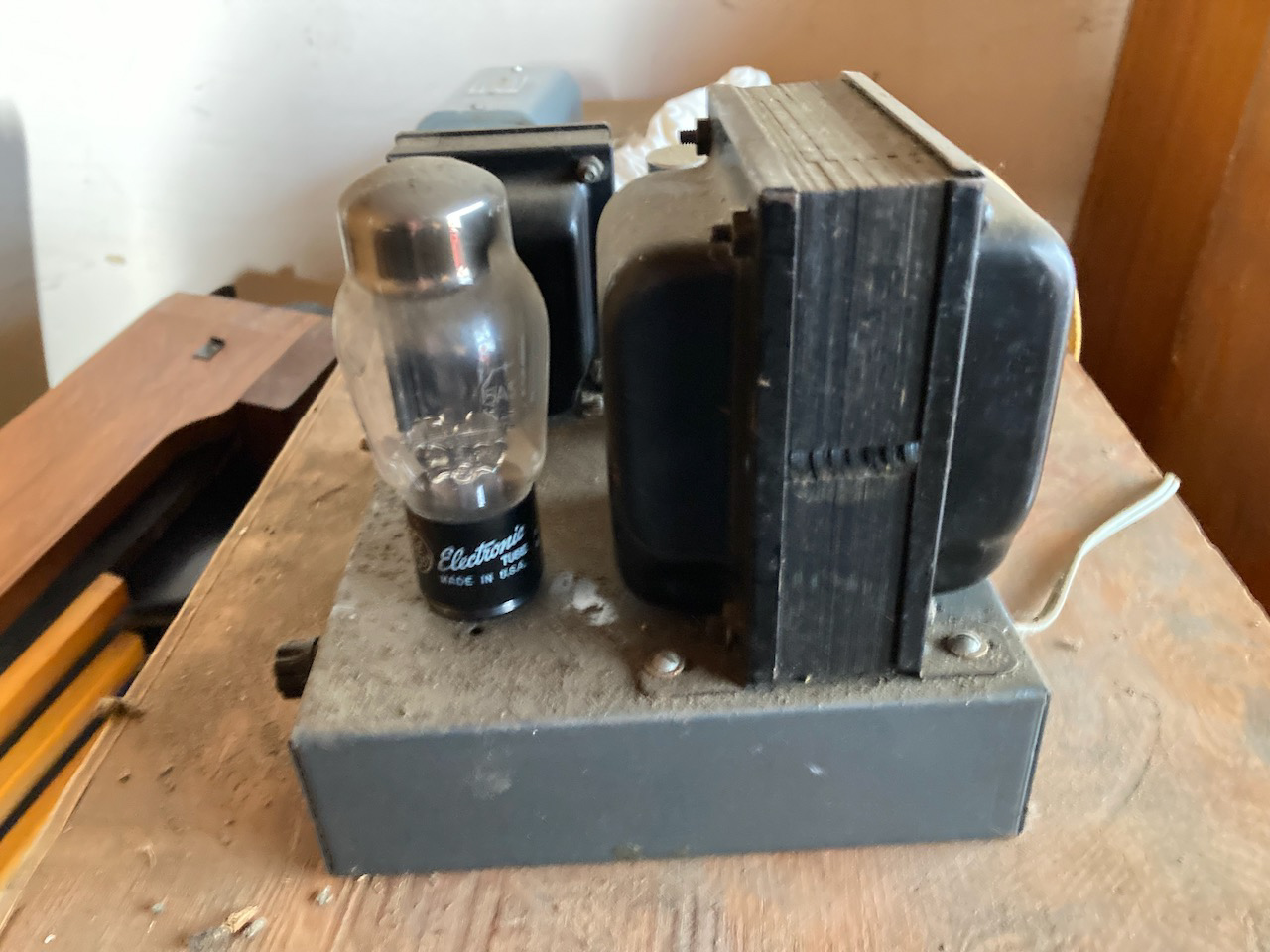
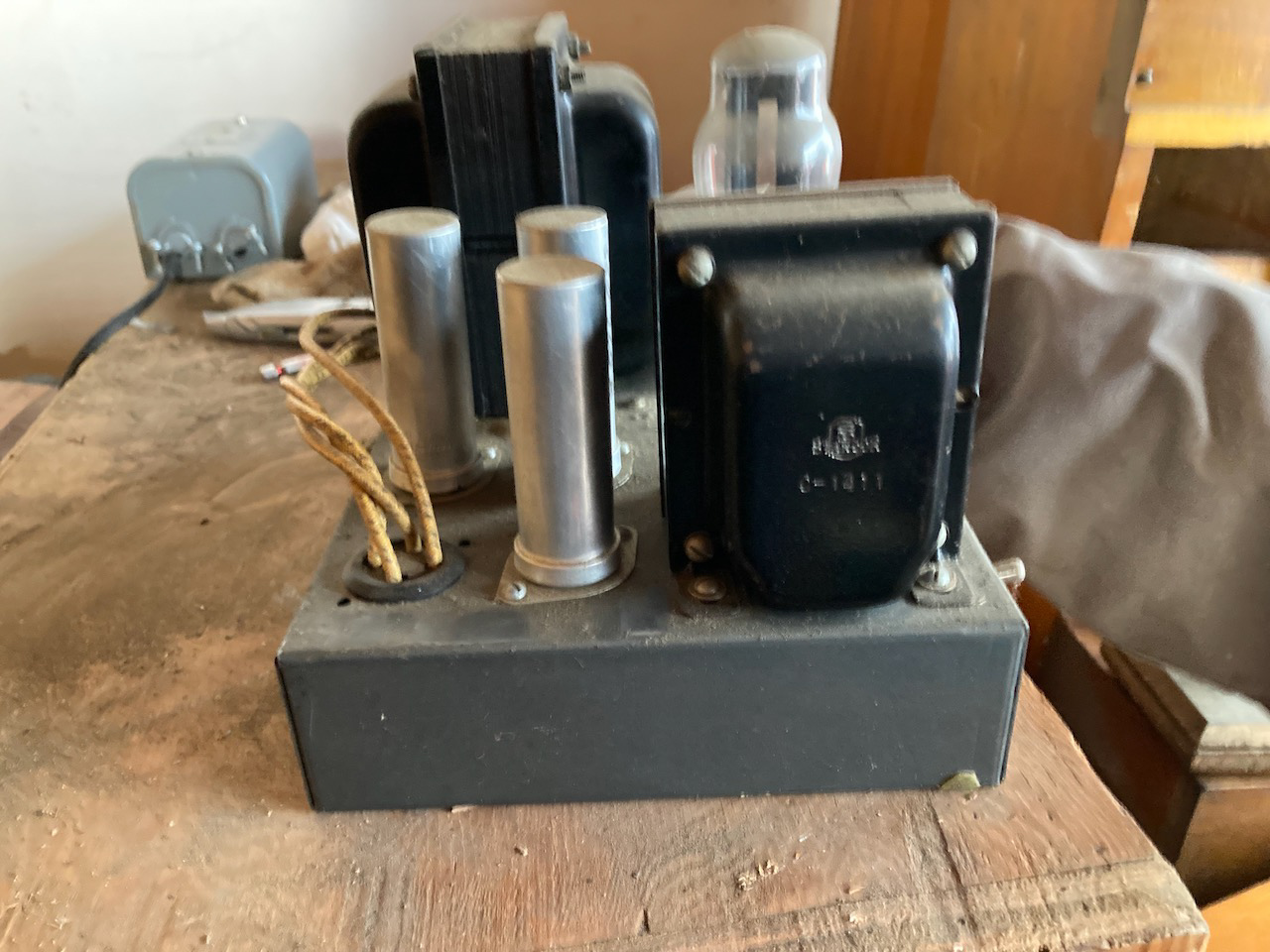
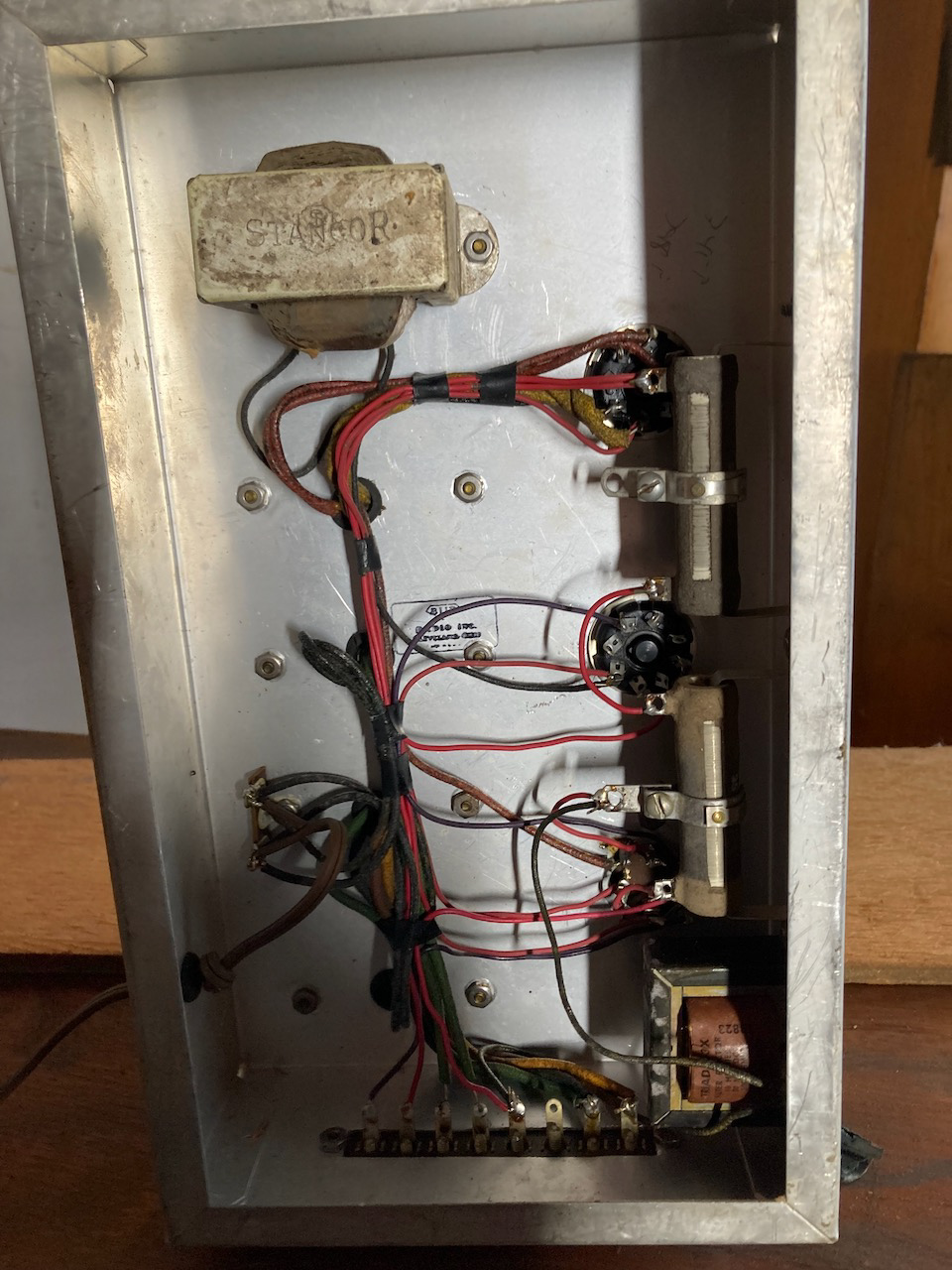
Stancor (Standard Transformer Corp) Model CH-2133 Amplifier and CH-2134 Power Supply
Status: Stolen – If you see this turn up somewhere, please contact us.
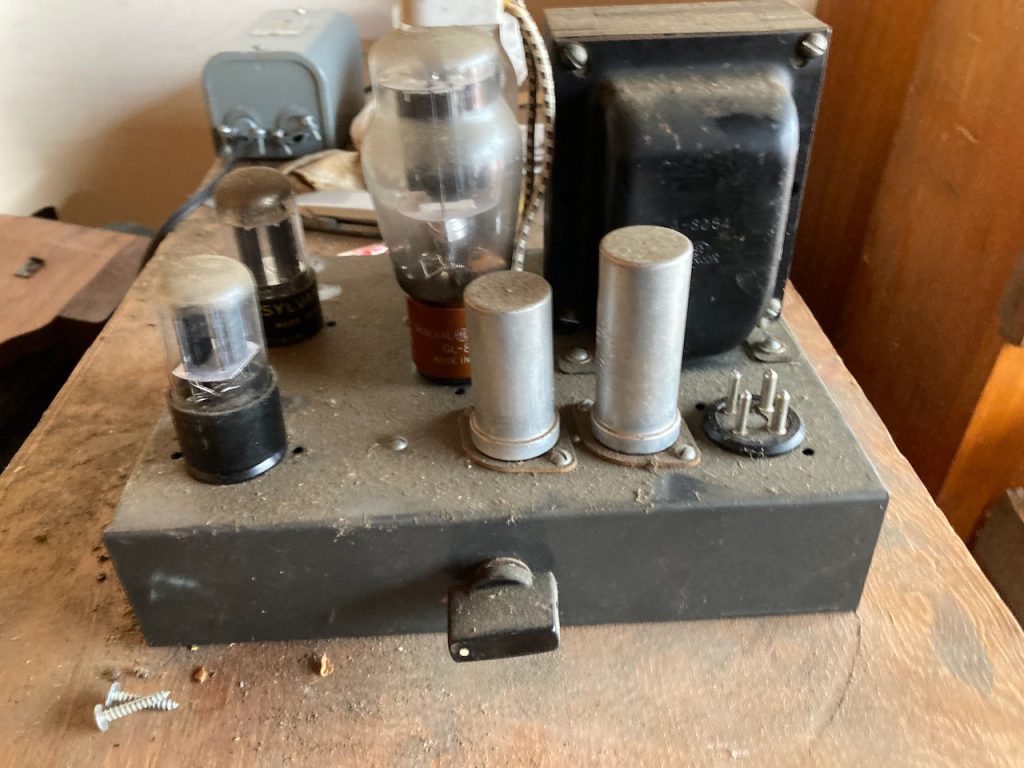
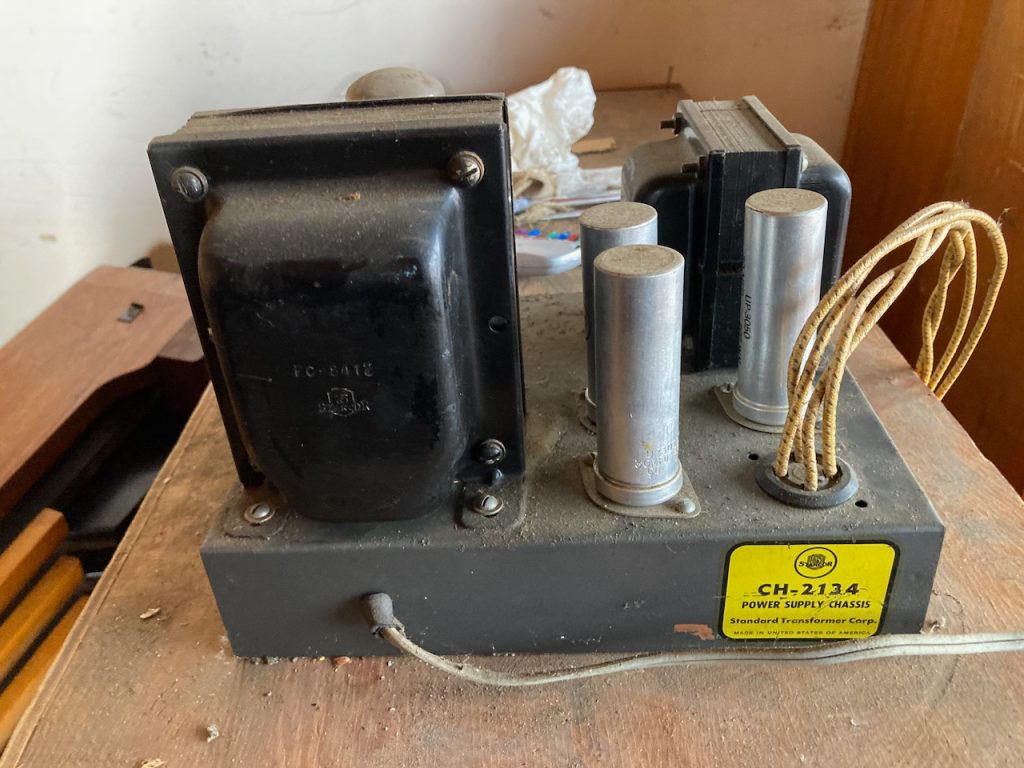
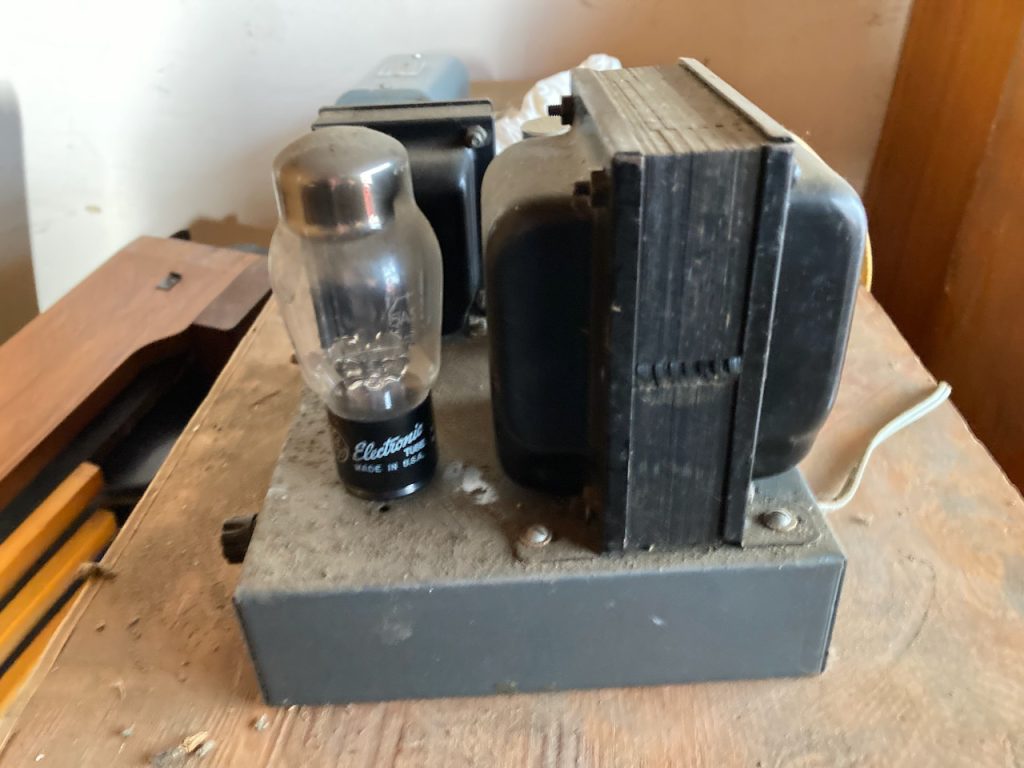
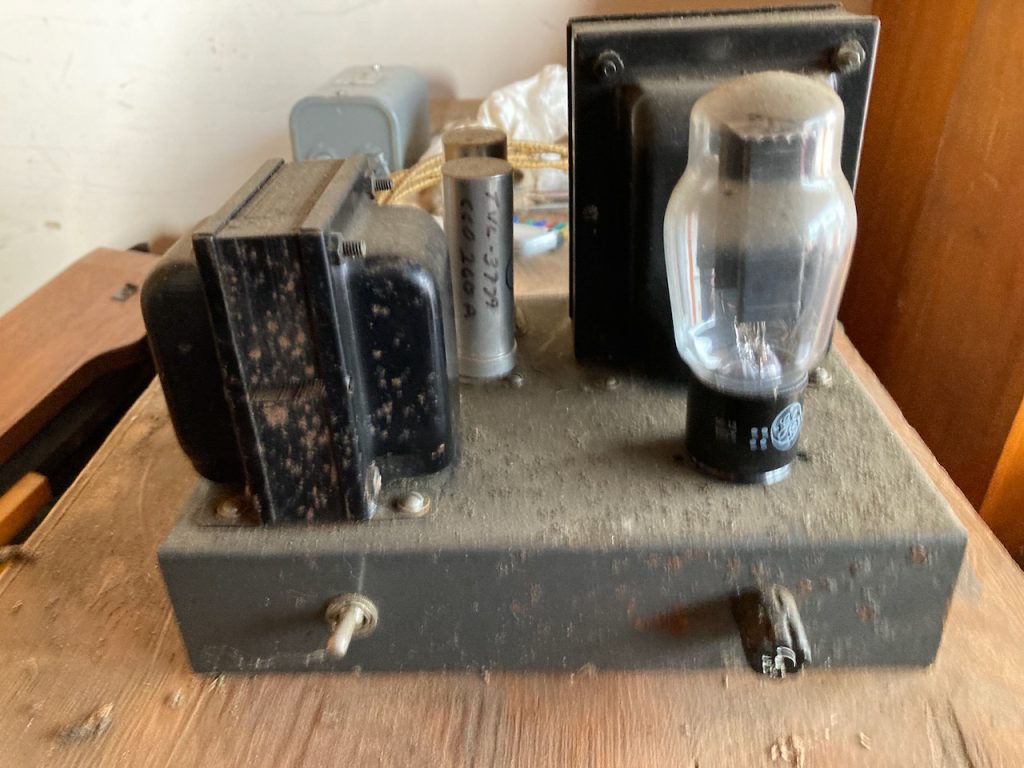

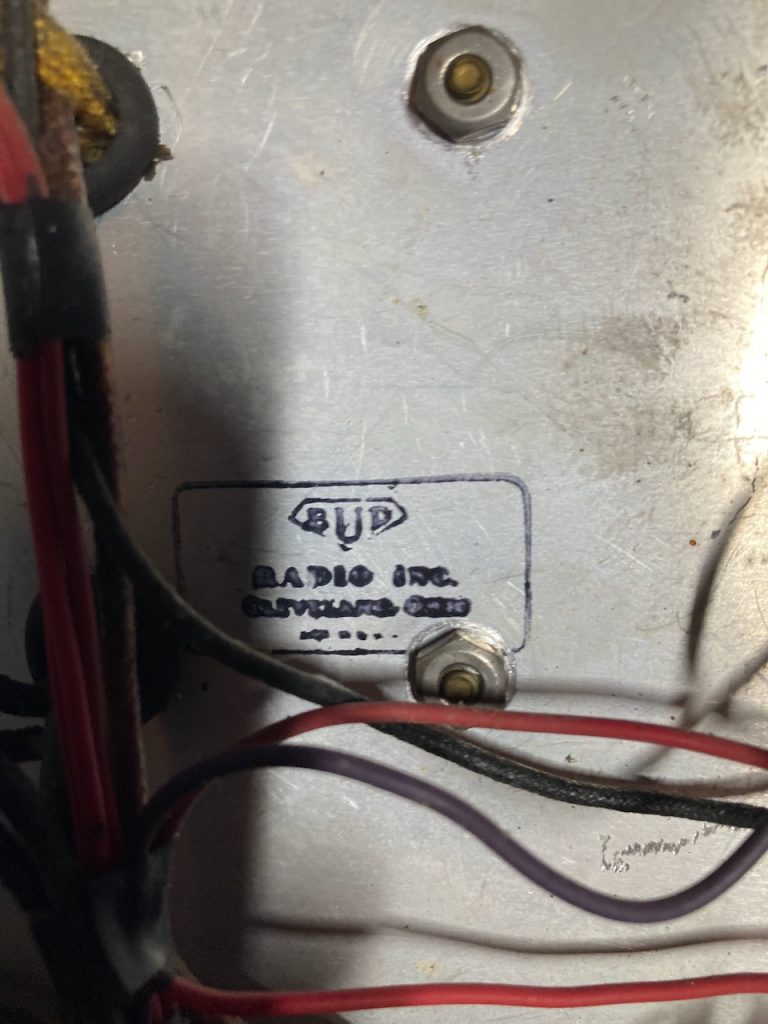
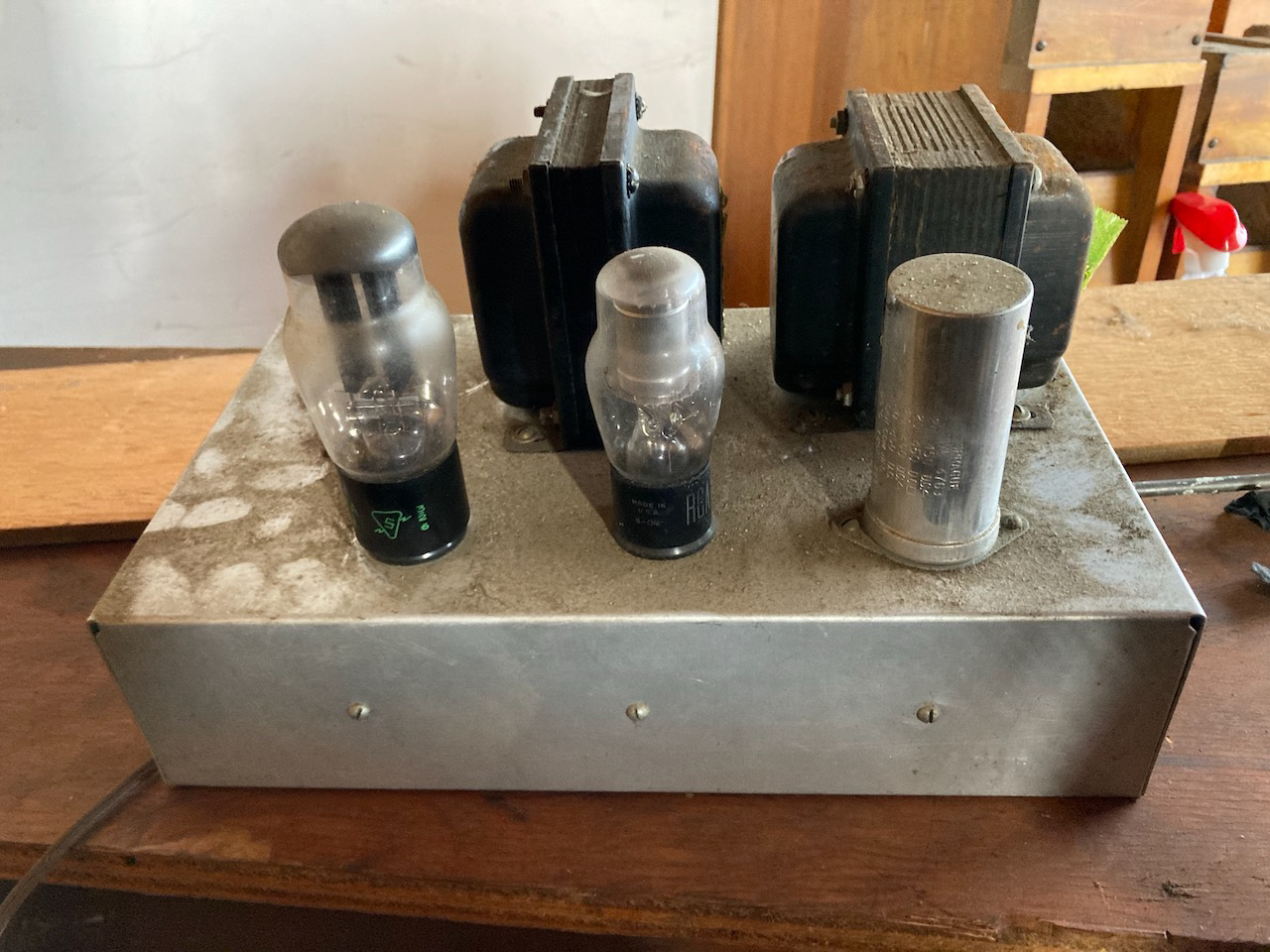
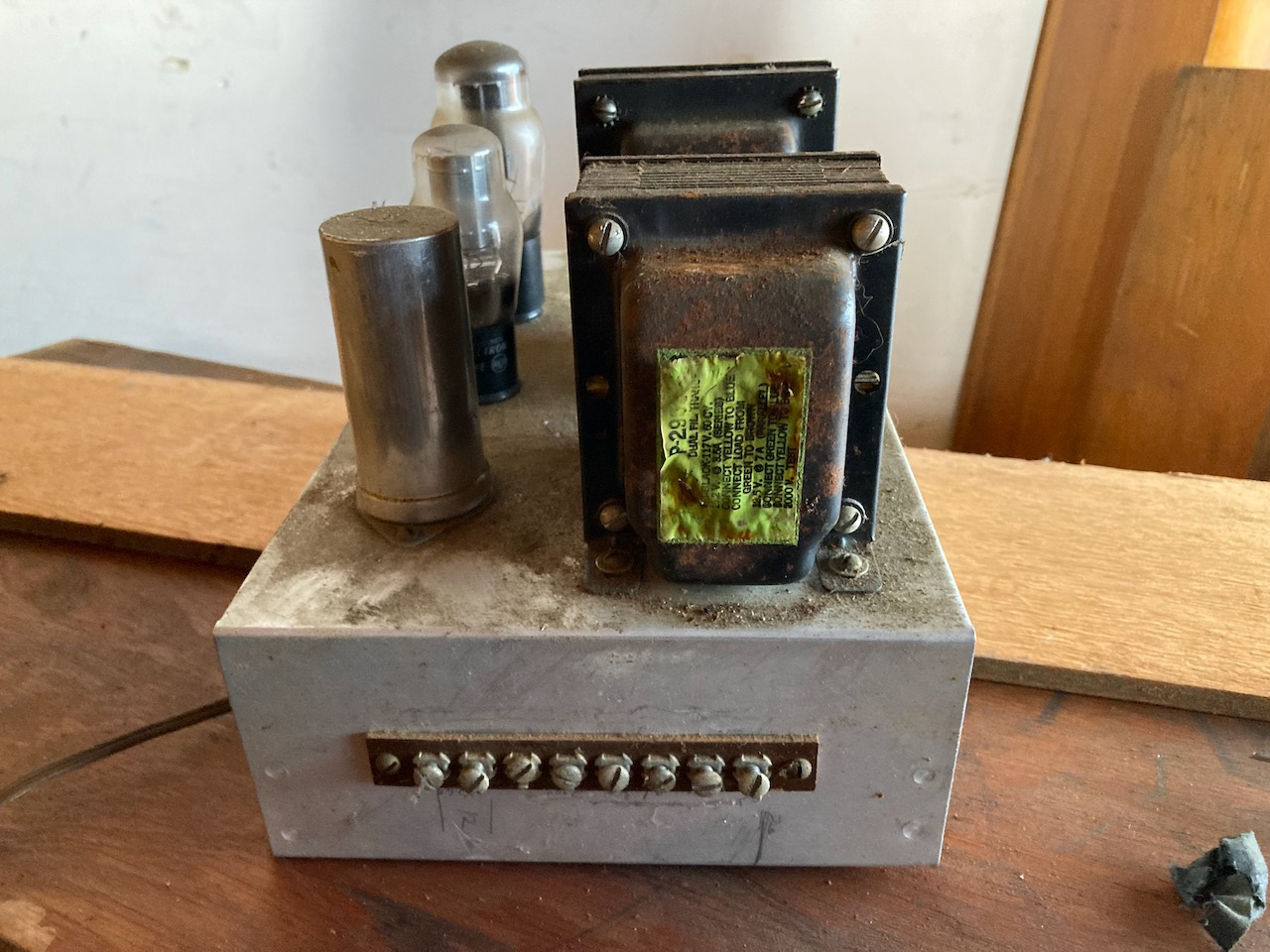
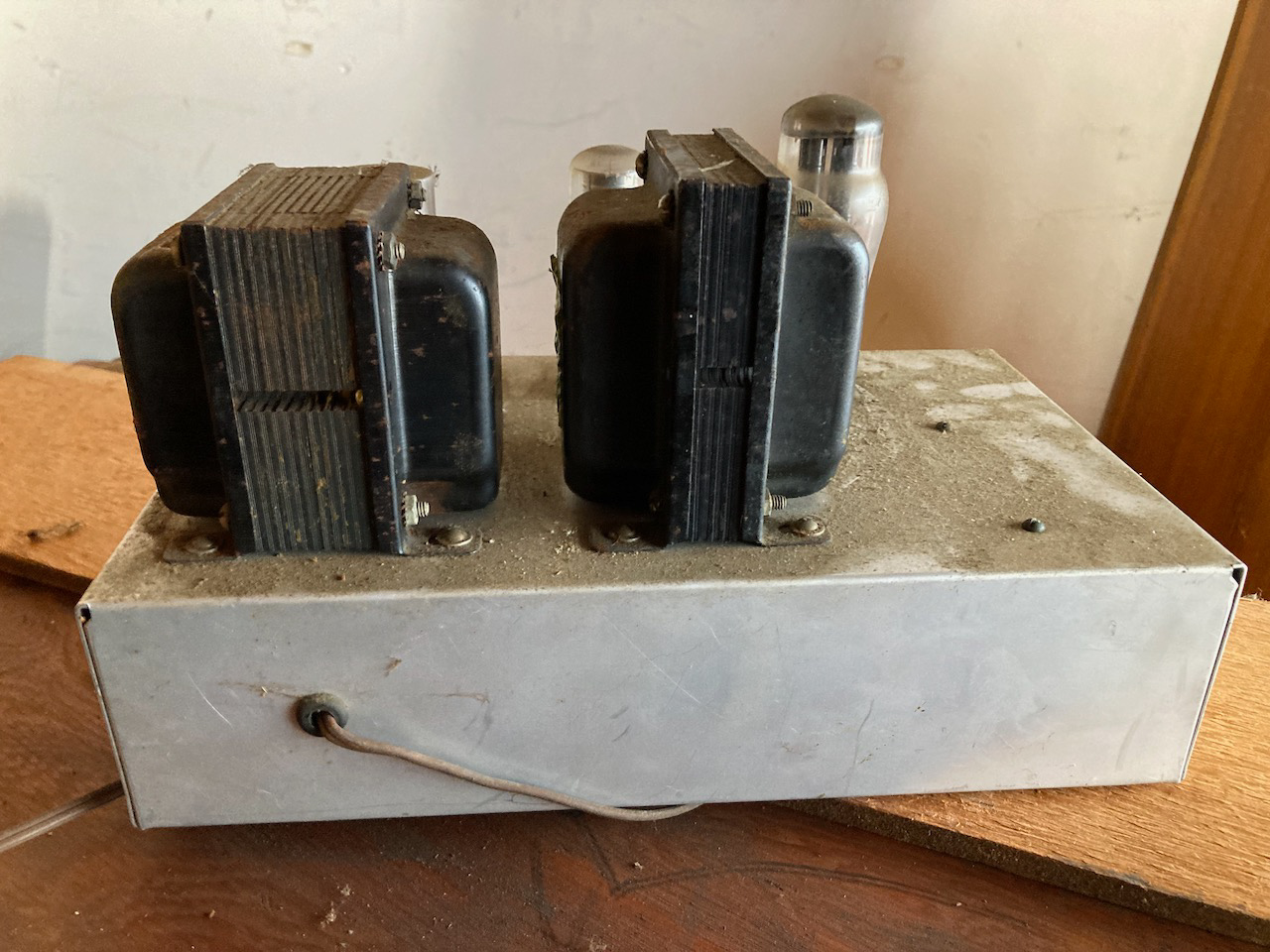
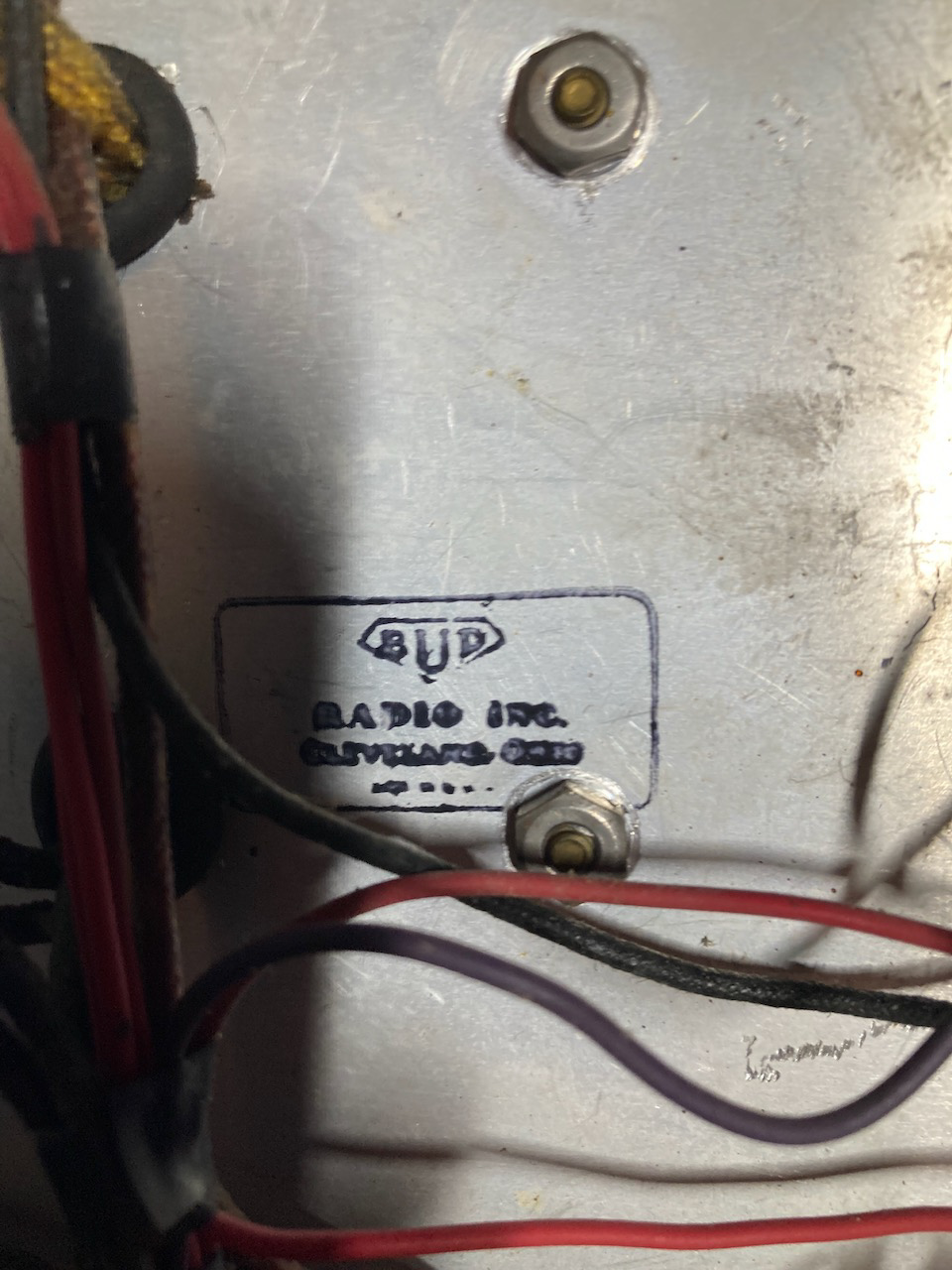
Amplifier (Possibly) in “Bud Radio” Chassis
Status: Stolen – If you see this turn up somewhere, please contact us.
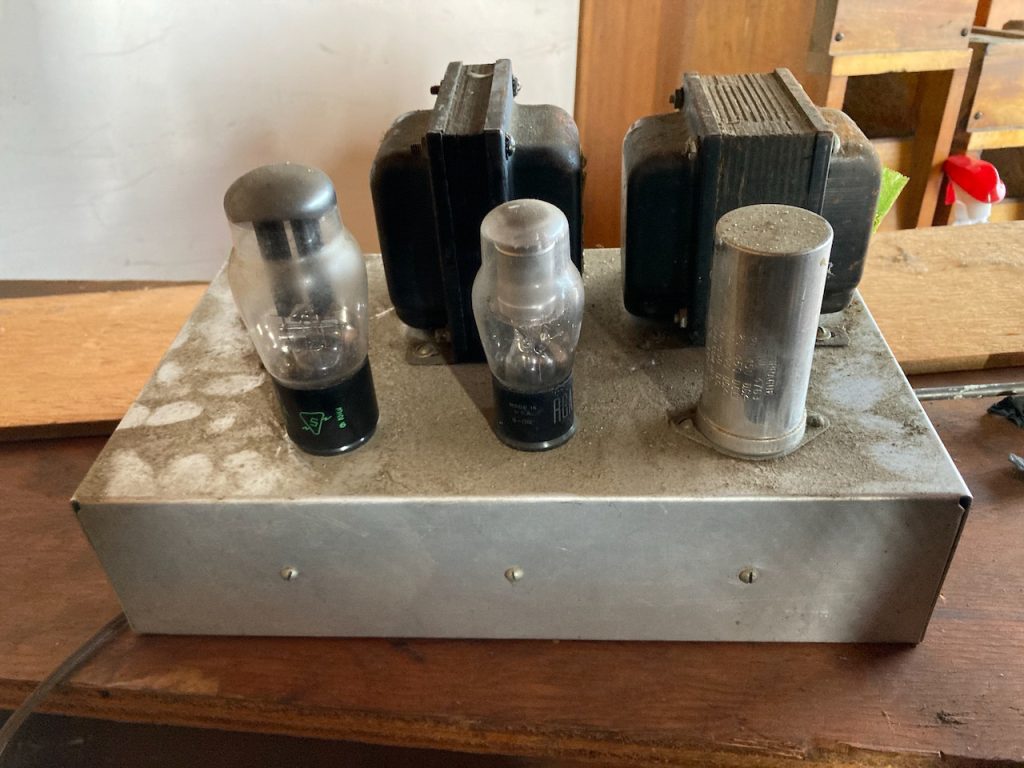
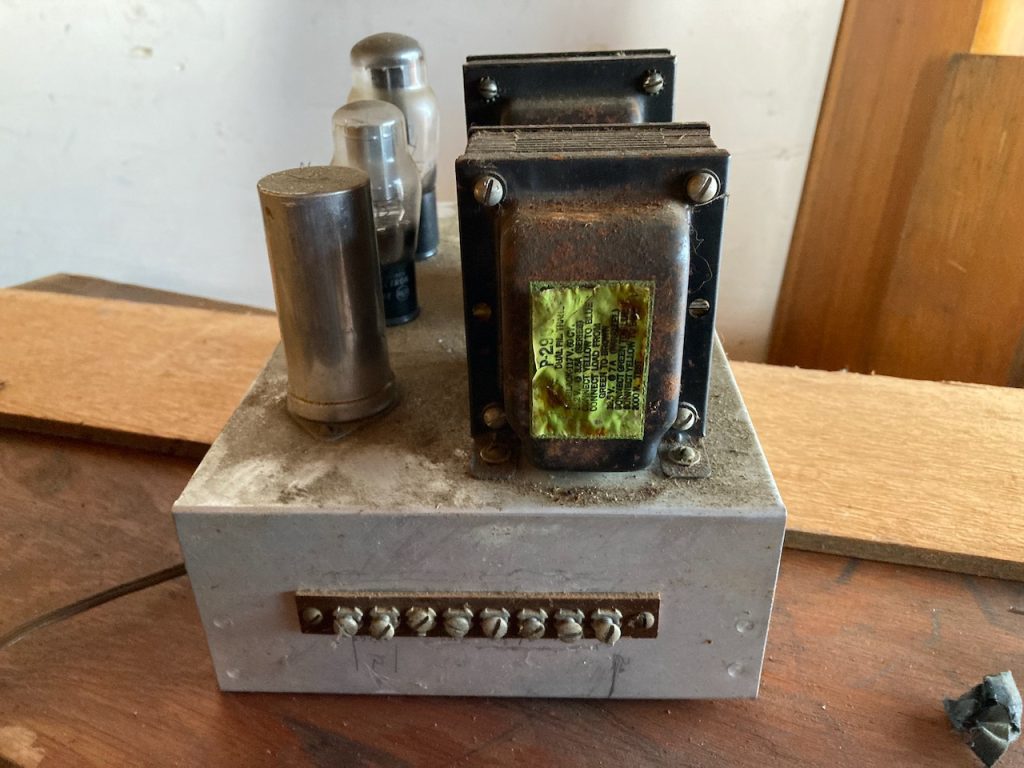
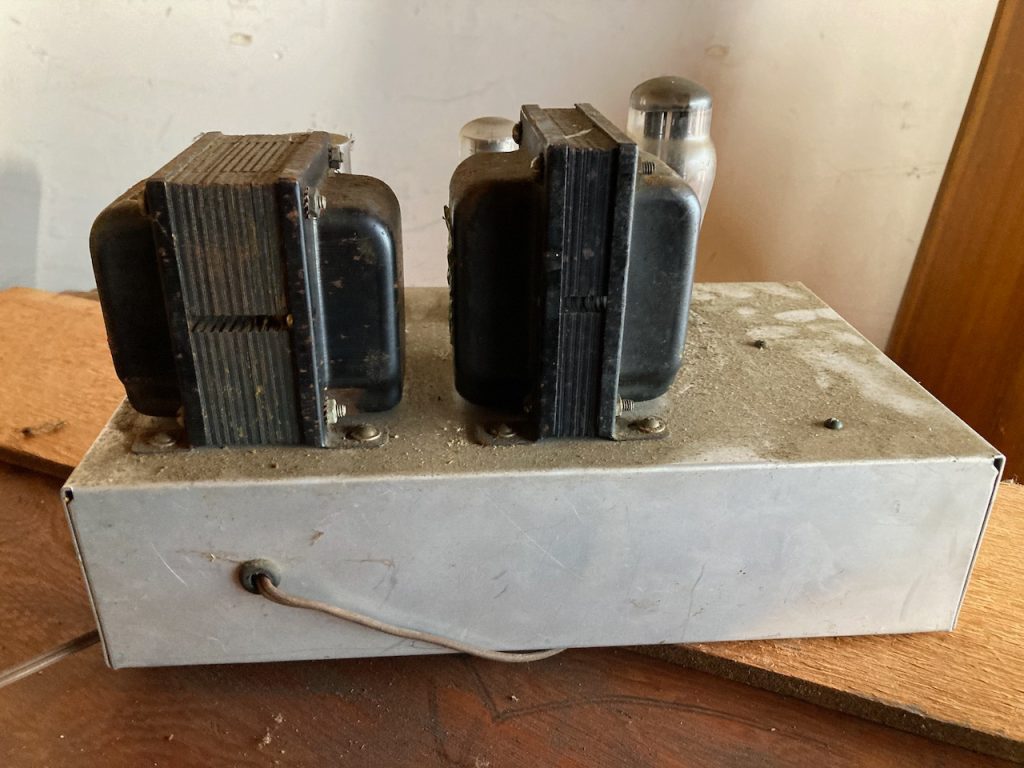
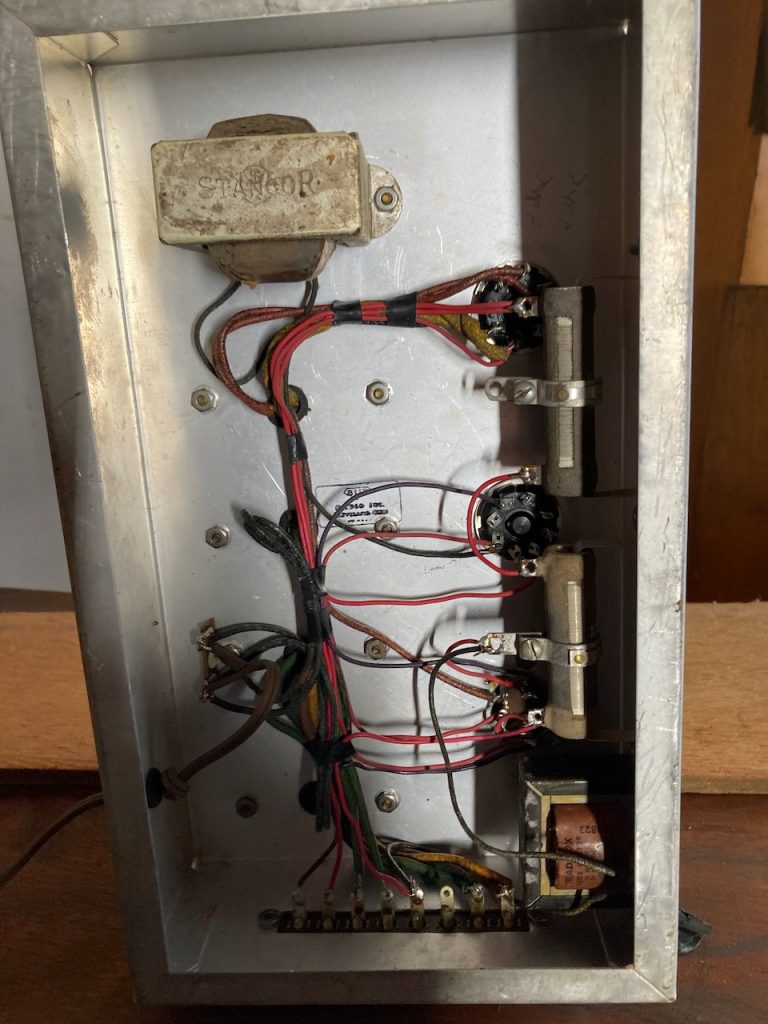
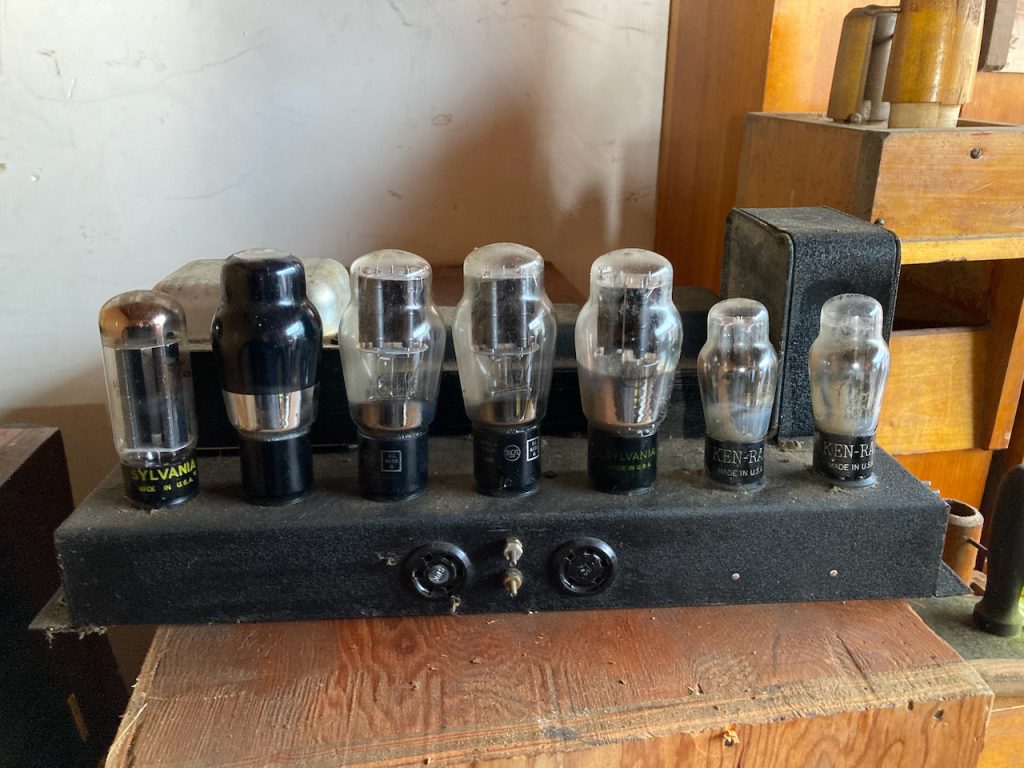
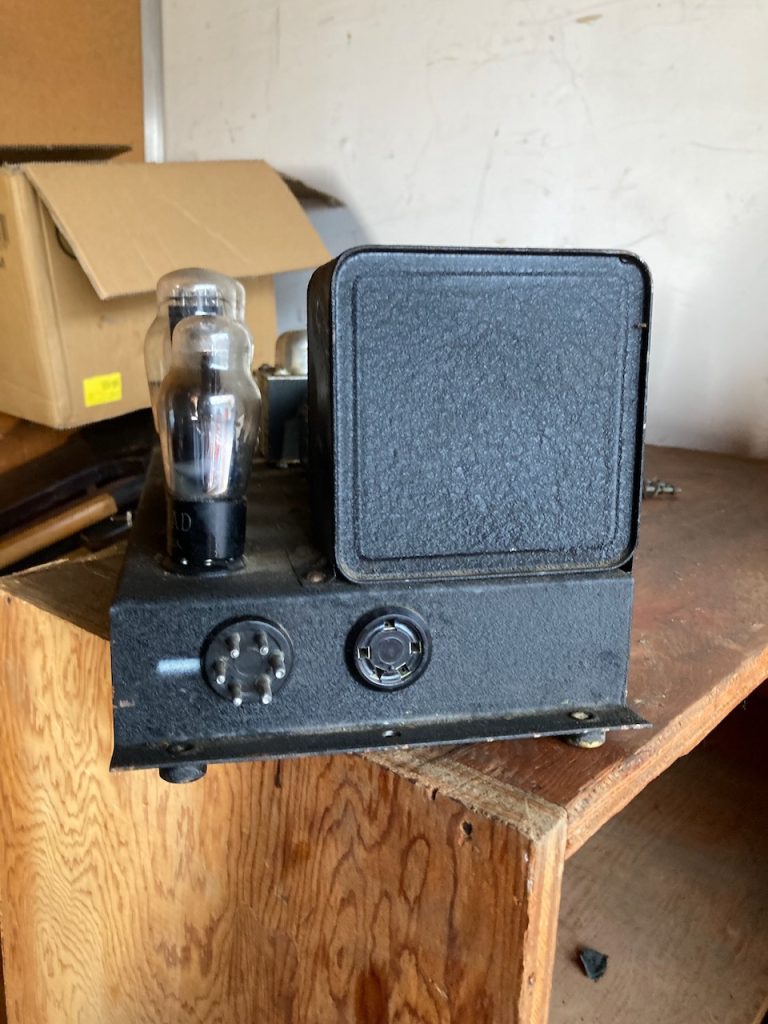
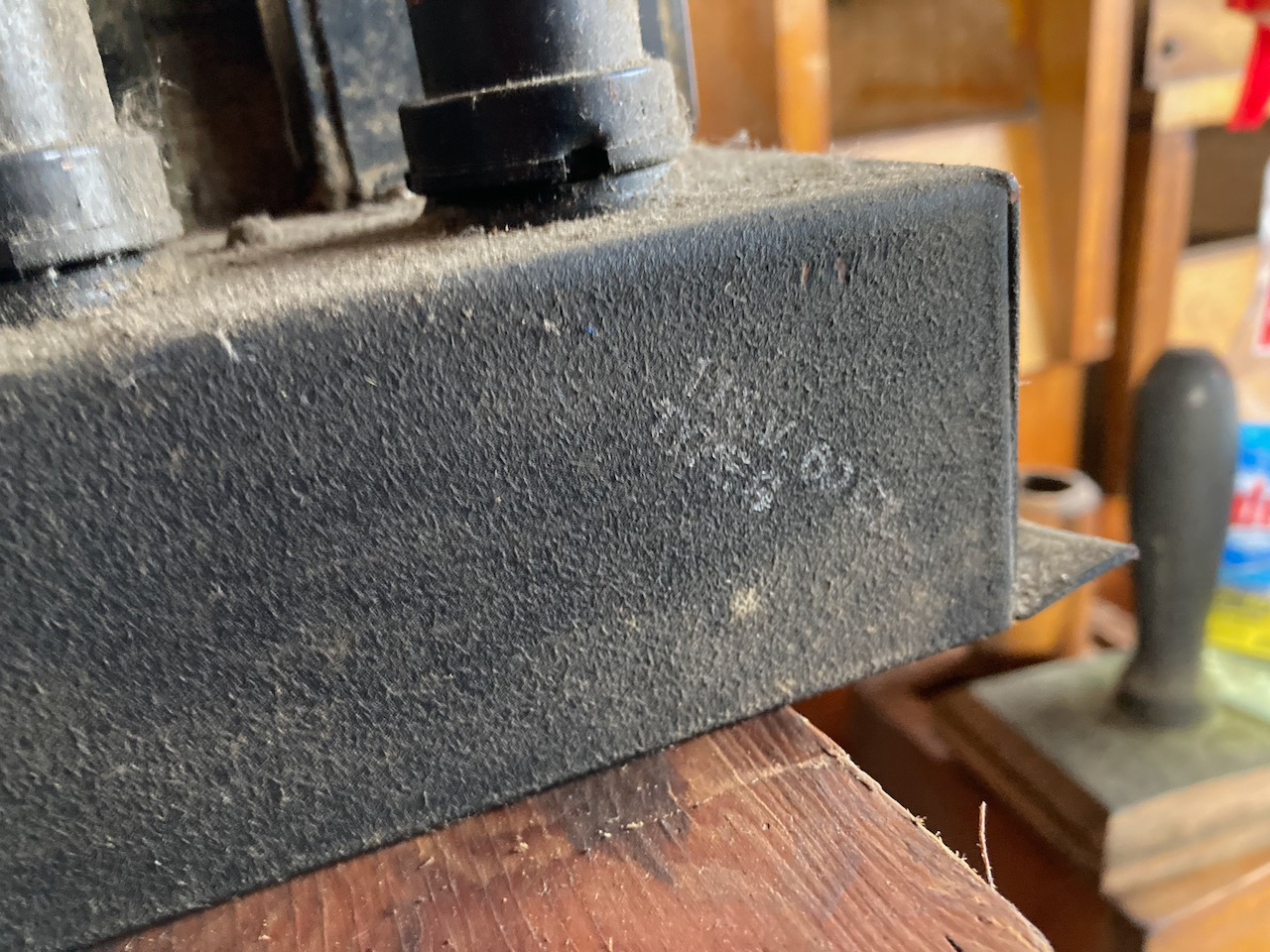
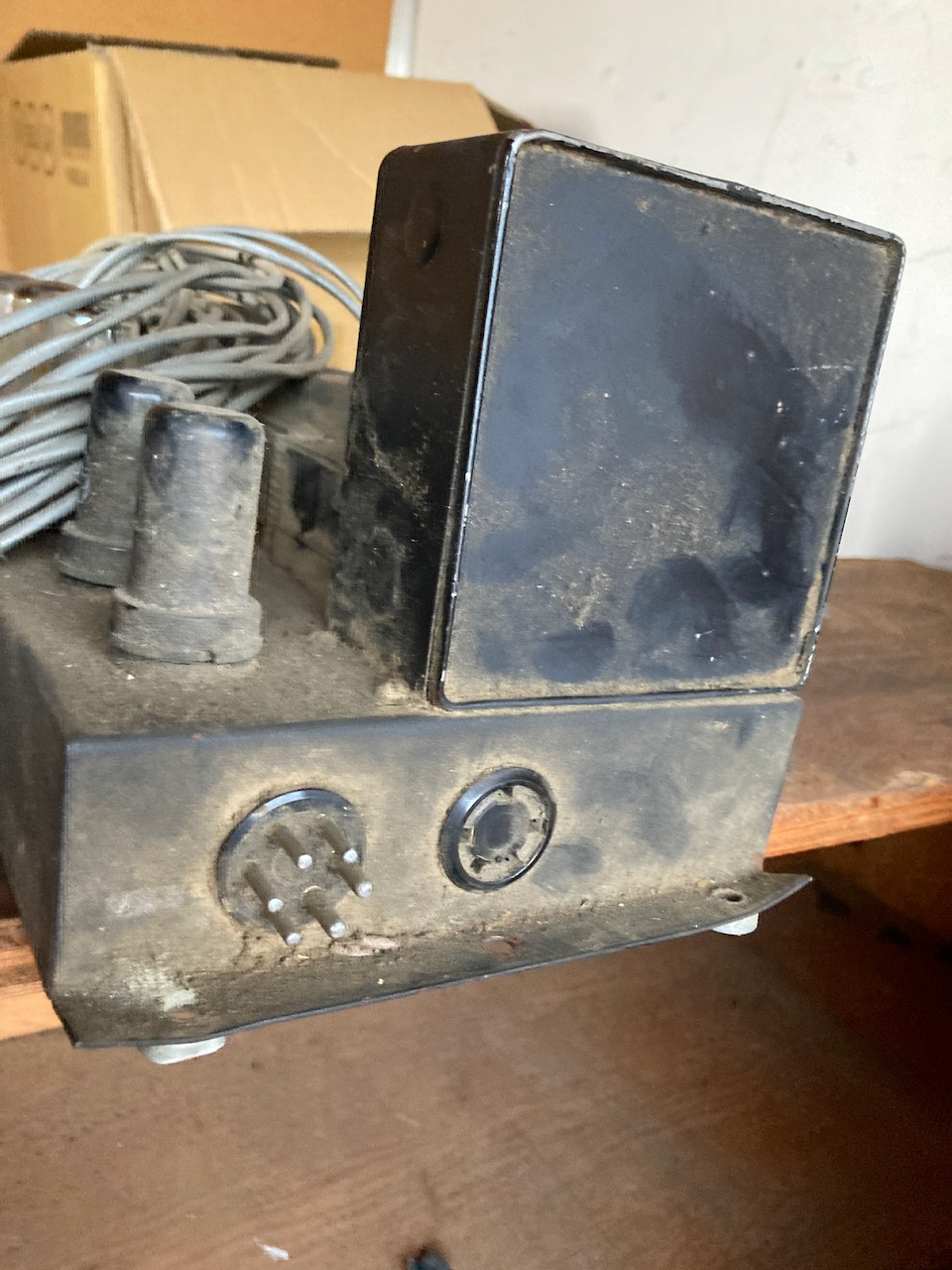
Non-branded Amp and Power Supply (probably) in Black Powder-coated Chassis
Status: Stolen – If you see this turn up somewhere, please contact us.
Update: These may be Hammond amps (especially given the connectors), and may belong with the G-40 tone cabinet (which goes with the Model G Hammond).
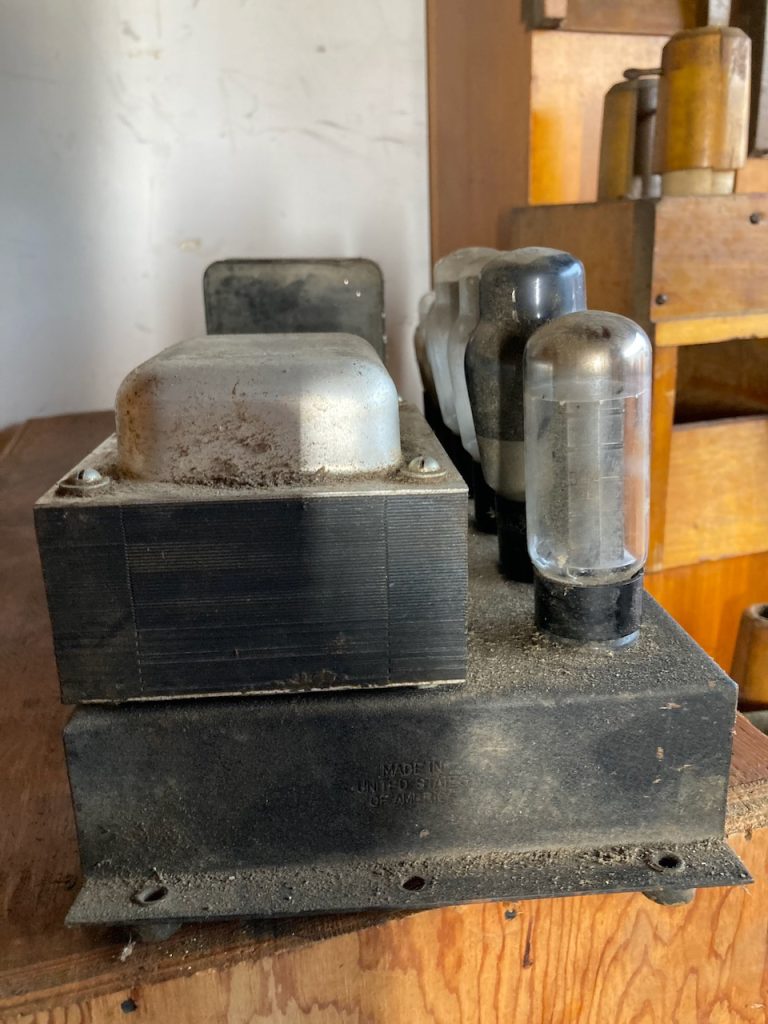
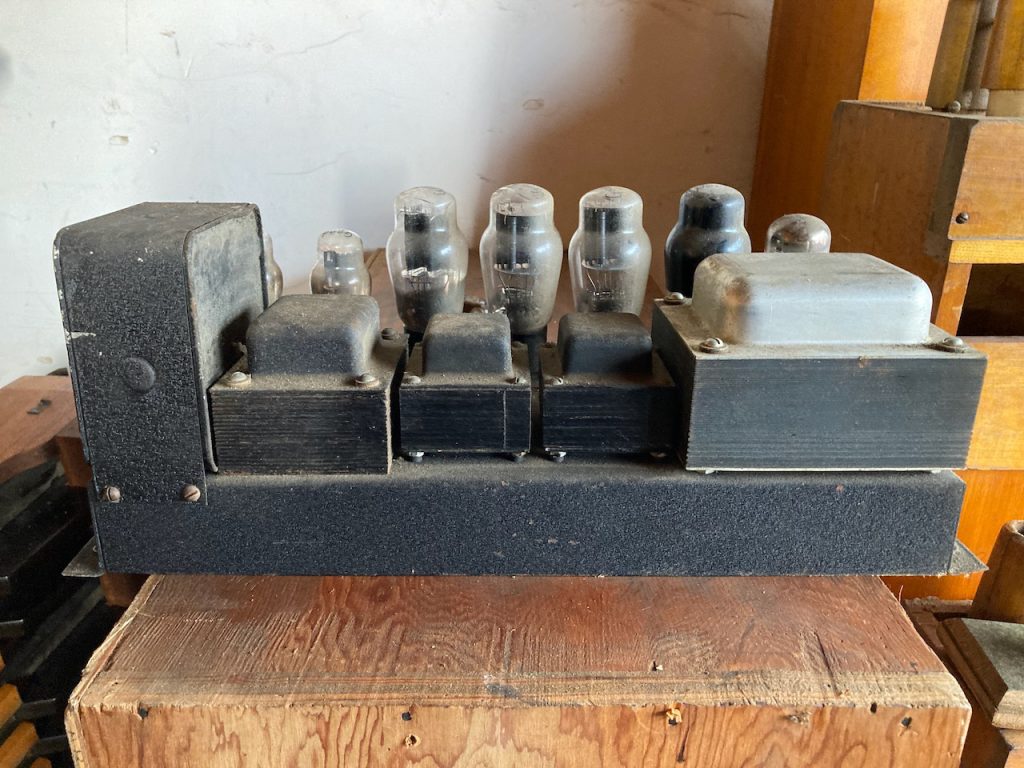
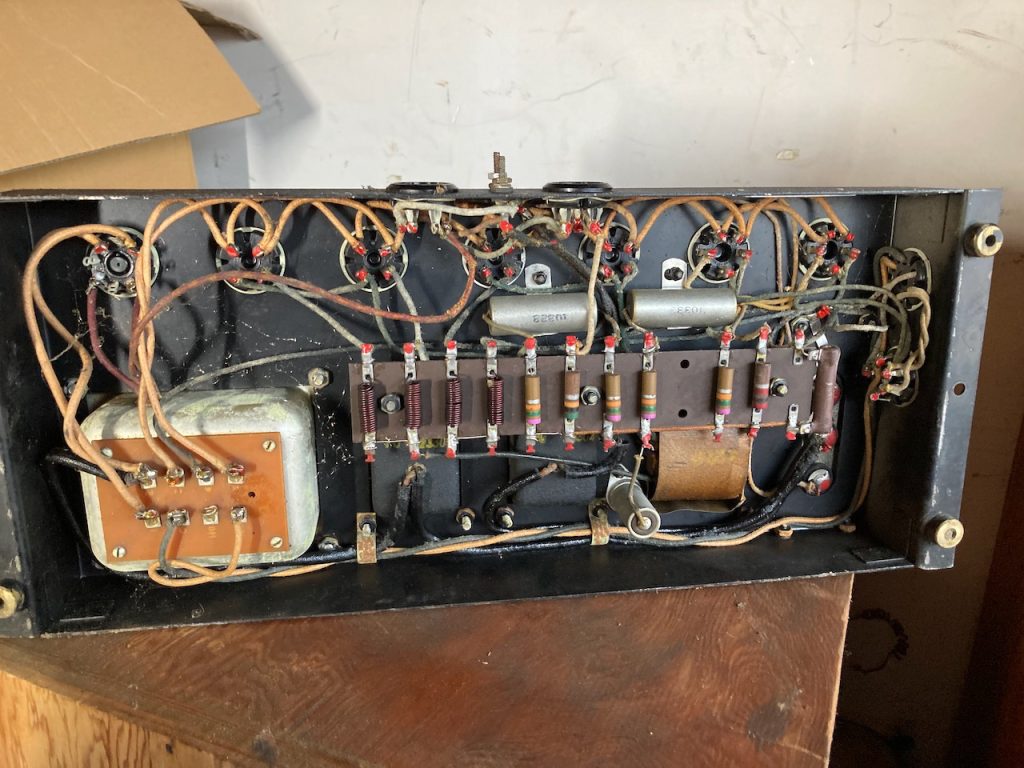
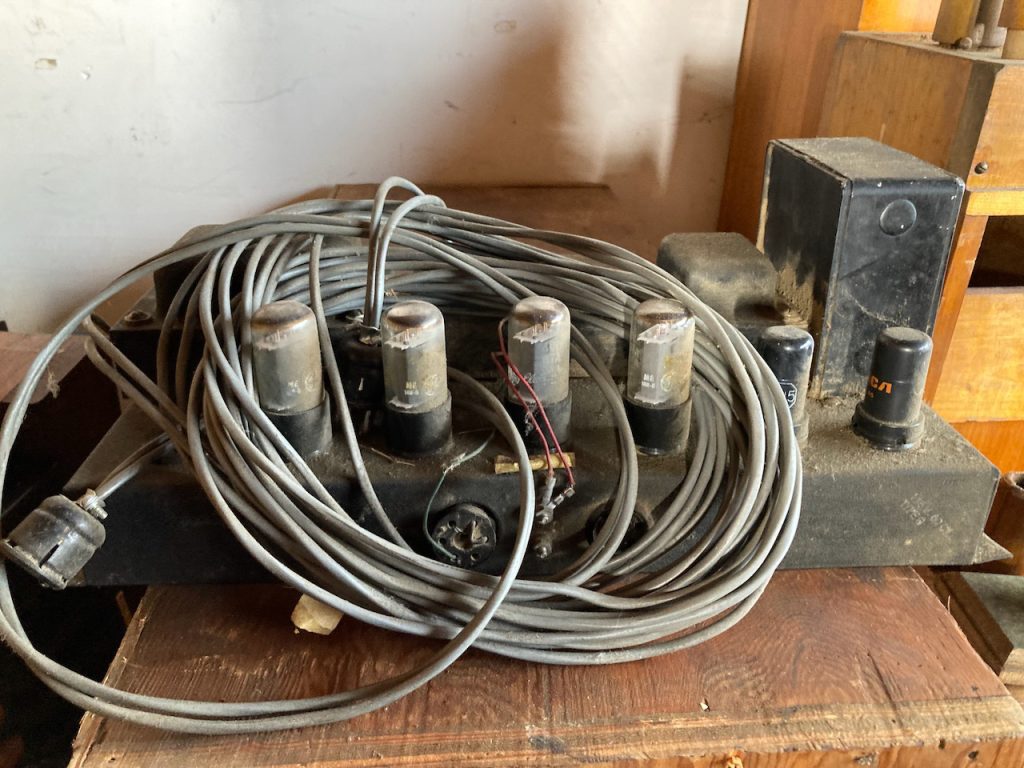
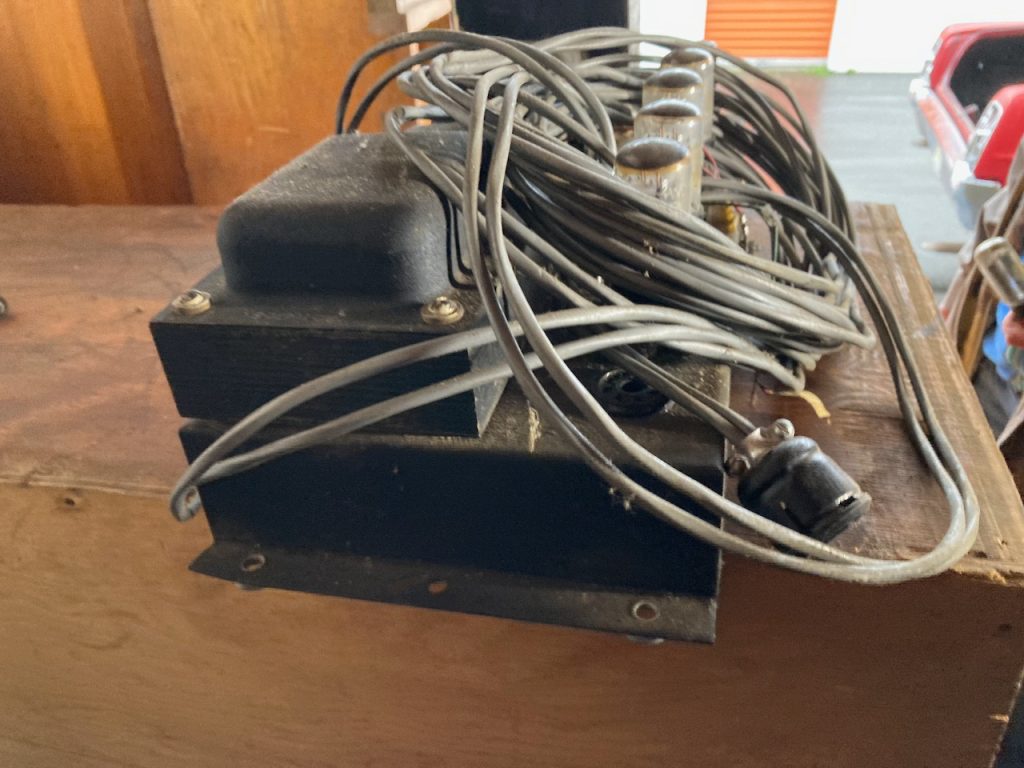
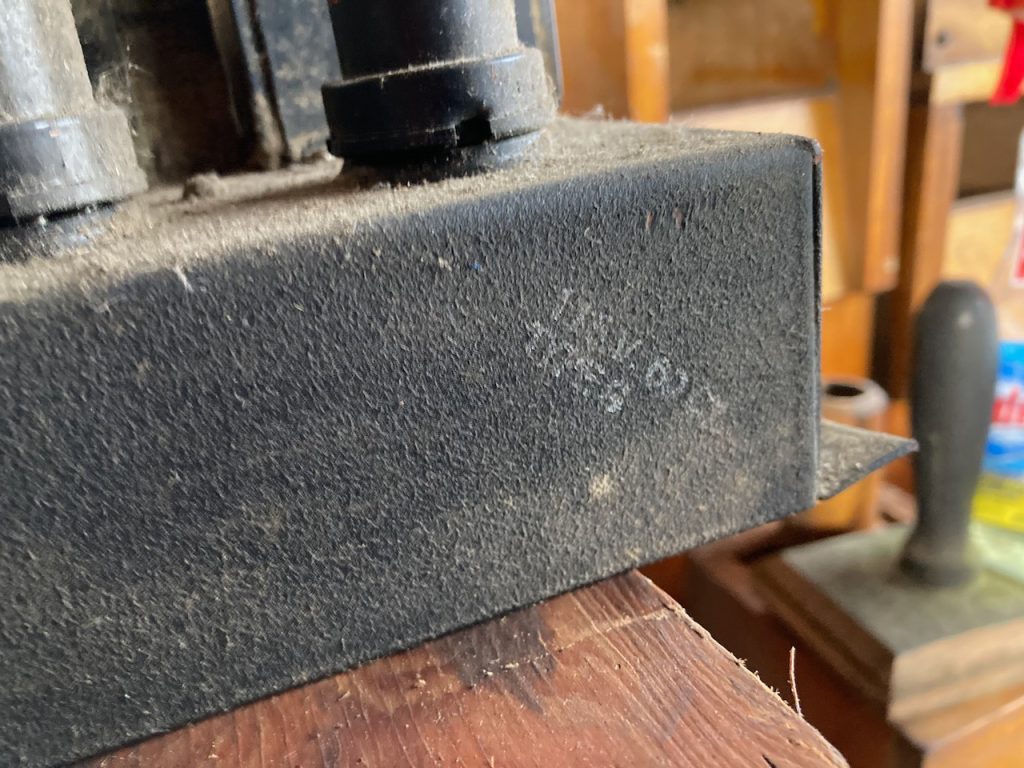
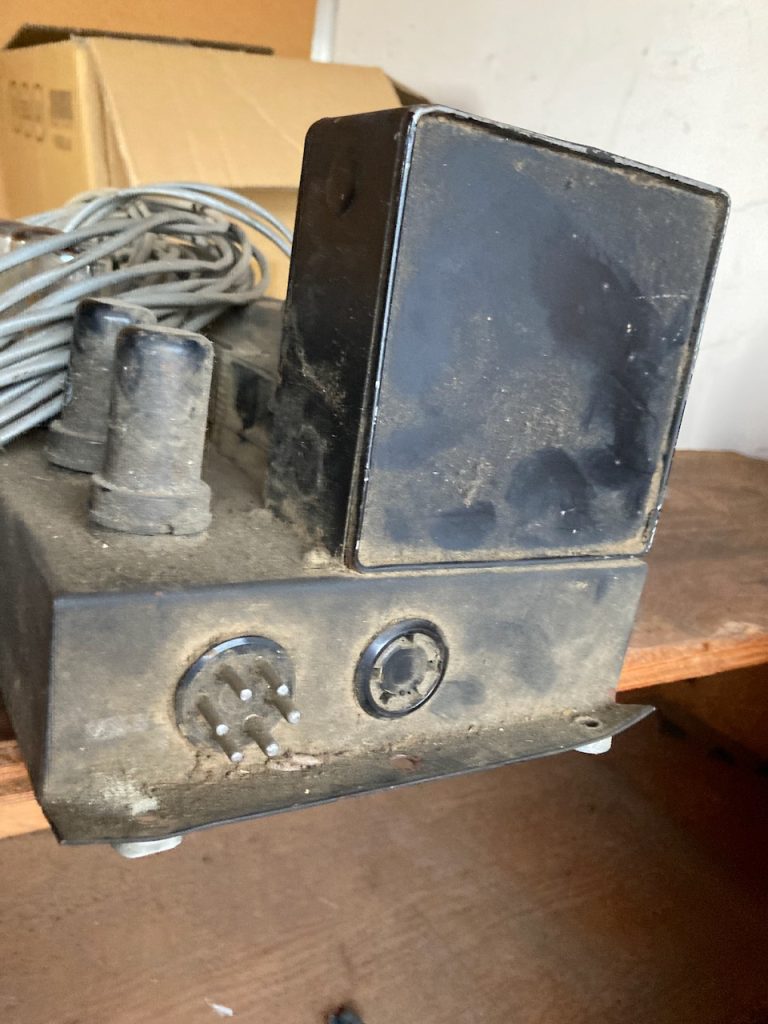
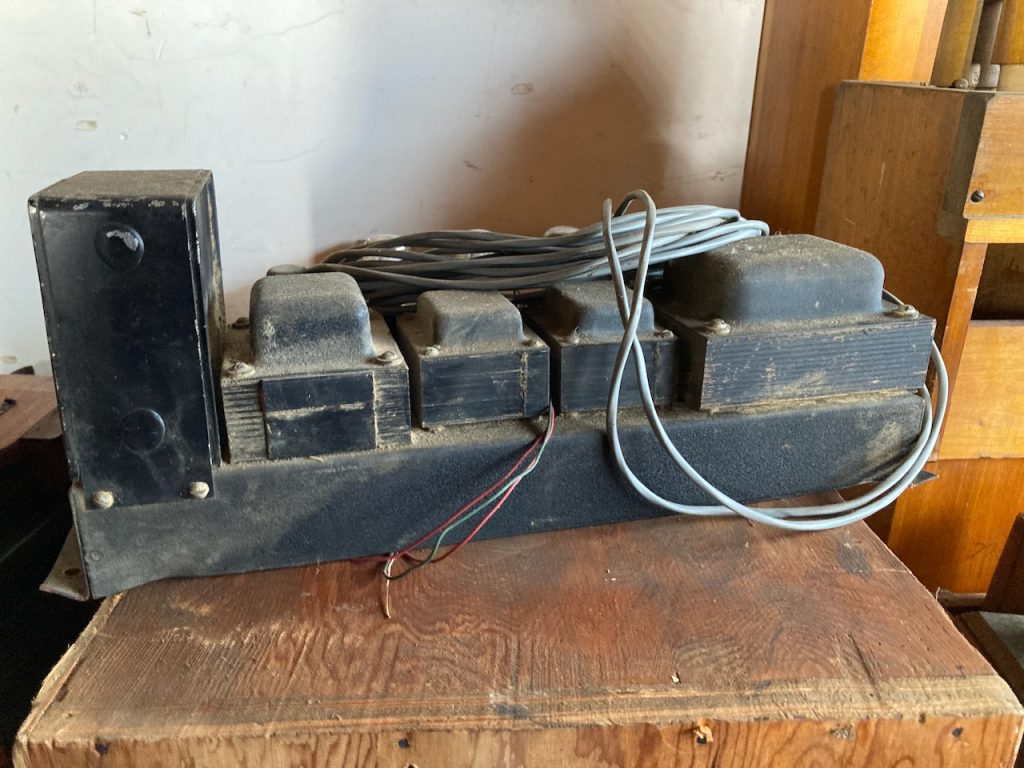
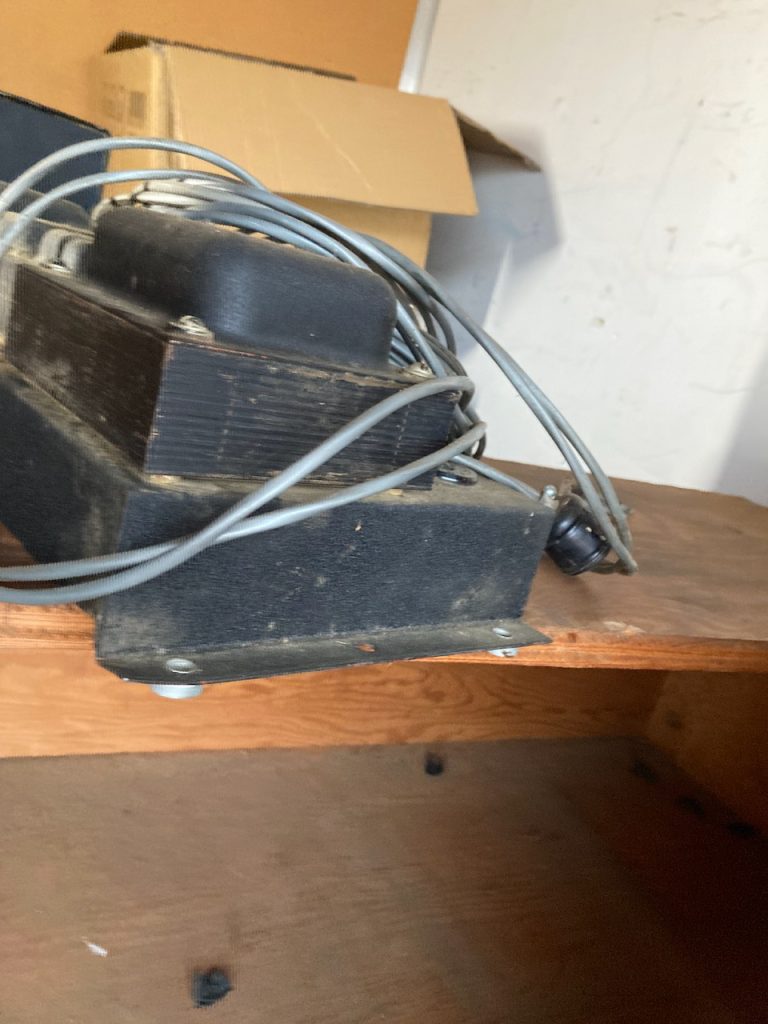
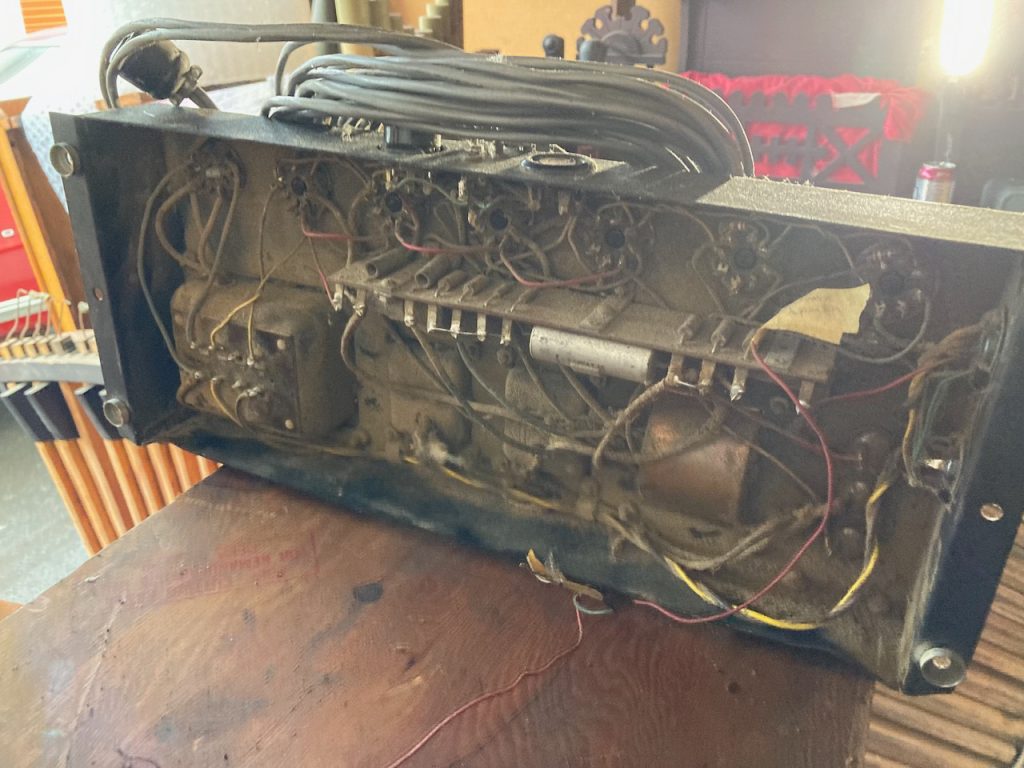
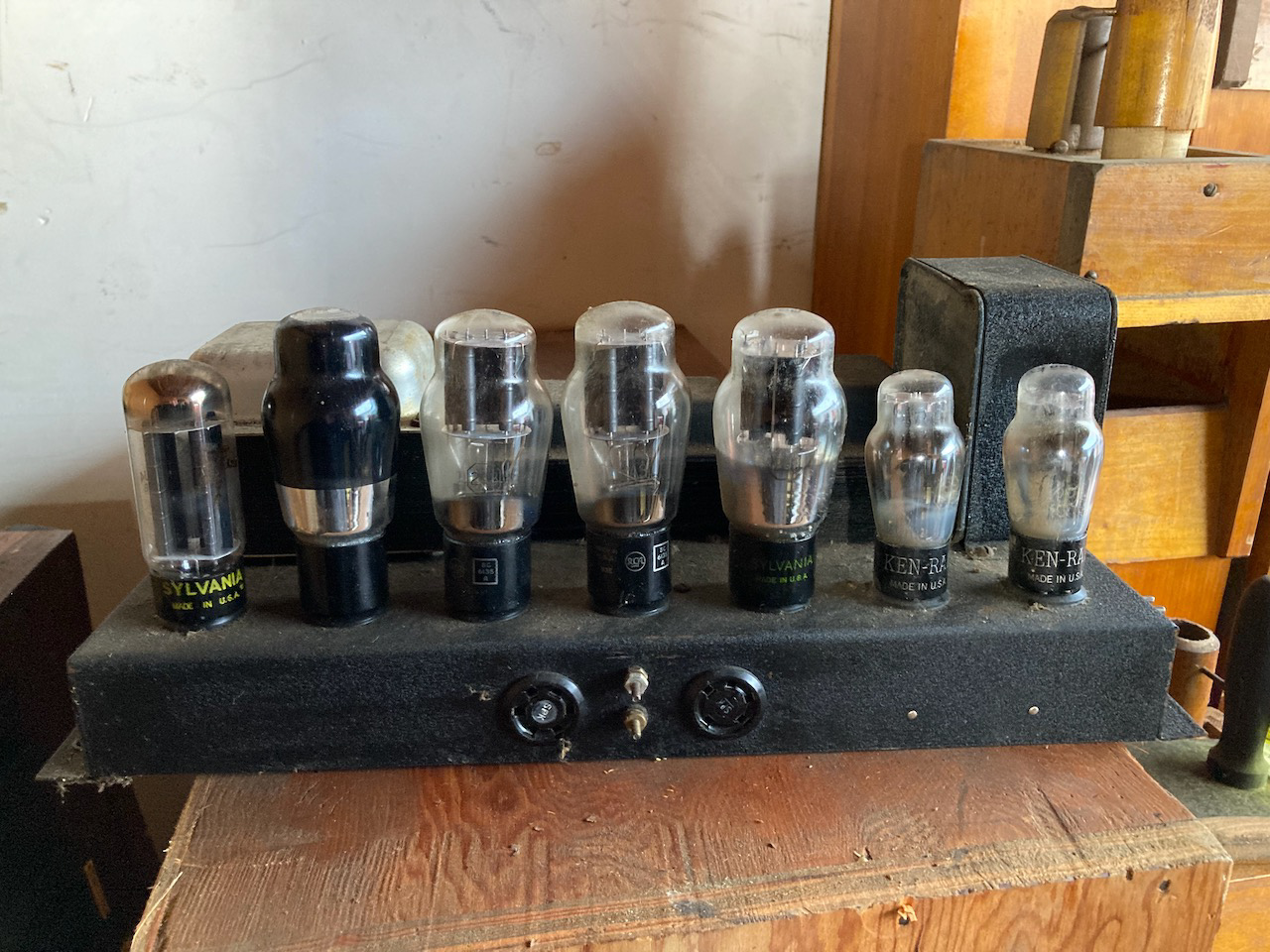

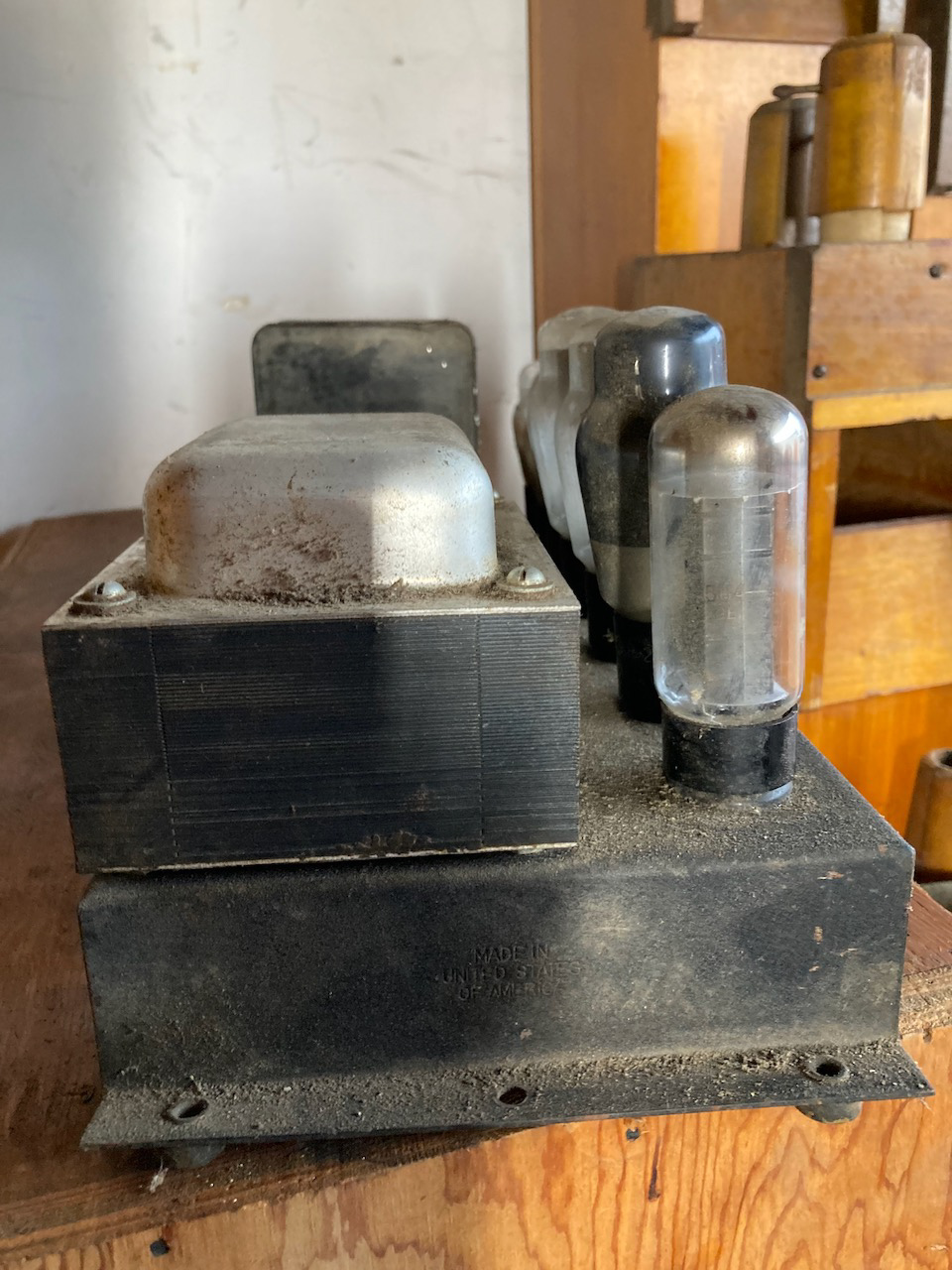
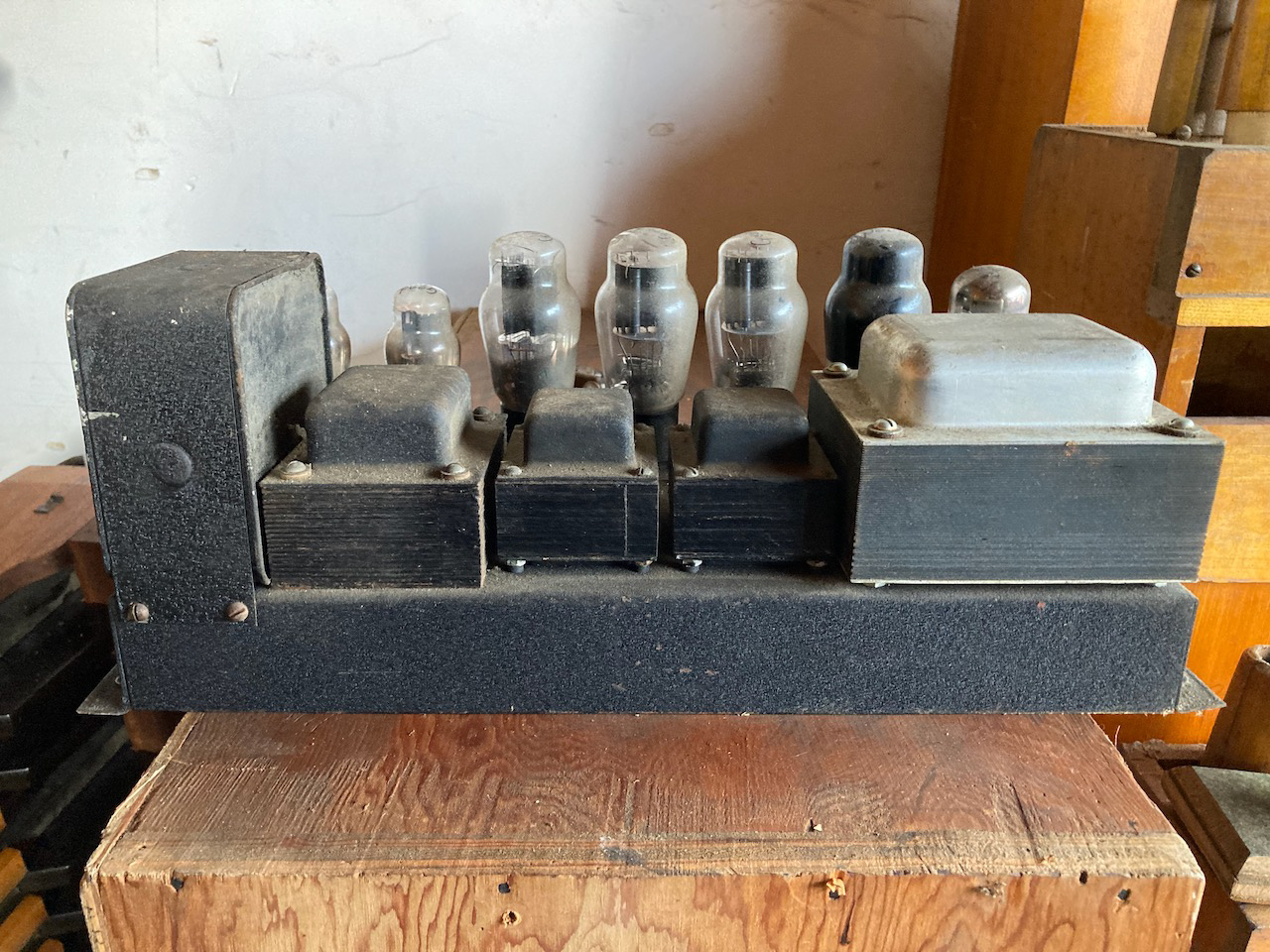
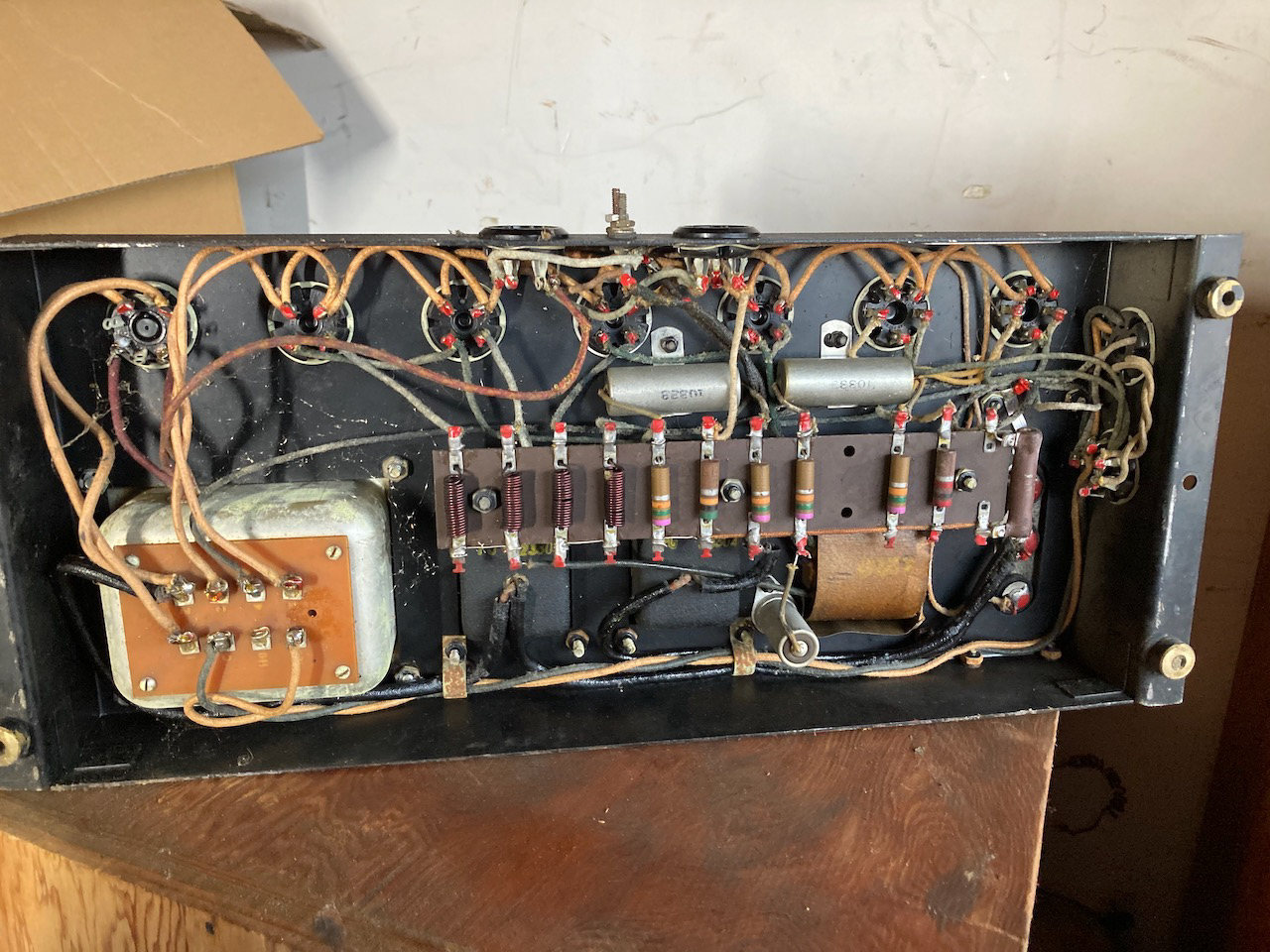
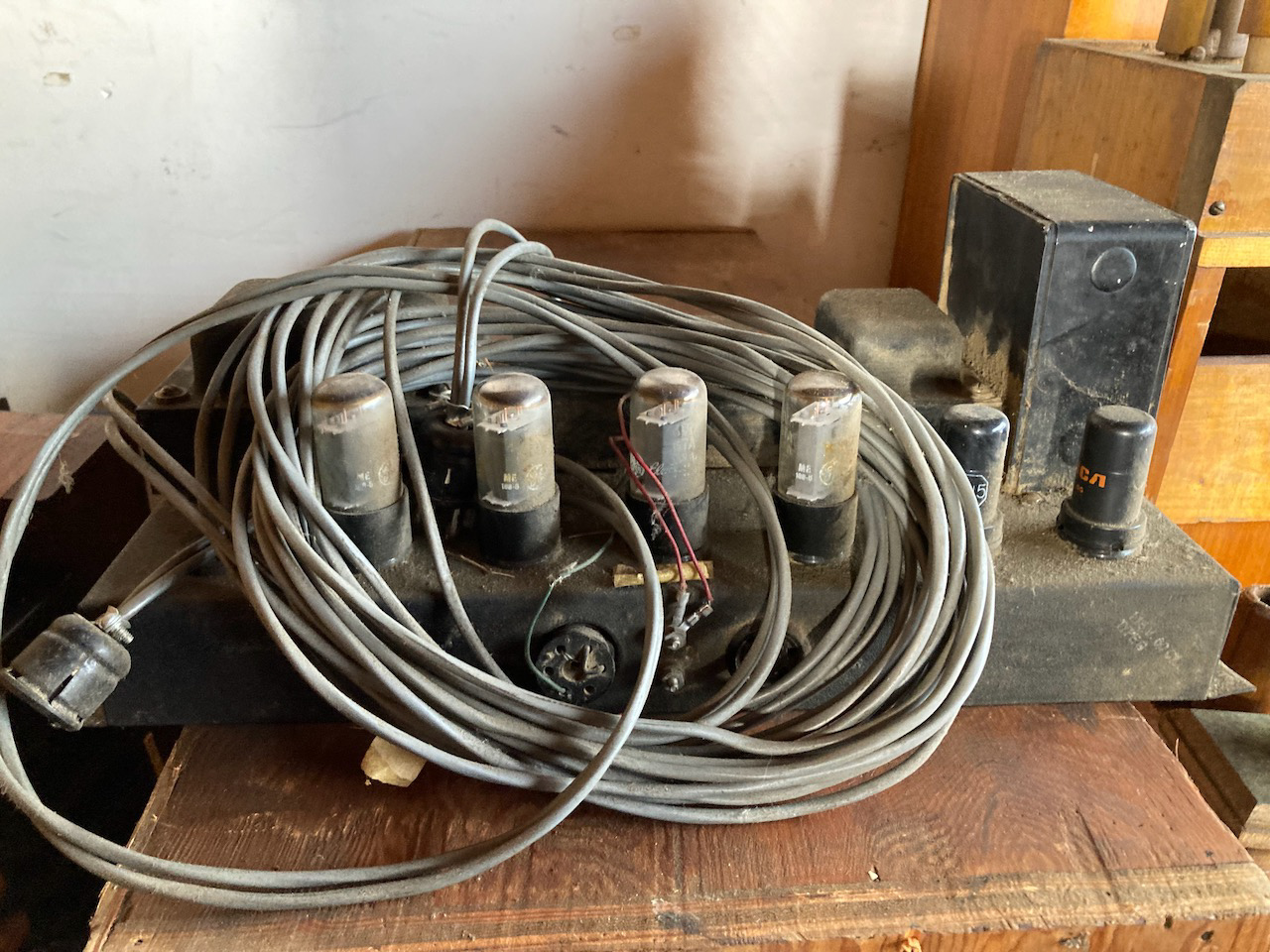
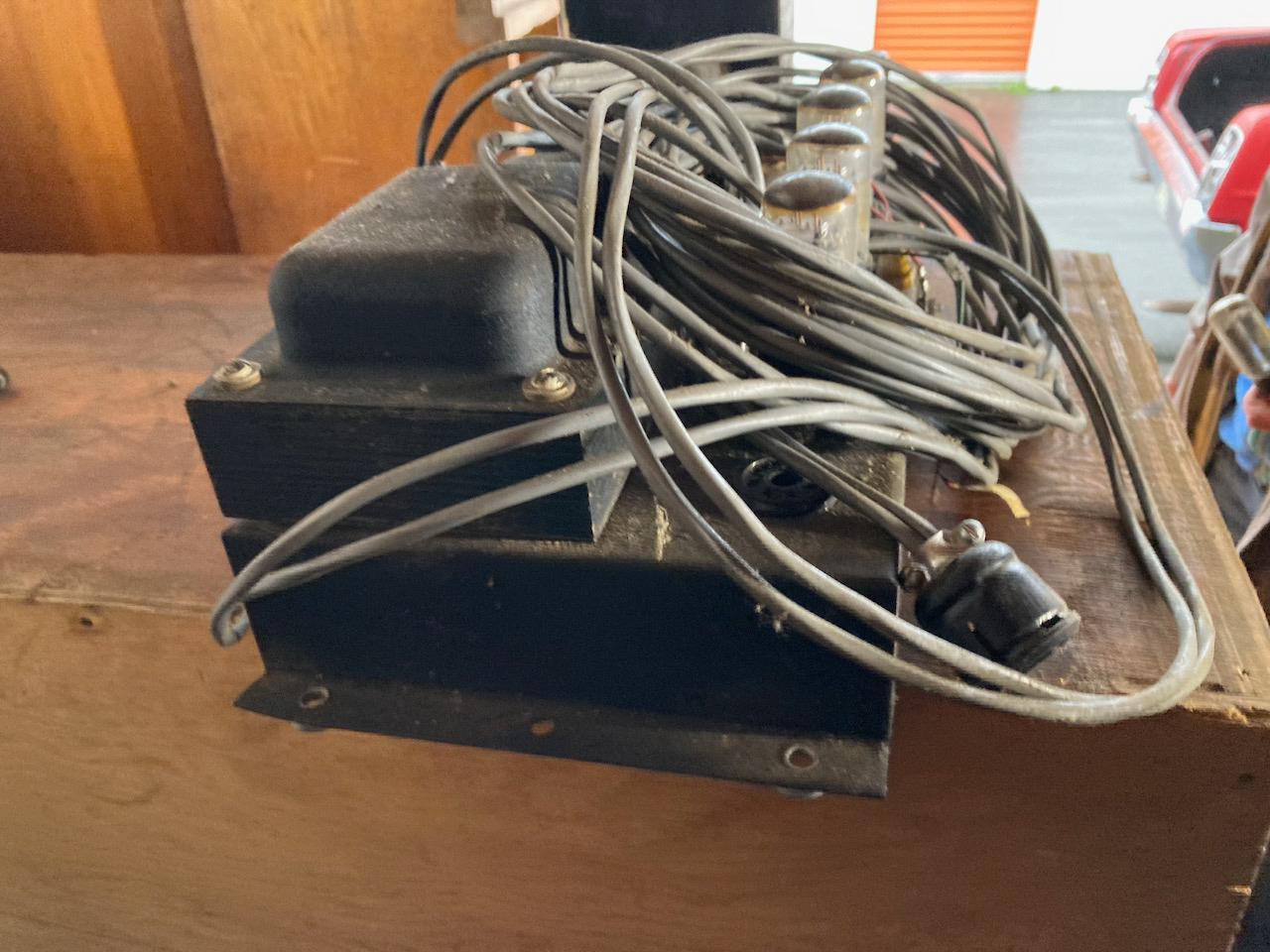


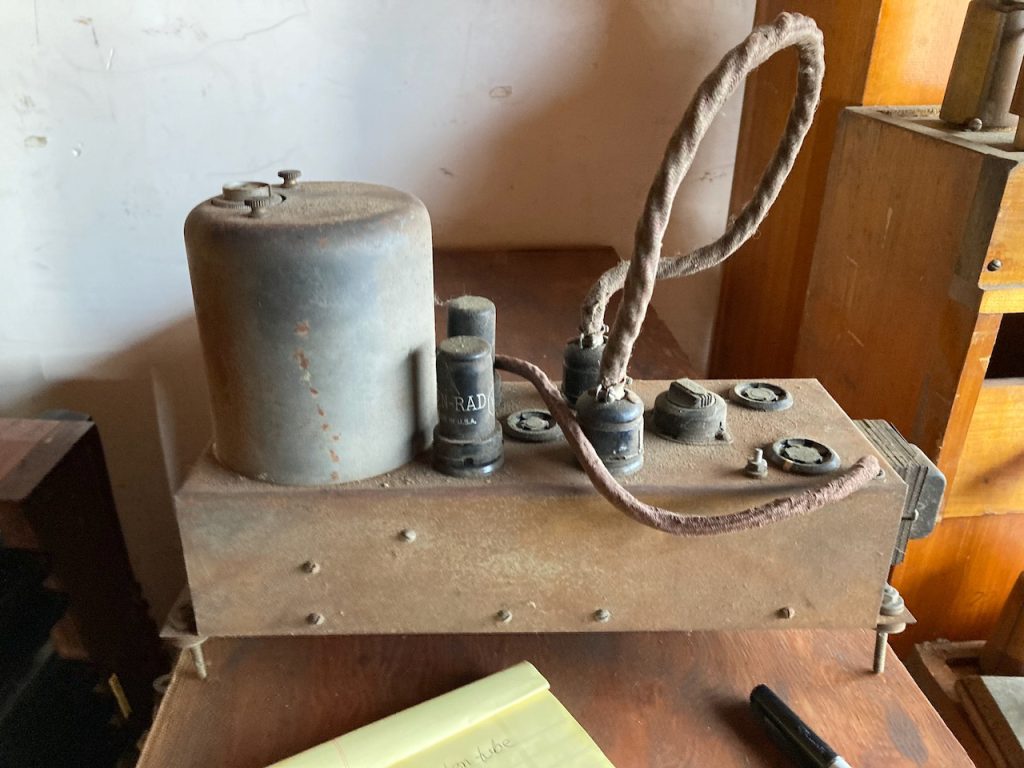
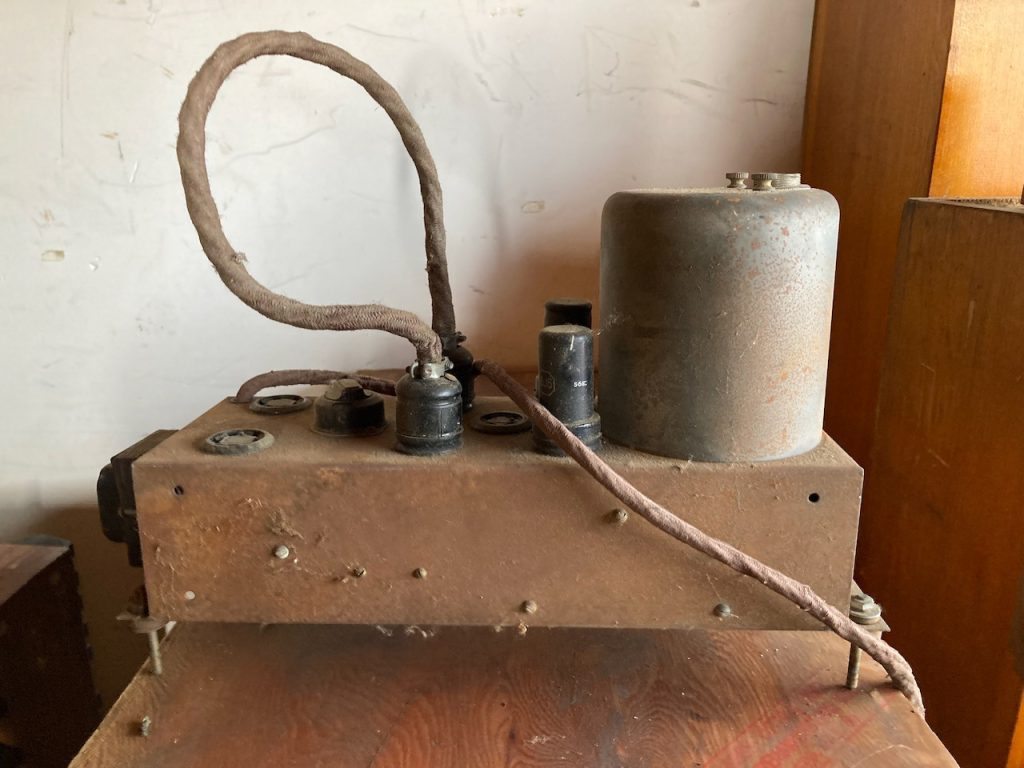
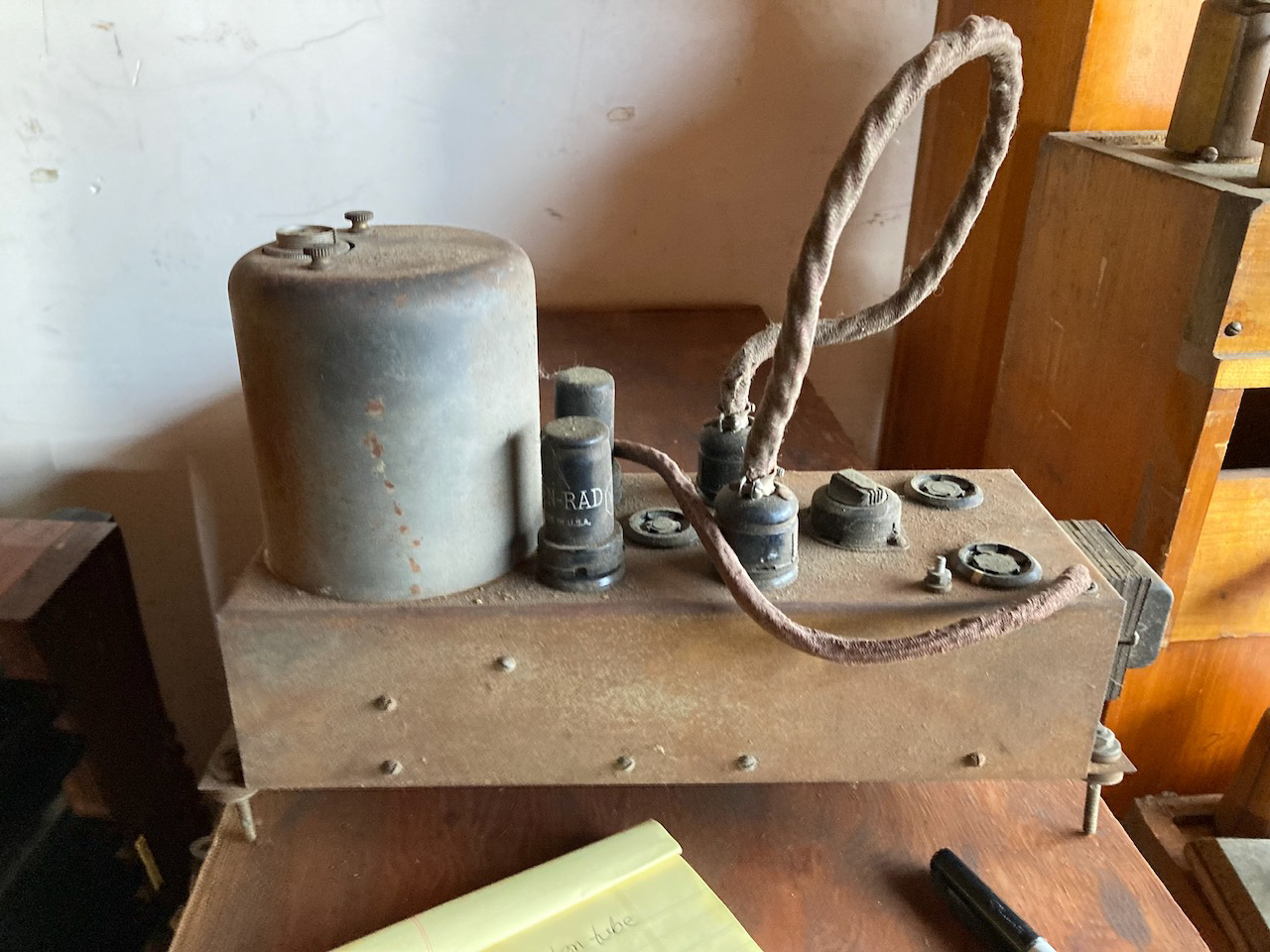
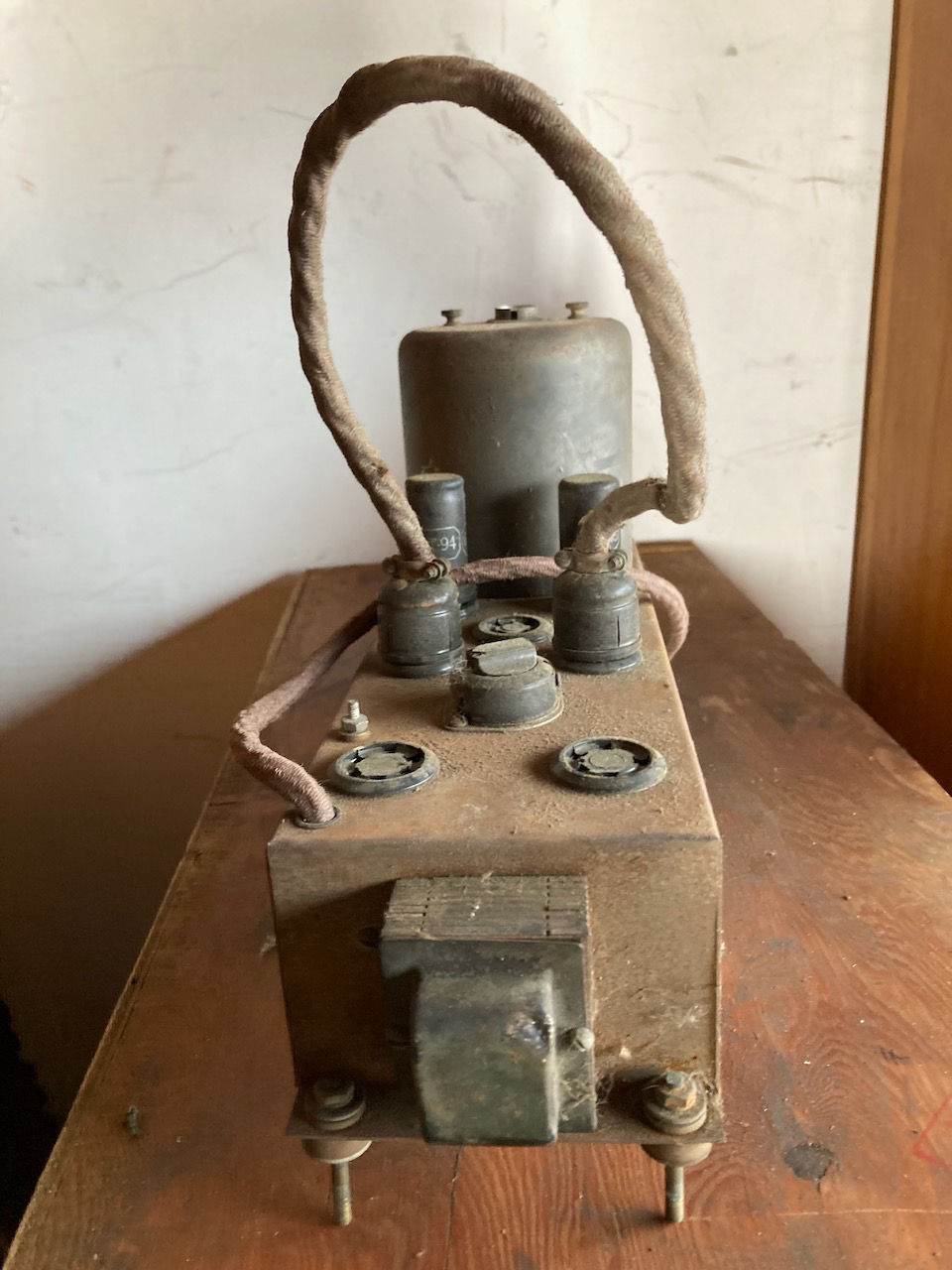
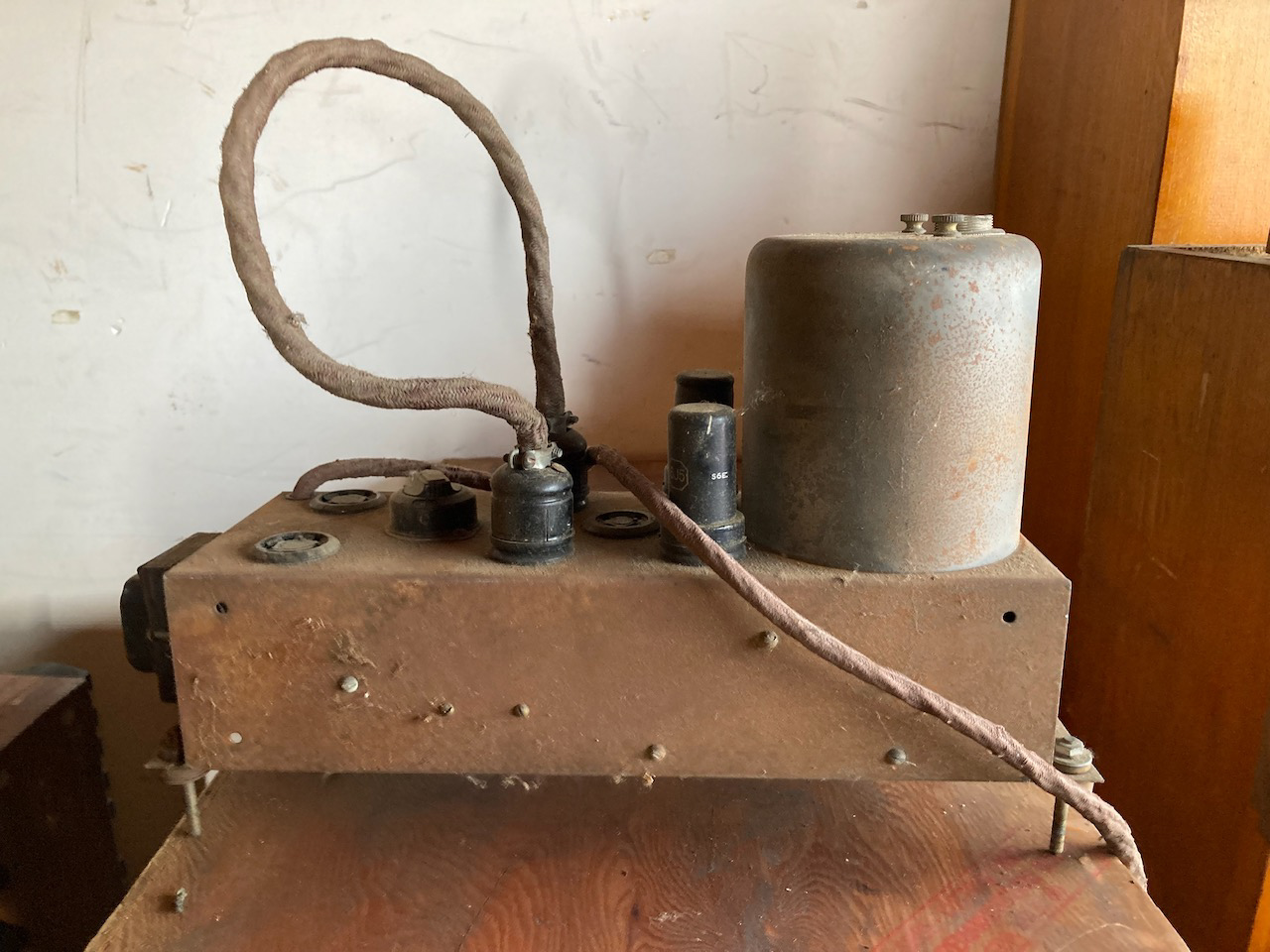
Unknown Product (possibly amp) in rusty chassis
Status: Stolen – If you see this turn up somewhere, please contact us.
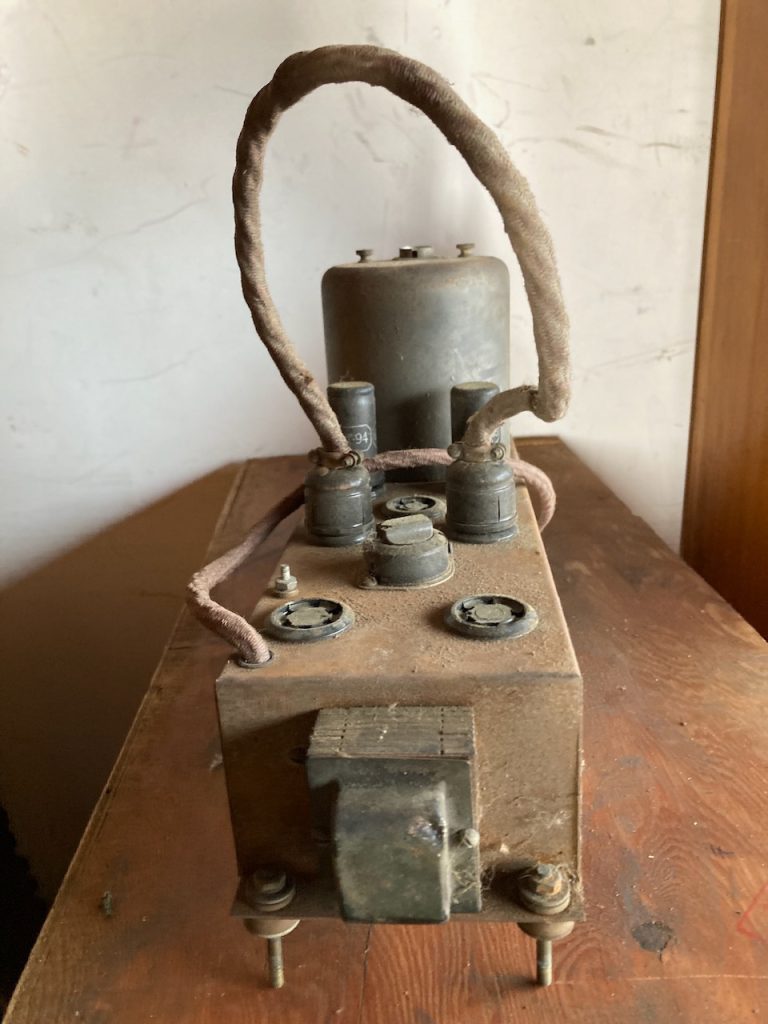
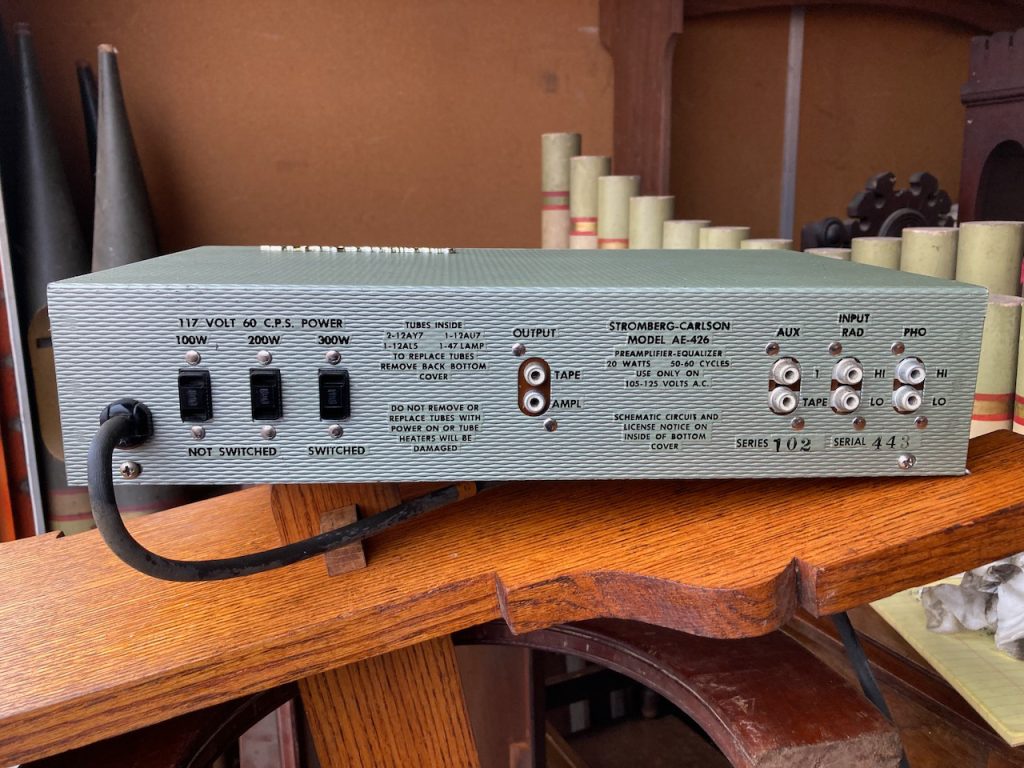
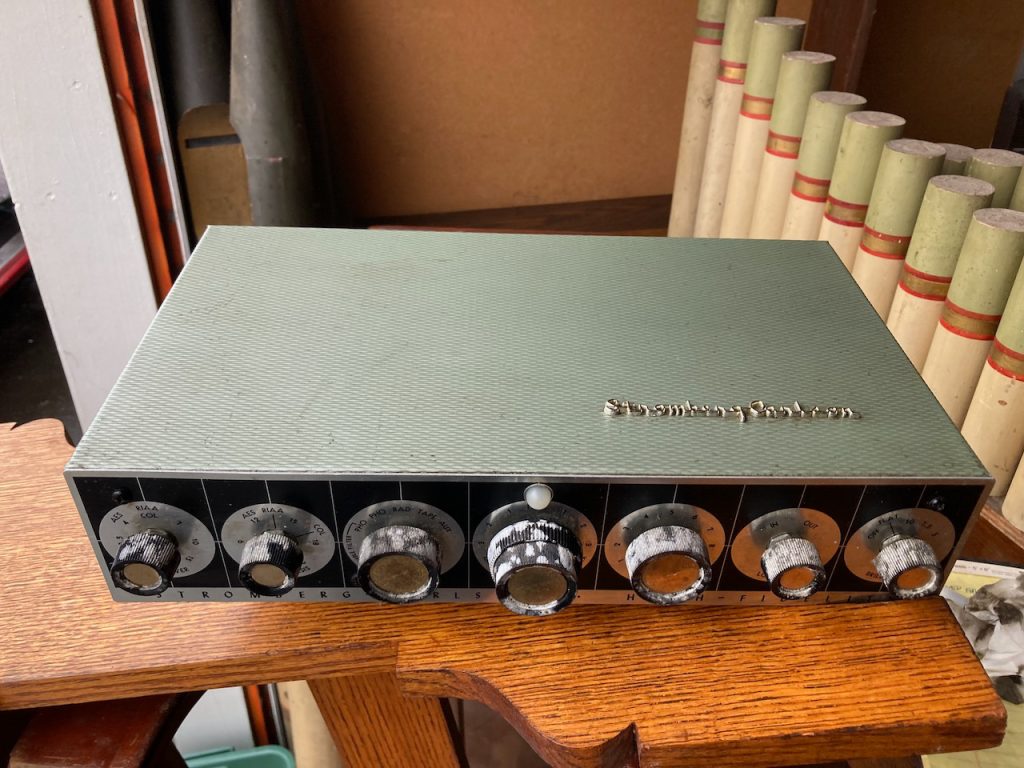
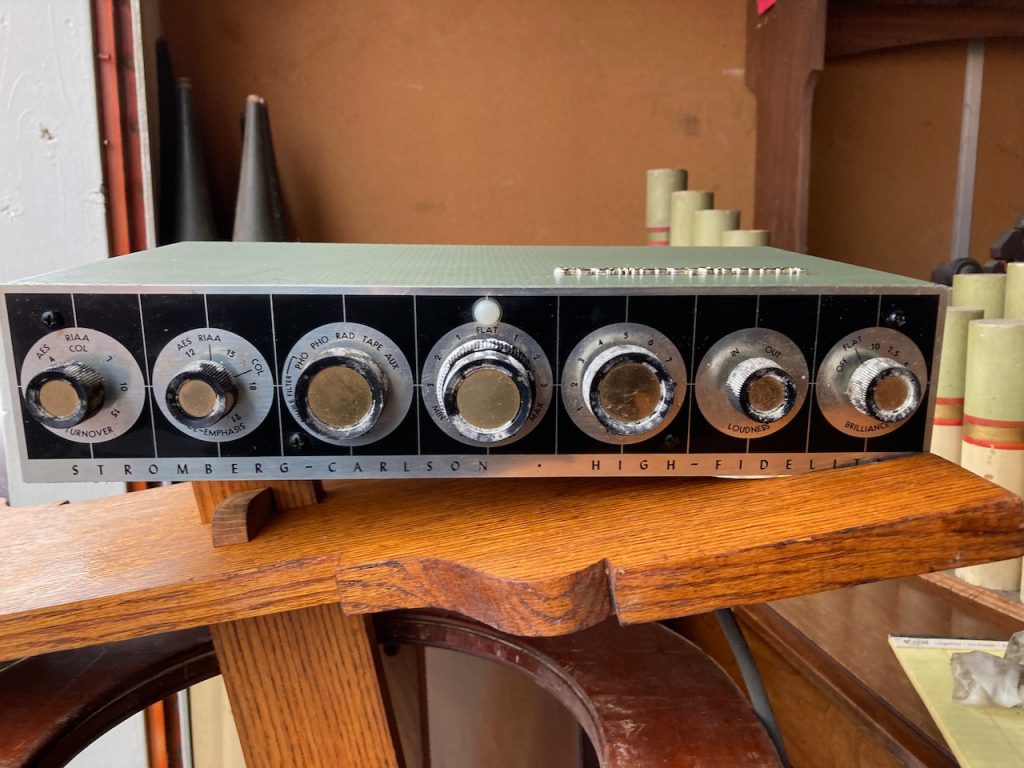
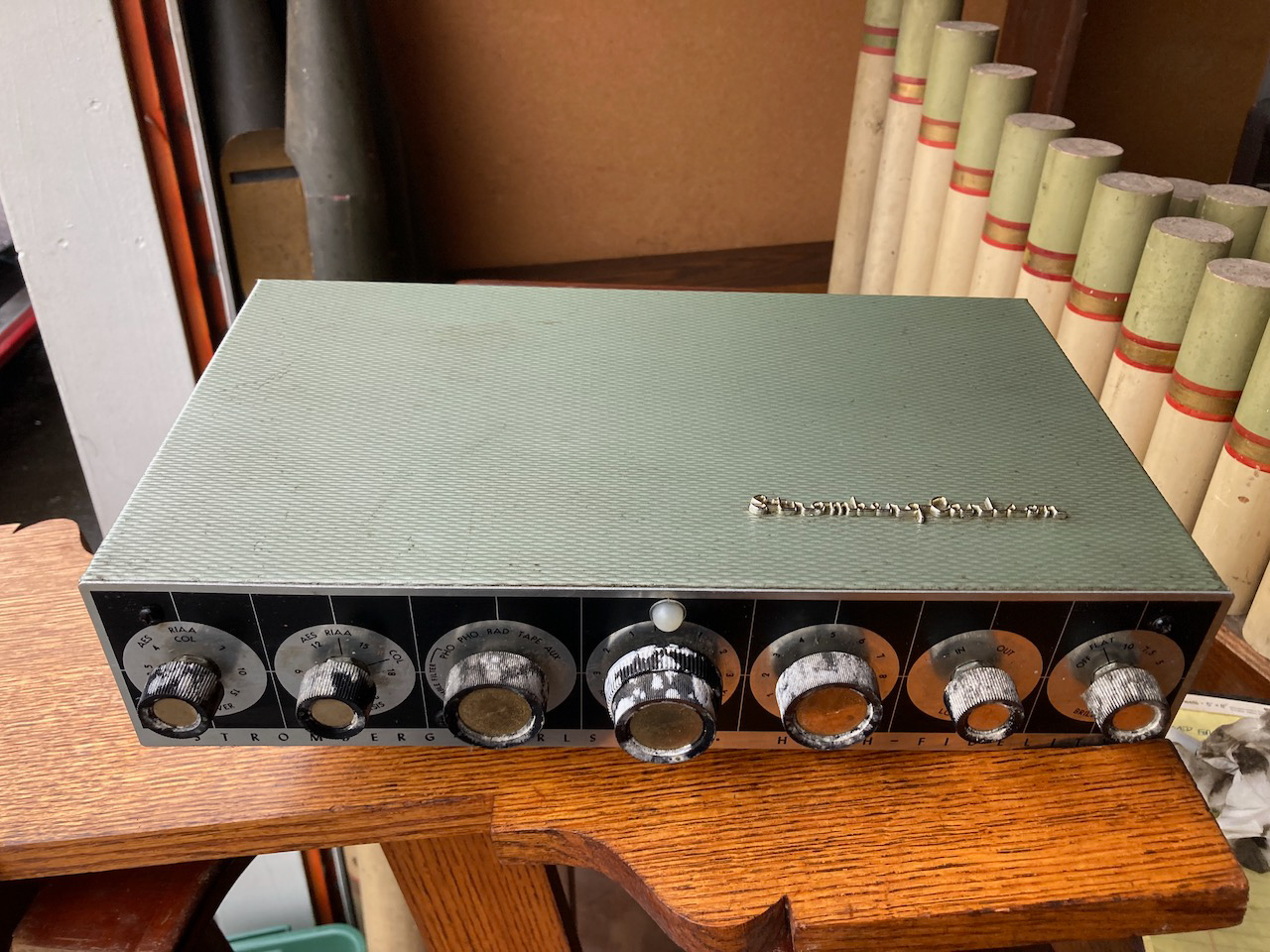
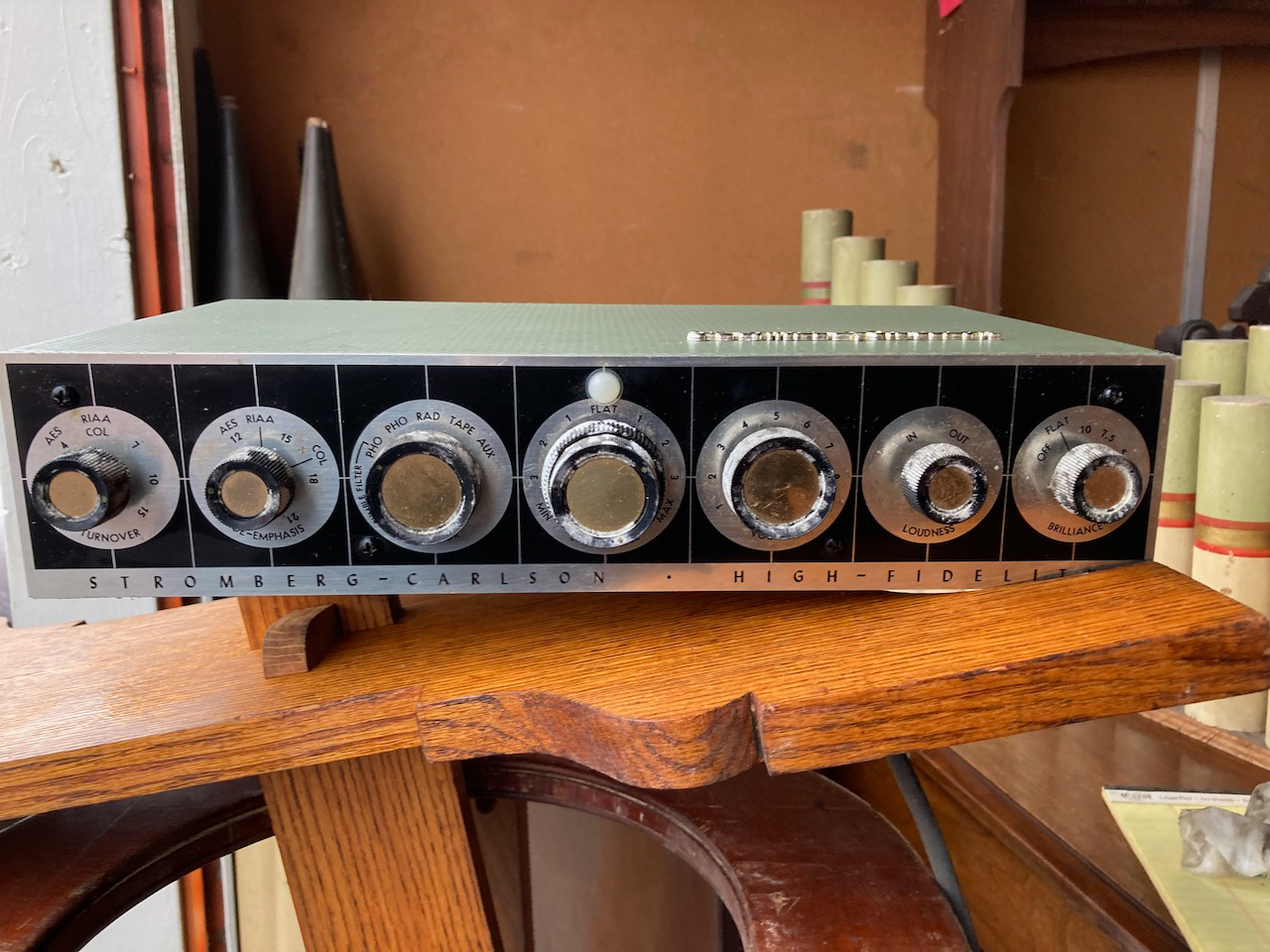
Stromberg-Carlson AE-426 Preamplifier/Equalizer
Status: Stolen – If you see this turn up somewhere, please contact us.

Oscillator Modules
Status: Stolen – If you see this turn up somewhere, please contact us.
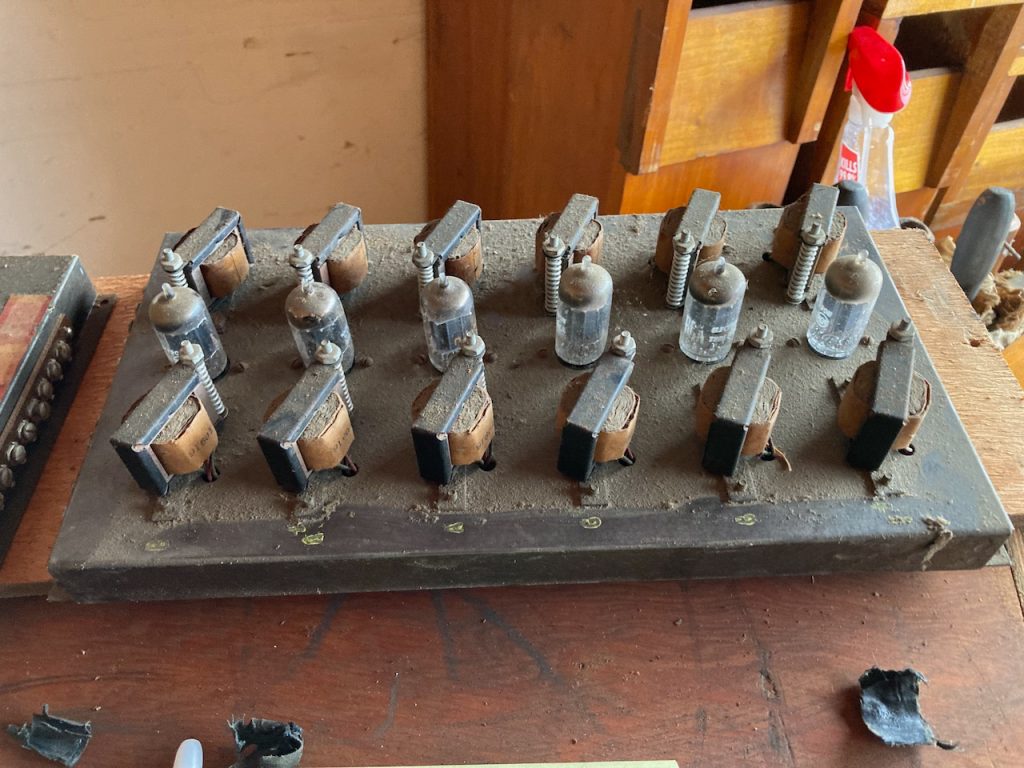
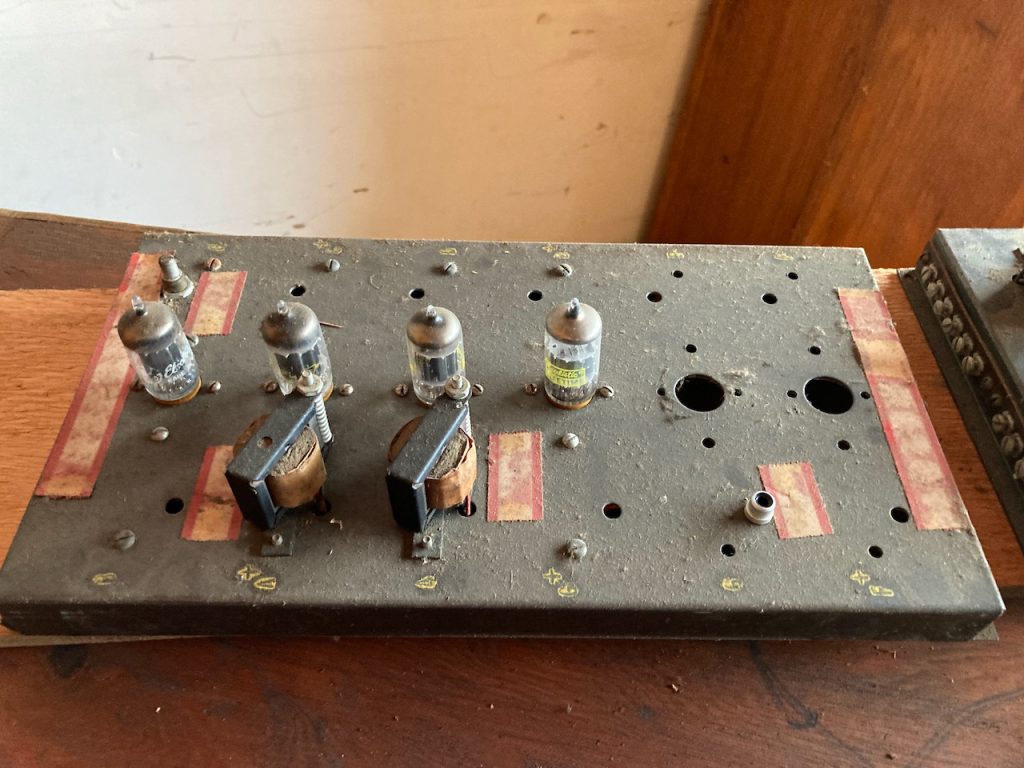
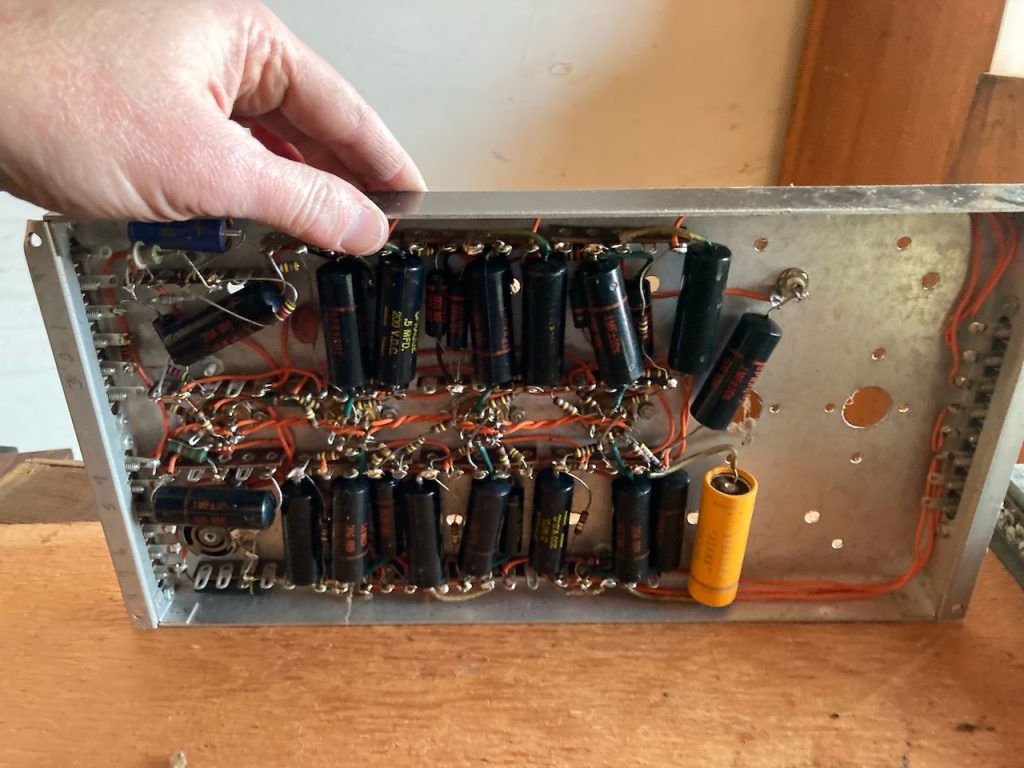
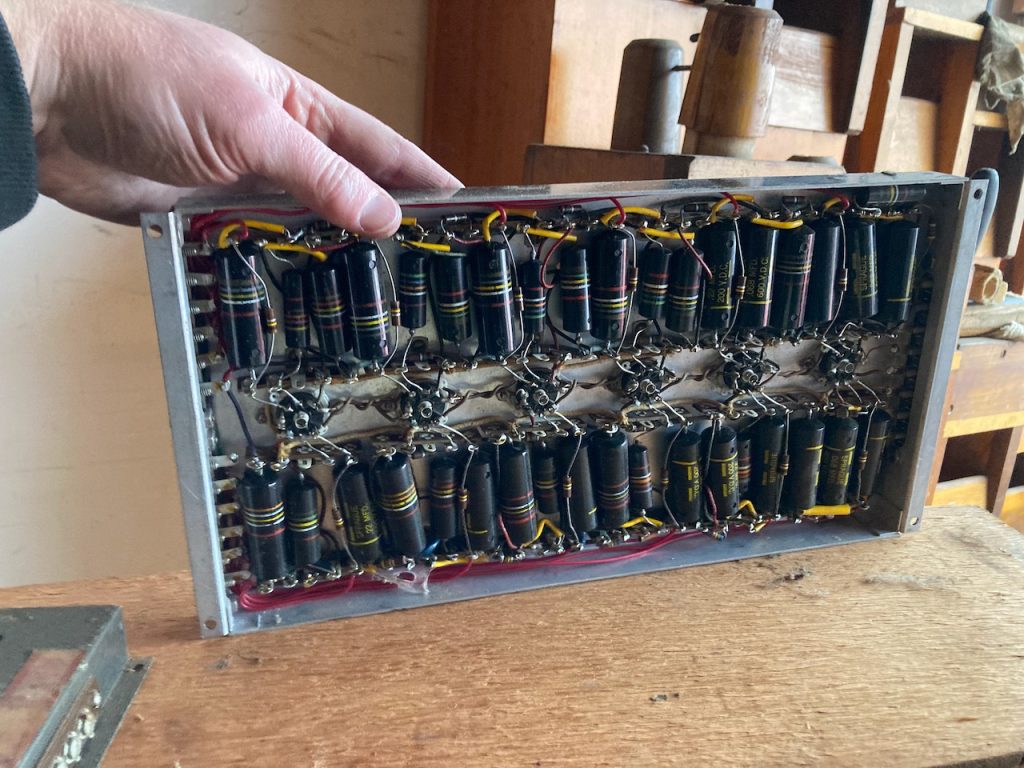
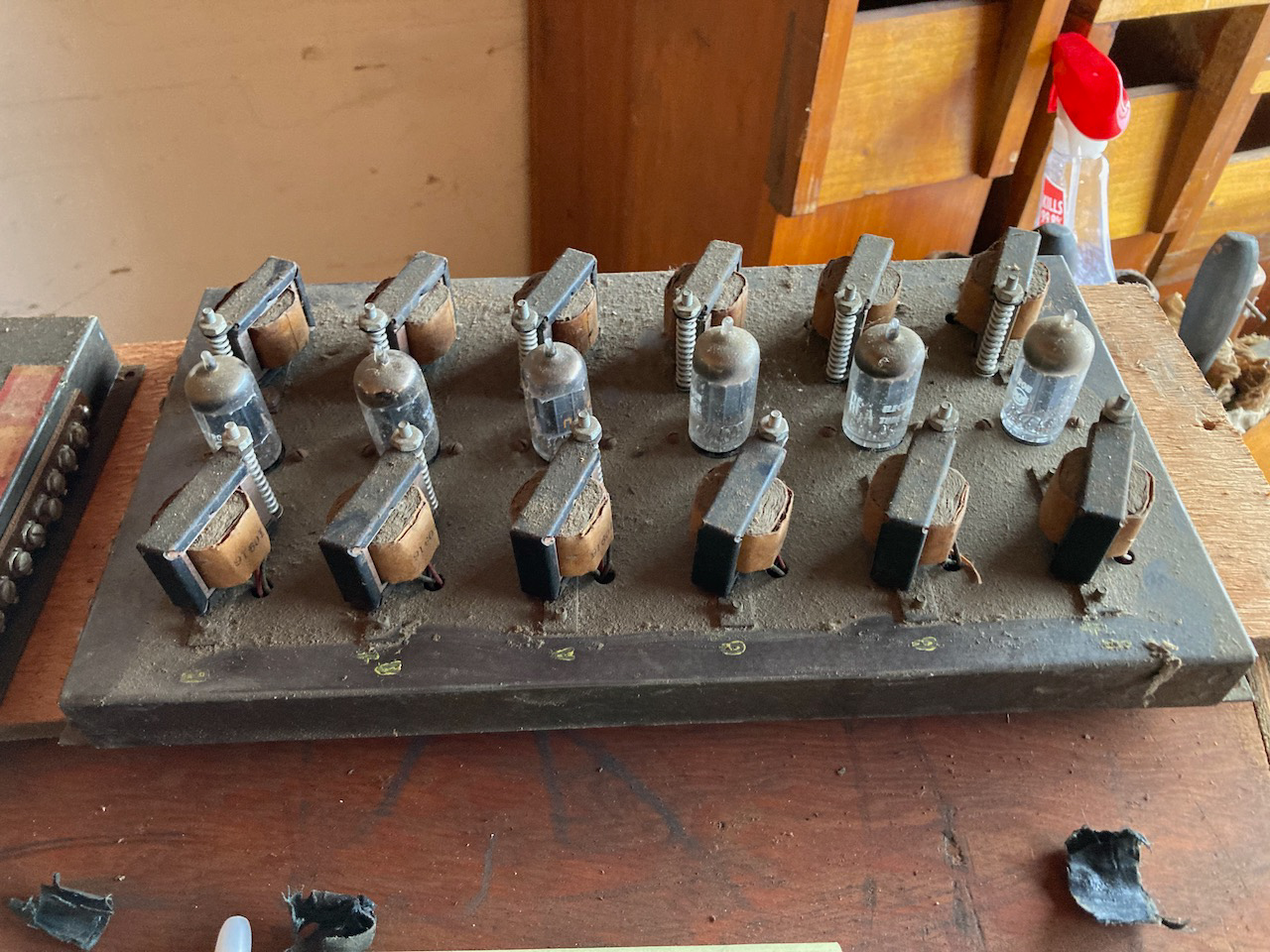
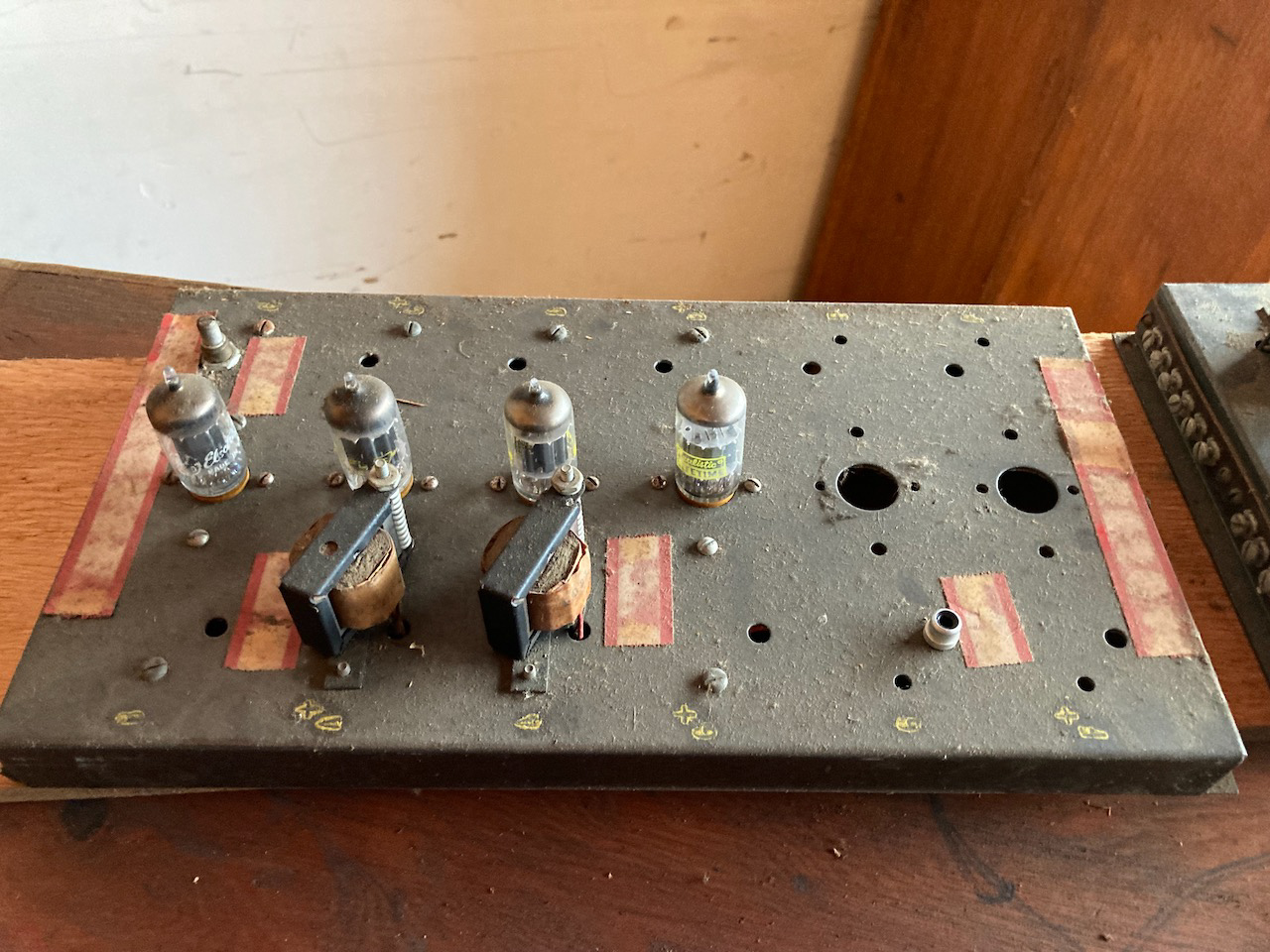
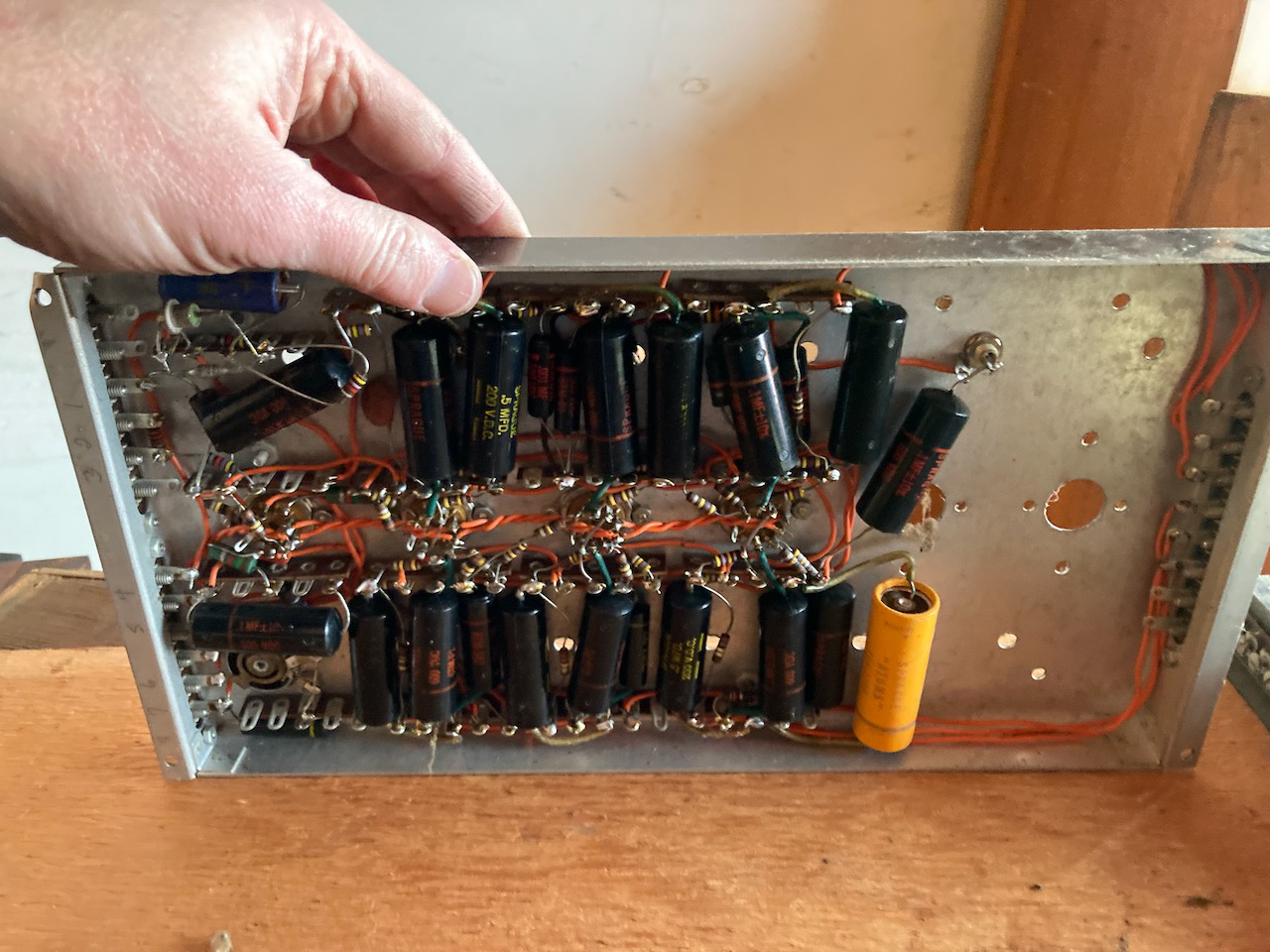
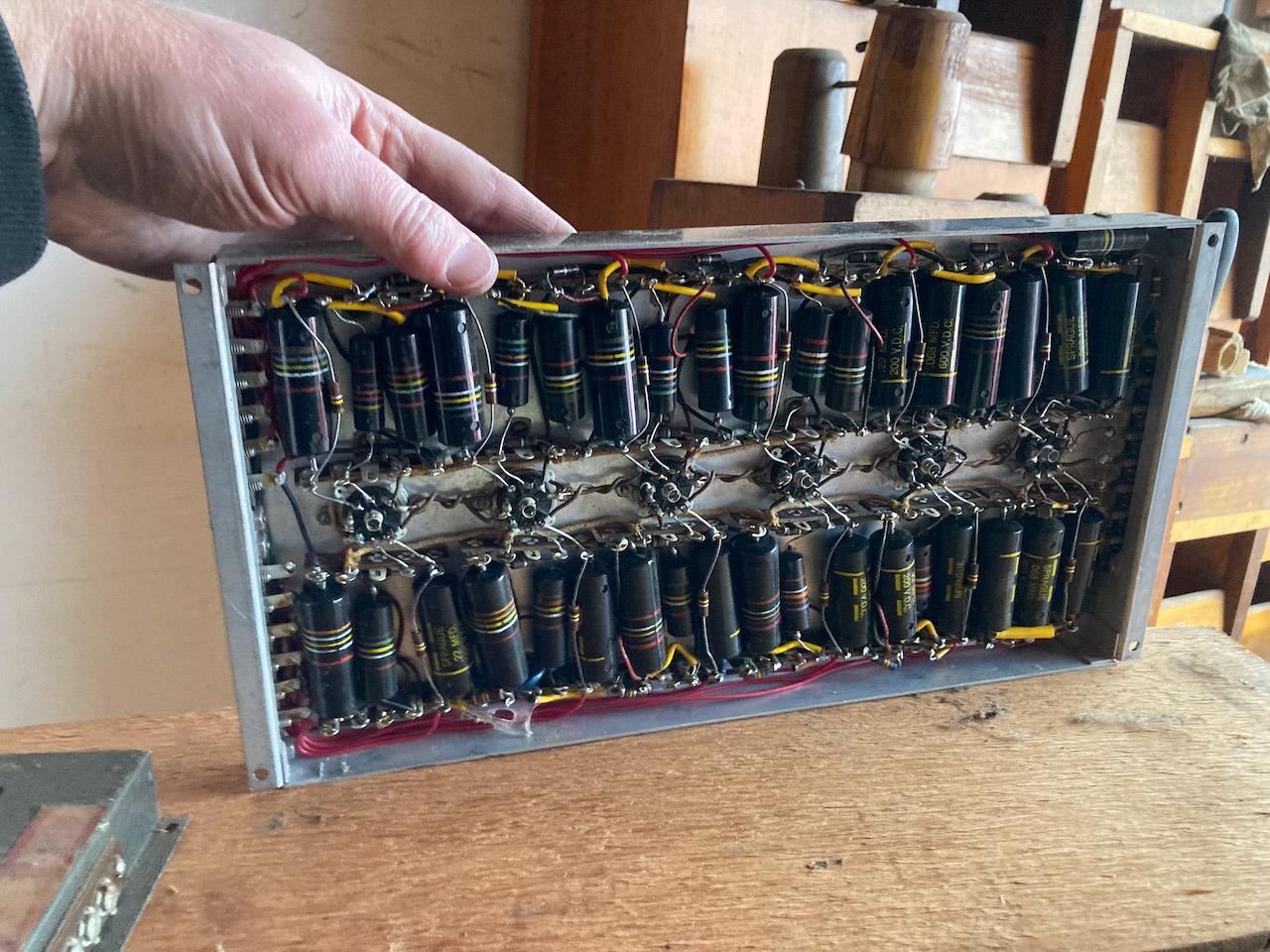
Notes: These are tube-based oscillators which were used to generate tones for an electronic chime module, likely used in a church tower. It is unknown if this is a homebrew project or something which was manufactured for this purpose.
Claimed Items
These items are no longer available, and are being displayed so that people who were previously interested know that the items have found a home.
Consoles
Möller 4-Manual and Pedal Drawknob Console
Status: Claimed, waiting for pick-up
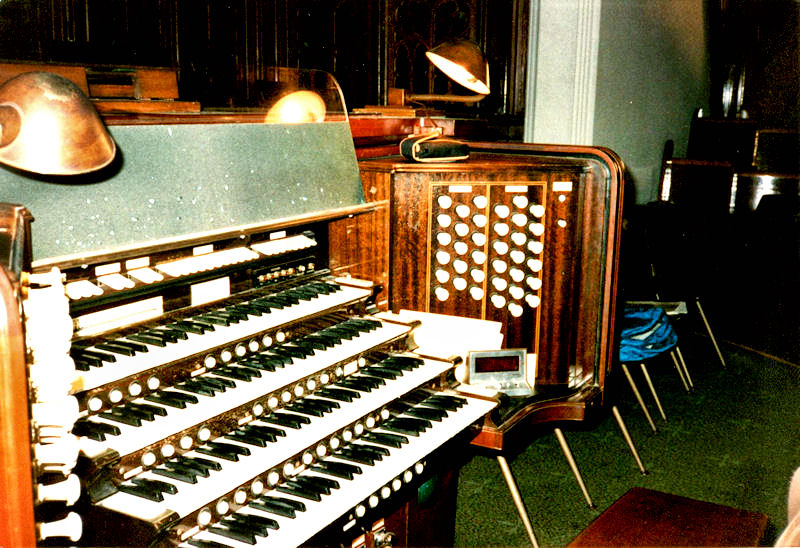
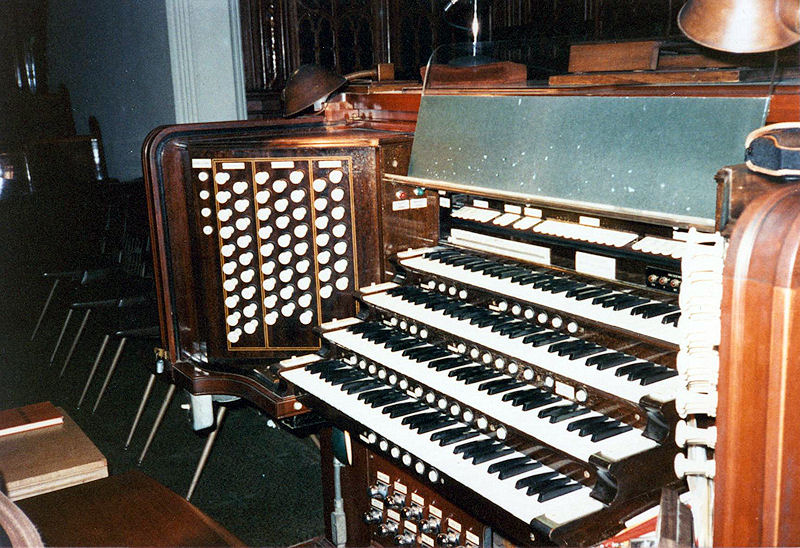
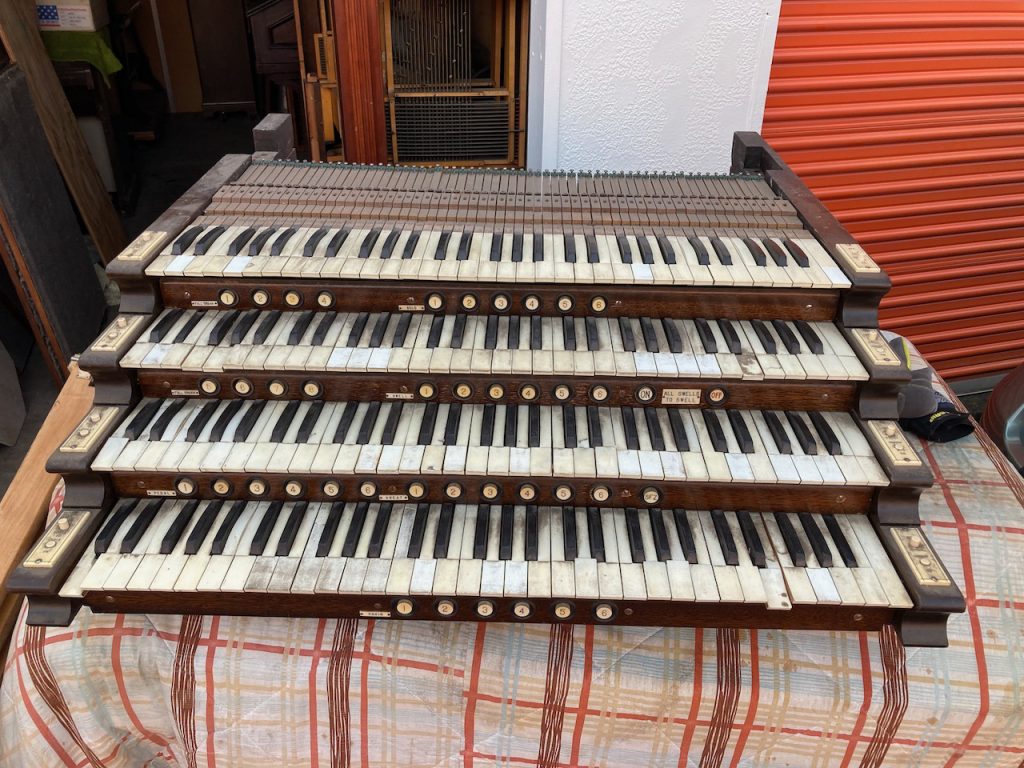
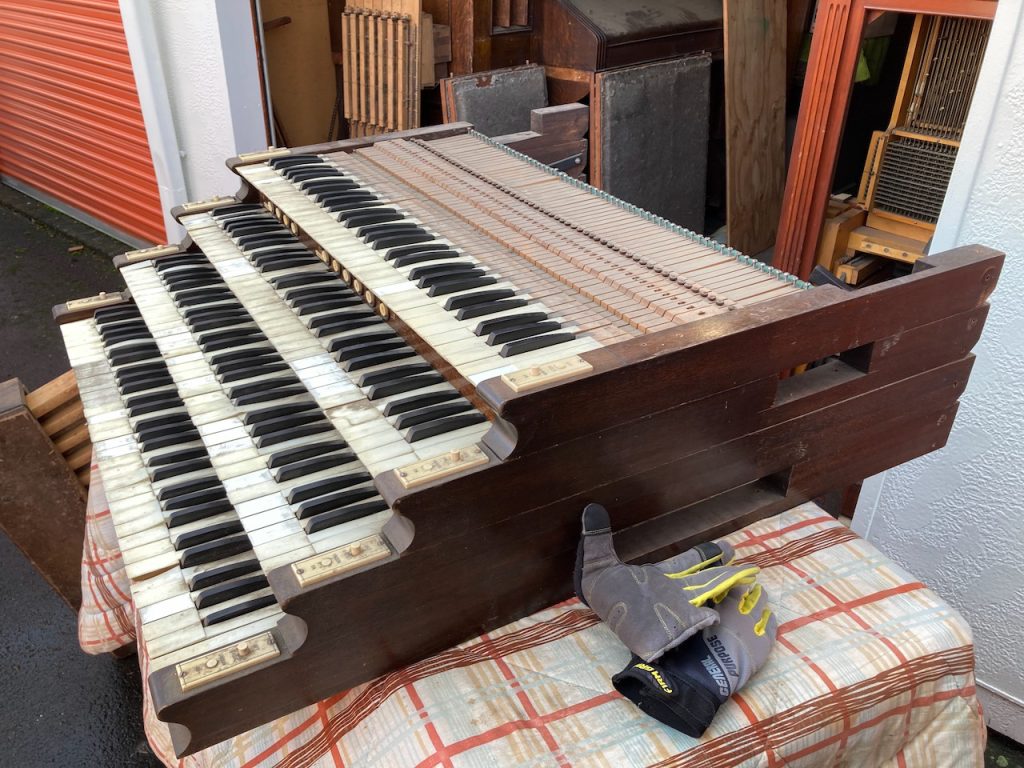
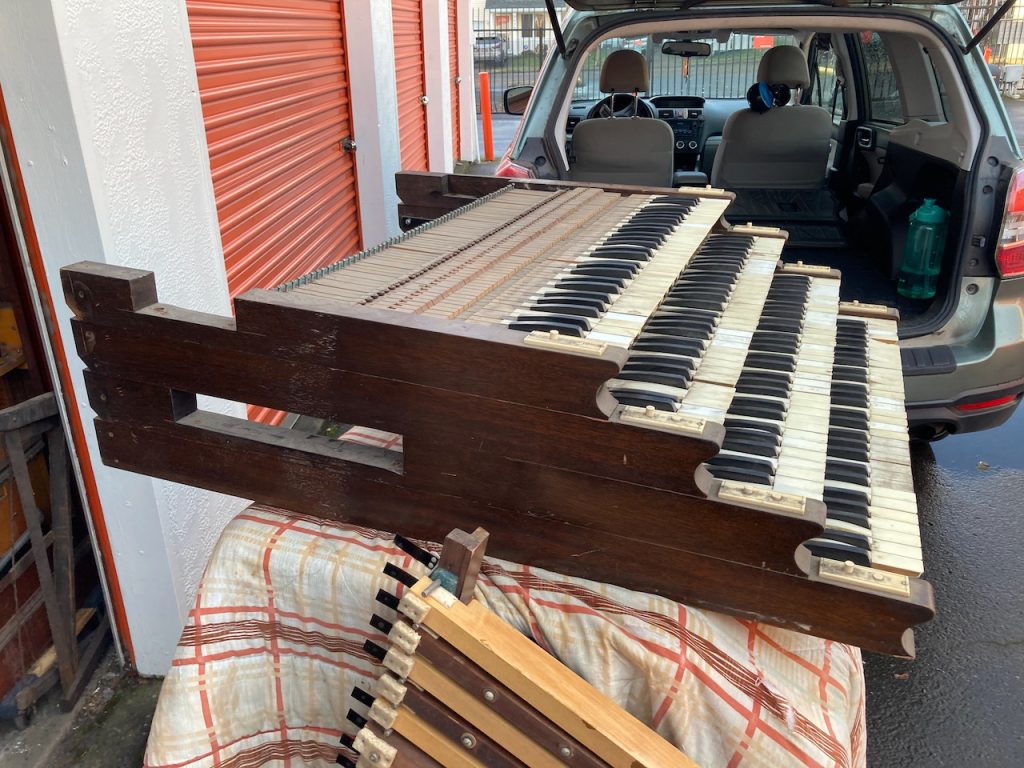
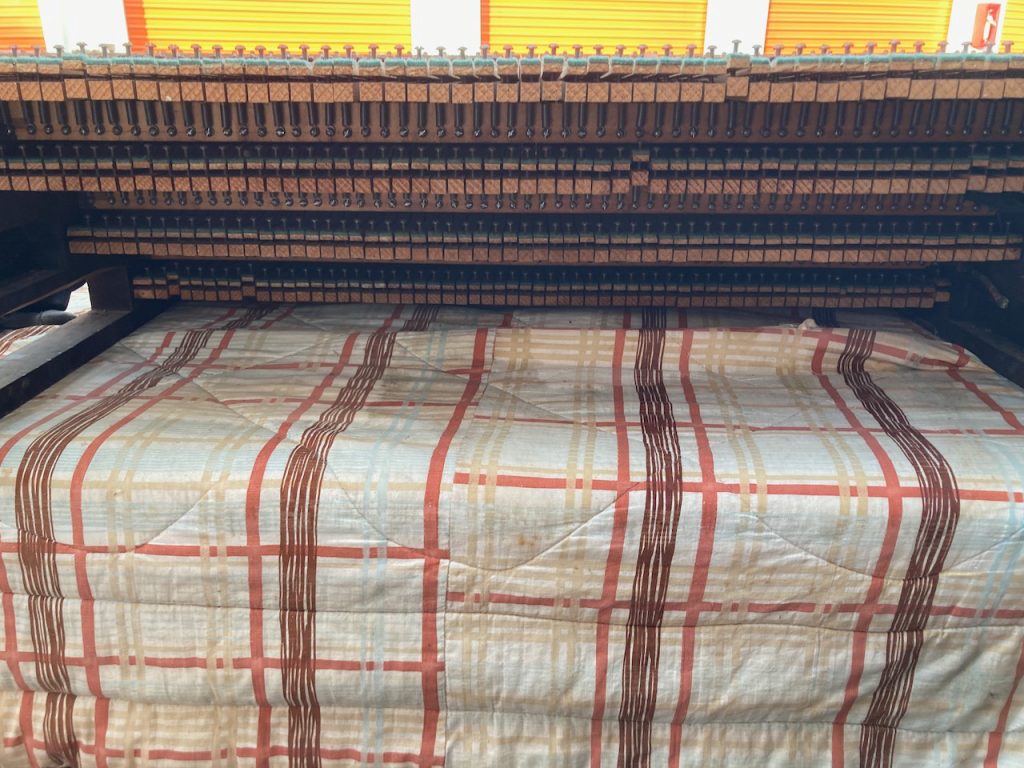
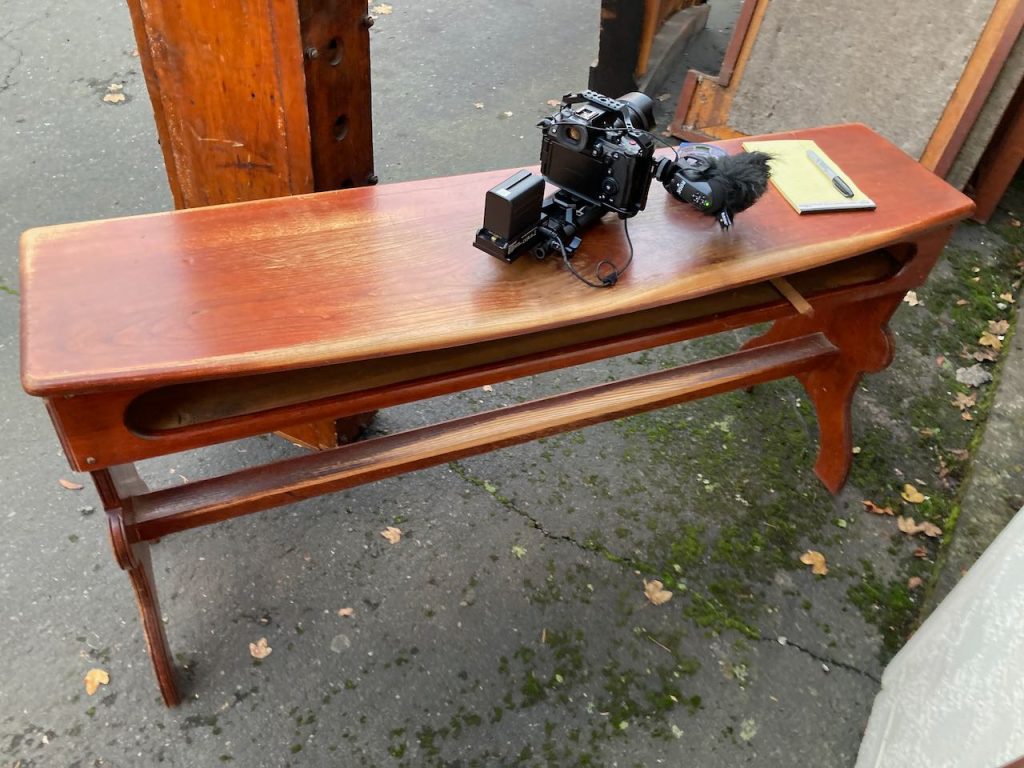
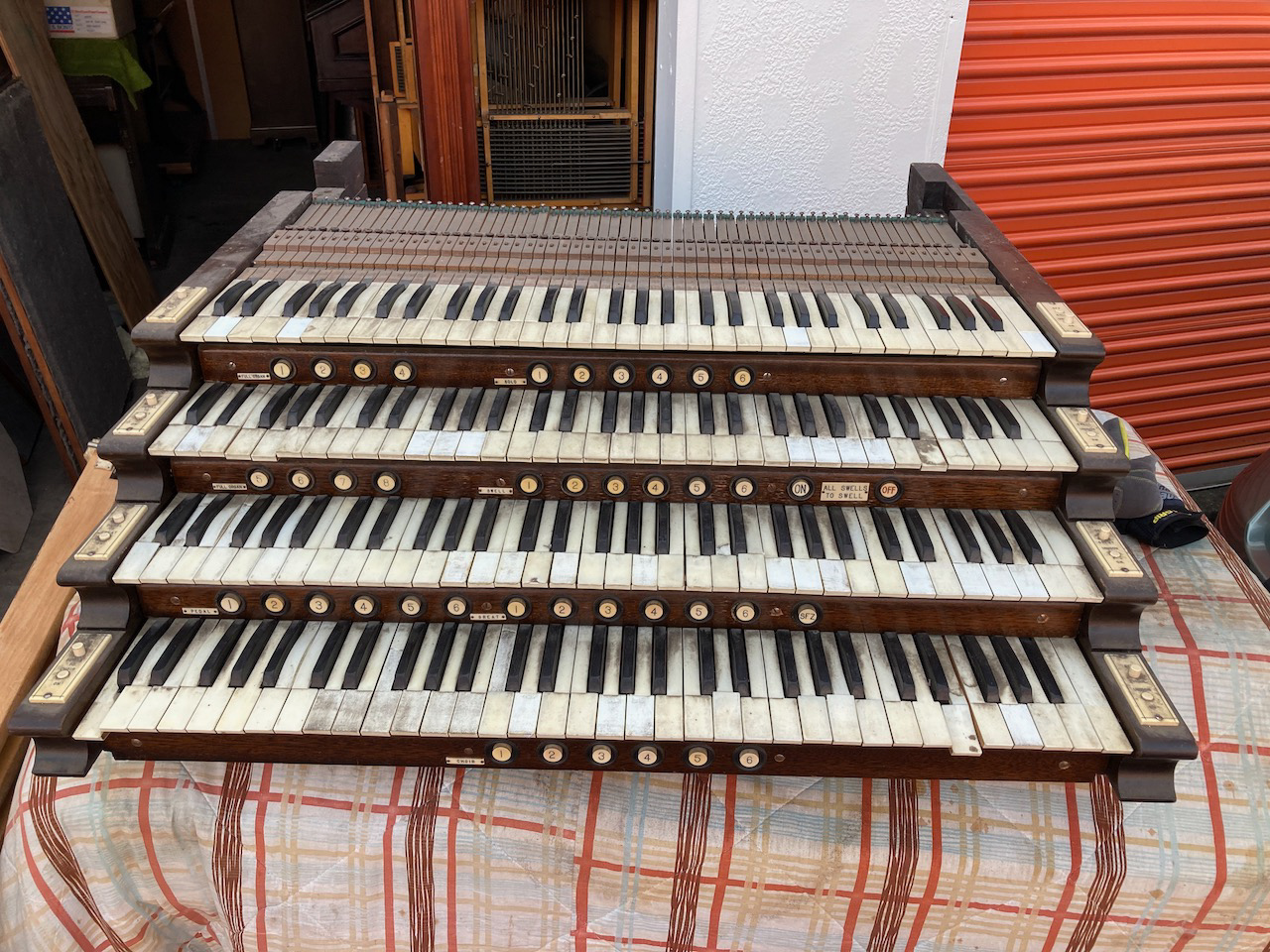
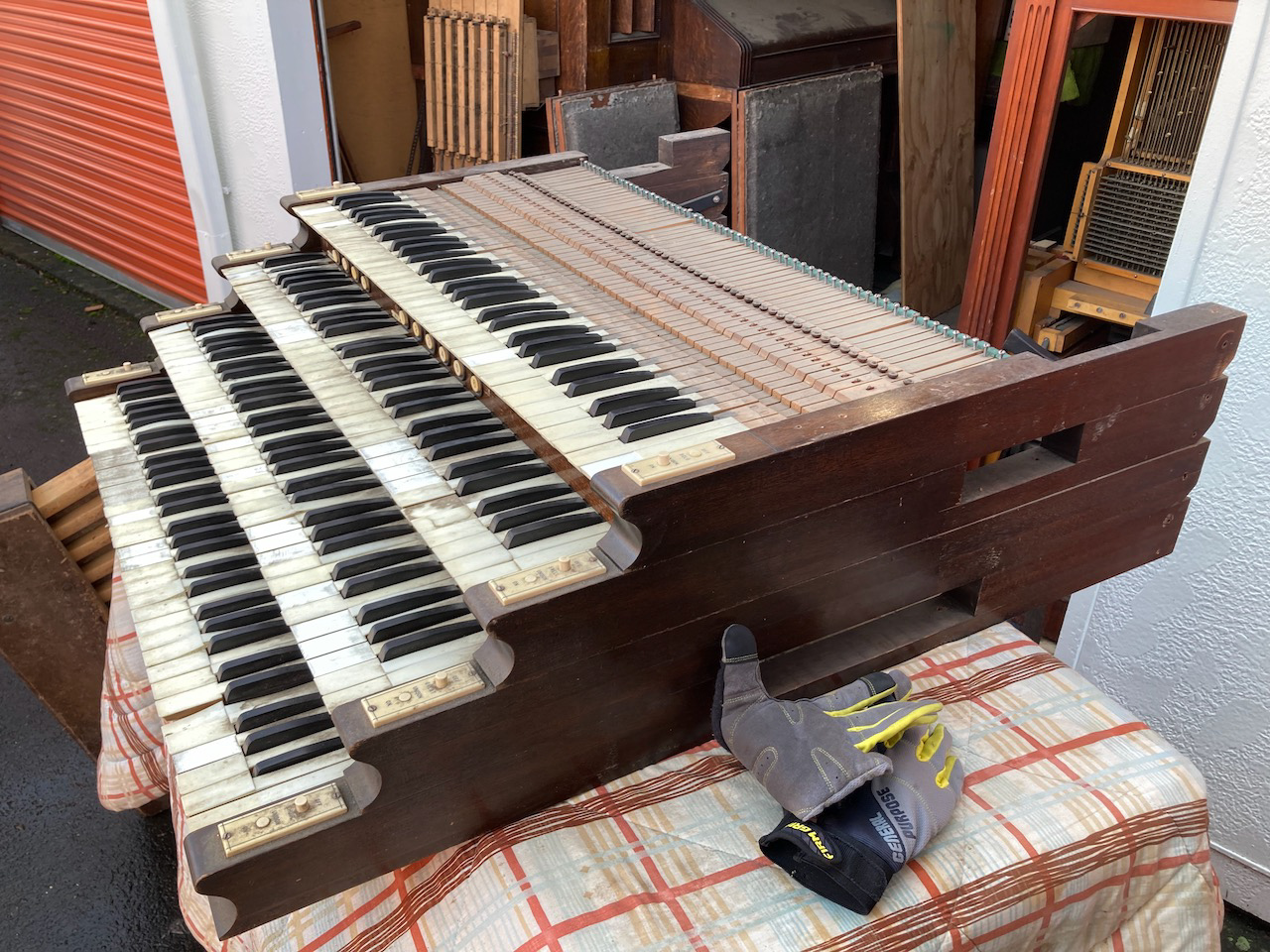
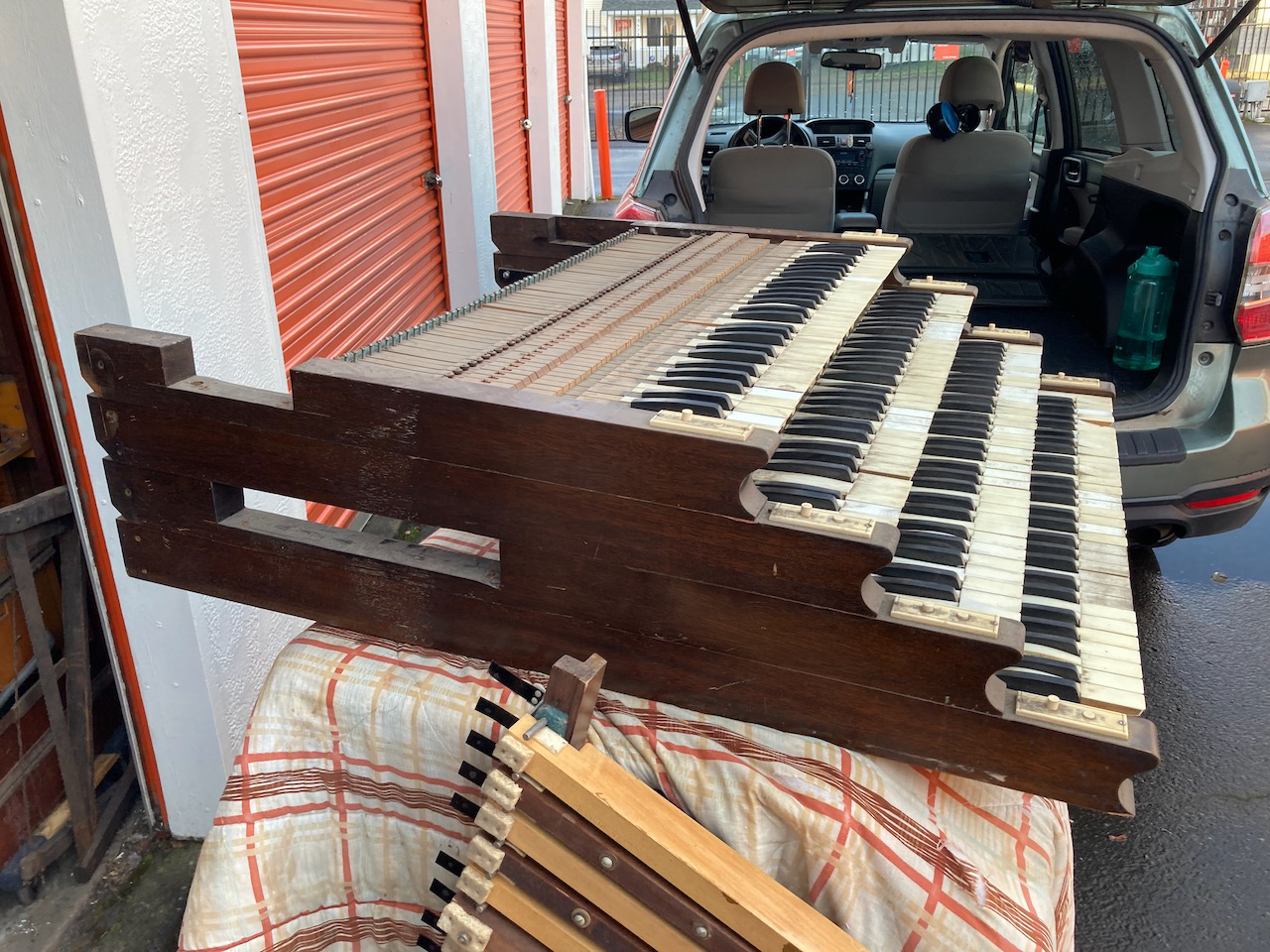
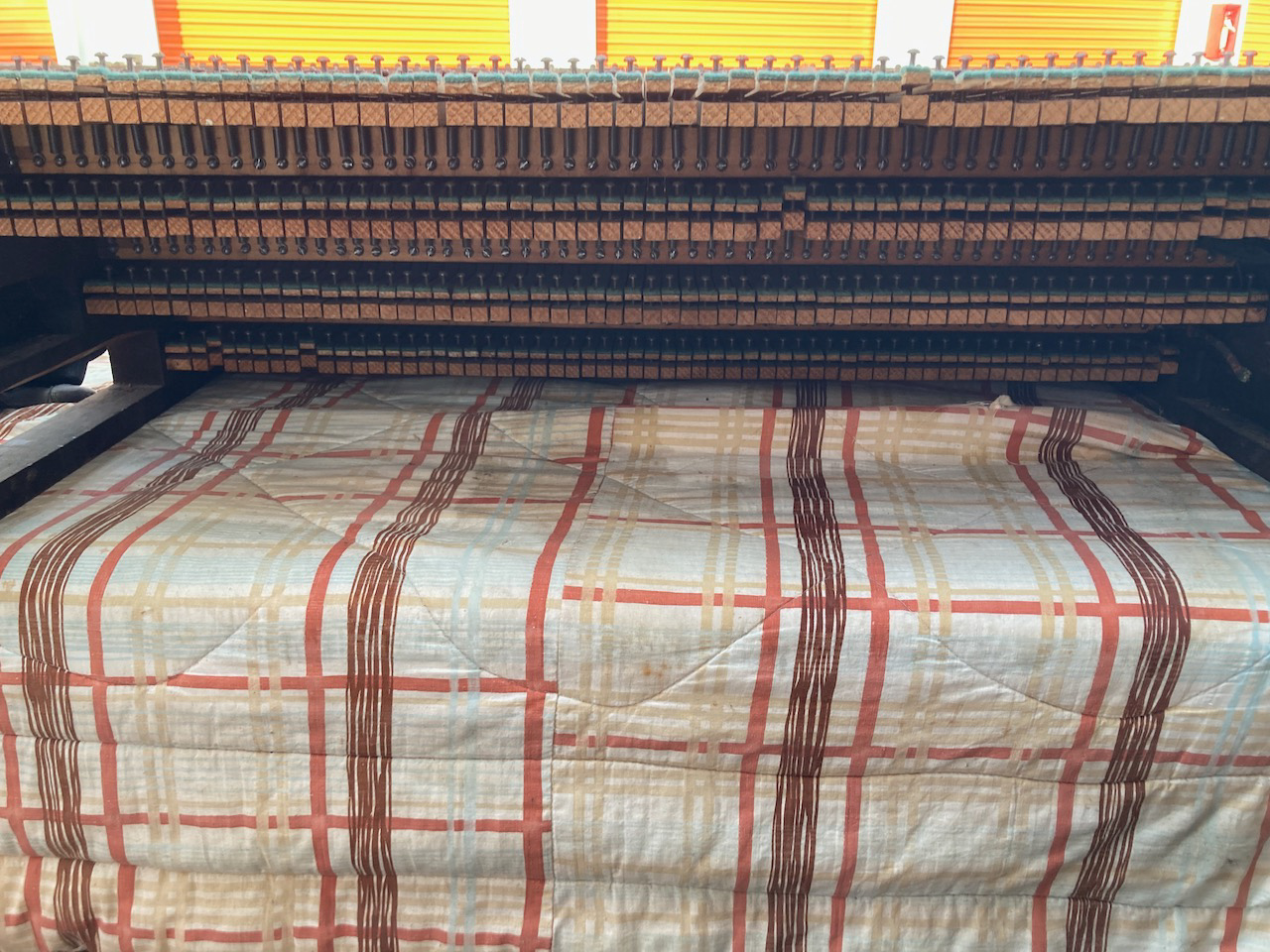
Notes: This console was originally from First Presbyterian Church in Downtown Portland. The first two photos were taken there in 1990. It is gigantic, and until we can remove more stuff from around it, it can’t be completely photographed. The keys are in bad shape, due to the storage unit not being temperature controlled, with many of the ivories falling off. We have gathered and bagged up as many as we could find, which is the vast majority, but unsure if any pieces are missing. More info: https://pipeorgandatabase.org/instruments/25256
Dimensions (approximate): 80″w x 57″h x 33″d without keydesk or pedalboard. Keydesk adds 24″ depth.
Consoles
Austin 4-Manual + Pedal Console
Status: Sold, waiting for pick-up.
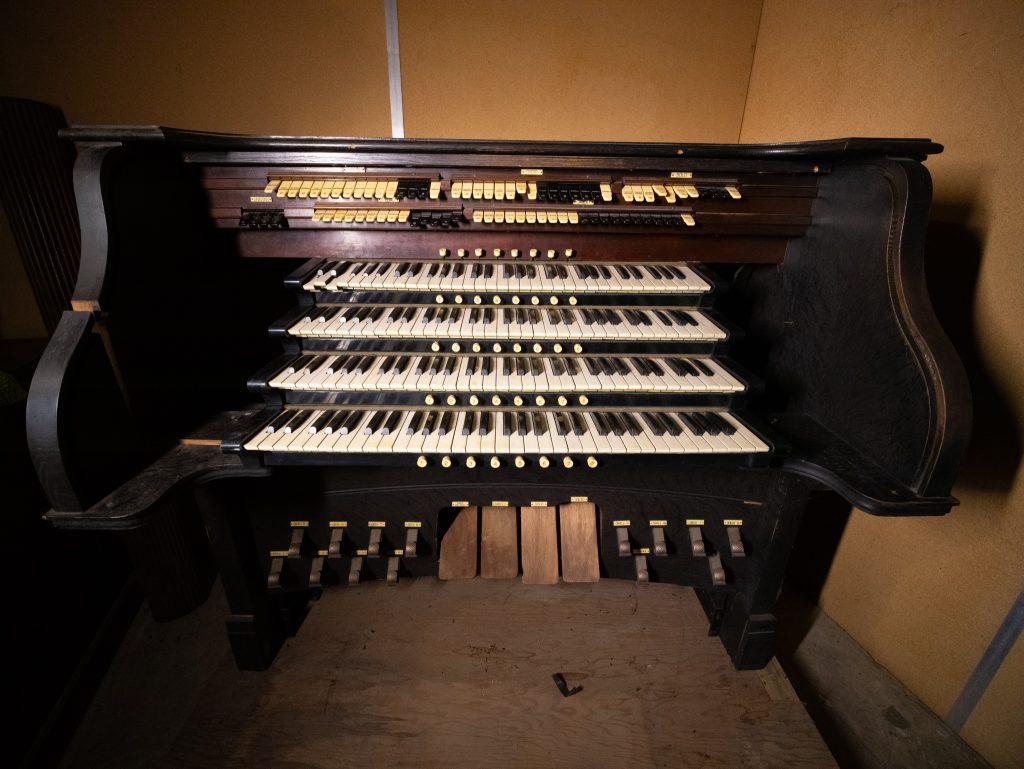
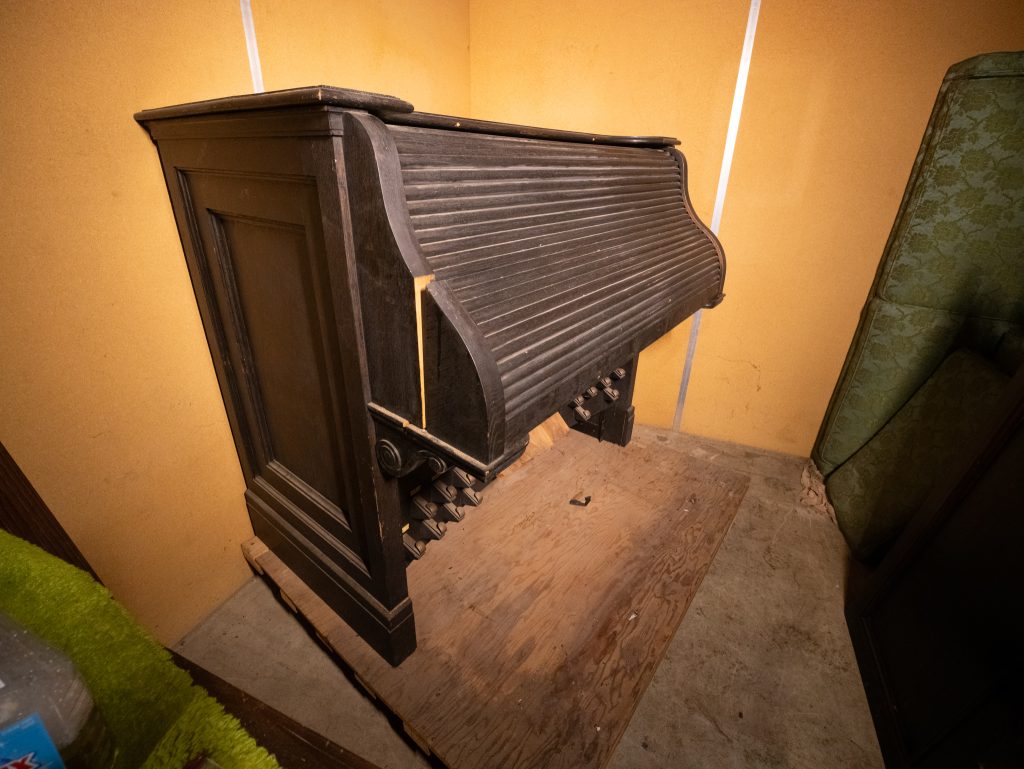
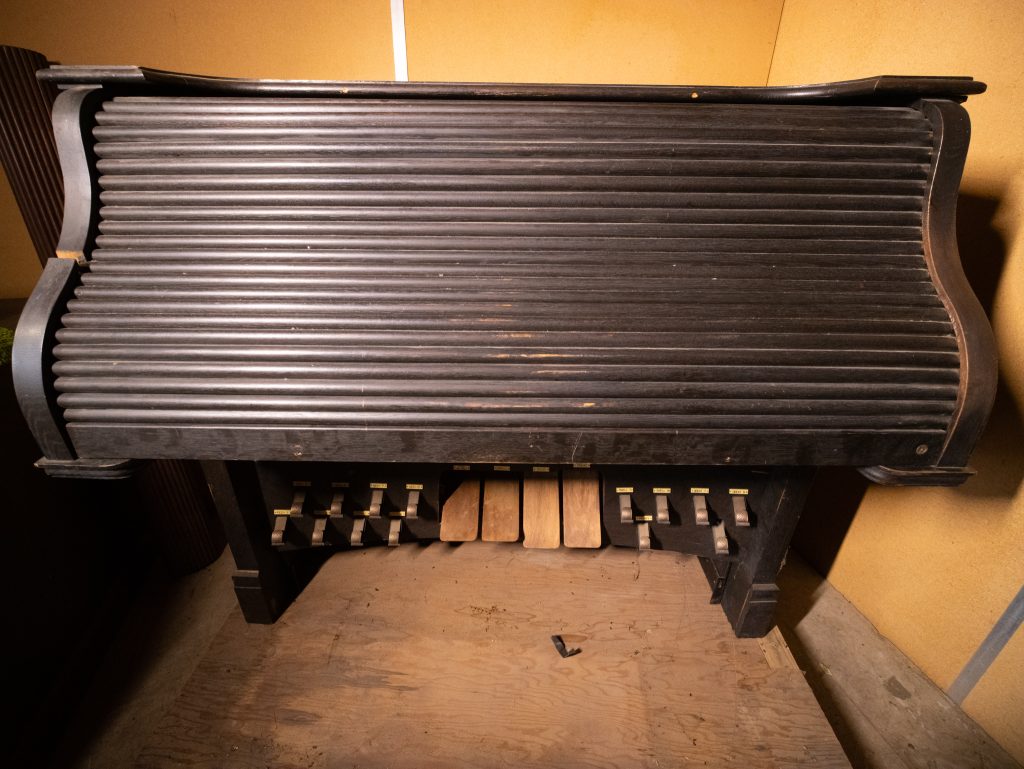
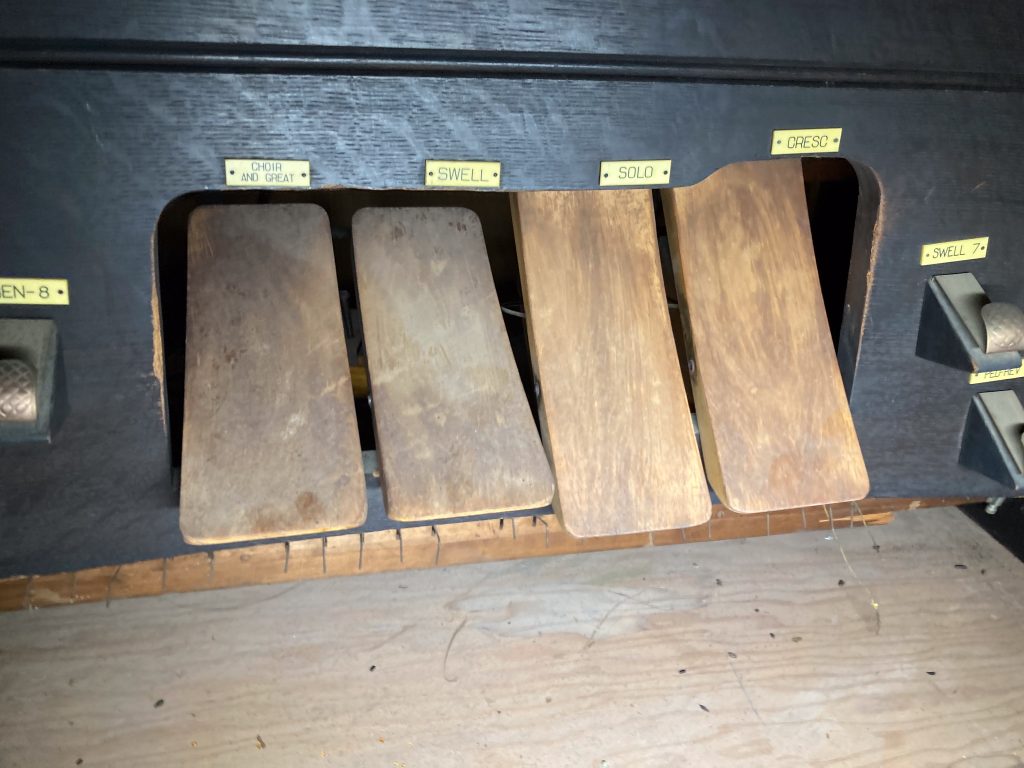
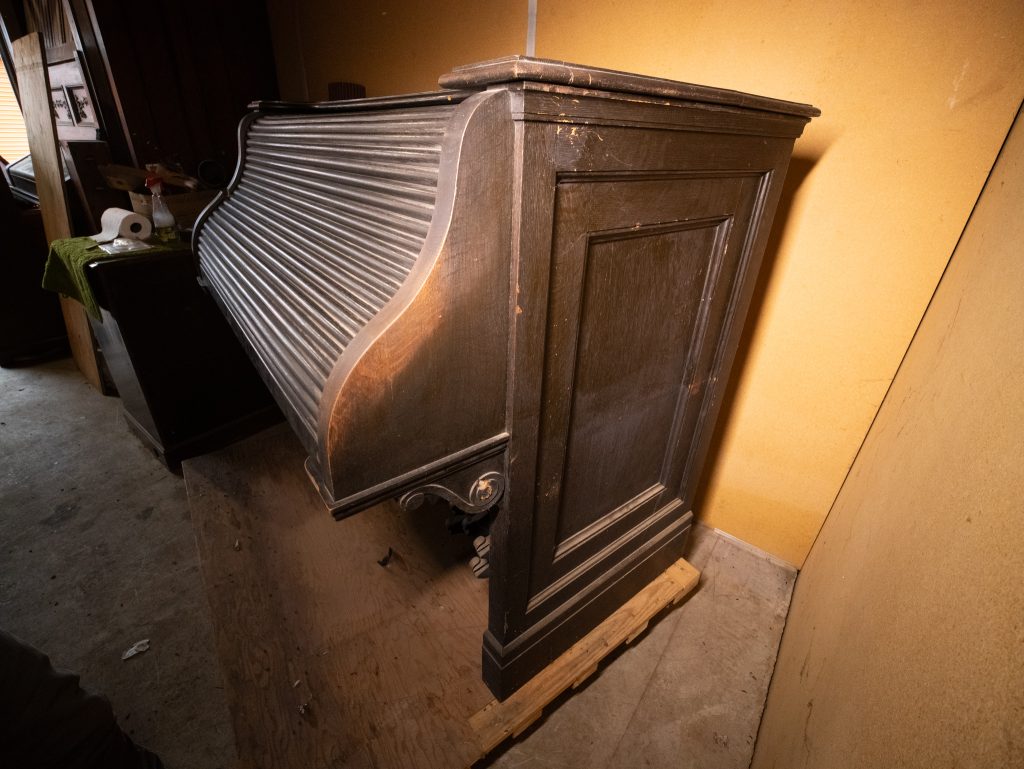
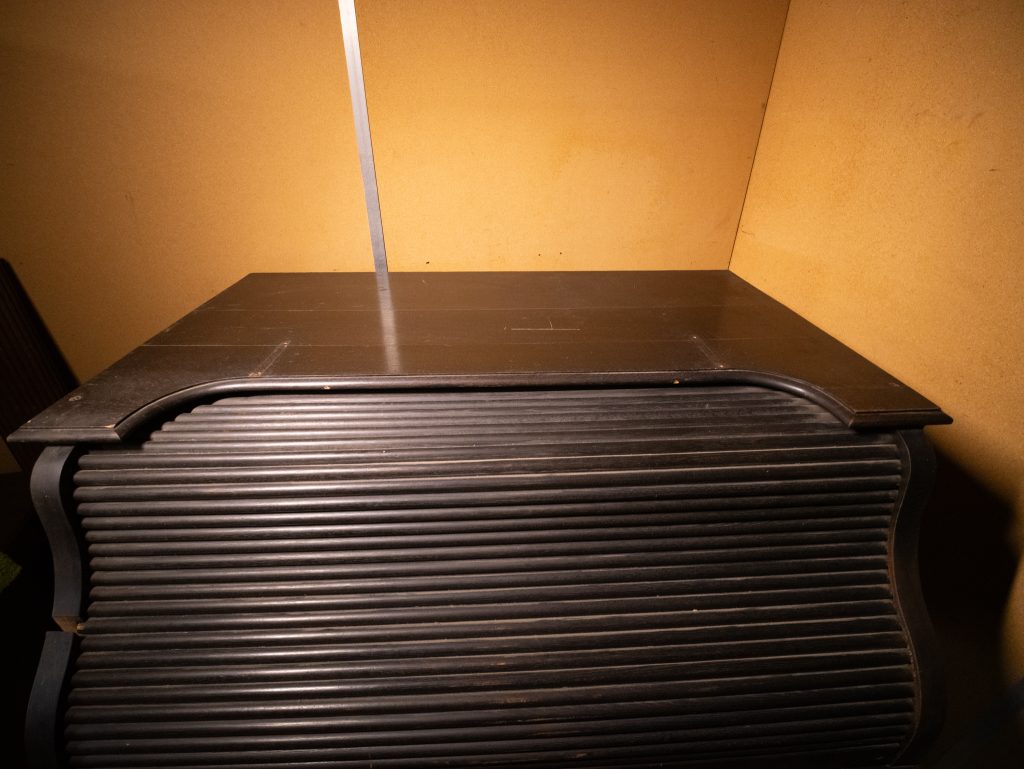
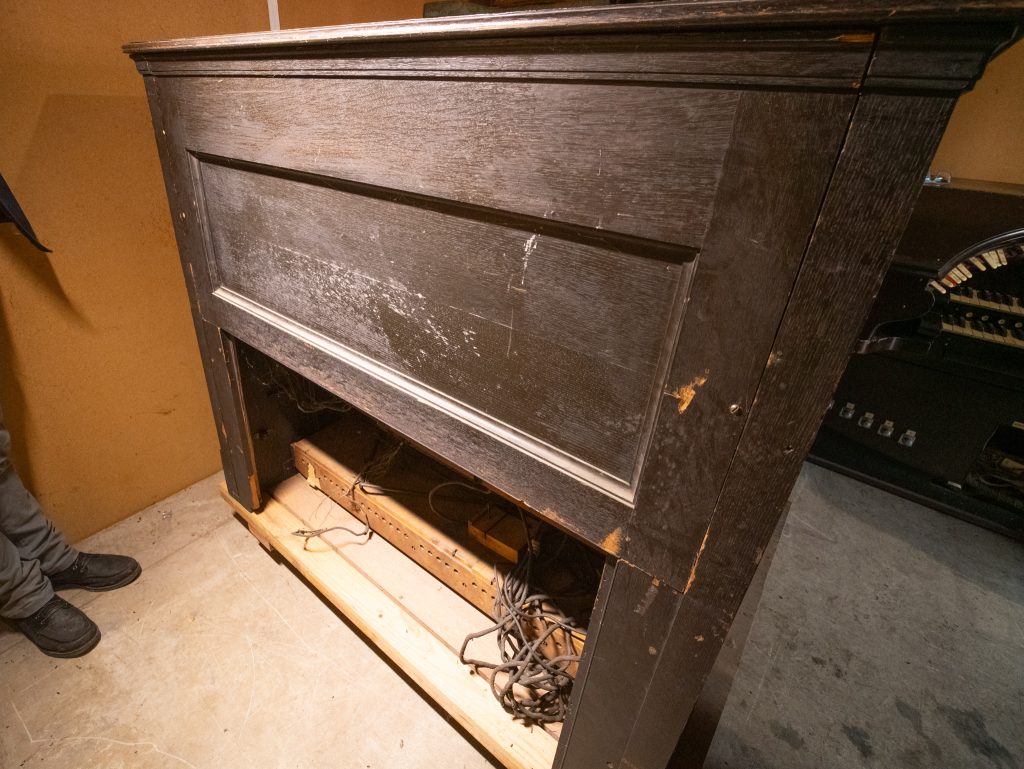
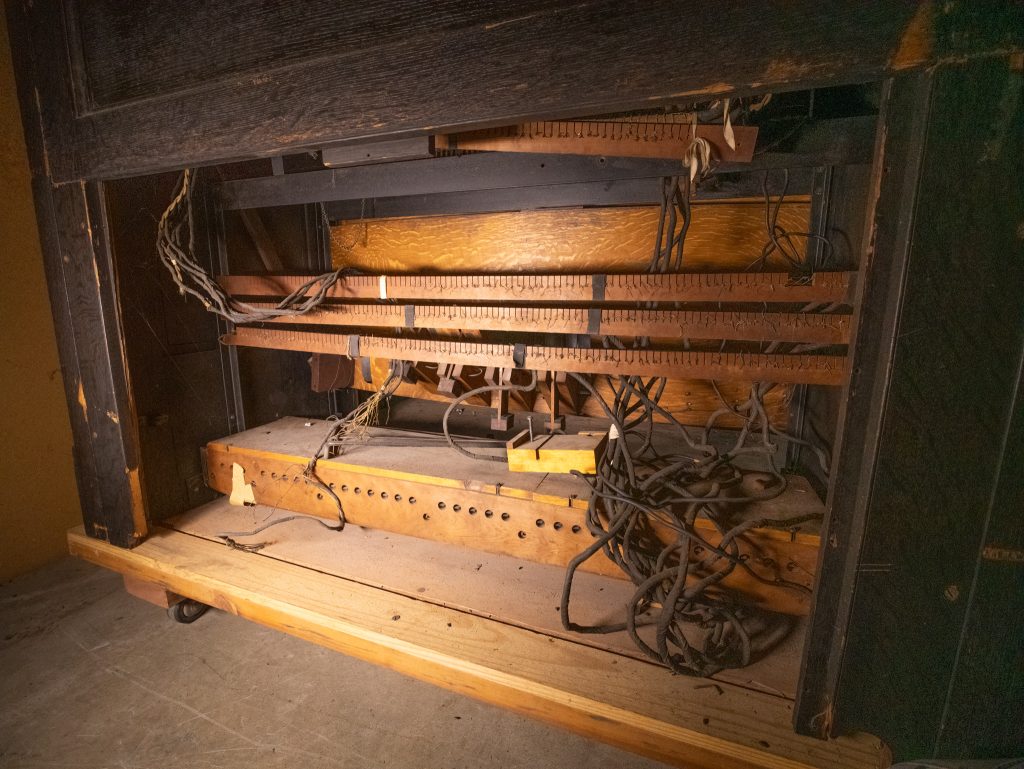
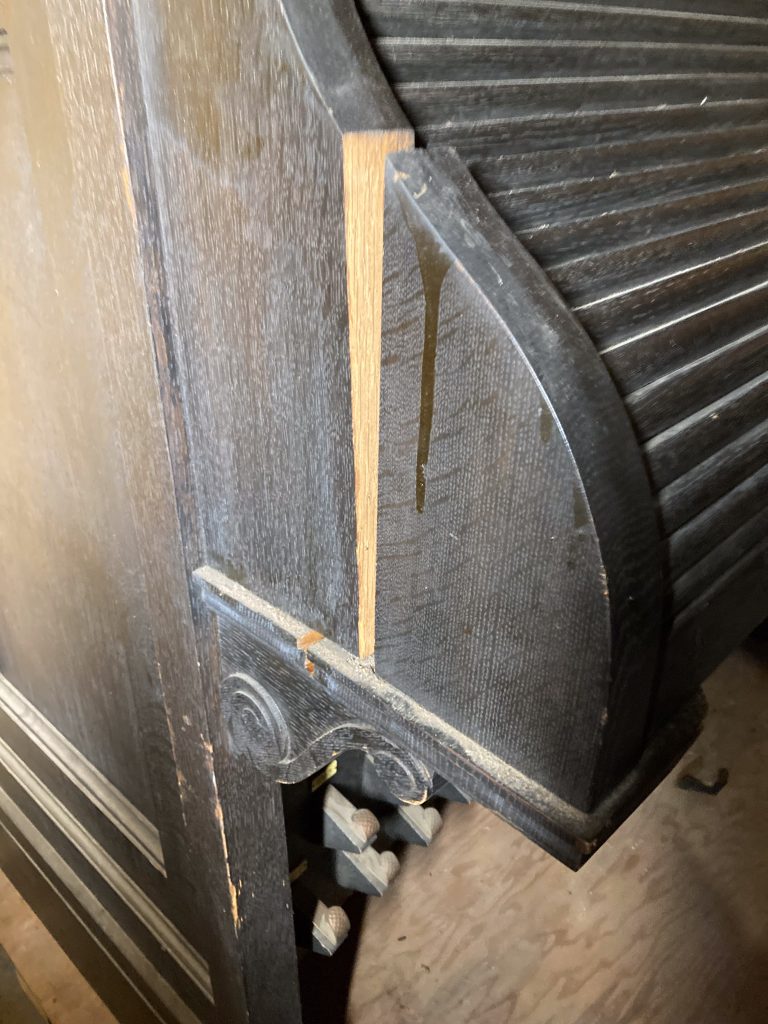
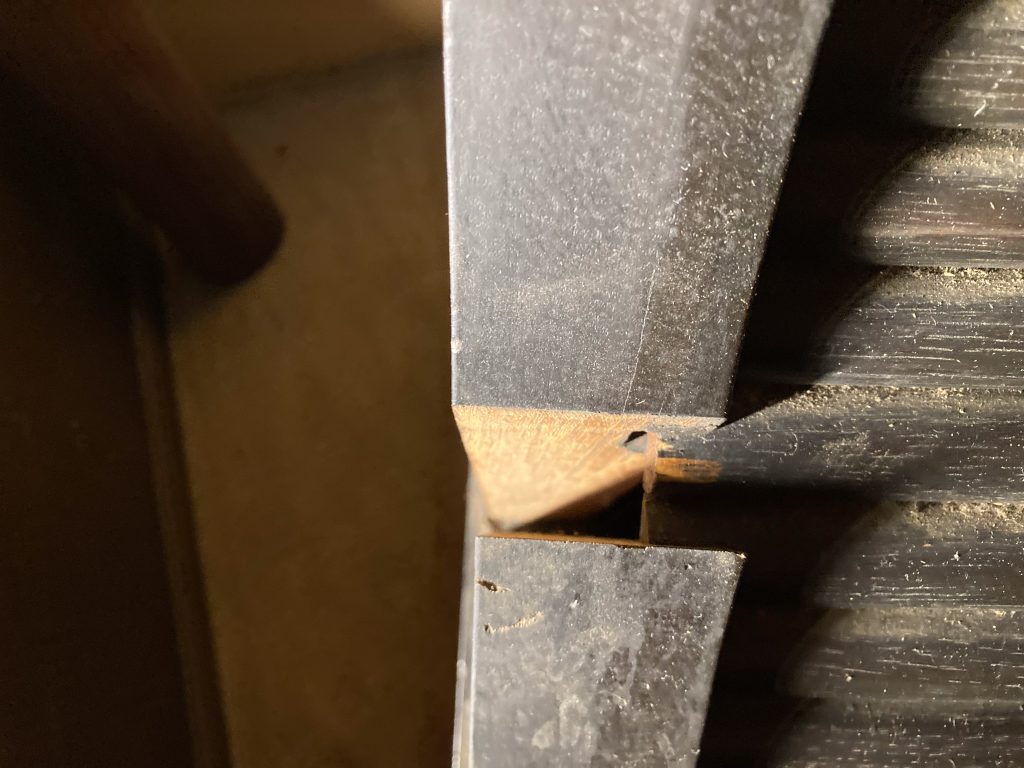
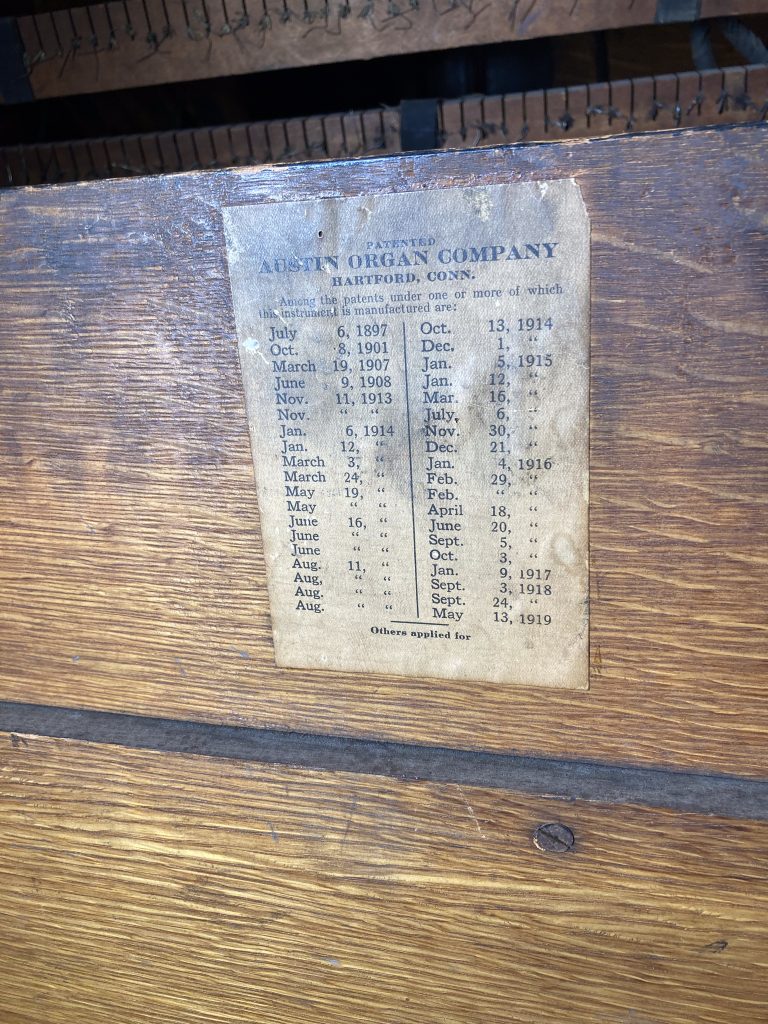
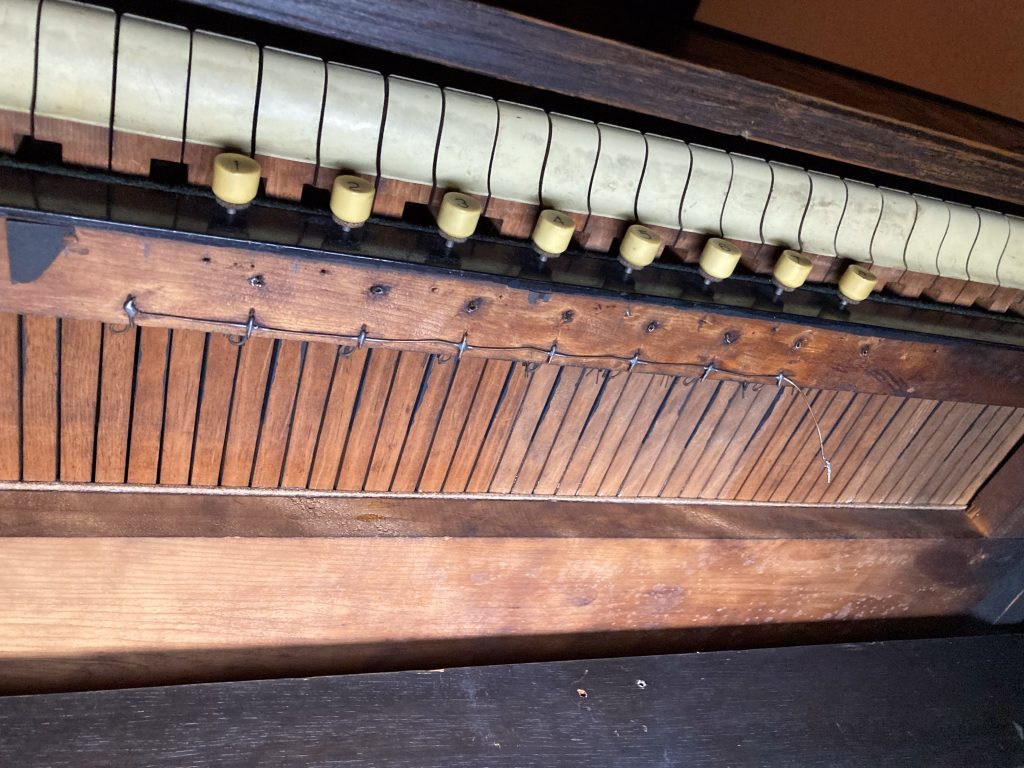
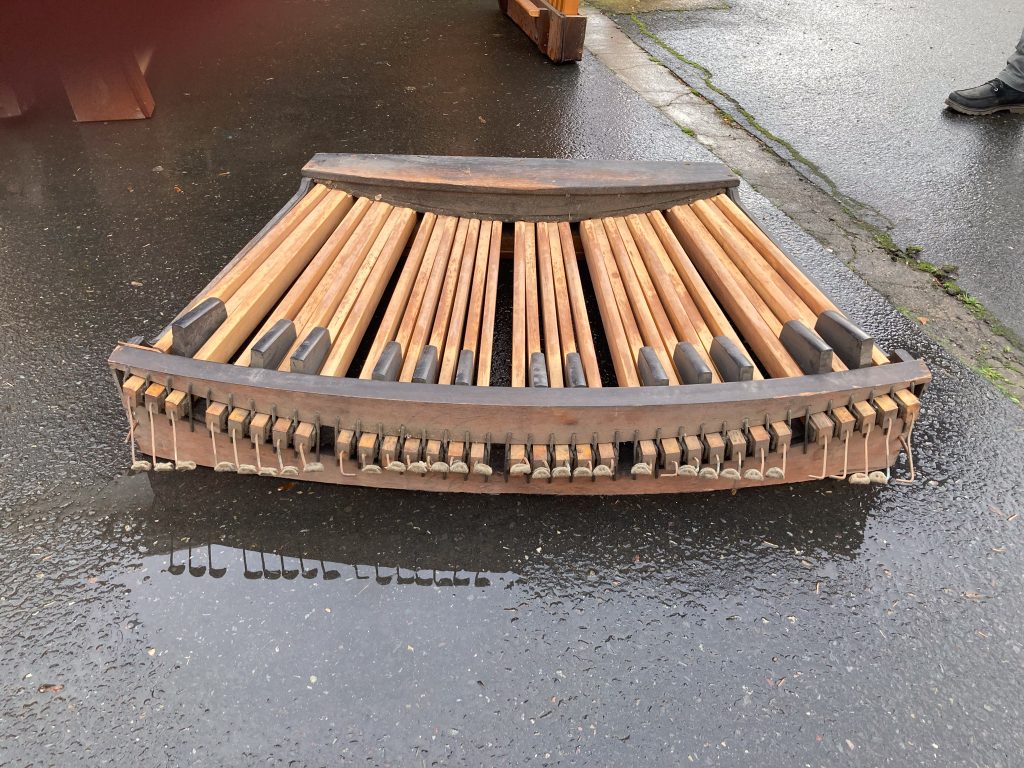
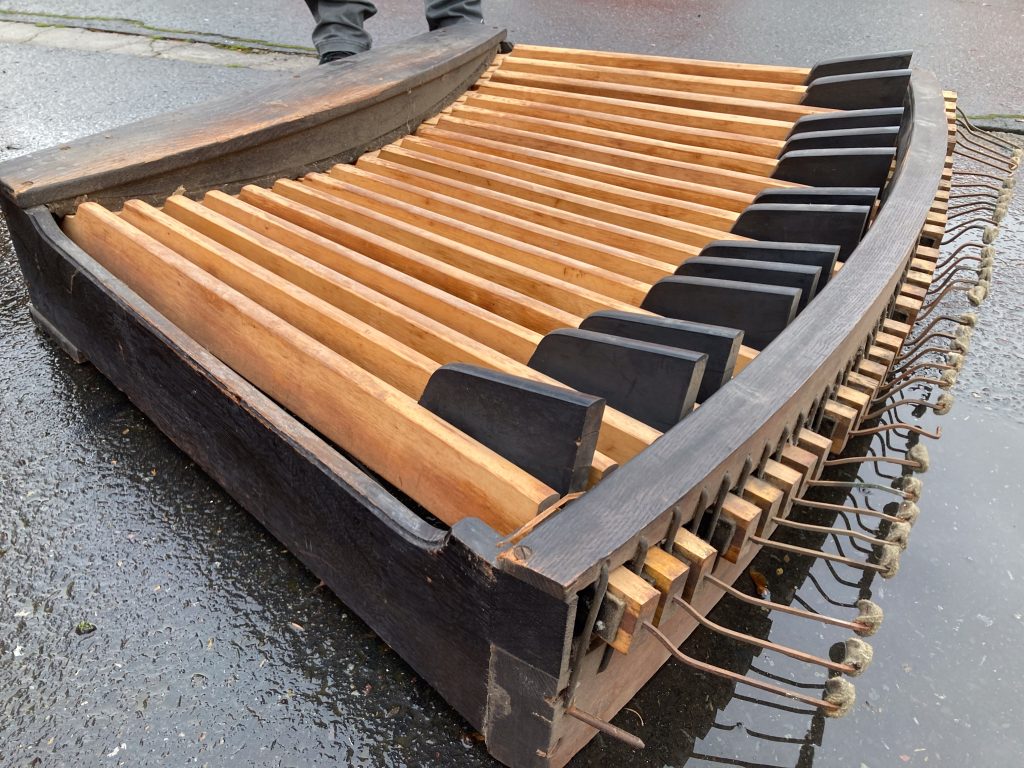
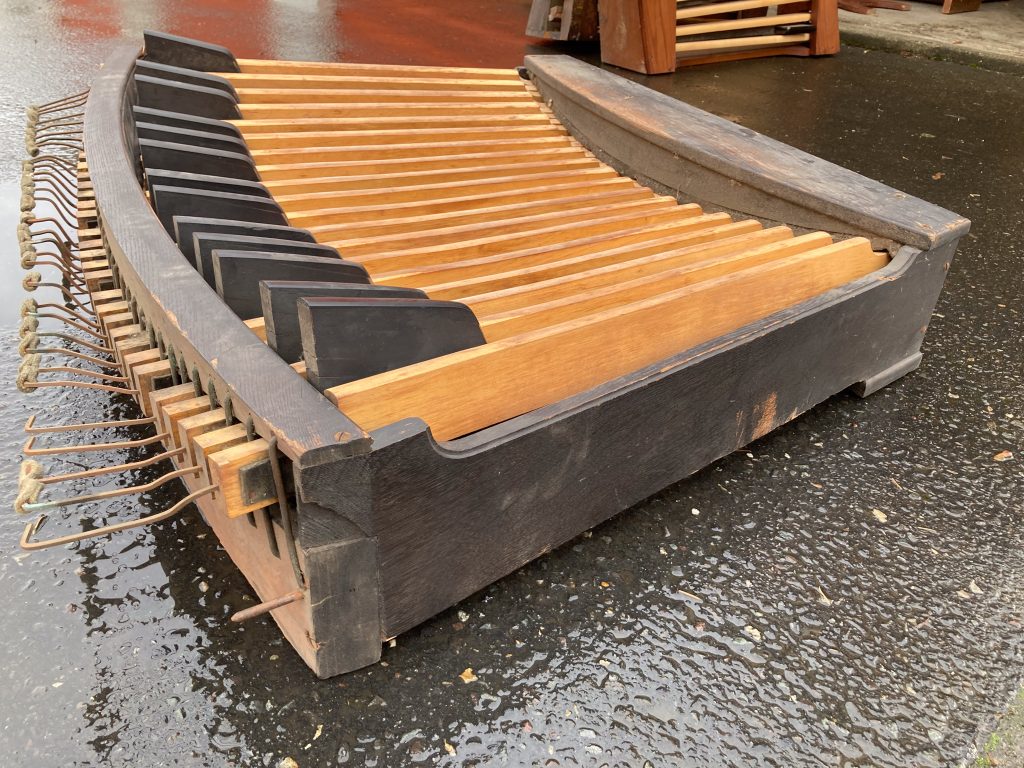
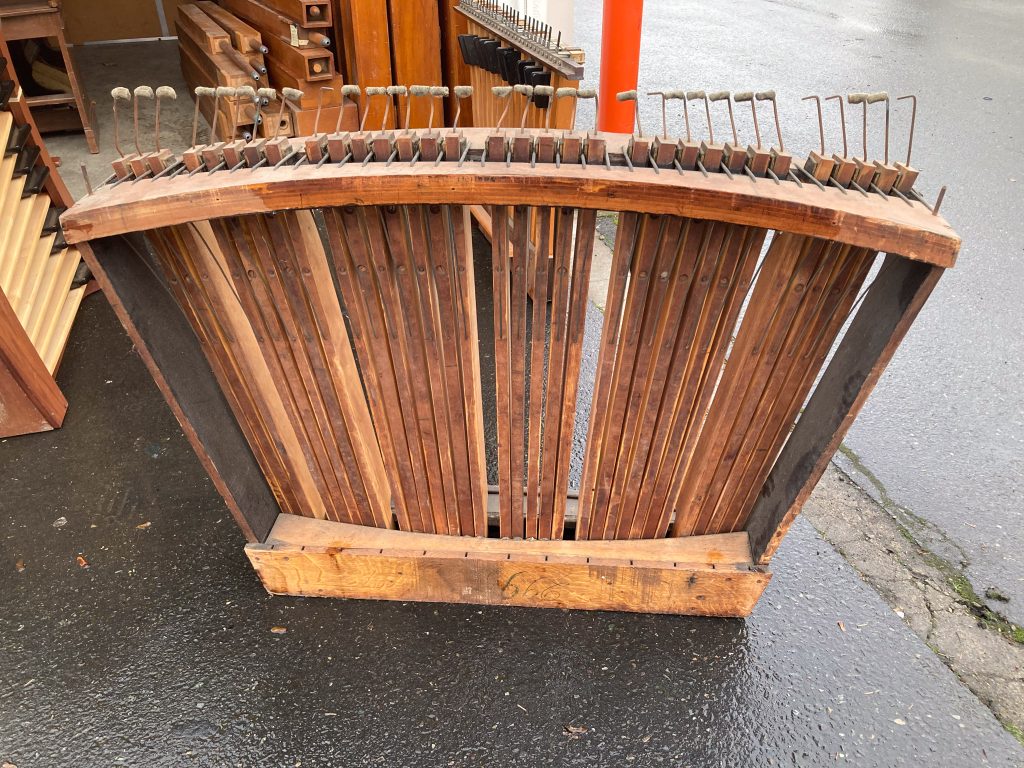
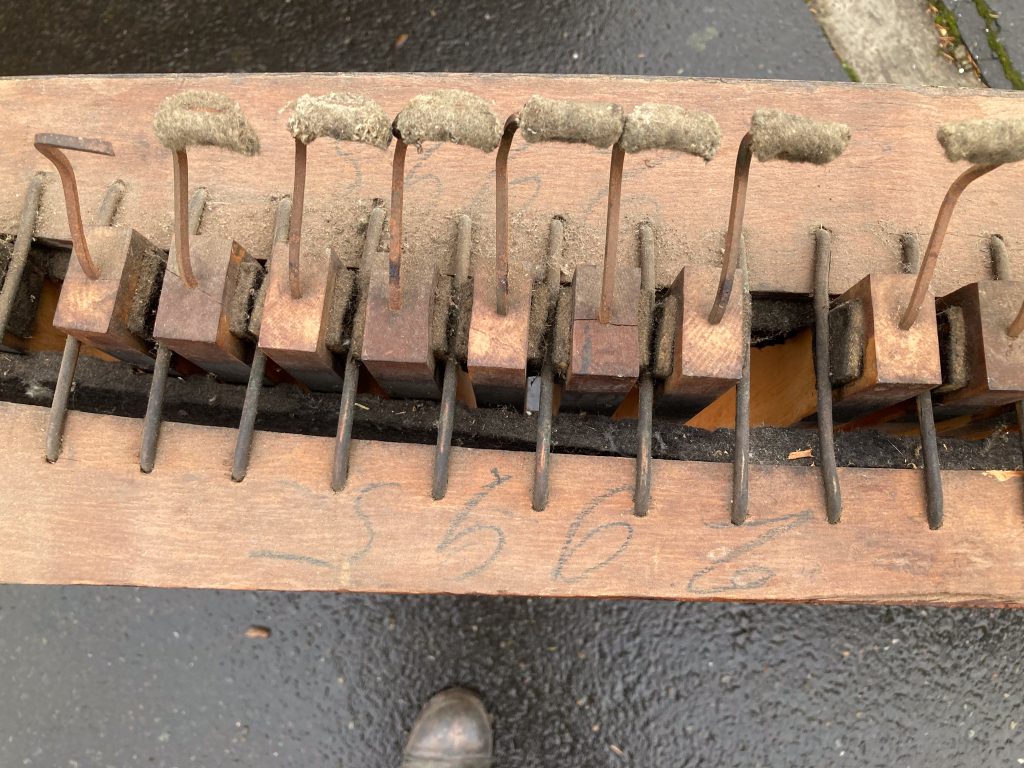
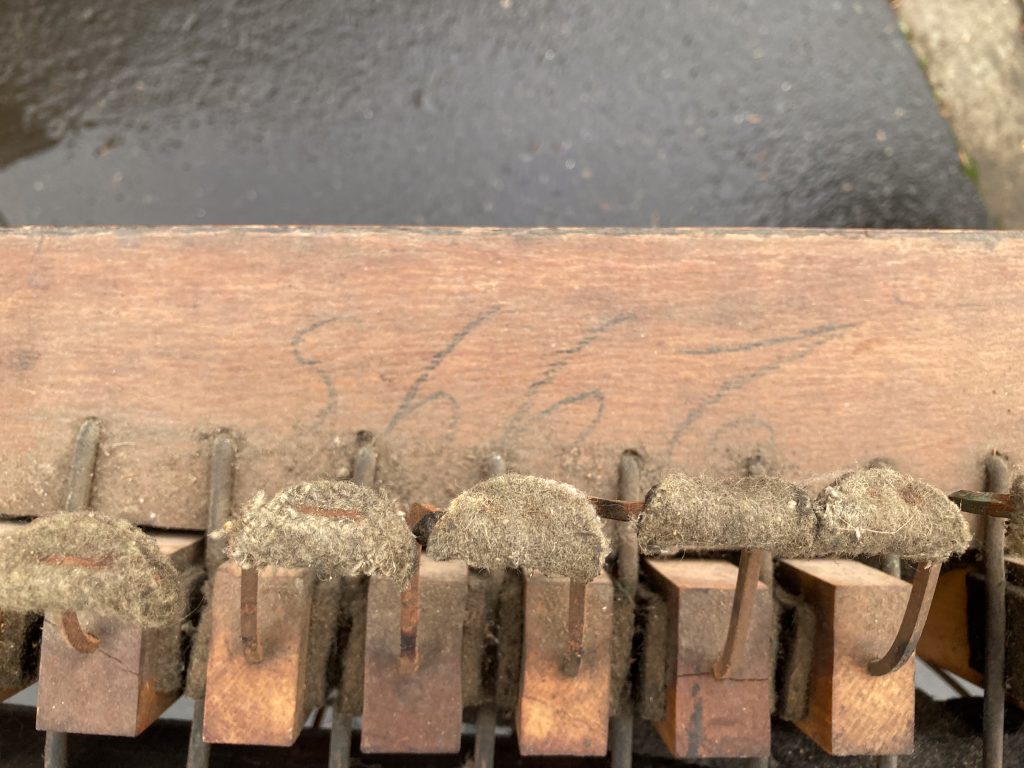
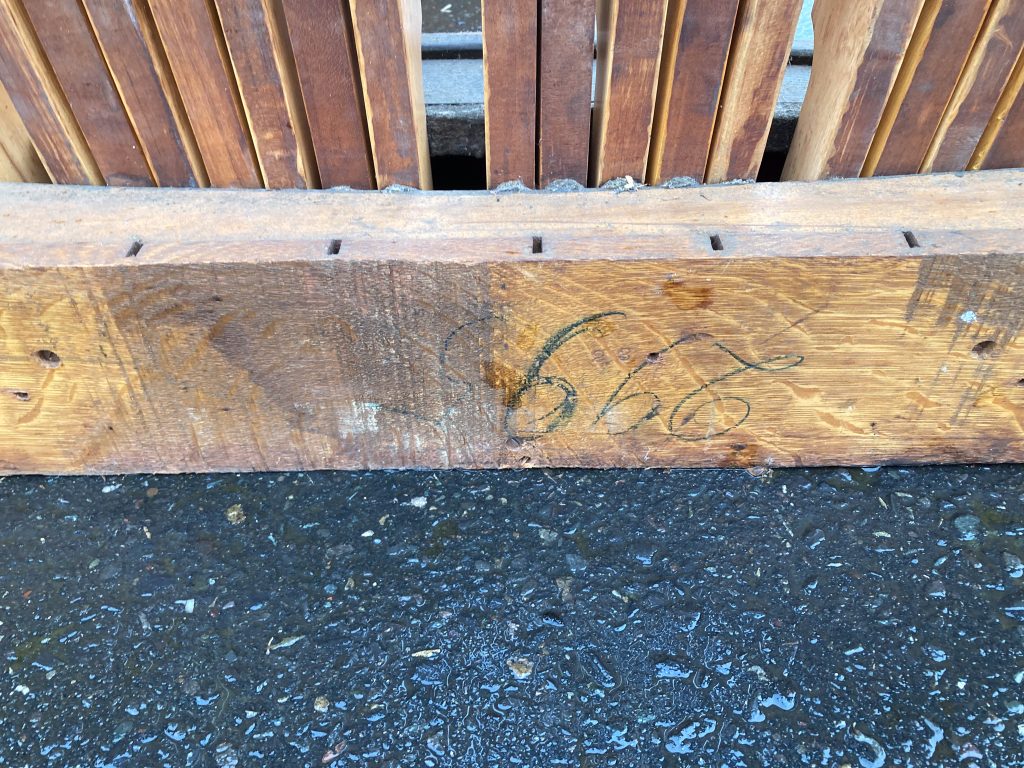
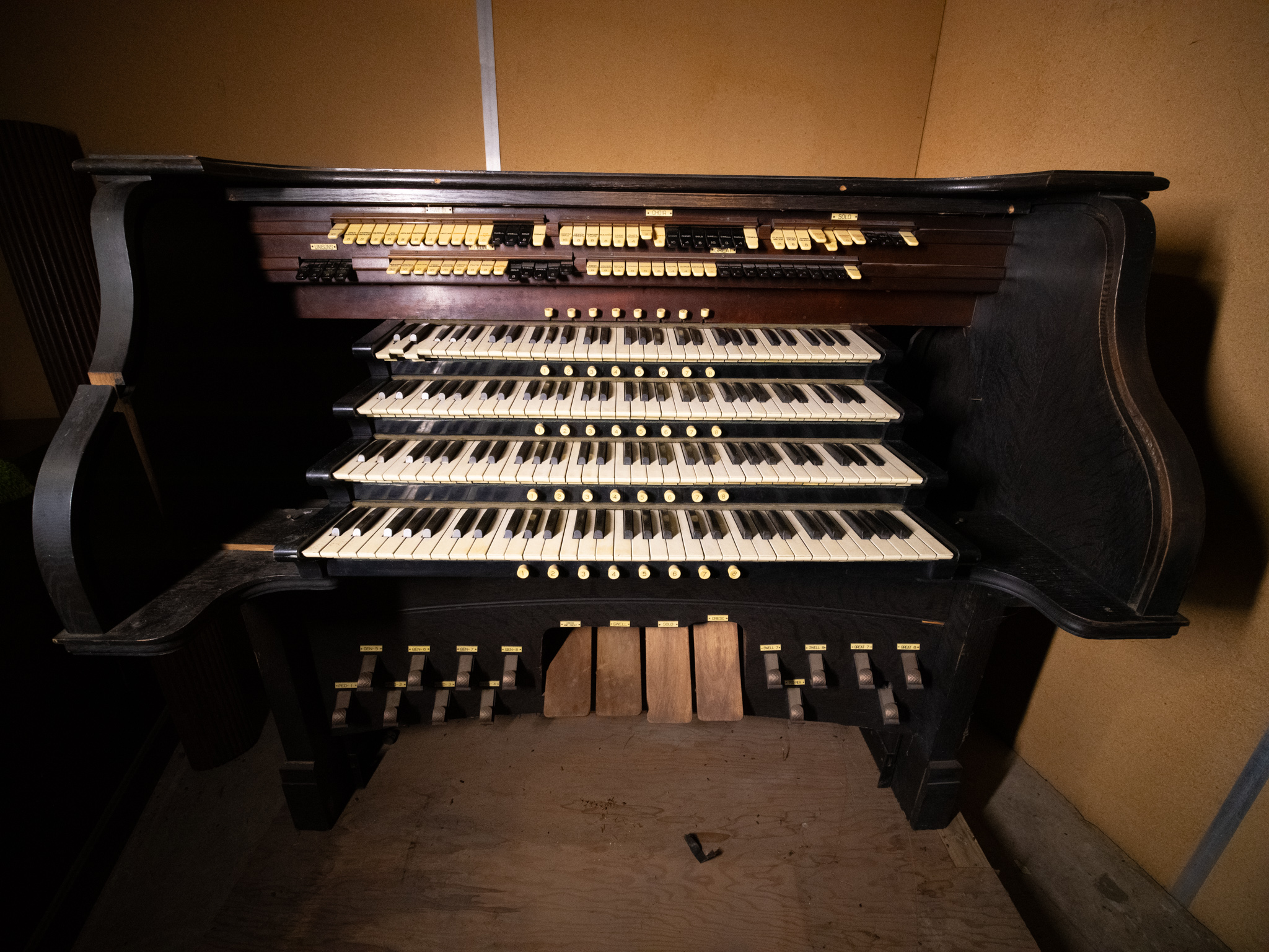

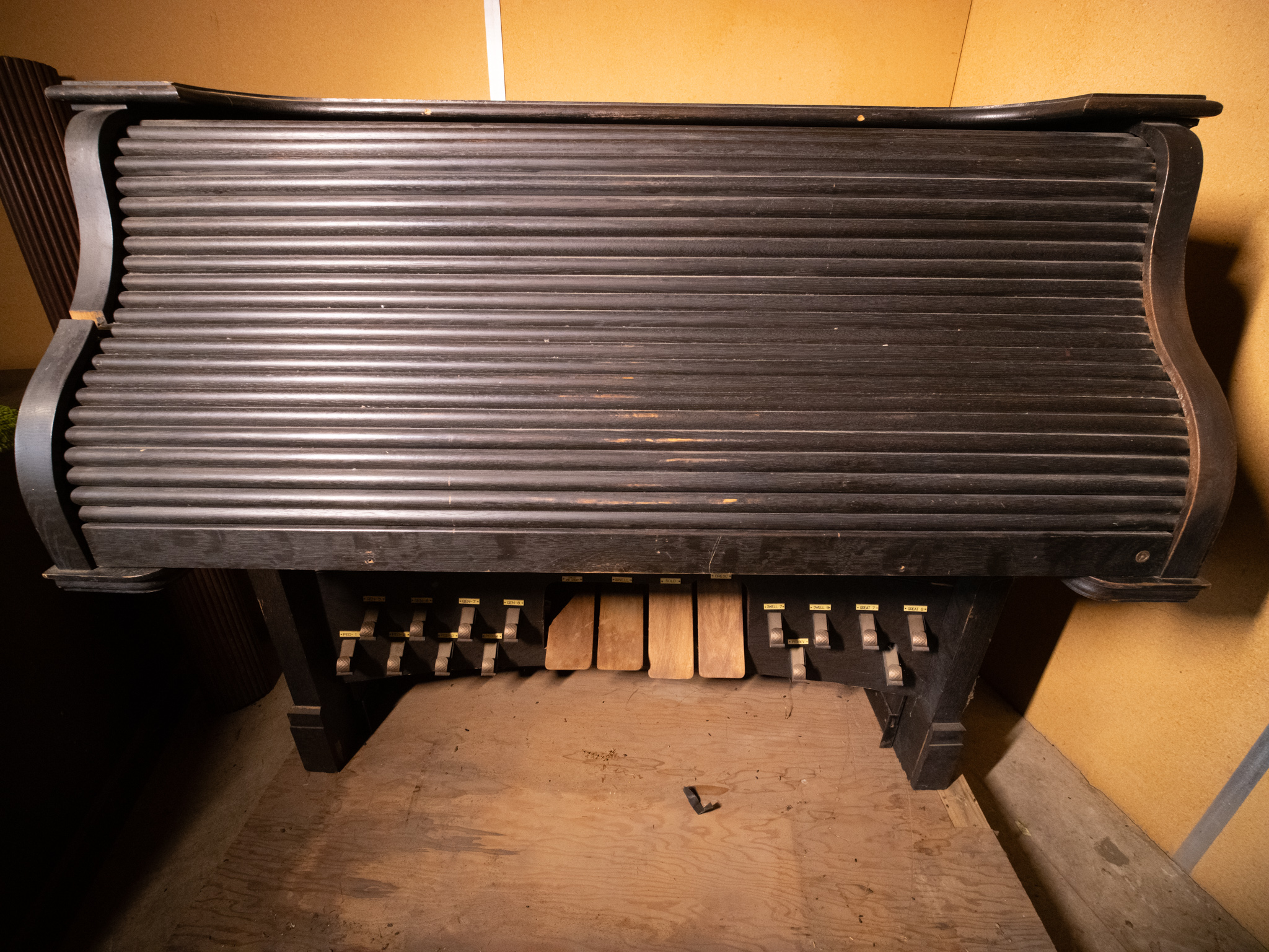
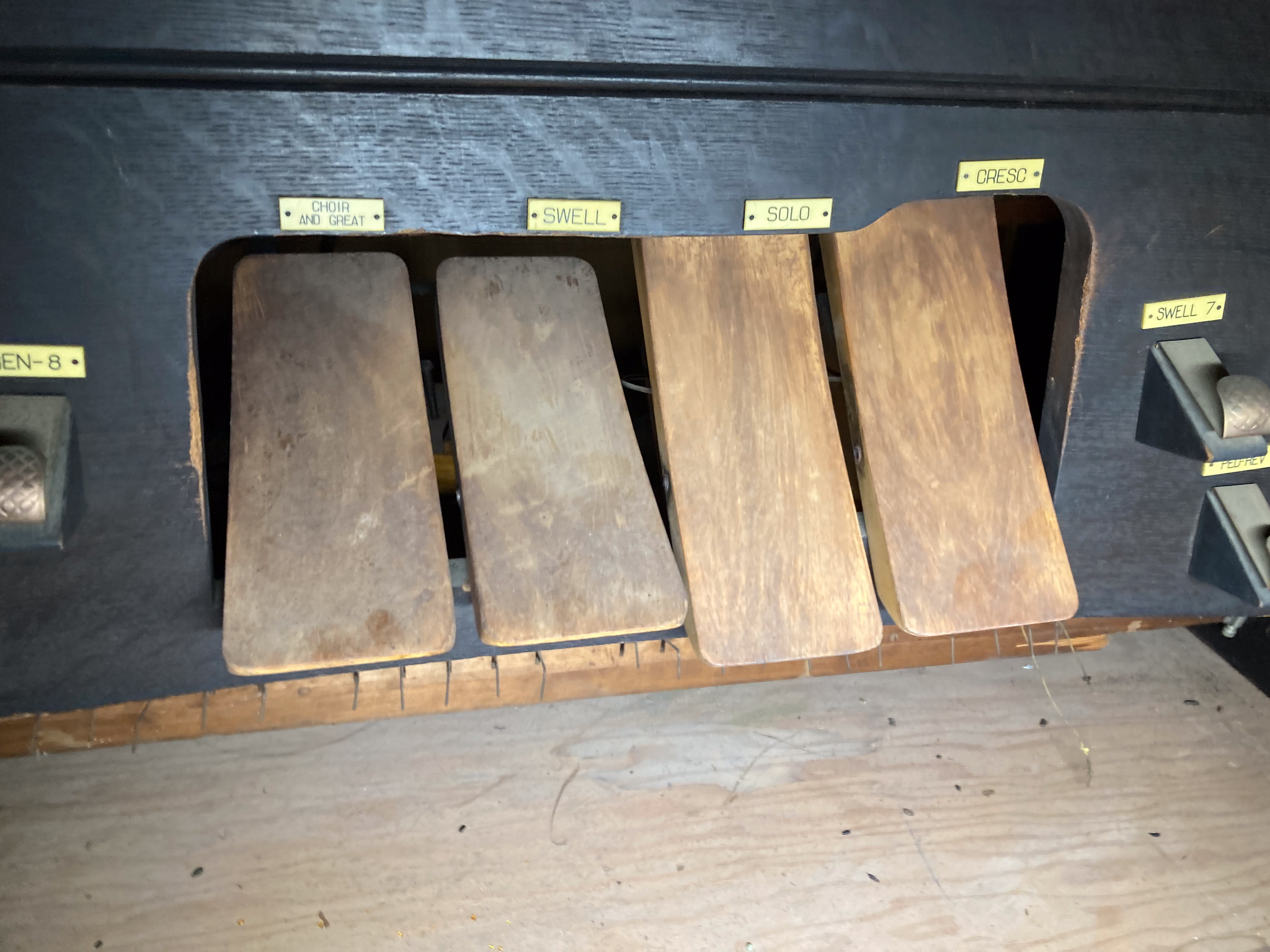
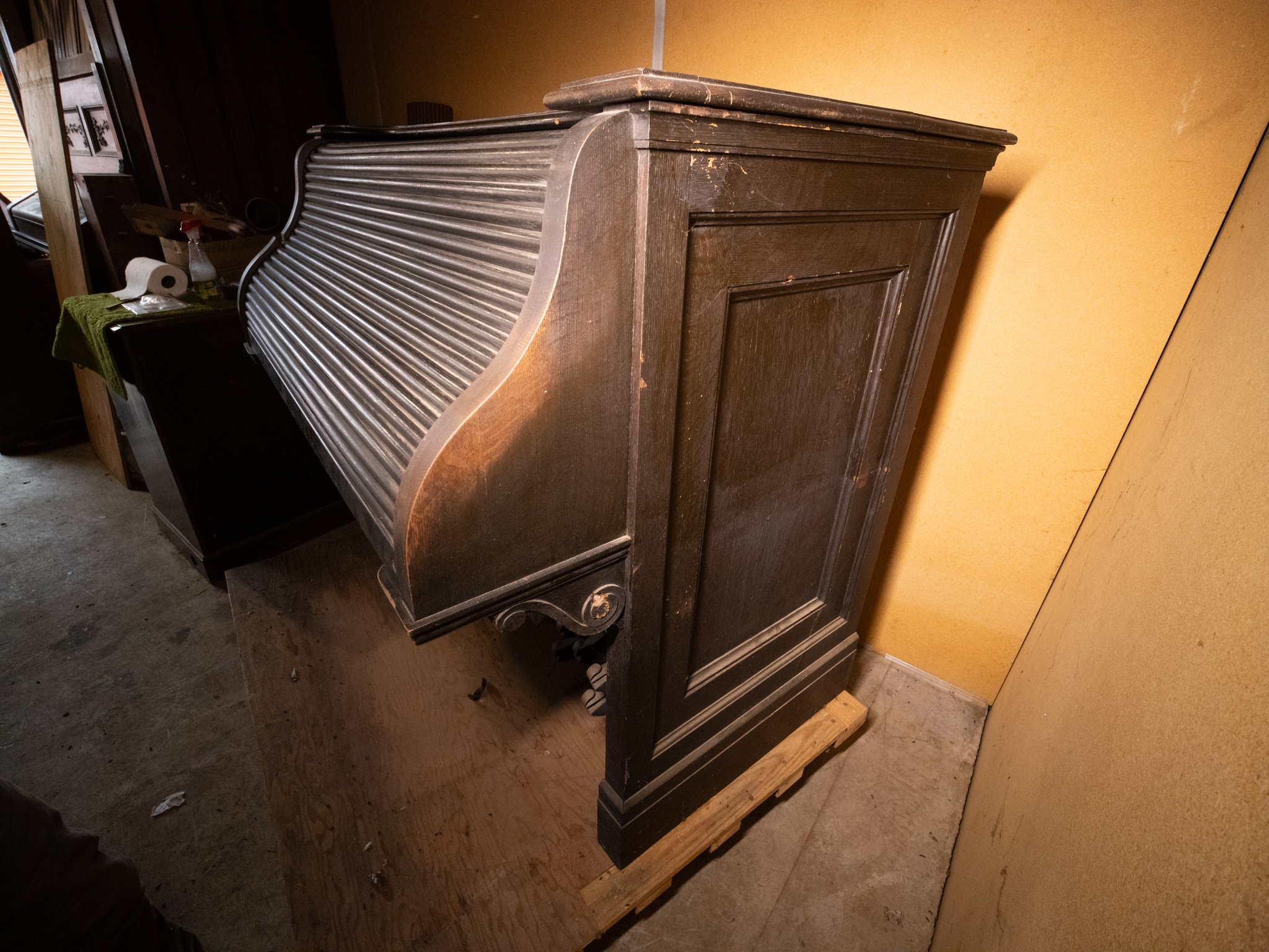
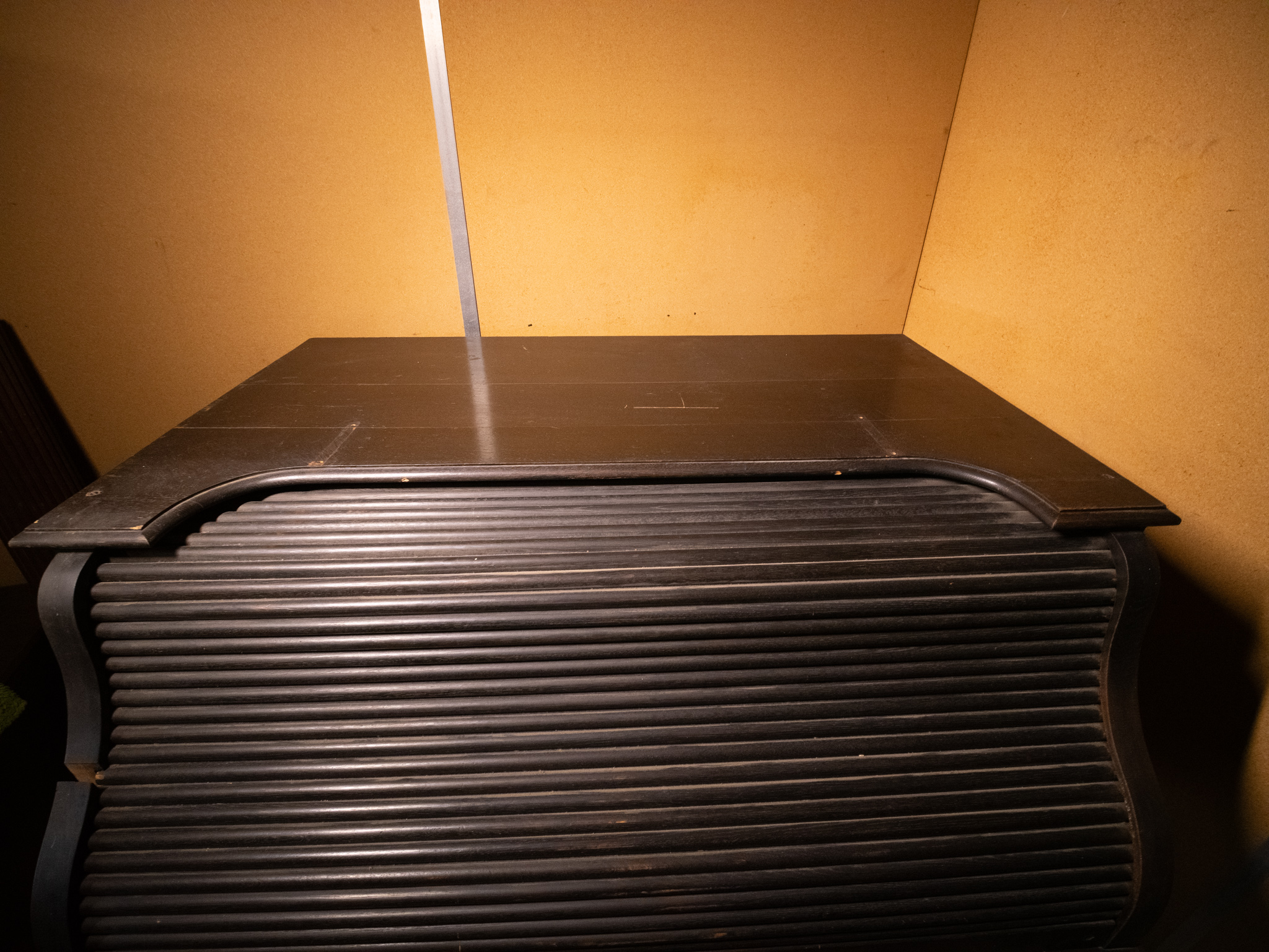
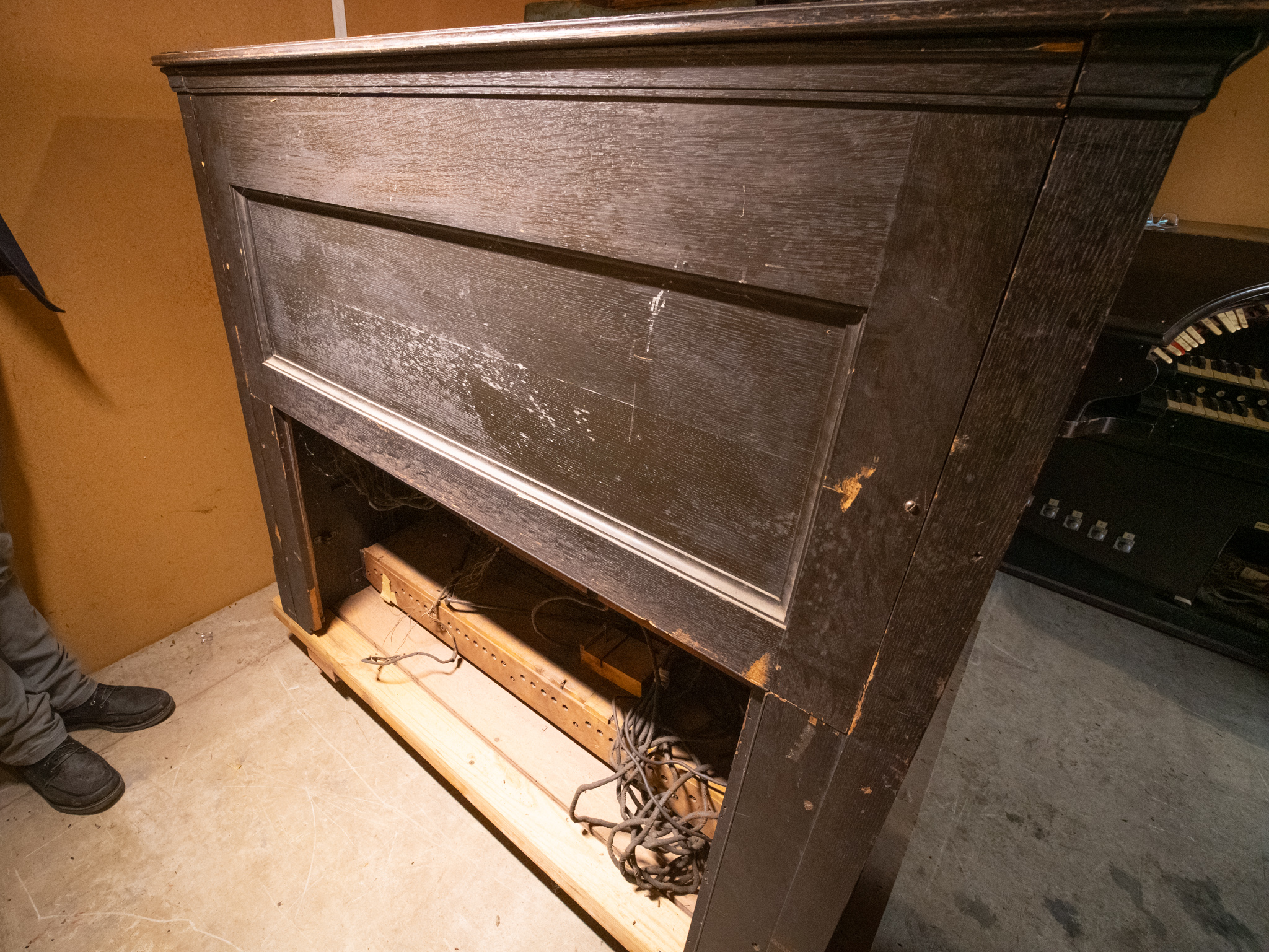
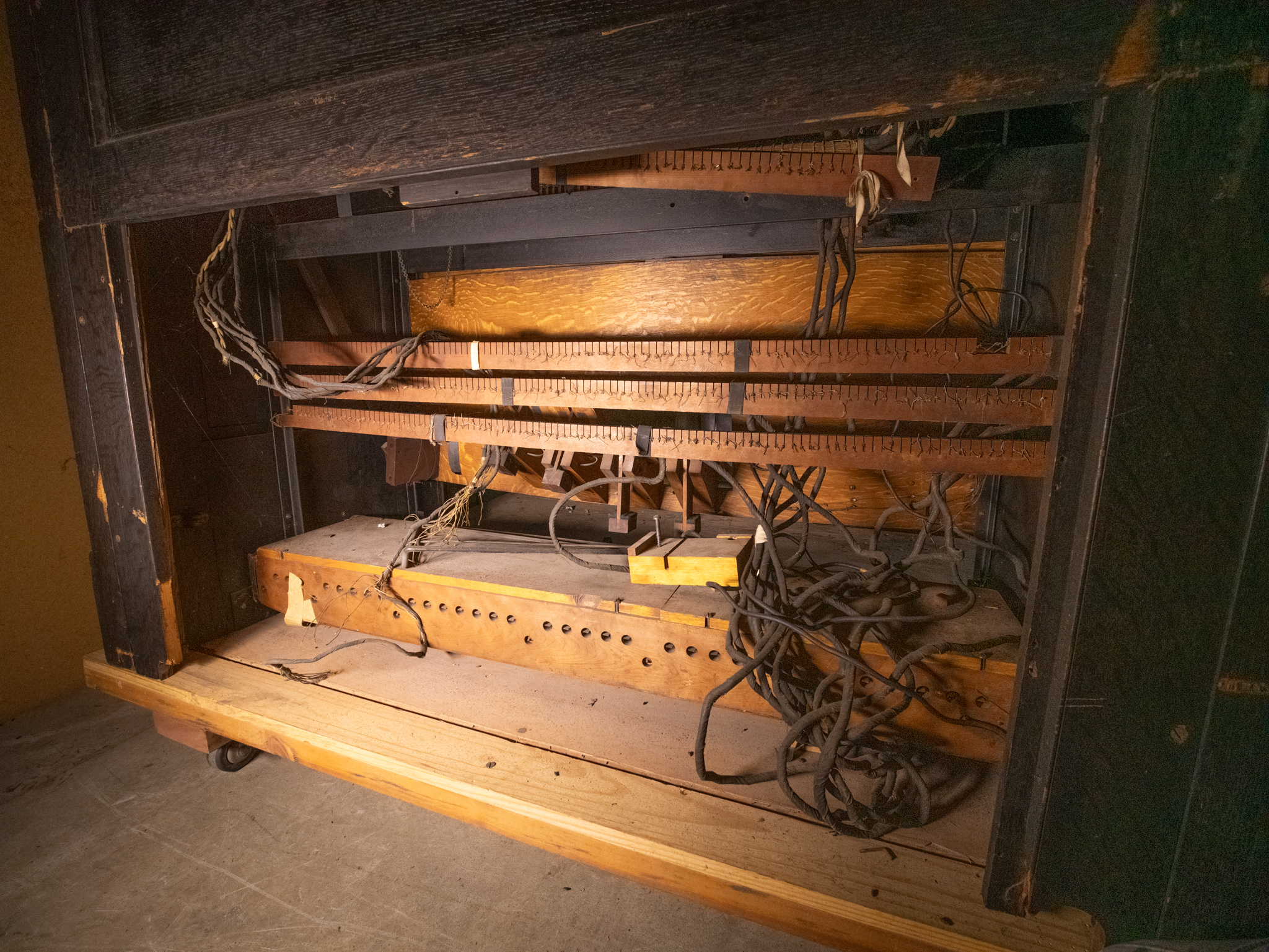
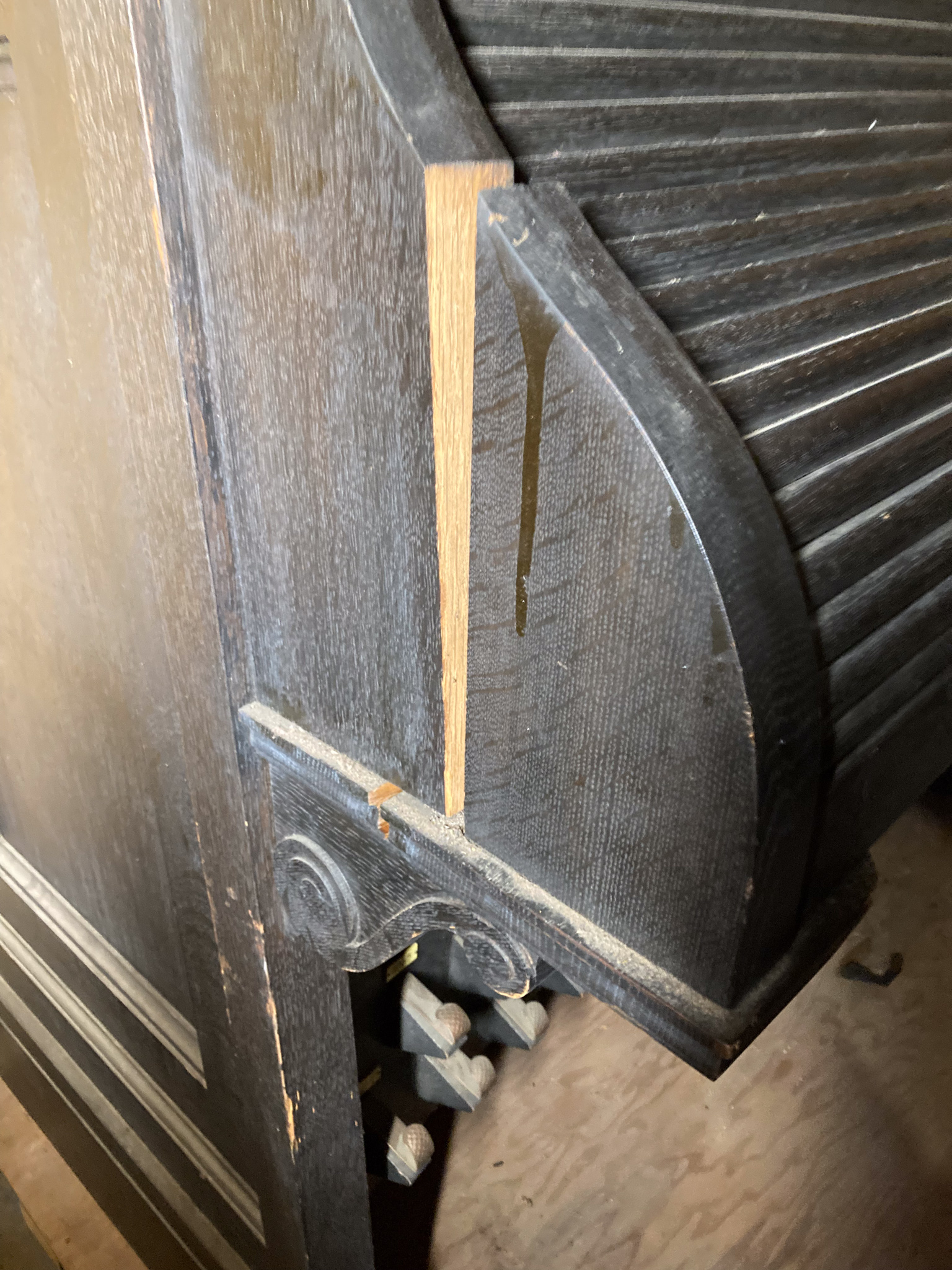
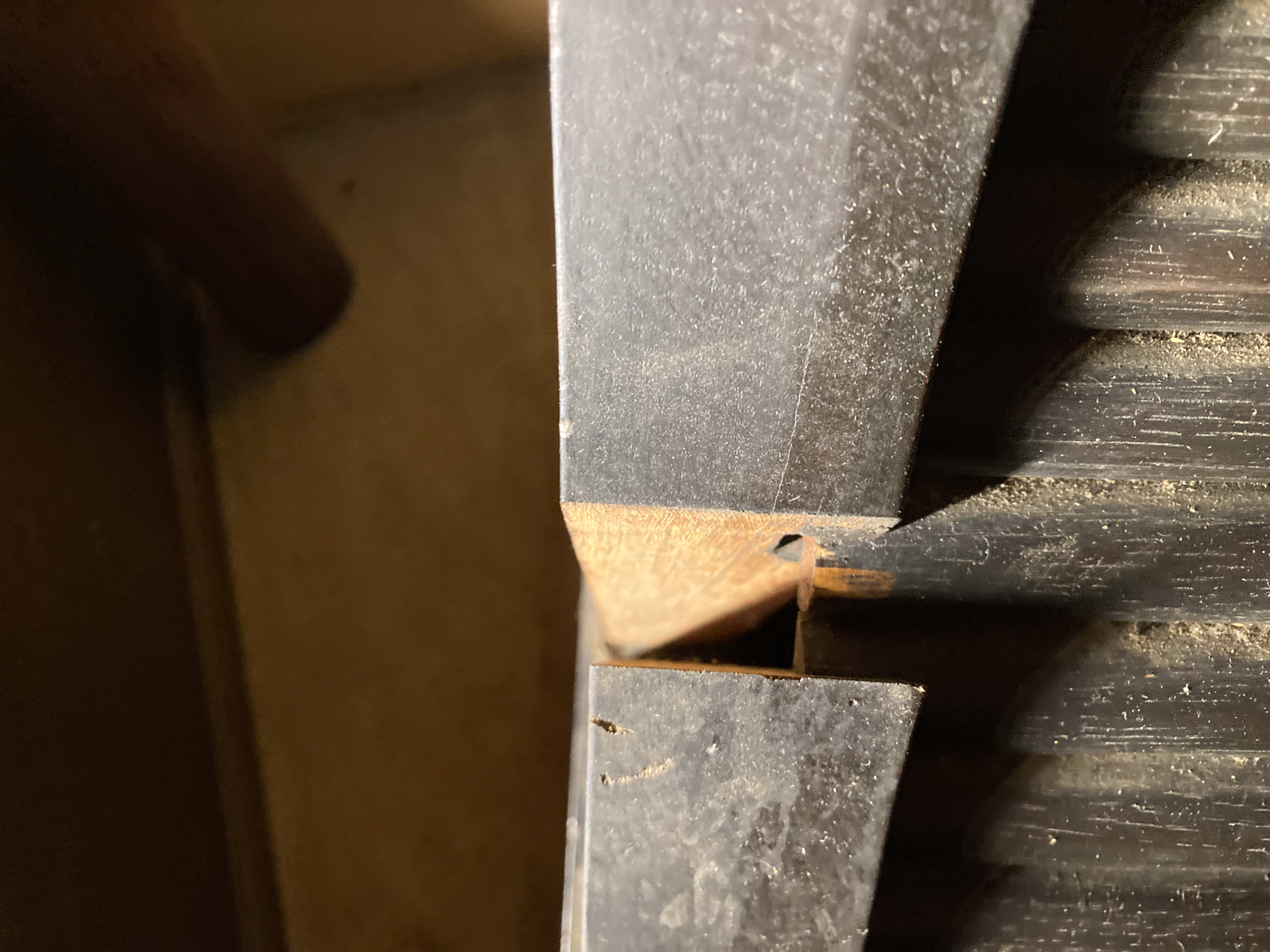
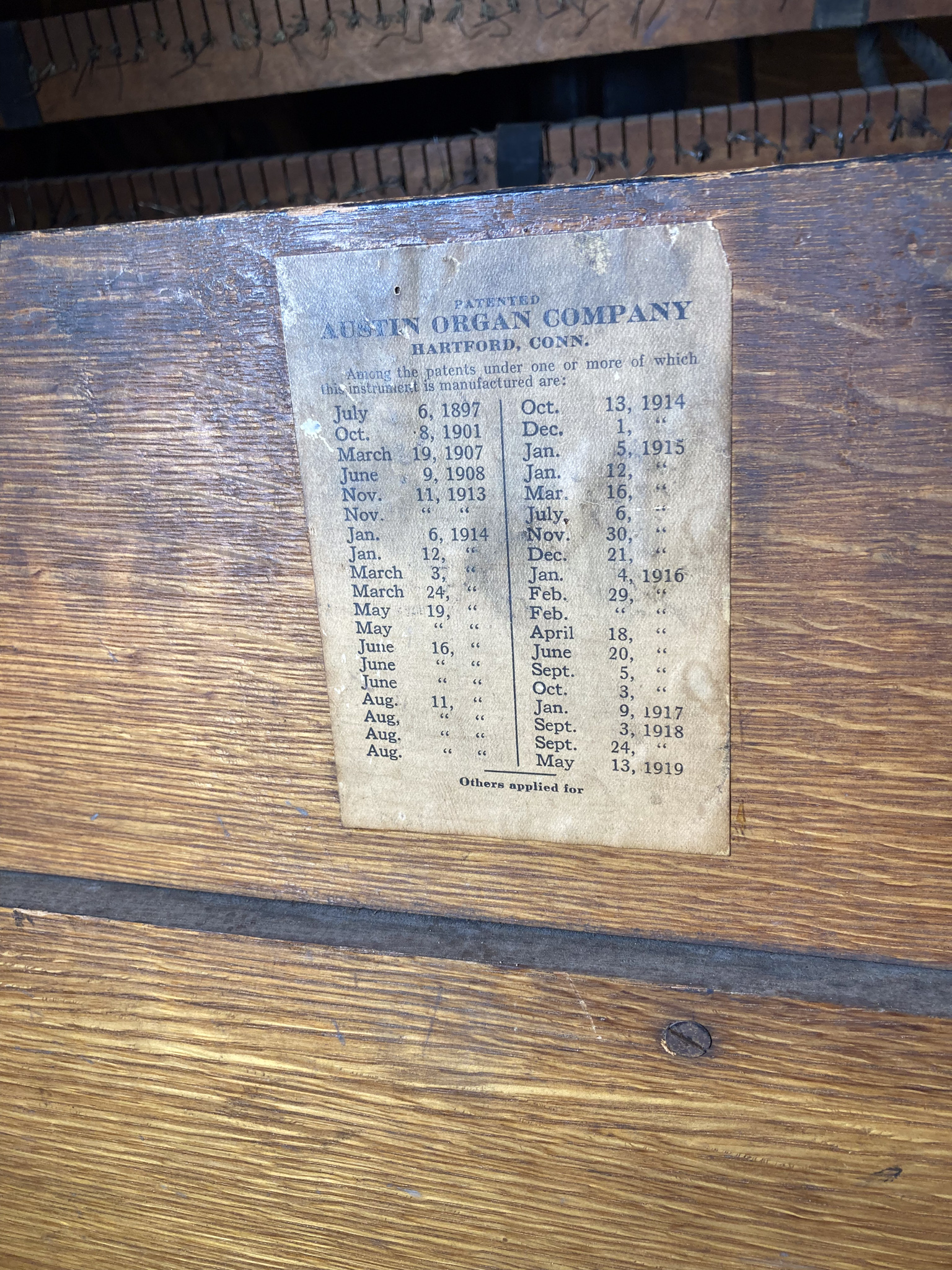
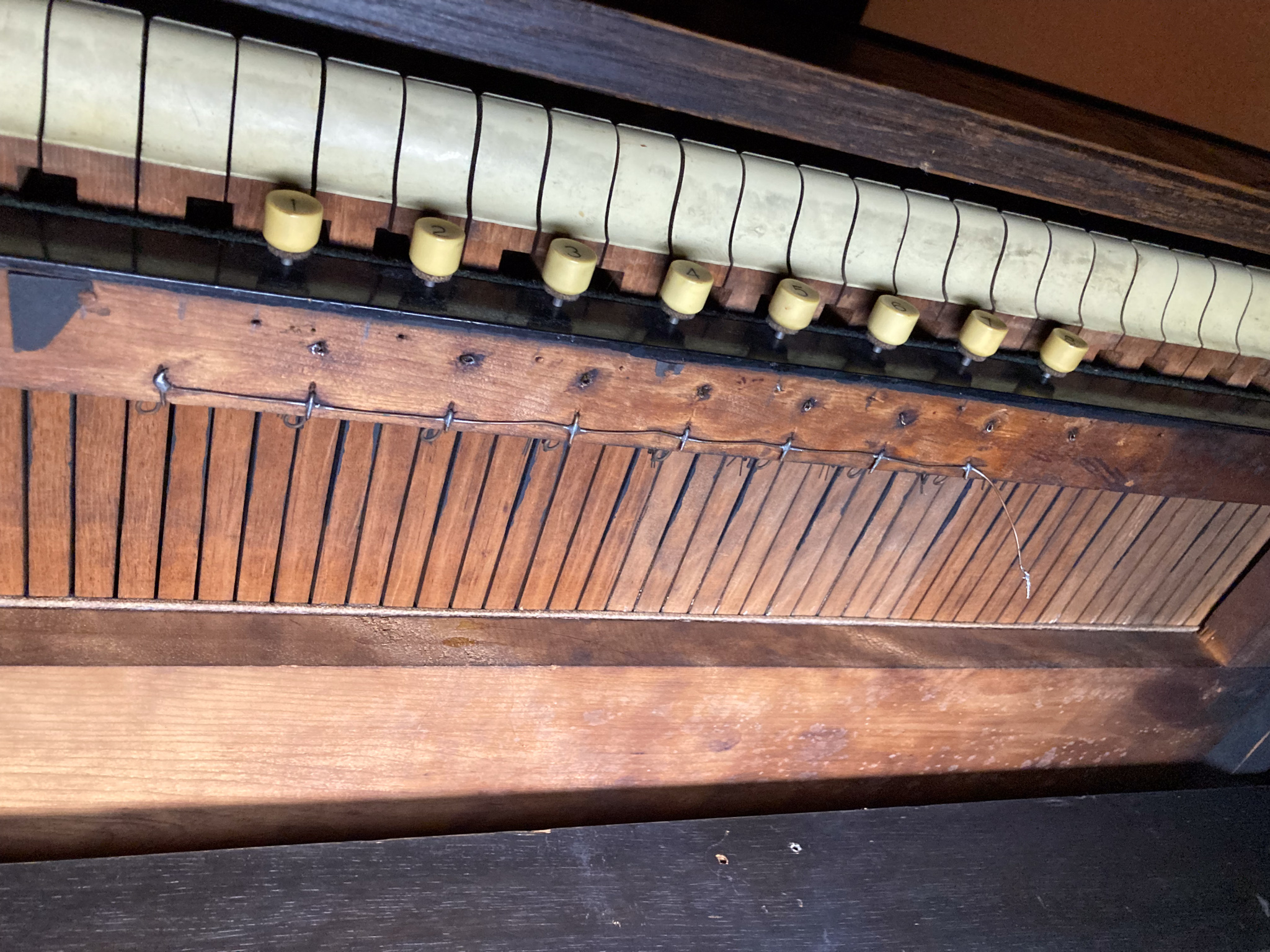
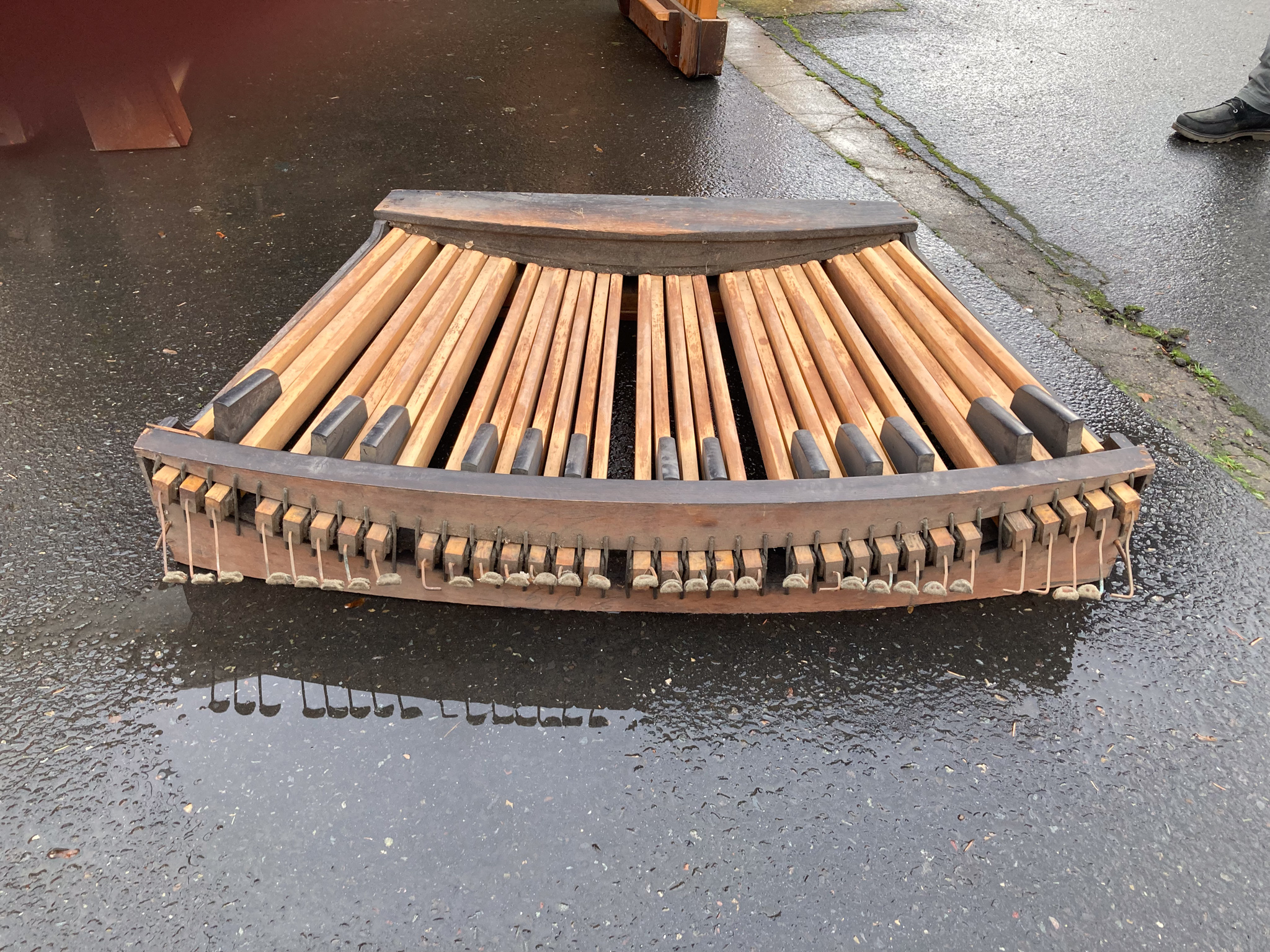
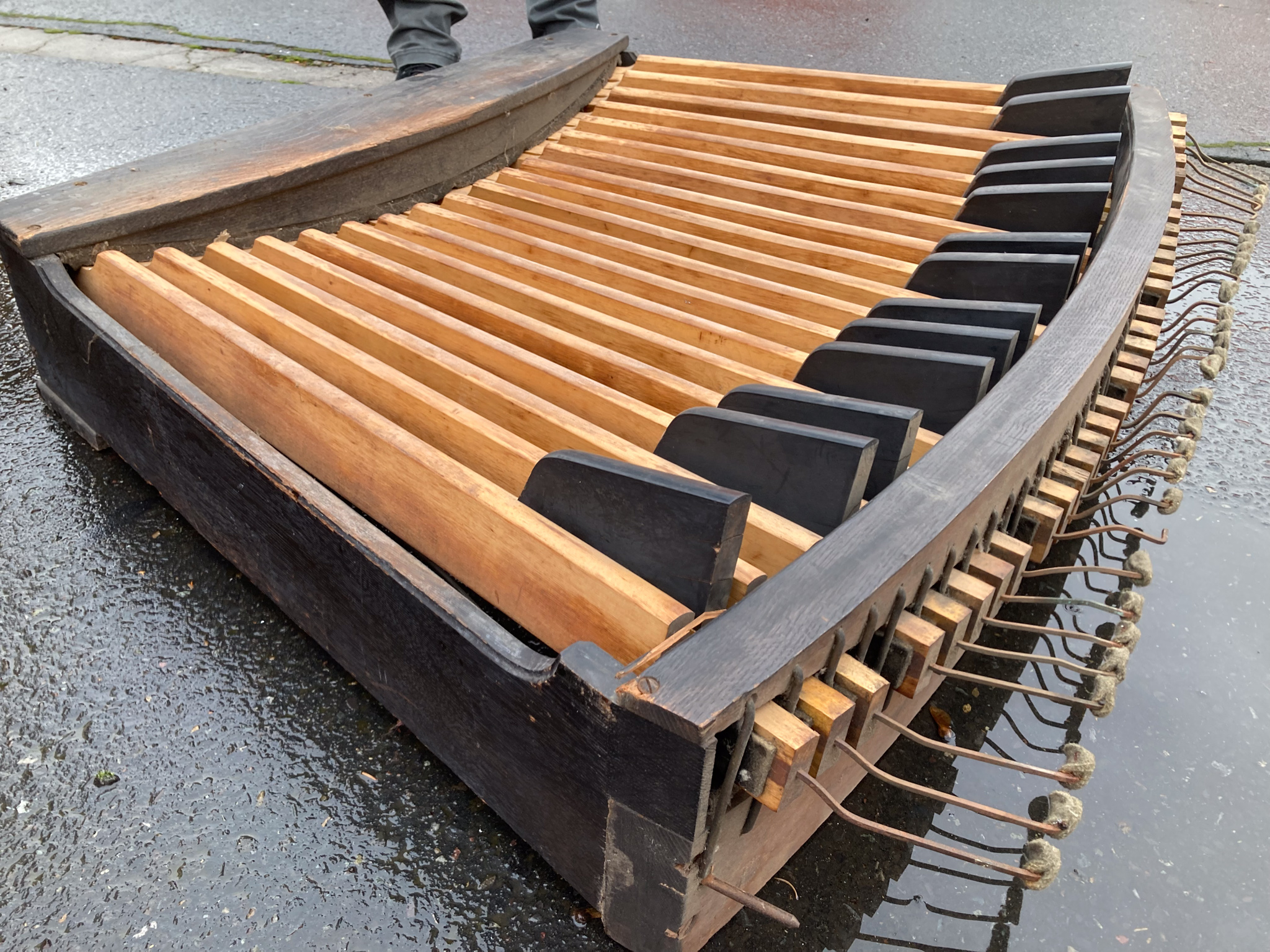
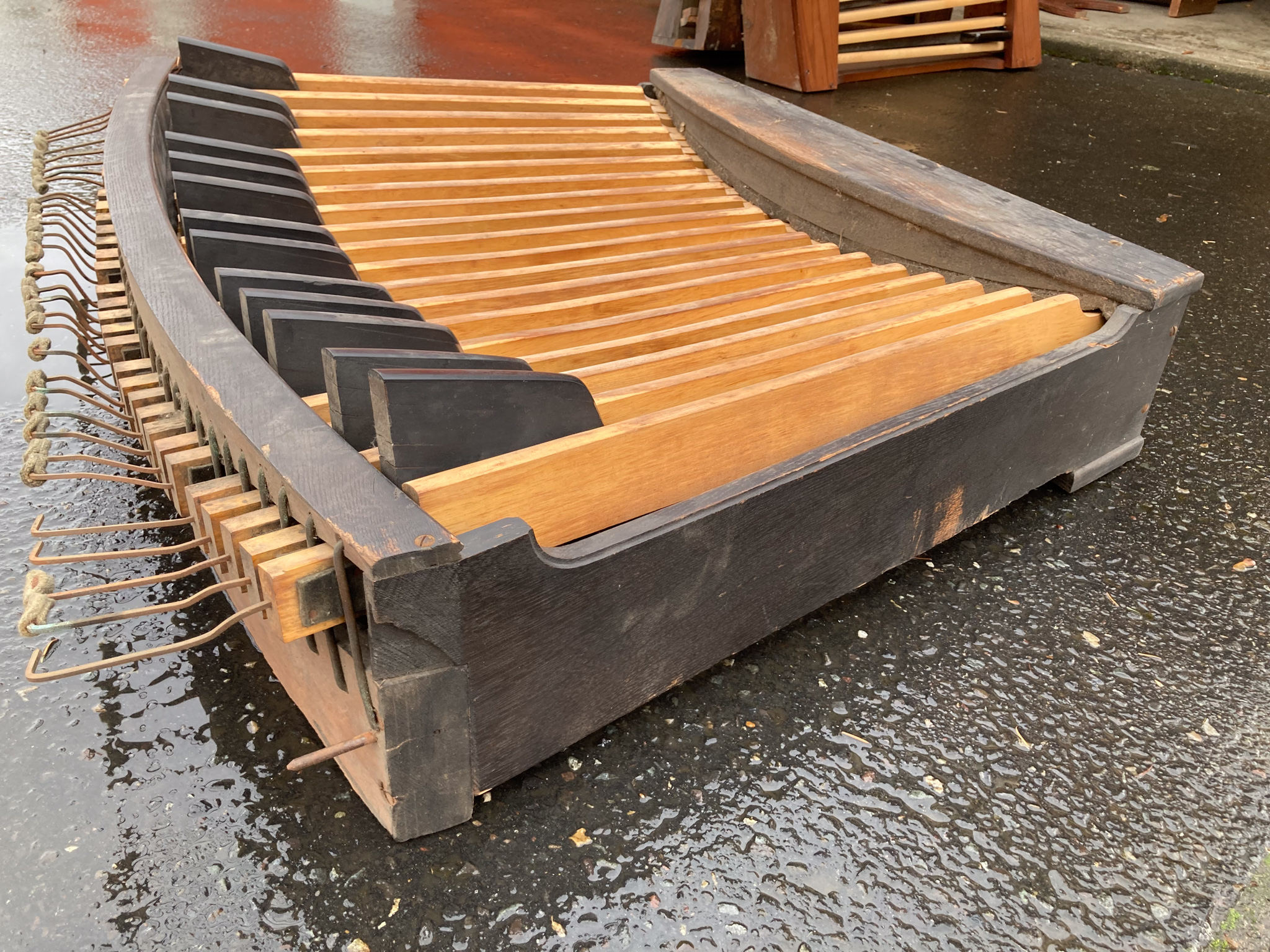
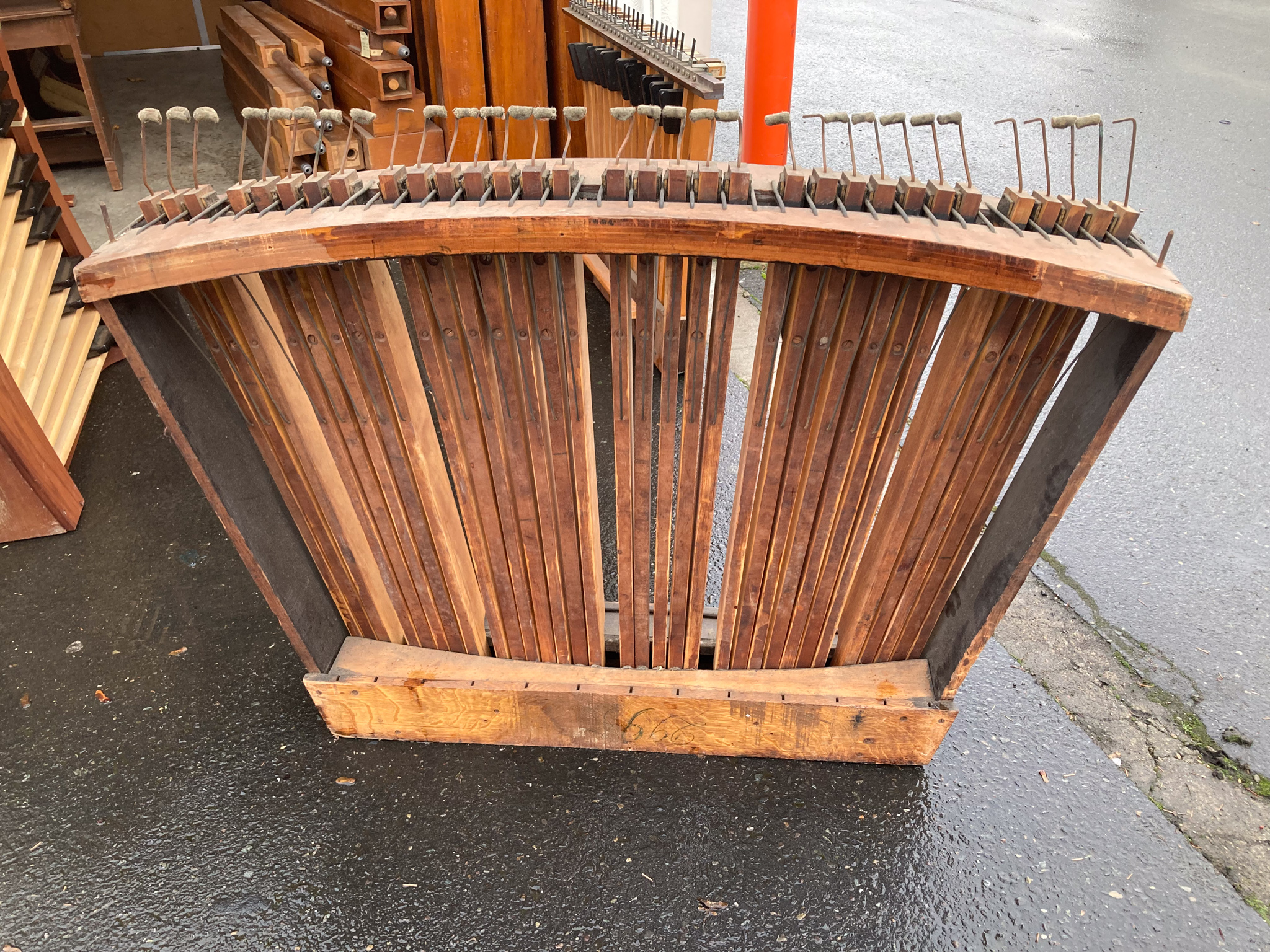
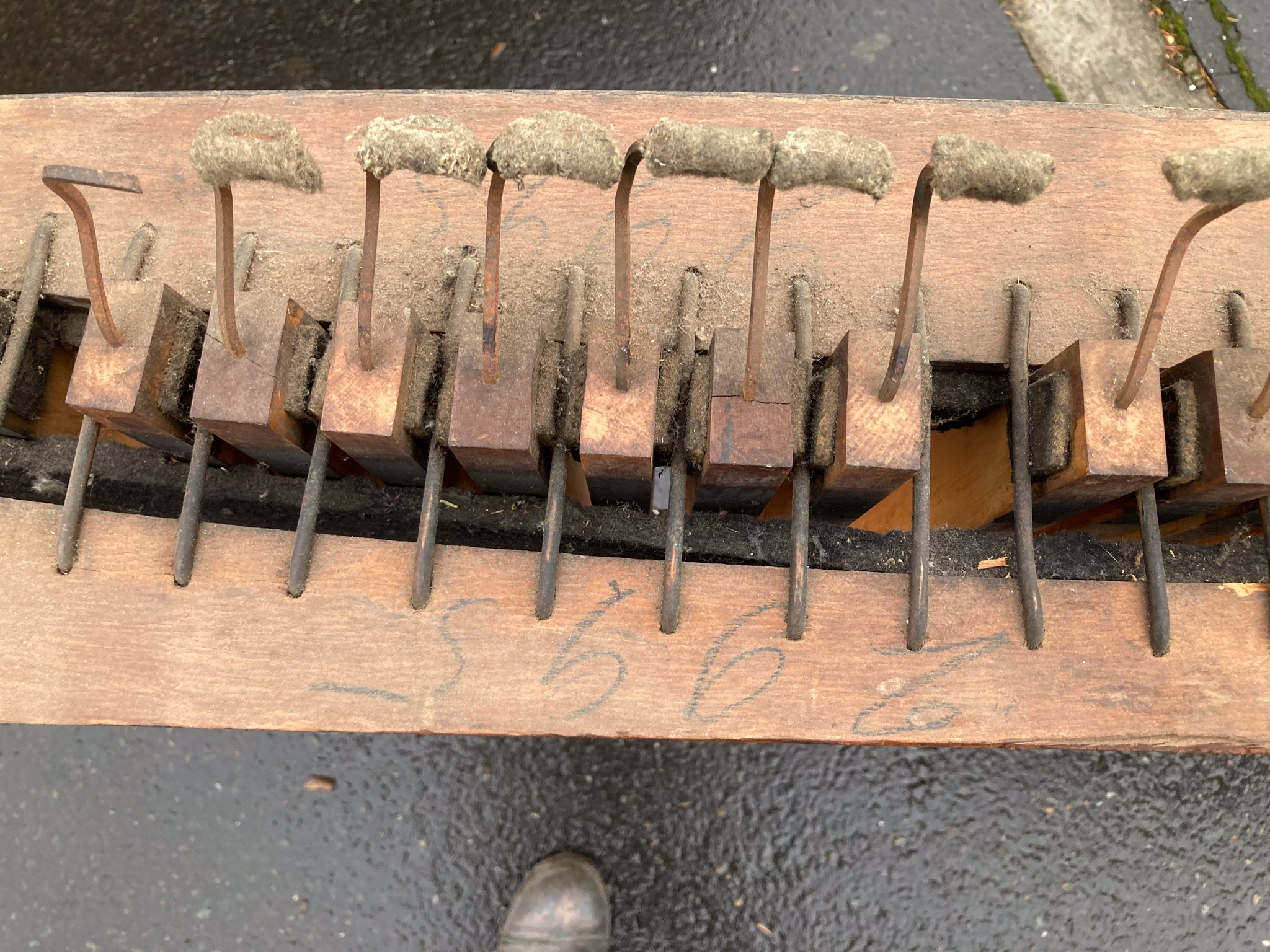
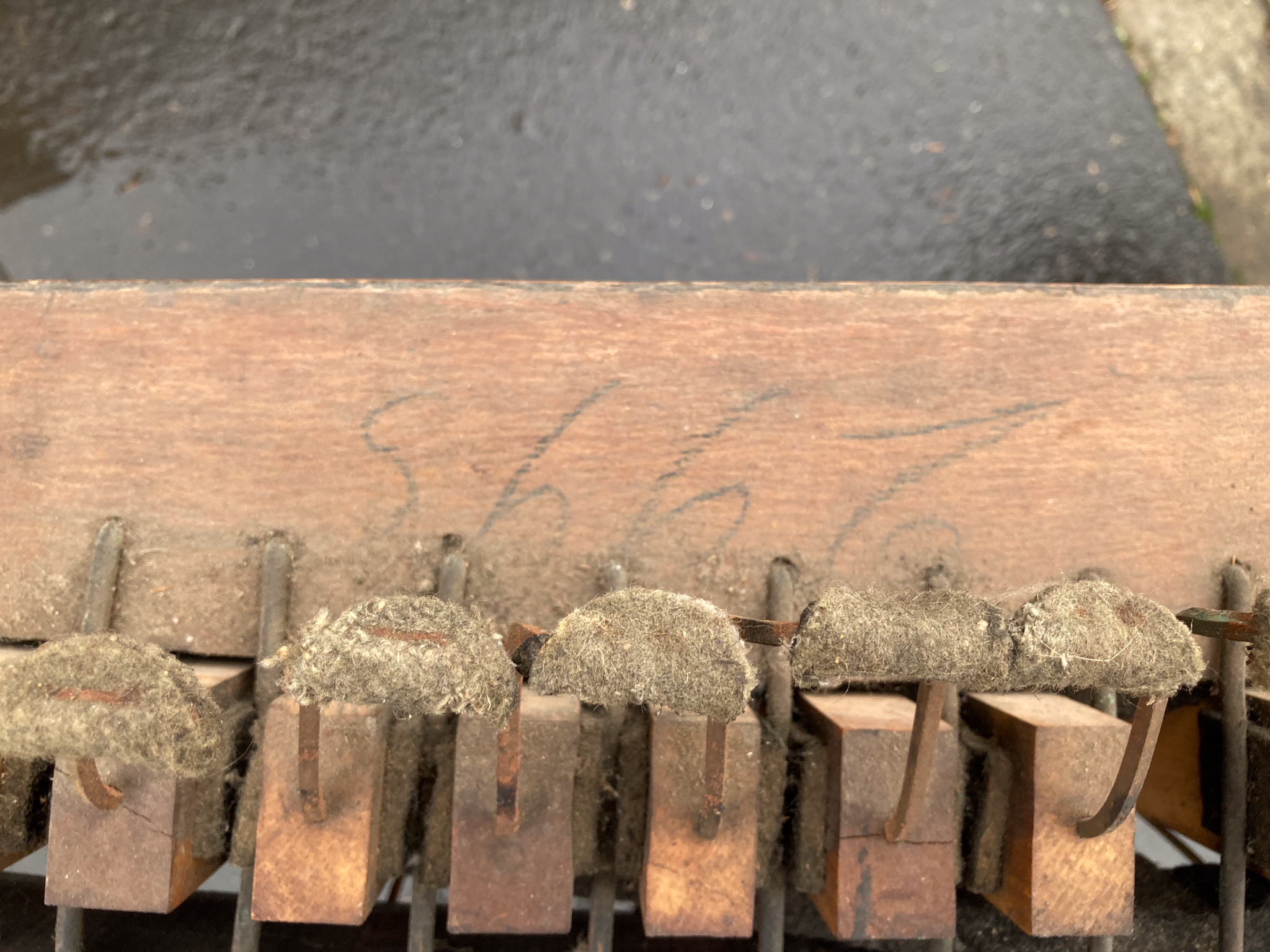
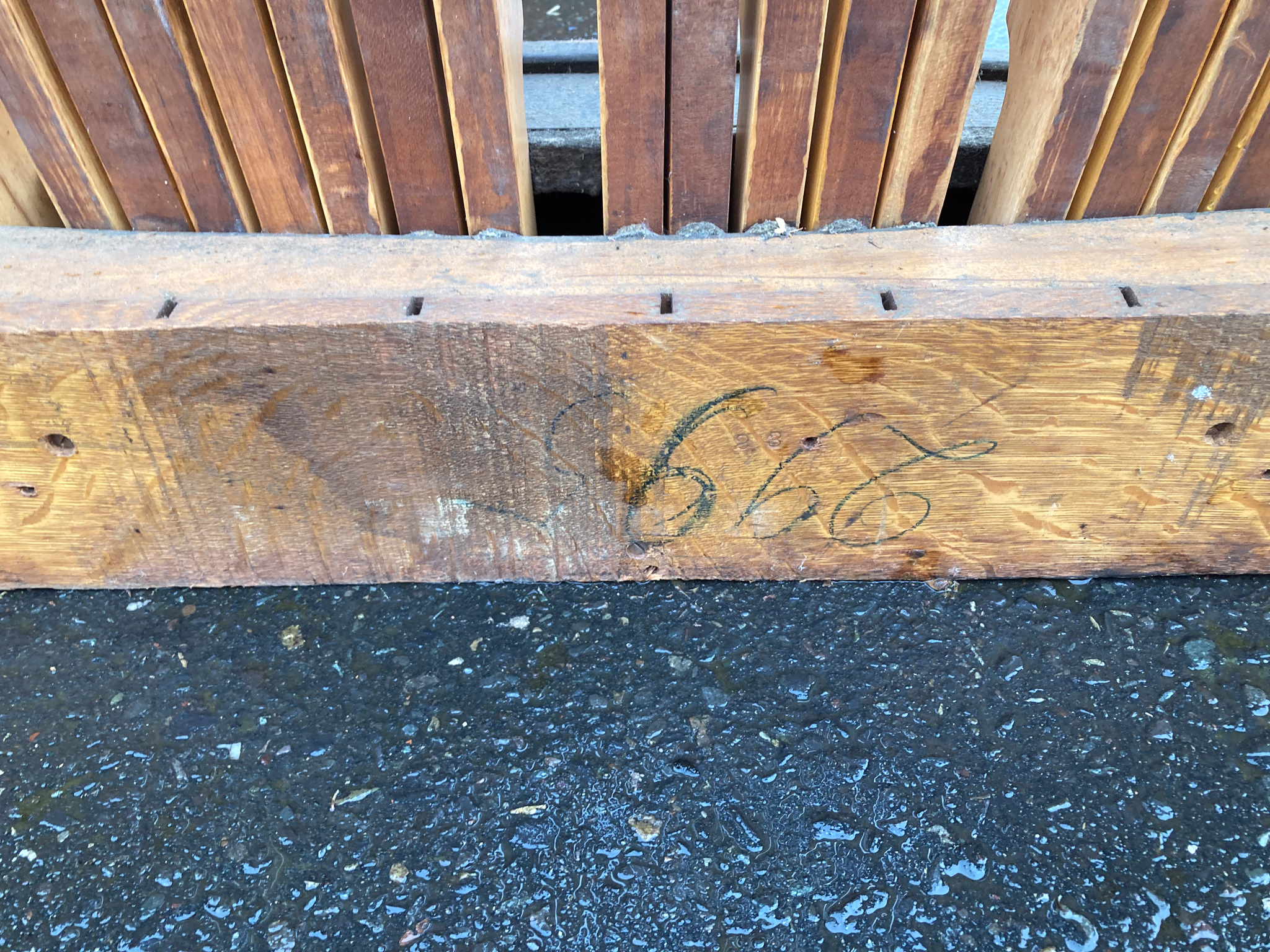
Notes: Keyboard stack is in pretty good shape. The split on the left side panel which guides the roll-top is a clean break between two pieces of wood and can be re-glued.
Dimensions: 59″w x 53″h x 42.5″d (without pedalboard, including keyboard overhang)
Wurlitzer 2-Manual and Pedal Console
Status: Claimed – Picked up.
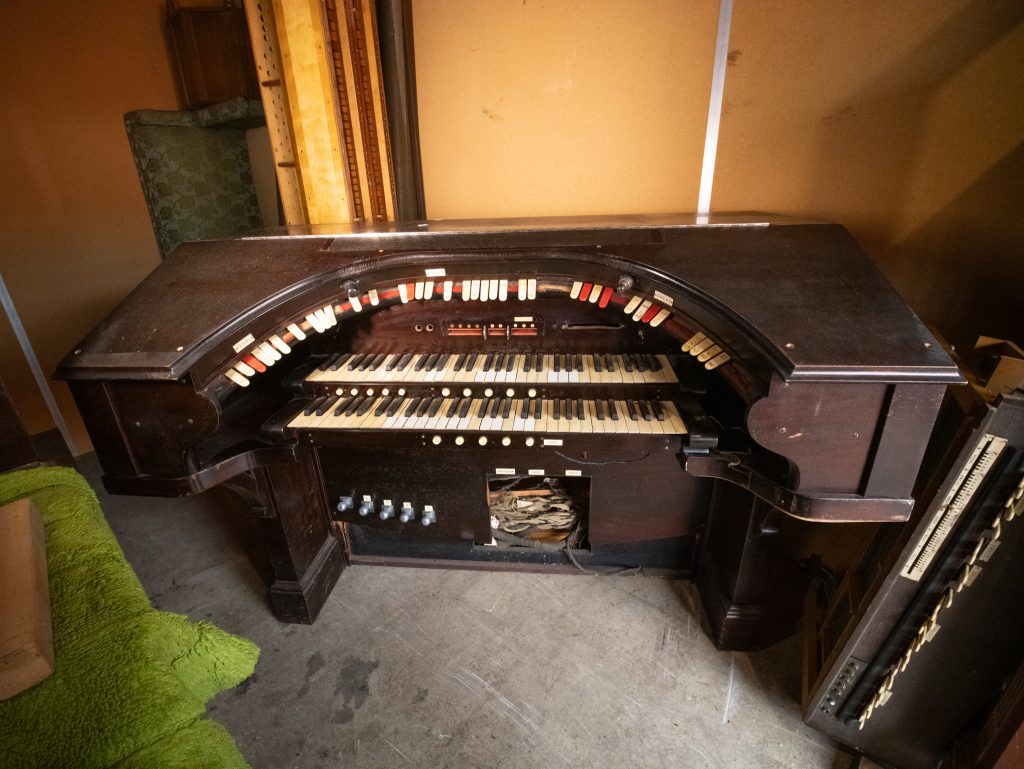
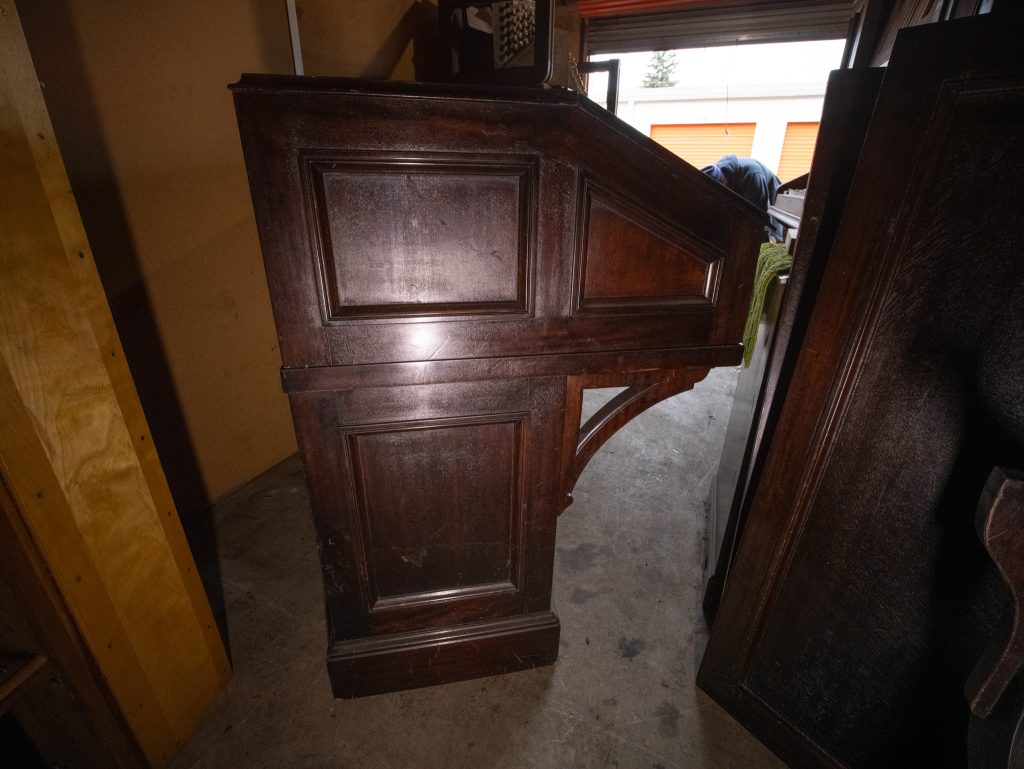
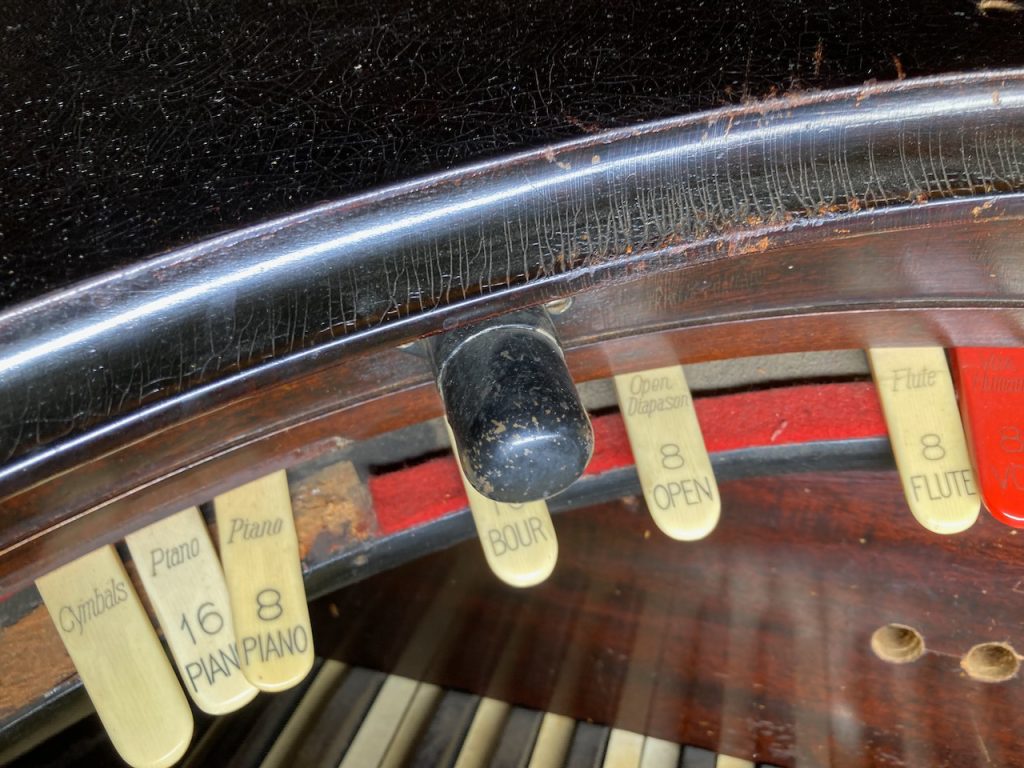
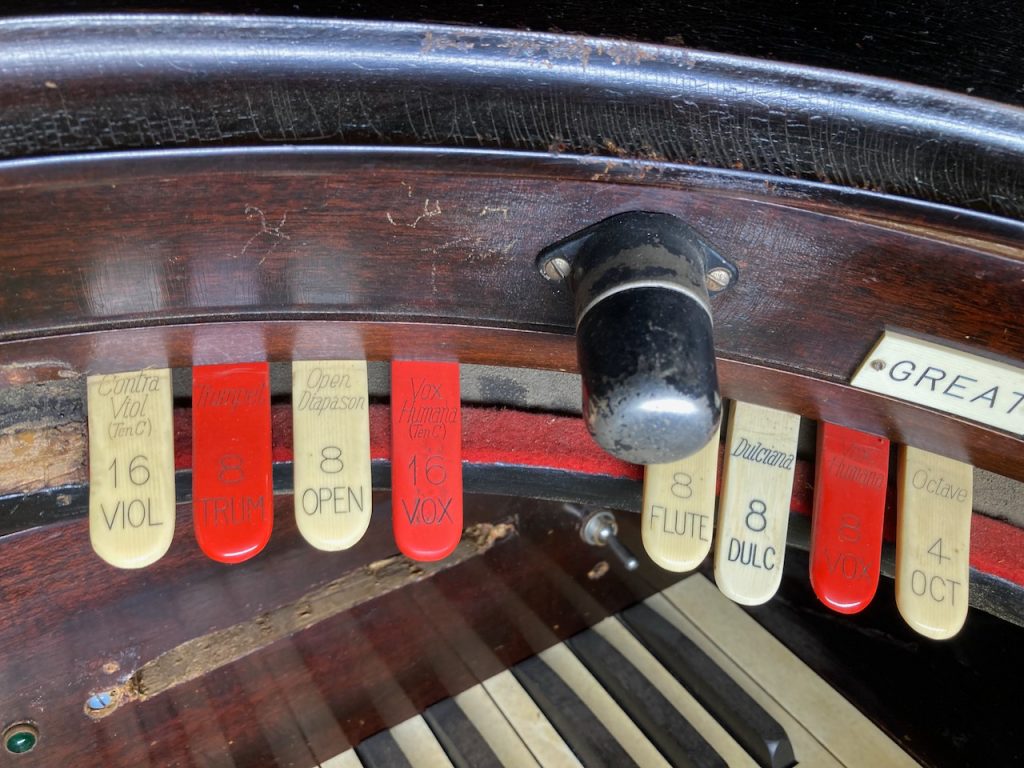
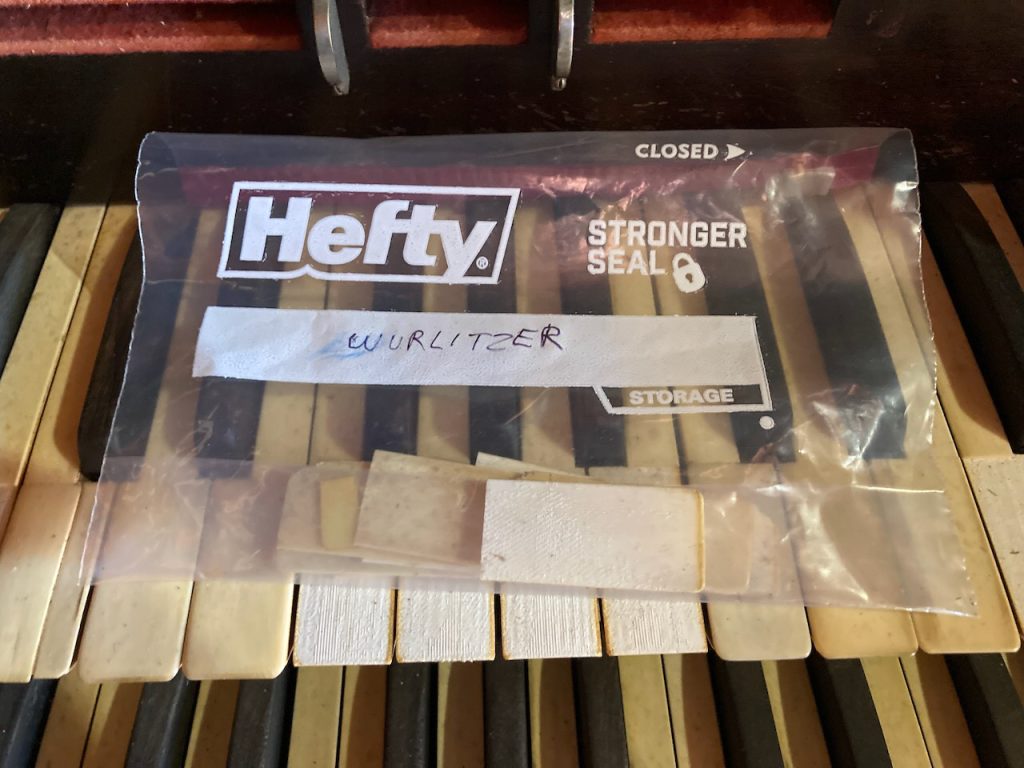
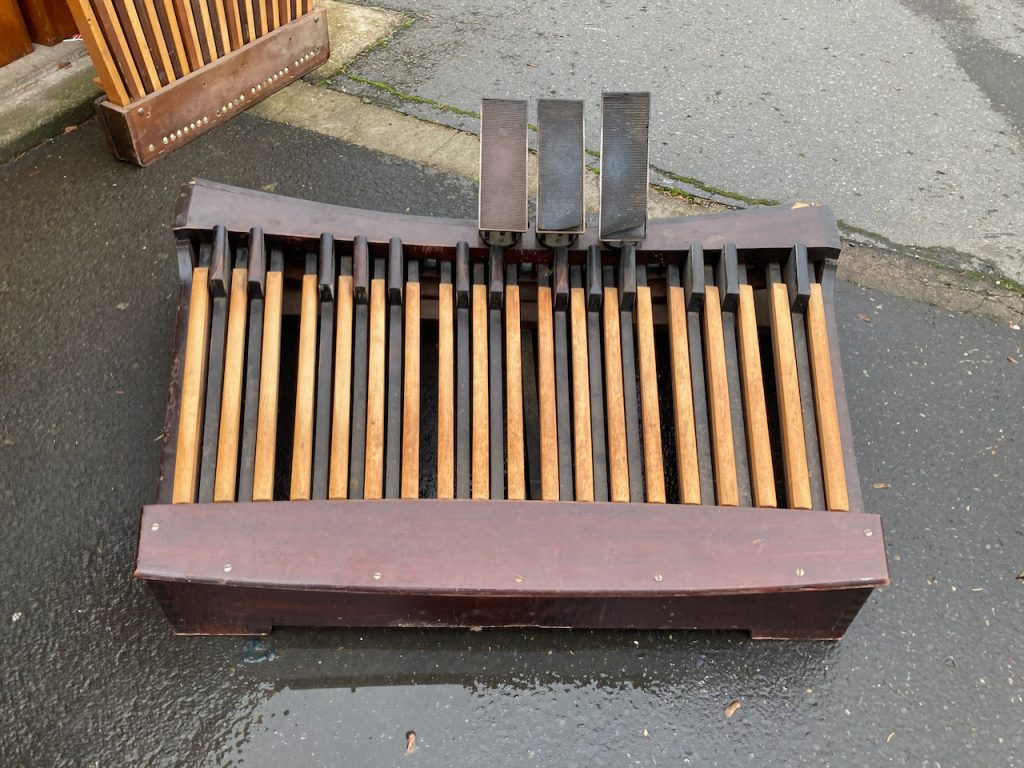
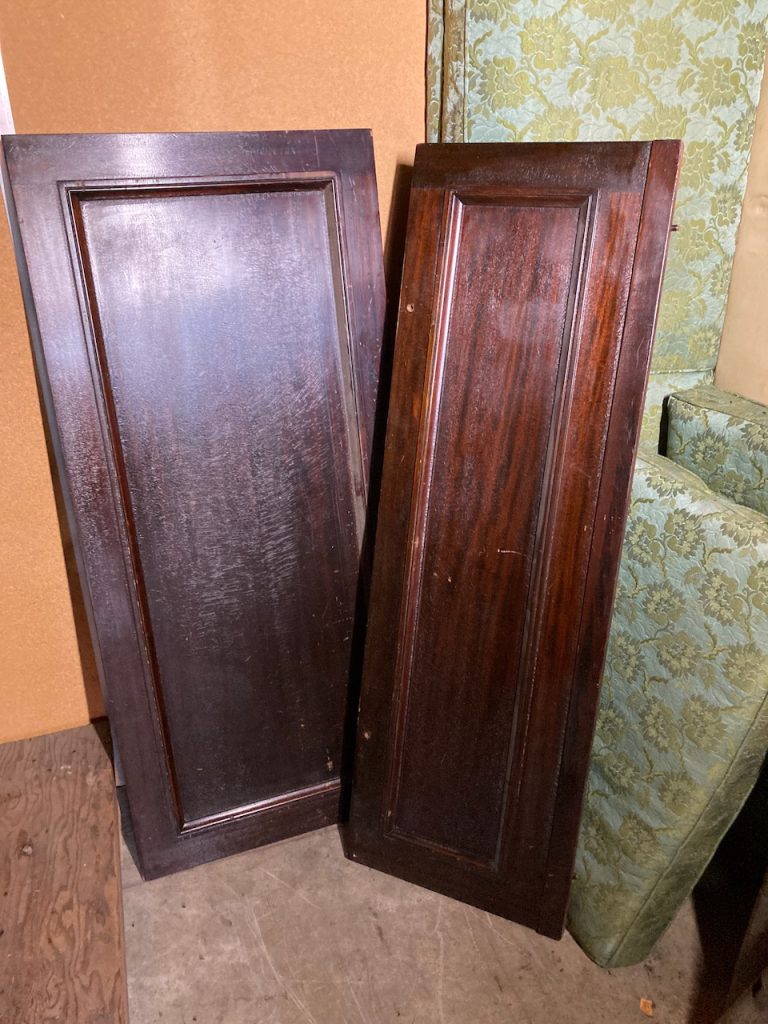
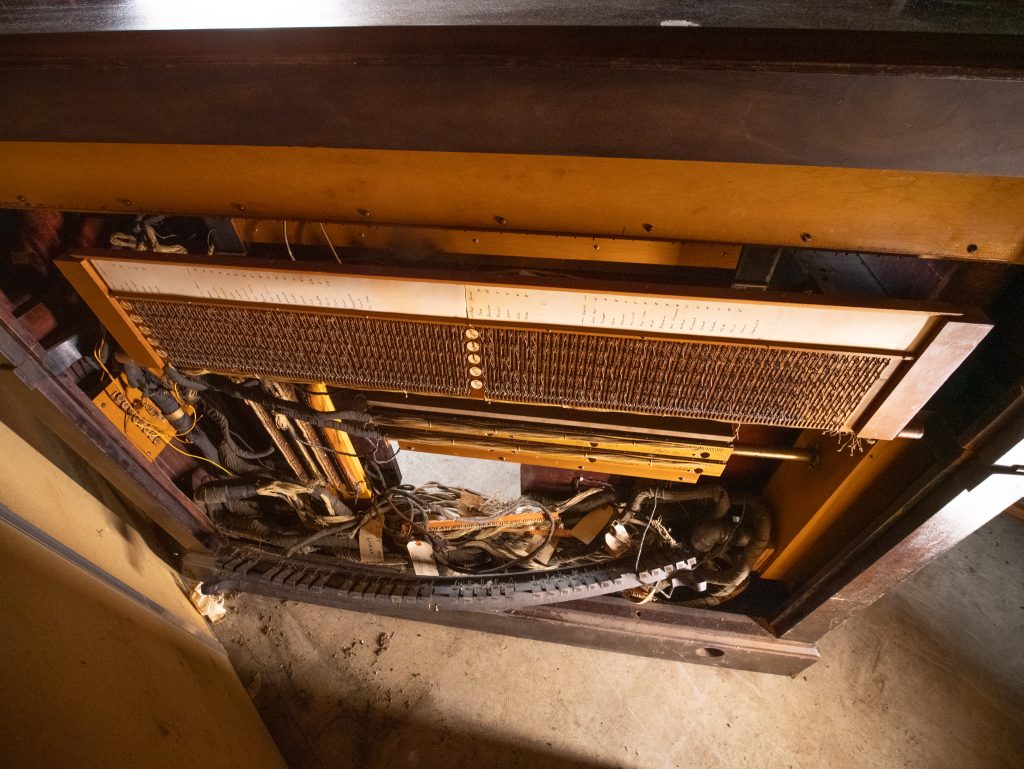
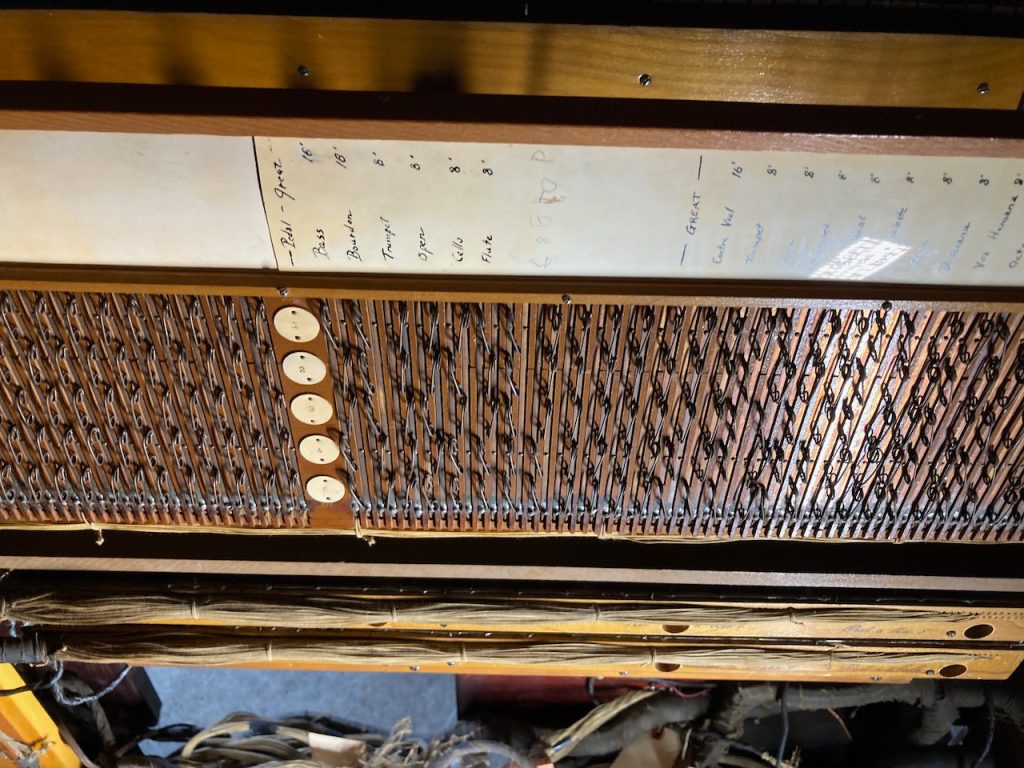
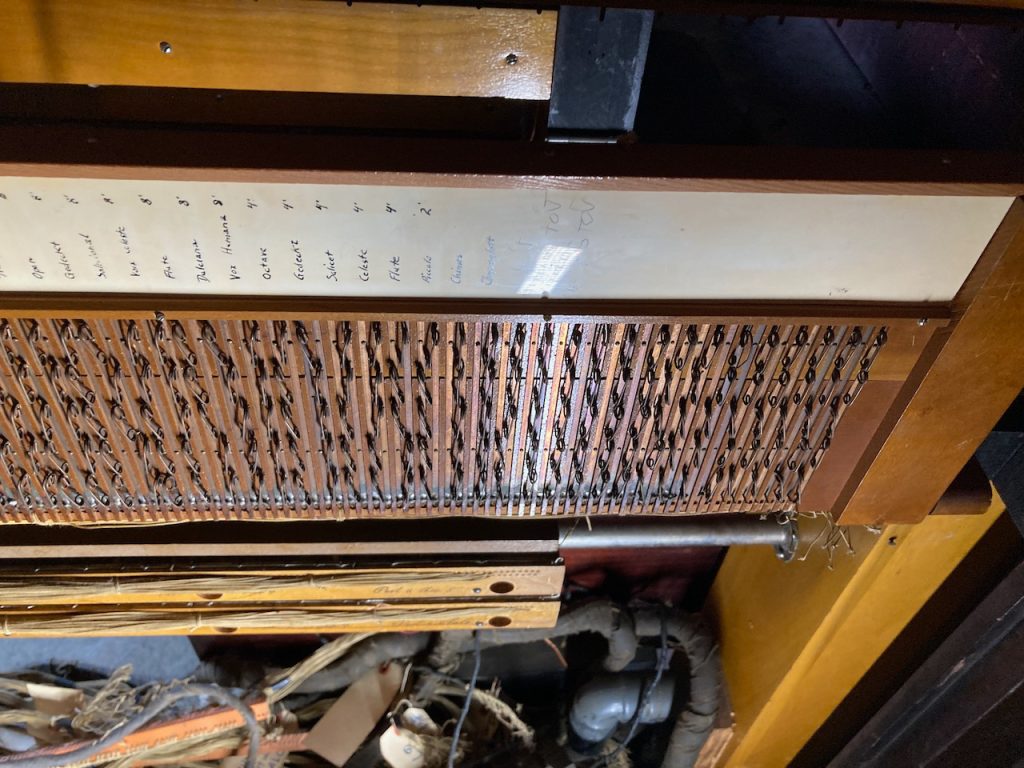
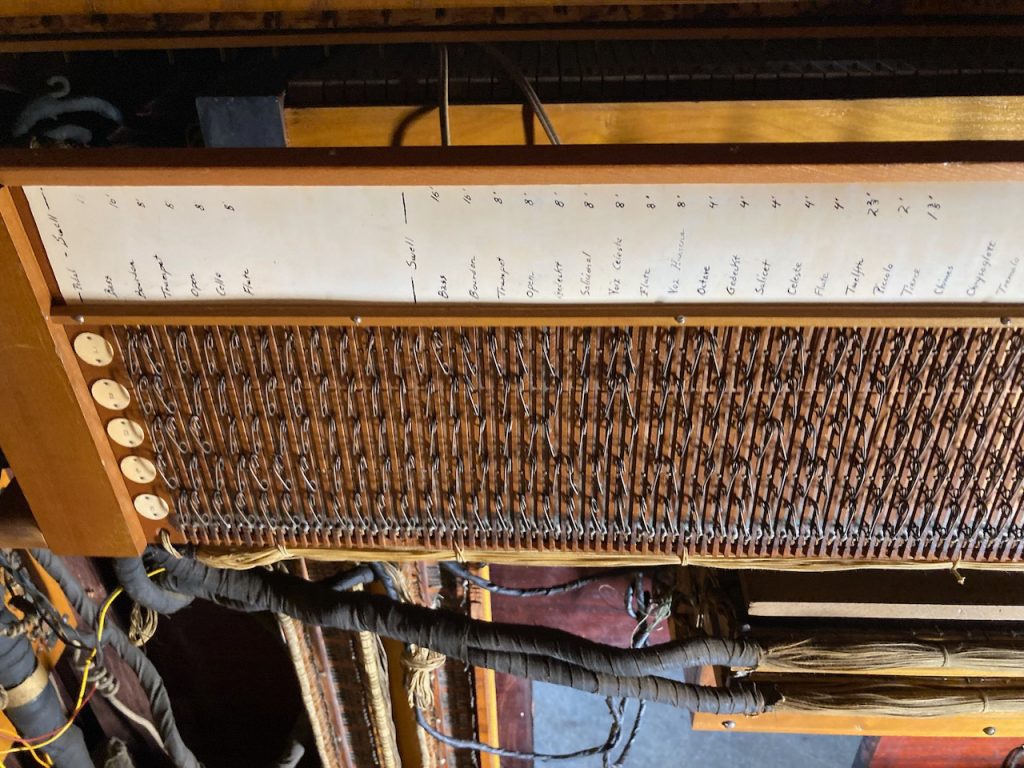
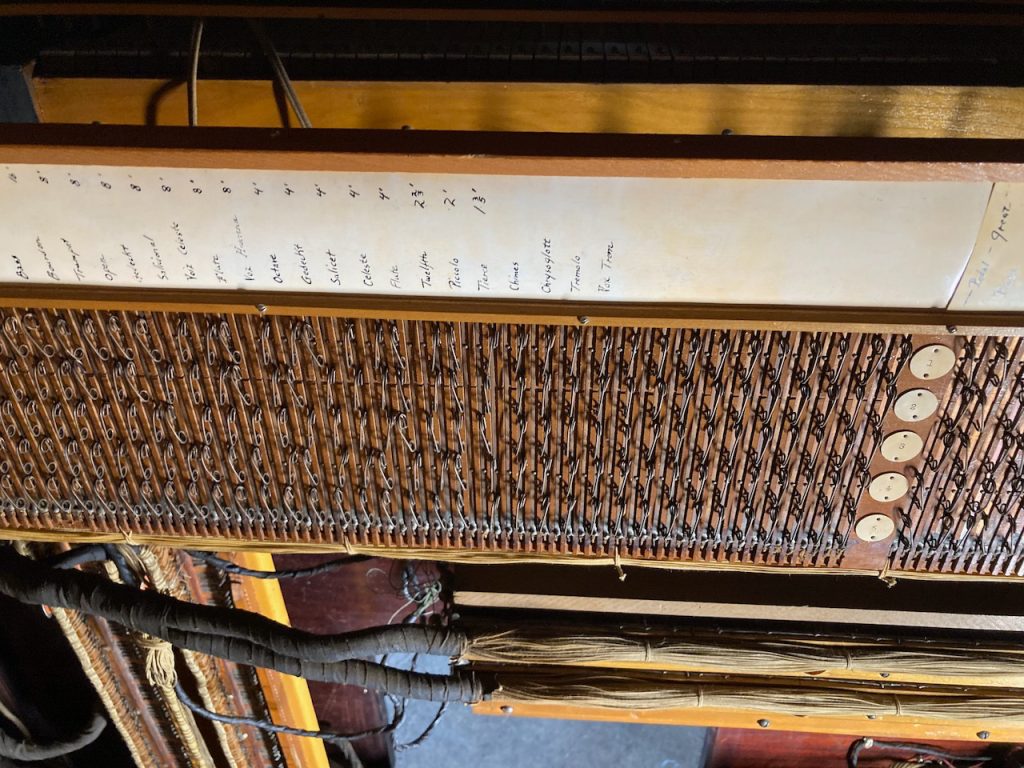
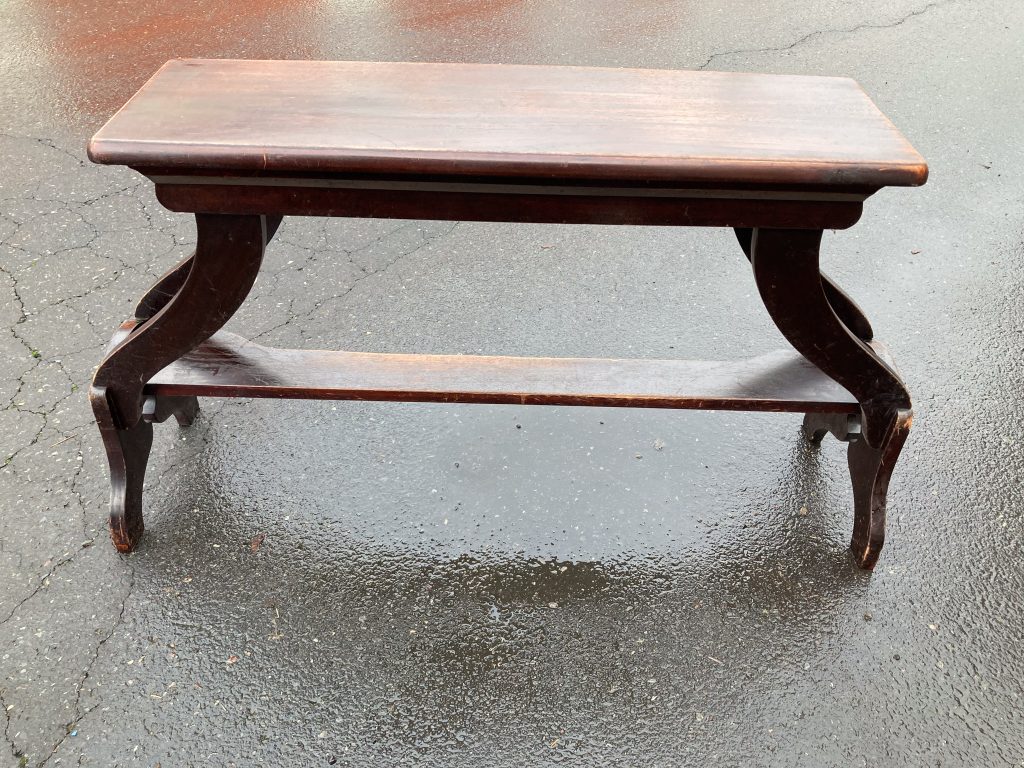
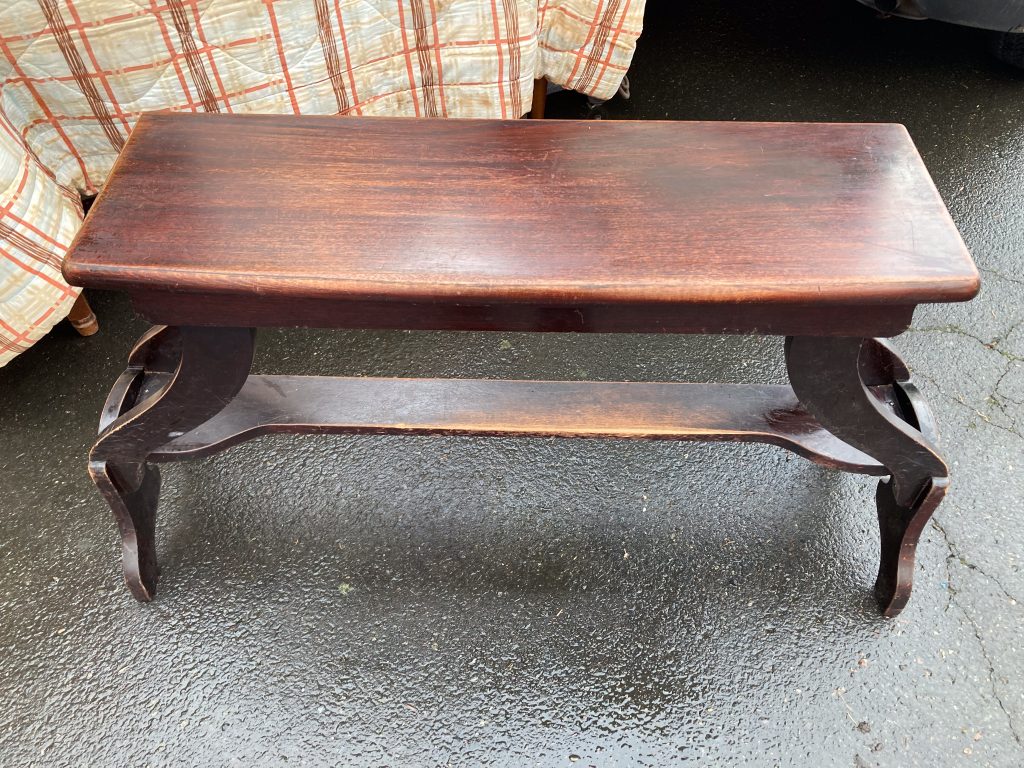
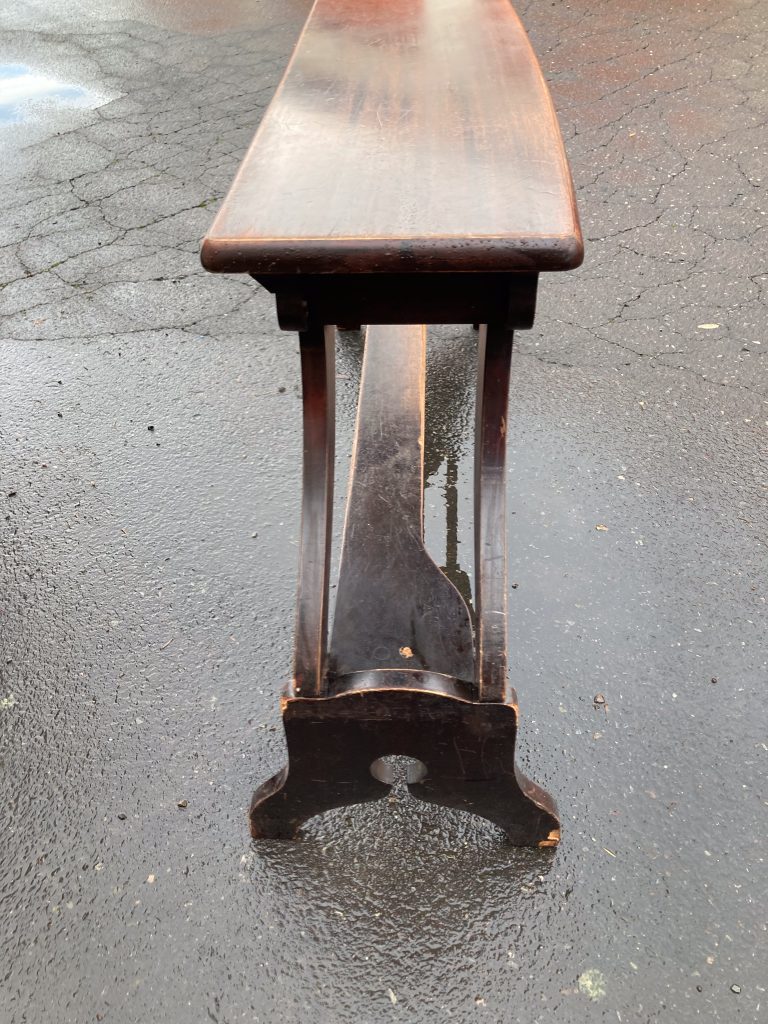
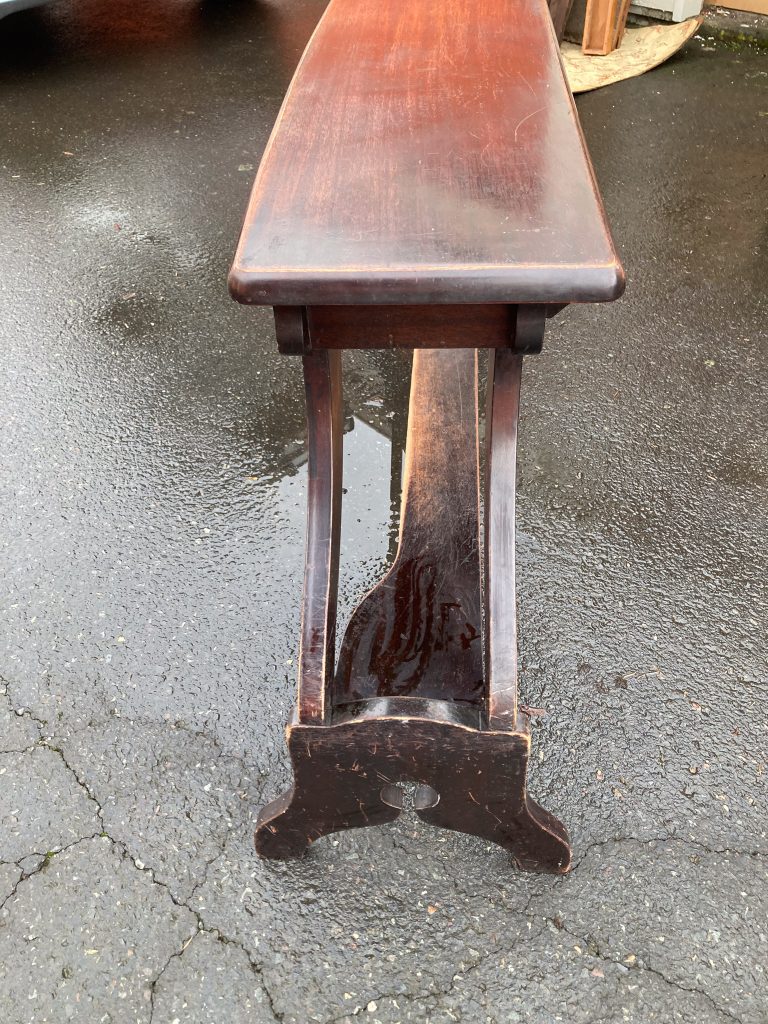
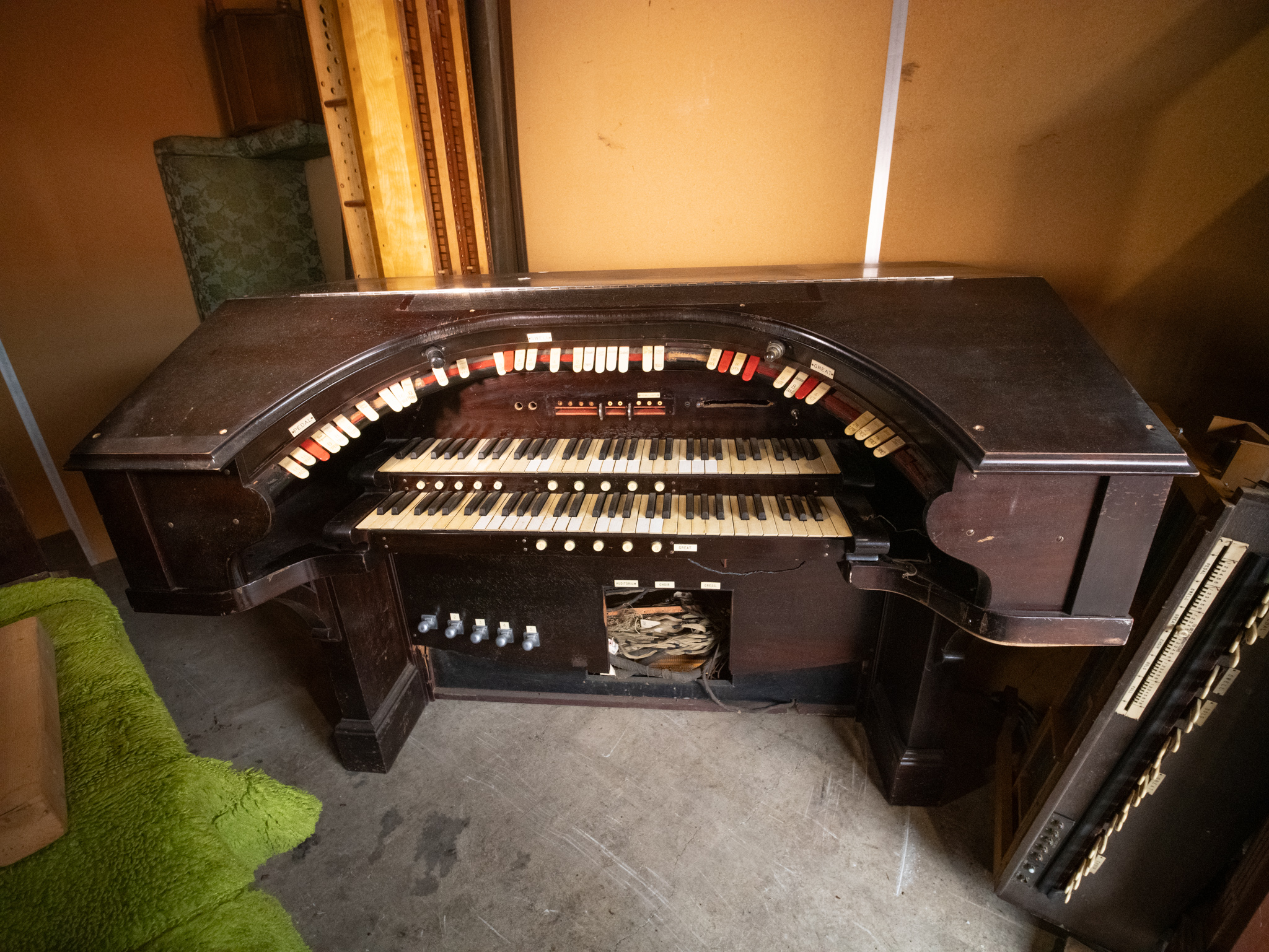
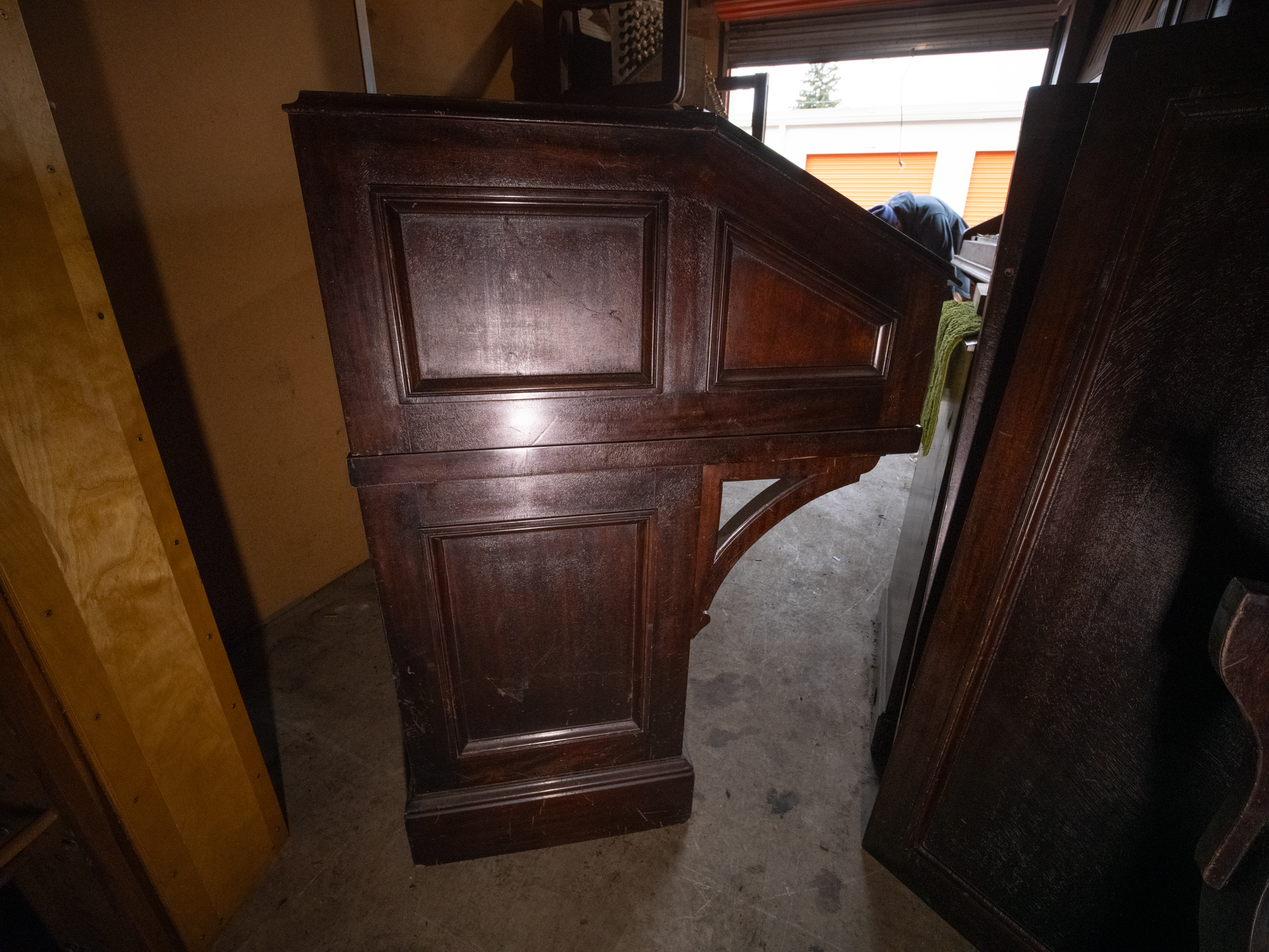
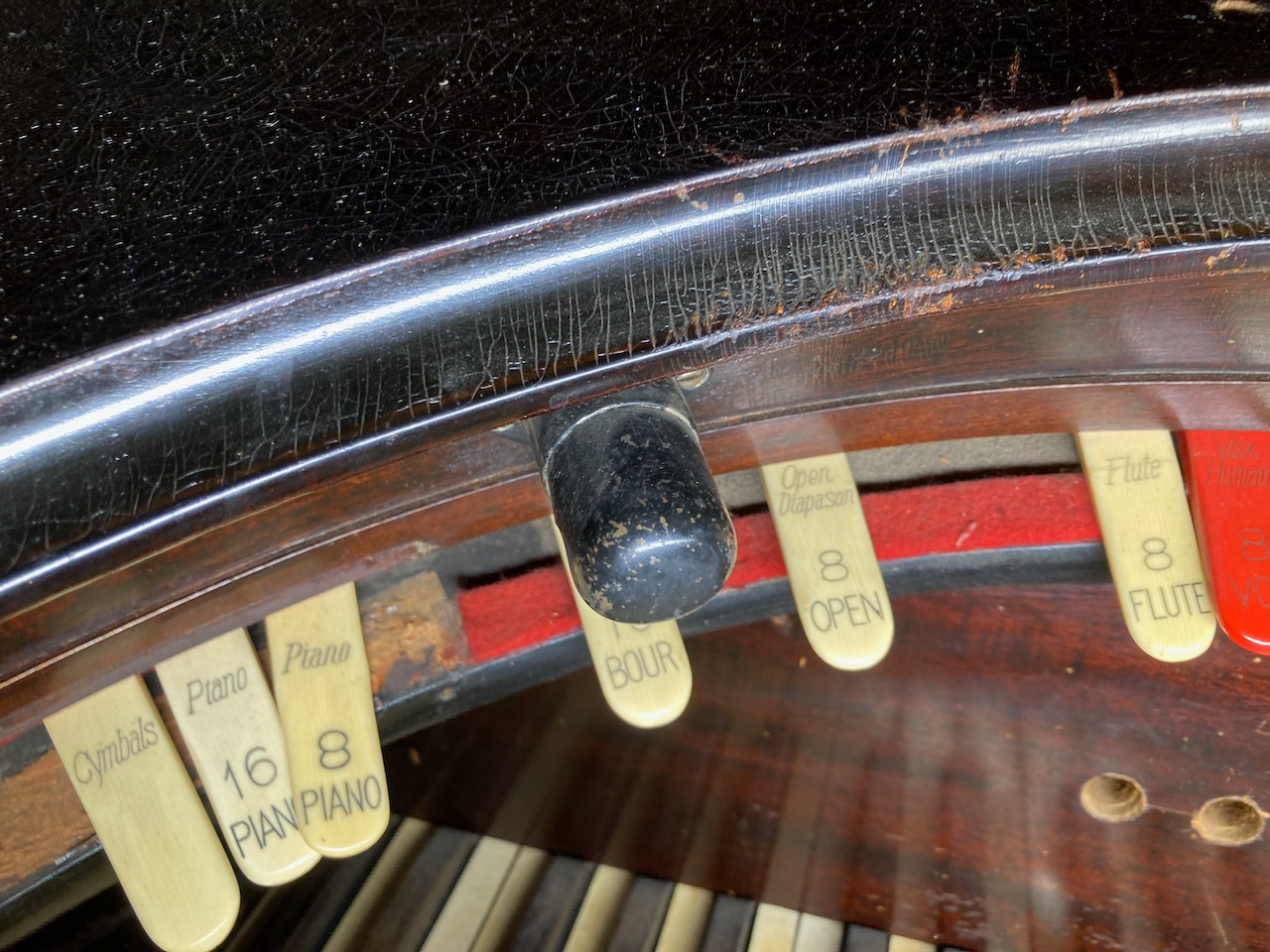
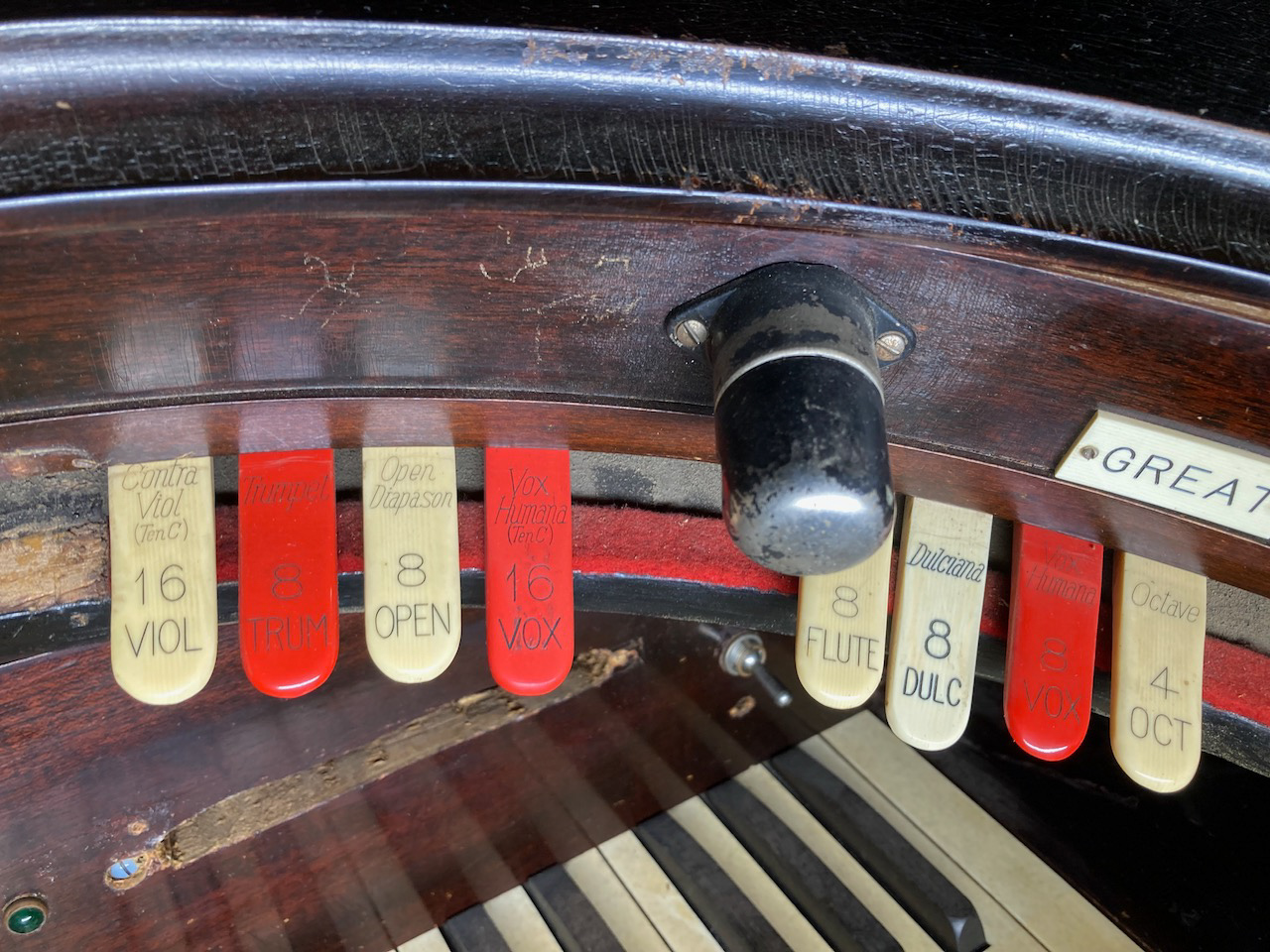
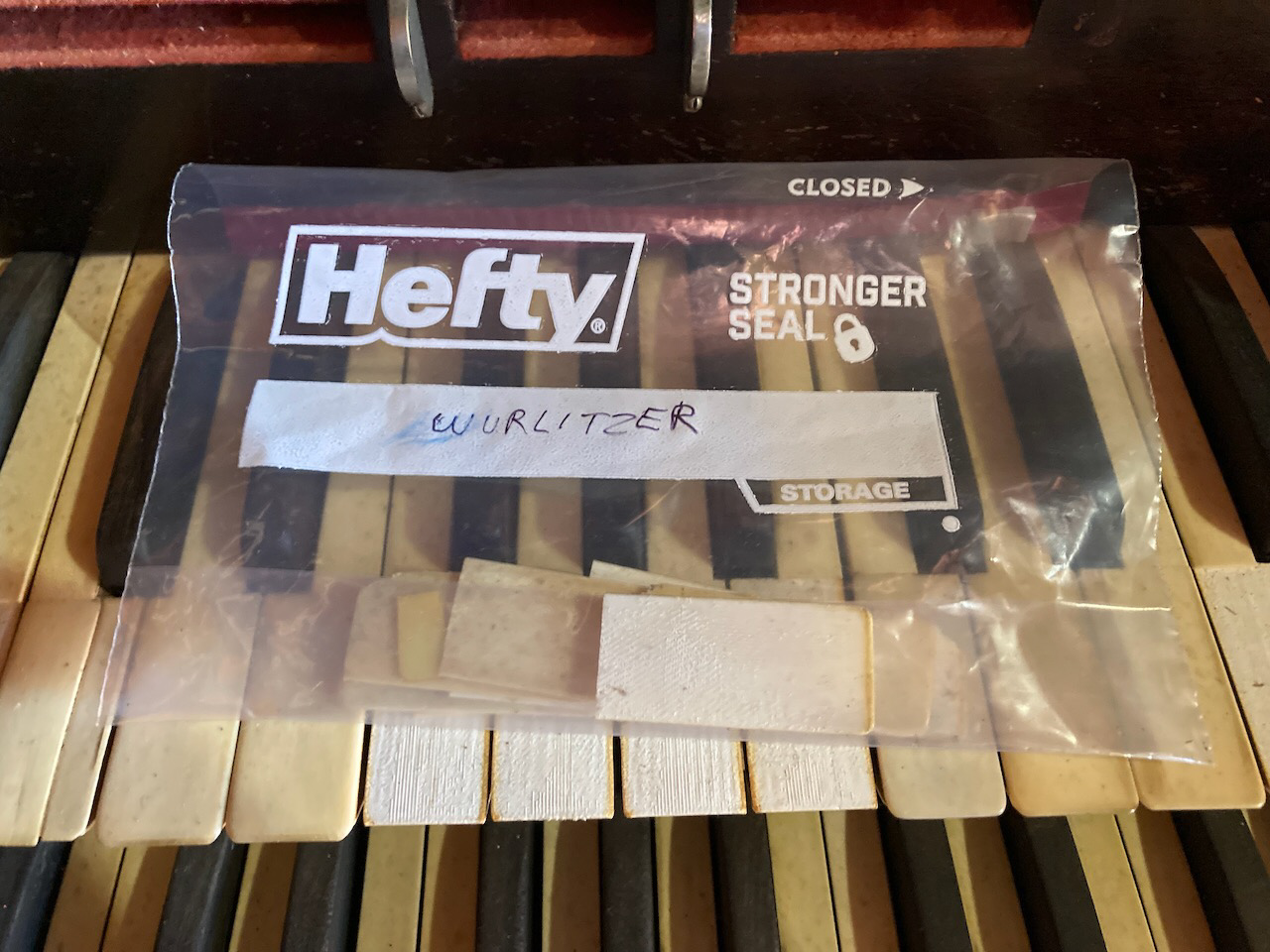
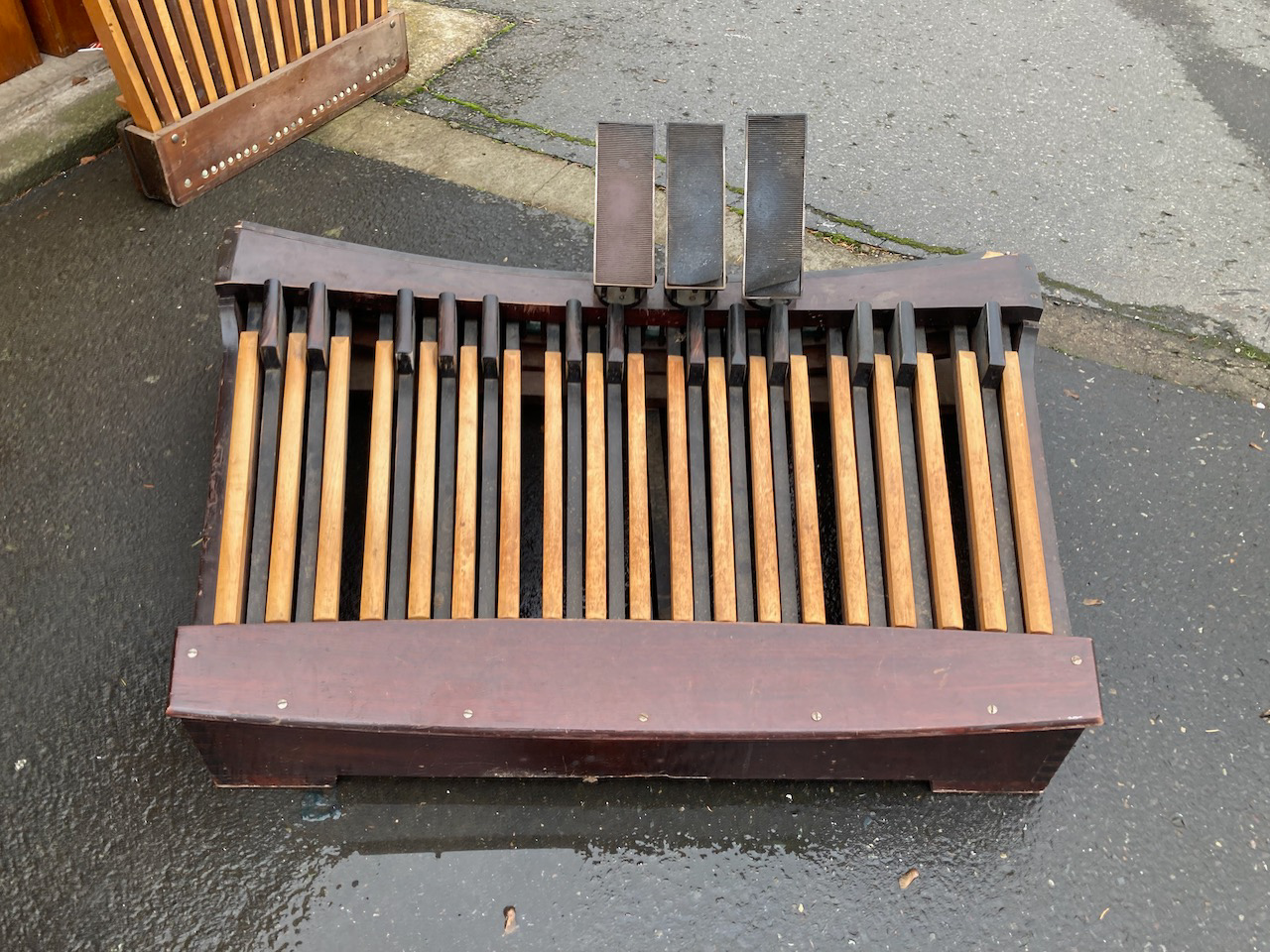
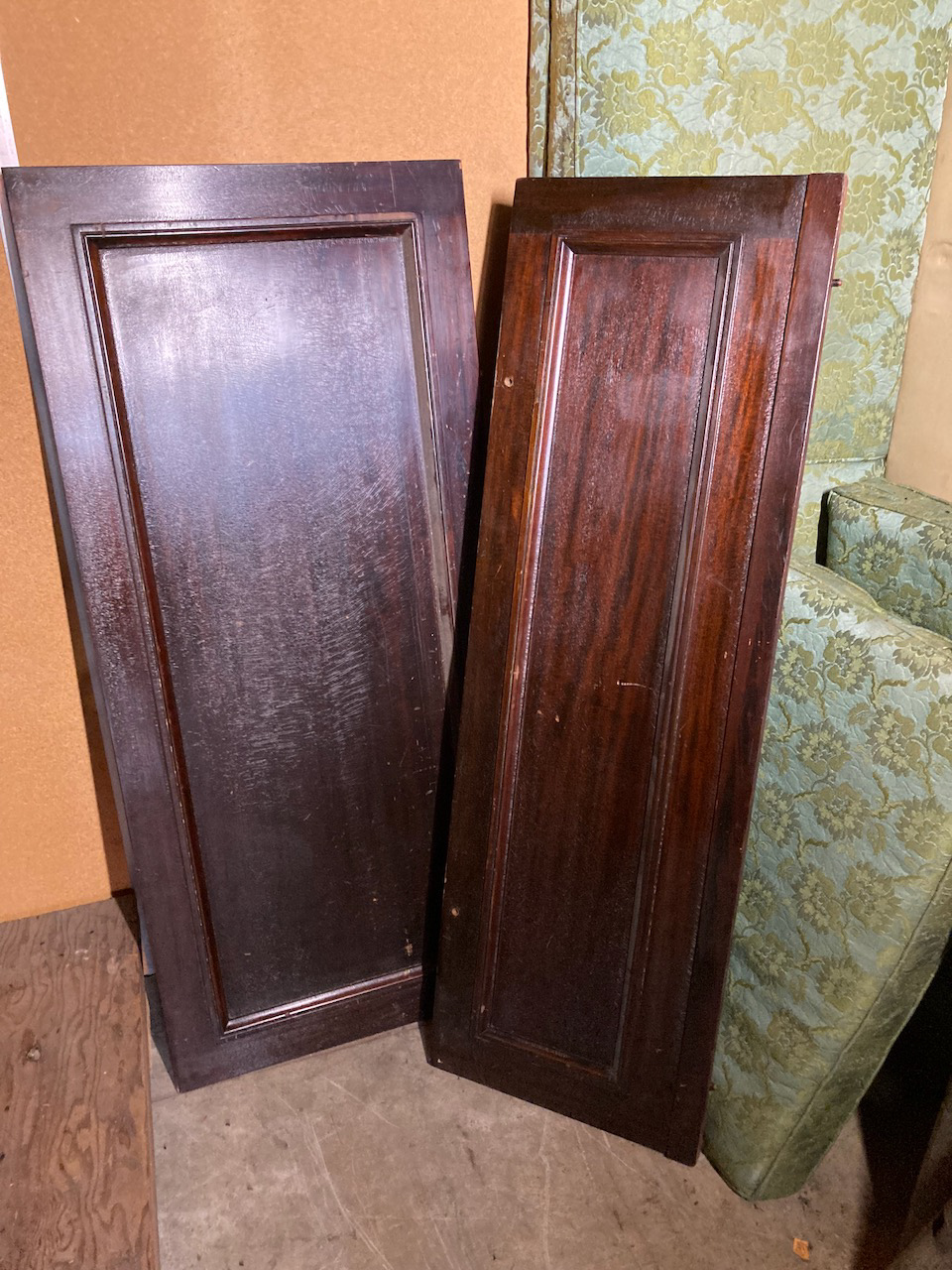

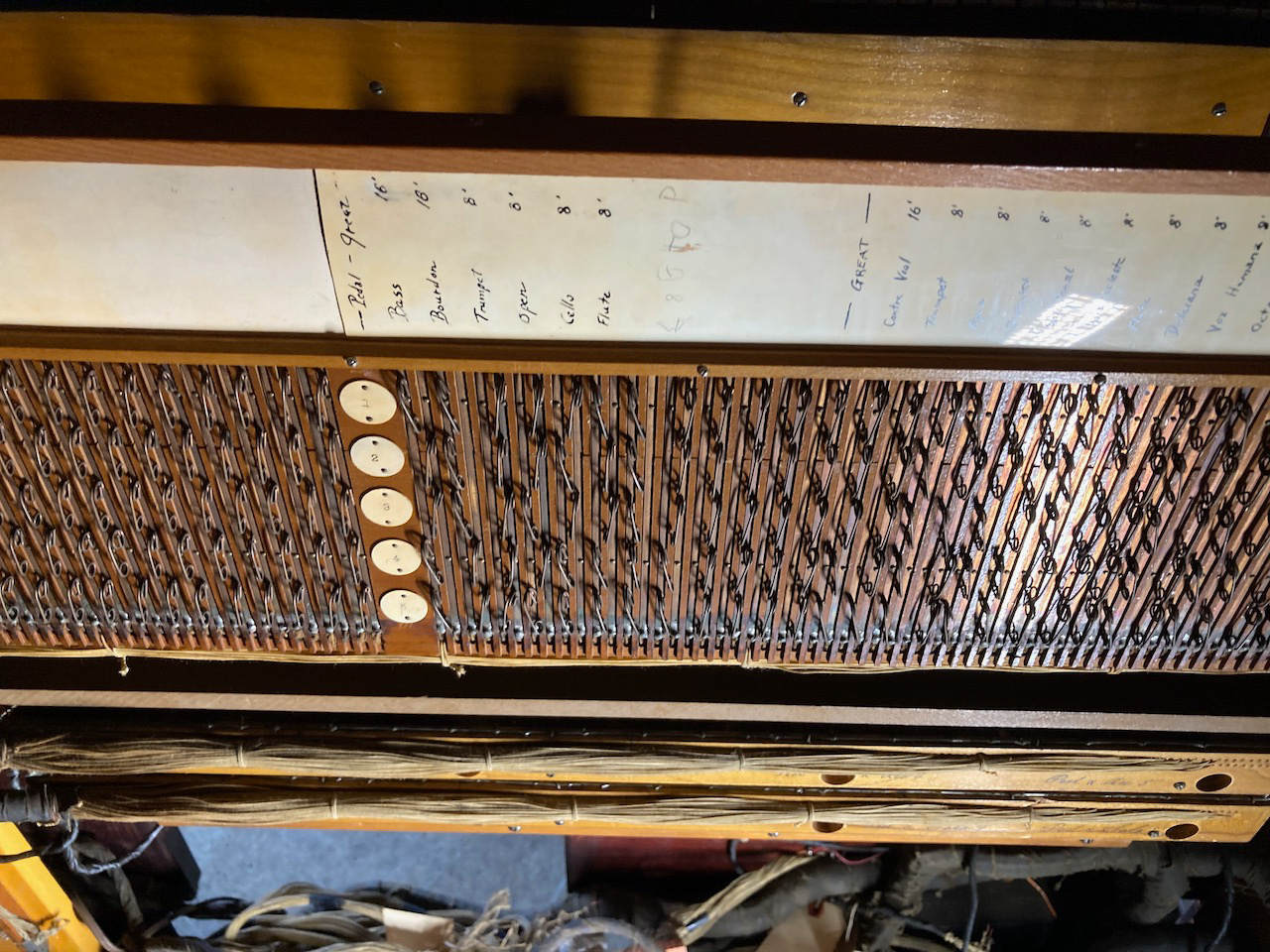

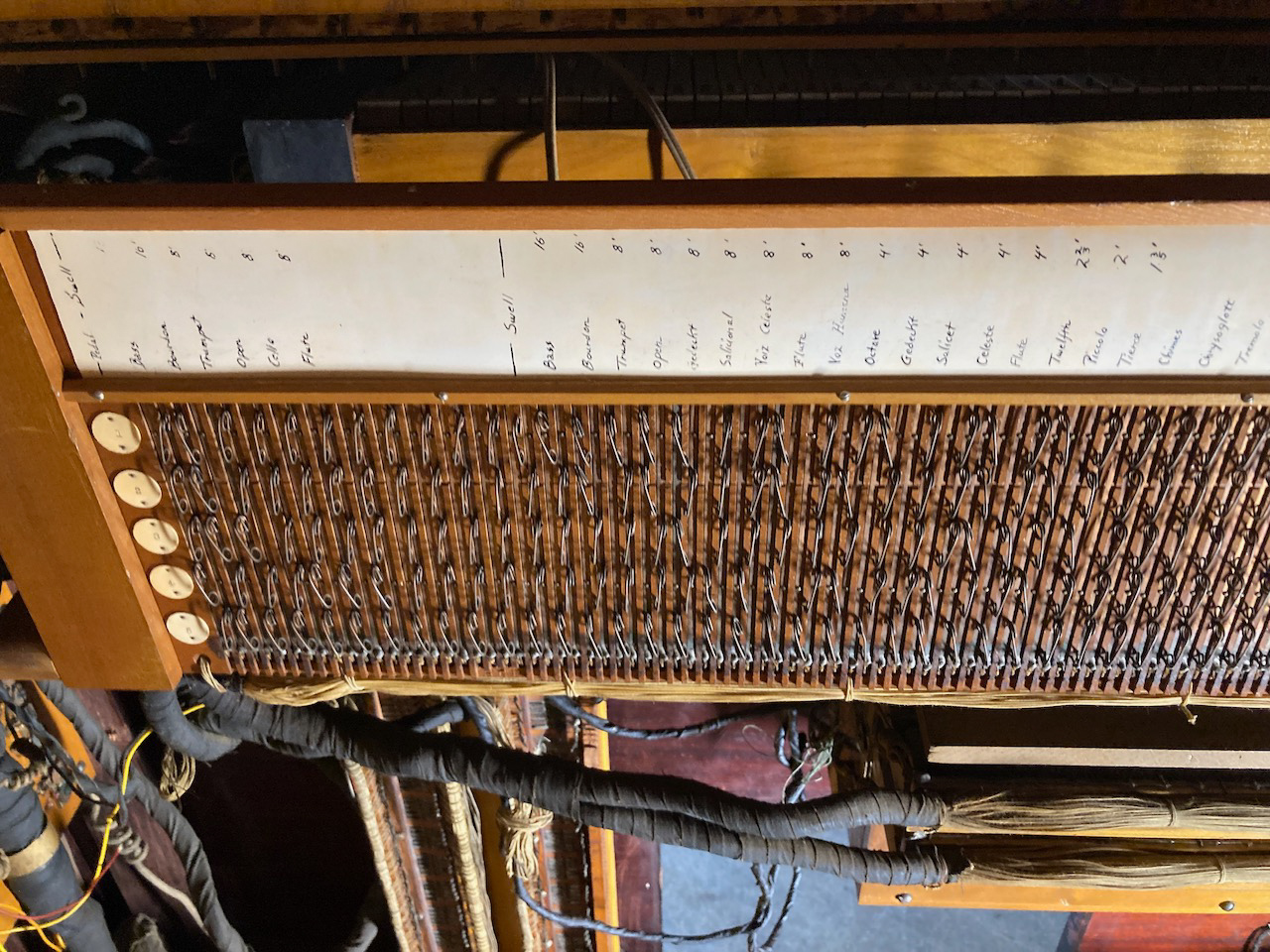
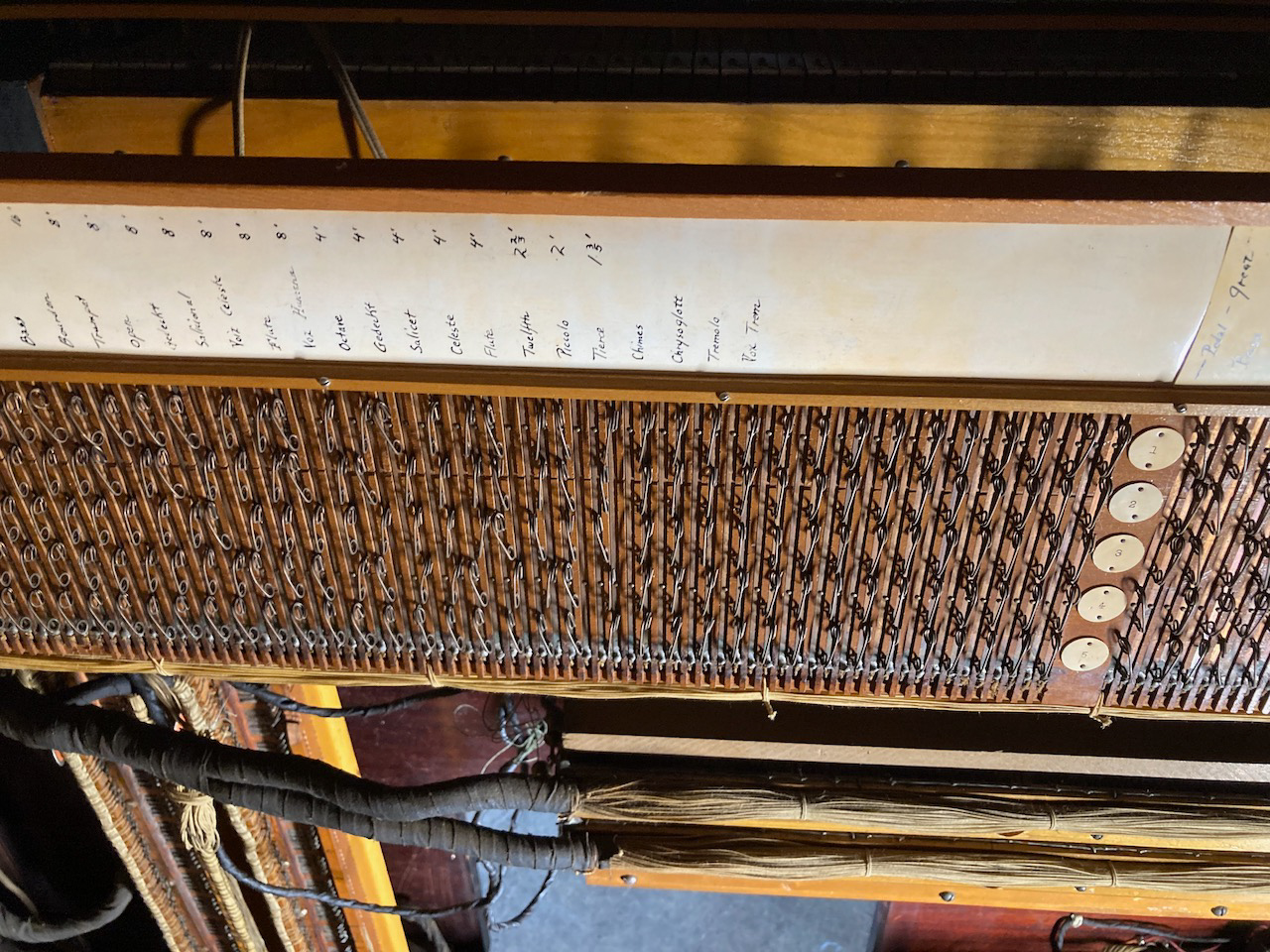
Notes: An extreme wide-angle lens was used for the main photo, and the result looks a bit distorted and squat. It is actually a typical 2-manual Wurlitzer size/shape. It is a church model, or has been modified into a church model, given some of the labeling and stop tabs. One person who looked at it said that it was an early model due to the “leaded caps” inside. Some stop tabs are missing – the console may have been raided for parts. Much like the Möller (above), the keys are in bad shape, due to the storage unit not being temperature controlled, with many of the ivories falling off. We have gathered and bagged up as many as we could find, which is the vast majority, but unsure if any pieces are missing.
Dimensions: 61 1/2″ w x 50 3/4″ h x 33 3/4″ d (not including pedalboard)
Complete instruments (more or Less)
“Compensating Organ Company” Self-Contained 1-Manual & Pedal Hybrid Pipe/Reed Organ
Status: Claimed – Picked up.
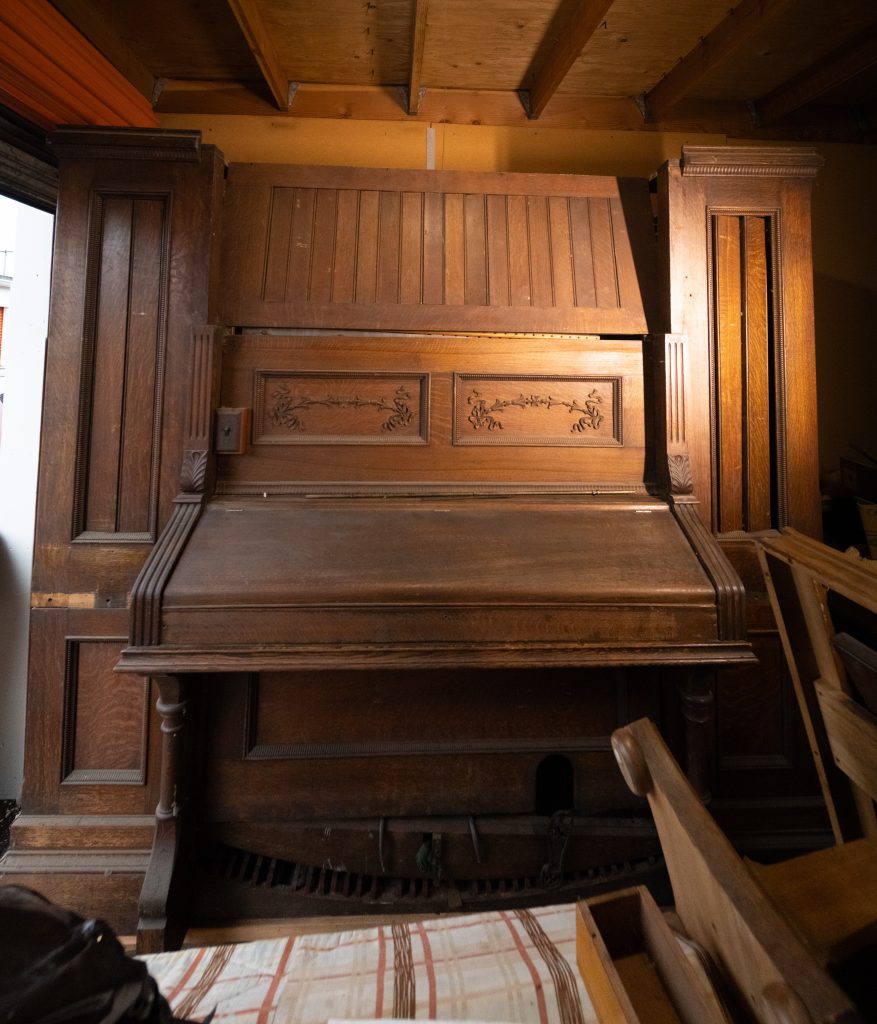
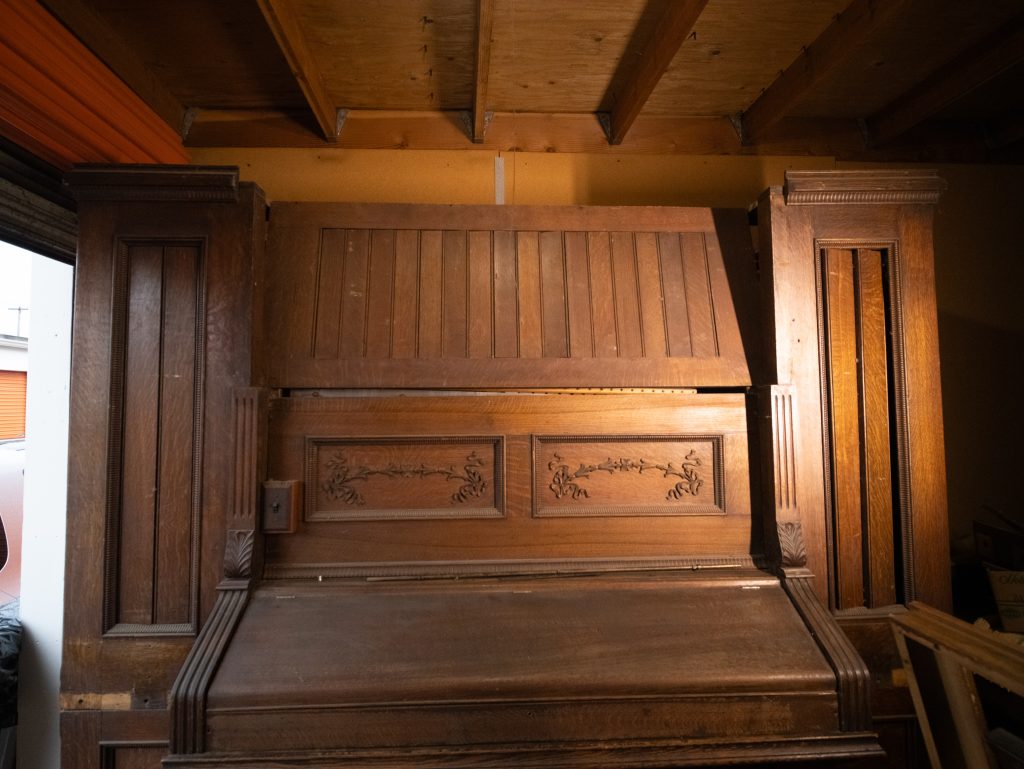
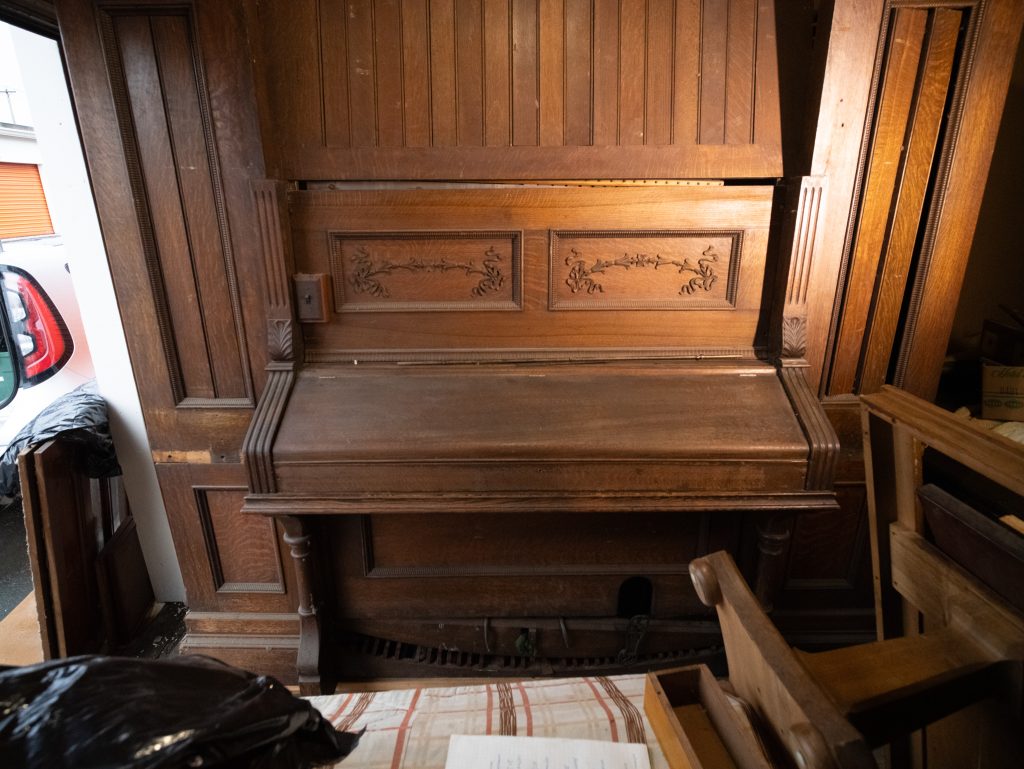
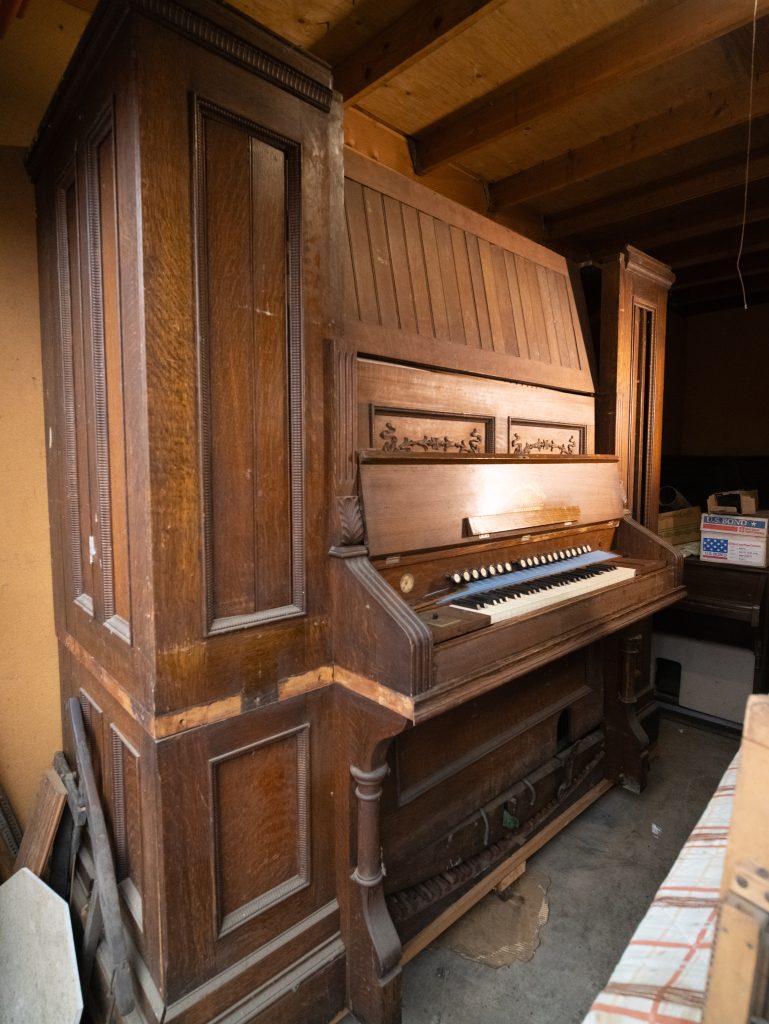
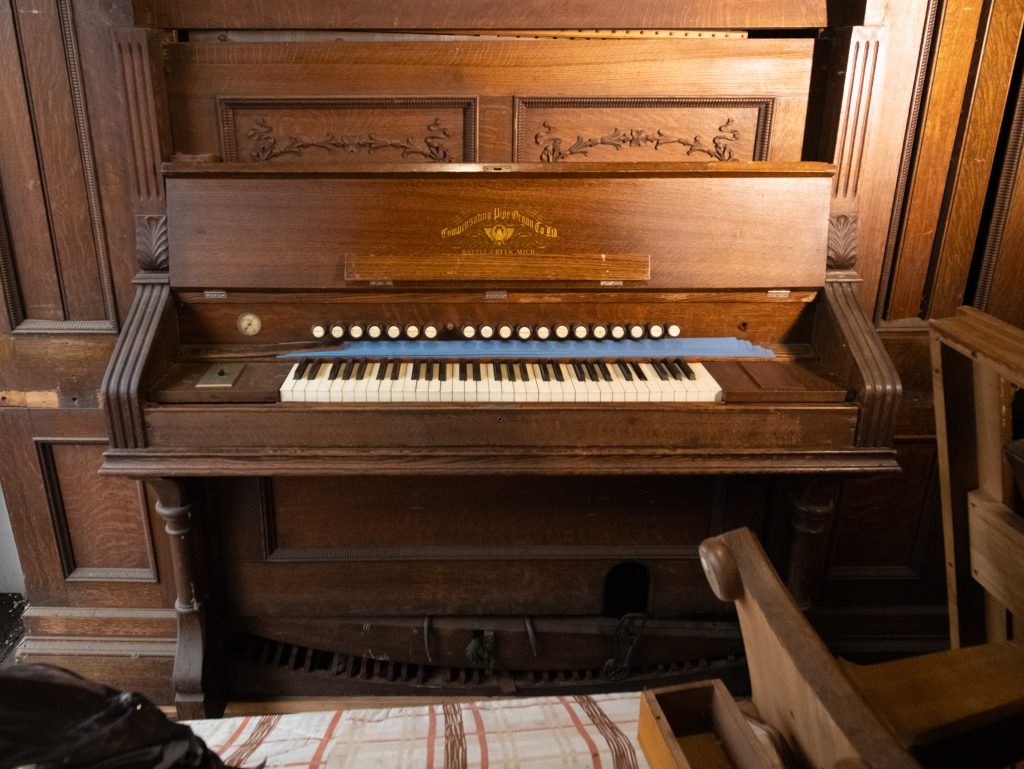
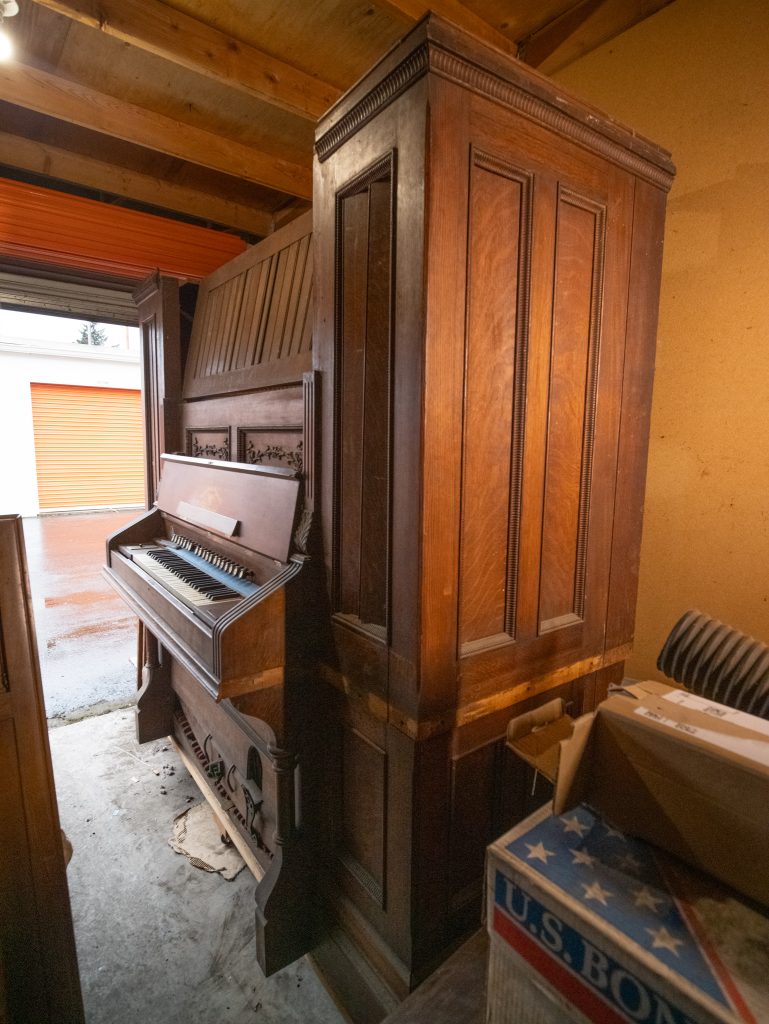
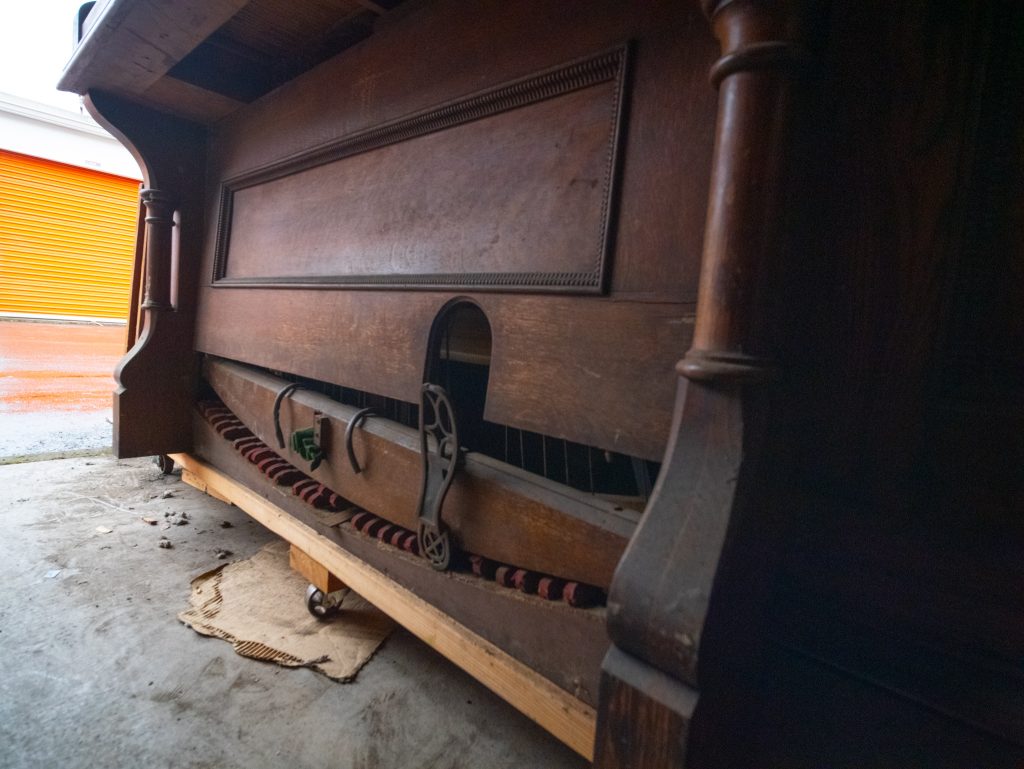
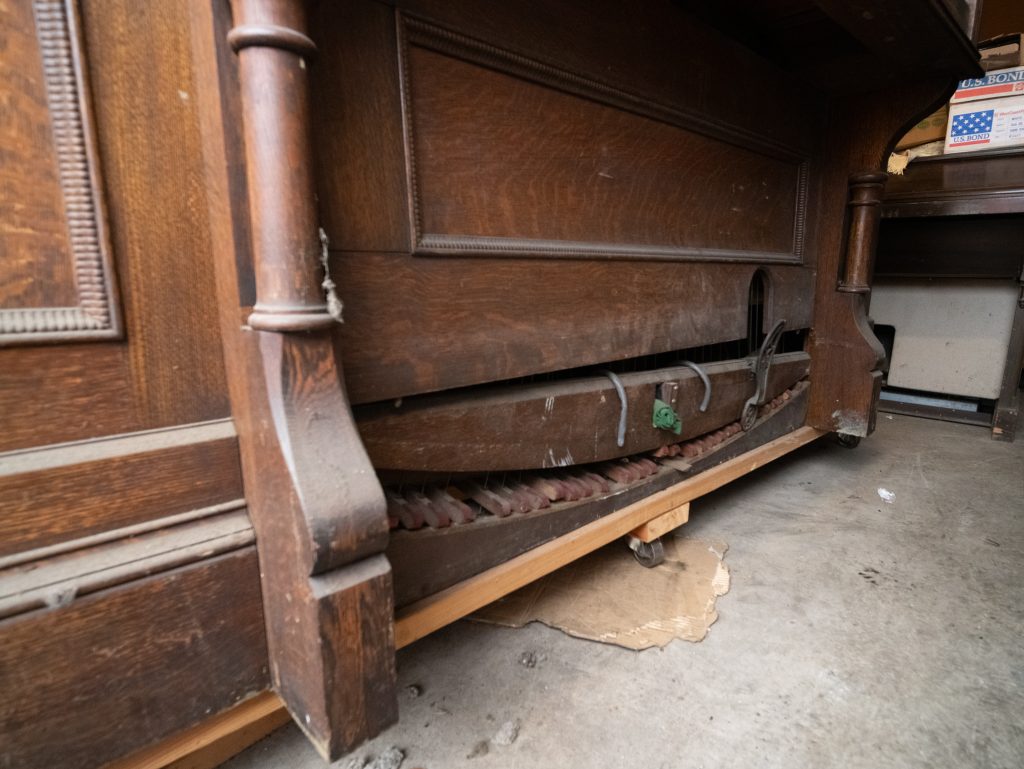
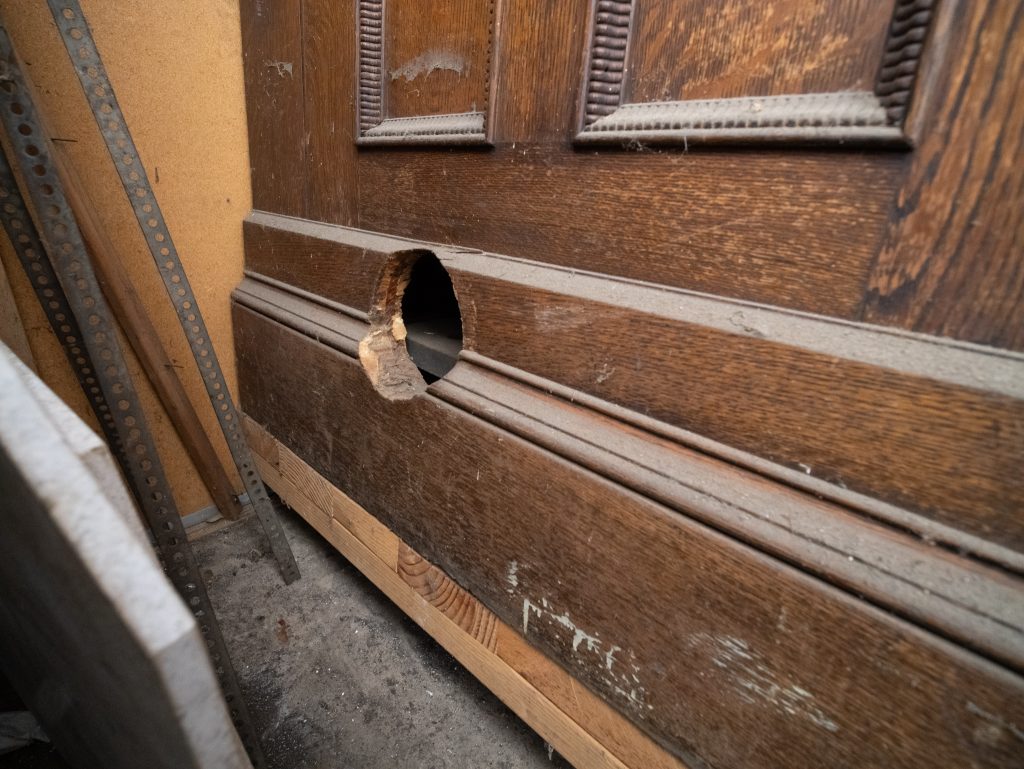
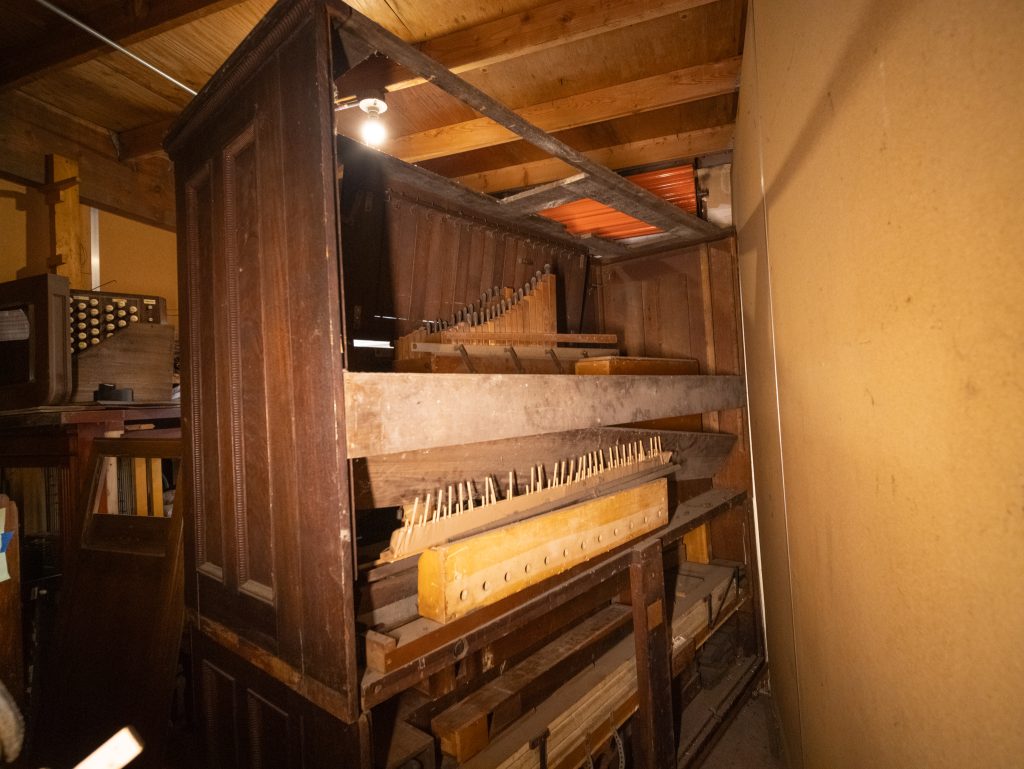
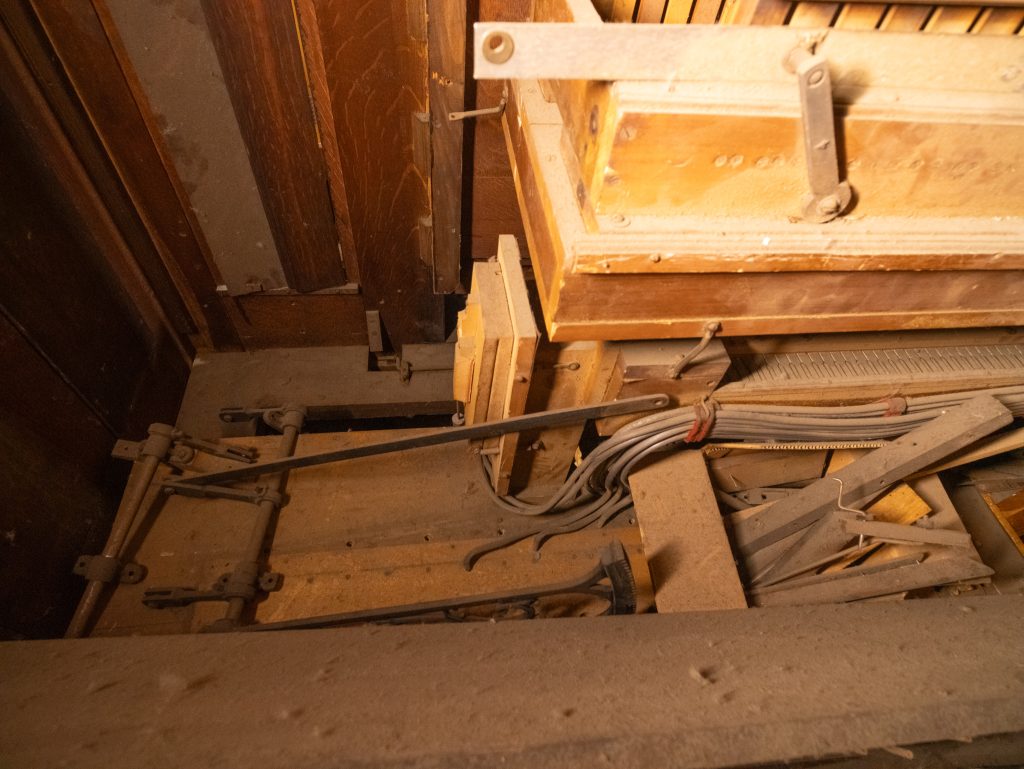
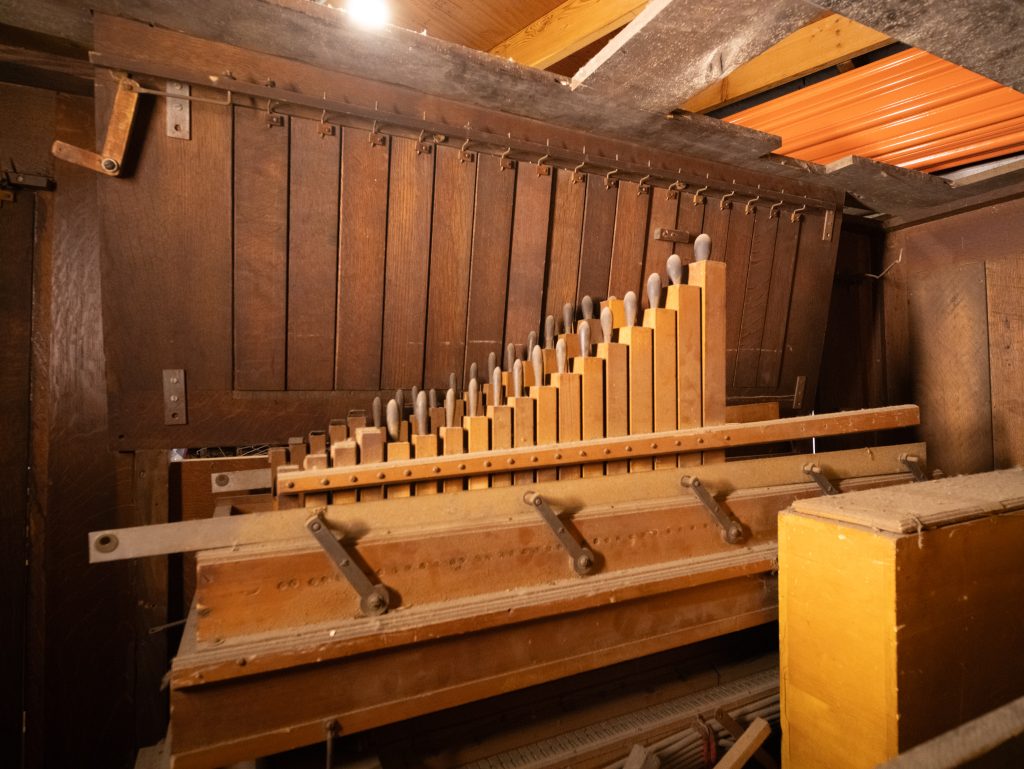
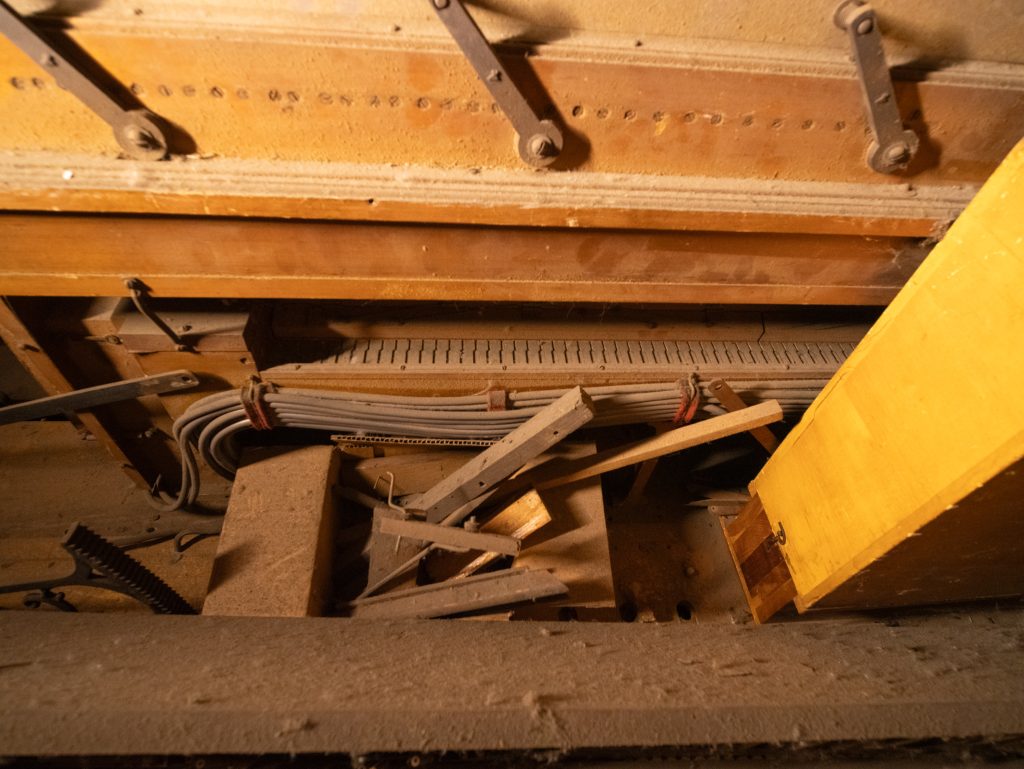
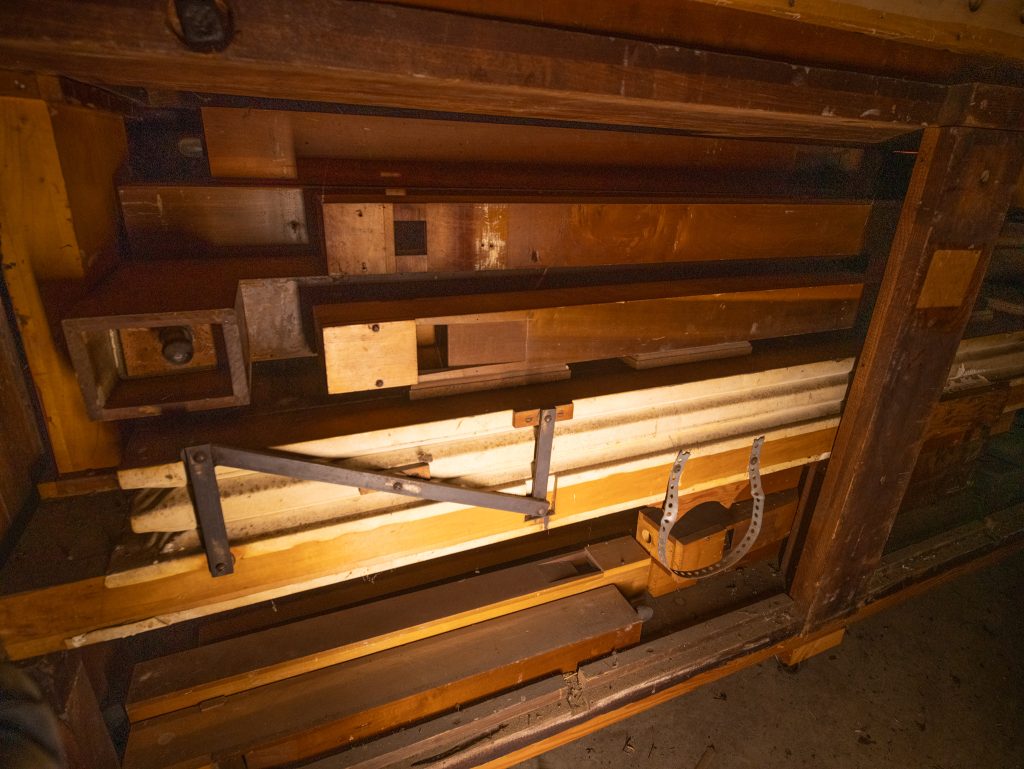
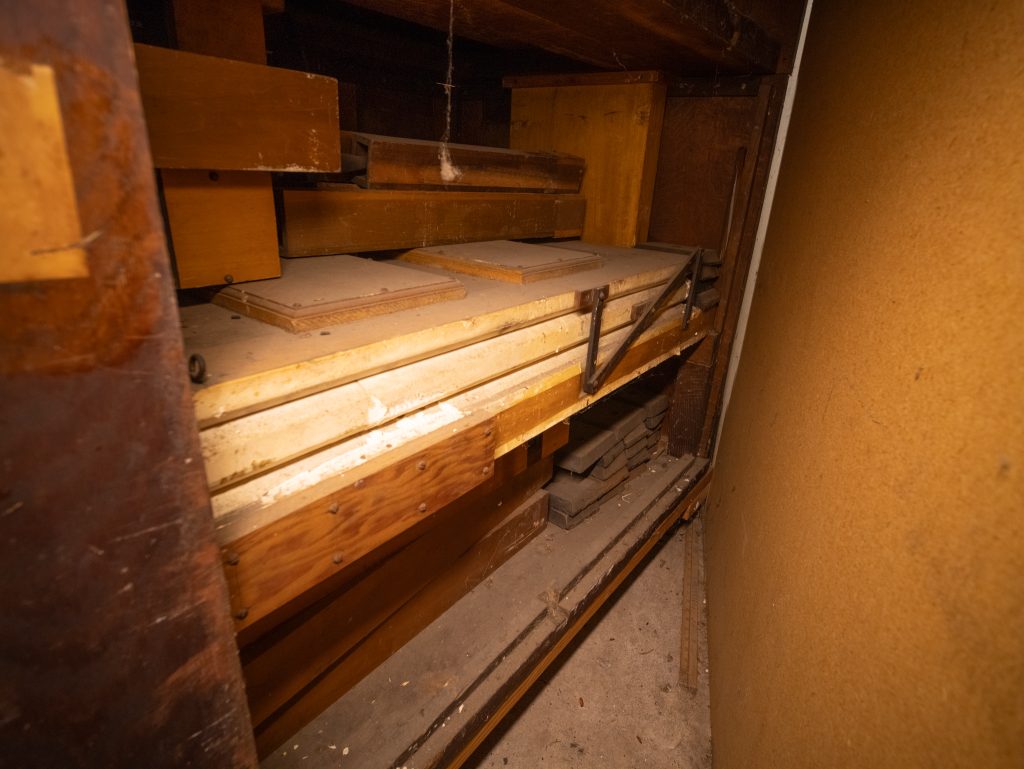
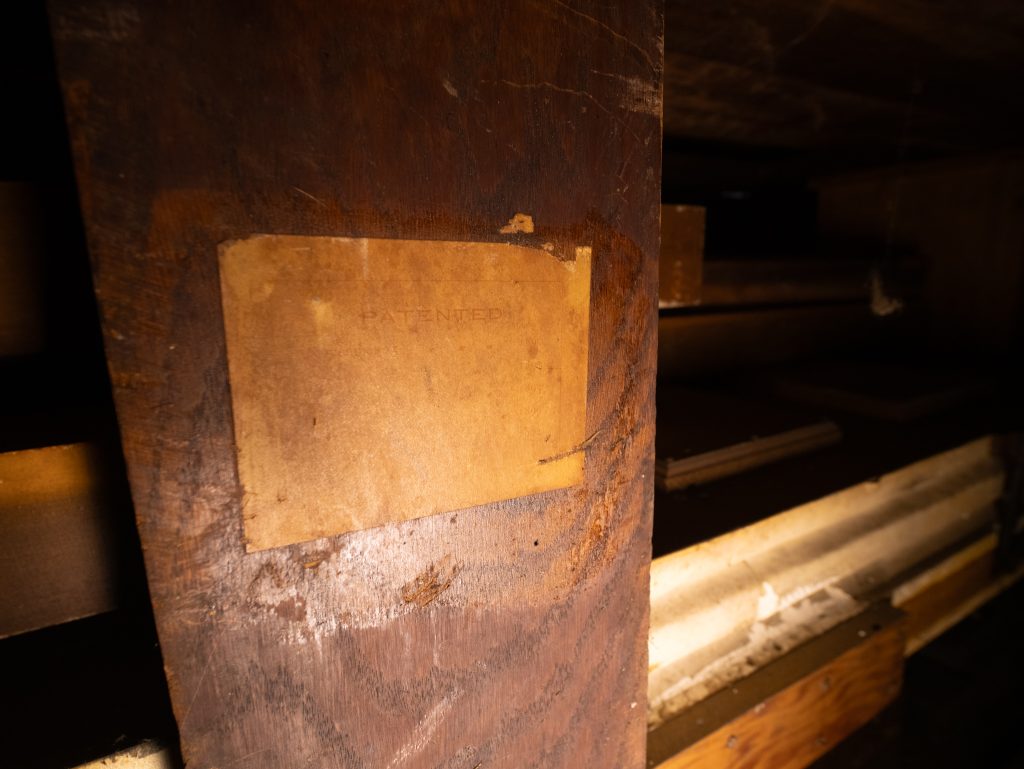
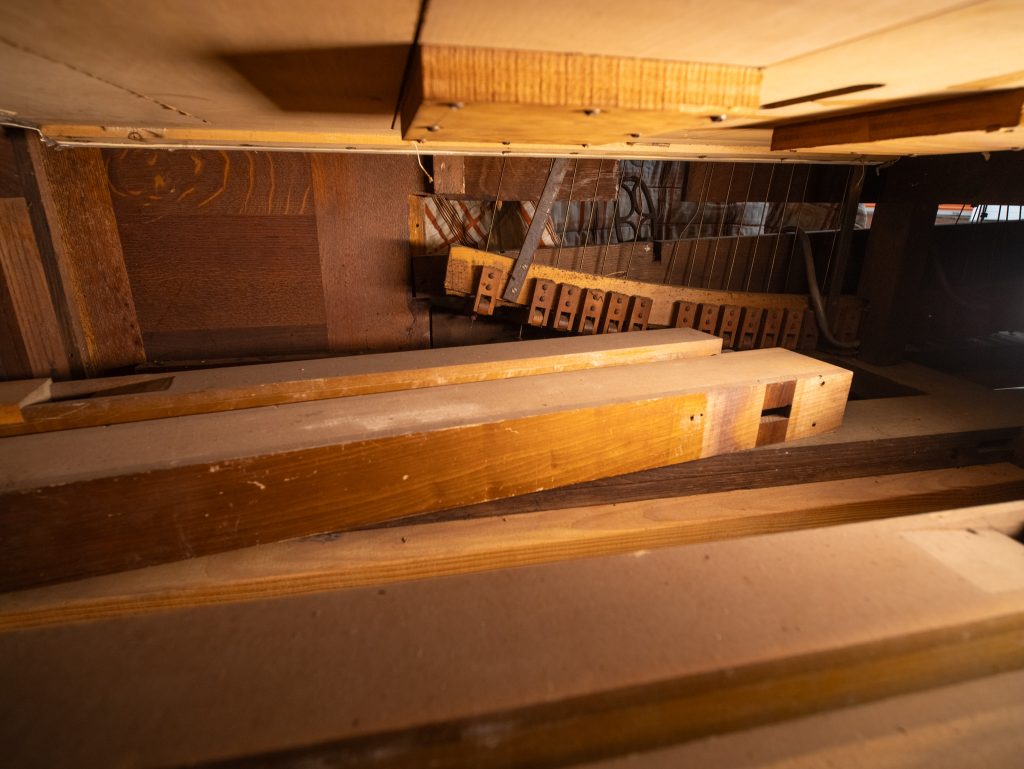
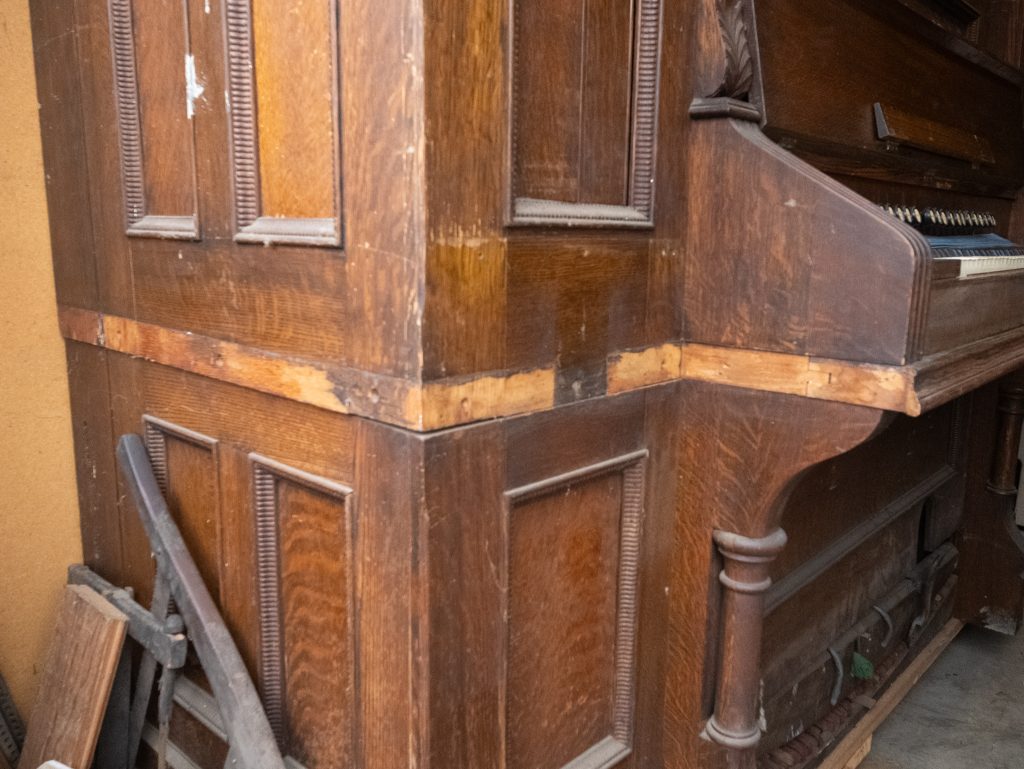
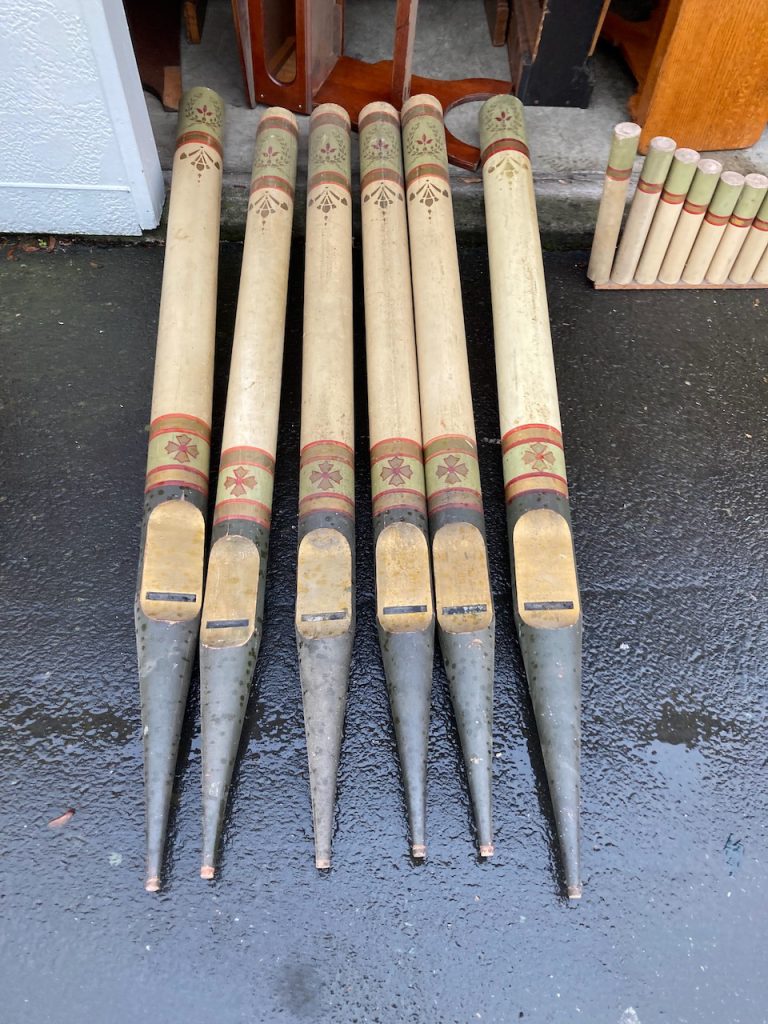
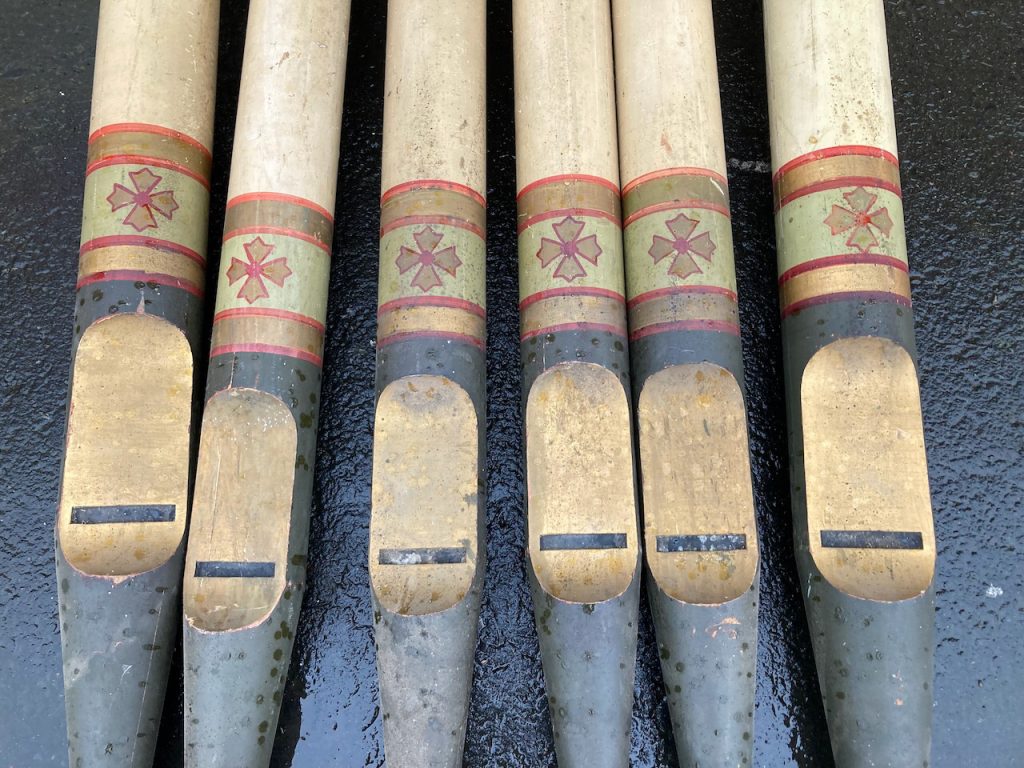
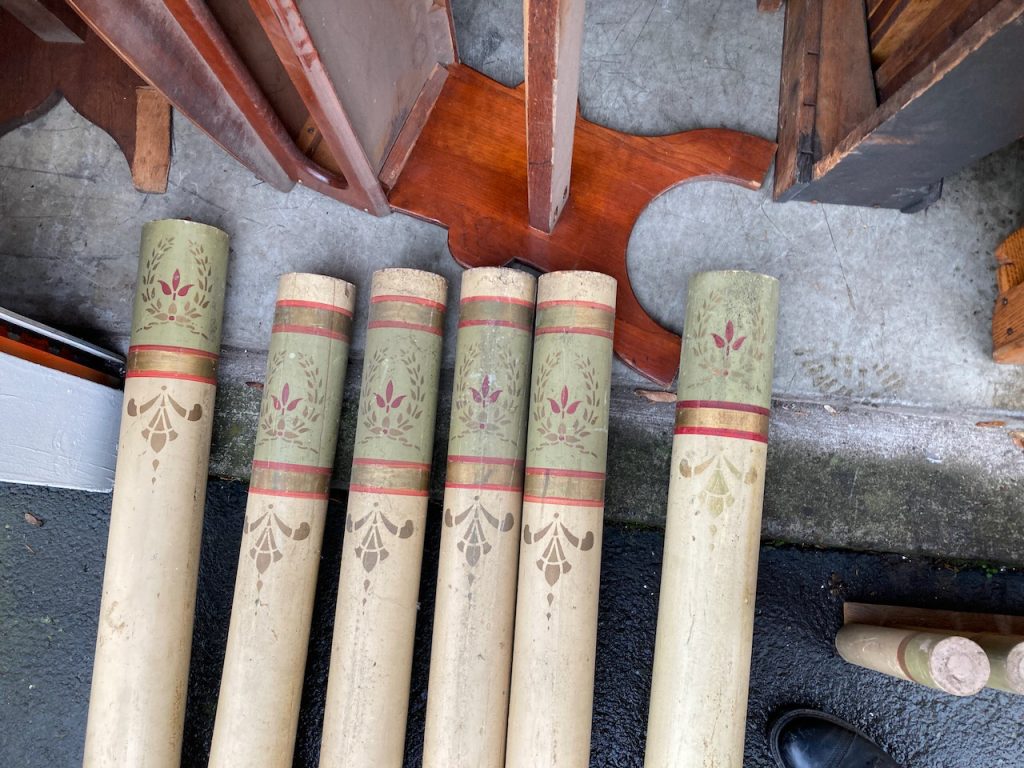
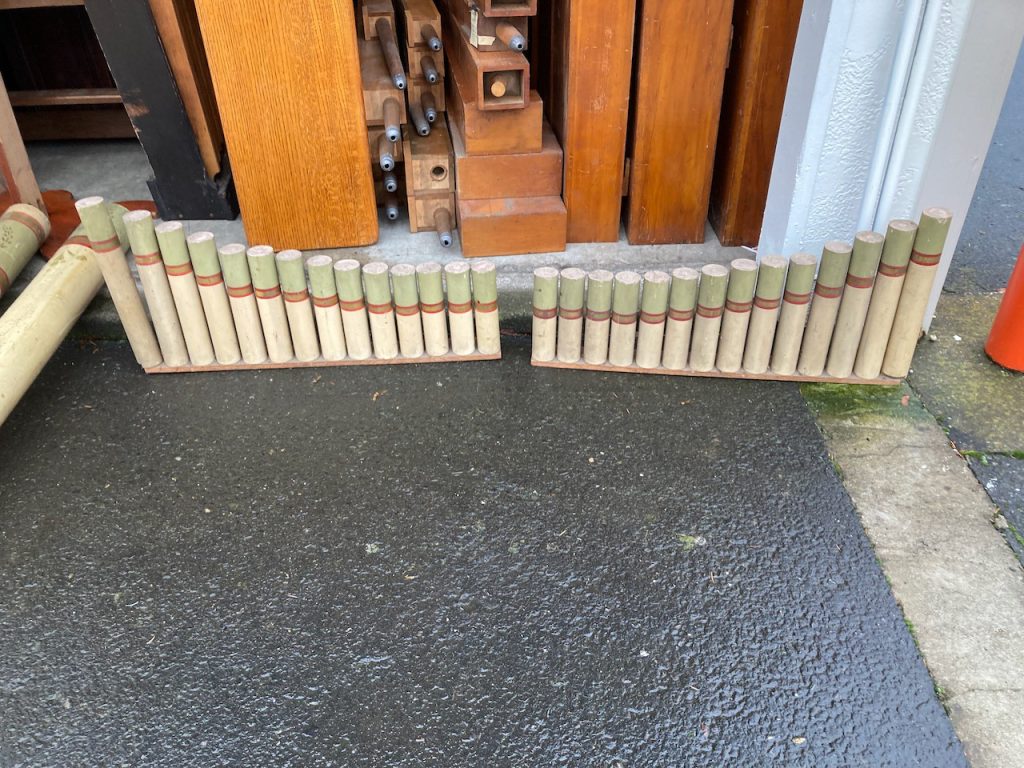
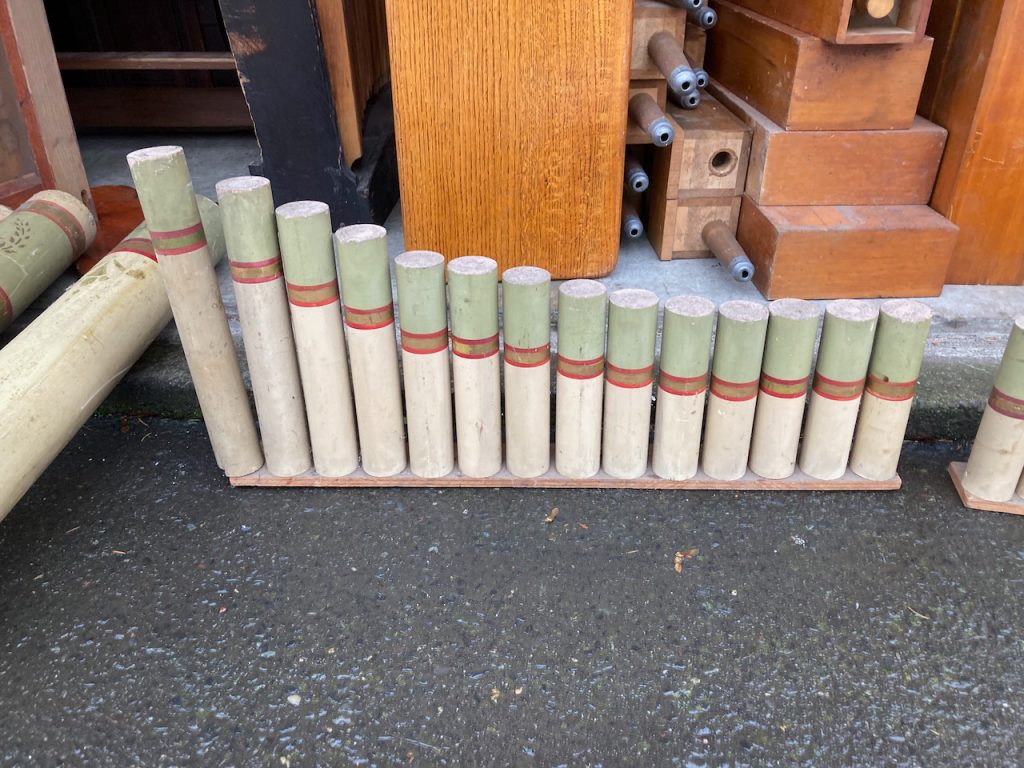
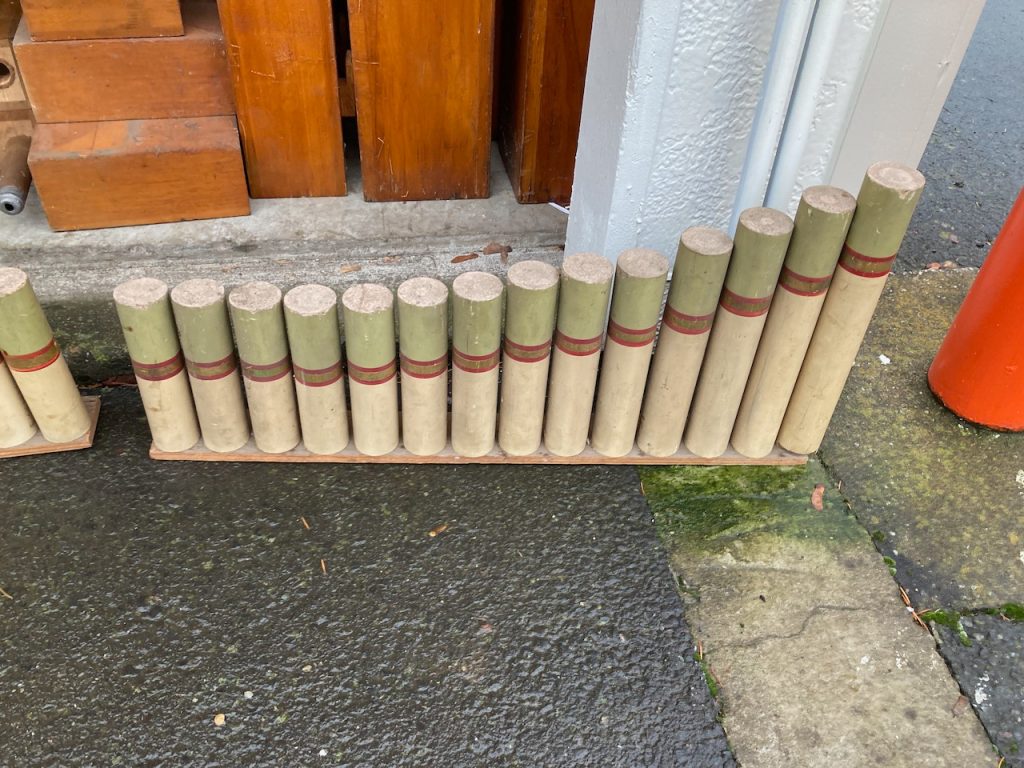
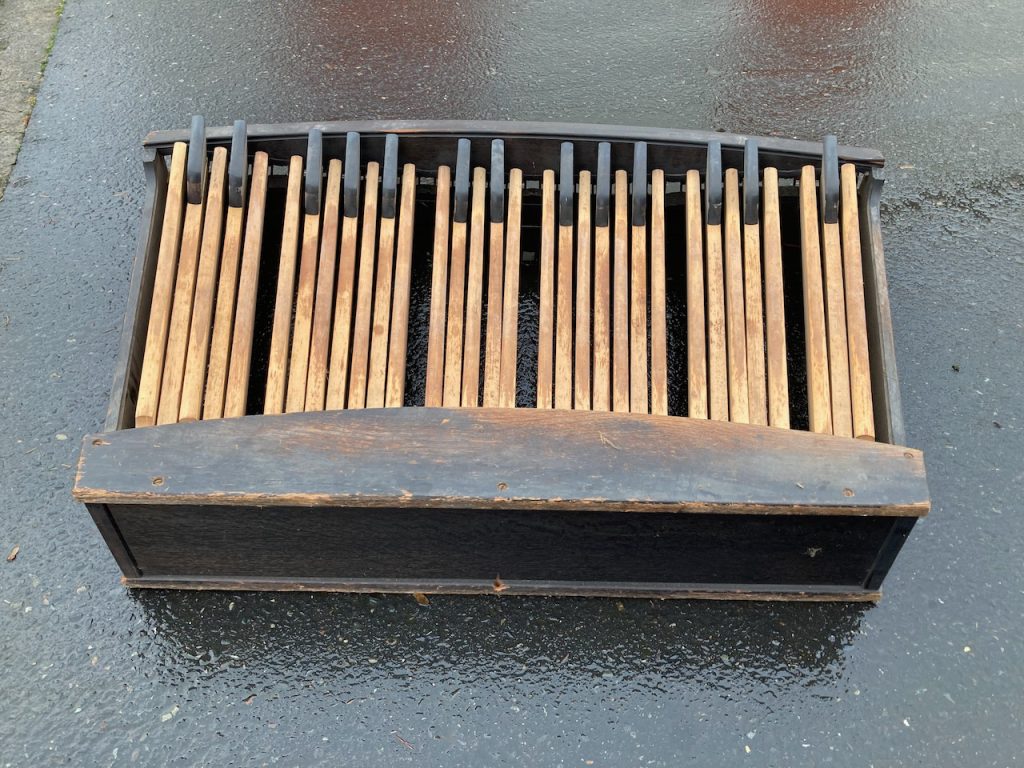
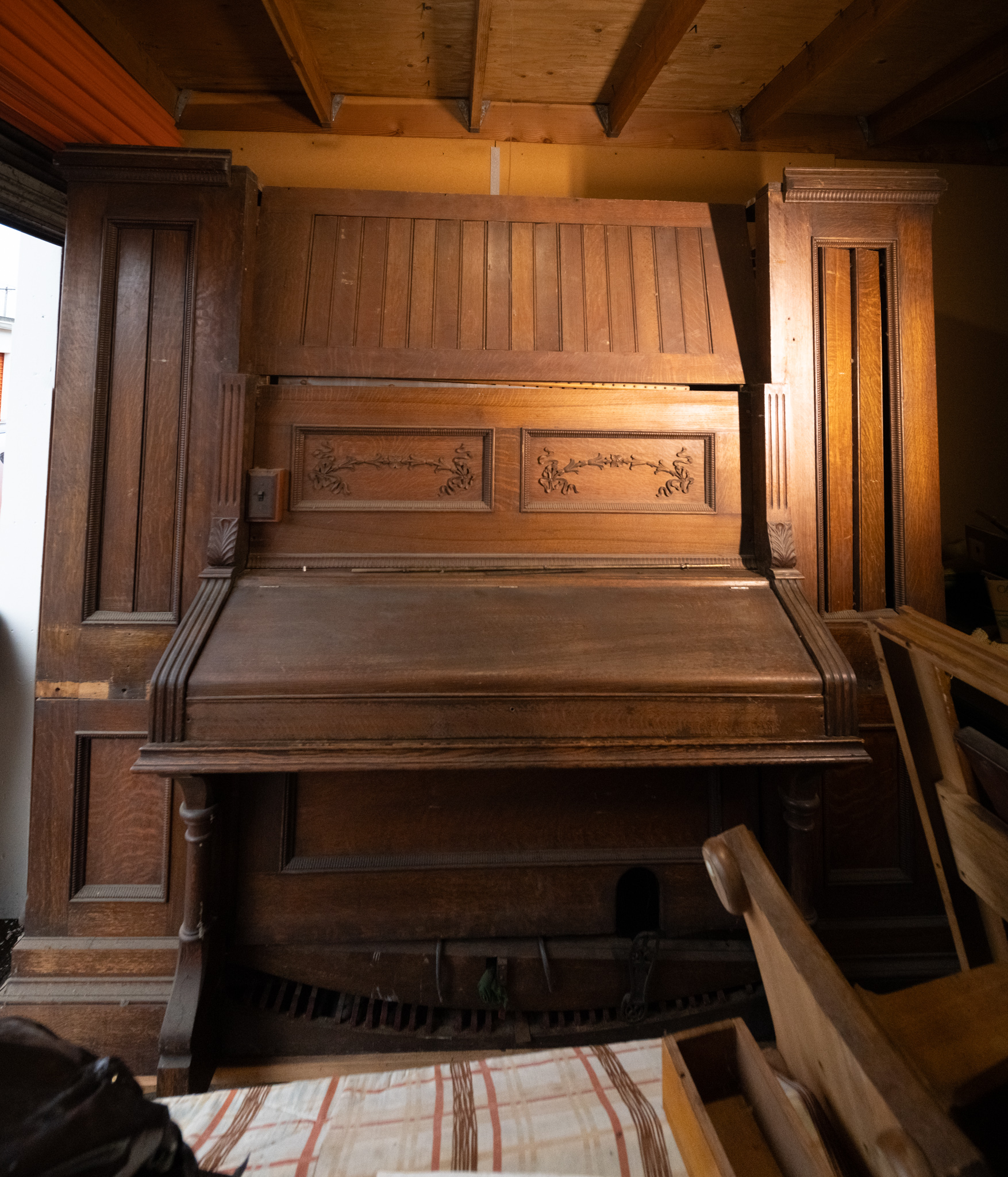
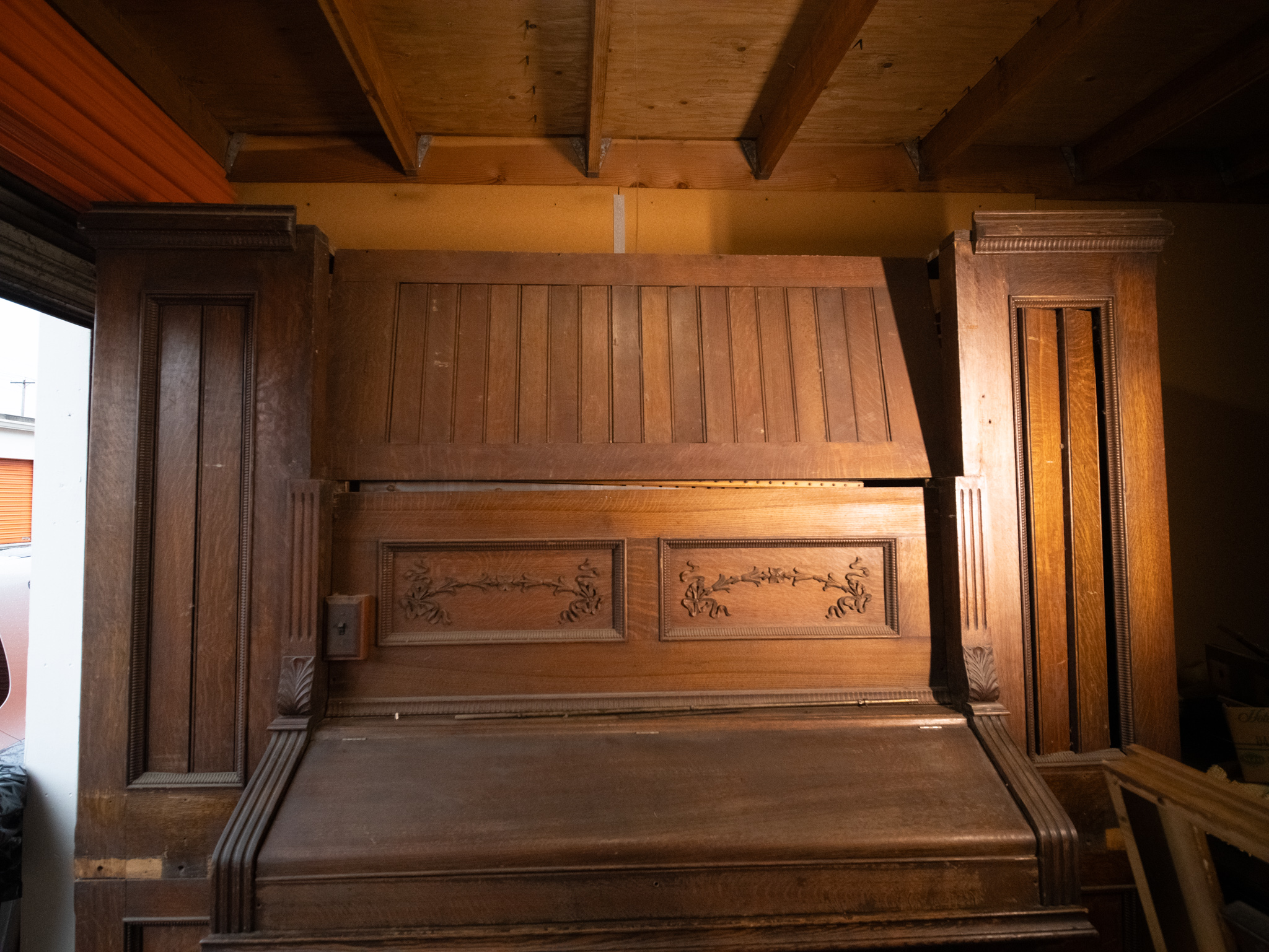
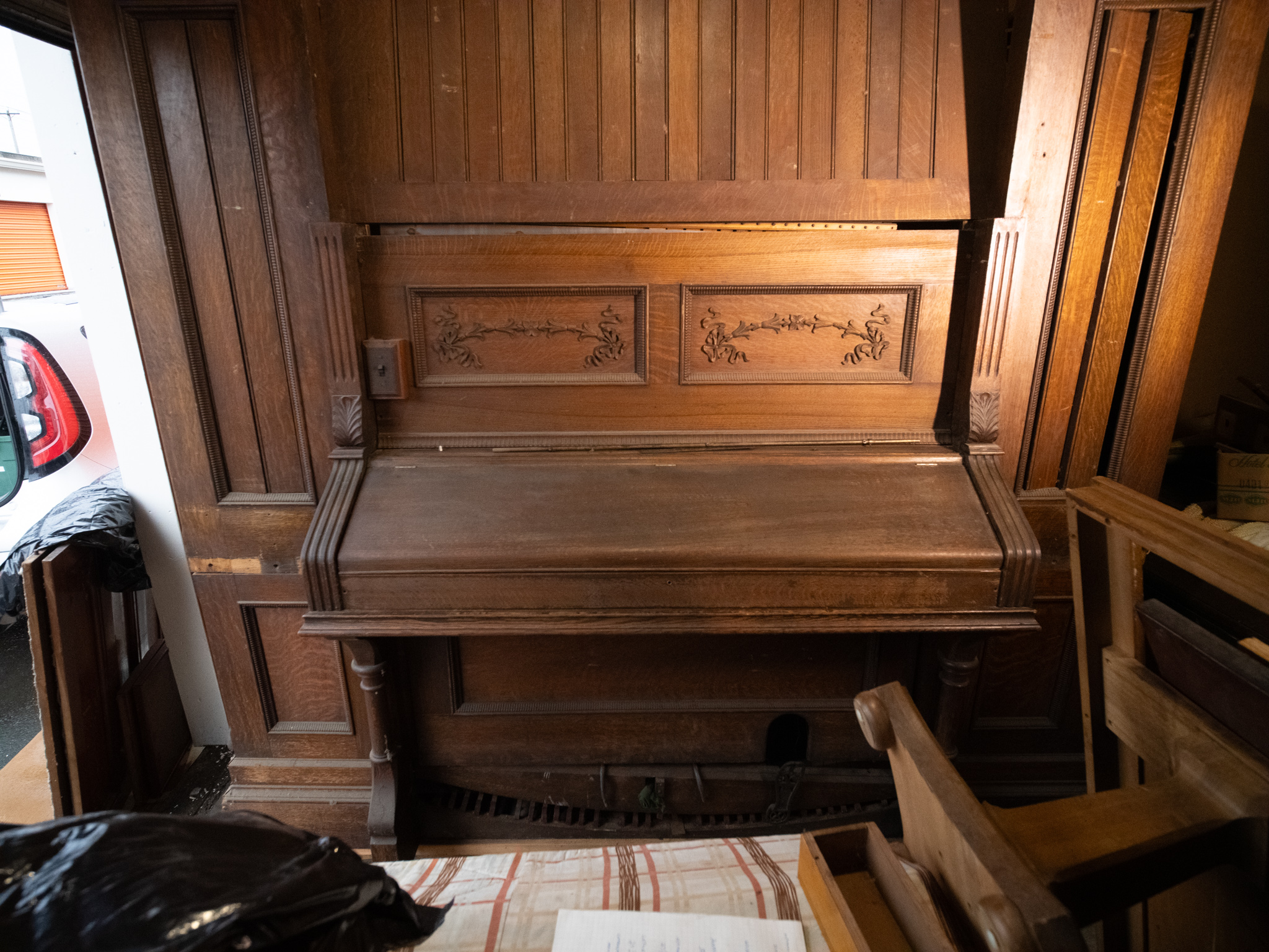
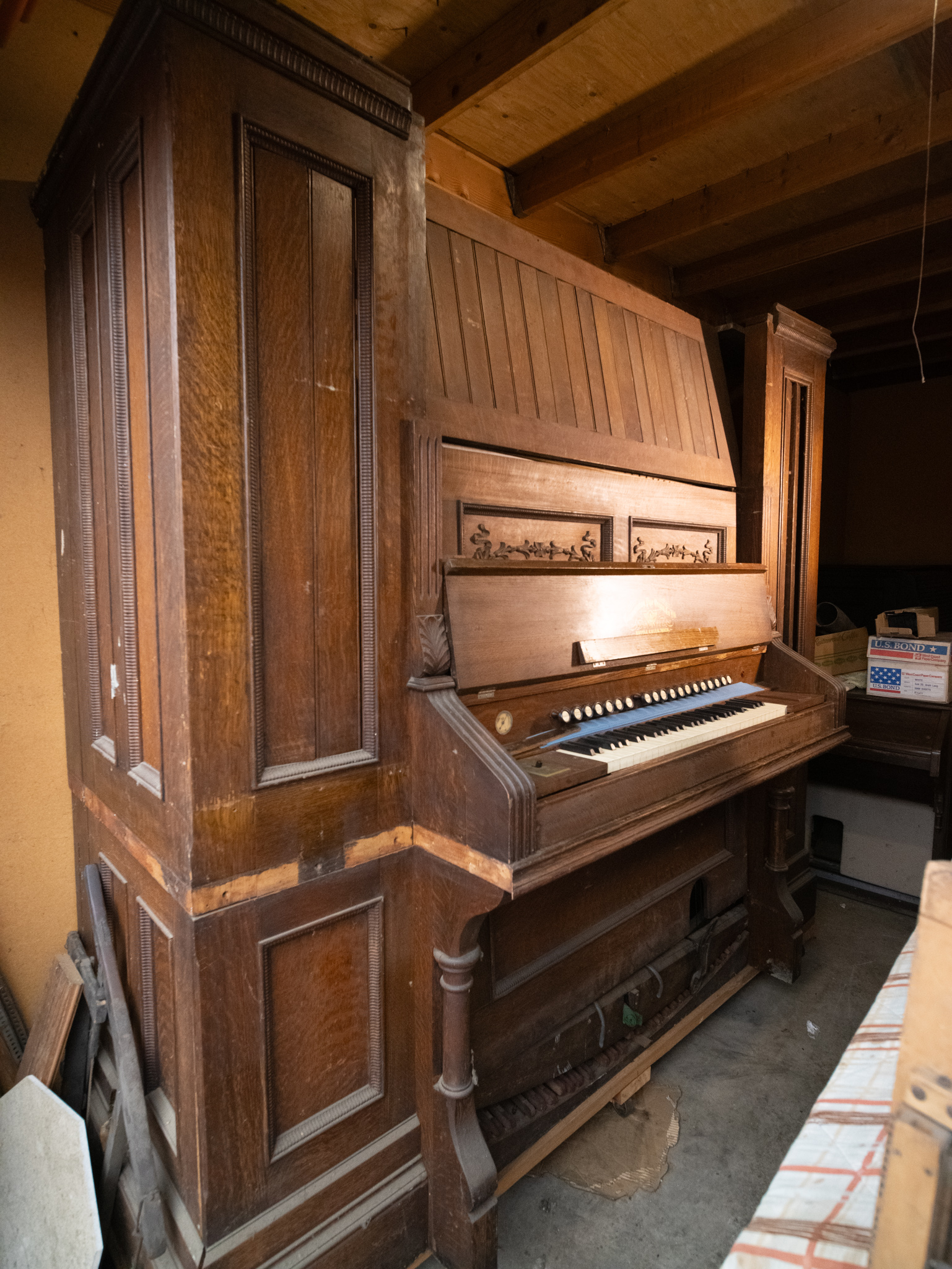
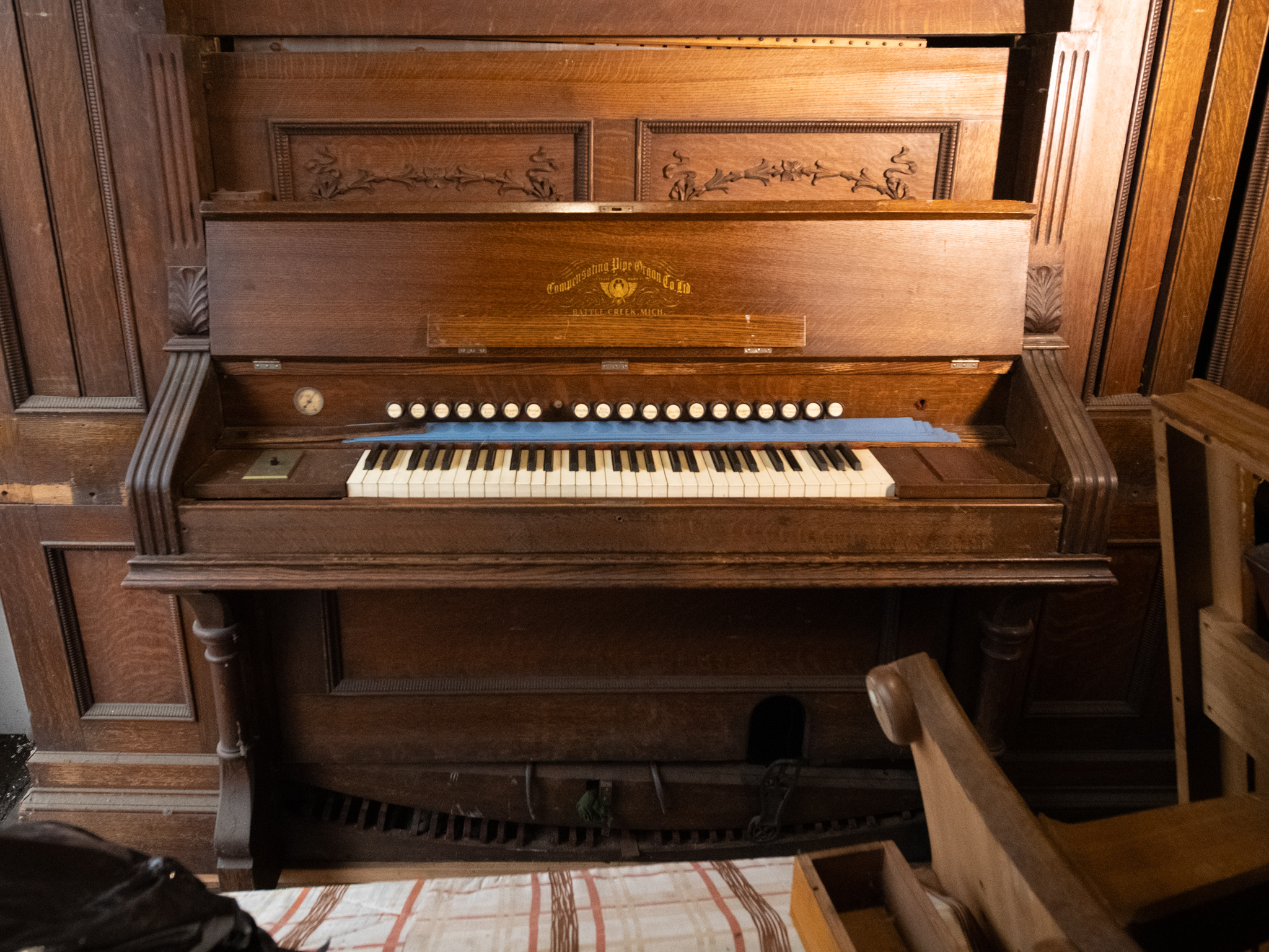
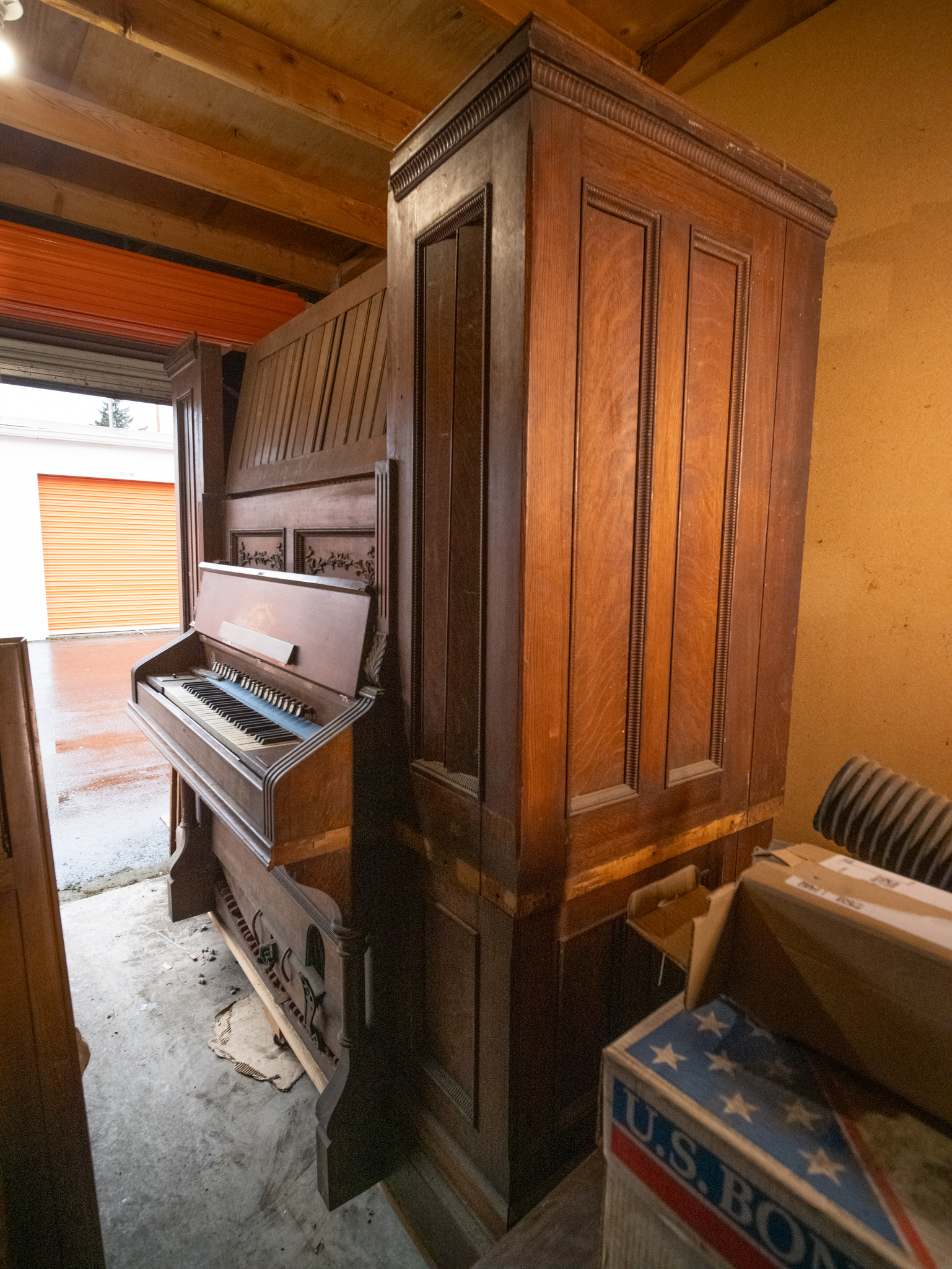
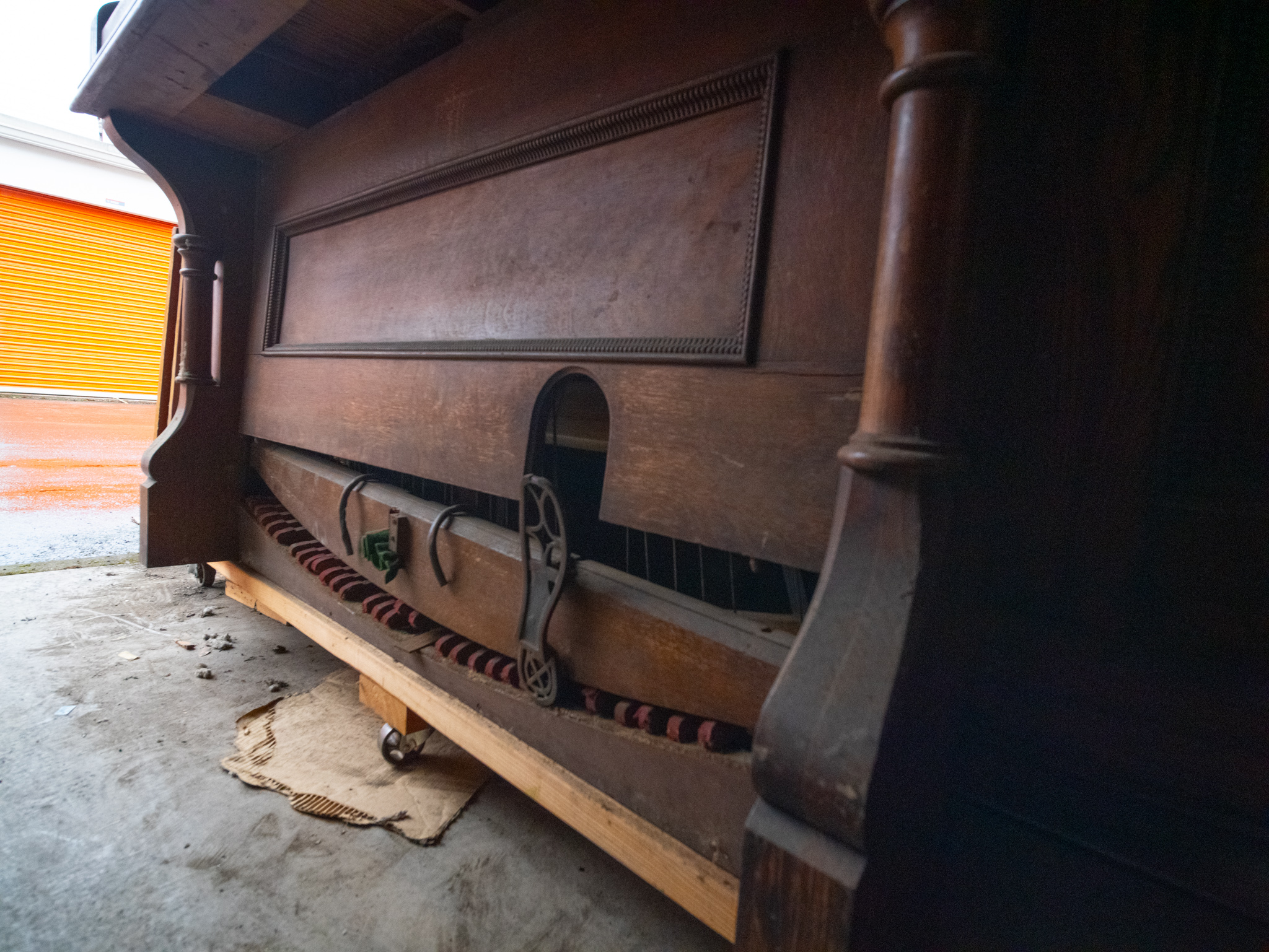
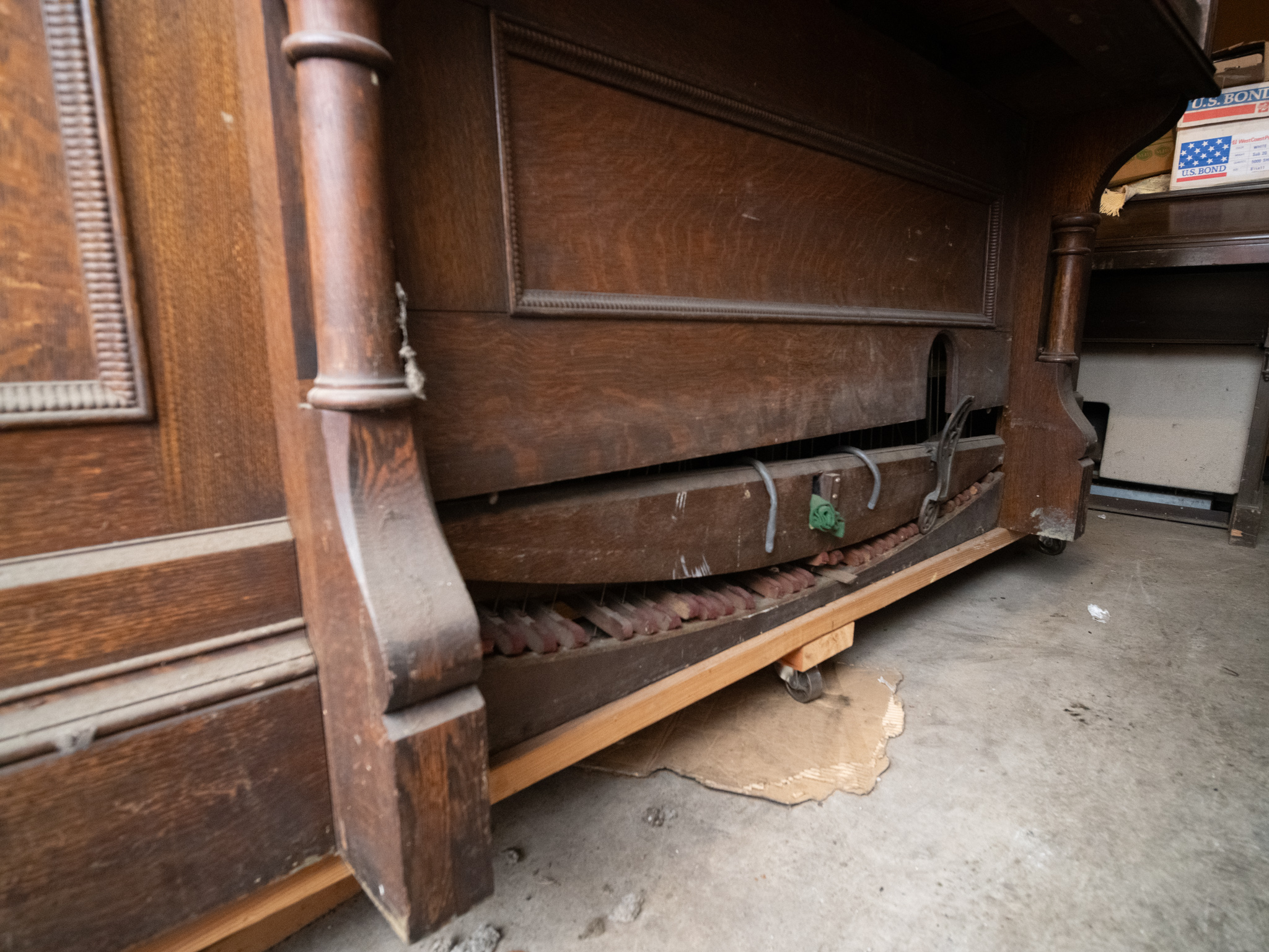
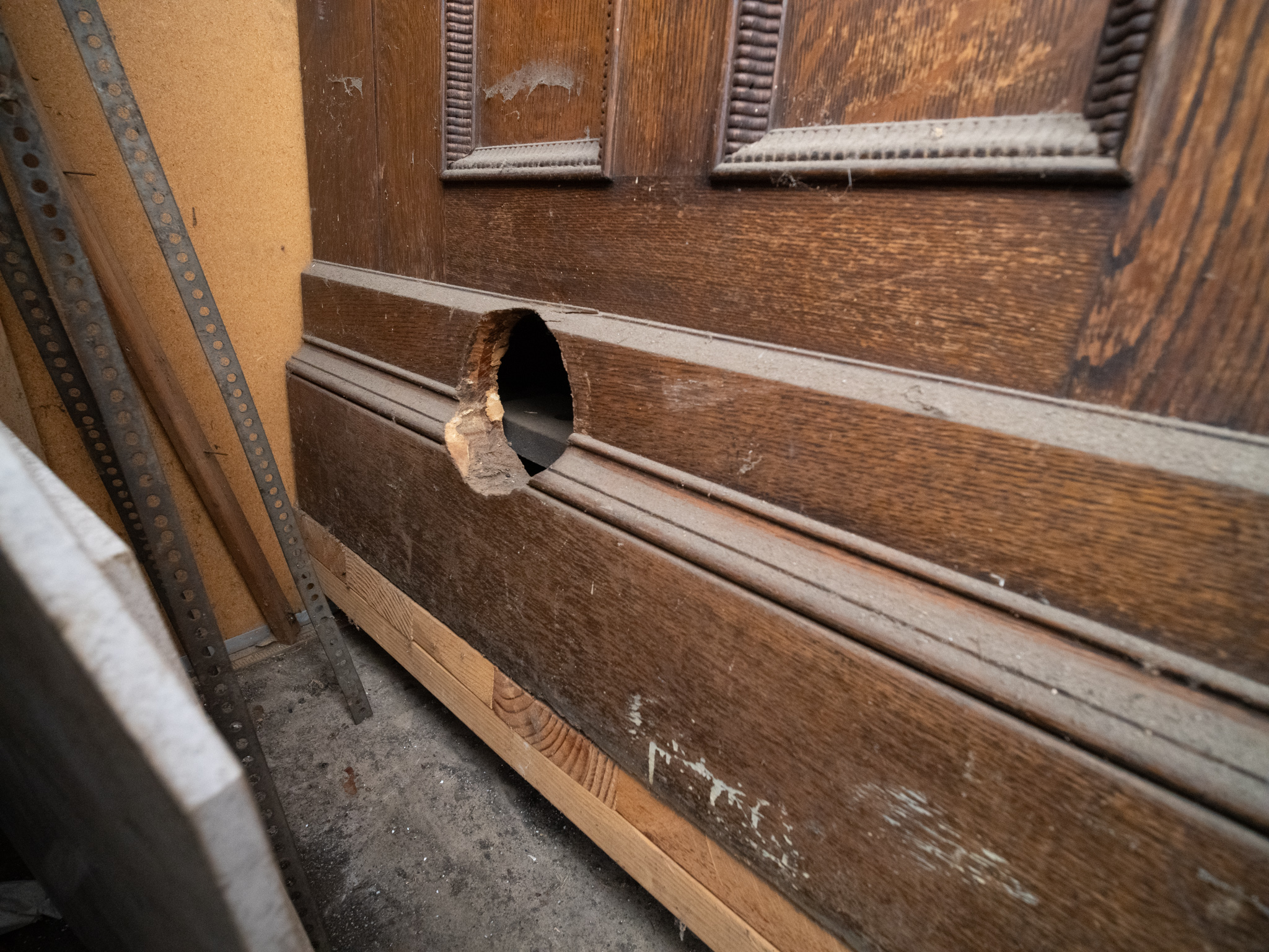
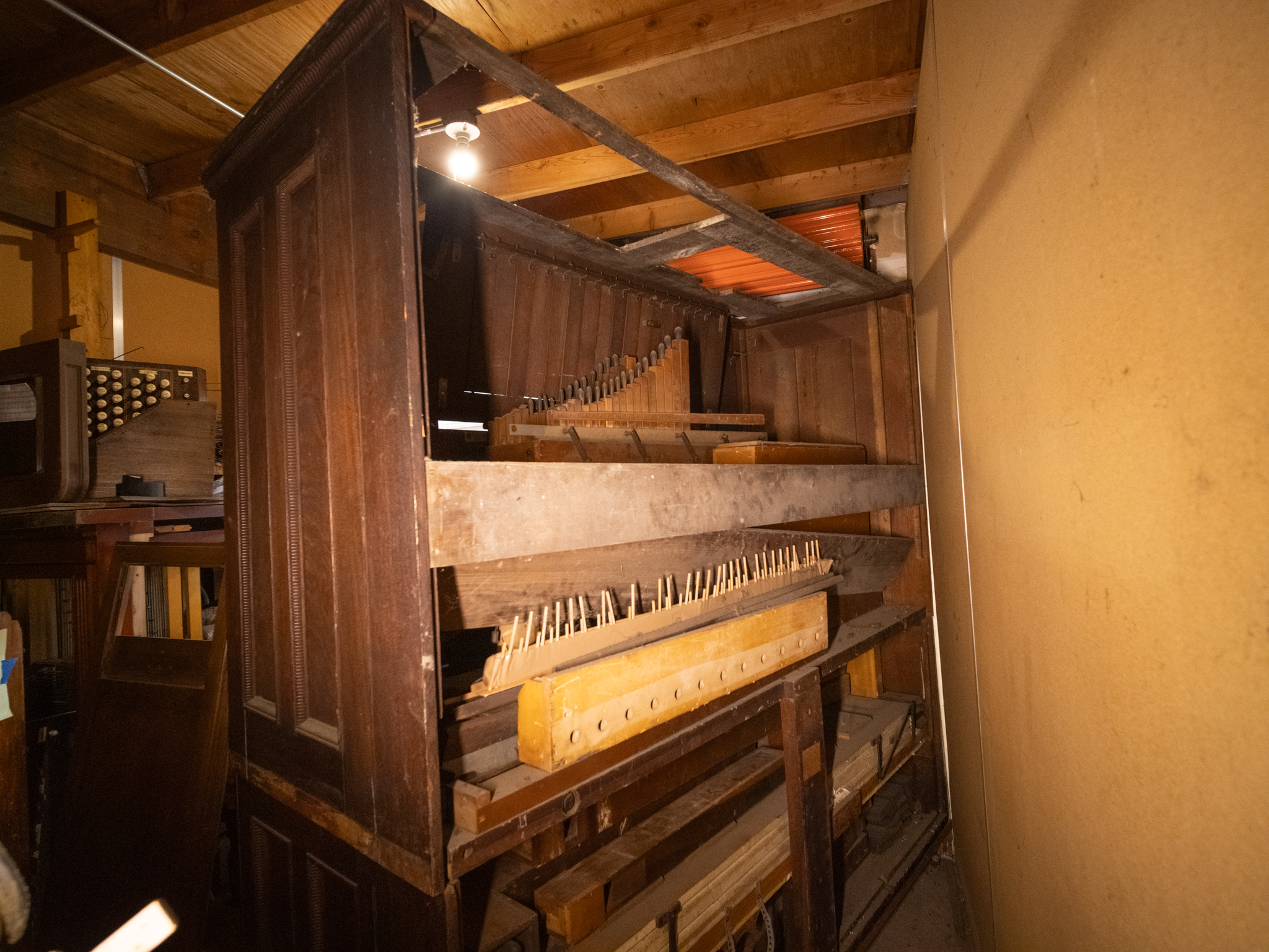
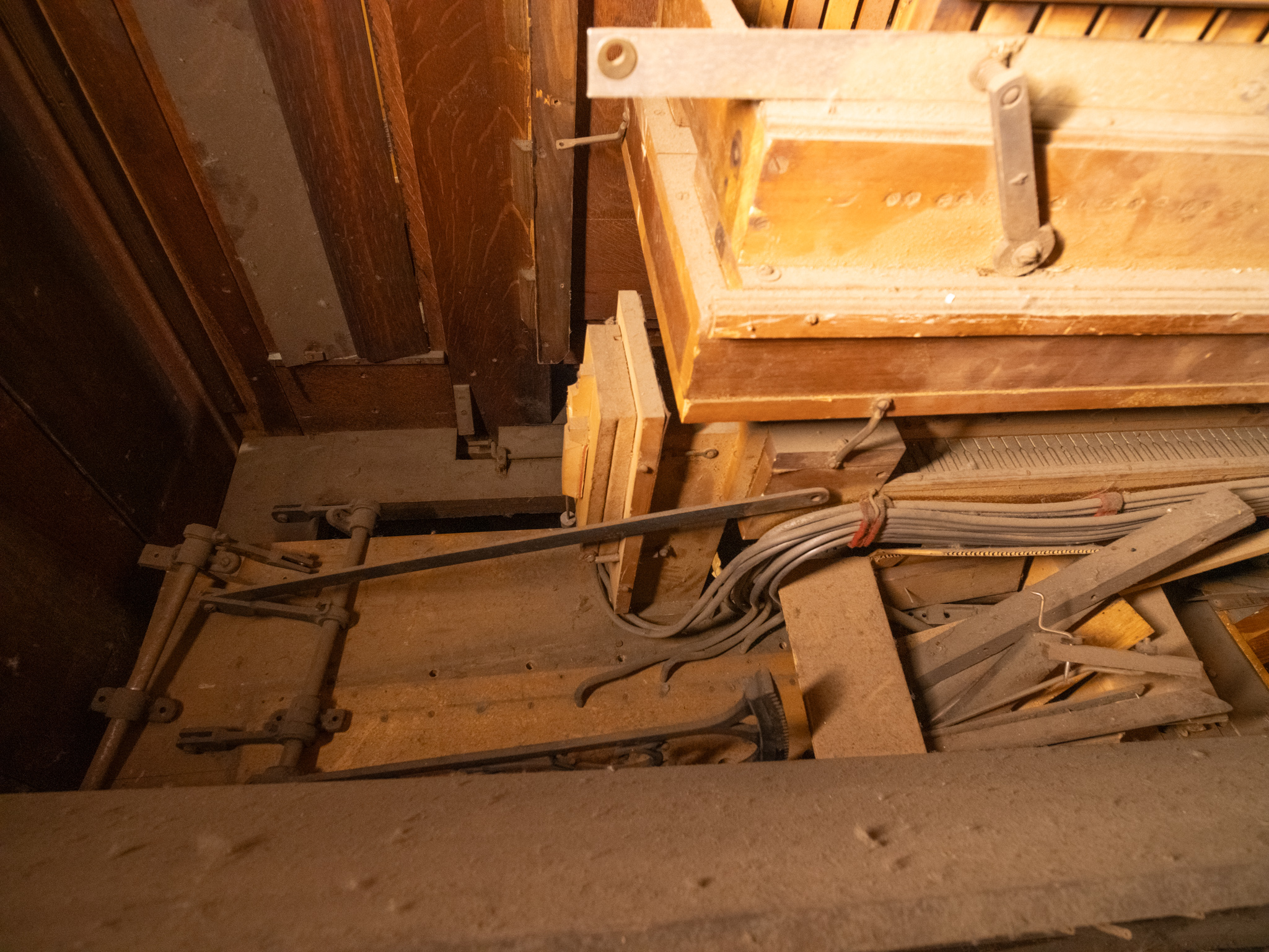
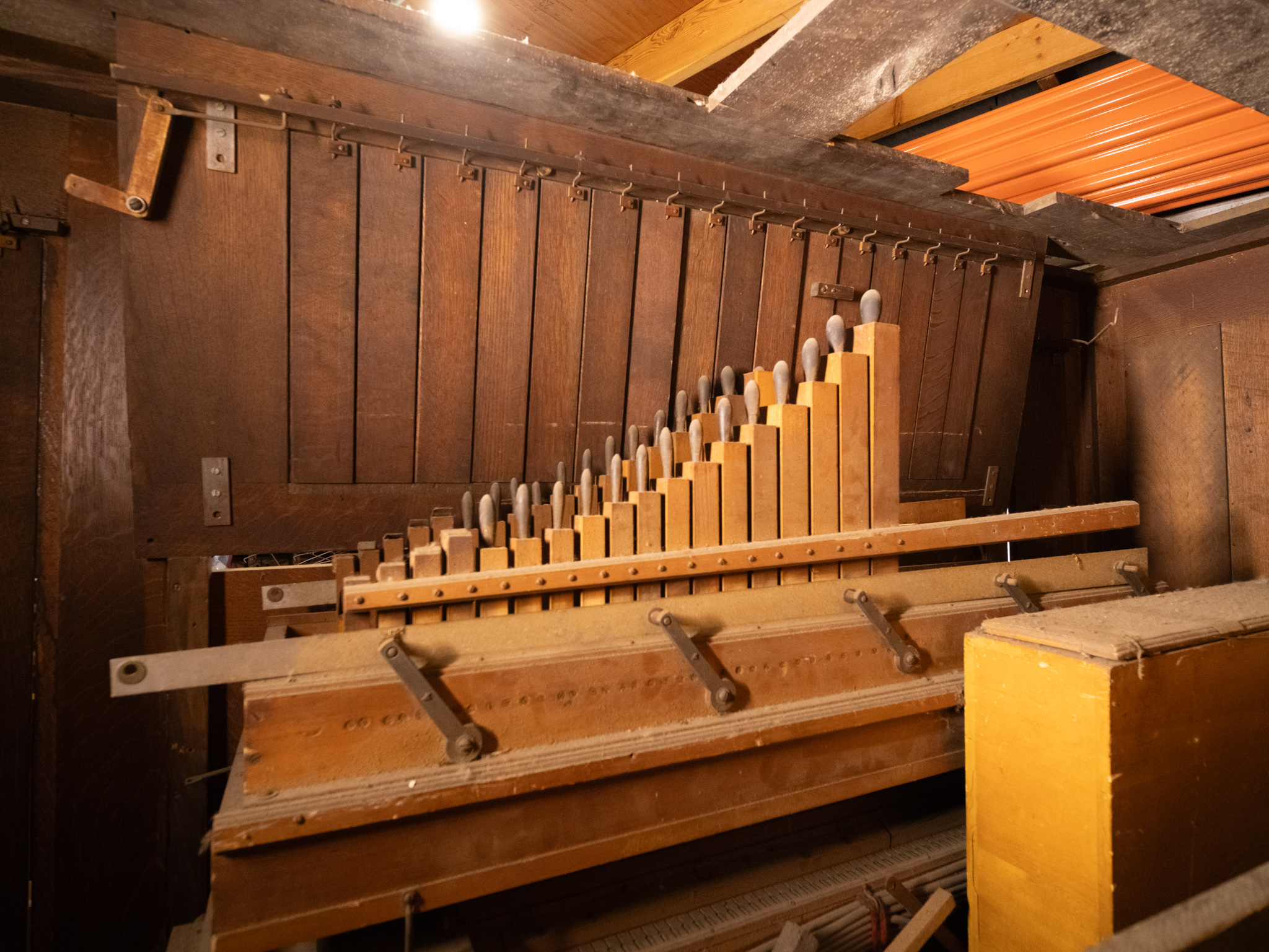
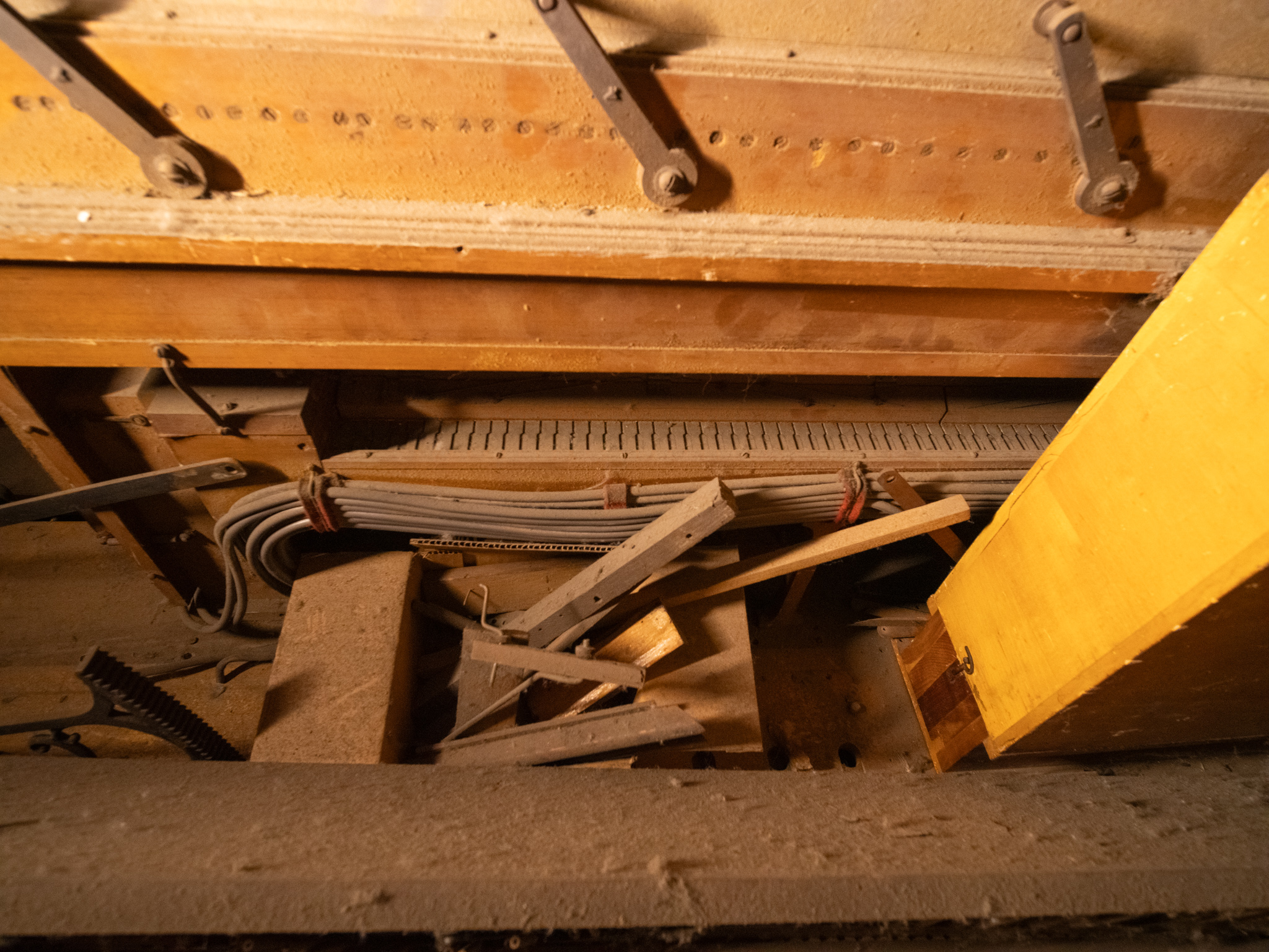
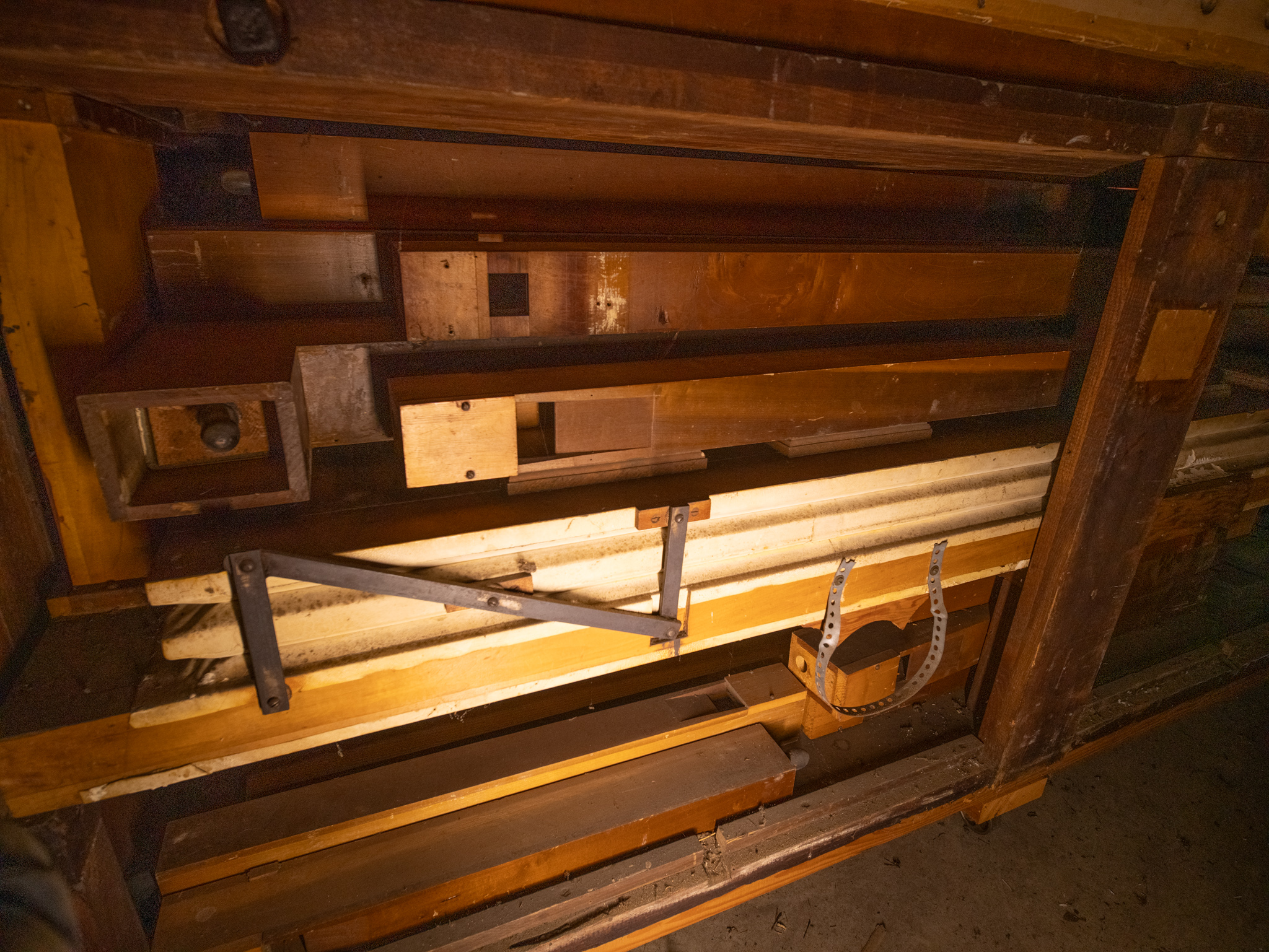
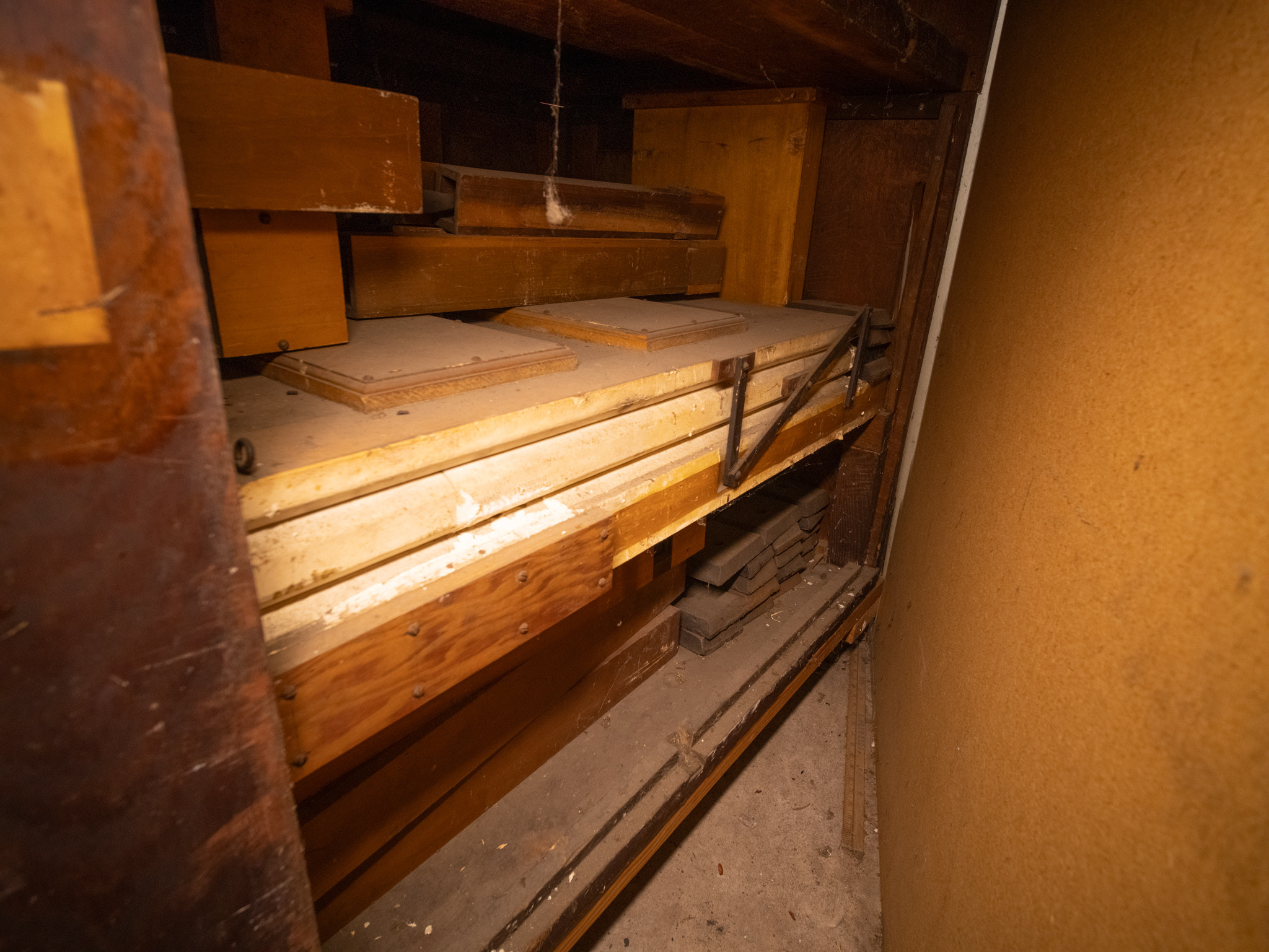
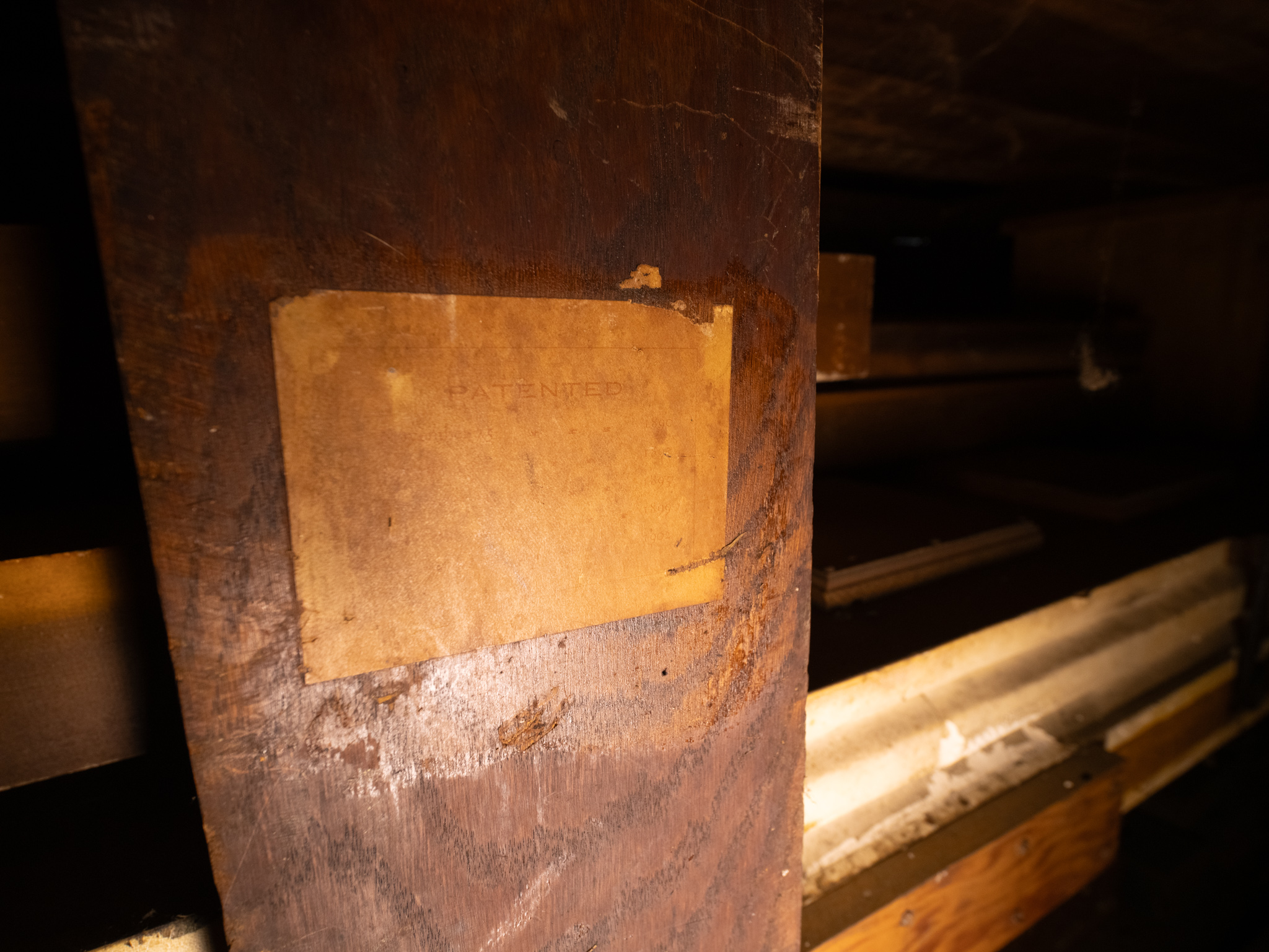
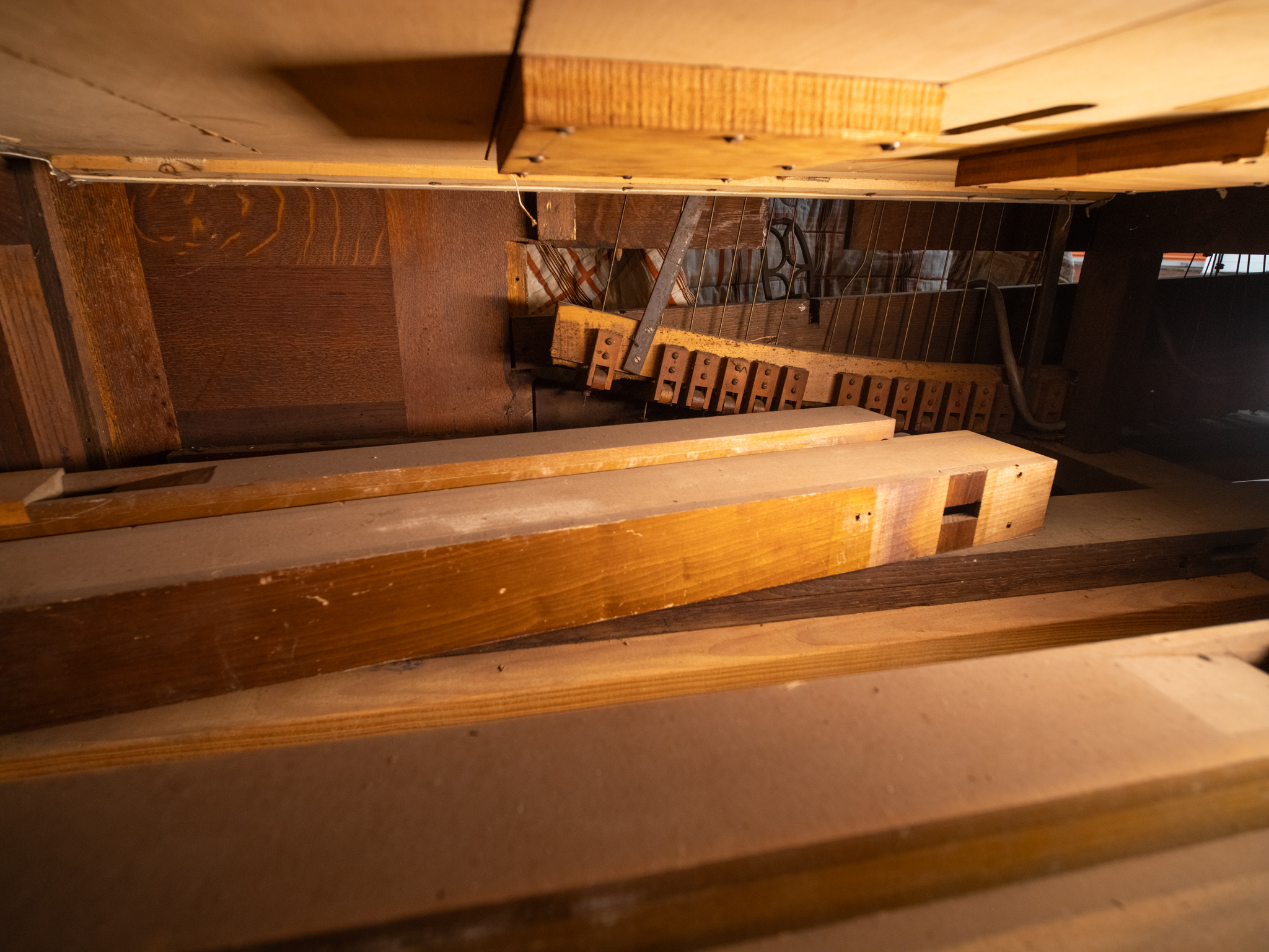
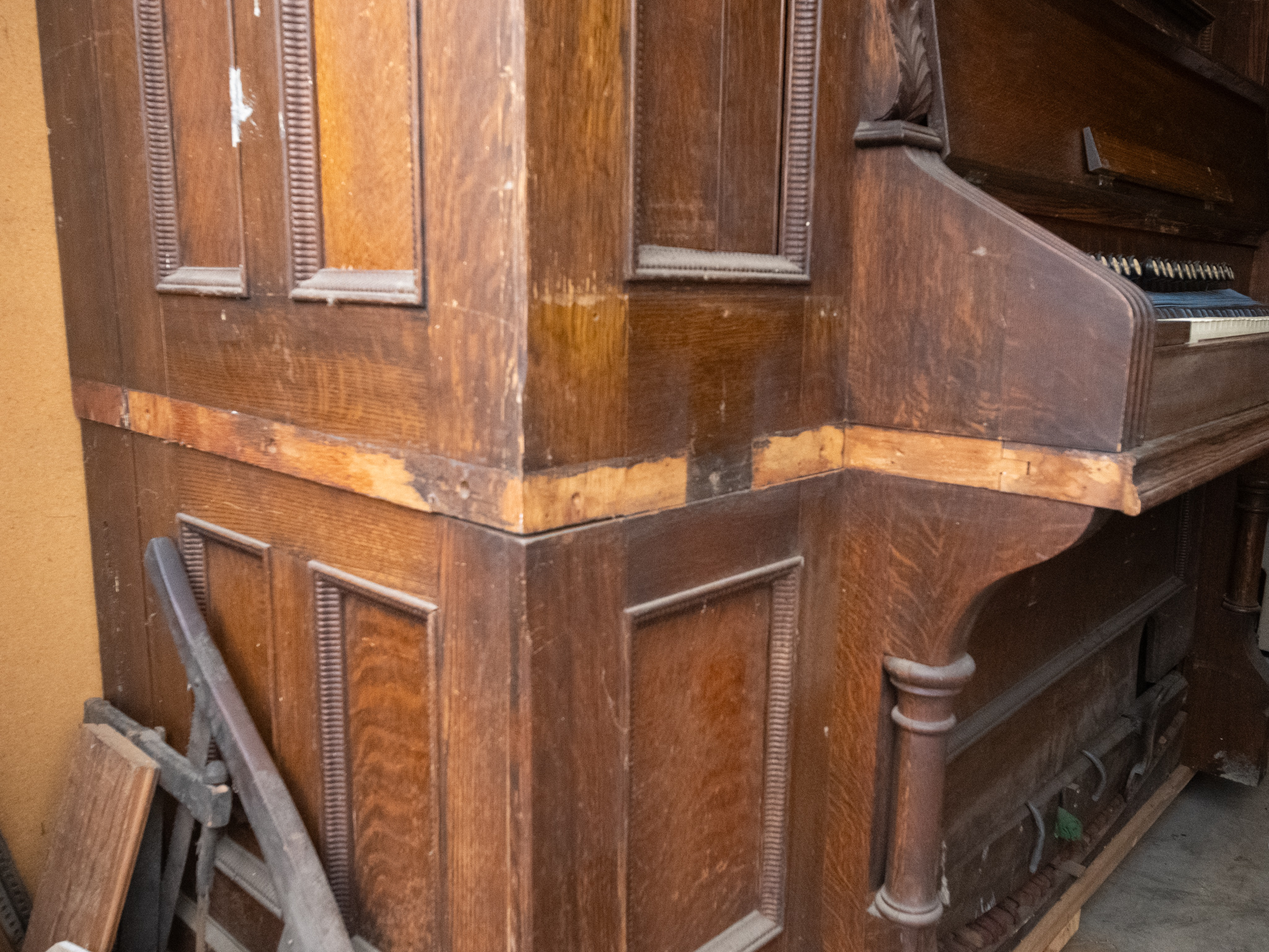
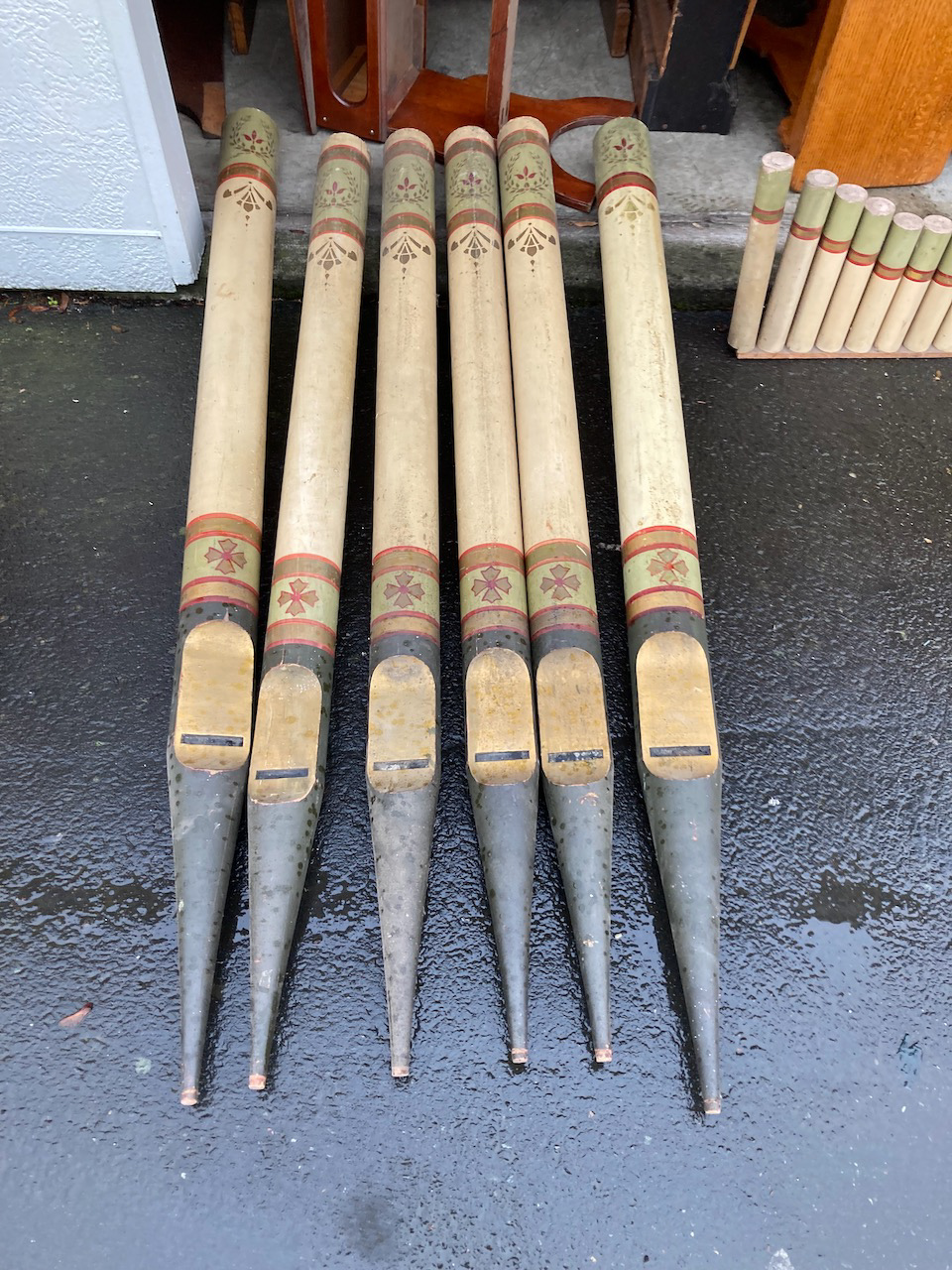
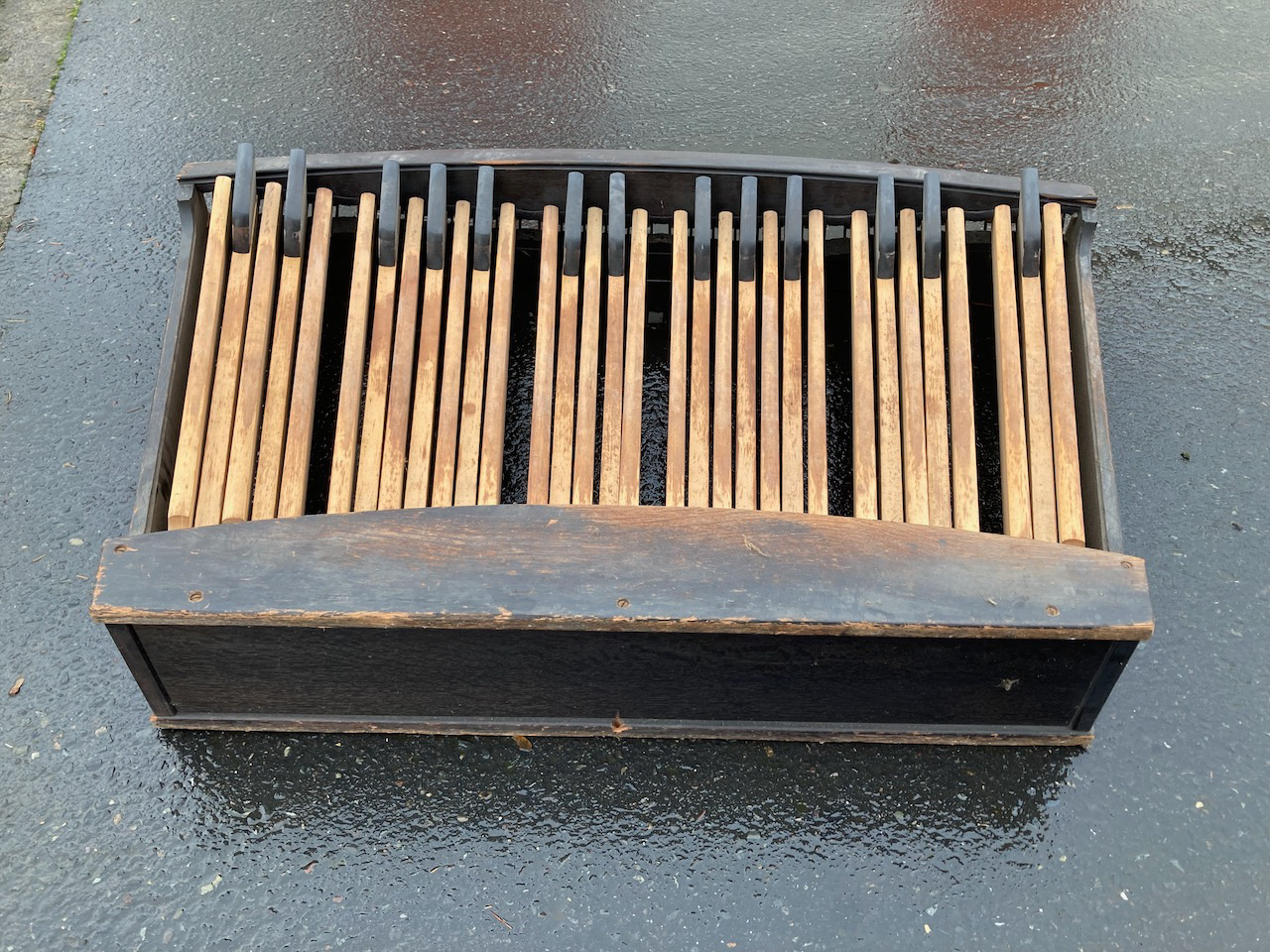
Notes: This organ was once in Paul’s home. It is from the “Compensating Organ Company” of Battle Creek, Michigan. The company had developed a system to alter the pressure between the pipes and the pump/harmonium-style reeds to keep them tuned in relation to each other. This appears to be a mechanism that raises and lowers a metal bar behind the pipes, to reveal portions of small slits at the base of the pipes, allowing for some air leakage.
The organ has its original hand-pumped bellows, but has been modified for use with an external blower. It is unclear if the blower is present. The pedalboard shown might not be the correct one, more evaluation is required. This instrument is from 1914 or earlier (the company closed in 1914, its building being sold to Dr. James Kellogg to make his first cereal for his nearby sanitarium).
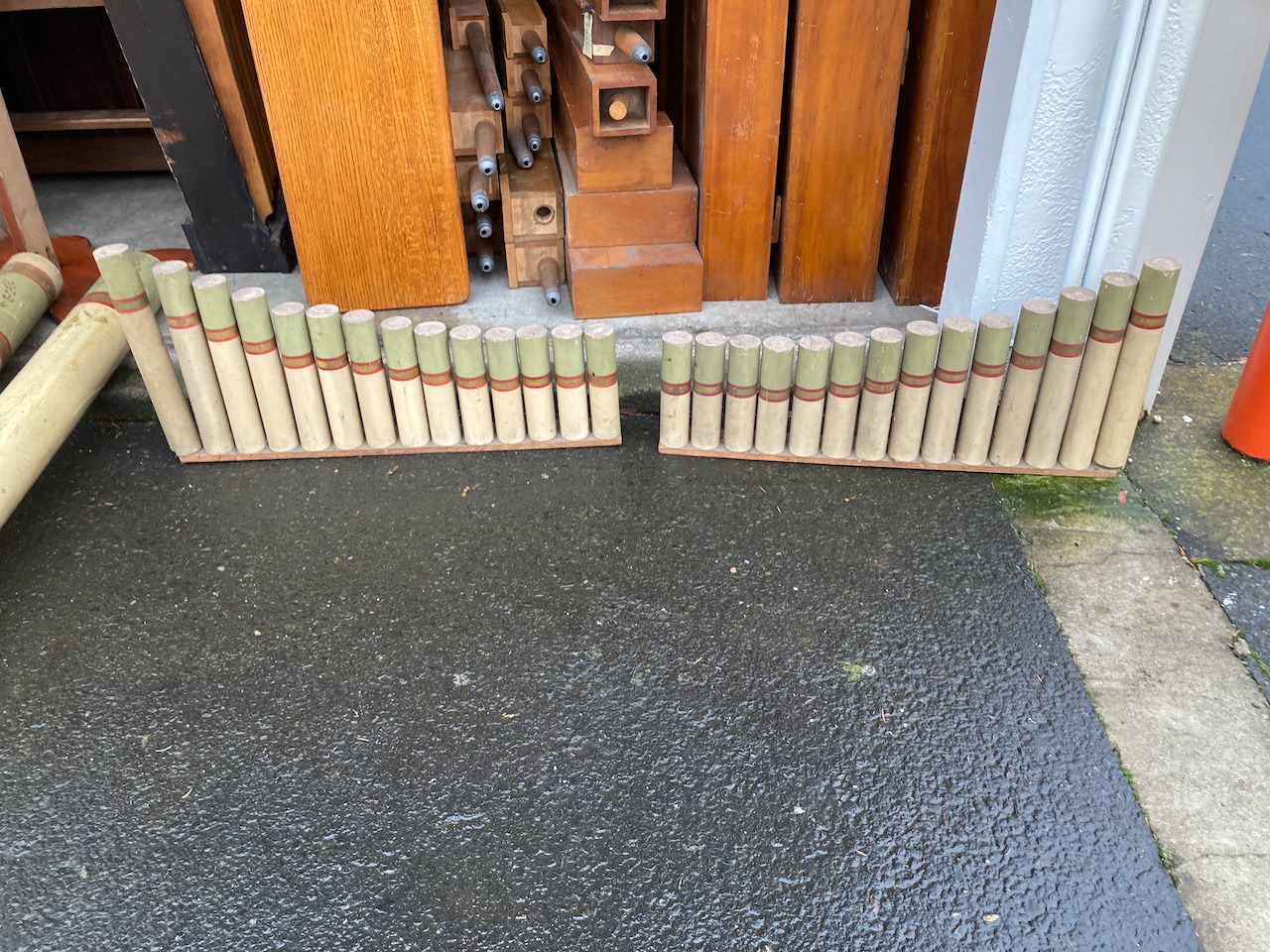
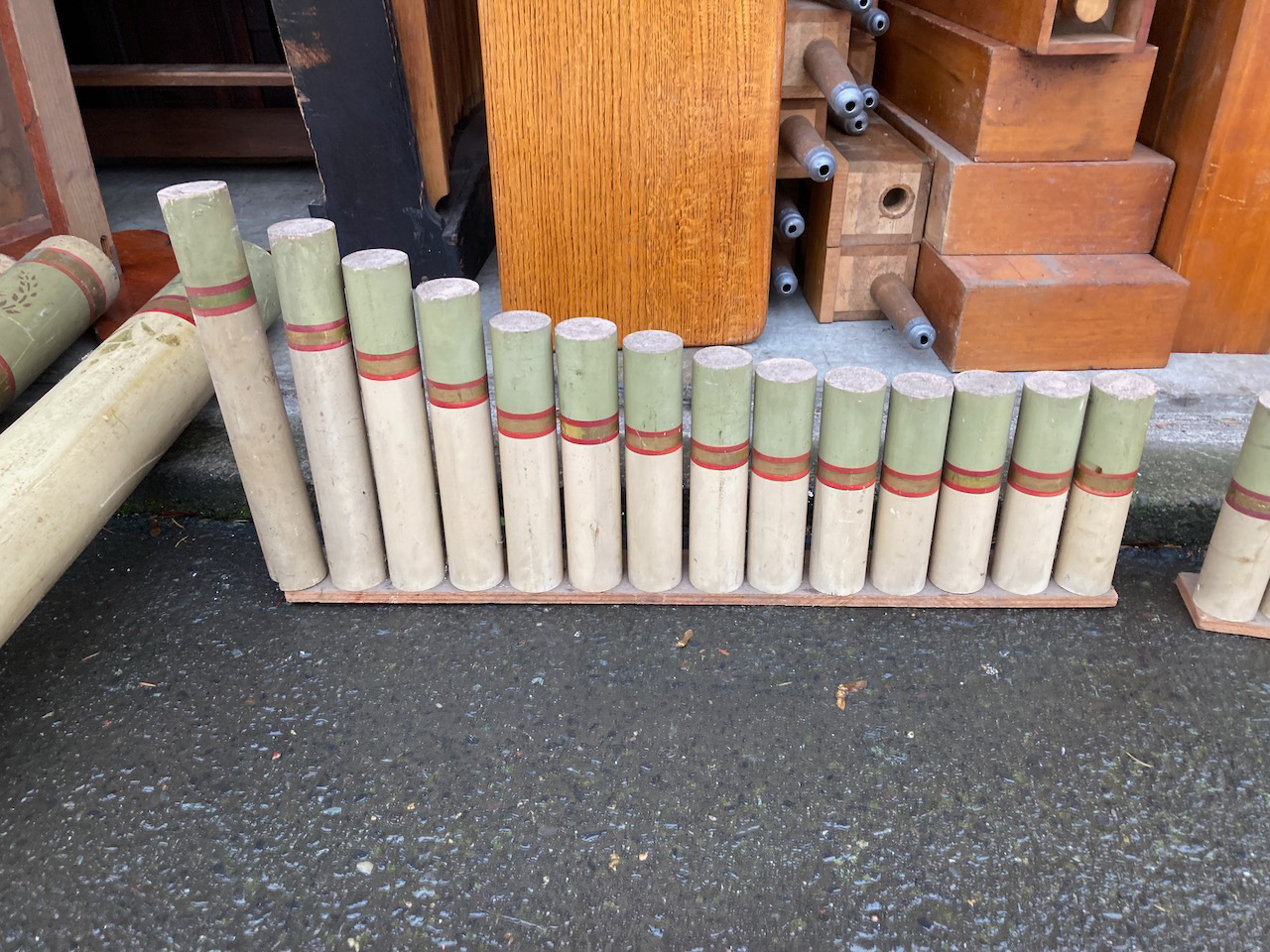
A lot of the pipework is present inside the unit, removed from chests and laying flat in the bottom half. It is not clear yet if all the pipework is there, but it was intentionally packed, so I hope it is complete. There was some additional “mystery pipework” stacked in front, which I will hang on to, just-in-case it belongs with this instrument, although the other pipework inside the case appears to mount in a different manner.
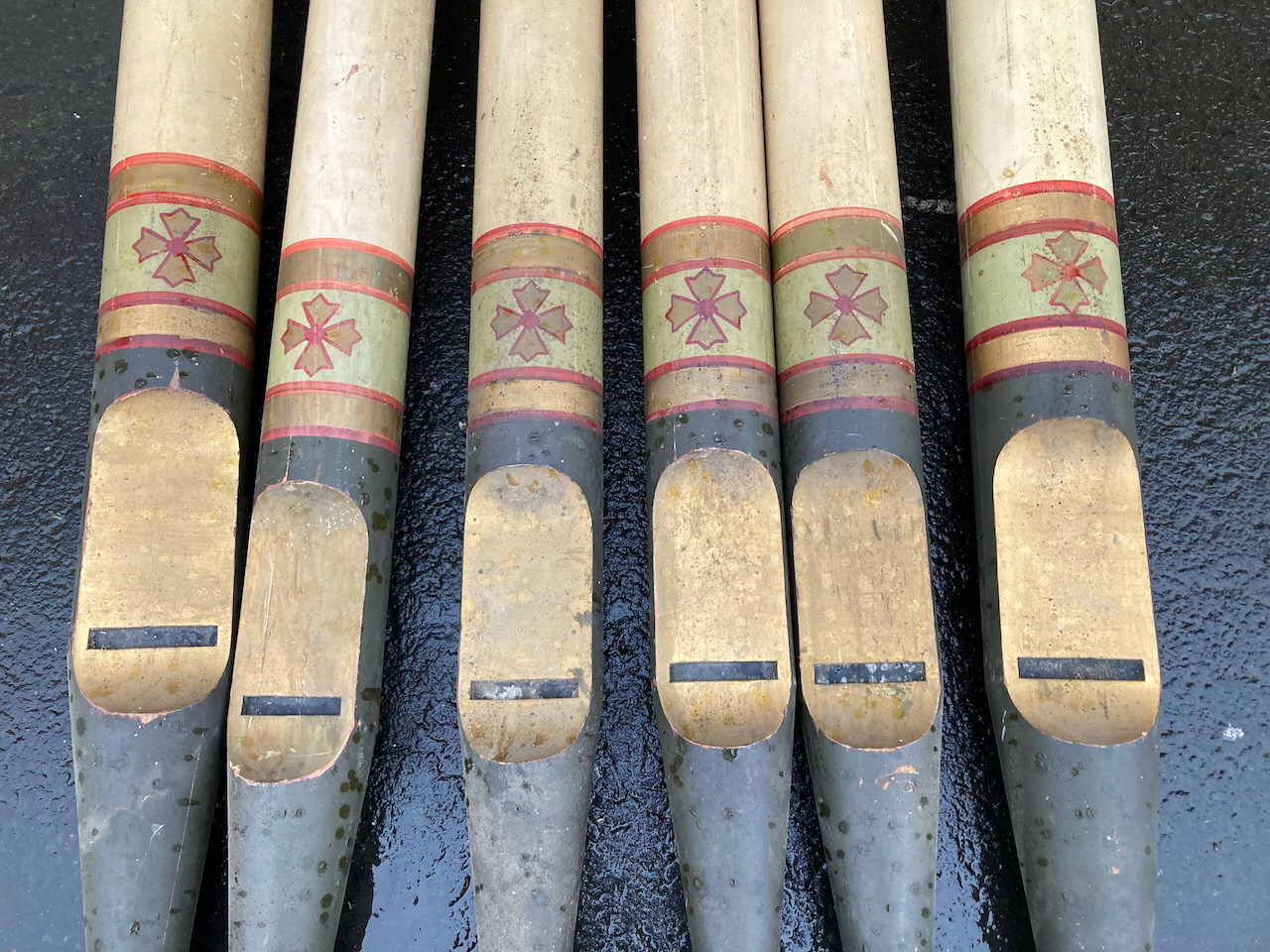
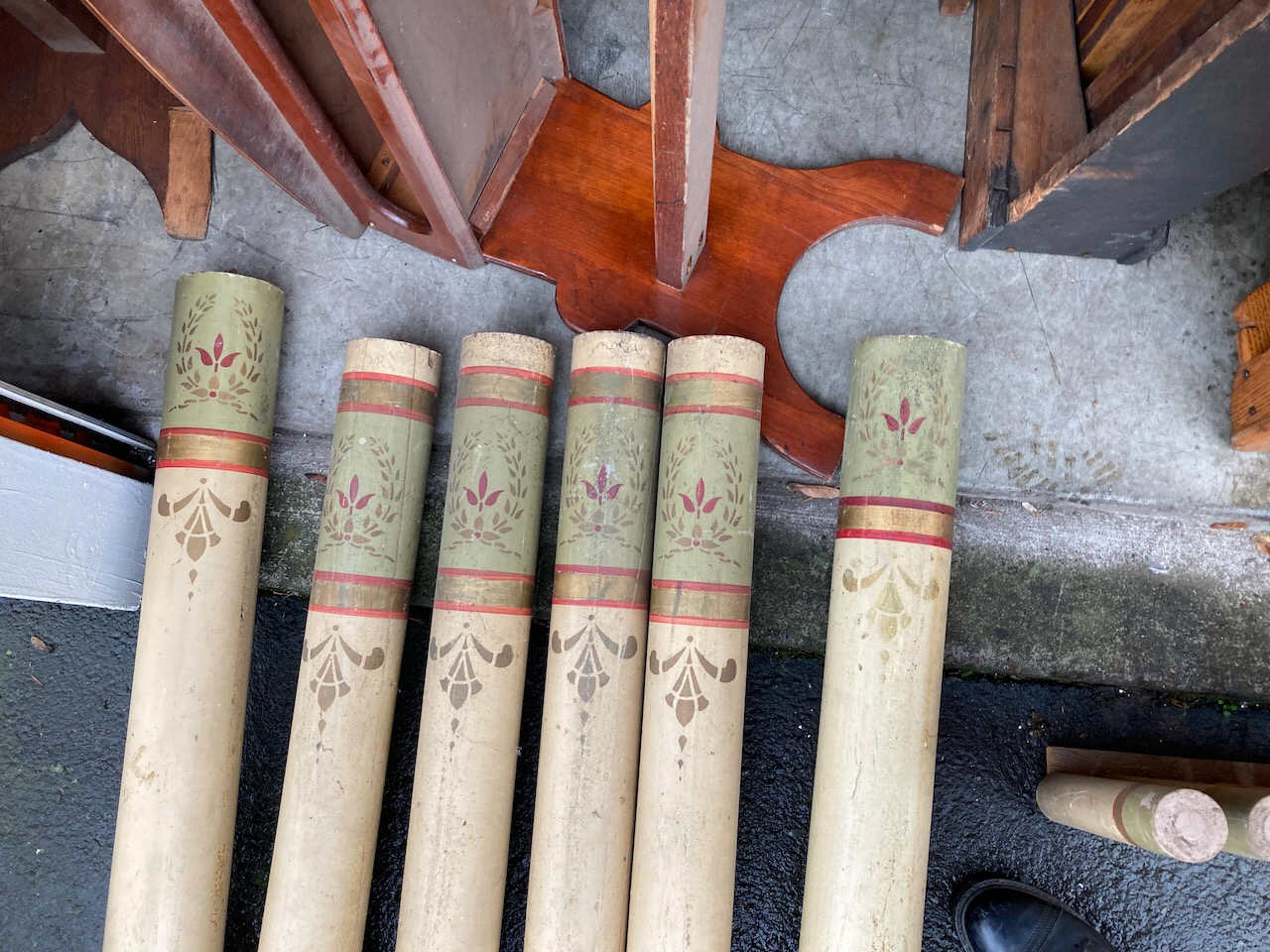
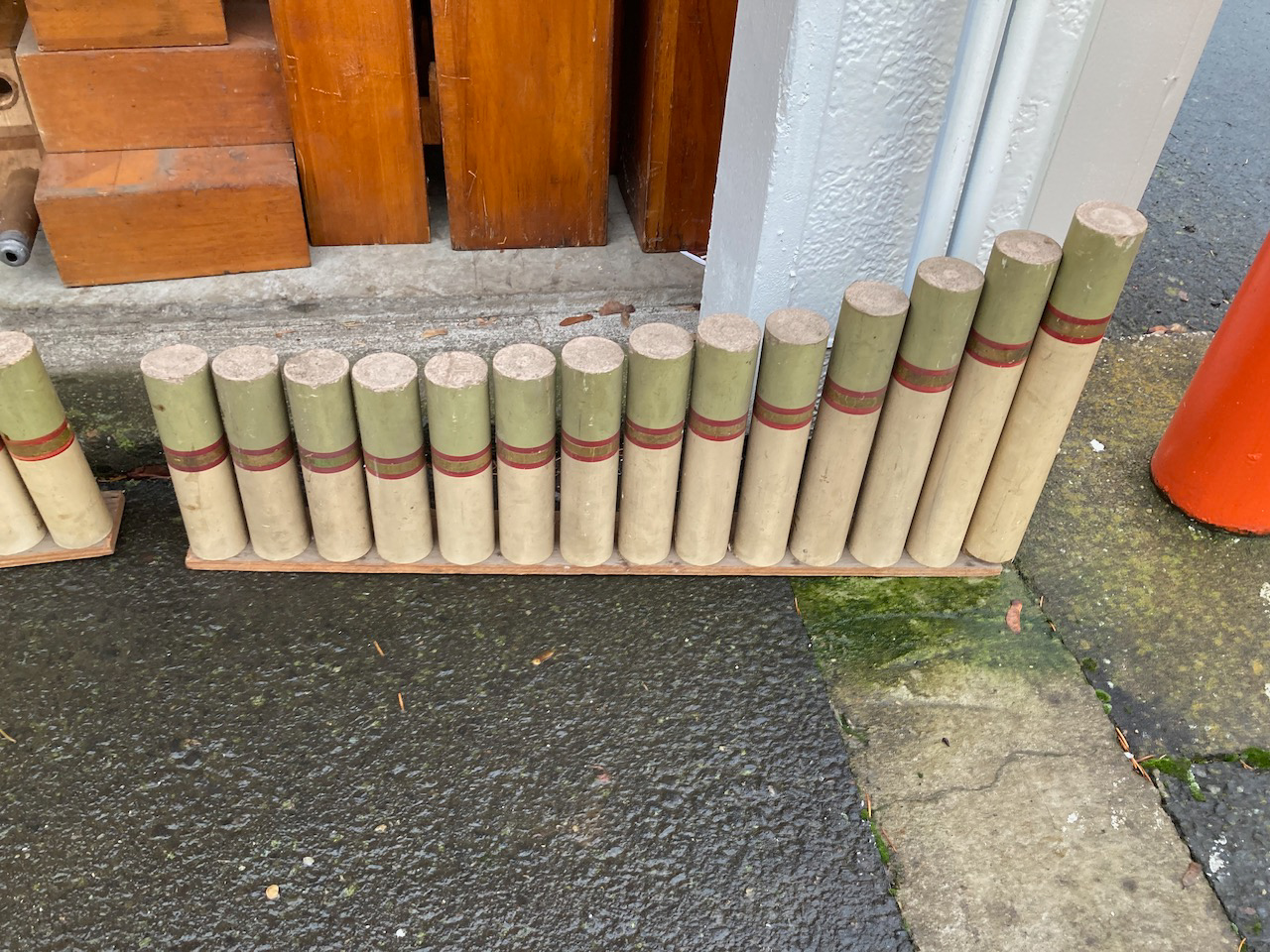
There is a set of wooden facade pipes. These were apparently held by rack boards on either side of the keyboard, but those boards have been removed. They may be present inside the case for storage, but that has not yet been determined.
The top half and the bottom half appear to be separable for moving.
A photo of a similar (but not identical) unit, fully assembled, can be seen here: https://www.reedsoc.org/index.php/rosdb/vieworgan?ID=10219&itemID=56
Dimensions: Main “cube” of organ, not including keyboard overhang or pedalboard – 90″w x 86″h x 33″d. Including keyboard overhang – 44″d
Hammond B Series with D-20 Tone Cabinet (Model BC converted to a BV)
Status: Sold – Picked up.
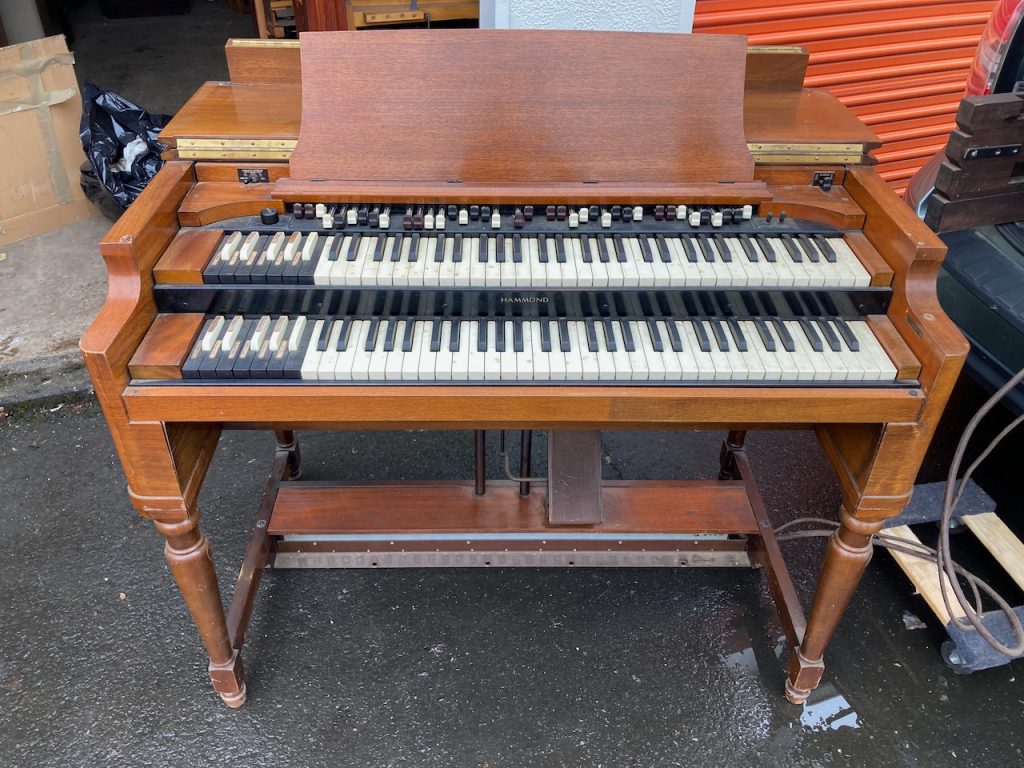
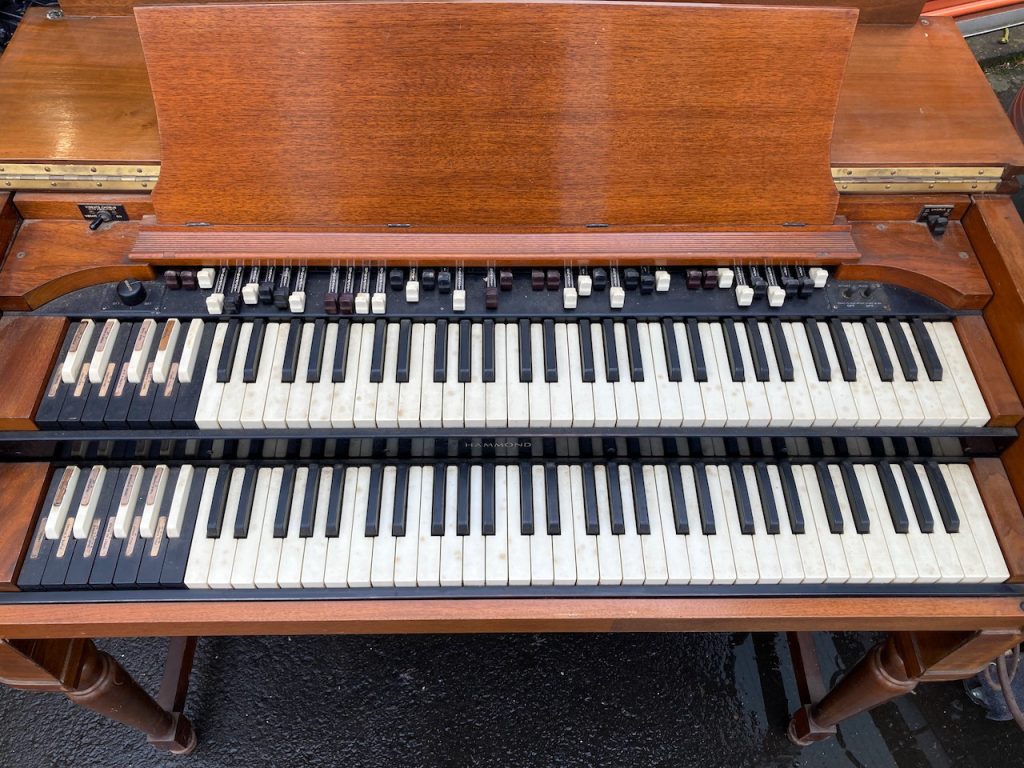
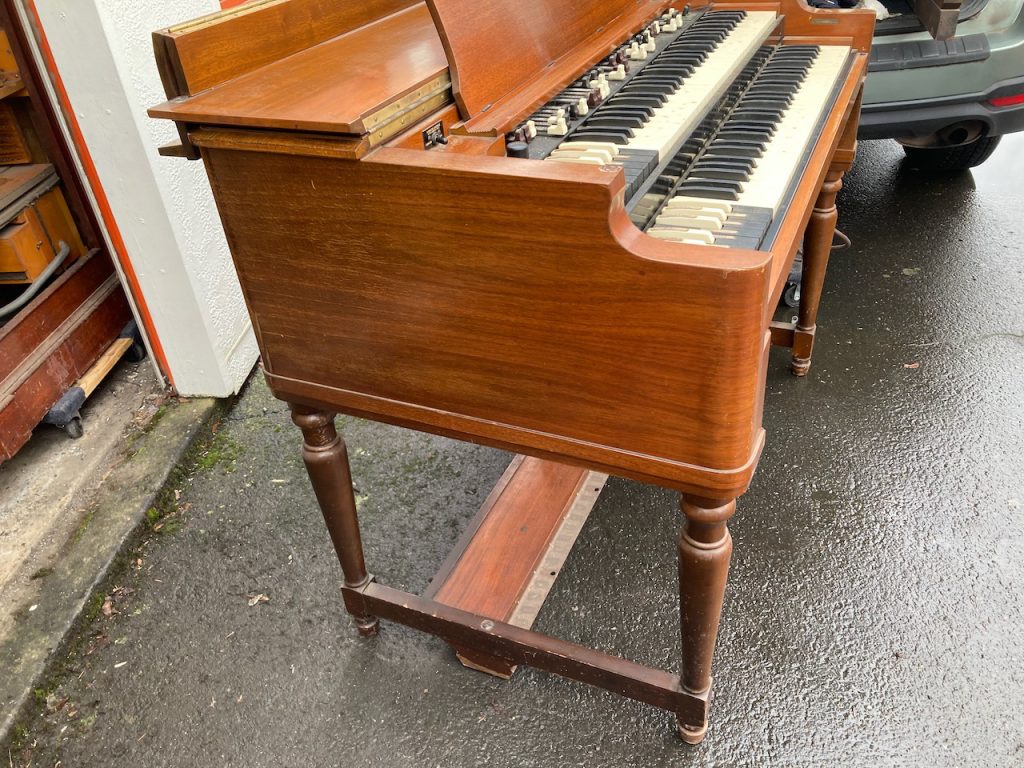
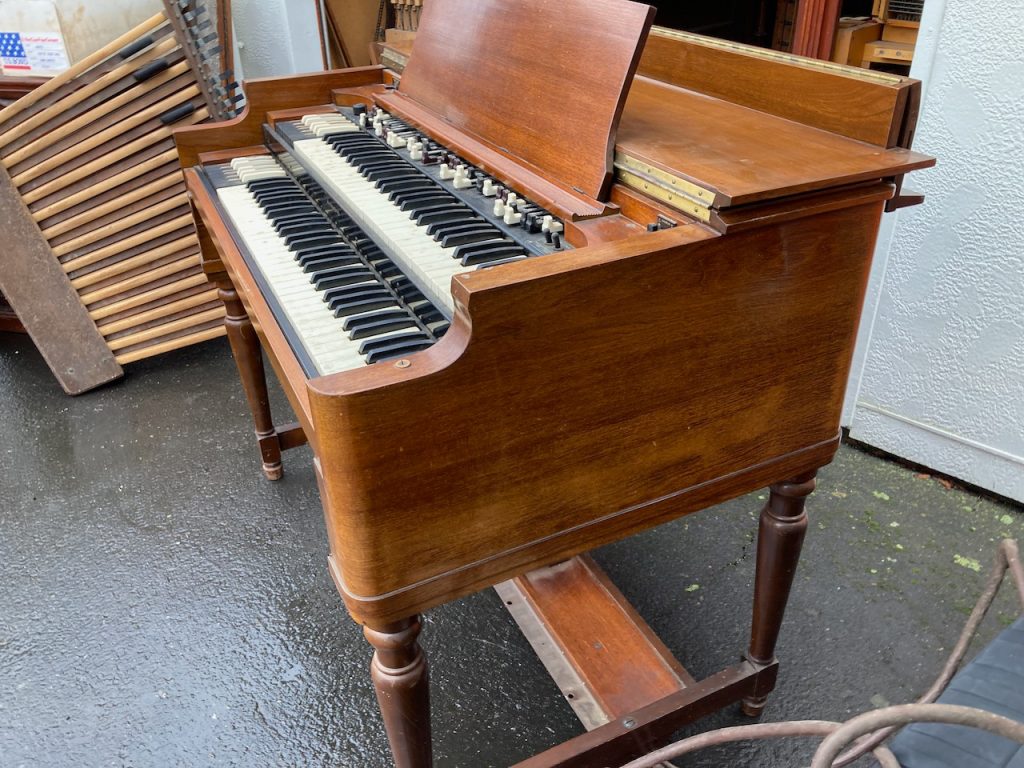
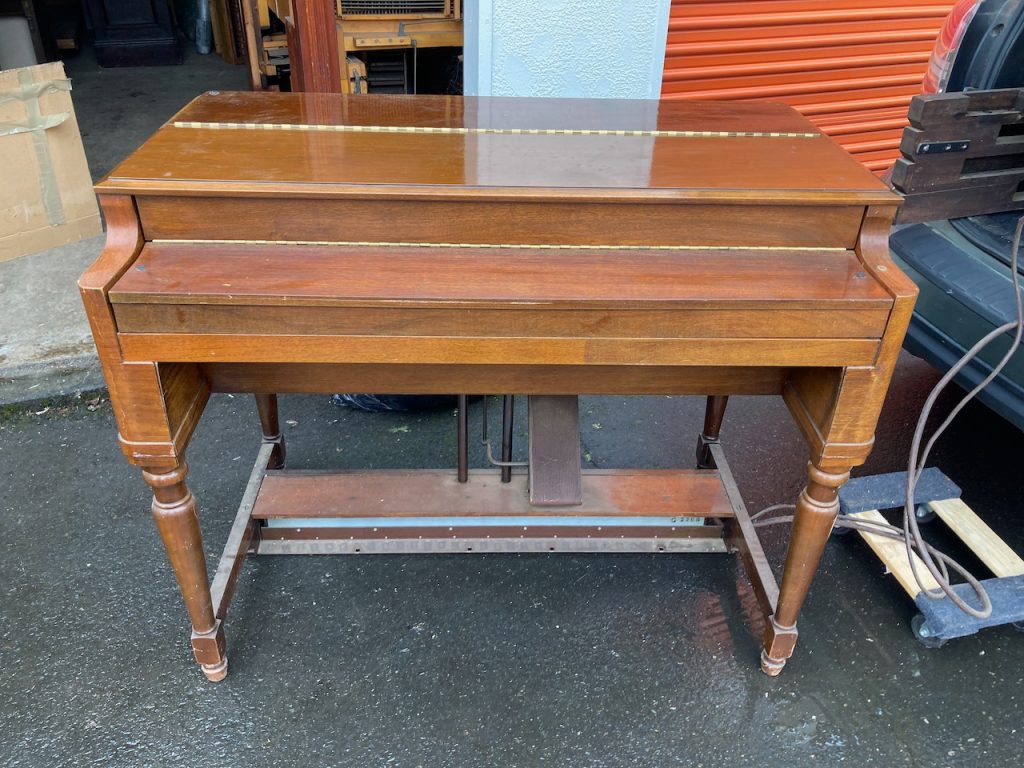
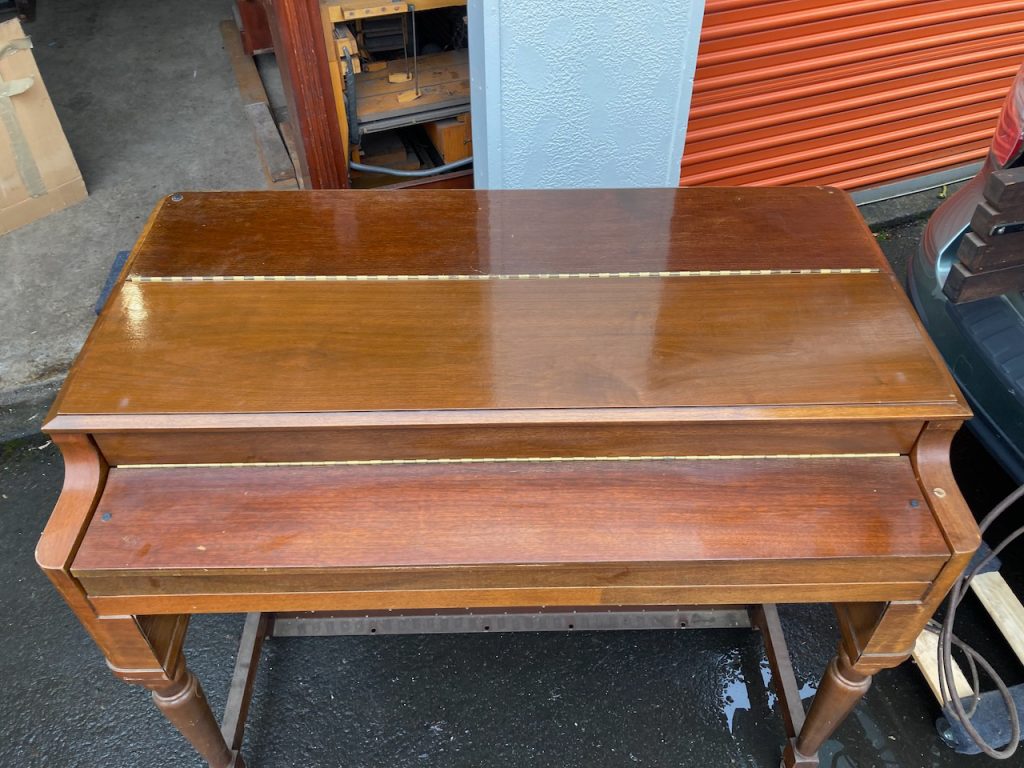
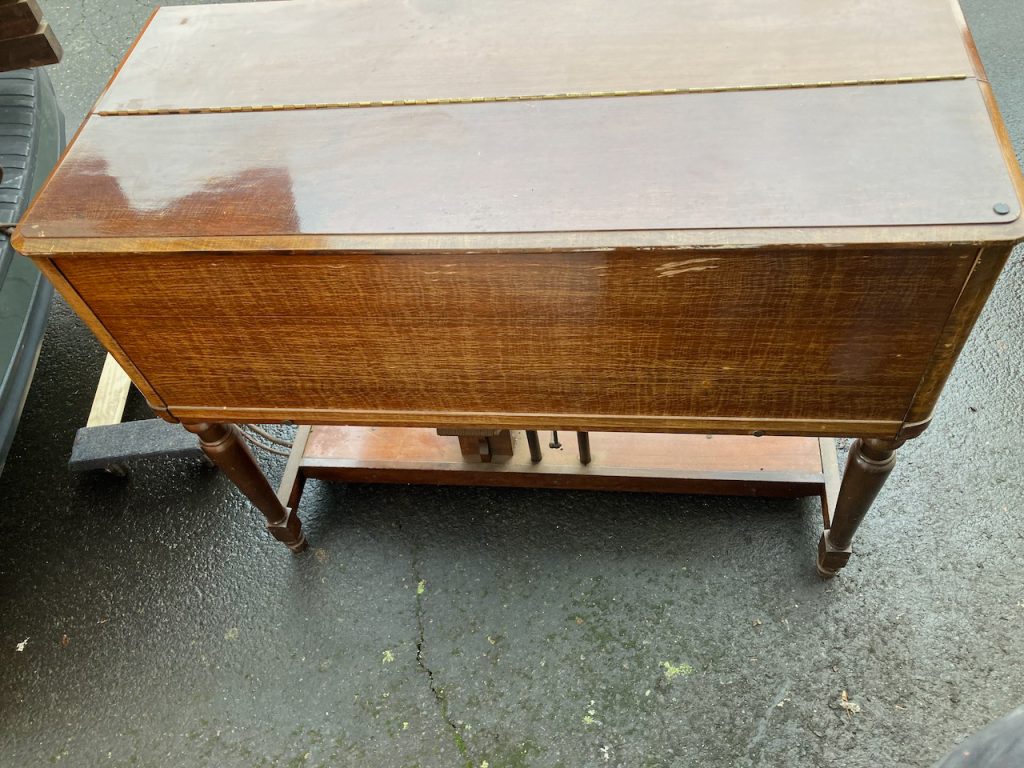
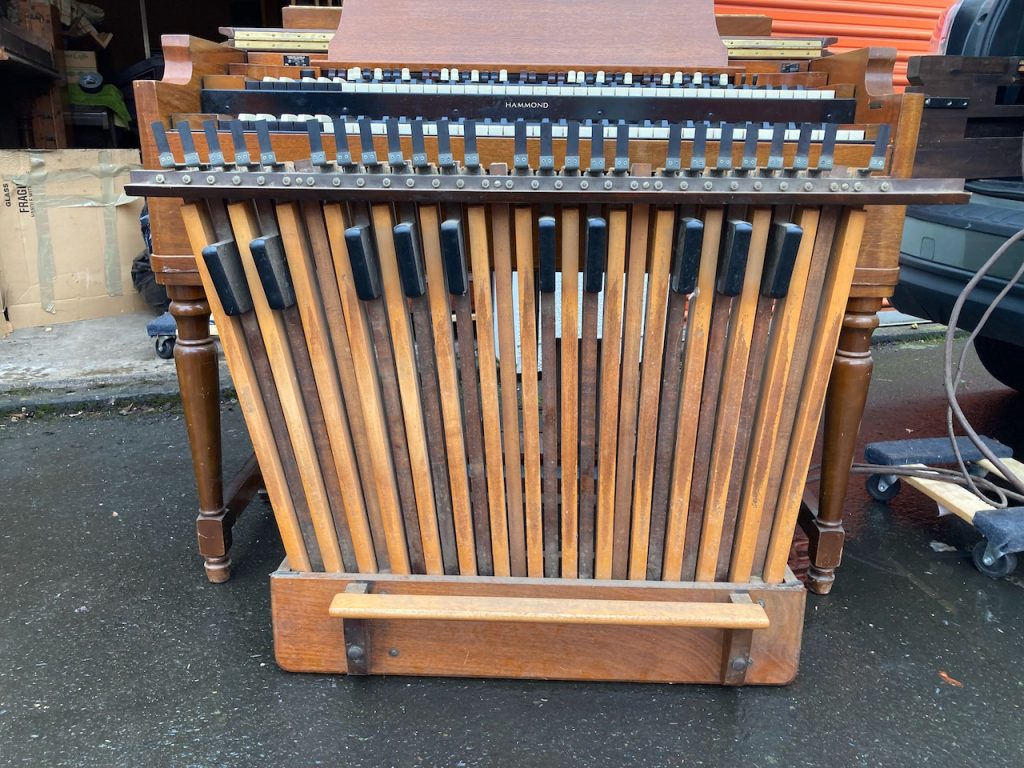
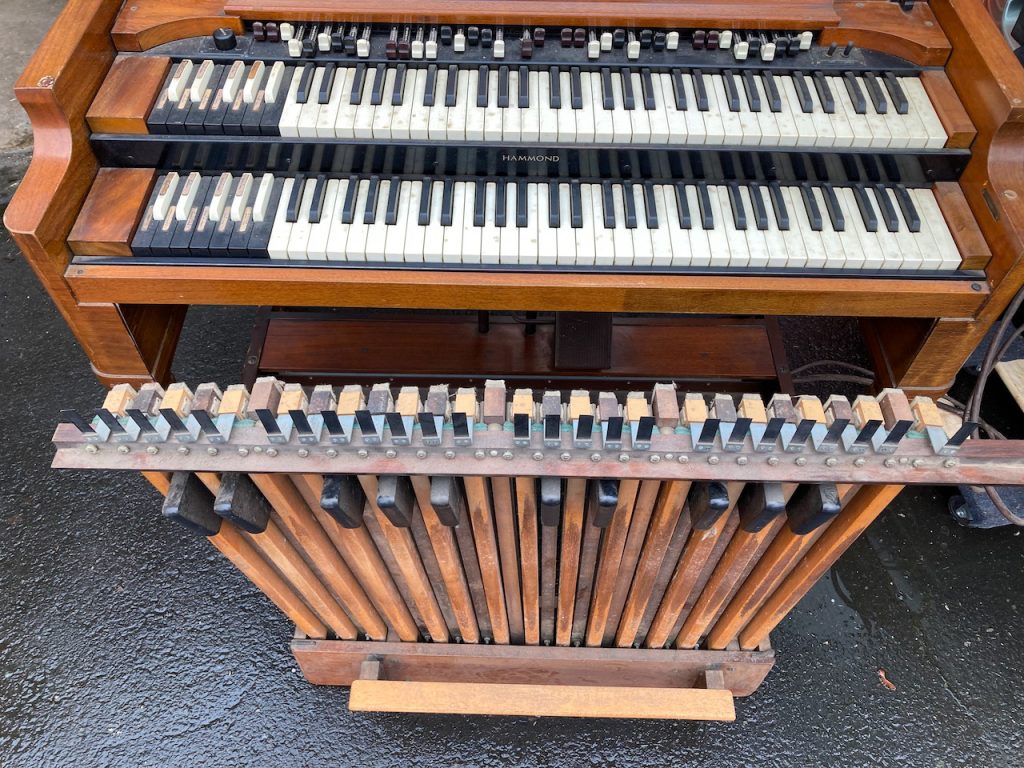
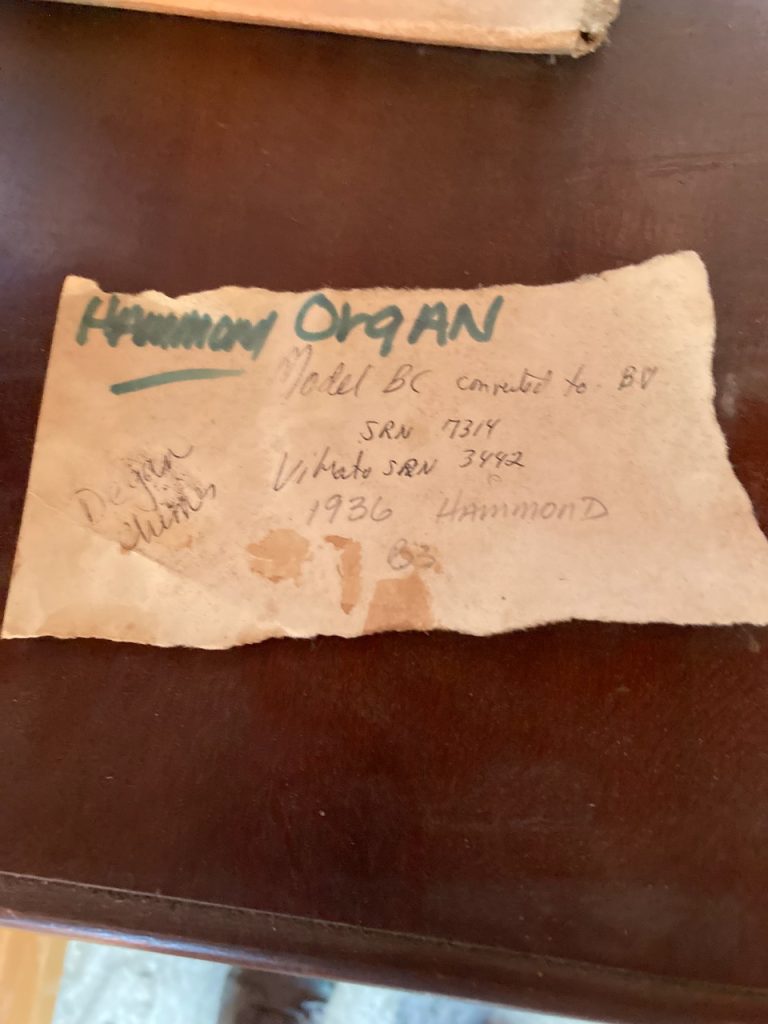
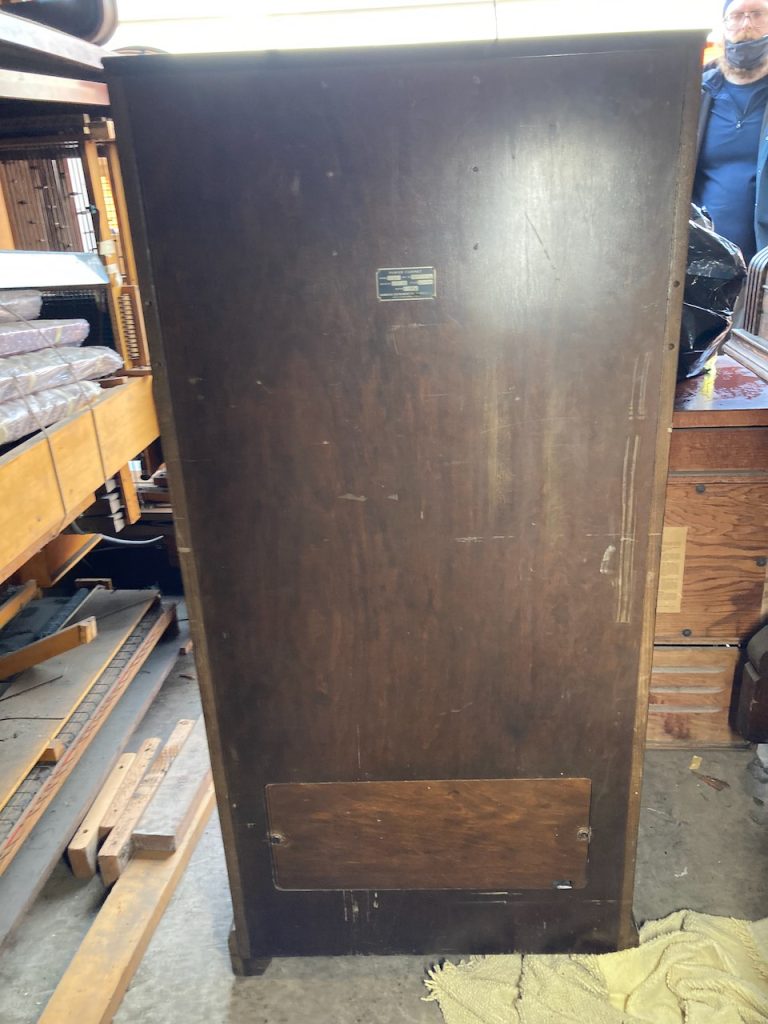
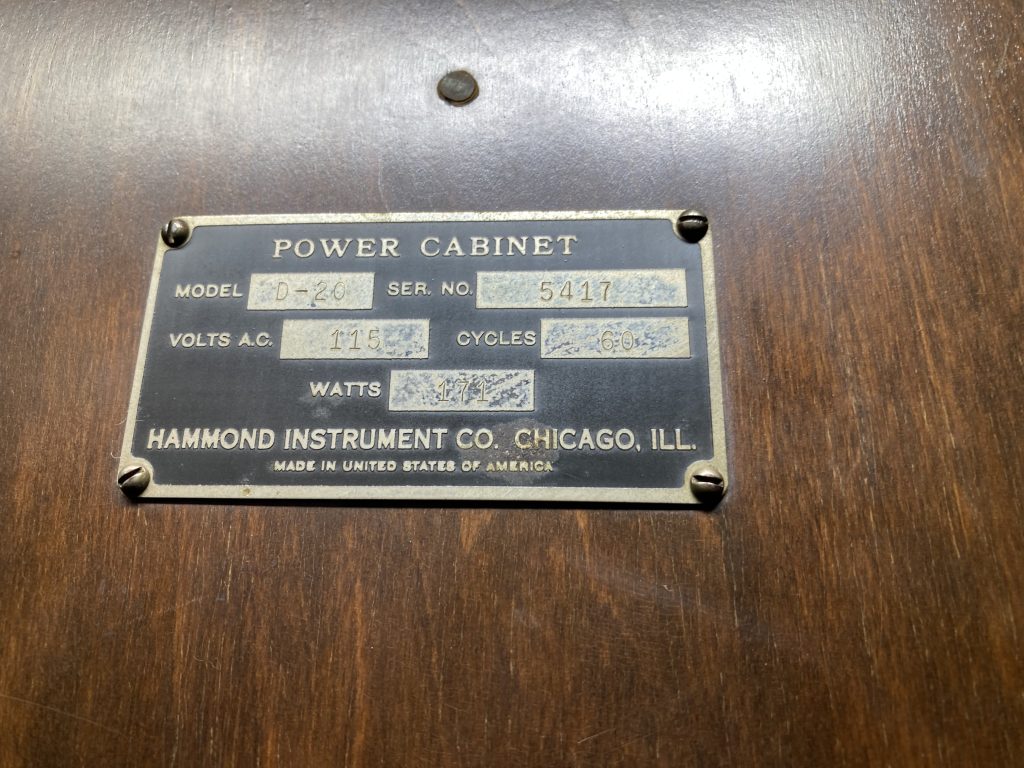
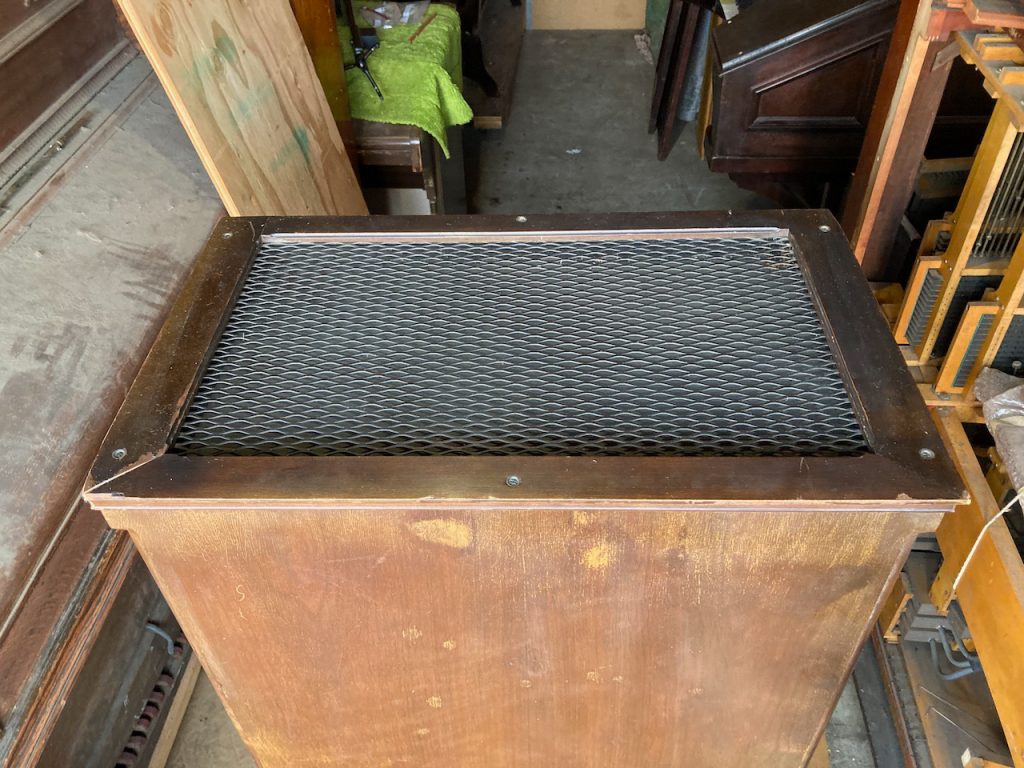
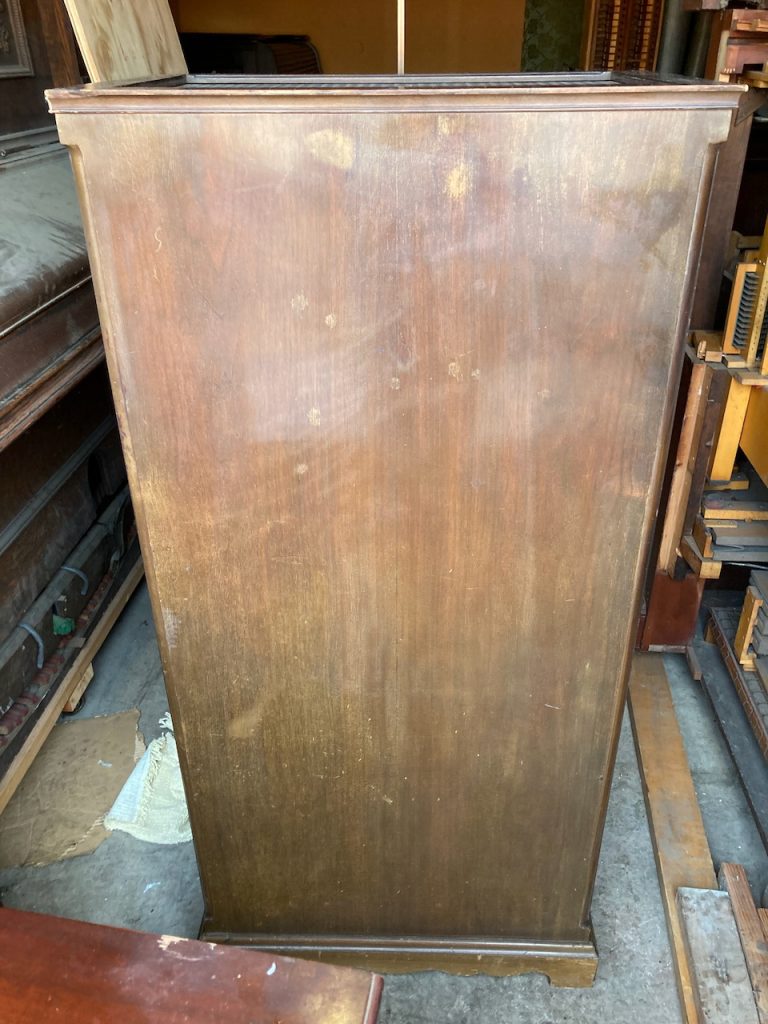
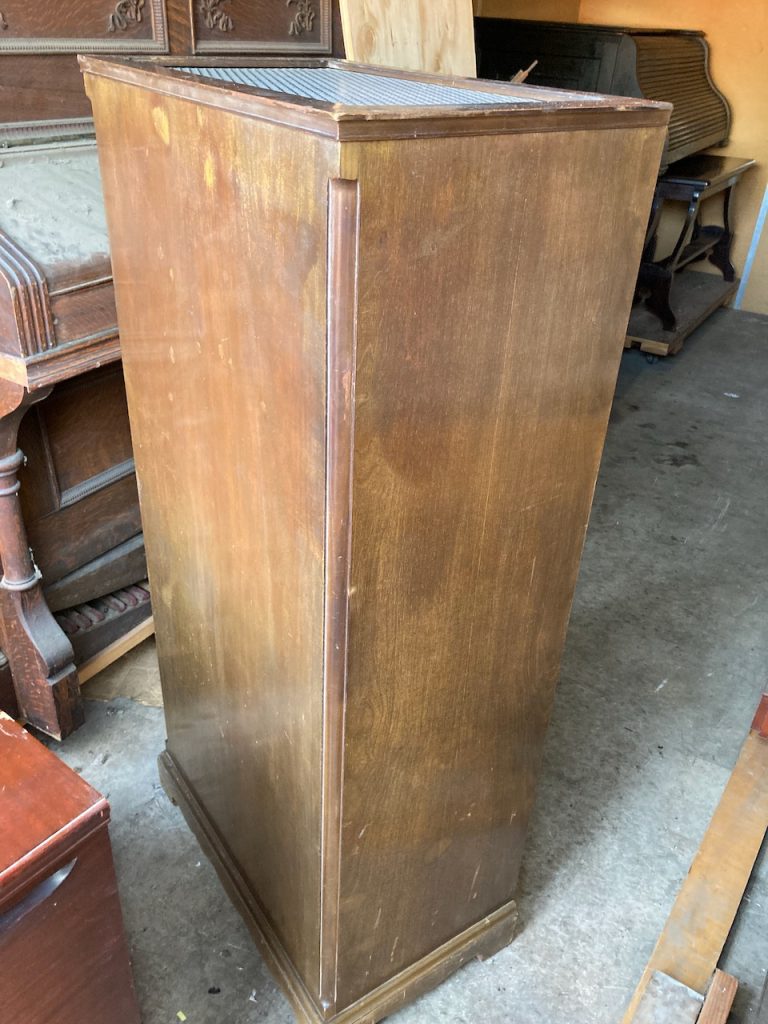
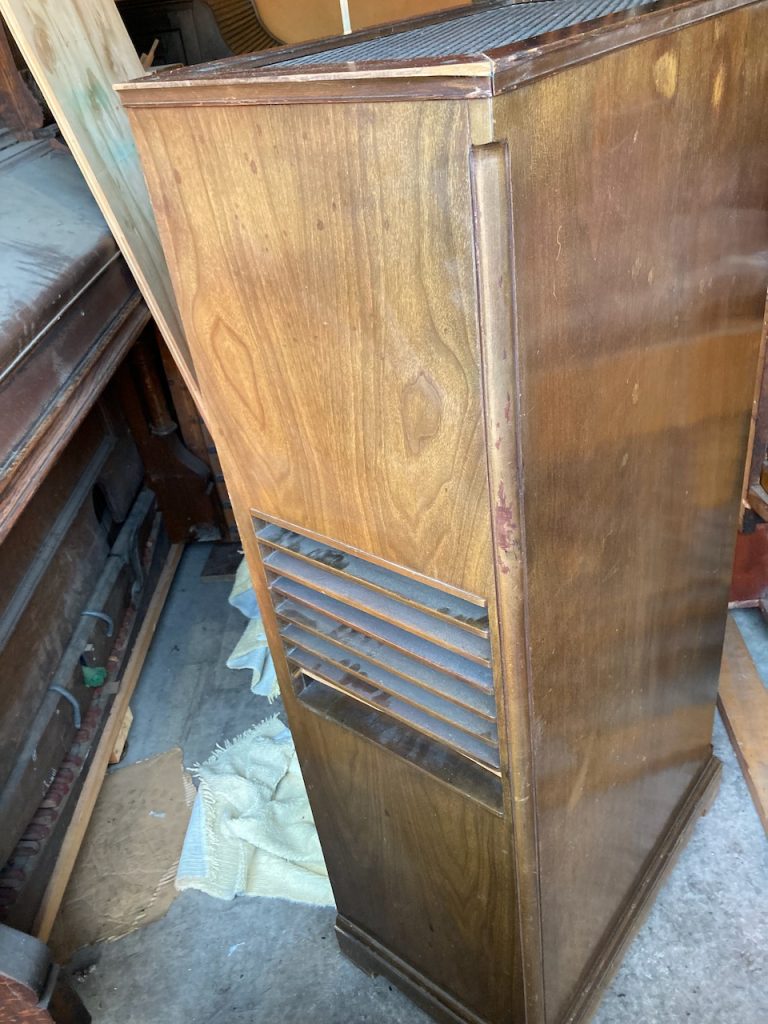
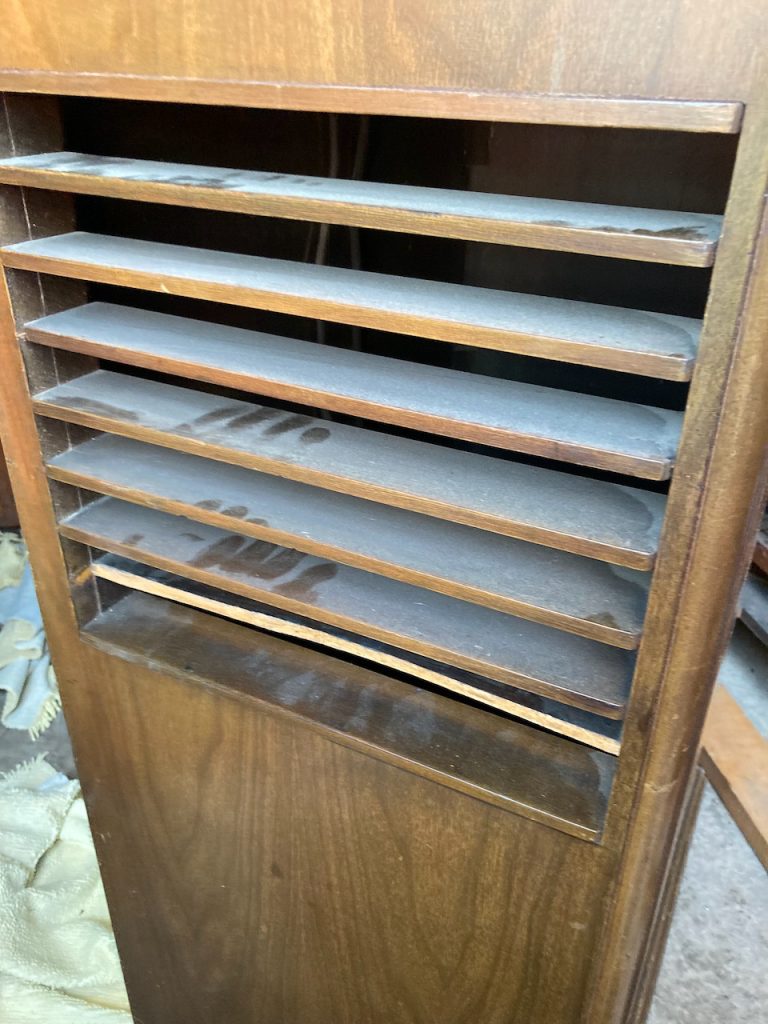
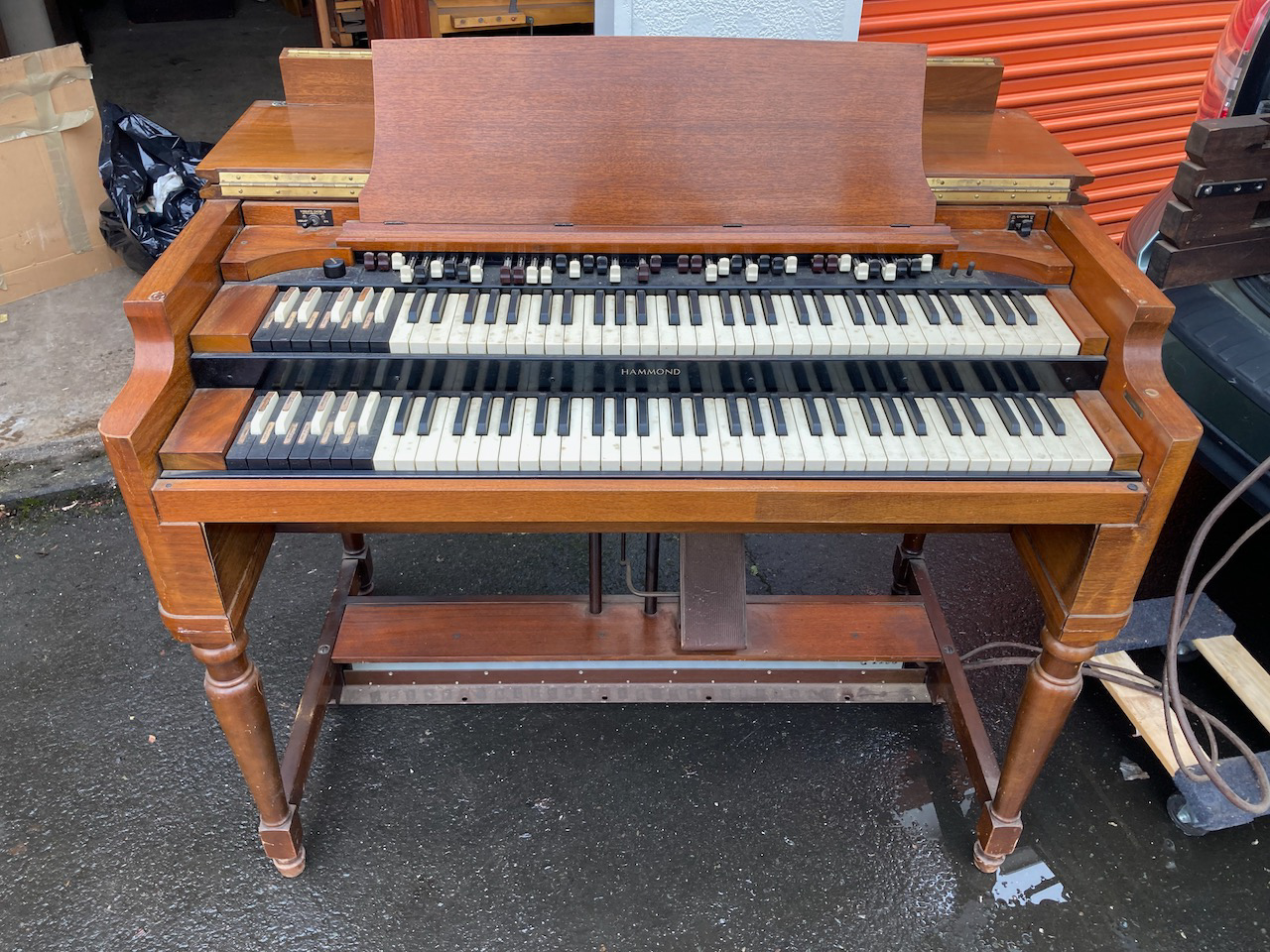
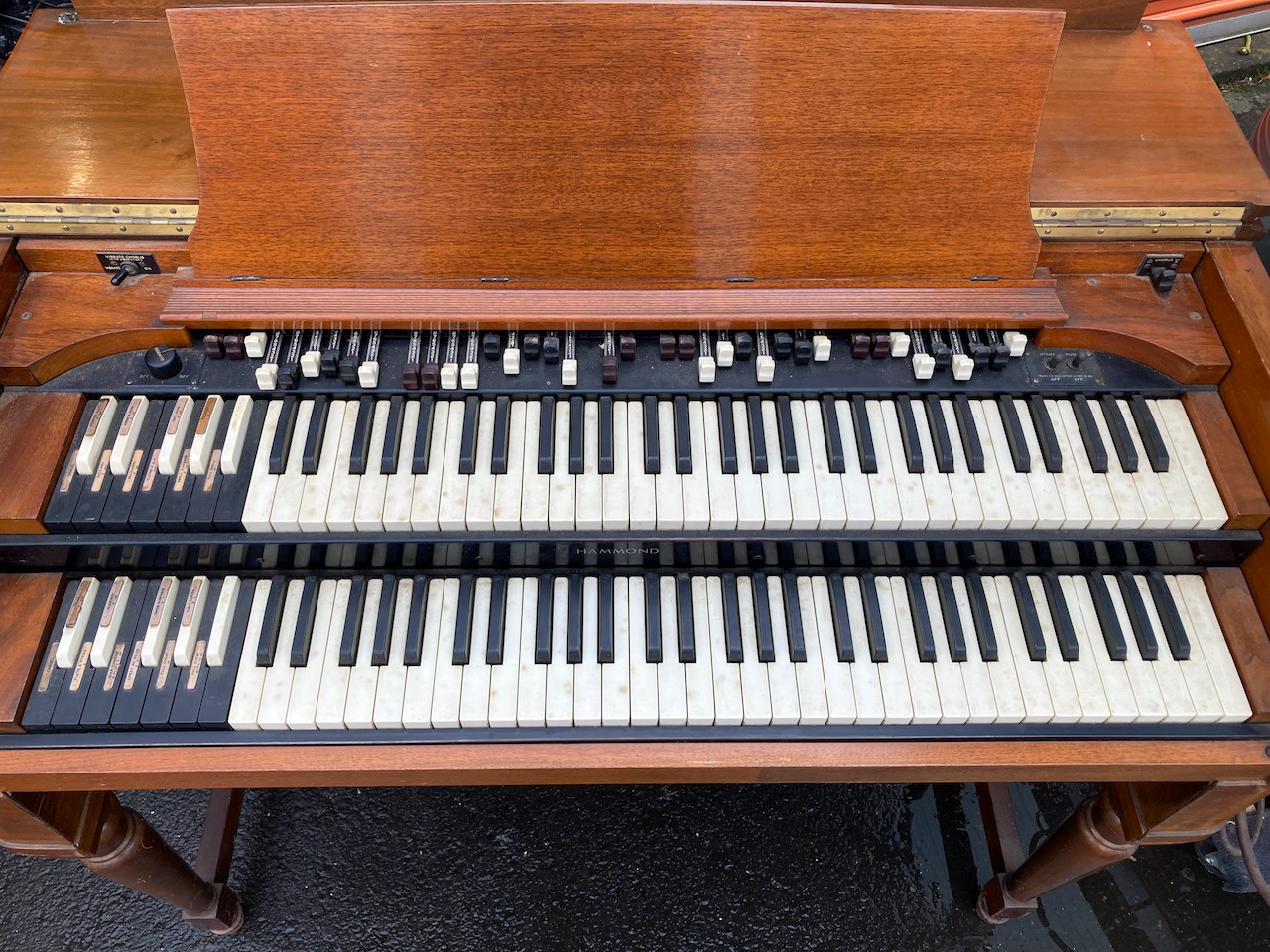
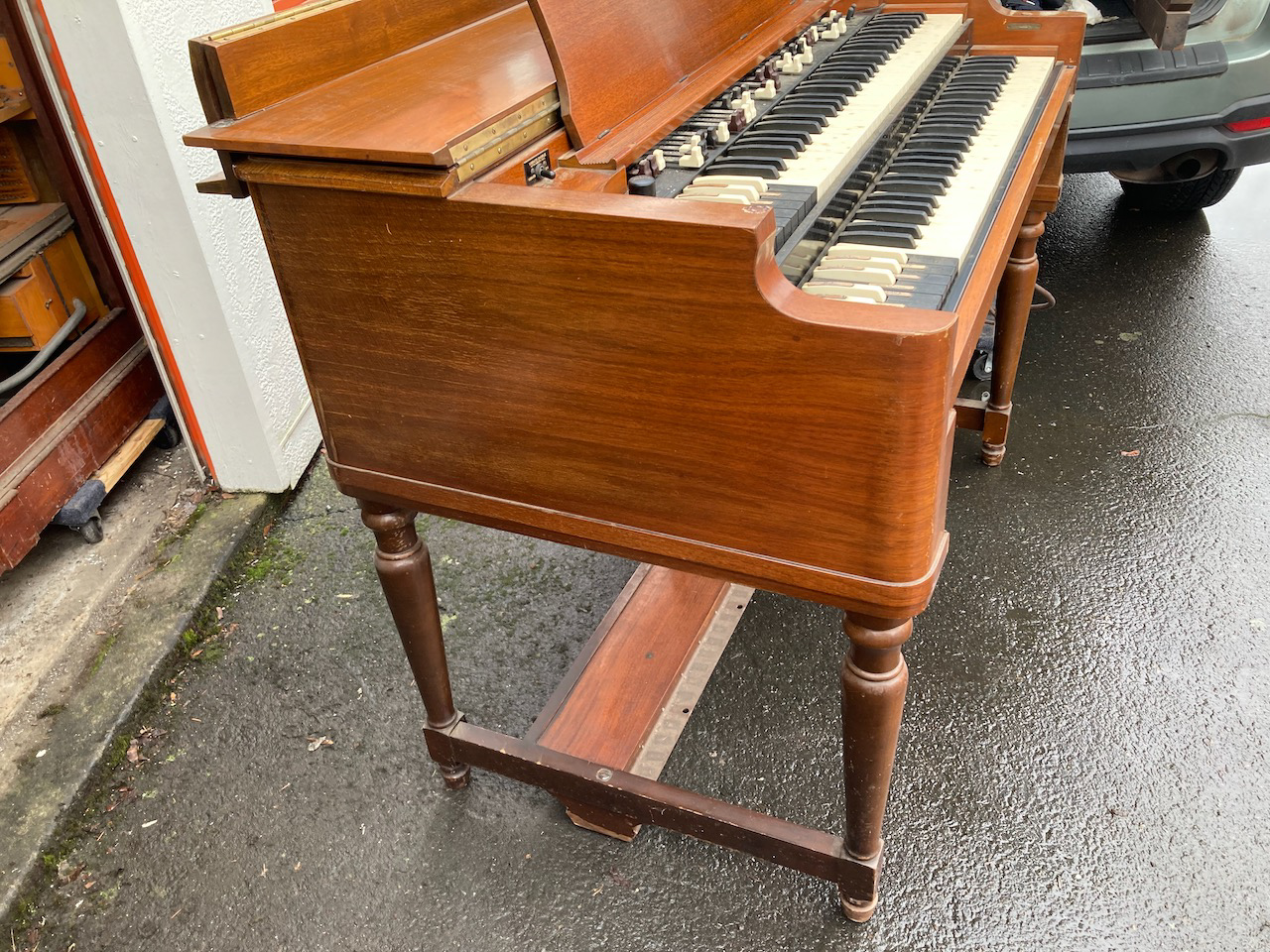
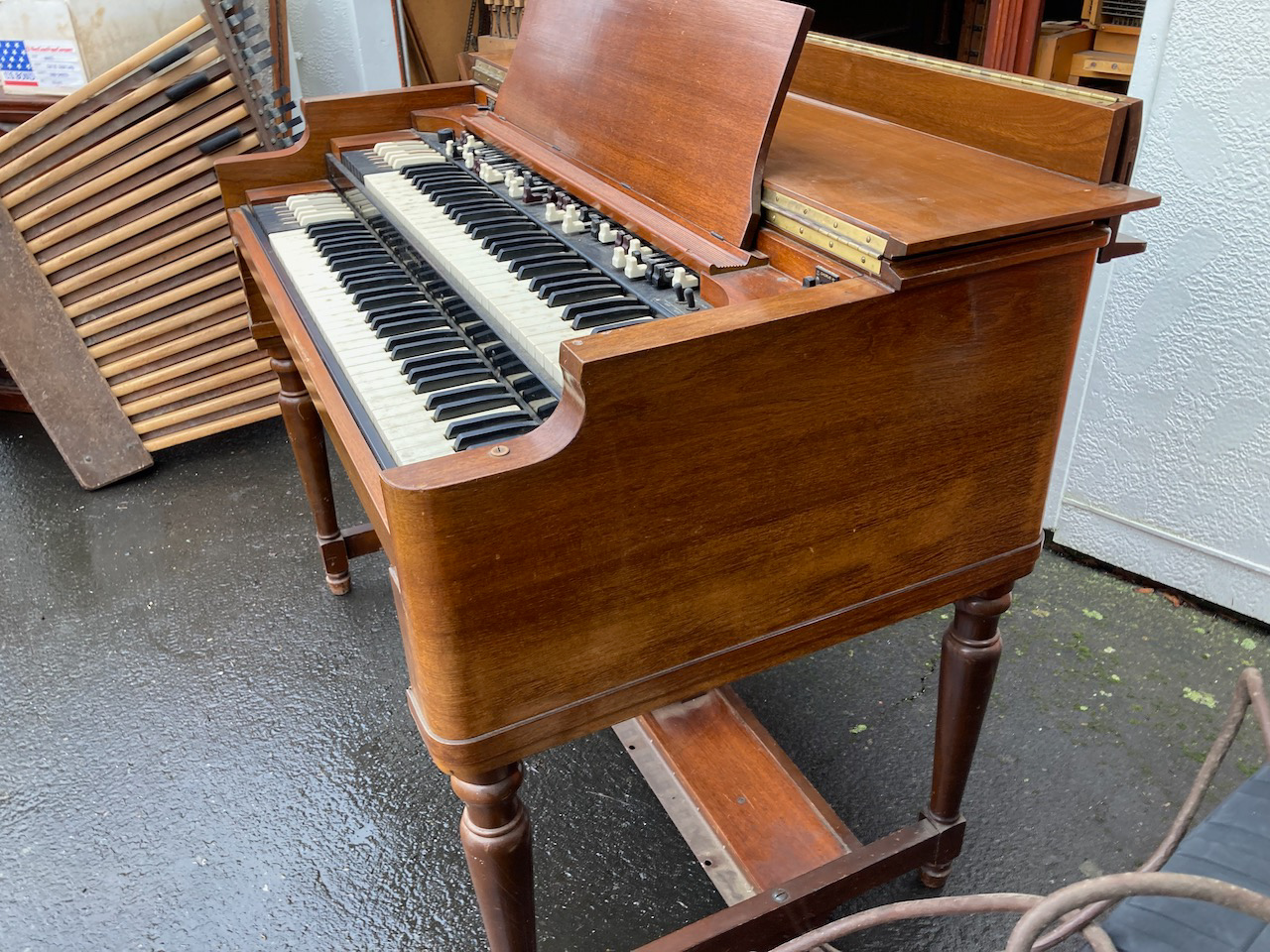
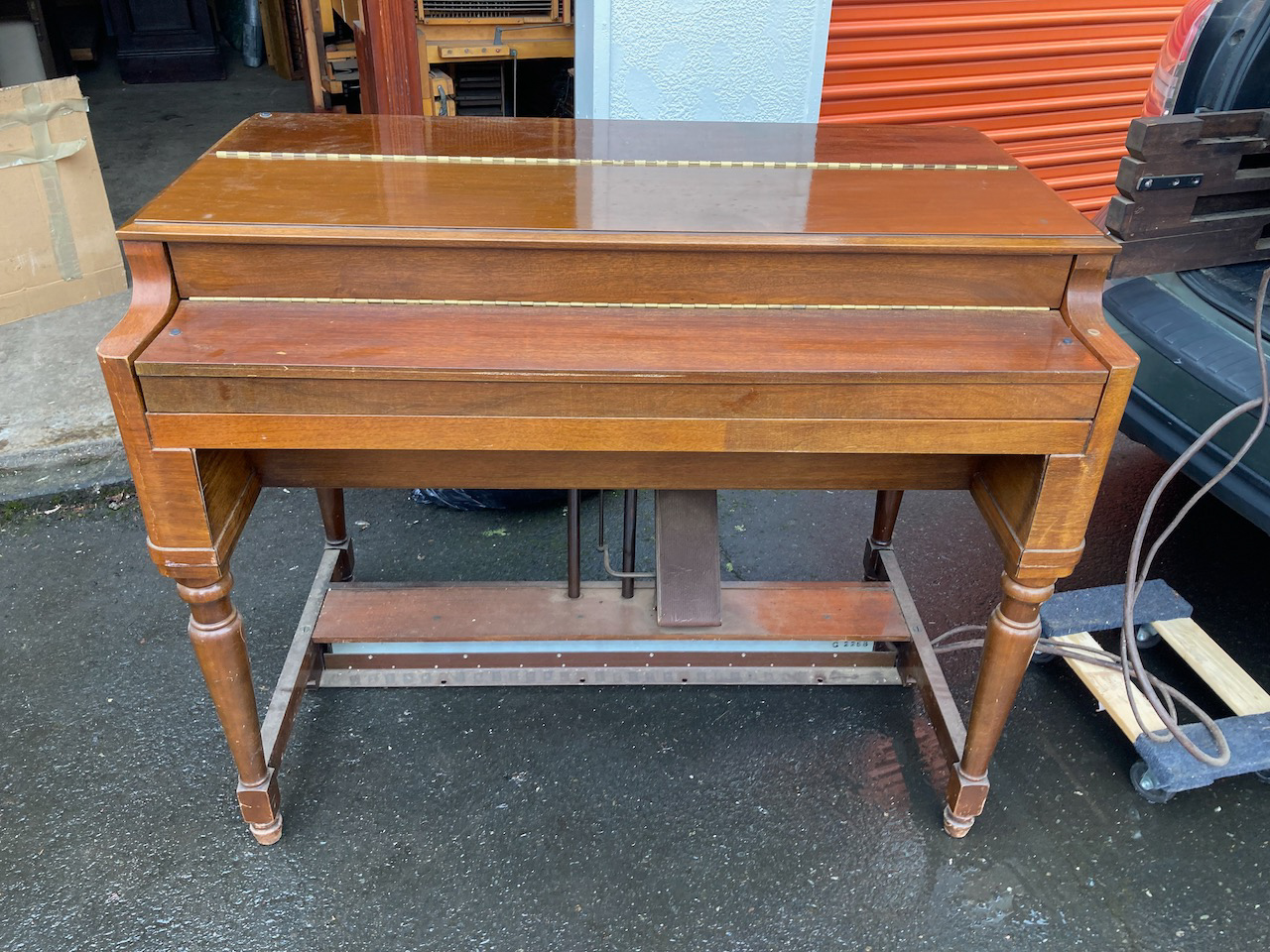
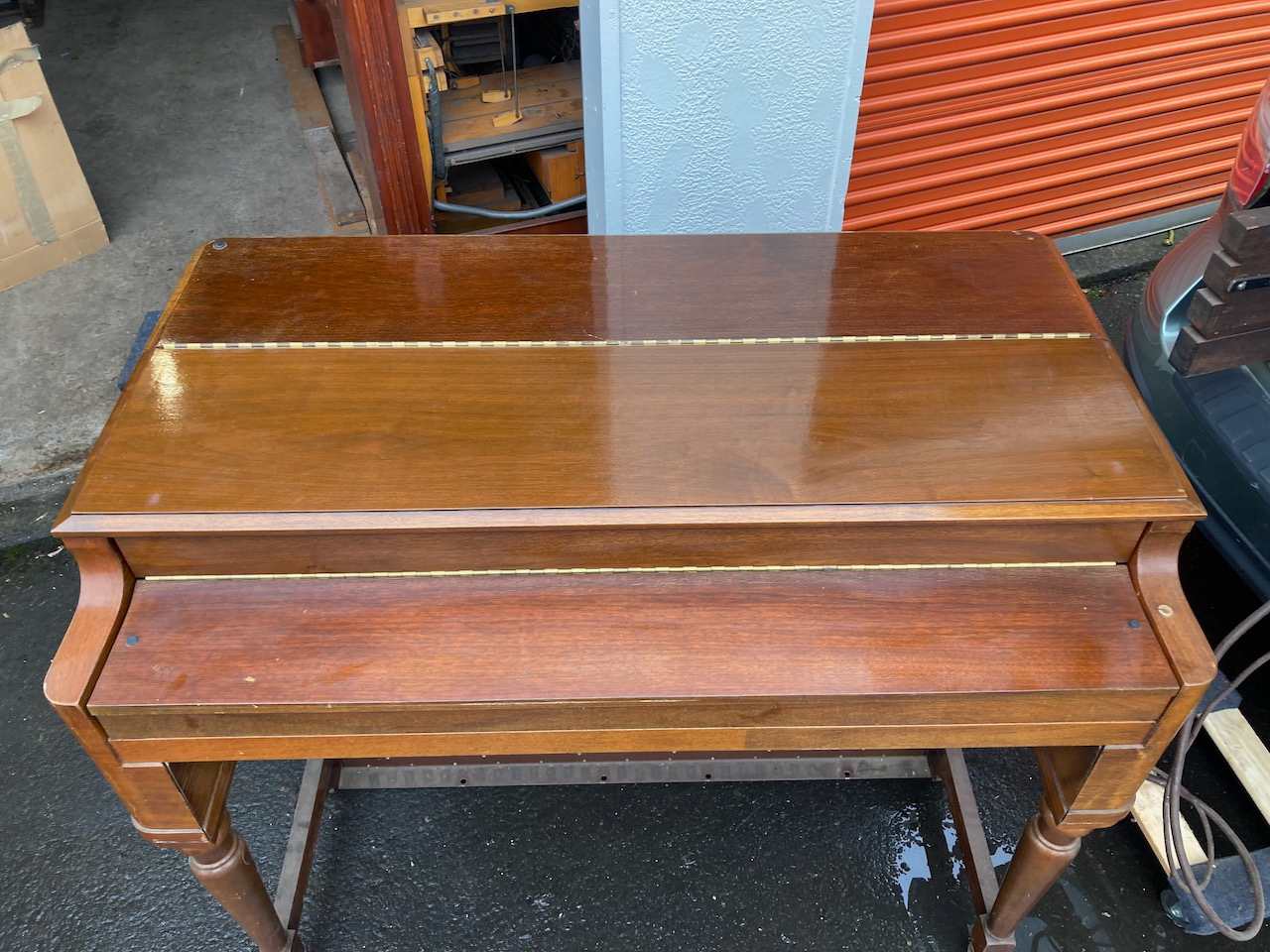
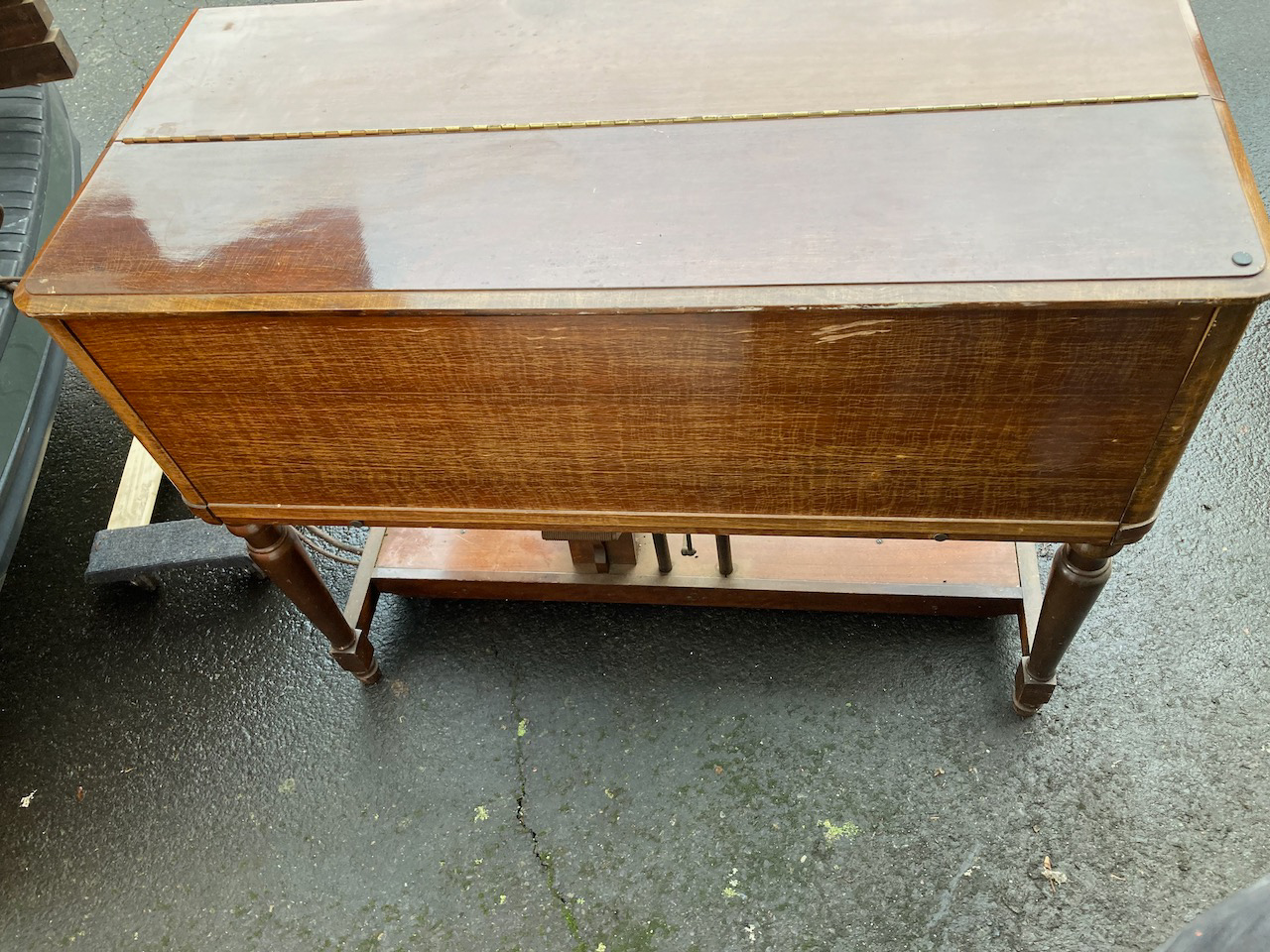
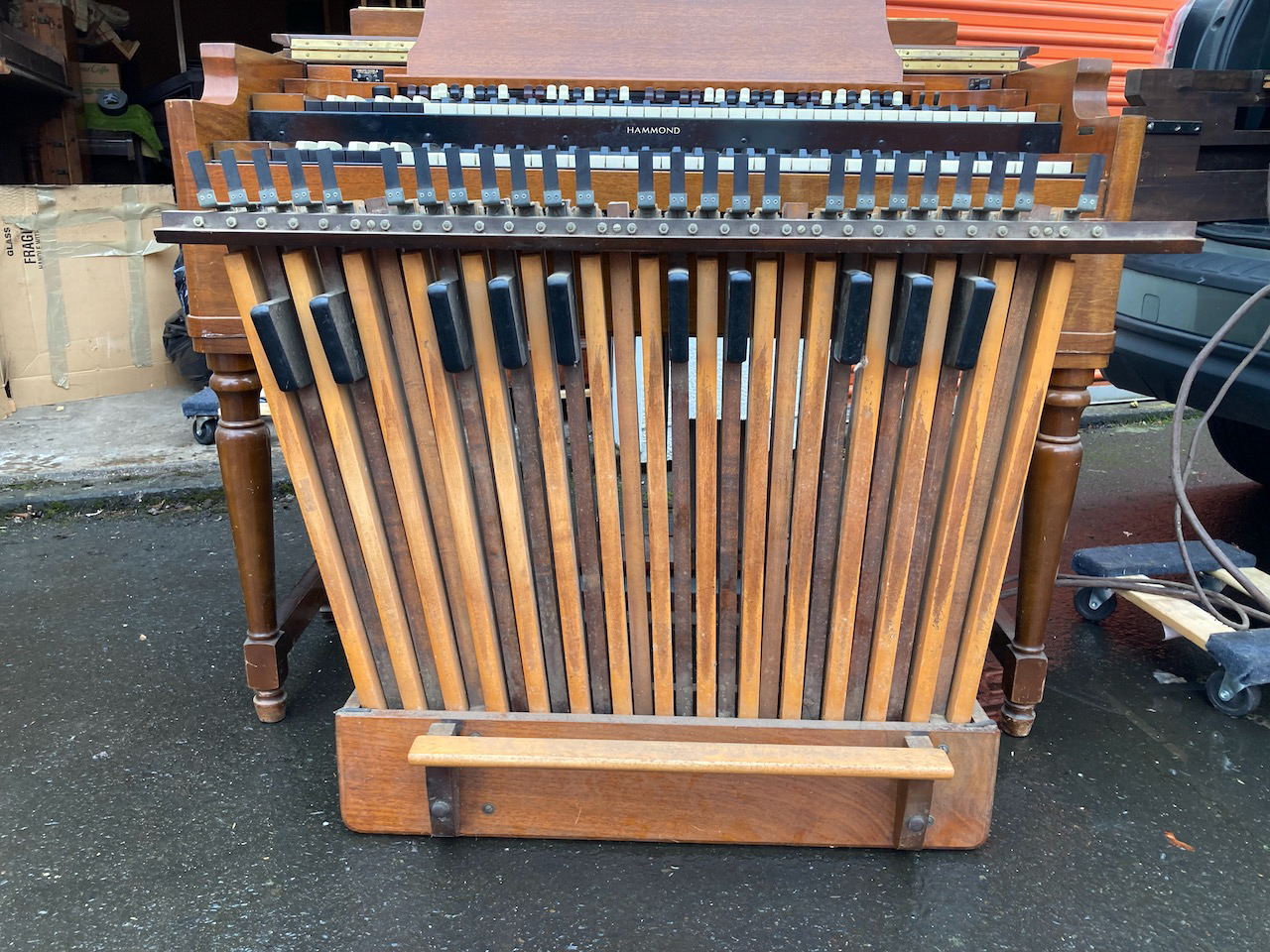
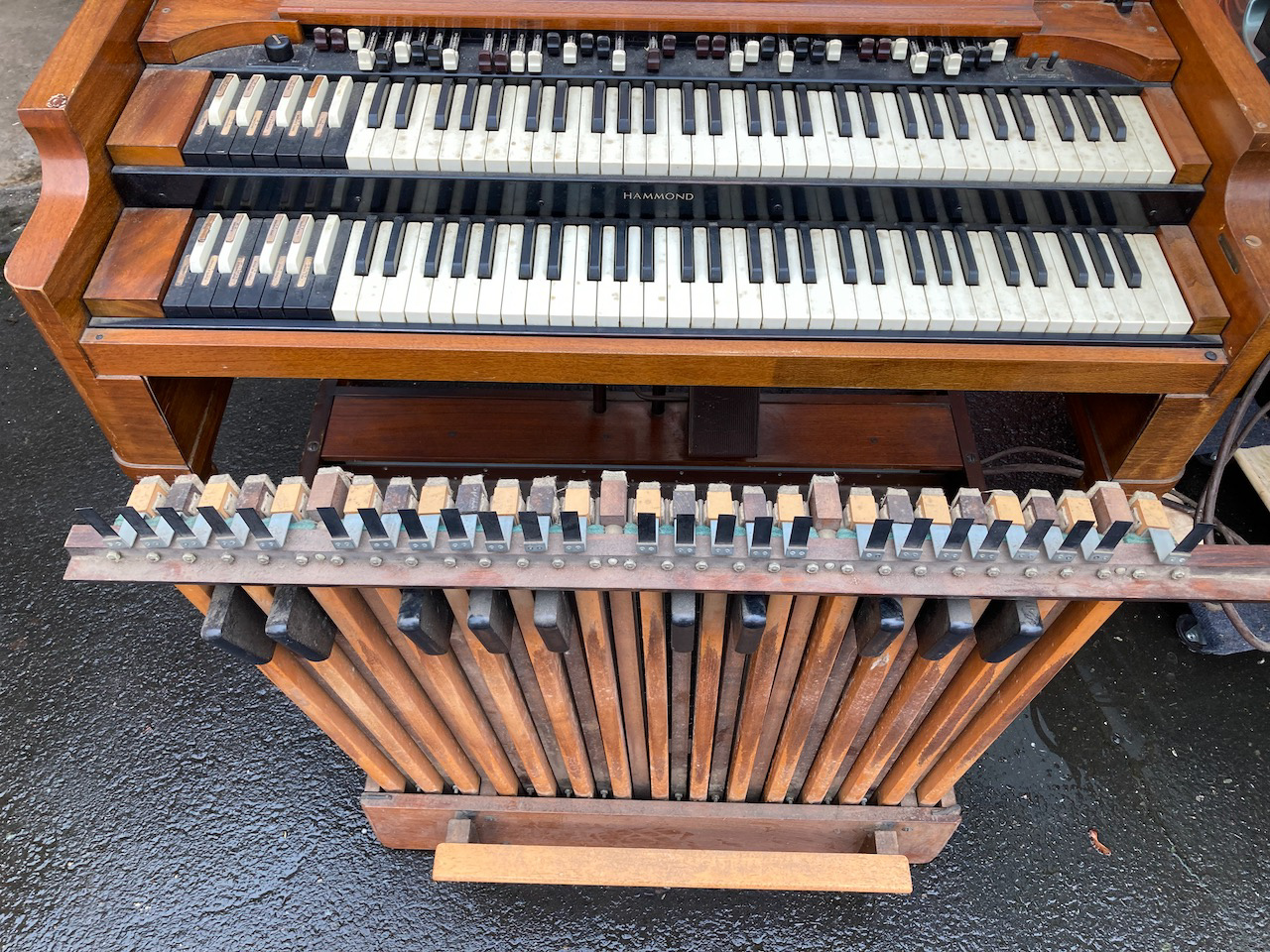
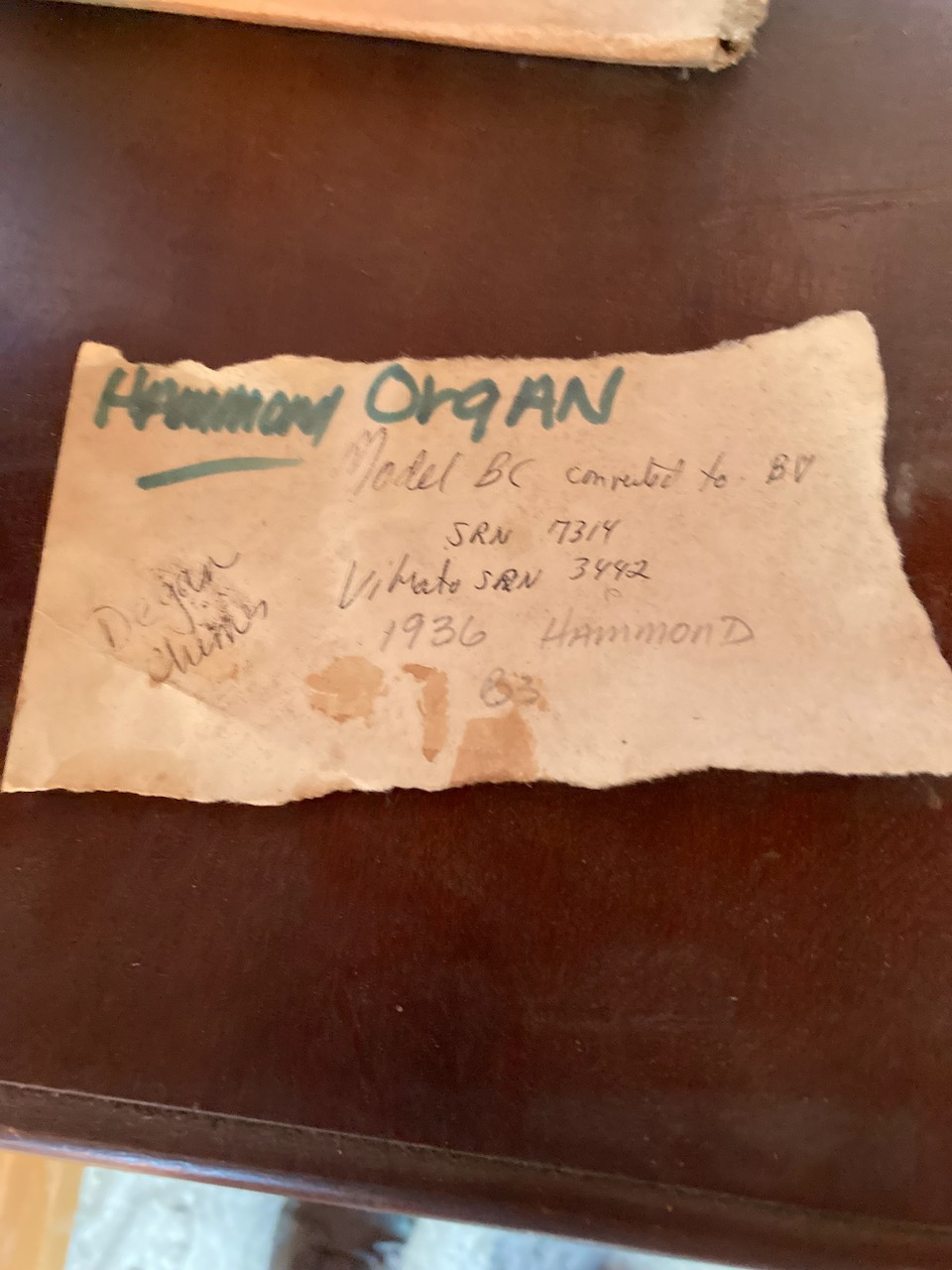
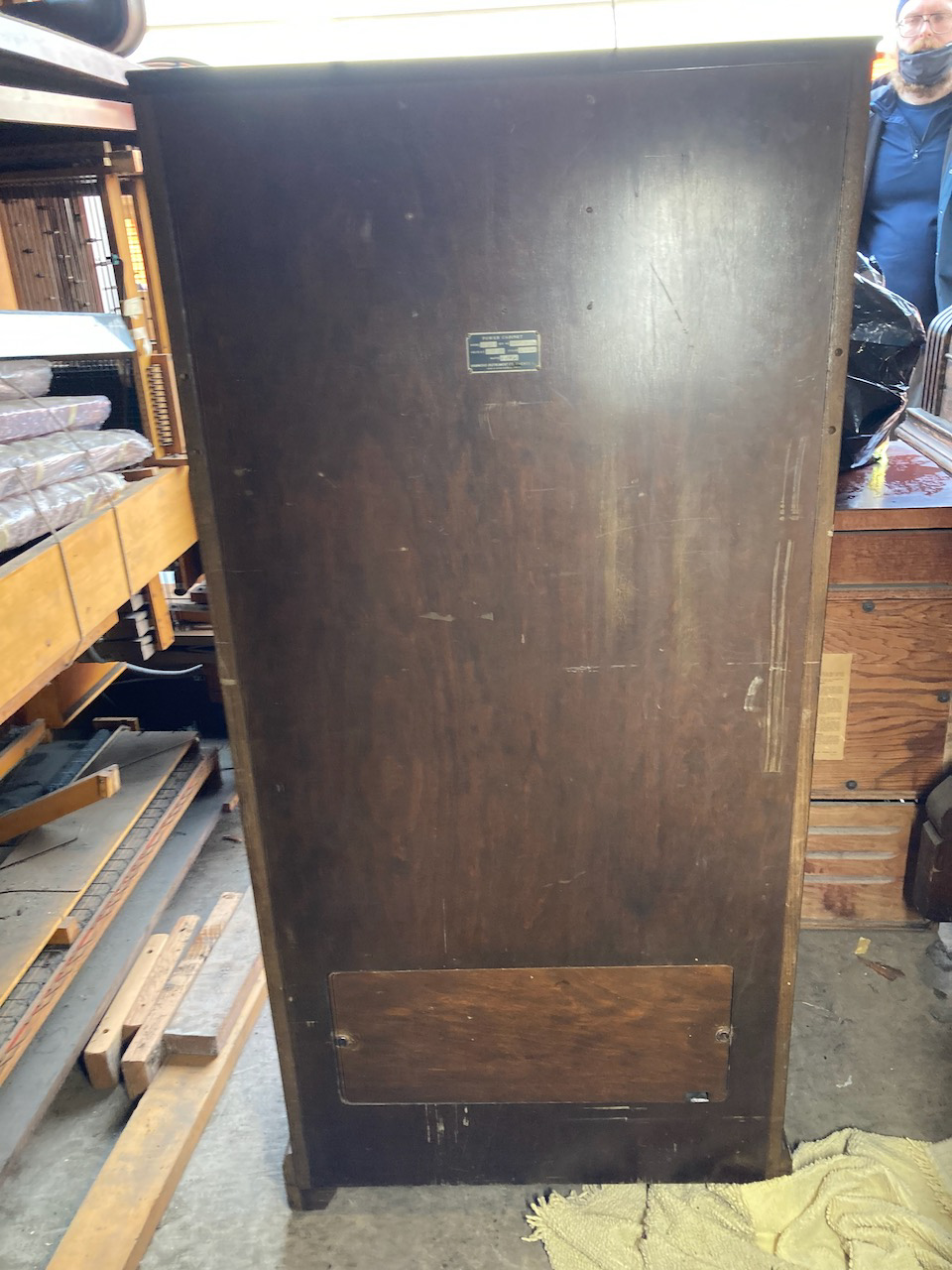
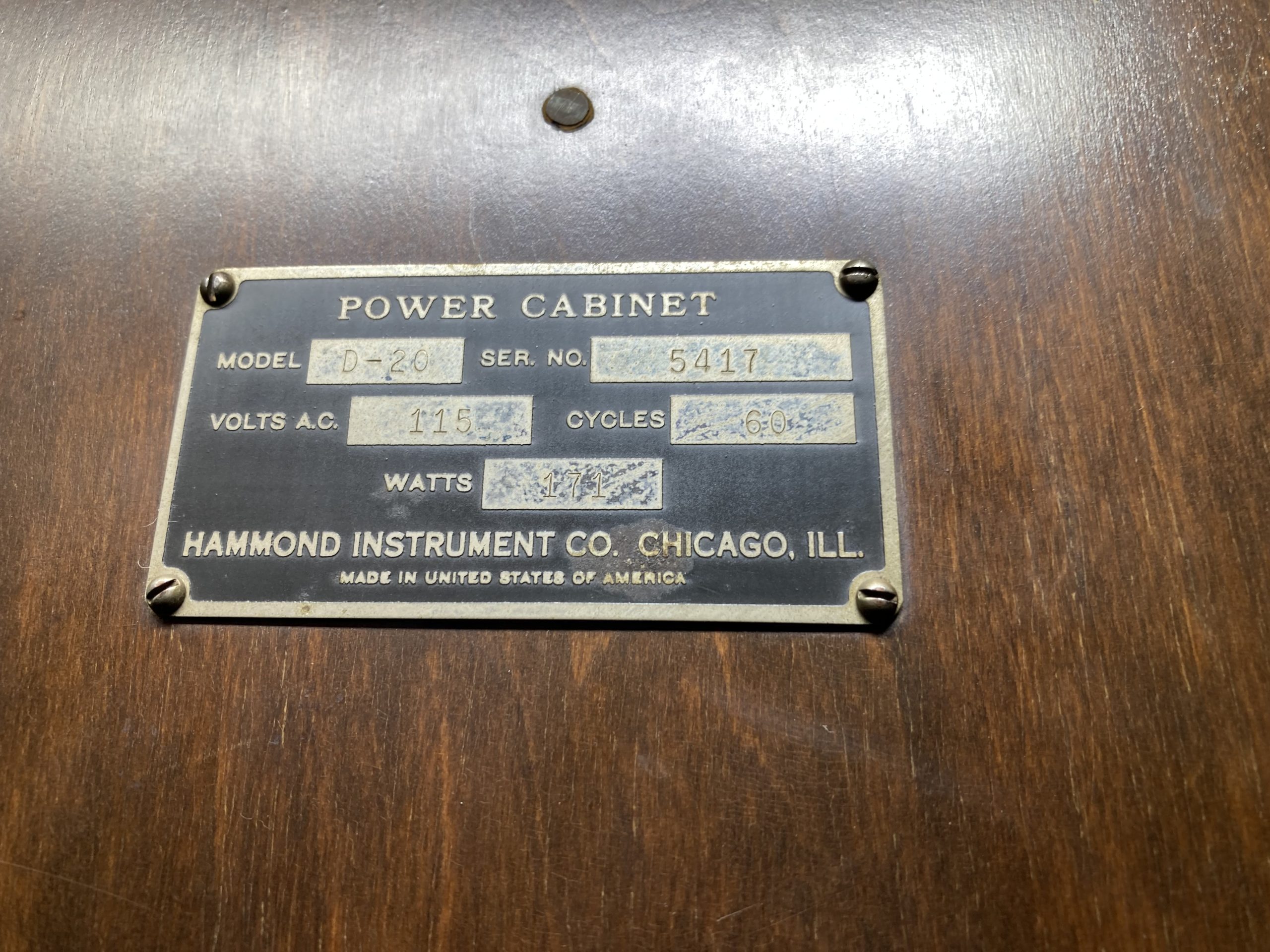

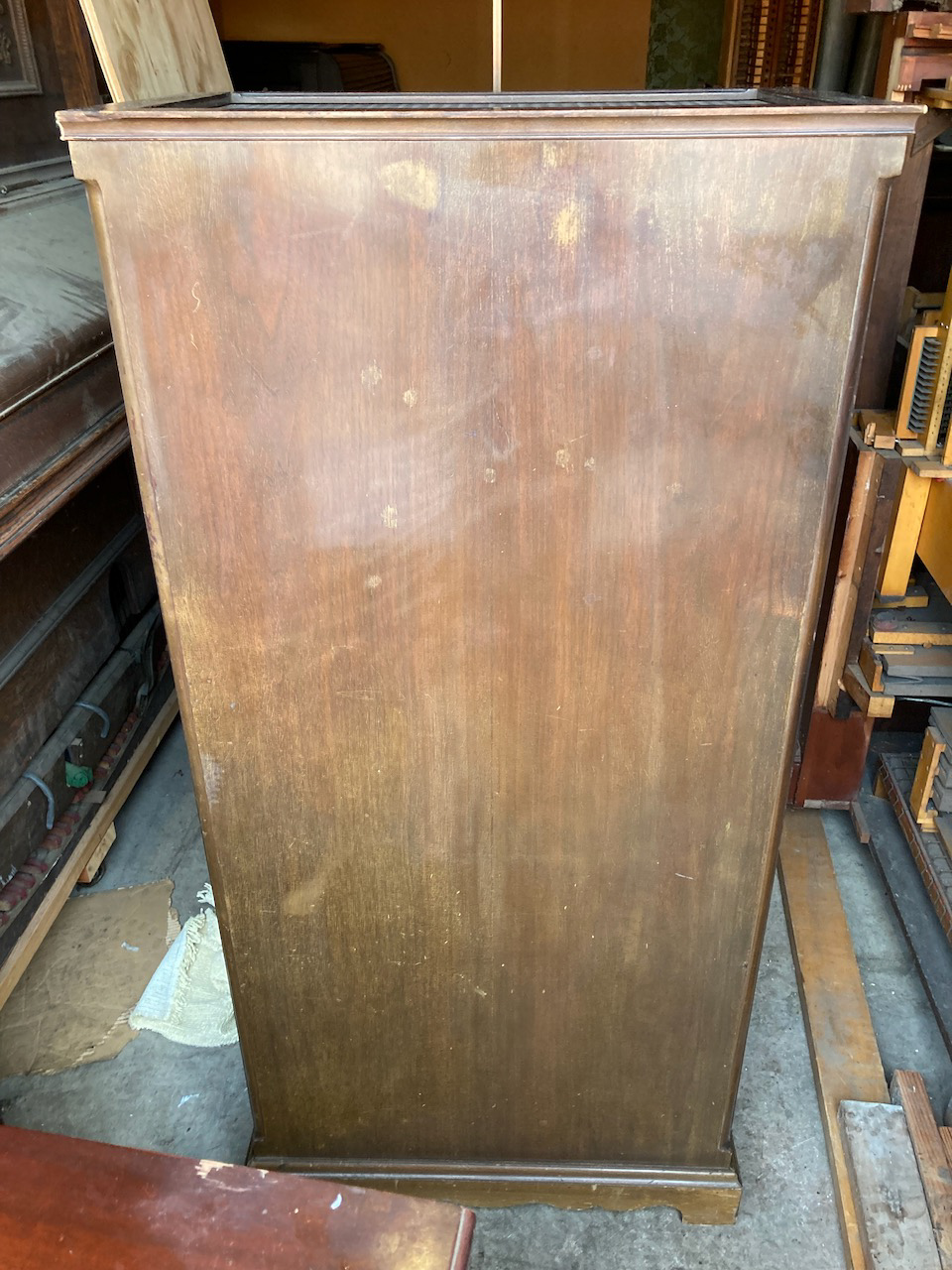
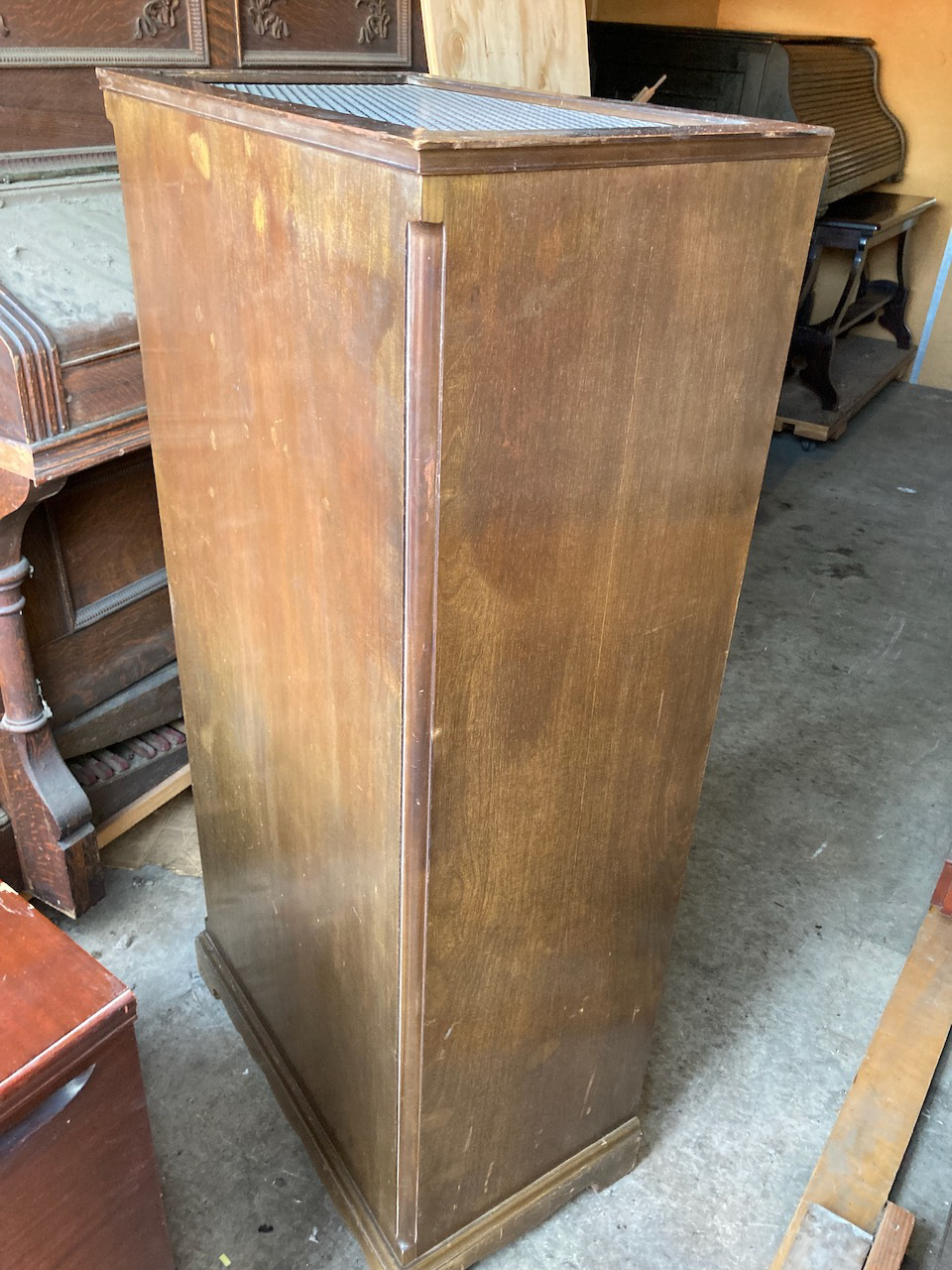
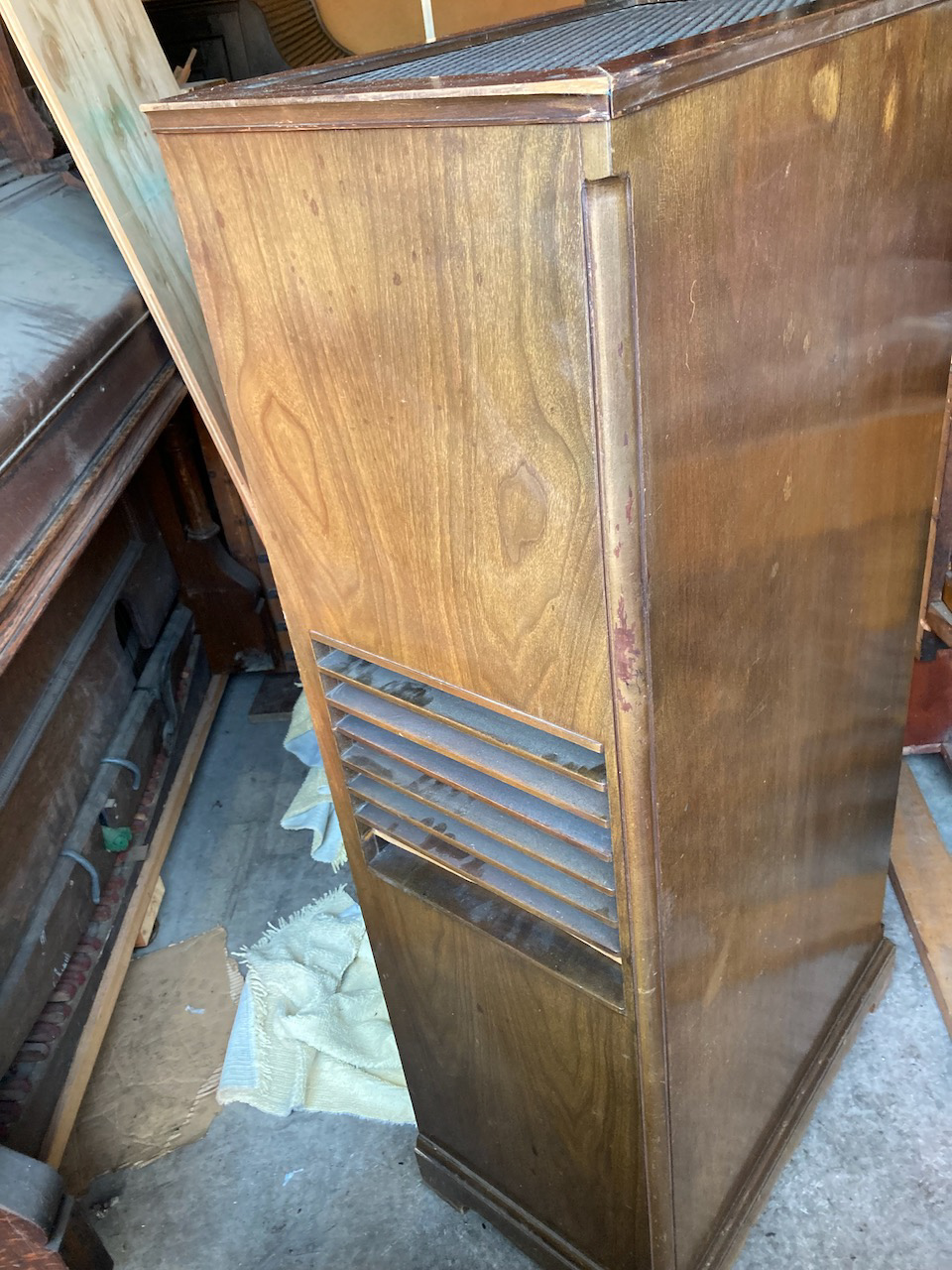

Notes: The Model BC includes a 2nd tonewheel generator to provide a true “chorus” effect.
A slip of paper was found in a box stored on top of the unit which indicates that this was originally a model BC that was converted to a BV (or BCV).
There is damage to one of the wooden louvers on the side of the tone cabinet.
Current status: The tonewheels move freely and the start motors engage and run and spin up to what appears to be full speed. The main tonewheel run motor runs freely. The chorus tonewheel motors spins down over a few seconds after the starters are released. This could be a simple lubrication issue. Hammond-compatible oil has been added to the oiling cups and I’m giving things a couple of days to spread through the wicking system.
The tone cabinet amp works, we were able to get sound out of the BC (using the main tonewheel generator, didn’t leave it powered up for long to avoid damage to the chorus motor). Tubes from amp are currently being tested/evaluated for separate resale value in case of parting-out the instrument.
There is damage to one of the wooden louvers on the side of the tone cabinet.
Includes bench and 25-note pedalboard.
Provide your own transportation. Item is currently at my home in NE Portland, close to I-84, and may be viewed by appointment.
Pipe Ranks and Pipe Organ Components
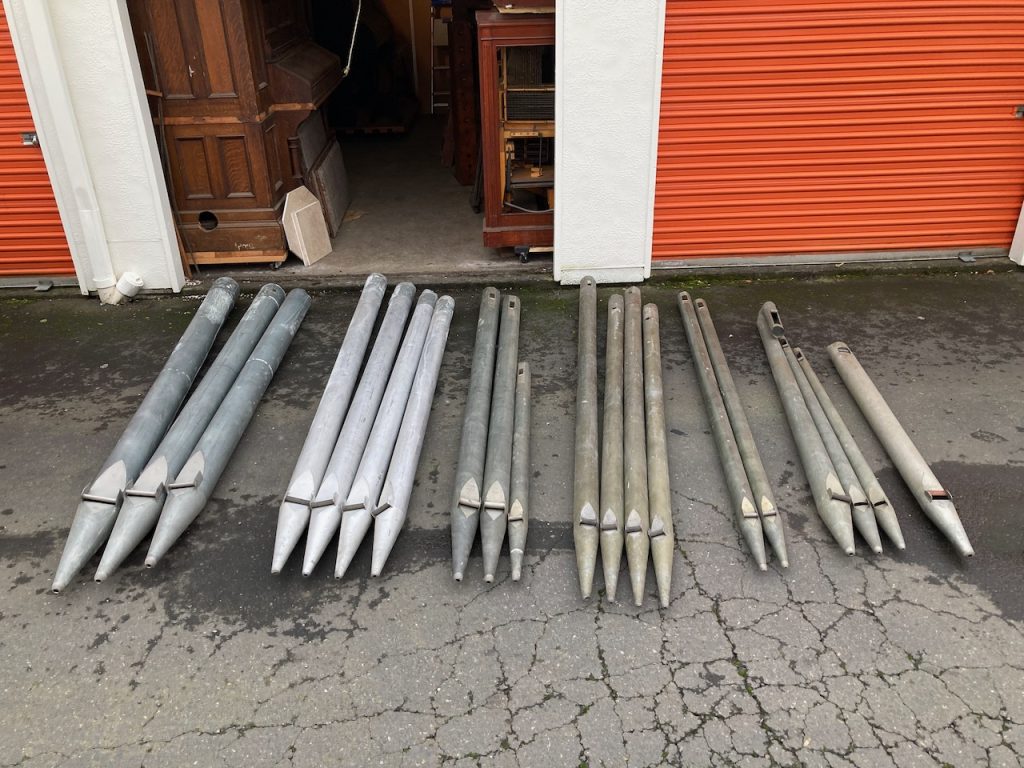
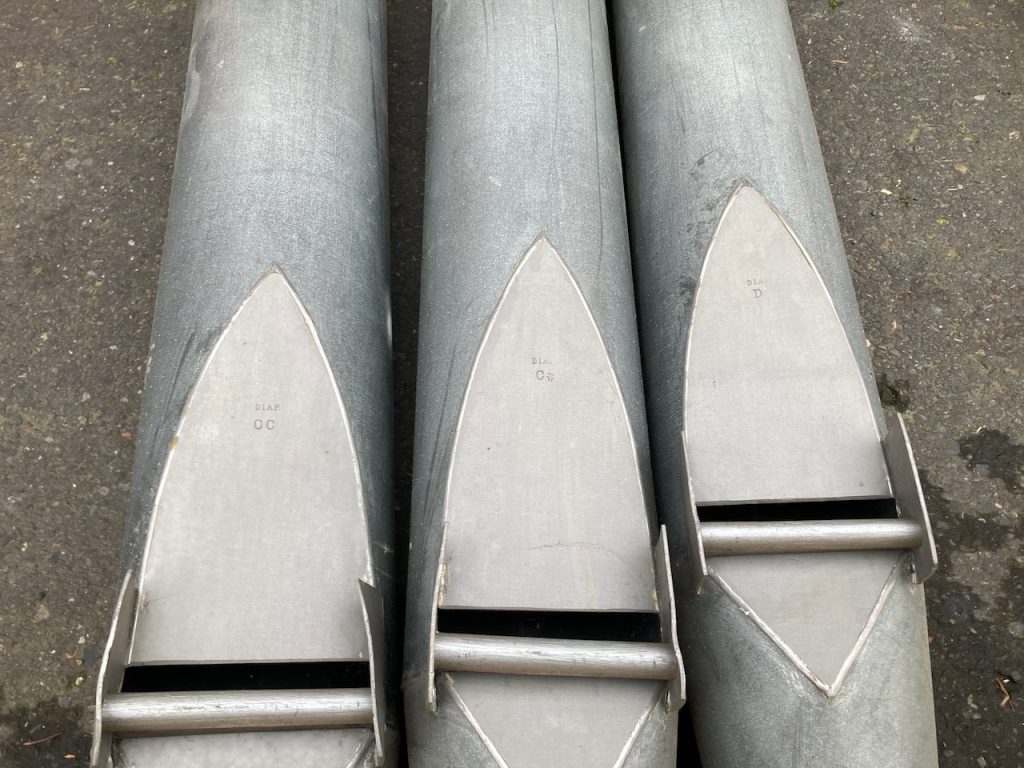
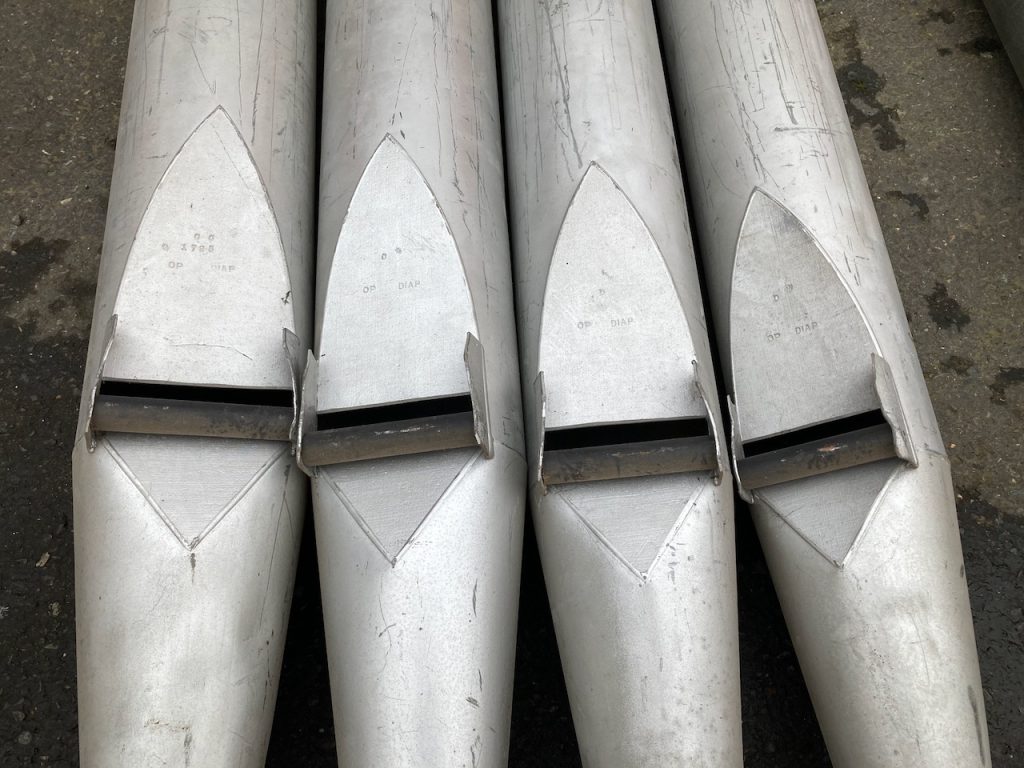
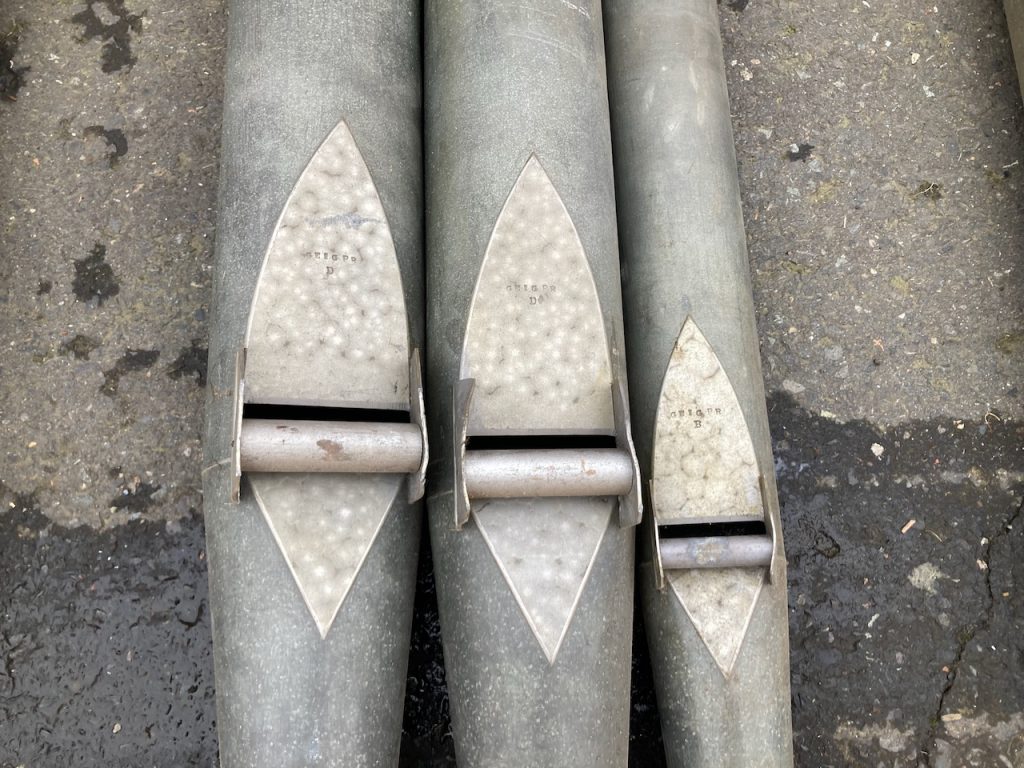
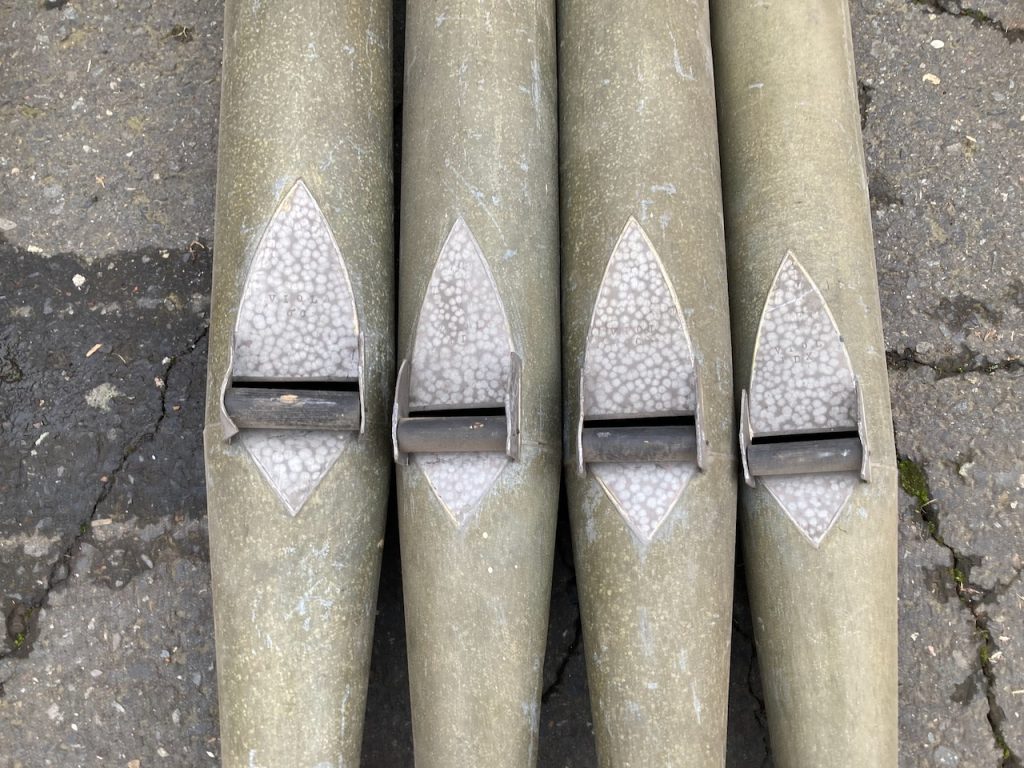
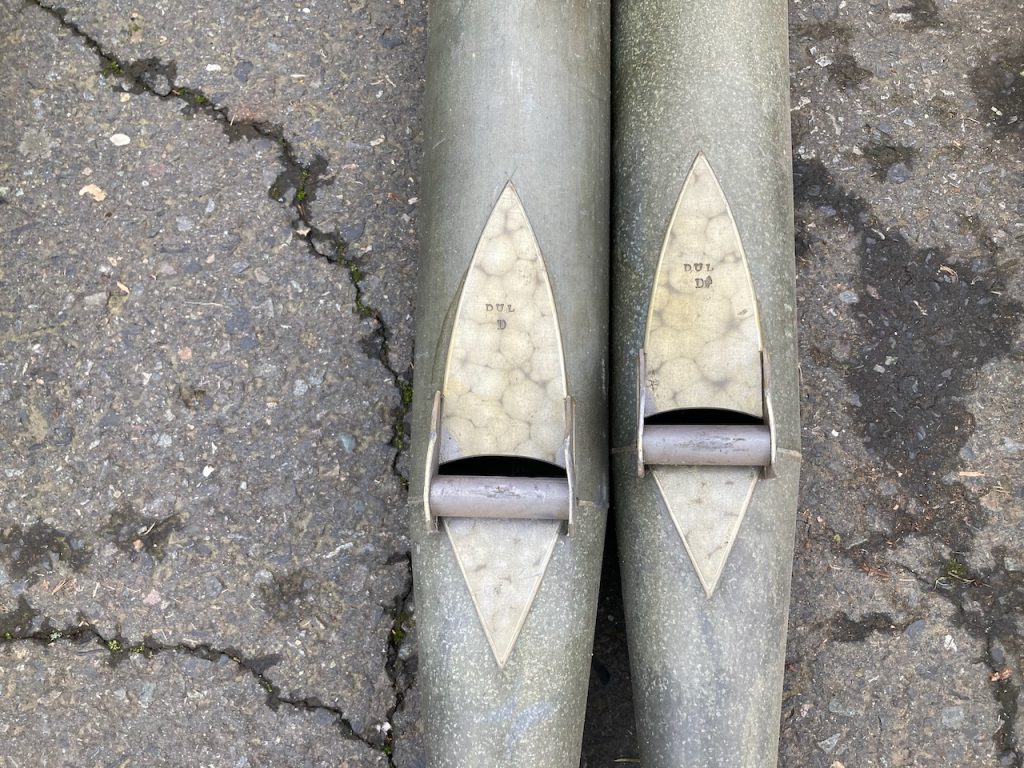
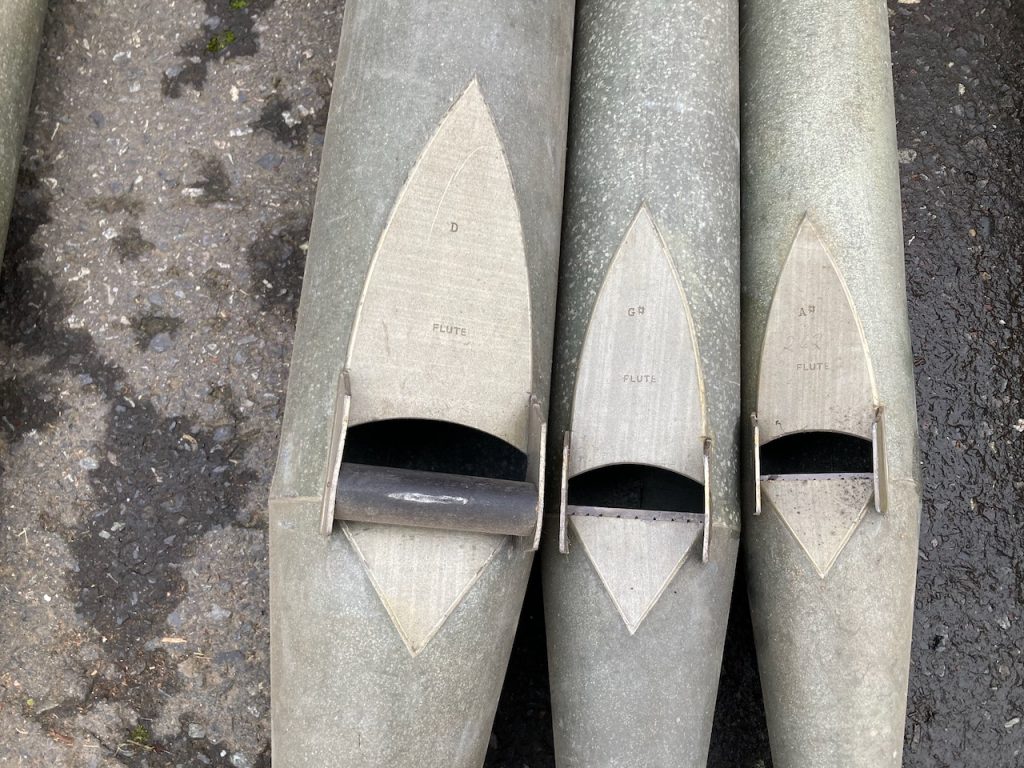
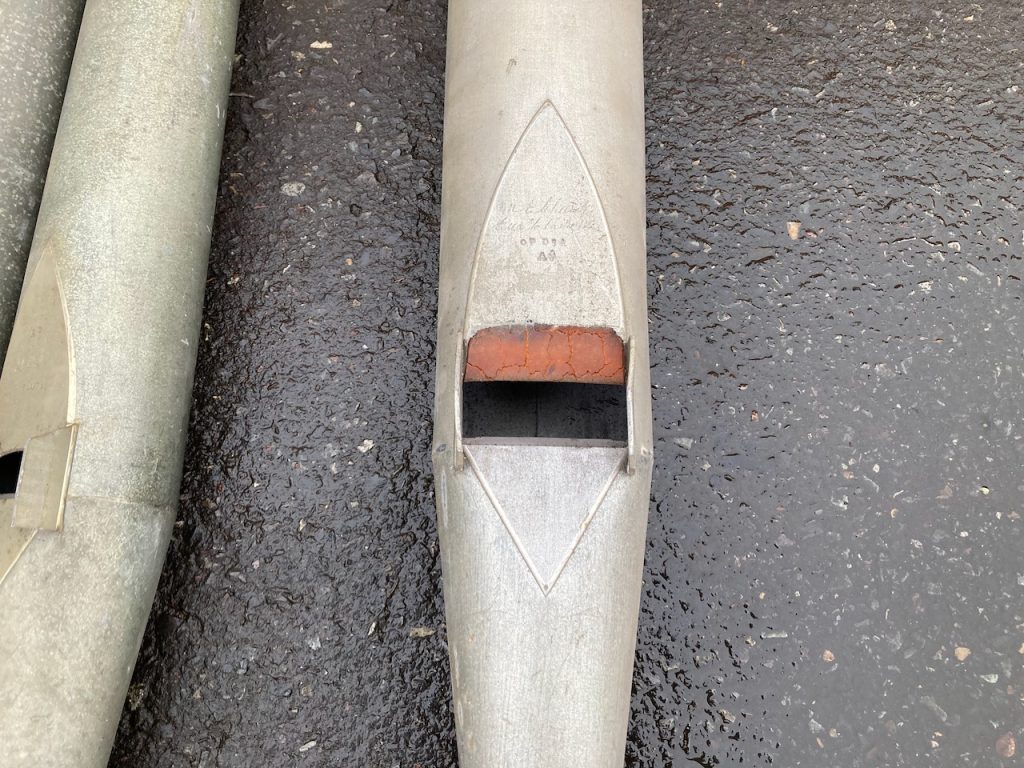
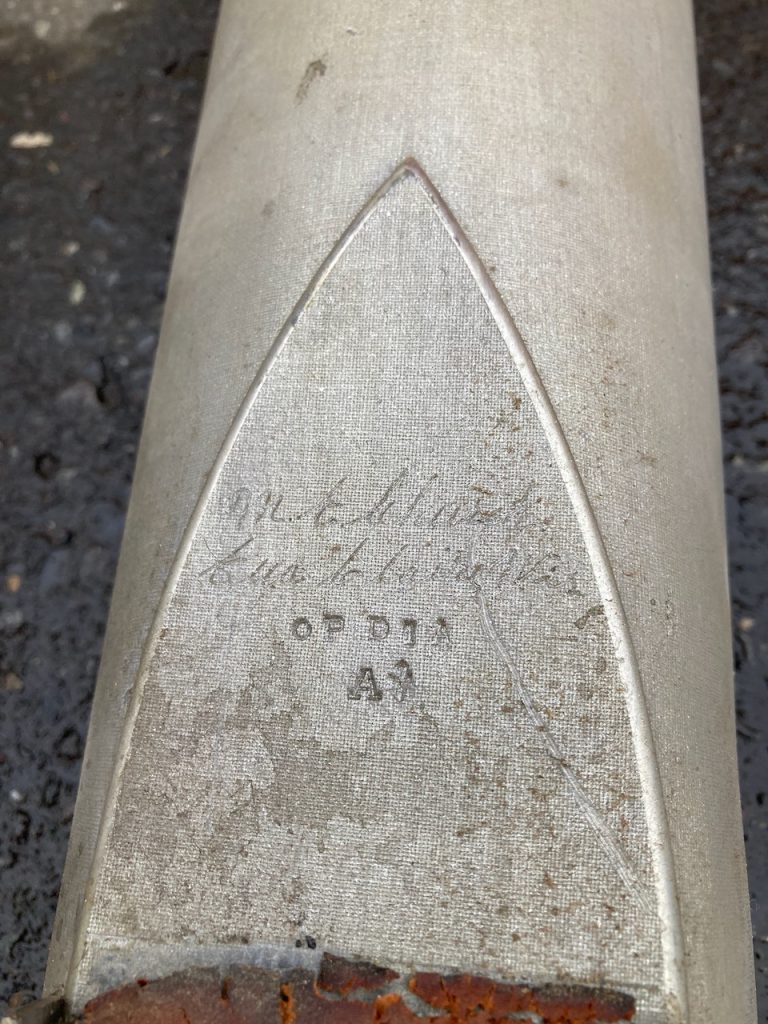
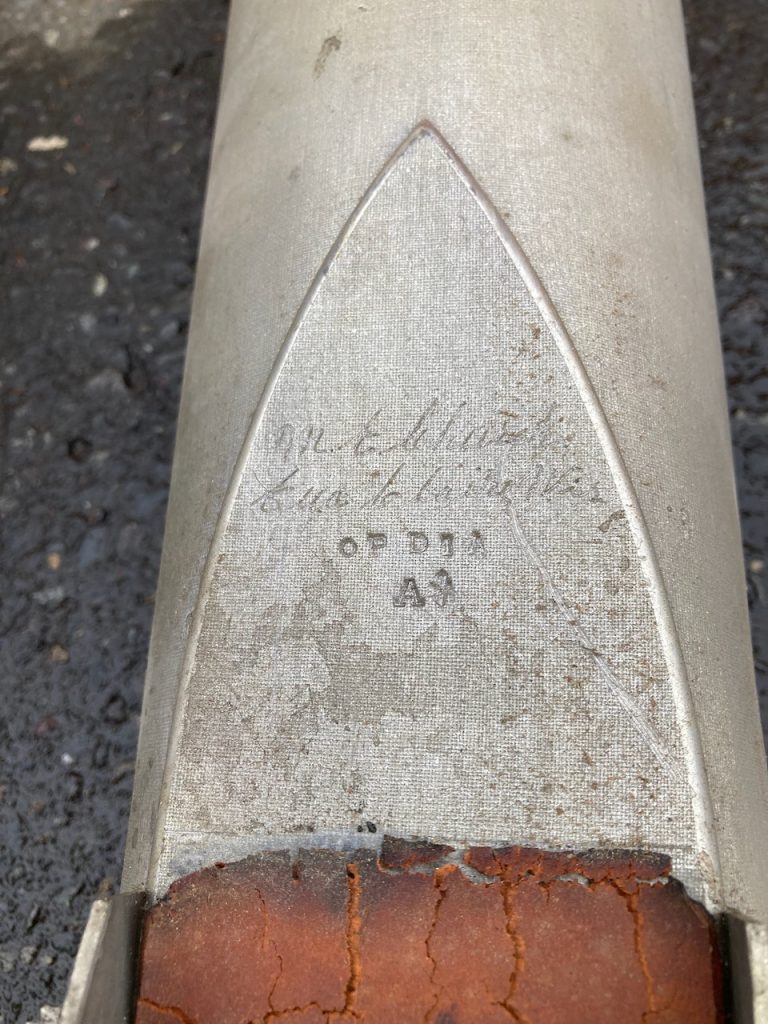
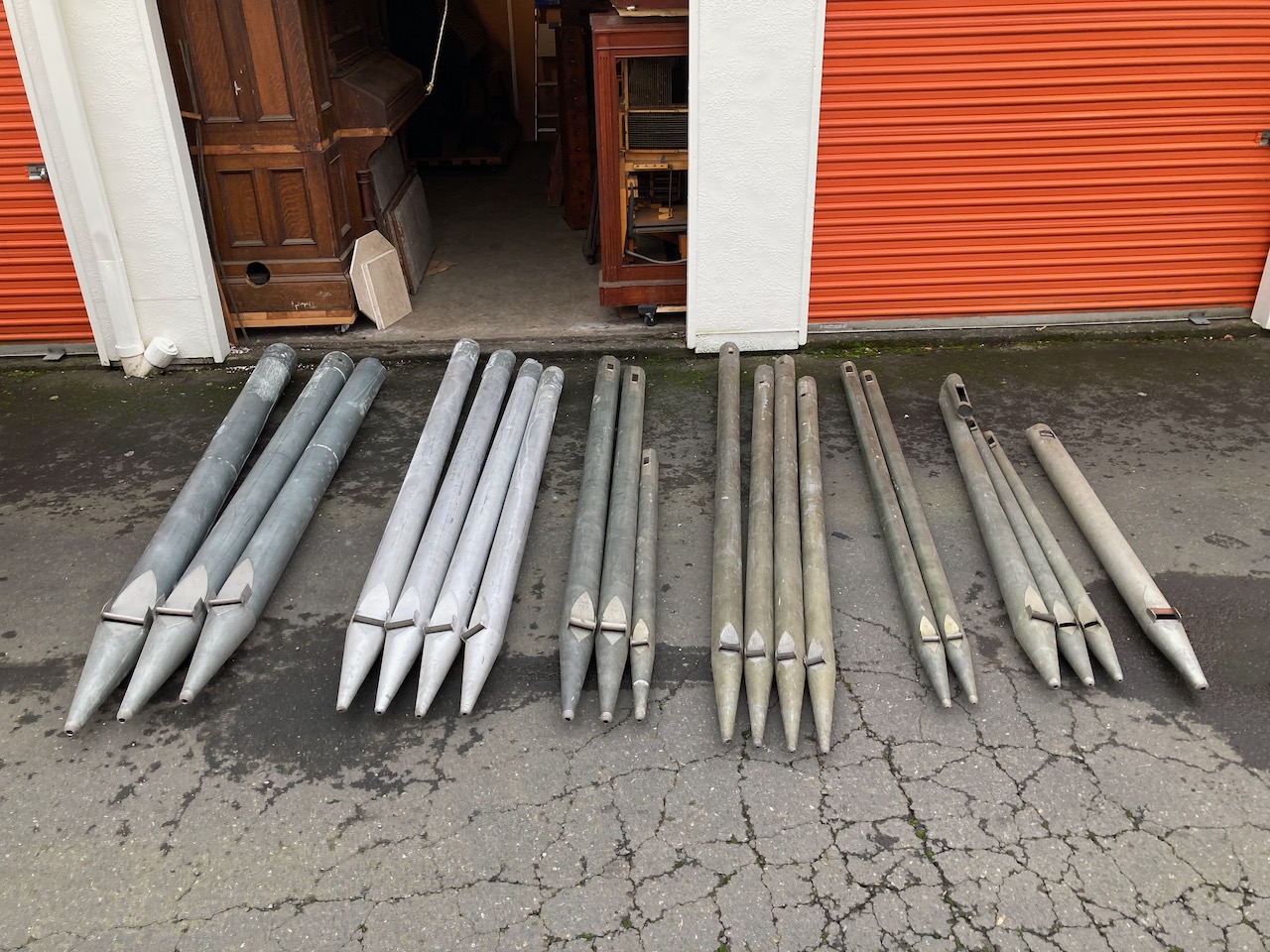
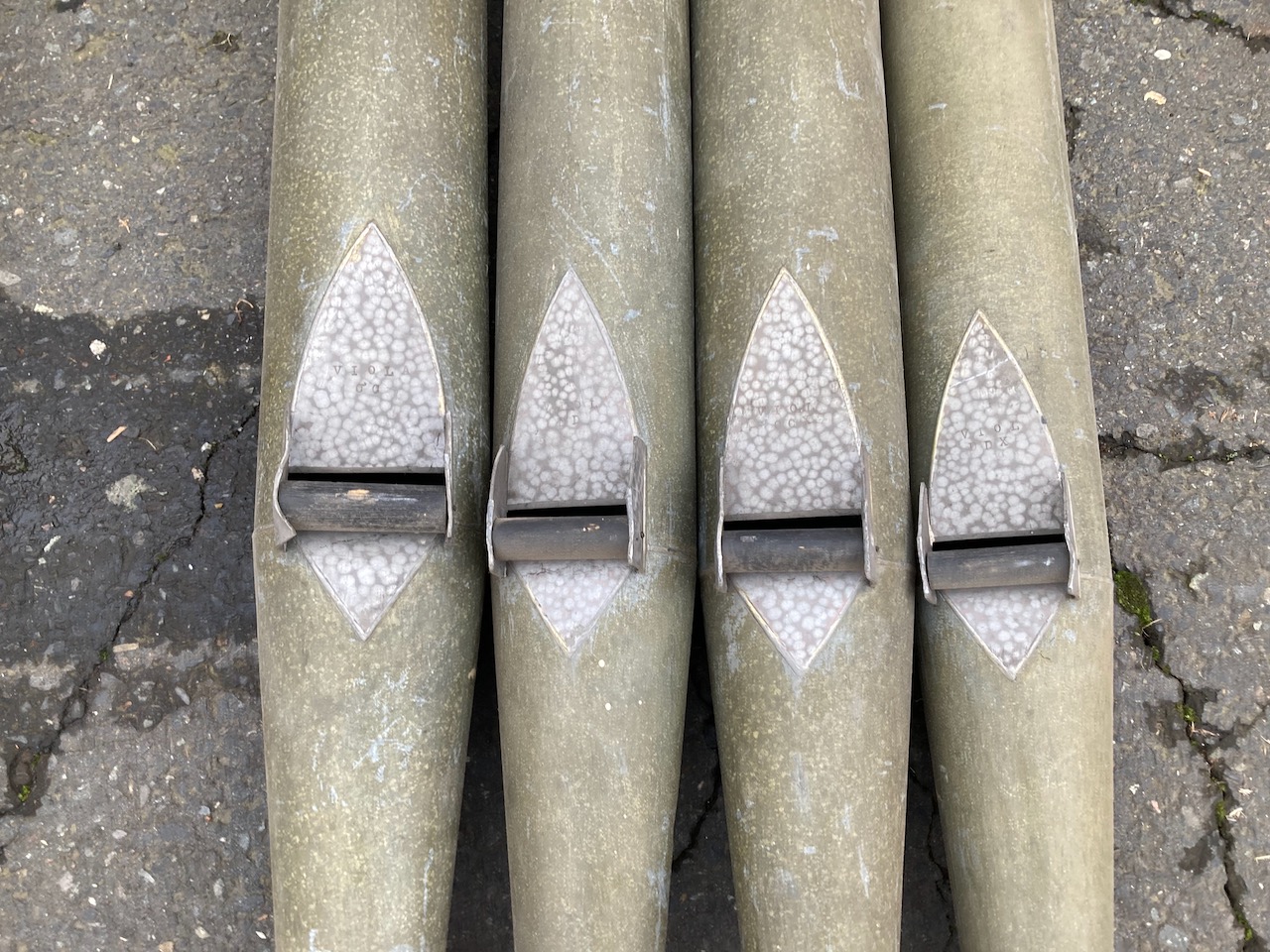
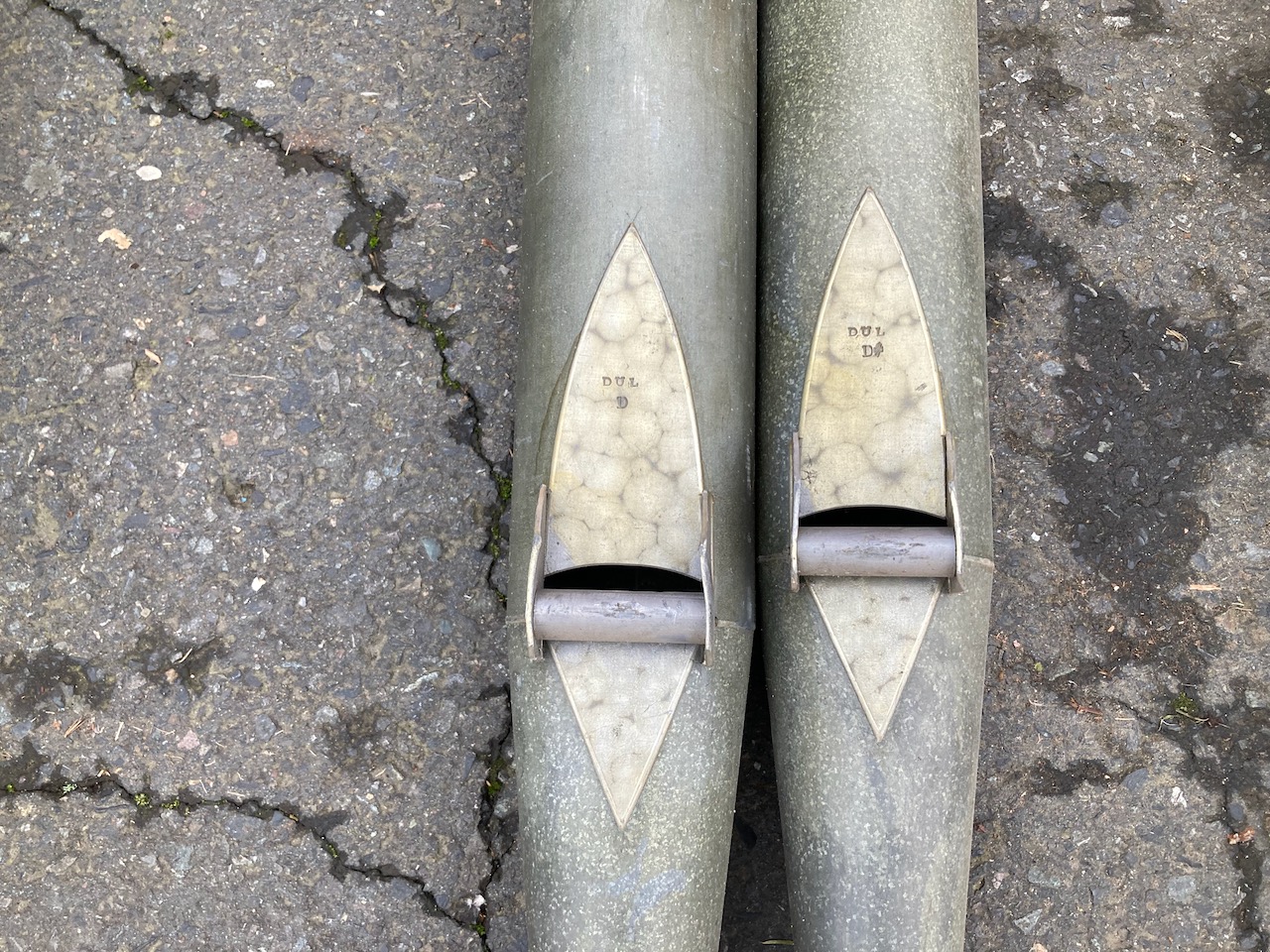
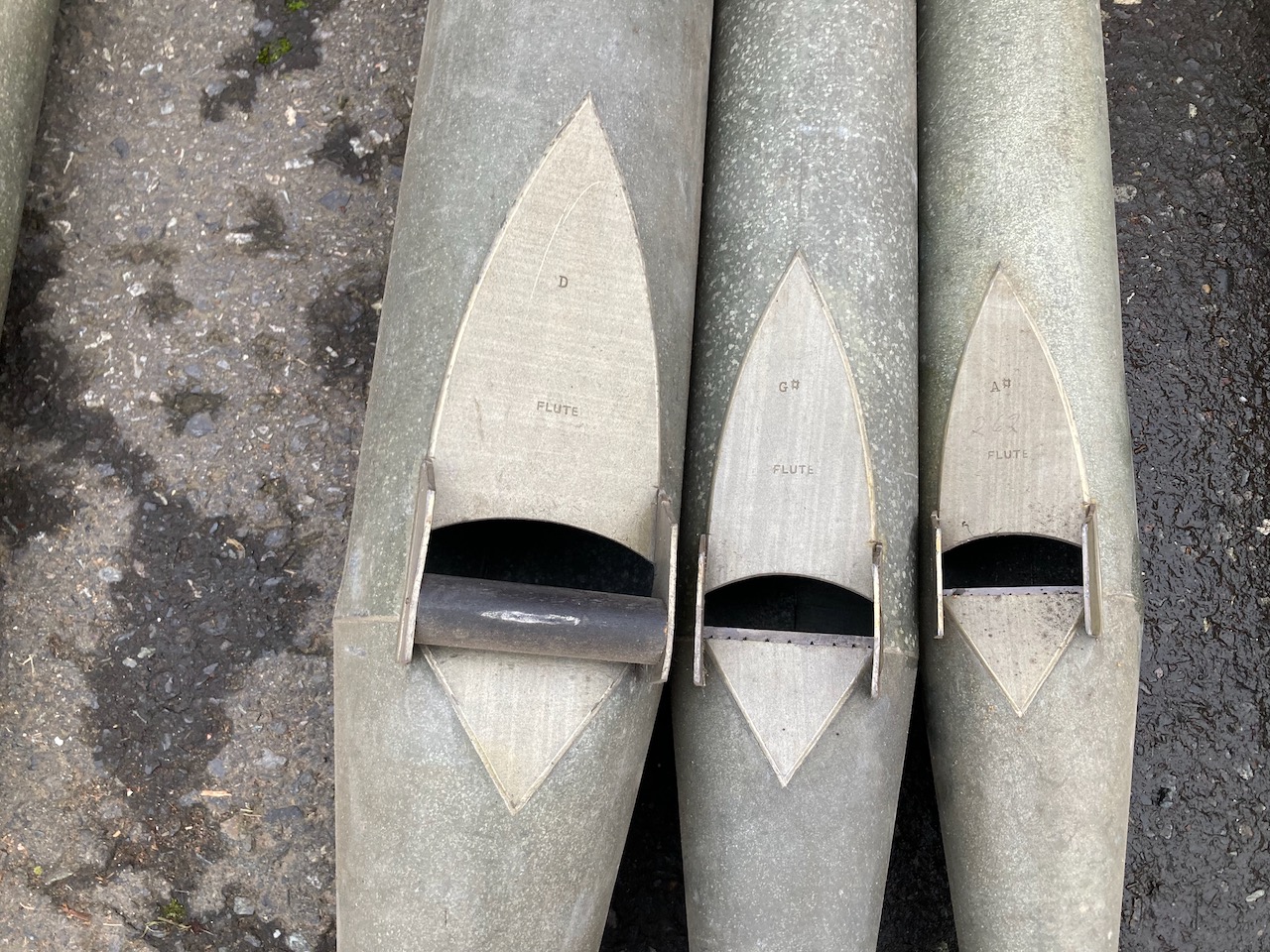
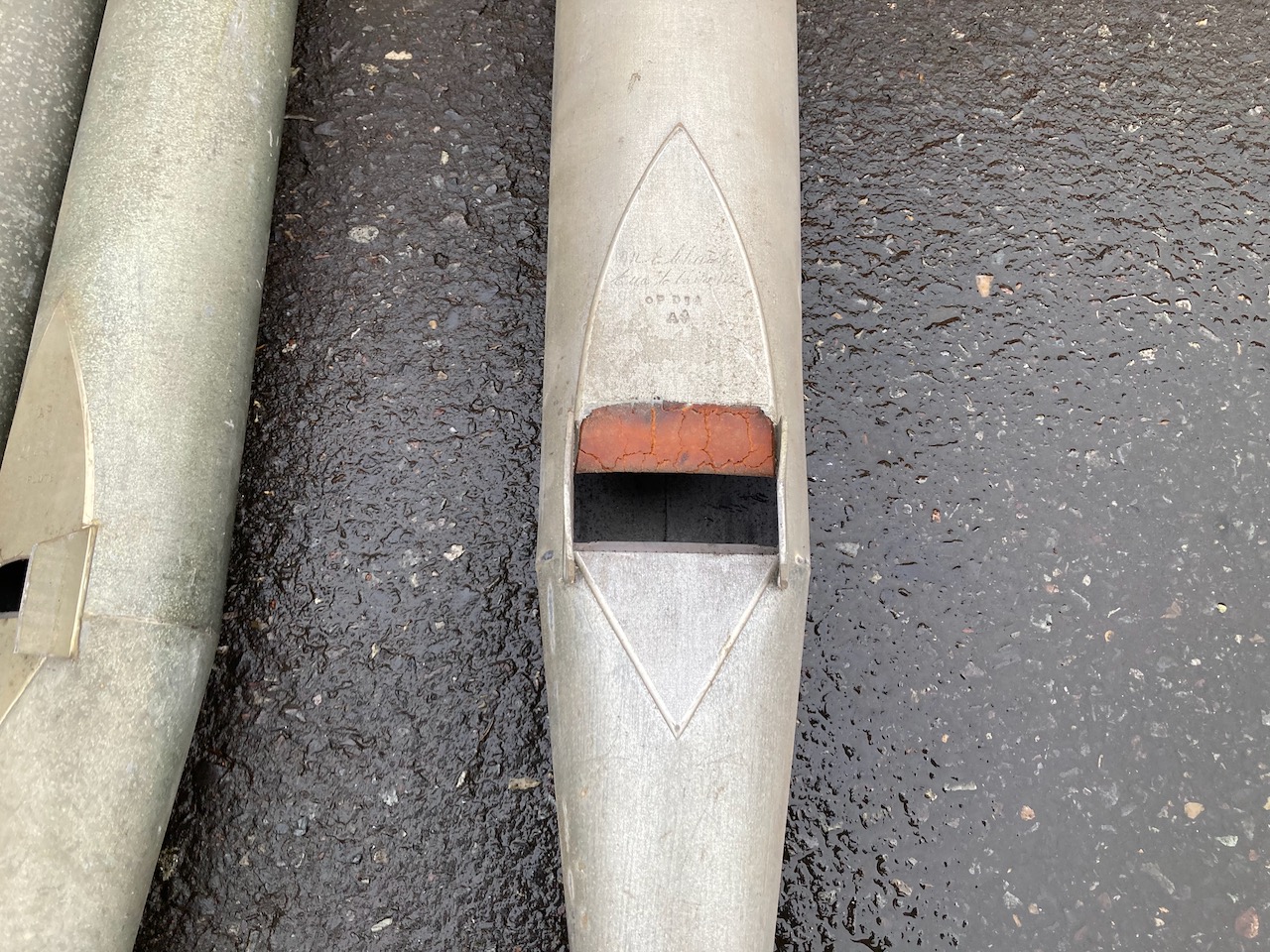
20 Assorted Metal Organ Pipes
Status: Claimed – Picked up
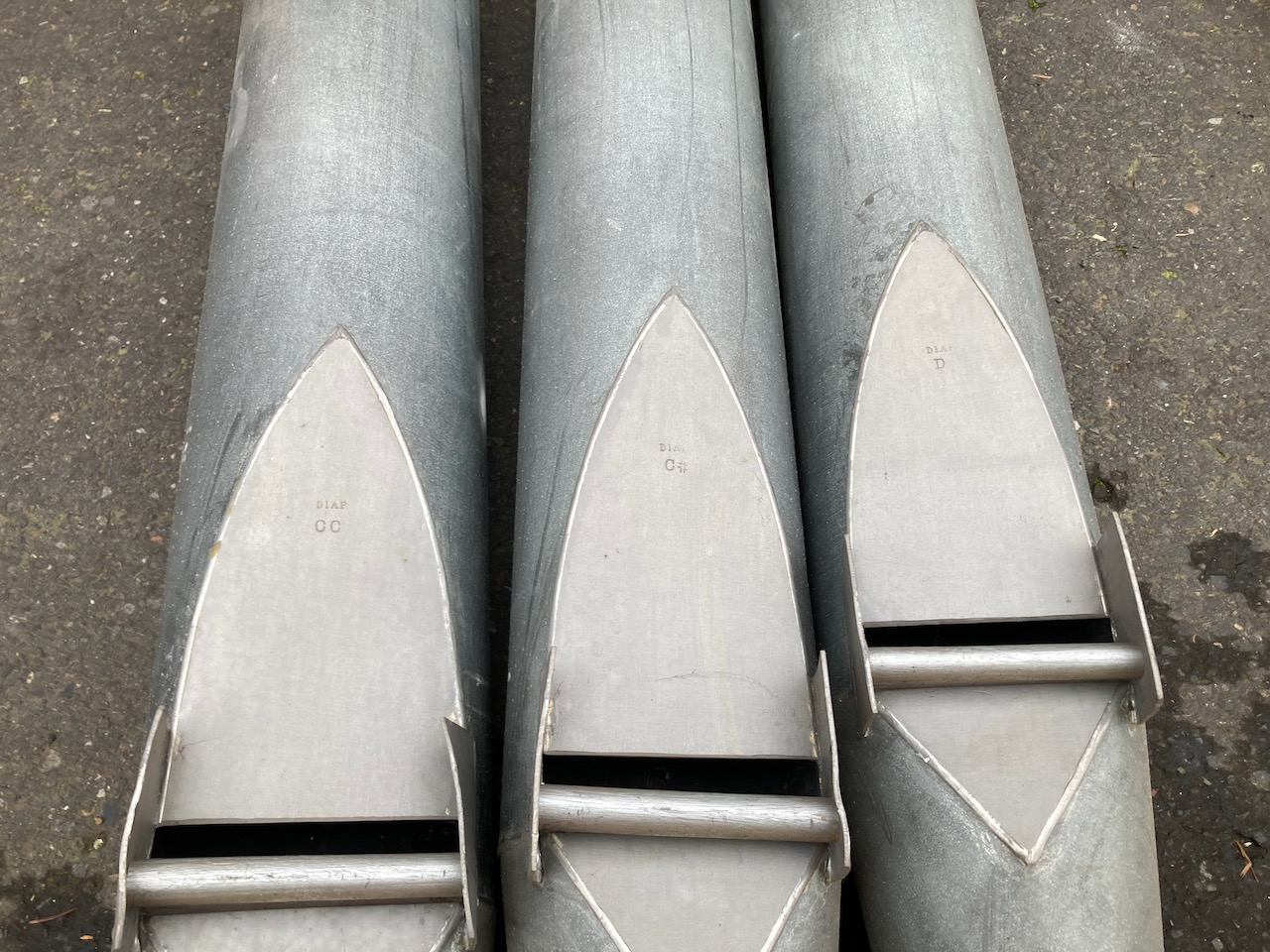
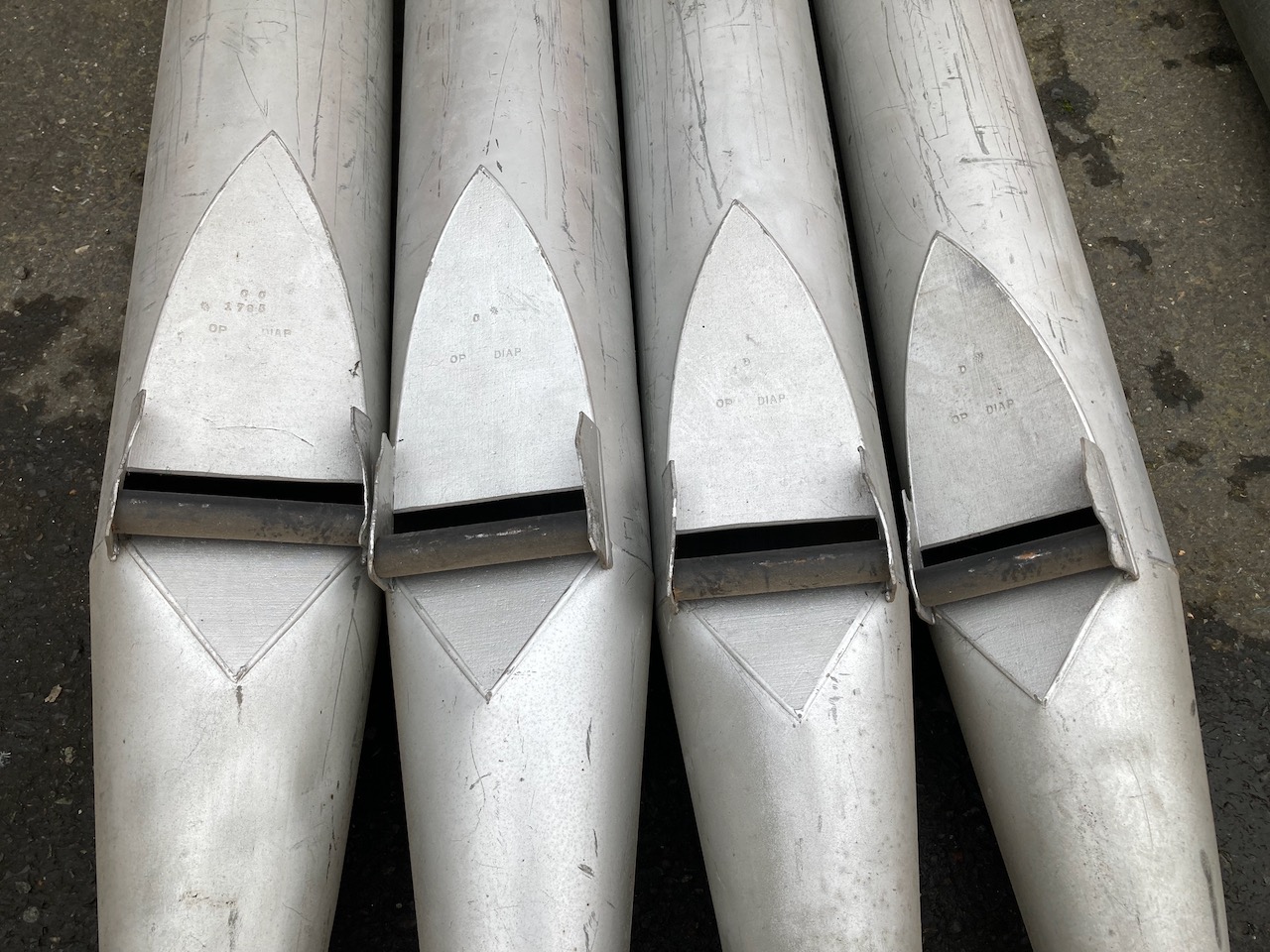
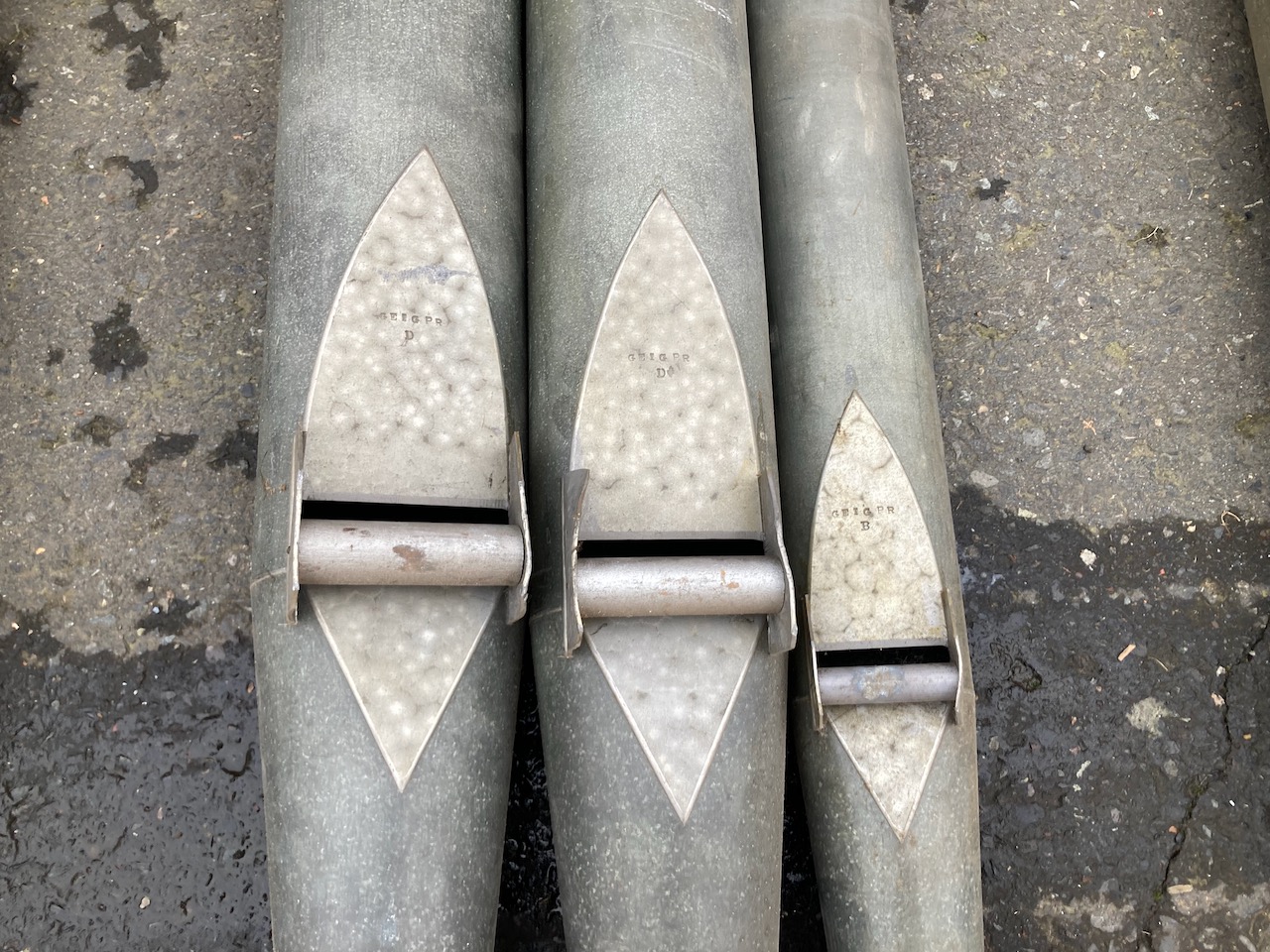
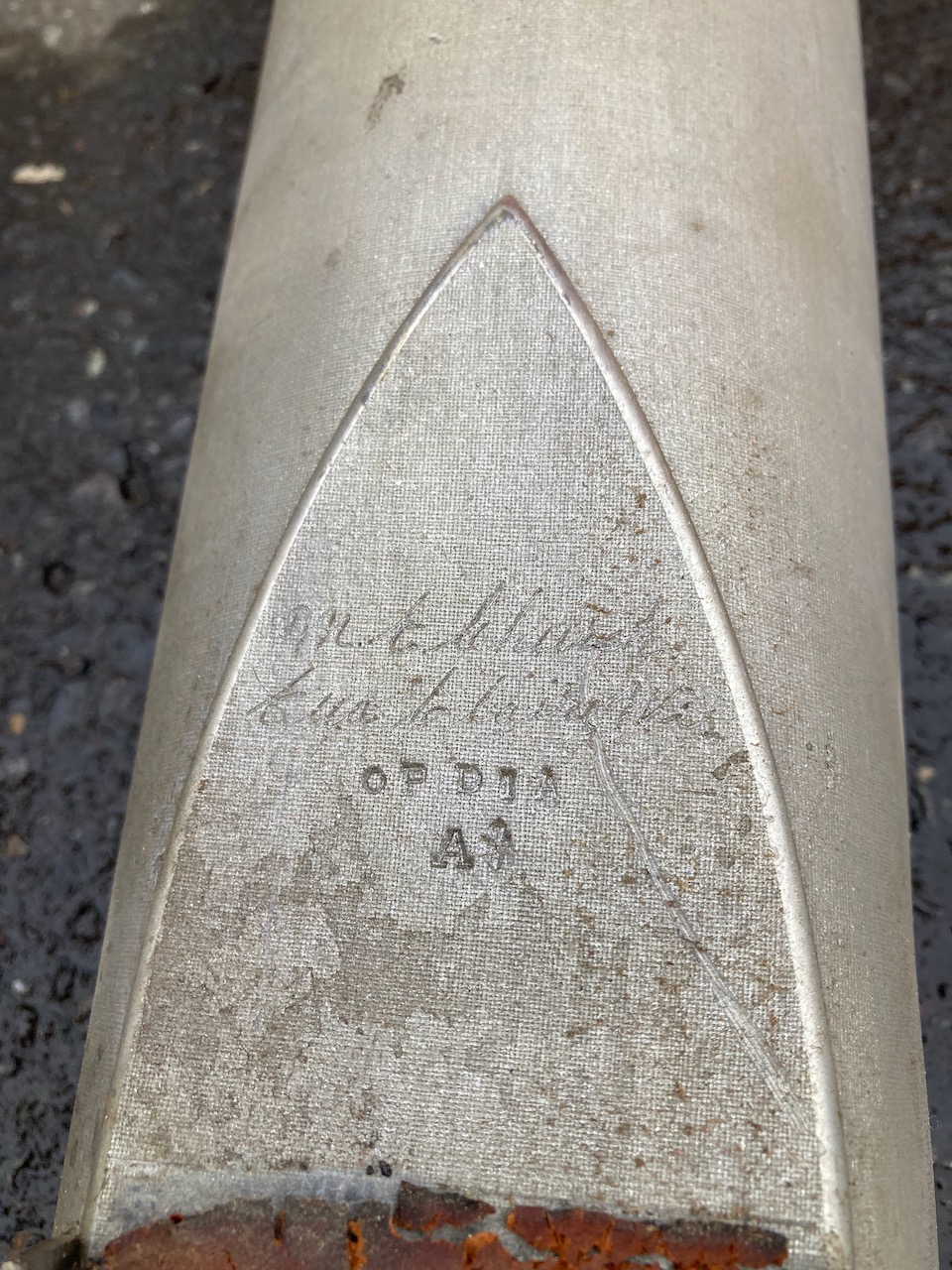
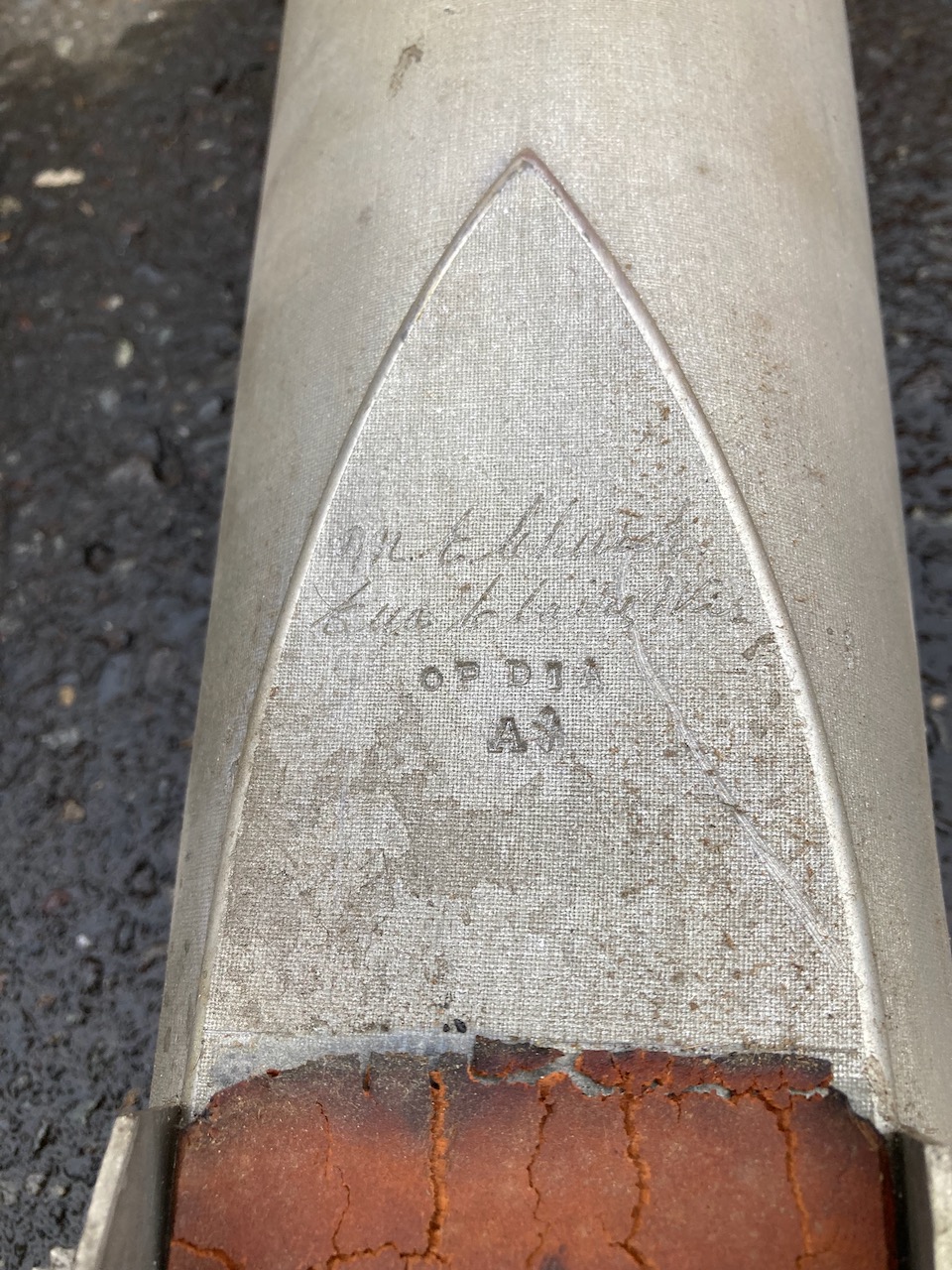
These pipes were grouped together at the back of the storage unit. At first I assumed they were one diapason-style rank, but they are in fact multiple small sets of pipes from various ranks. It is unknown at this time if they were revoiced by someone to go together as one “Frankenrank” or if they are merely individual pipes. The last pipe has an inscription on it in cursive that I can’t quite make out.
If no one has a use for these together (perhaps paint them to match and make facade pipes?), I will part them out for free for those wanting a souvenir pipe or something to use in an art project.
Pipe Ranks and Pipe Organ Components
Wurlitzer Concert Flute 4′ (incomplete)
Status: Claimed – Picked up
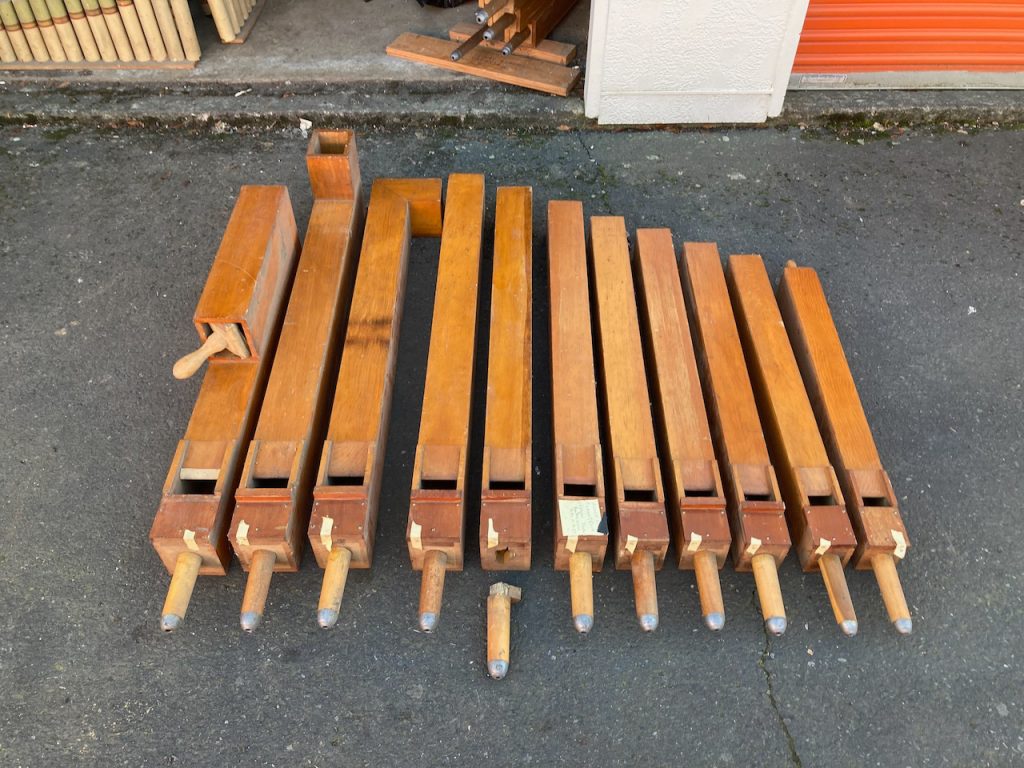
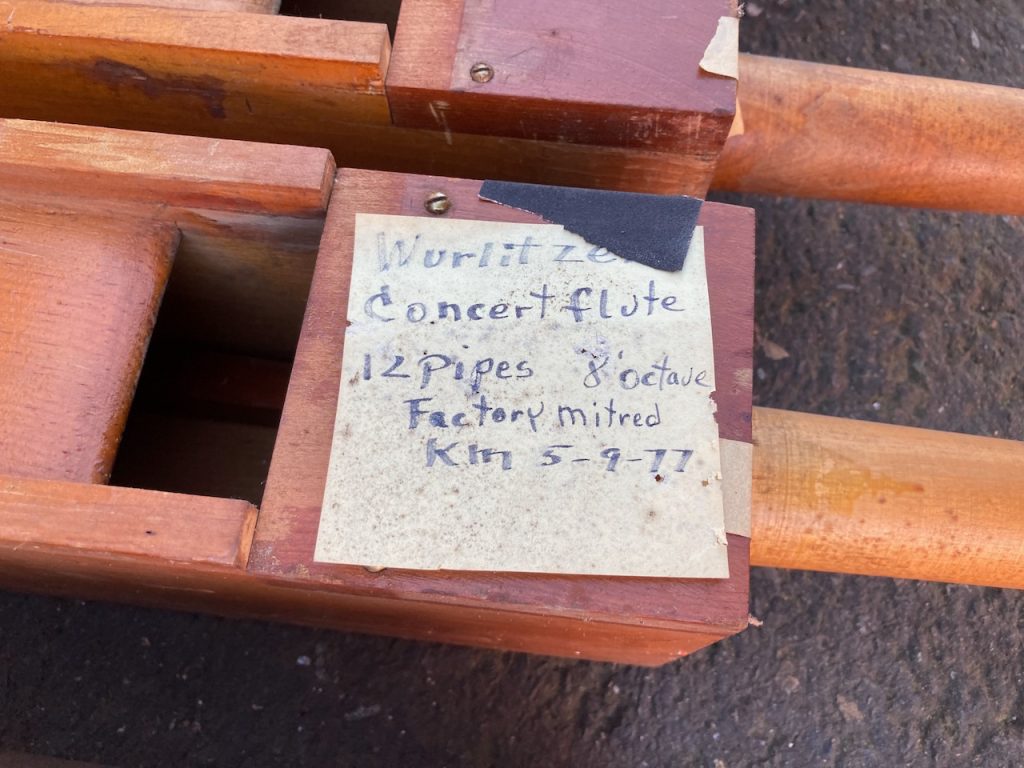
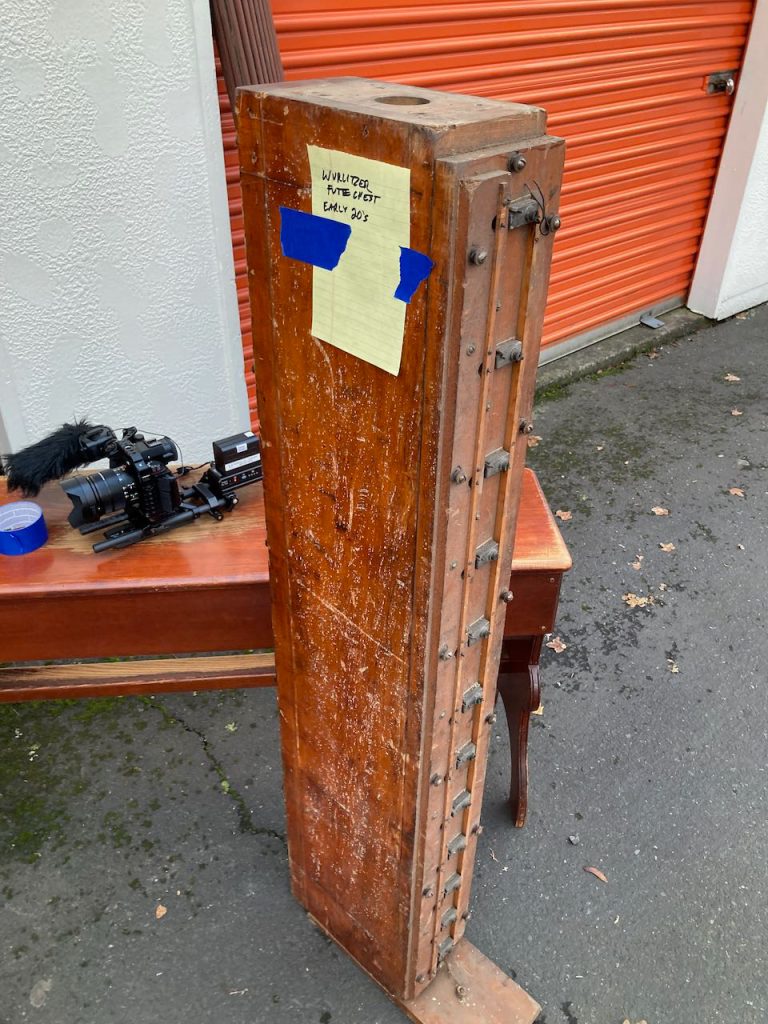
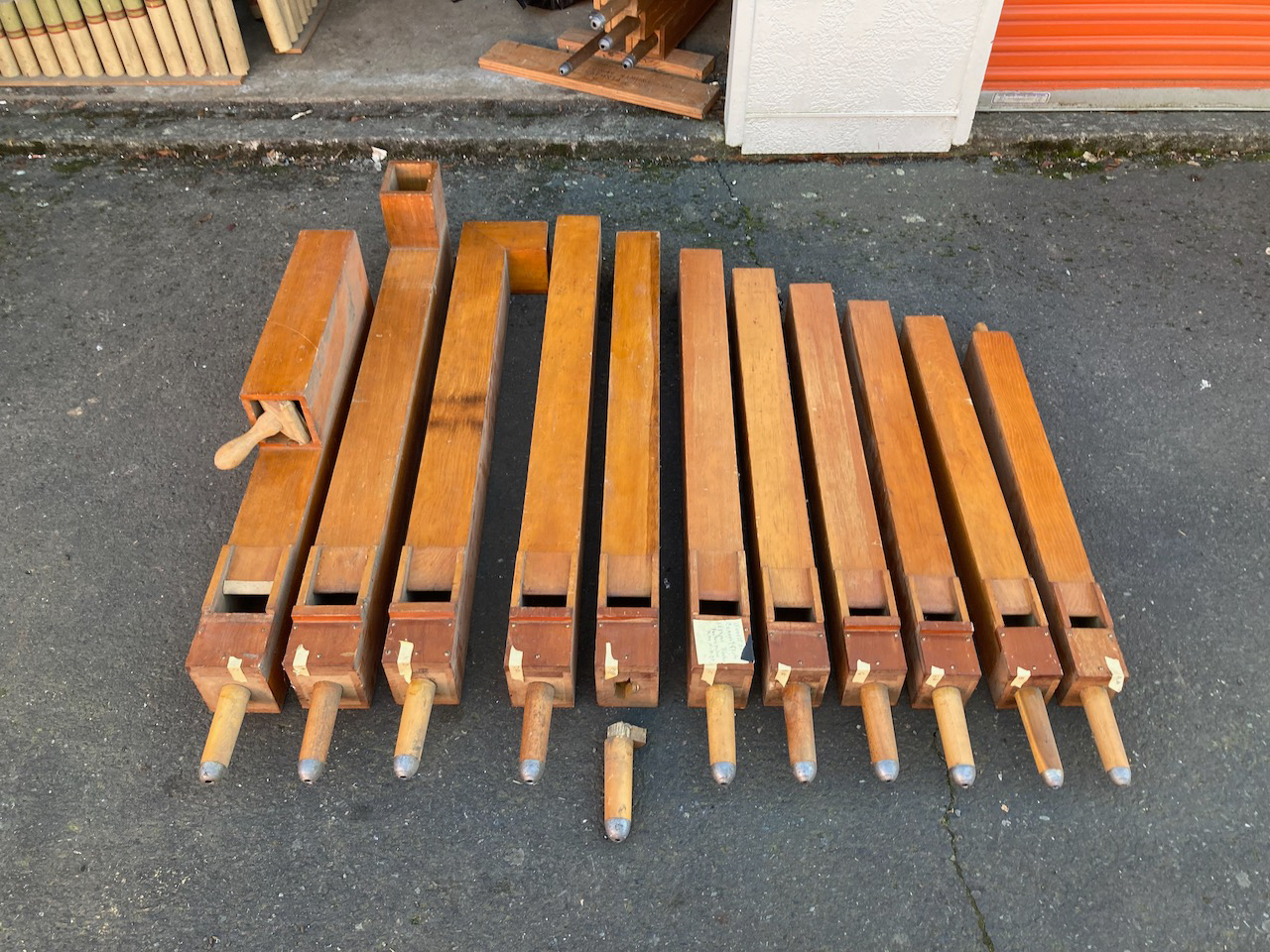
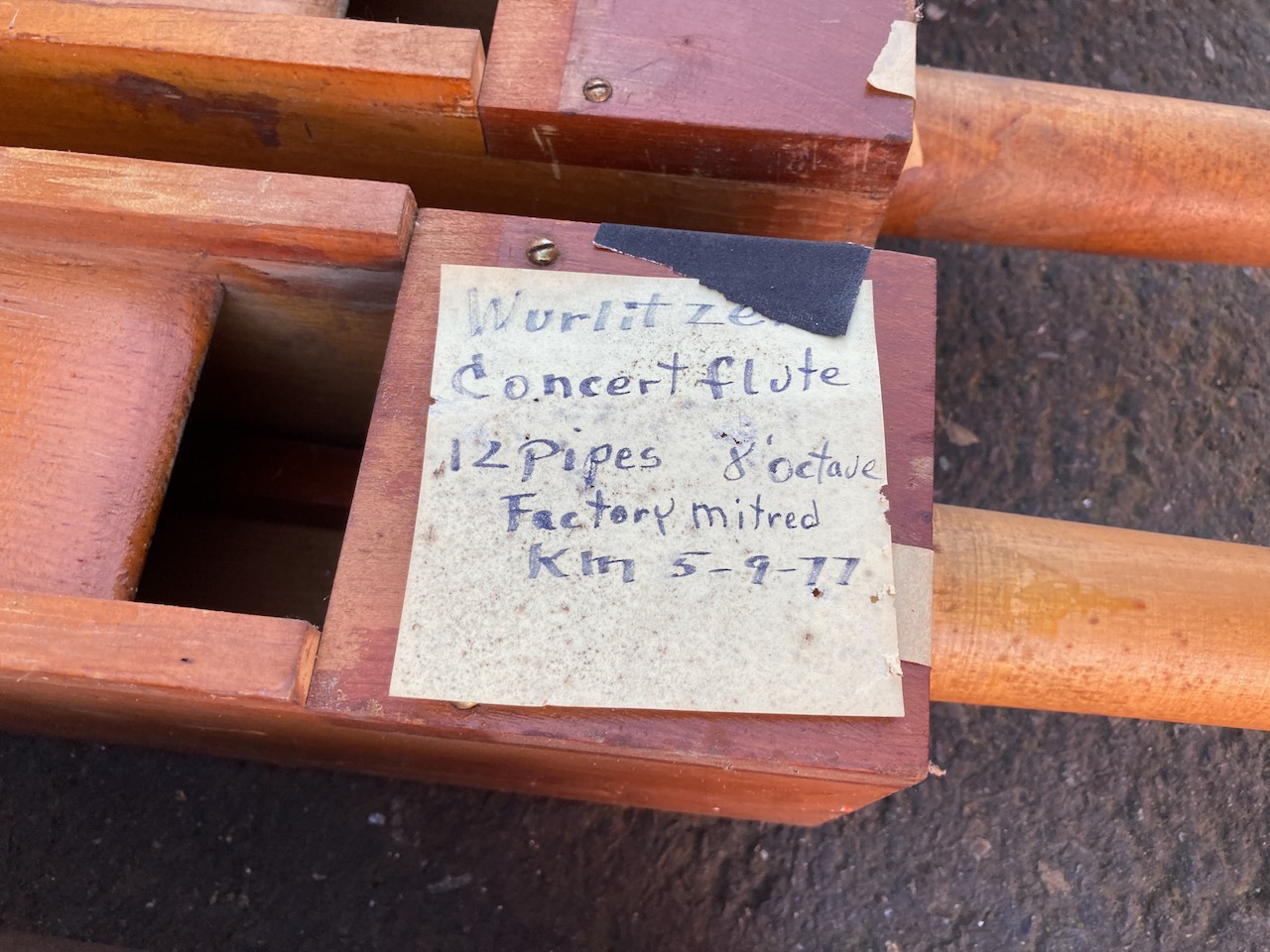
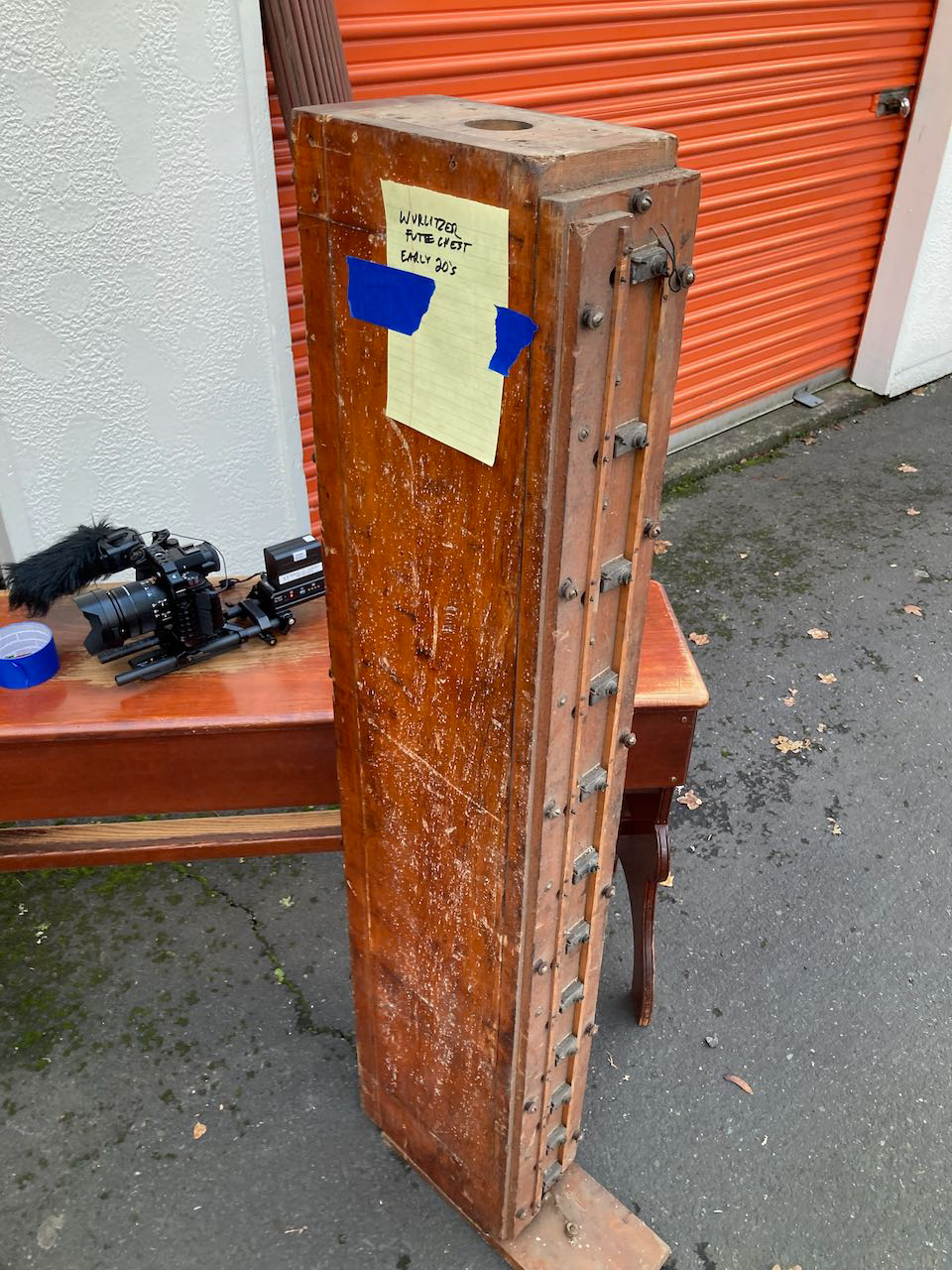
Notes: 11 pipes have been found. Some have been mitered. A note attached to one of the pipes indicates that there may have been 12, but the 12th has not turned up. Also in the storage unit is a Wurlitzer flute chest. (It is unknown at this time if the chest belongs with these pipes.)
Contra Bass 8′ (incomplete)
Status: Claimed – Picked up
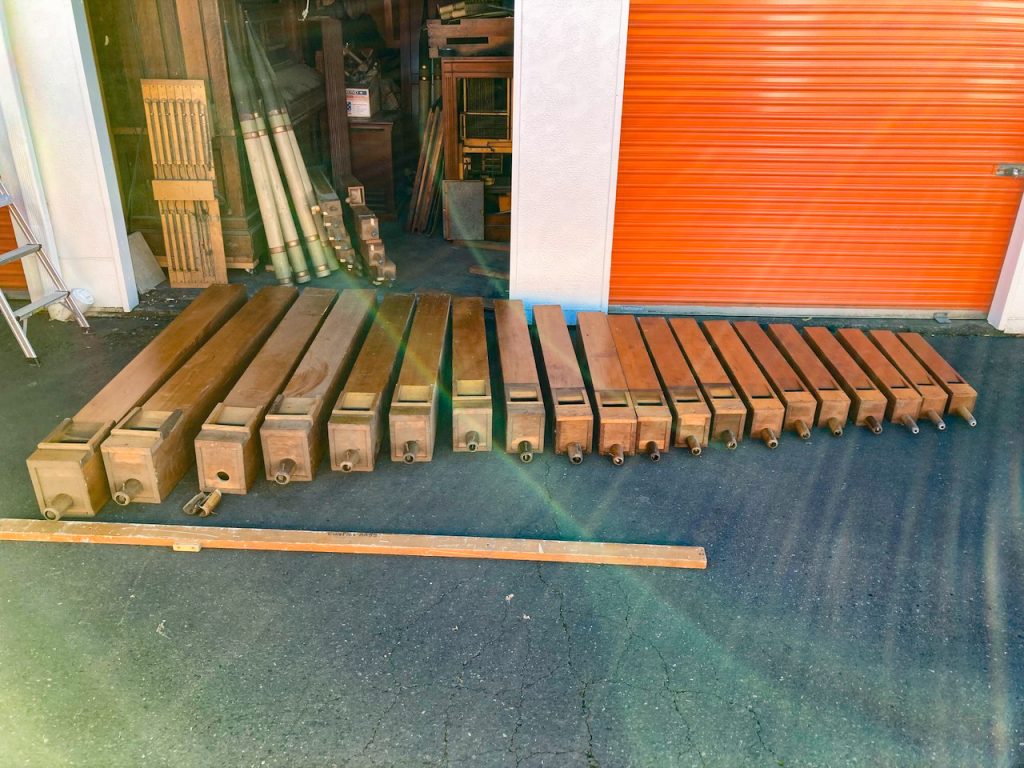
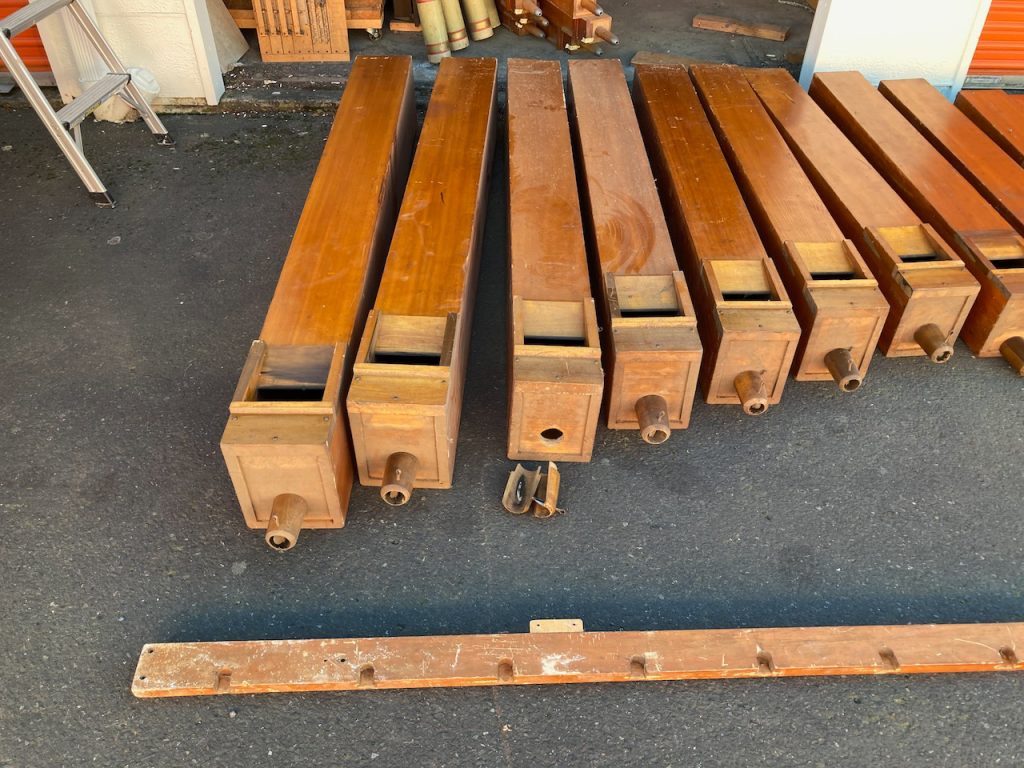
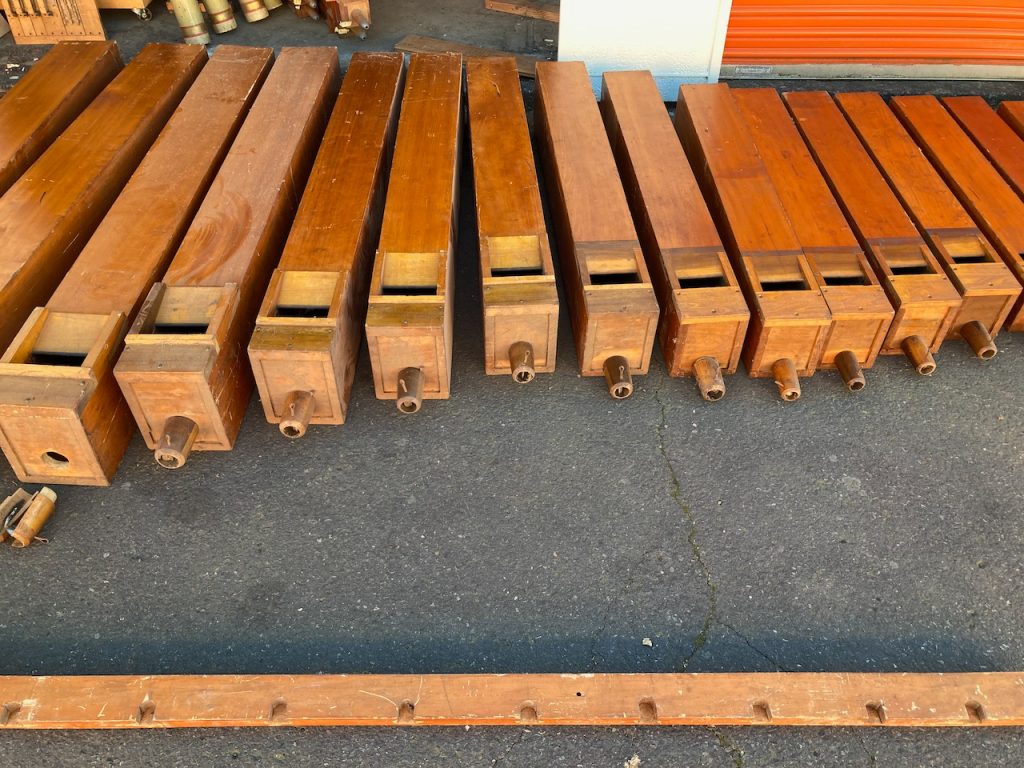
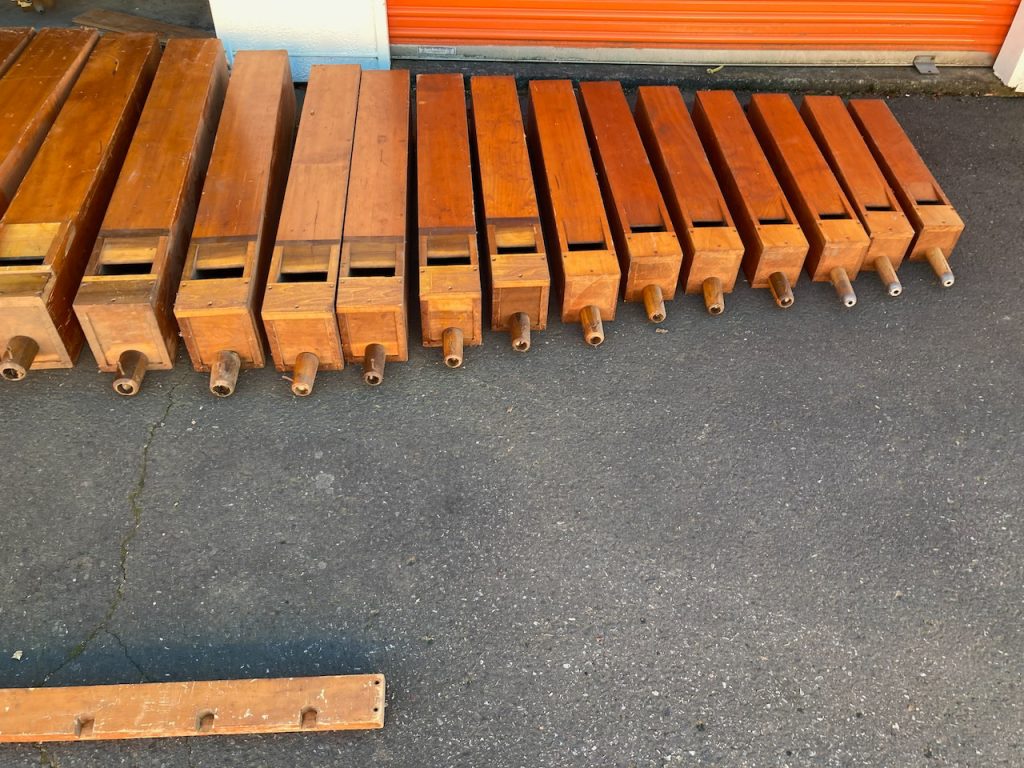
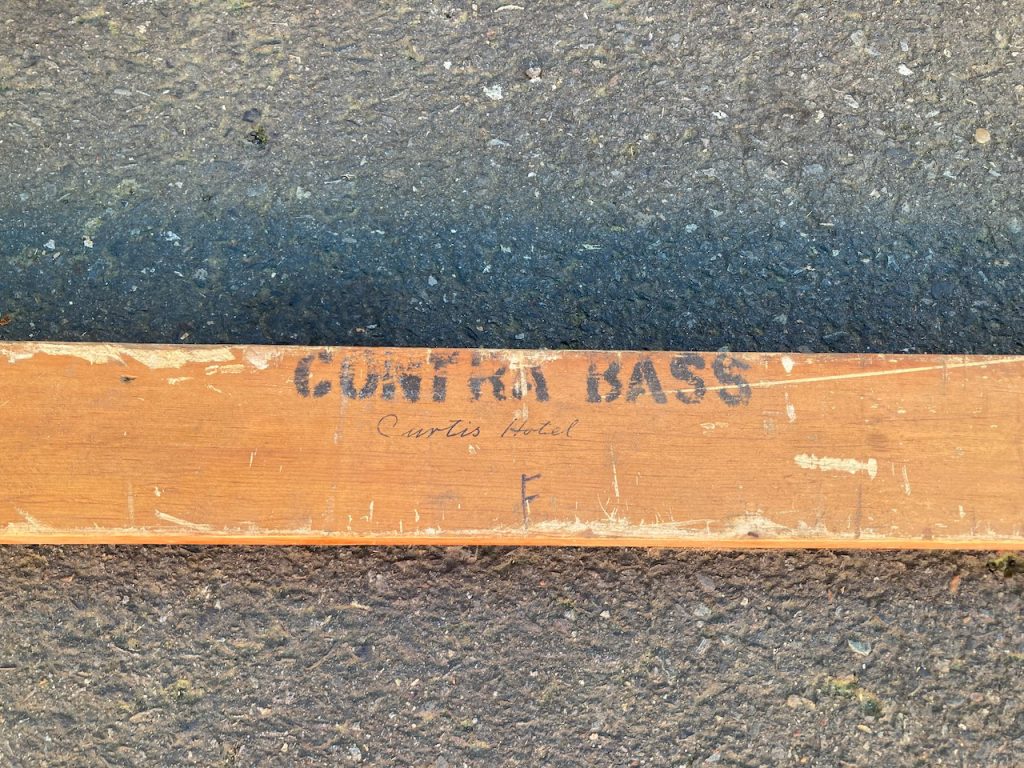
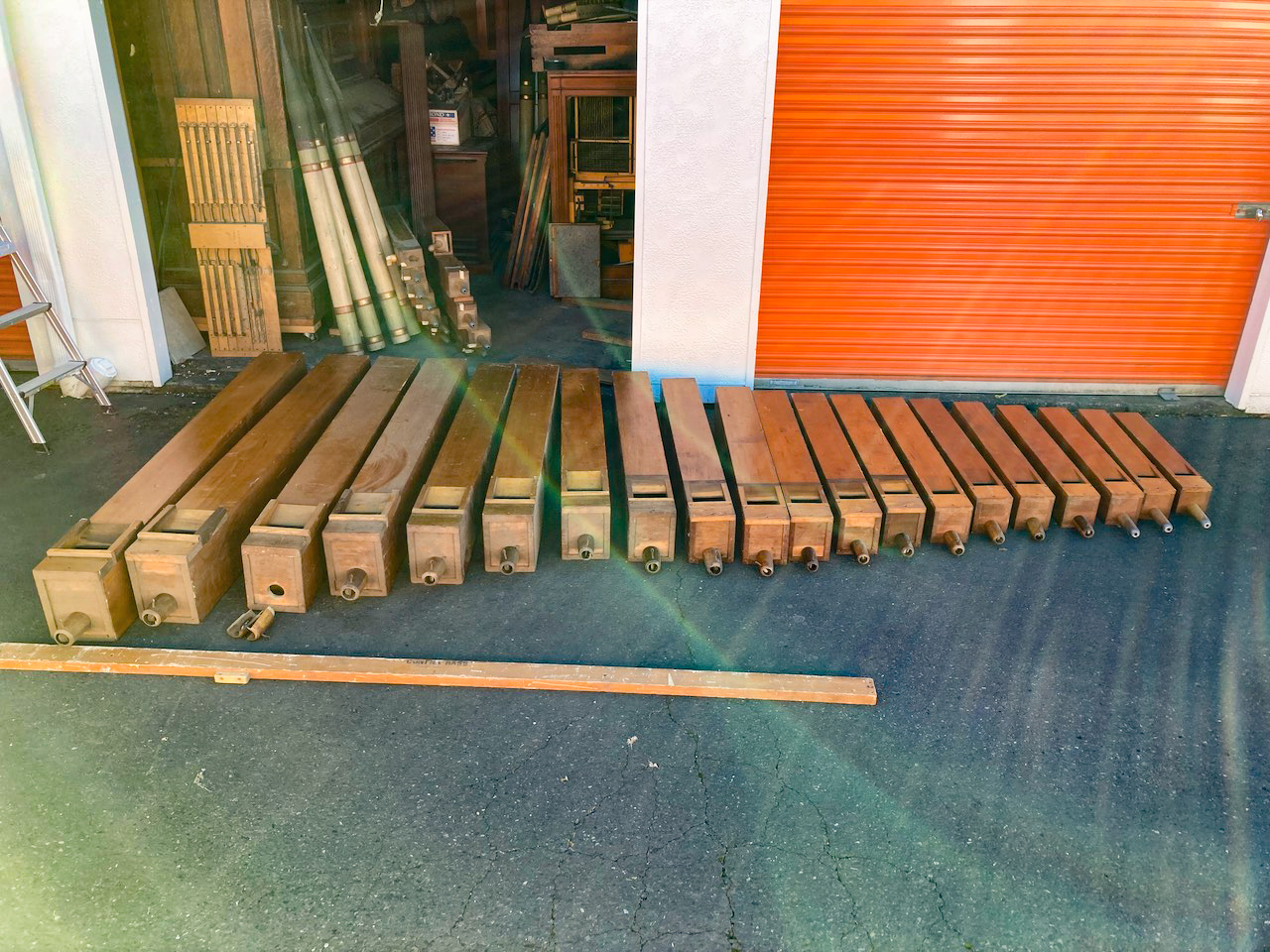
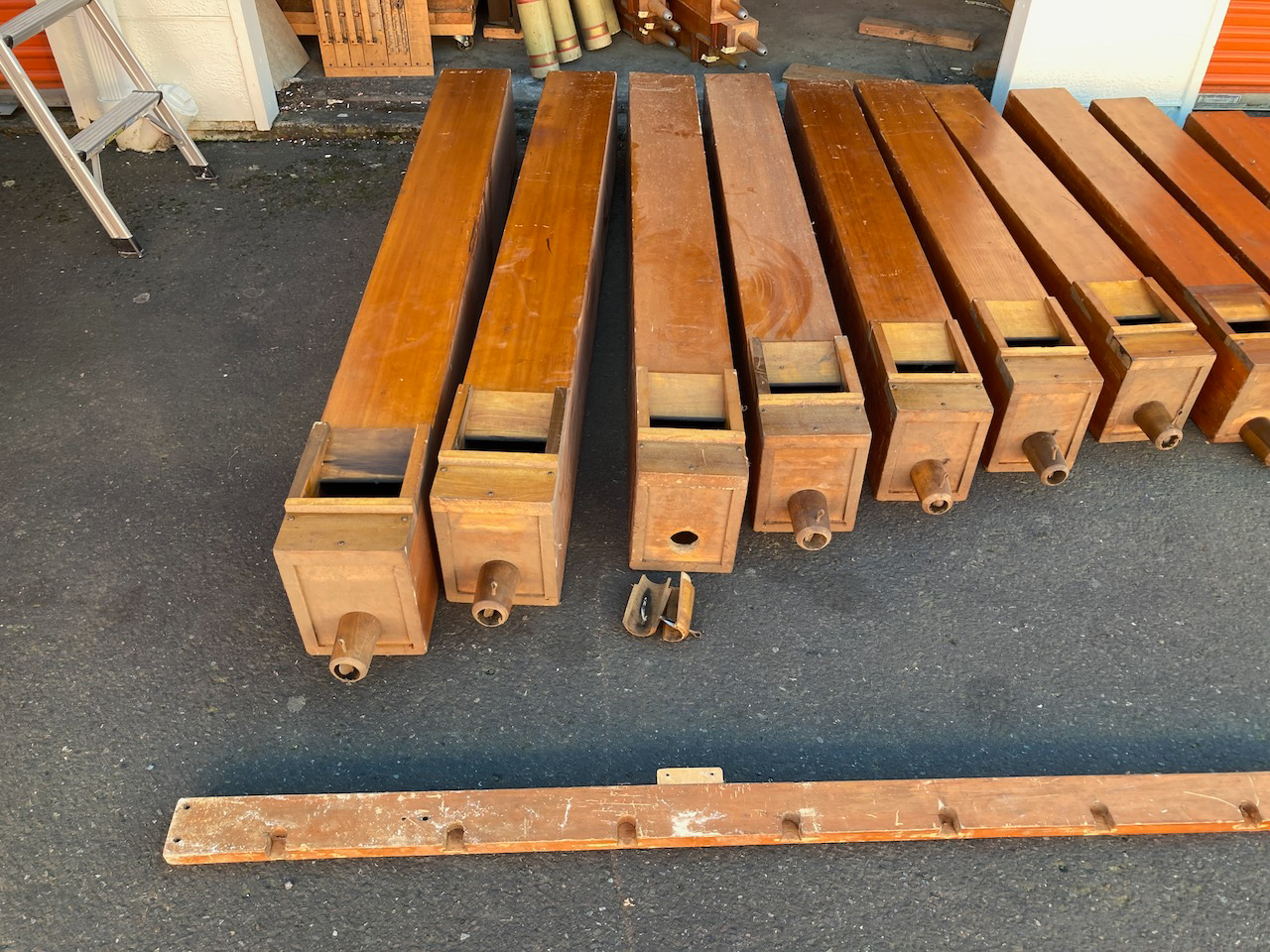
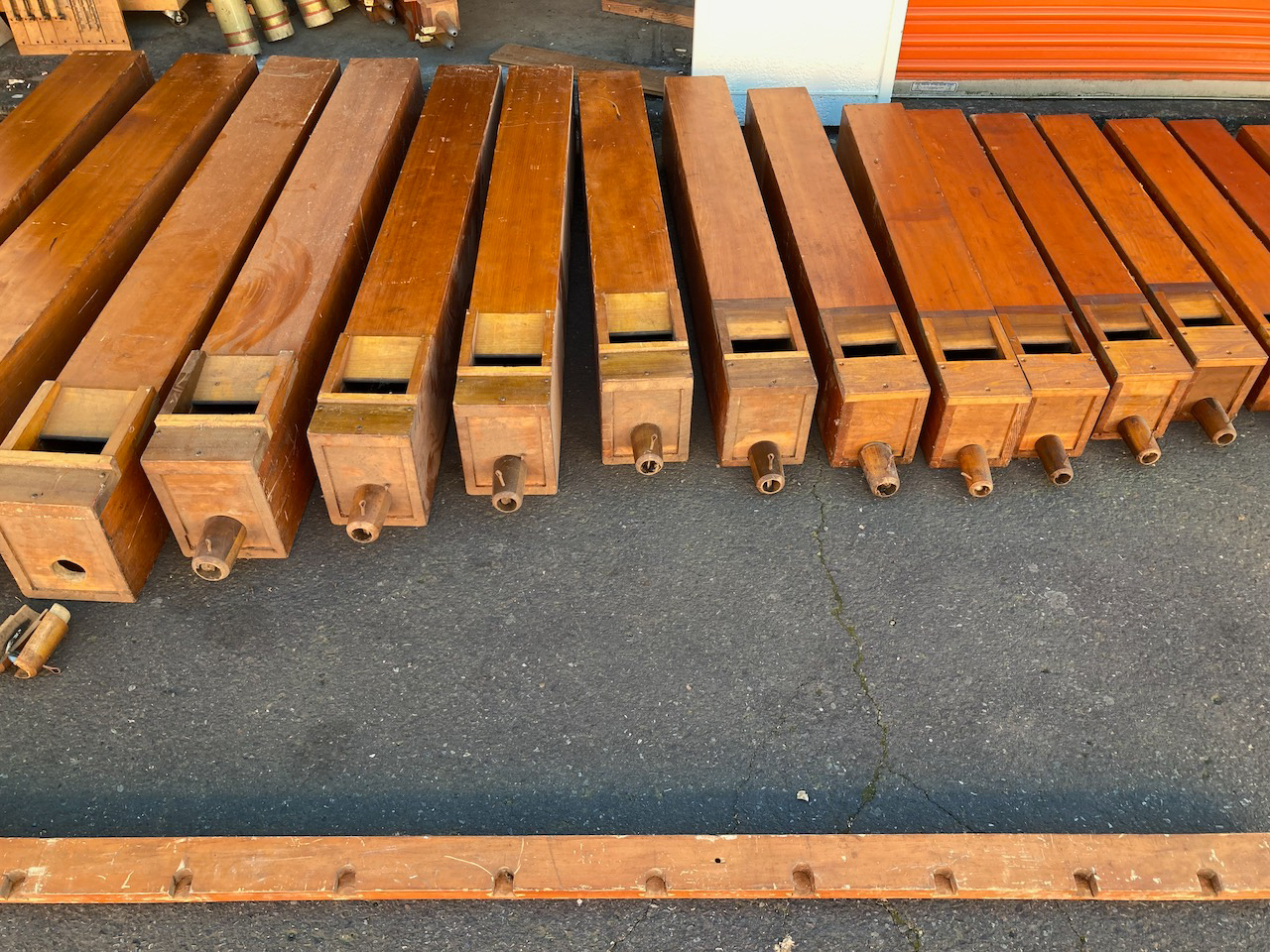
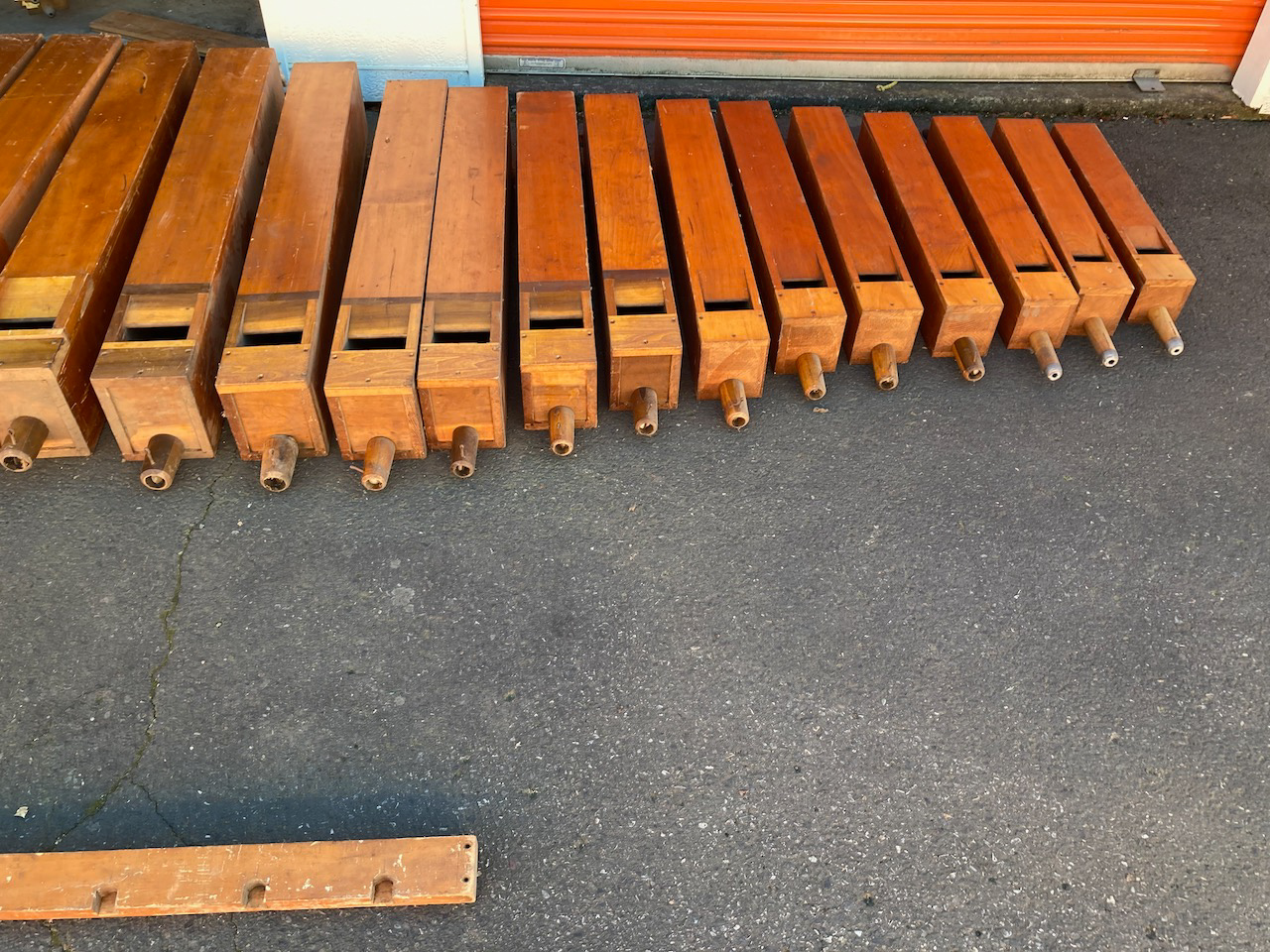
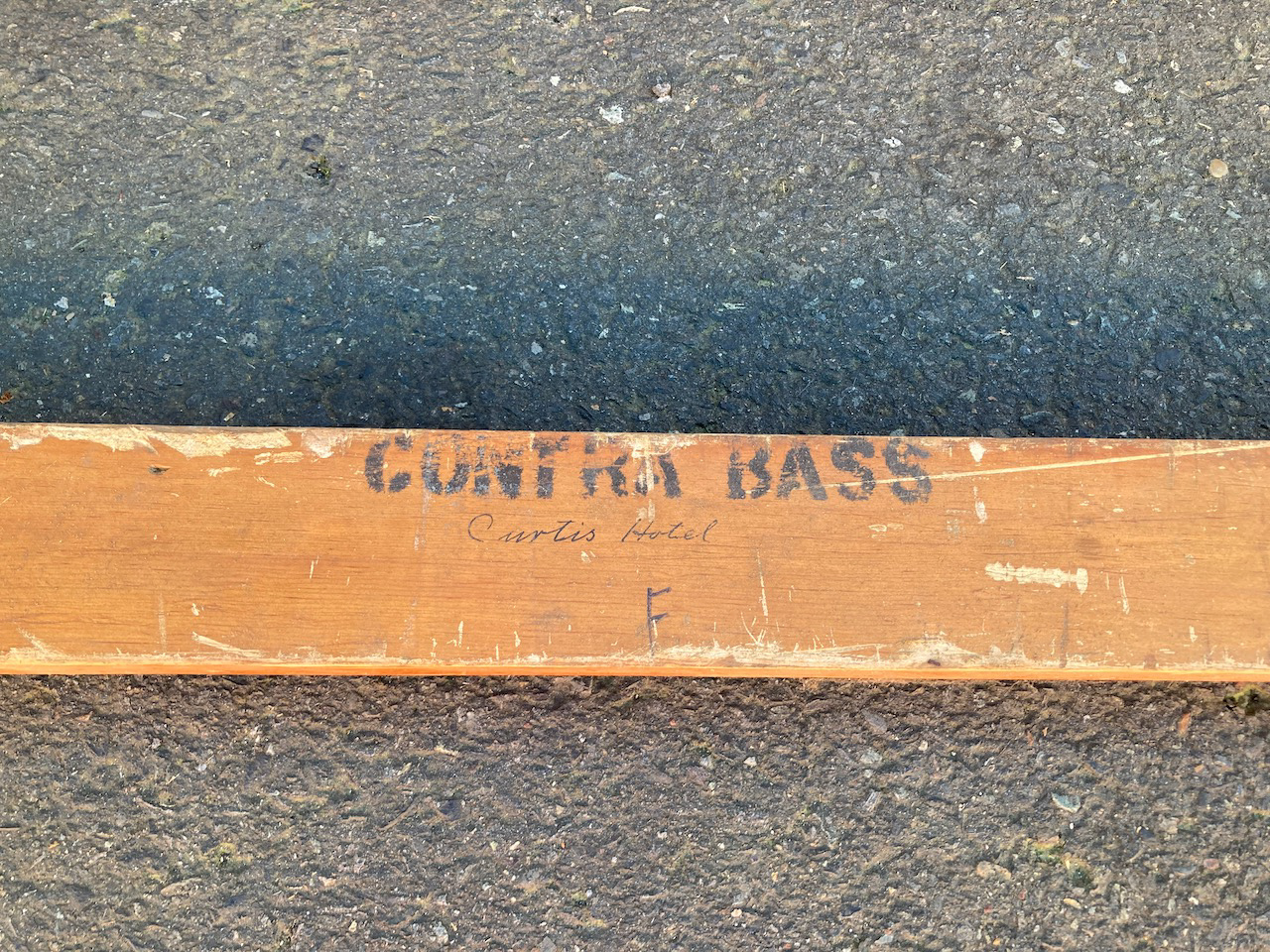
Notes: This rank consists of 20 pipes. It is missing the lowest four notes, C through D#. The rack board indicates that this came from the “Curtis Hotel”. It has been confirmed that these came from the Curtis Hotel in Minneapolis, which was demolished in 1980, and had a Kimball pipe organ. (There was also a Curtis hotel in Portland, but these pipes didn’t come from there.) https://www.pipeorganlist.org/OrganList/data_mn/MN-MplsCurtisHotelBallroom-KIMBALL-1920.html
Unknown Rank A
Status: On hold, in case this goes with something else
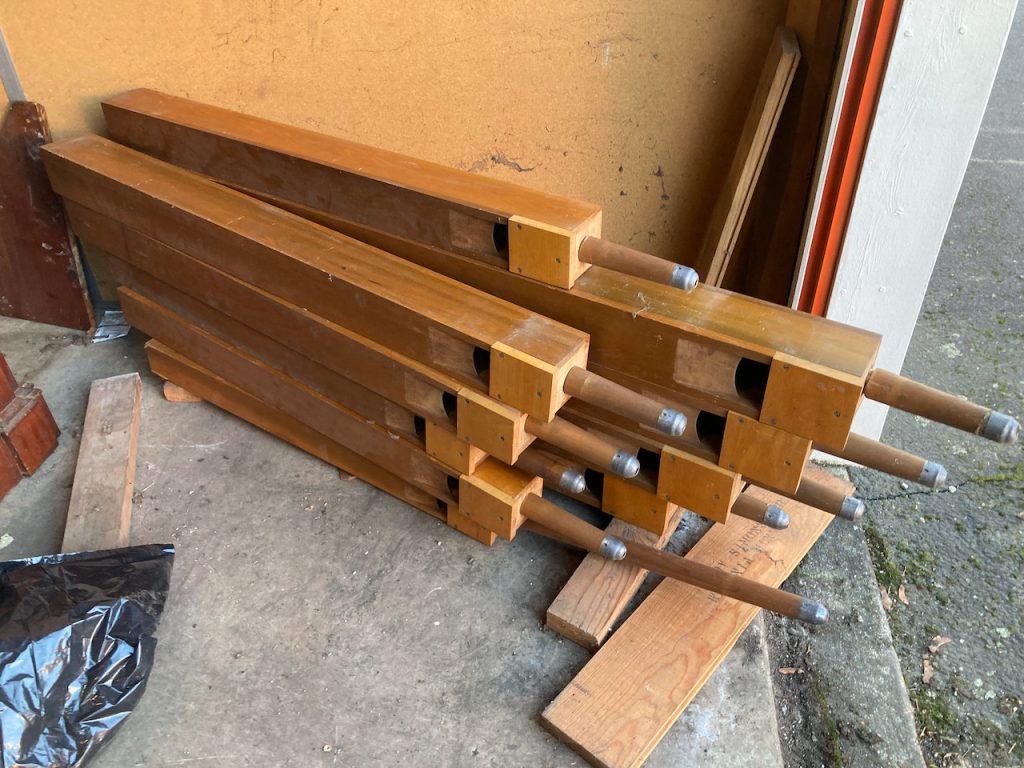
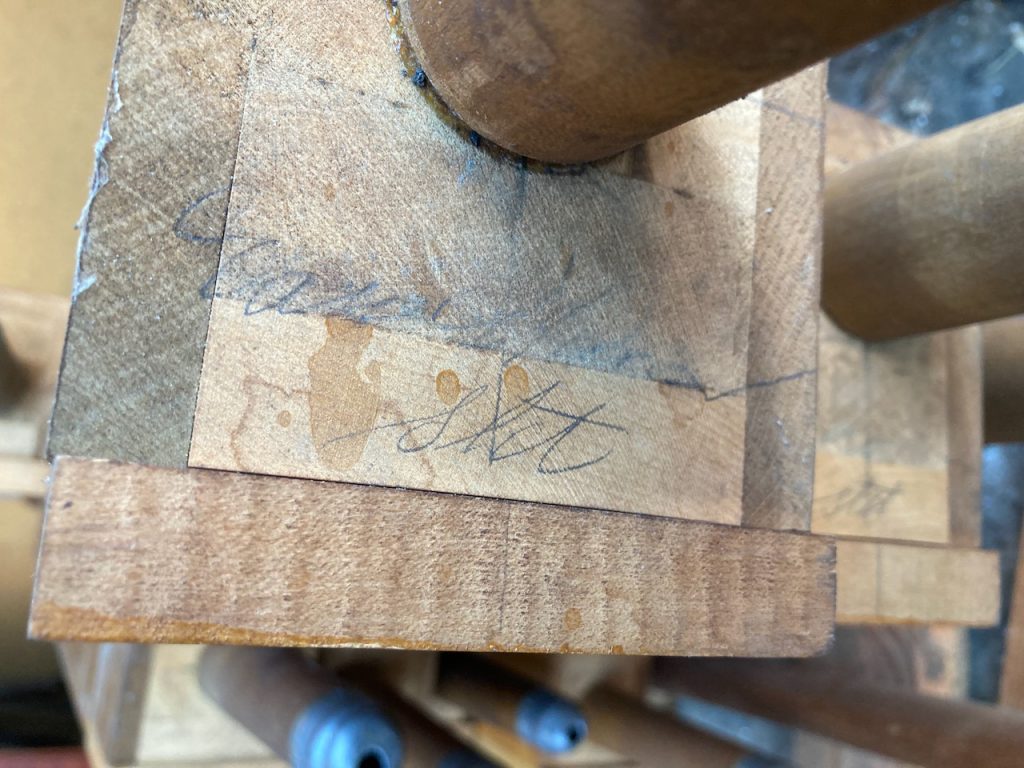
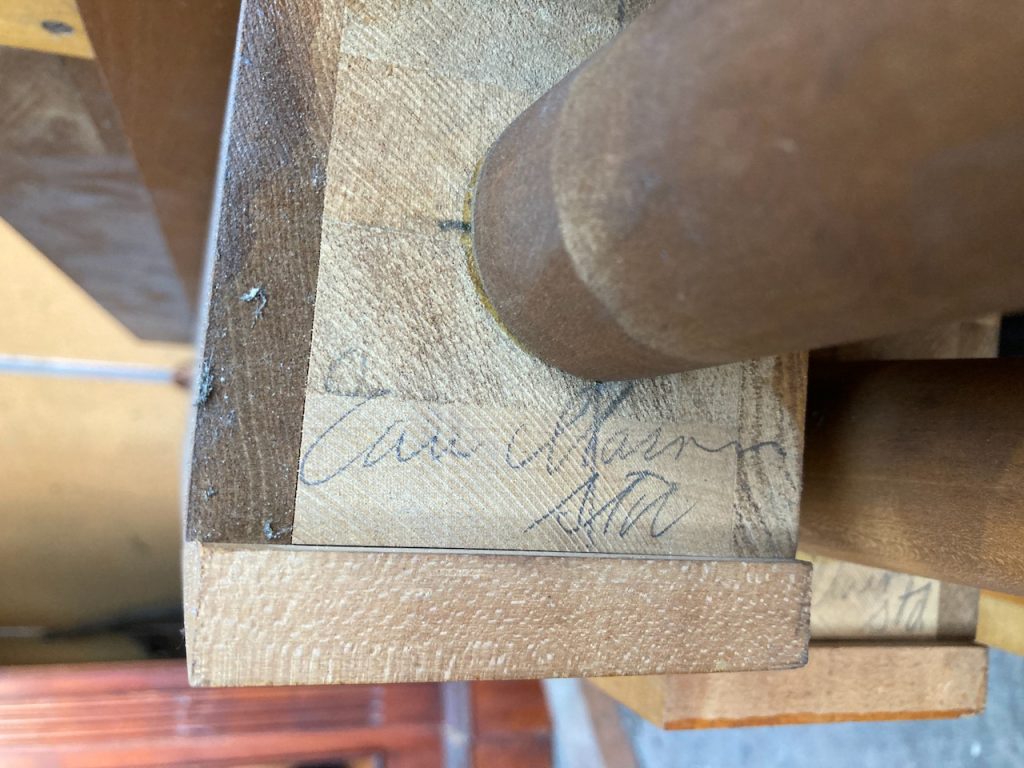
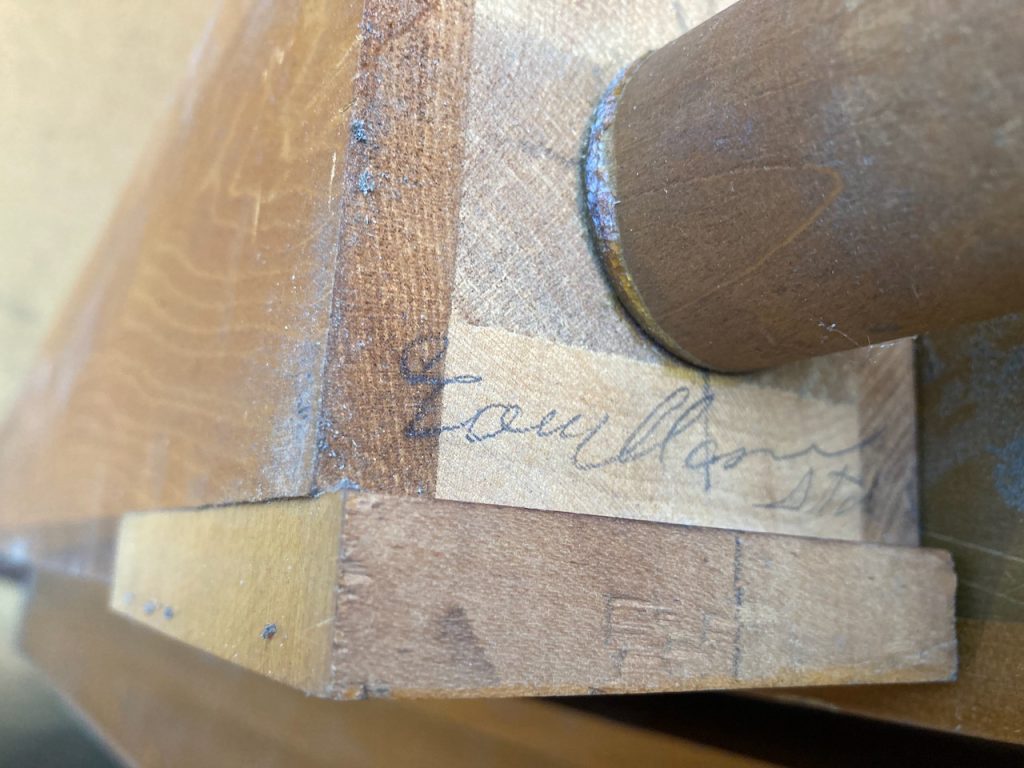
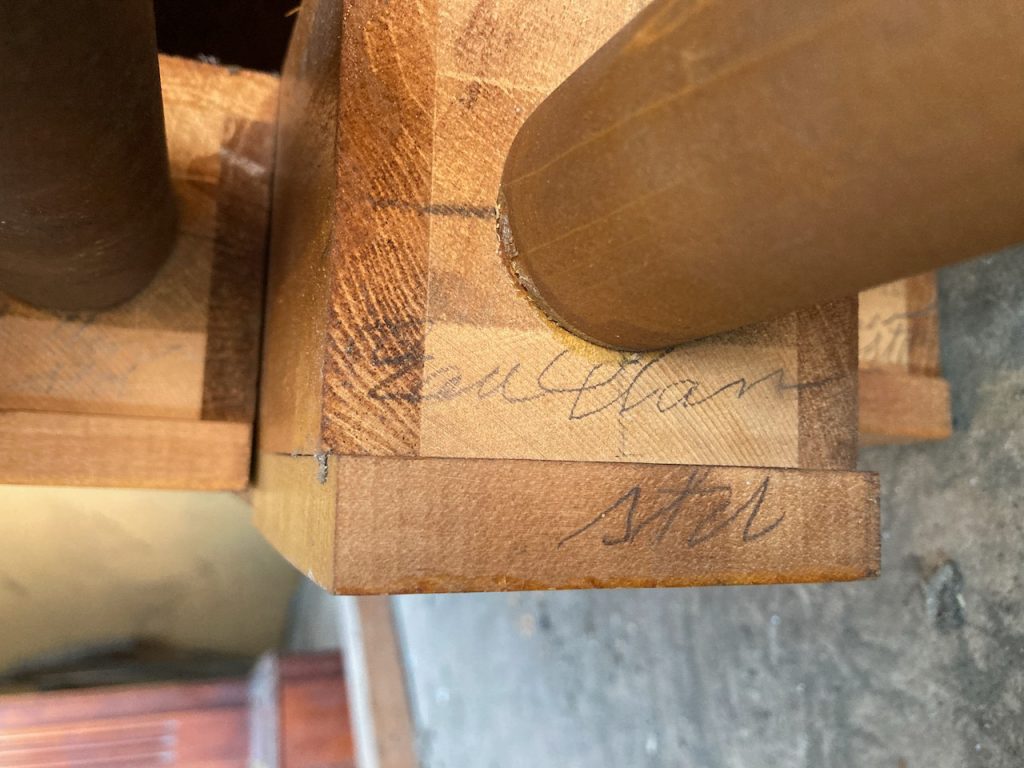
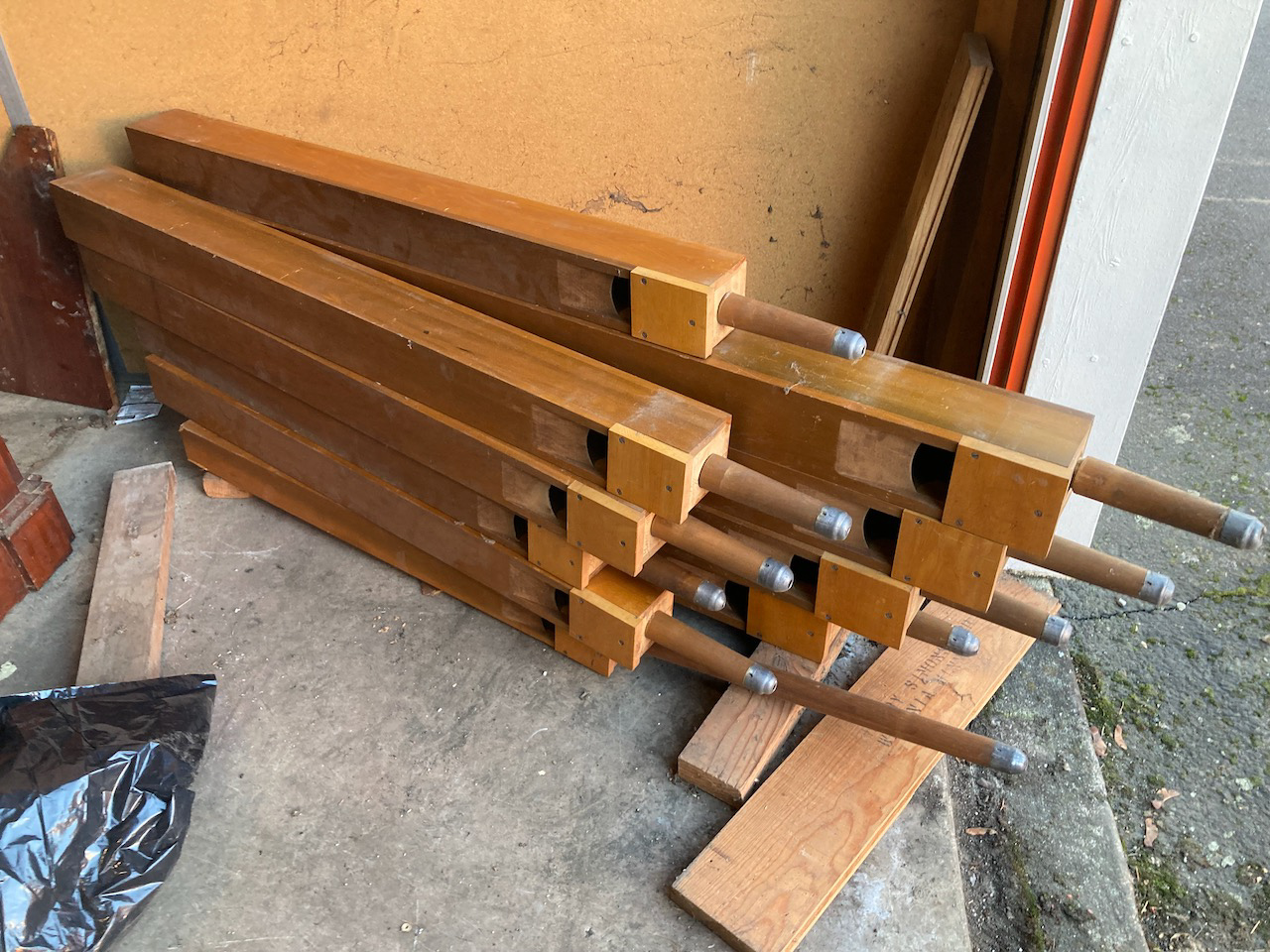
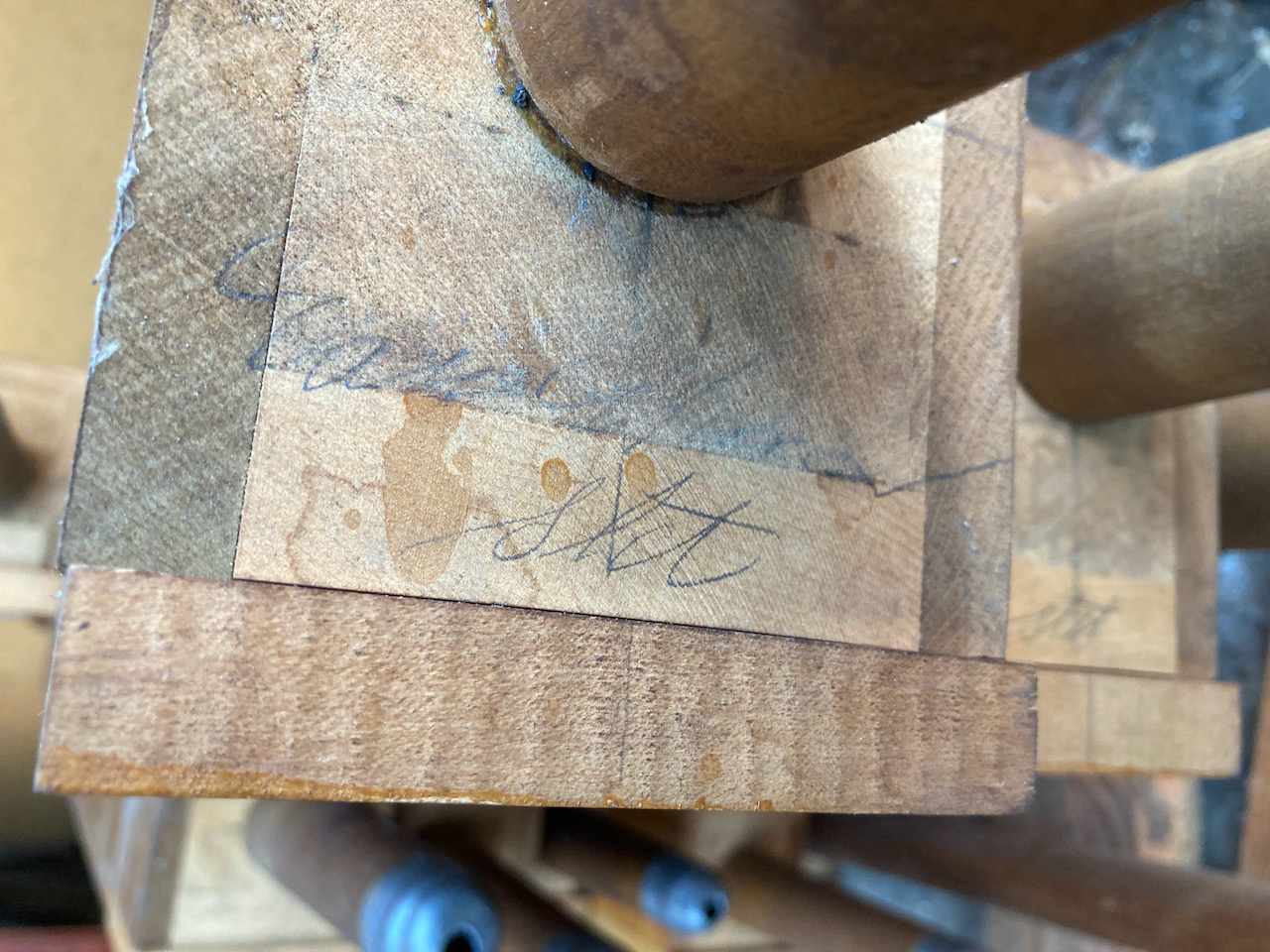
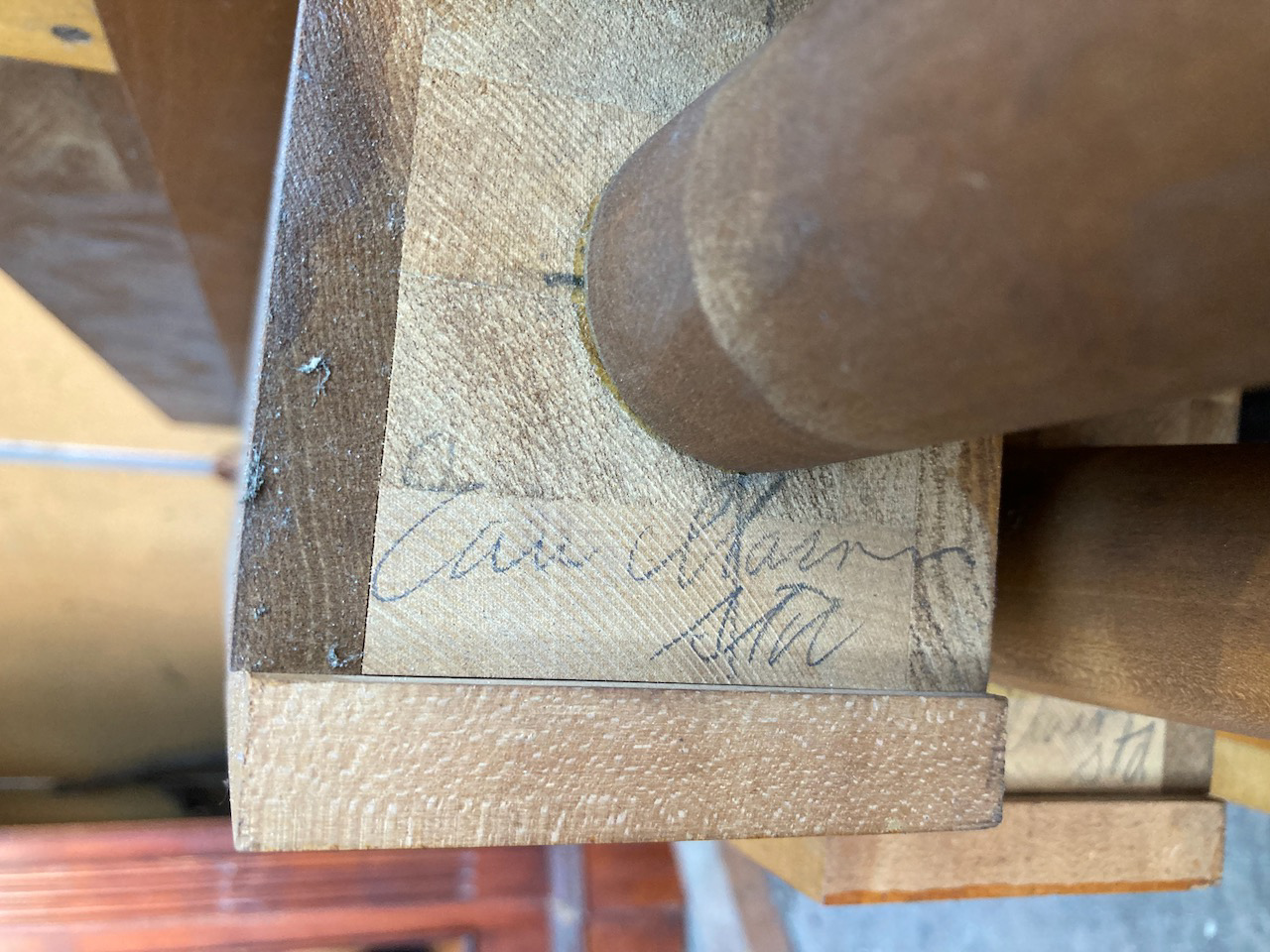
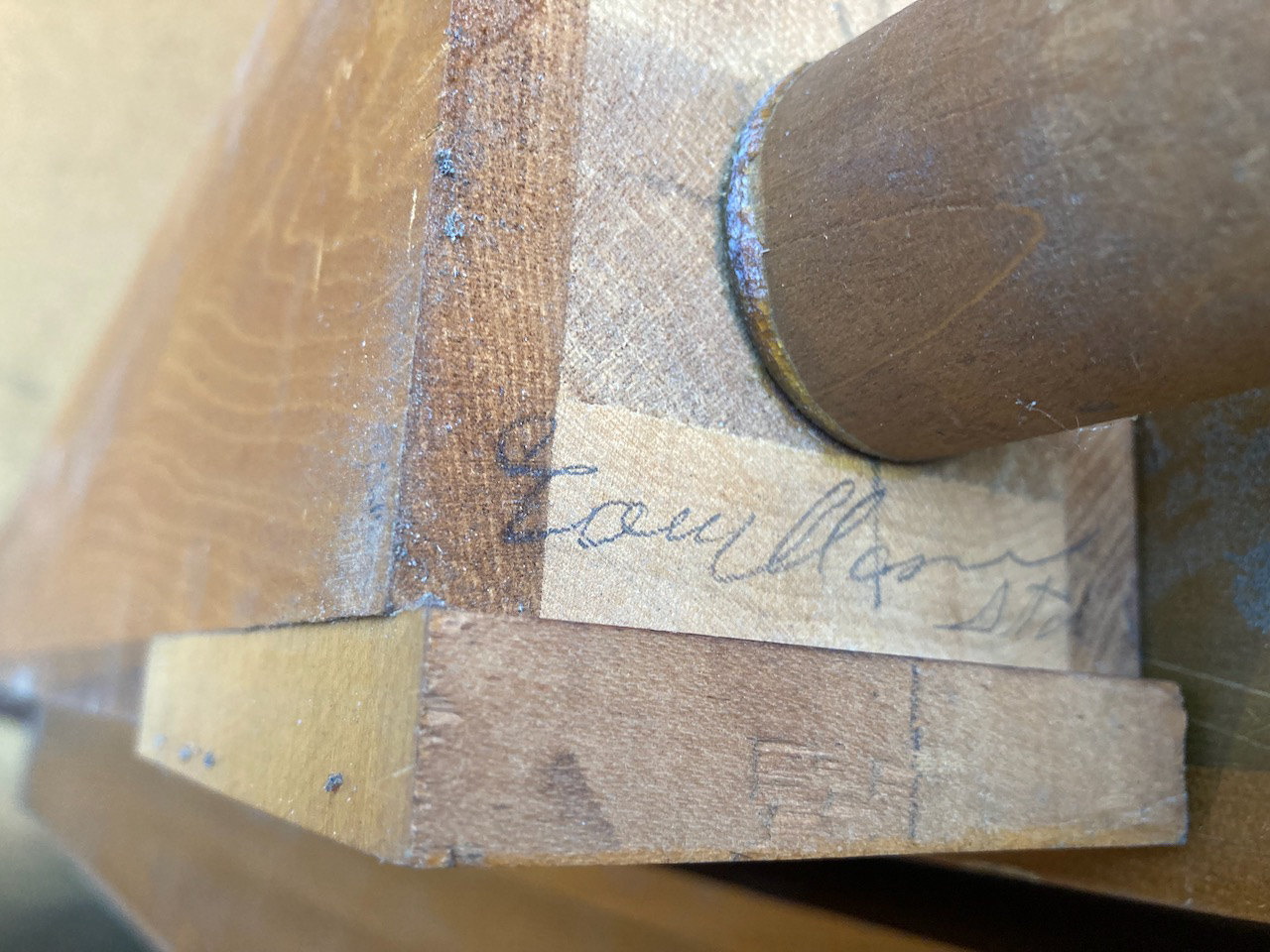
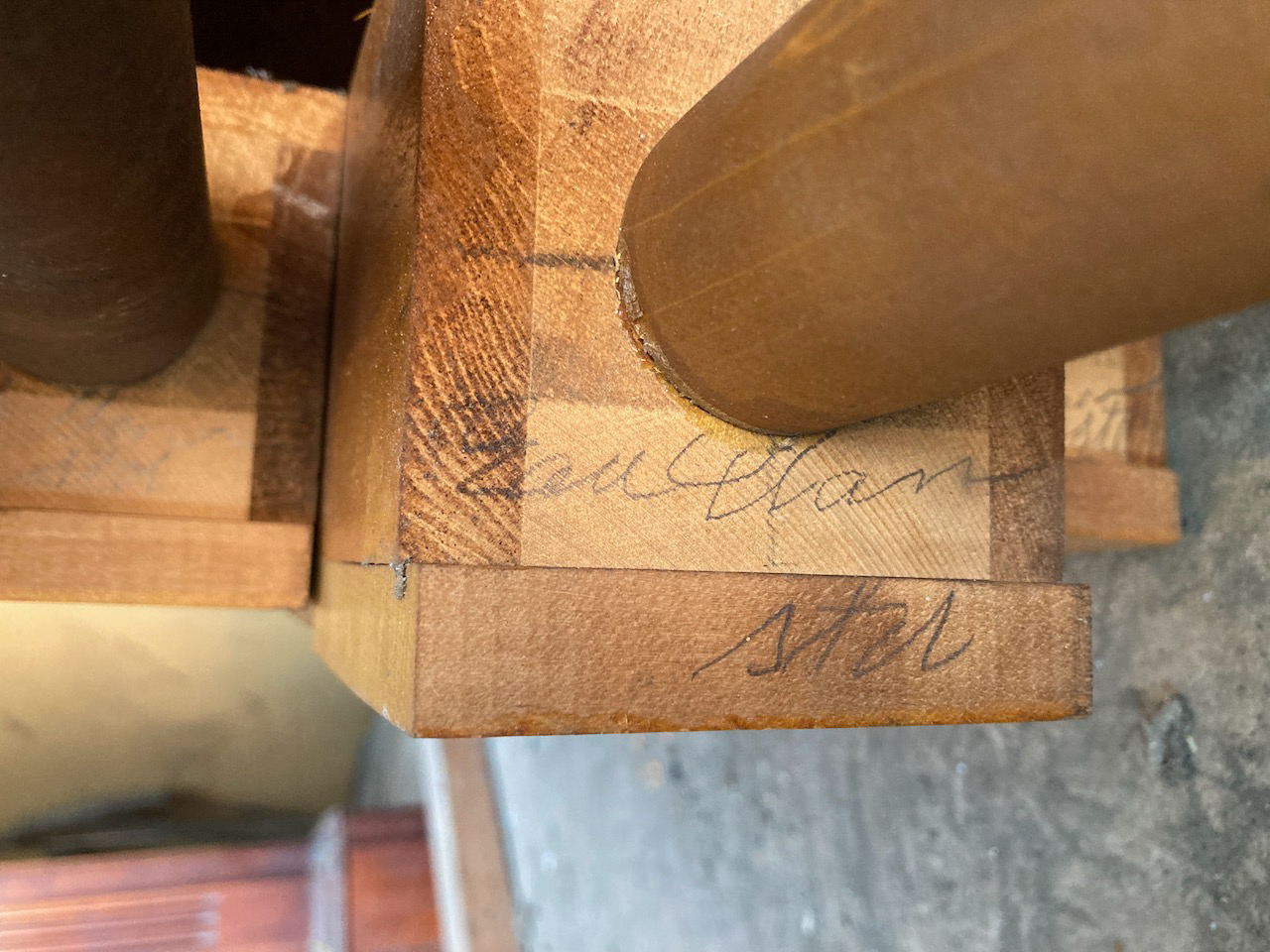
Notes: This set of 10 pipes was stored against the Compensating Organ Co. instrument. Just in case these were meant to go with it (perhaps they were modified to work with it), they are being held until that can be determined. However, cursive writing on the bottom of the pipes says “Eau Claire”, which could indicate these came from a venue in Wisconsin, and Paul had connections to the region.
Pedalboard
Status: Claimed – Picked up
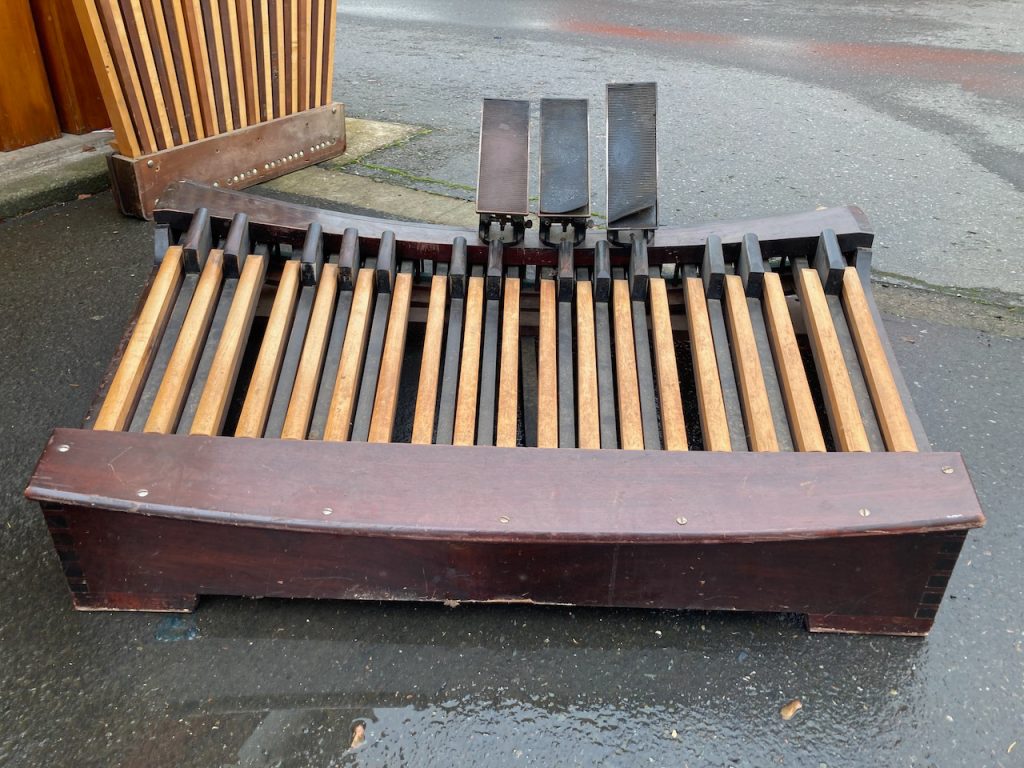
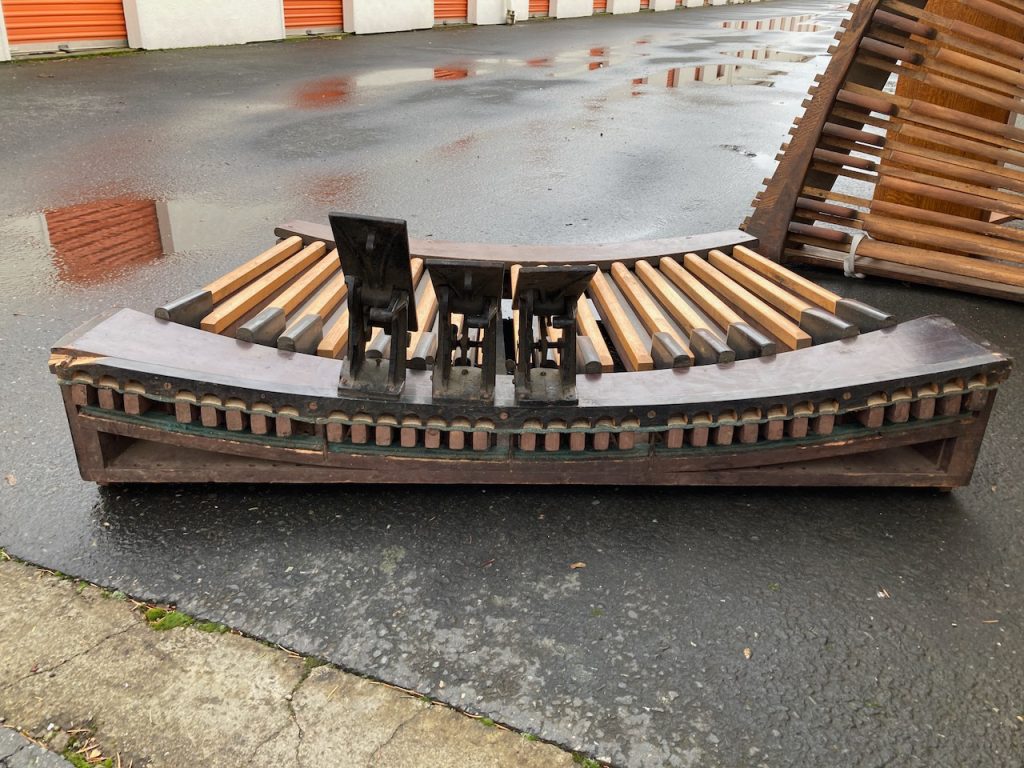
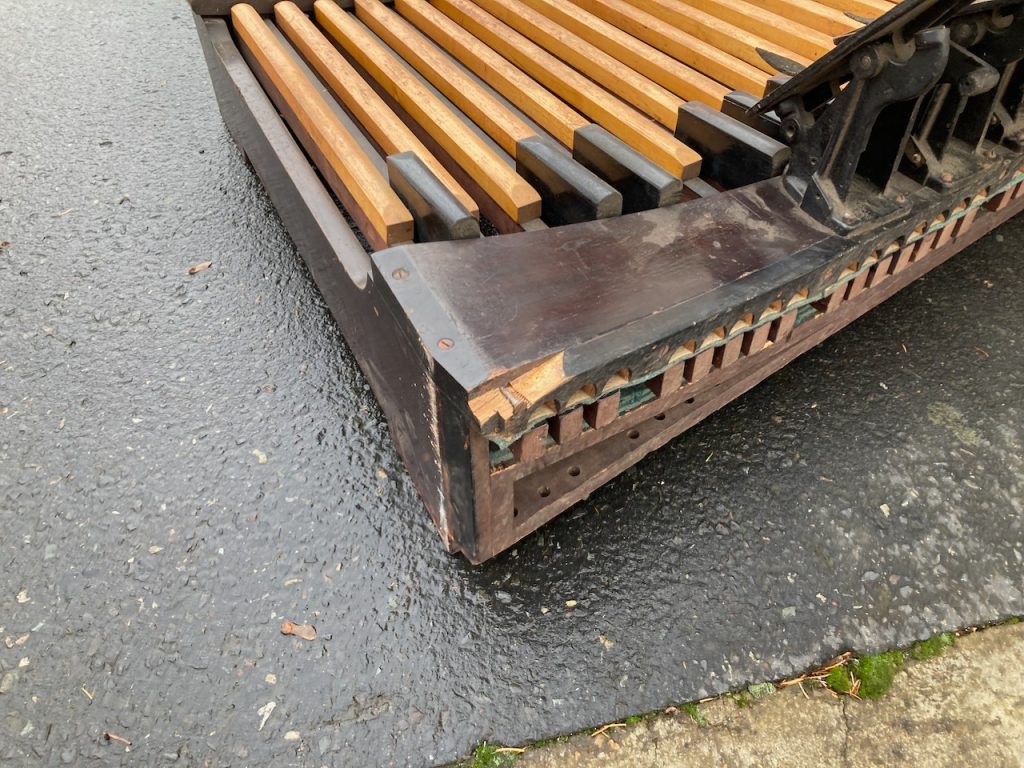
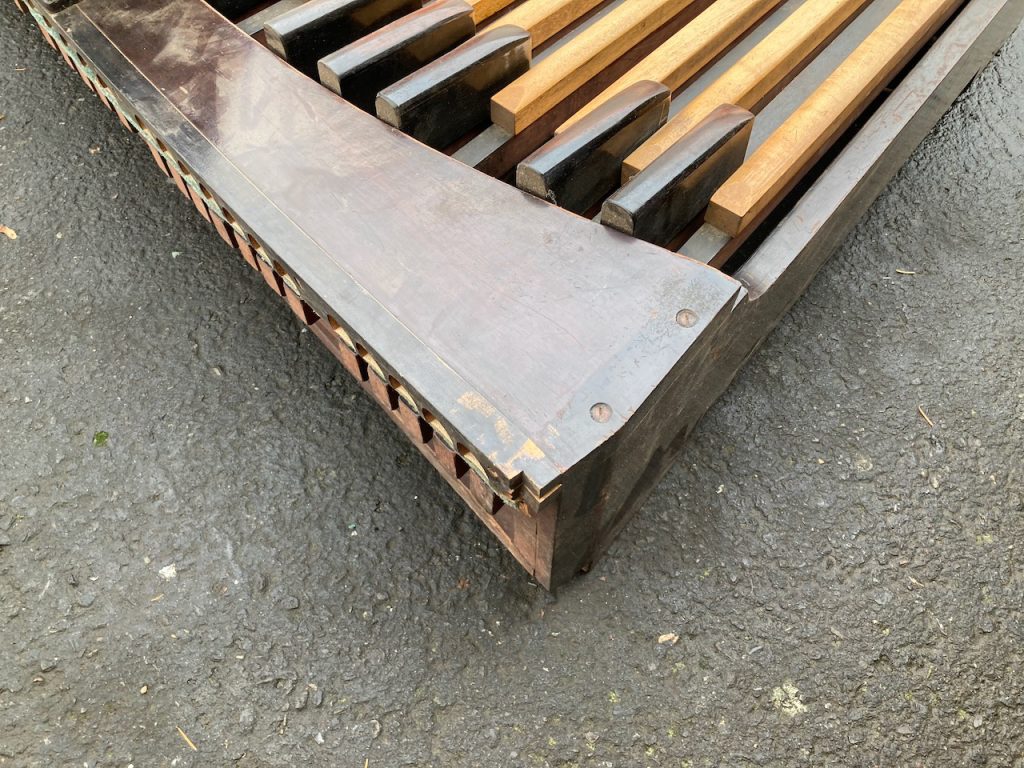
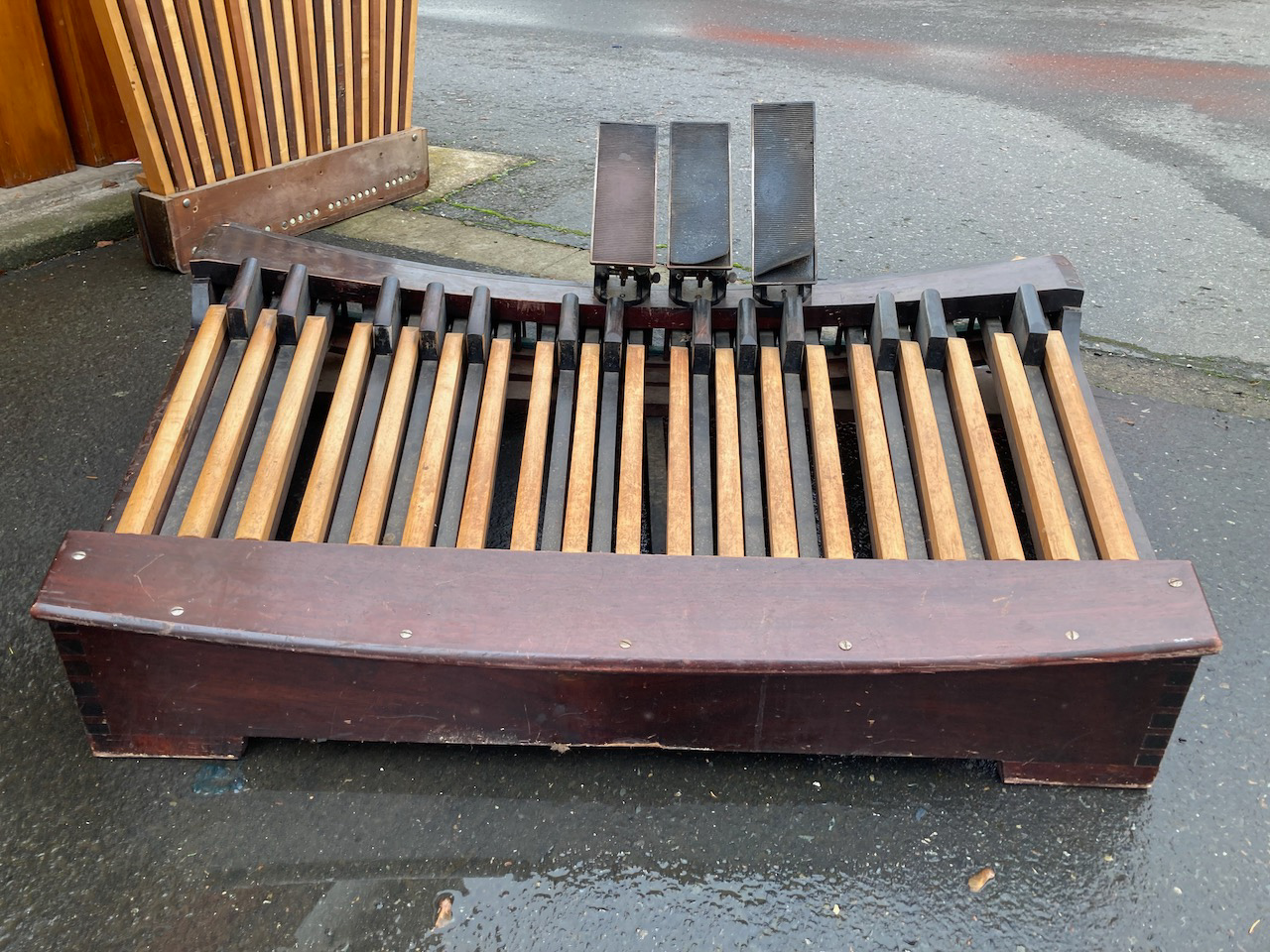
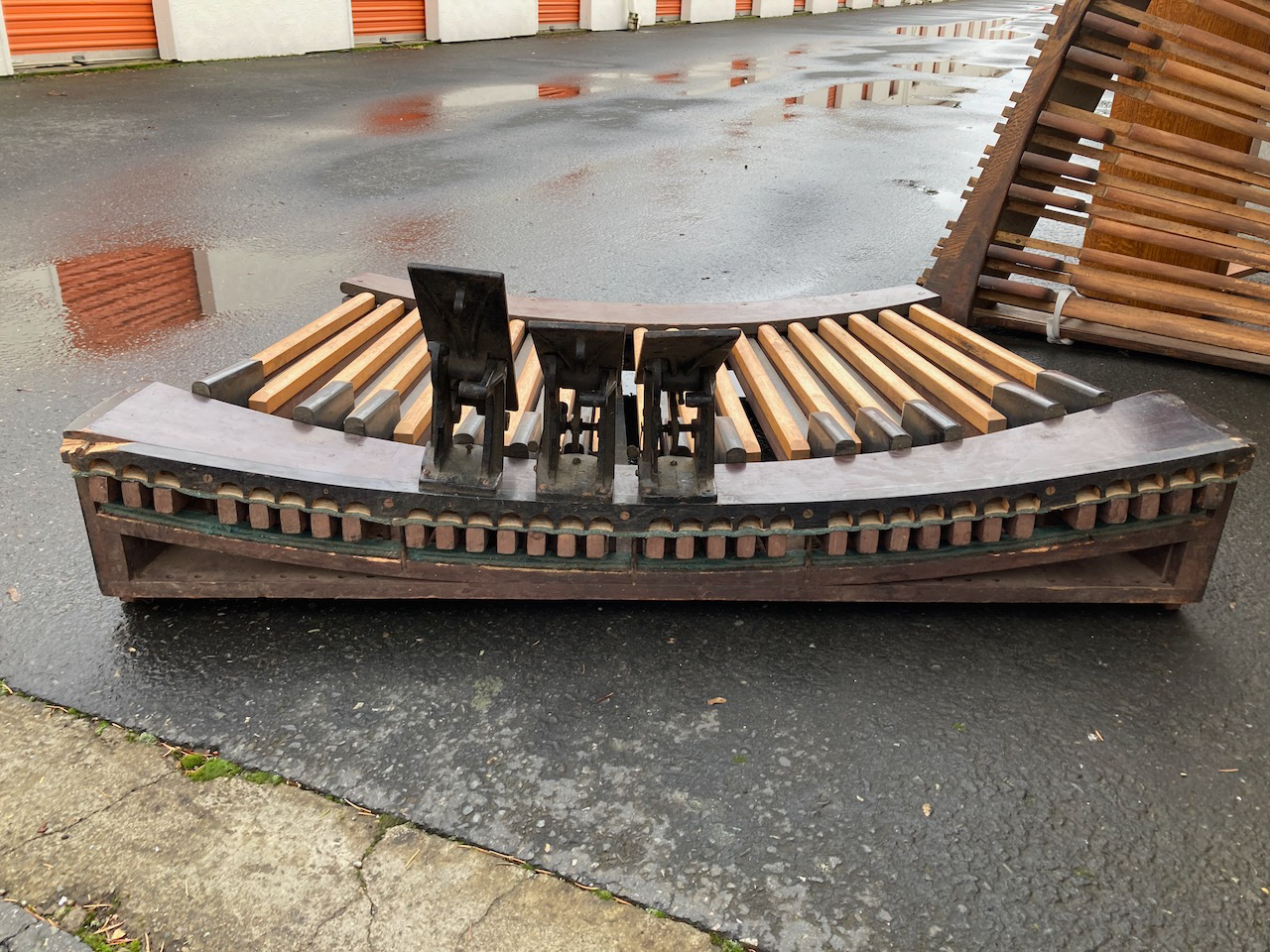
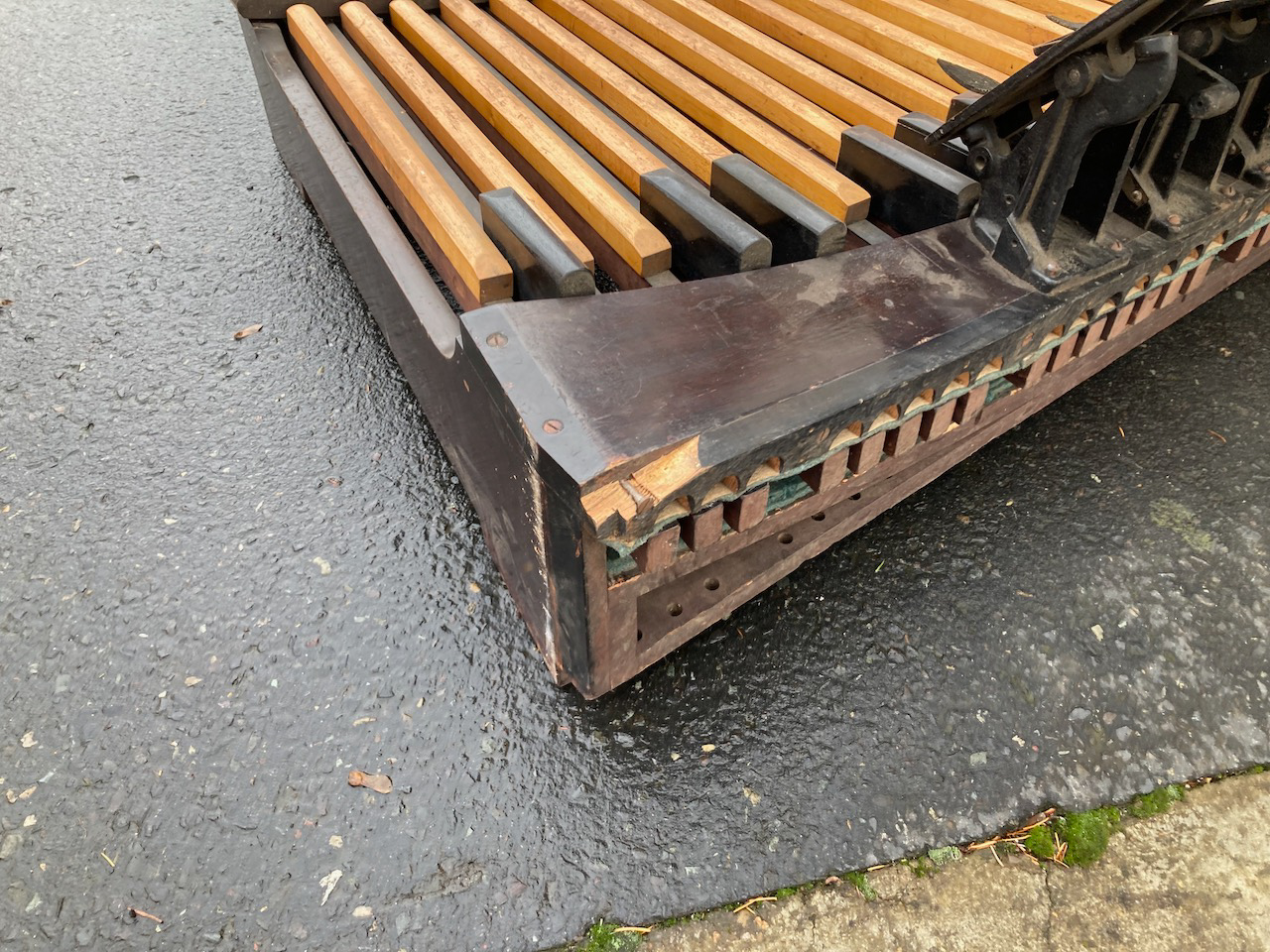
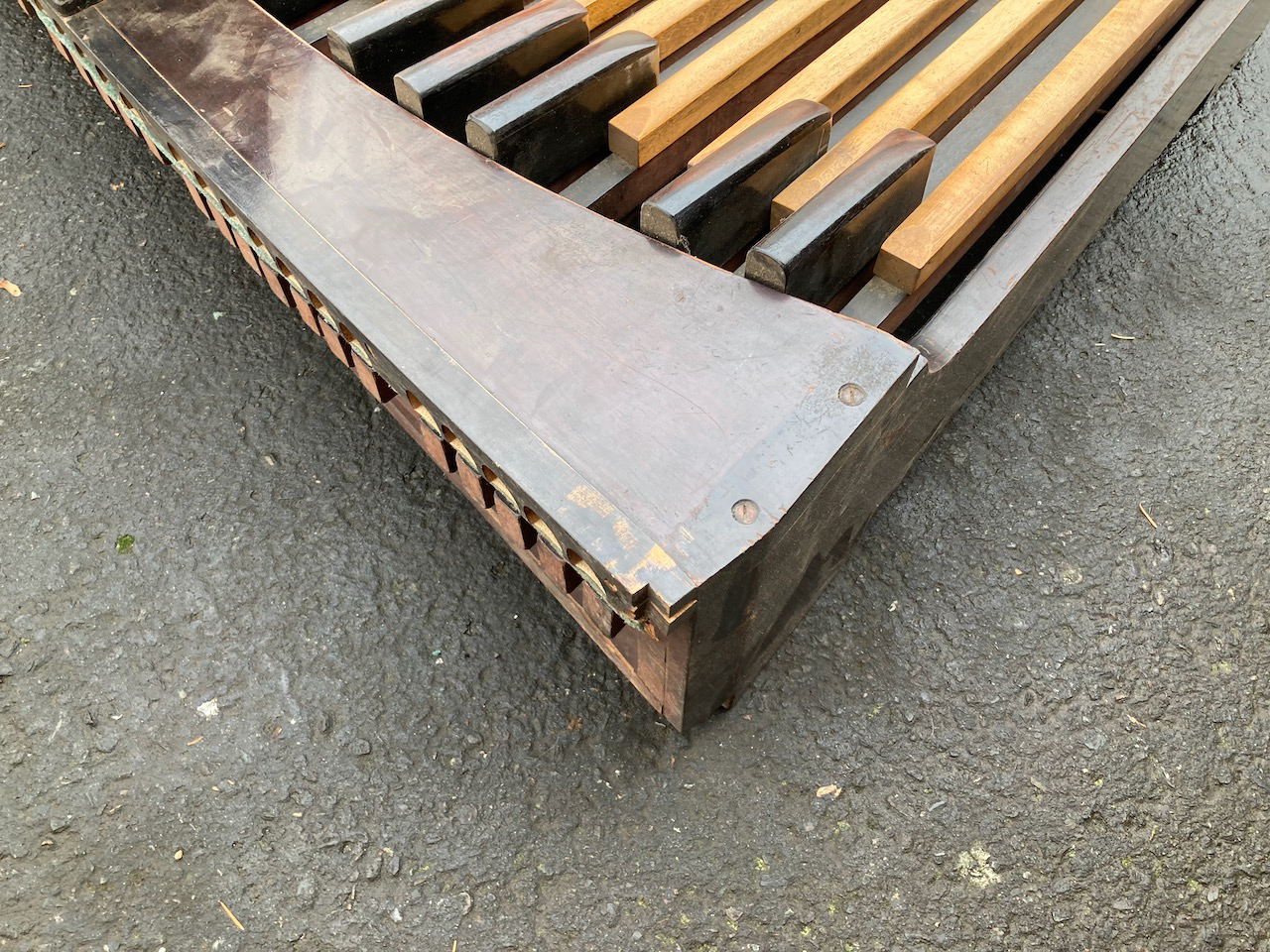
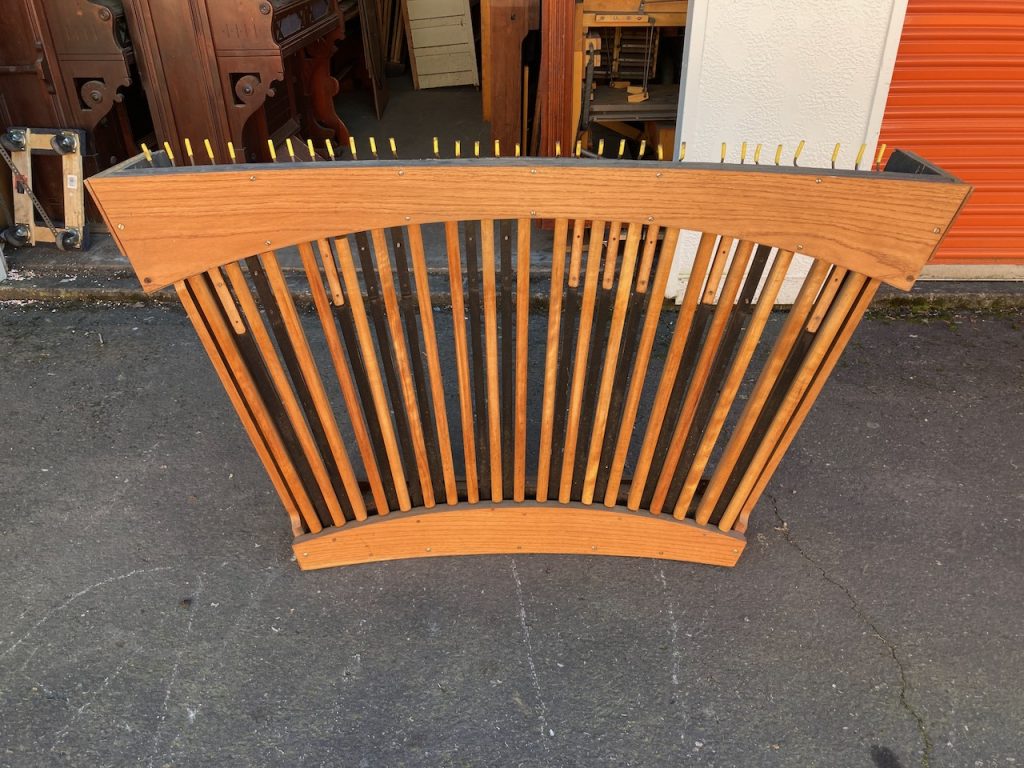
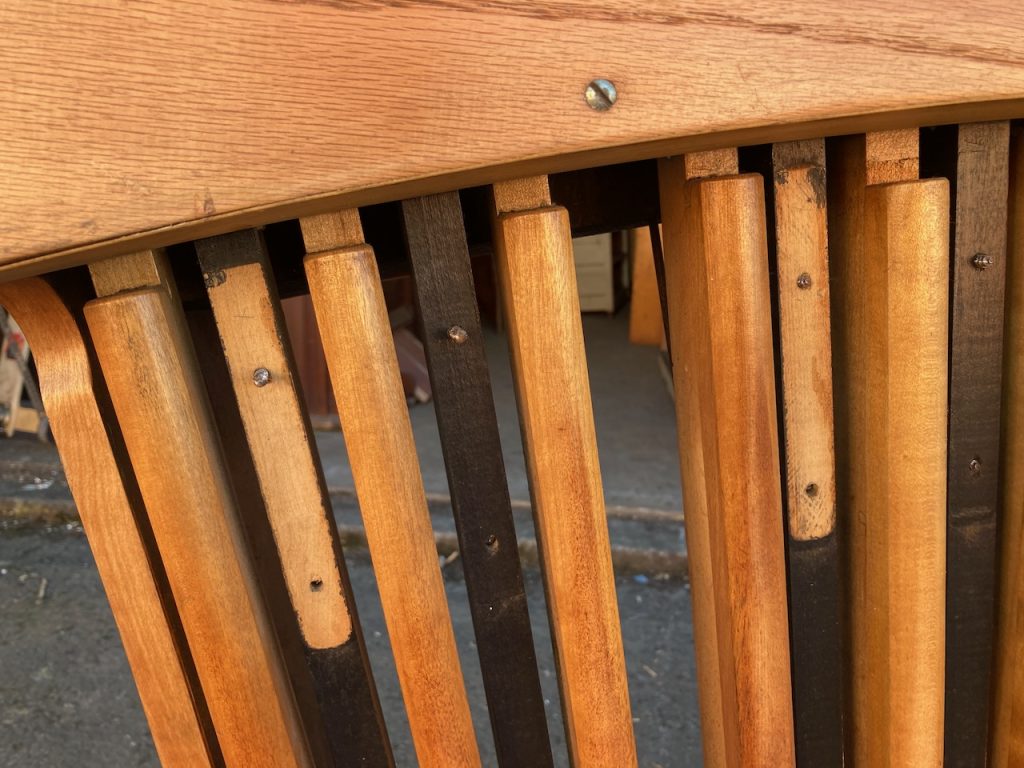
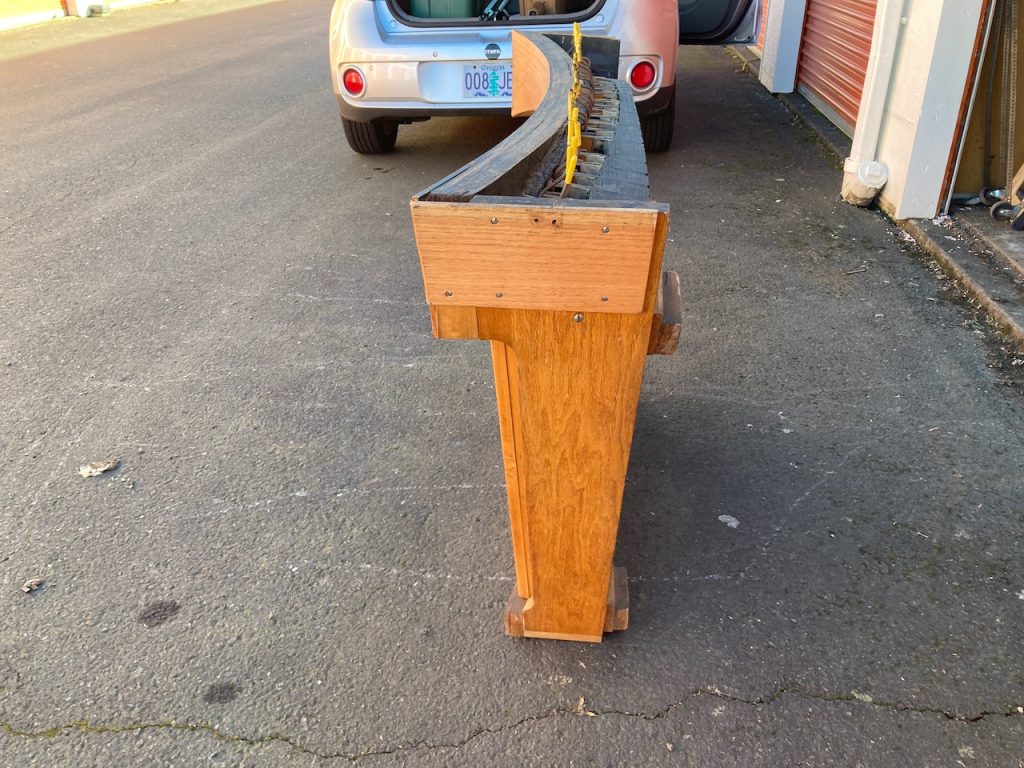
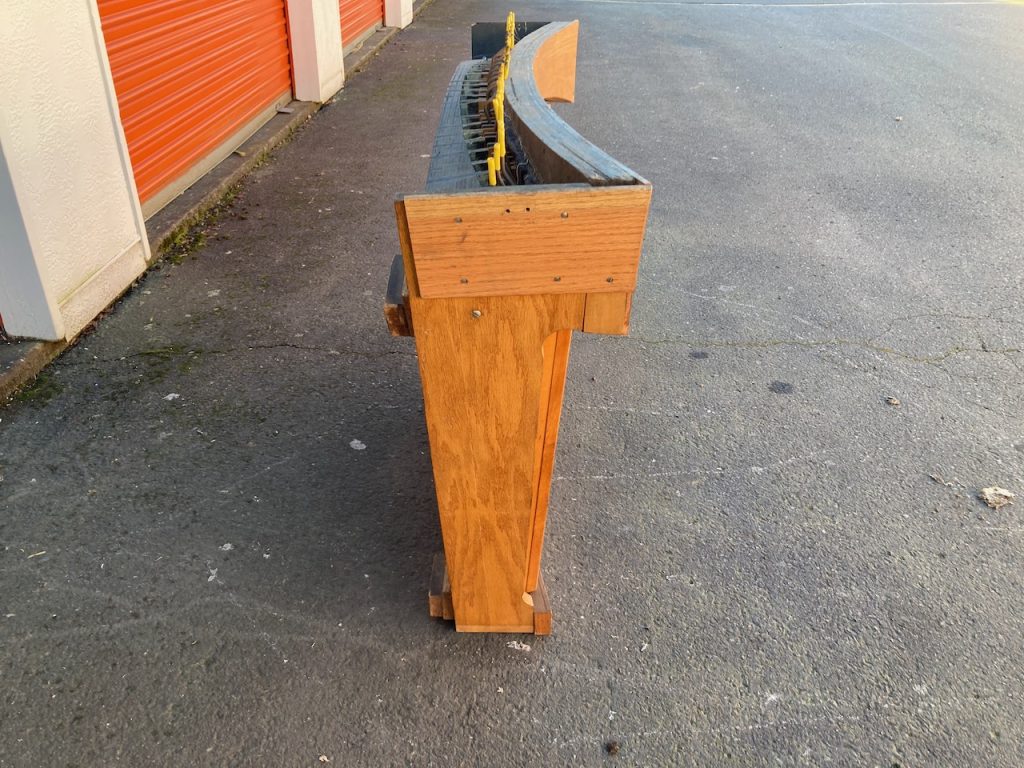
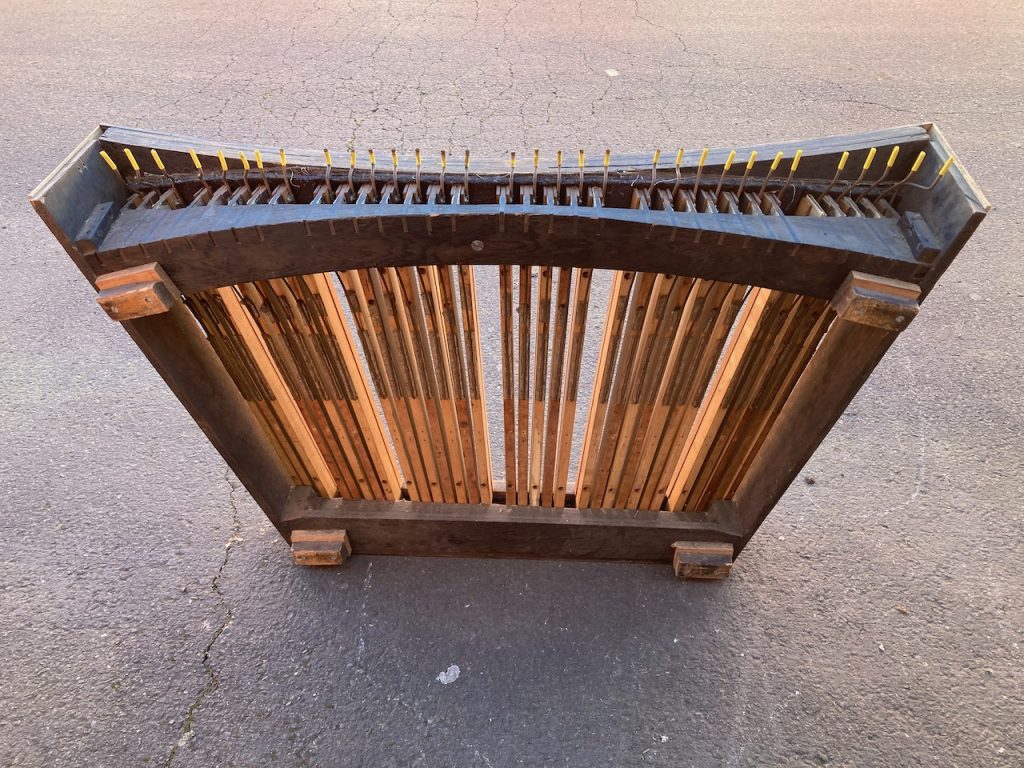
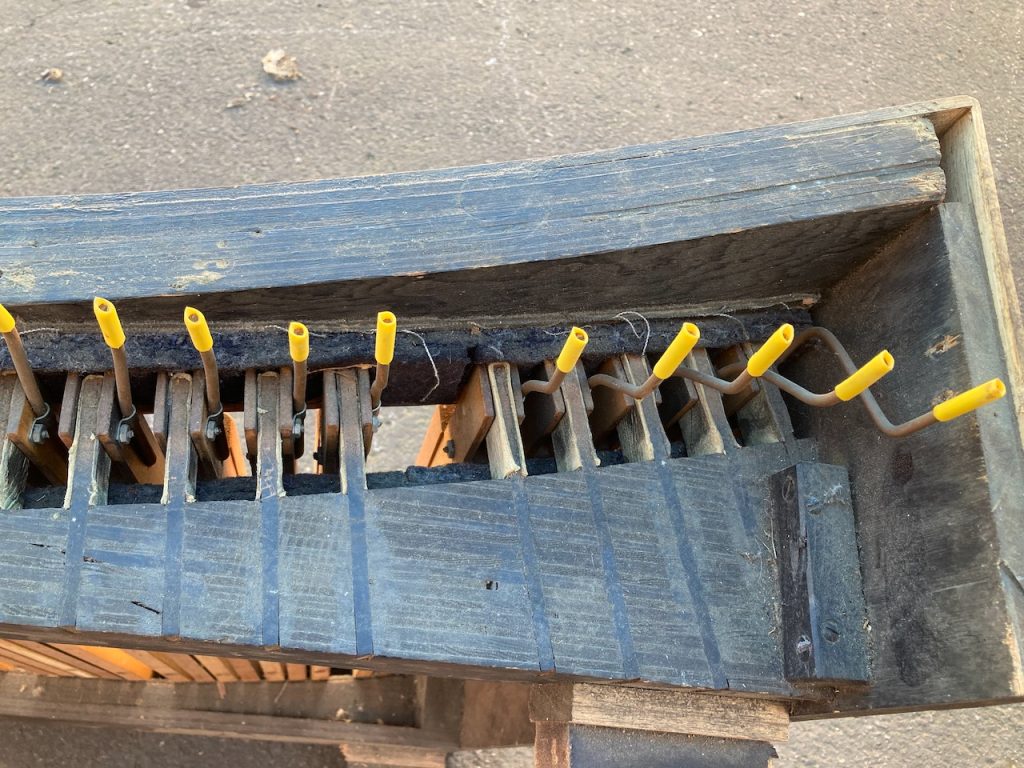
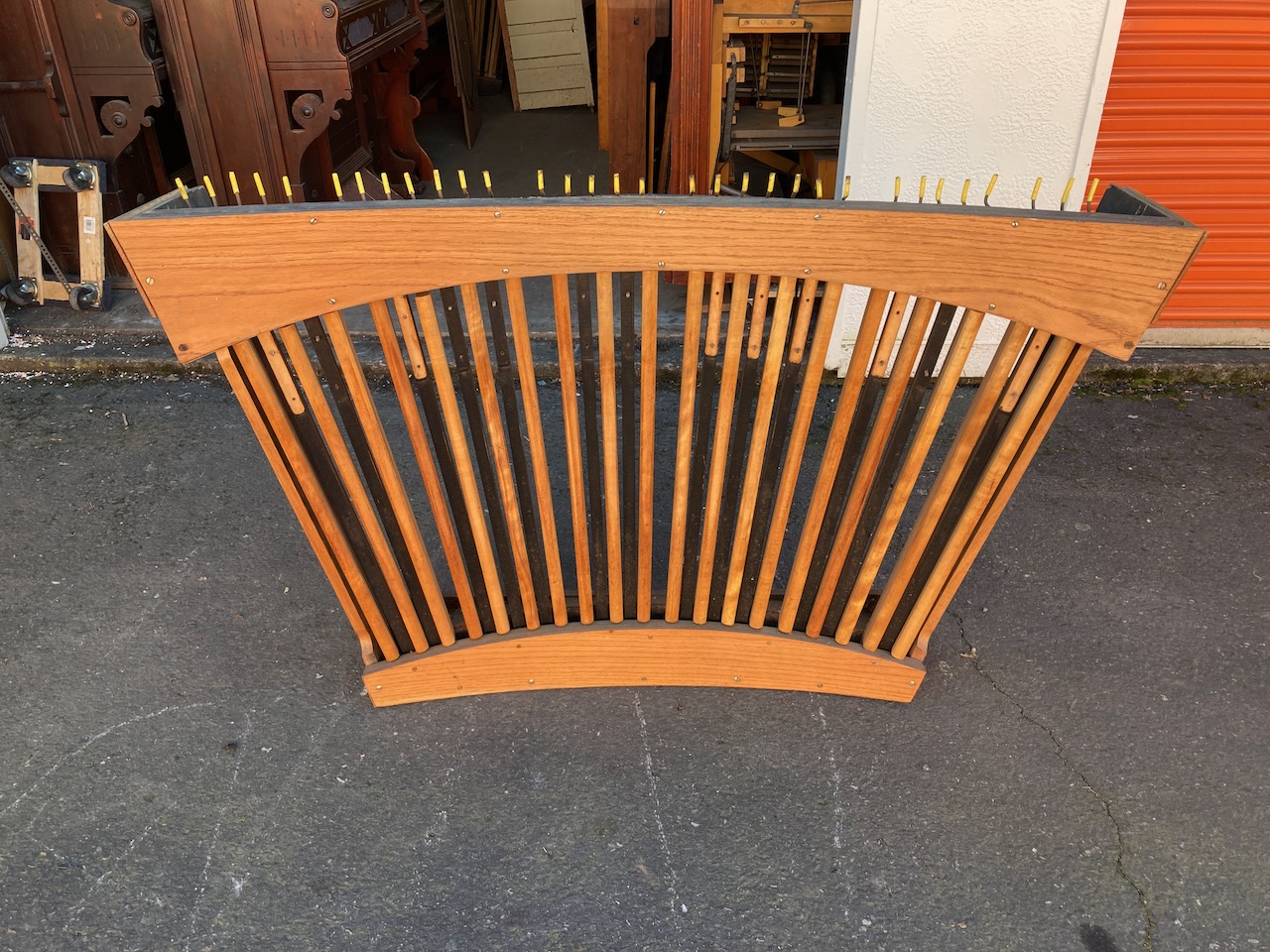
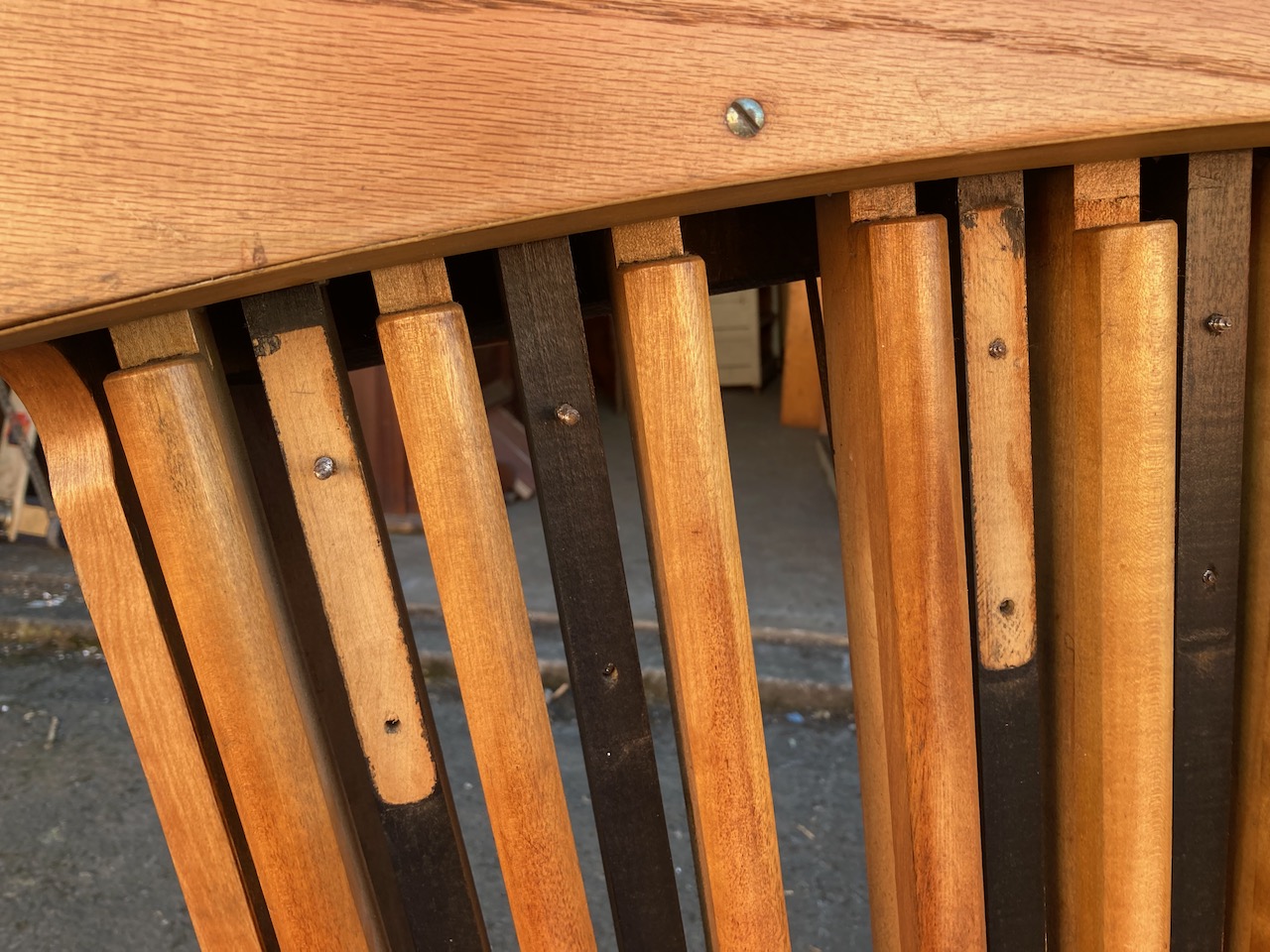
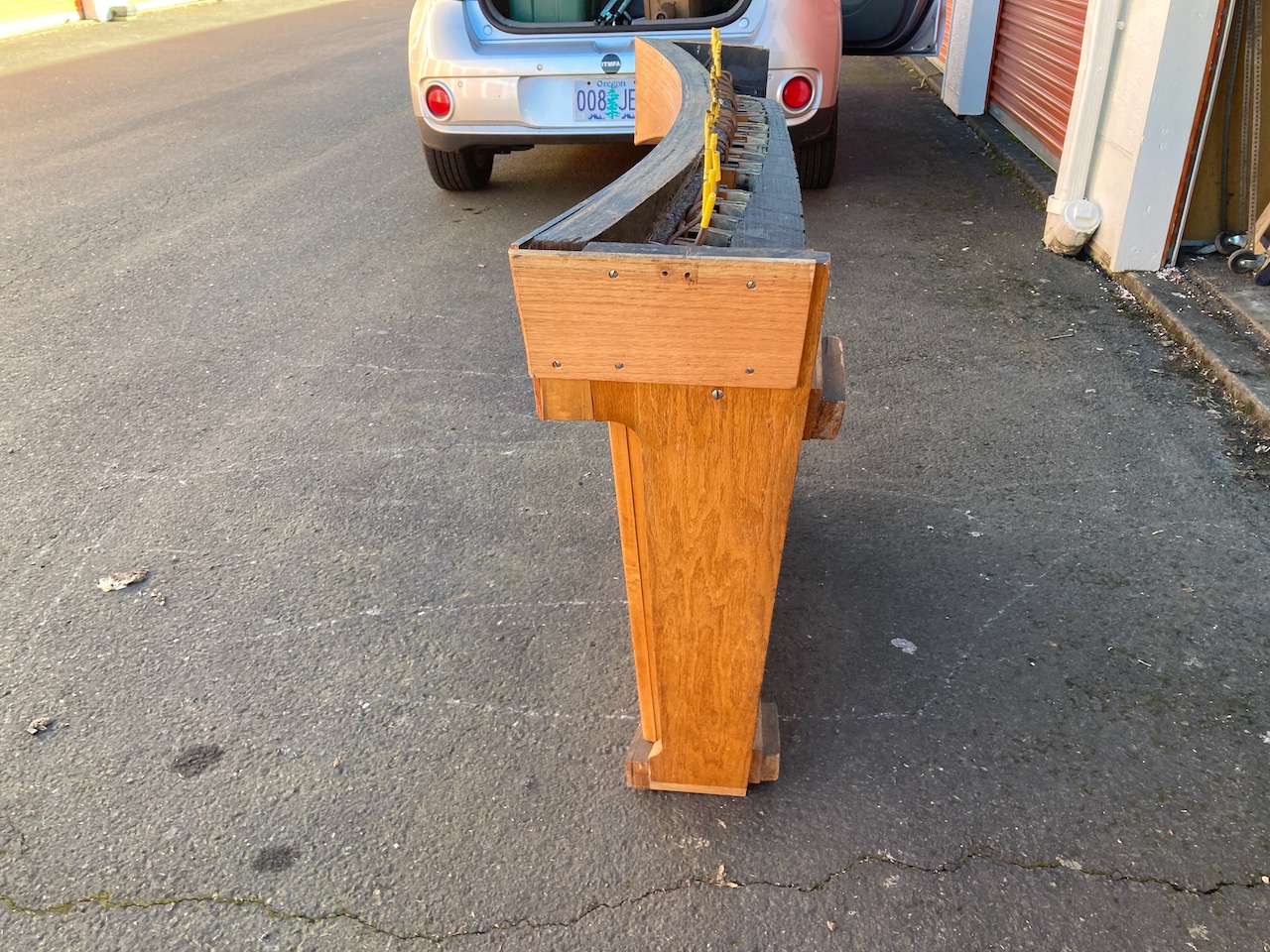
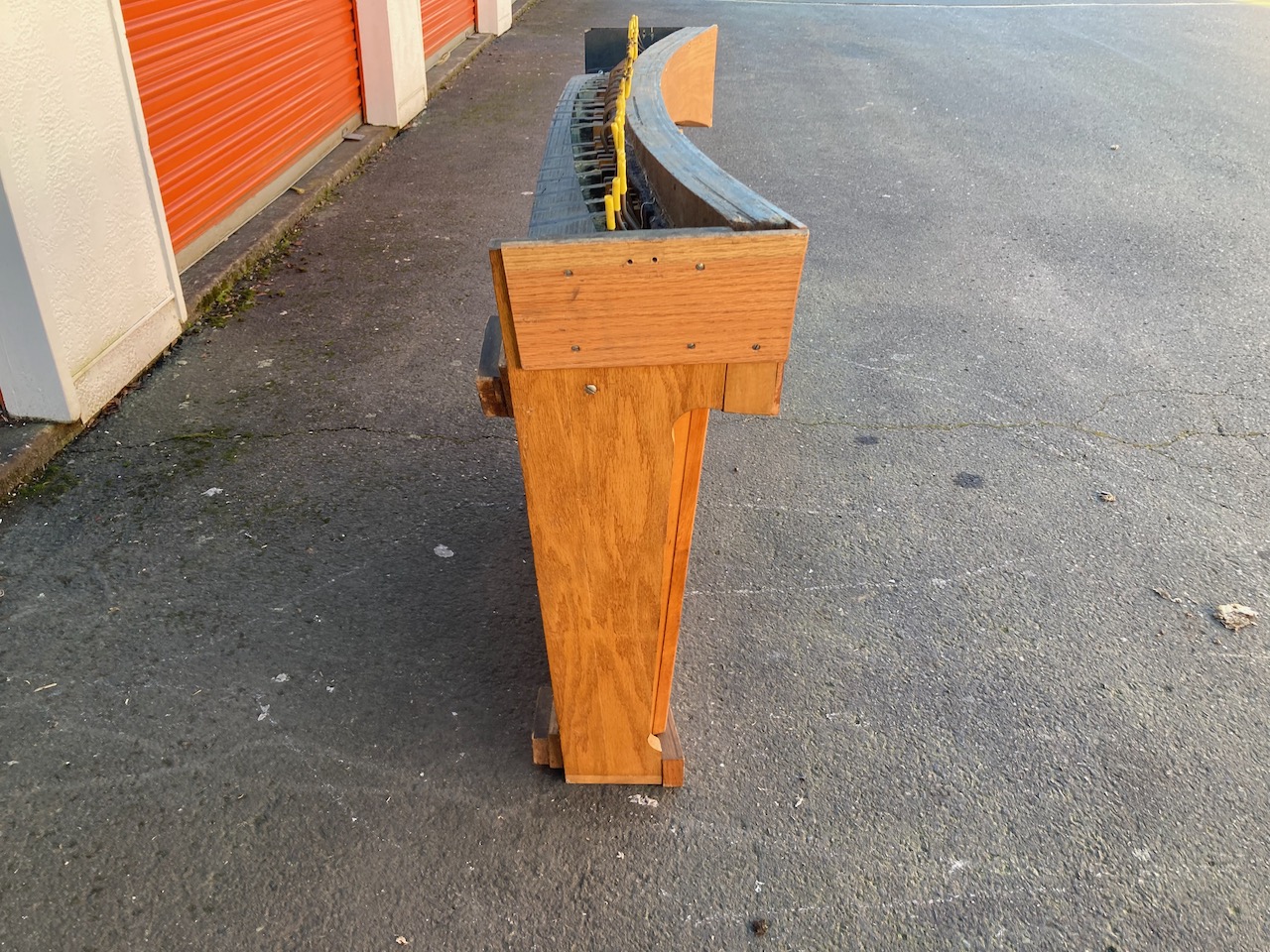
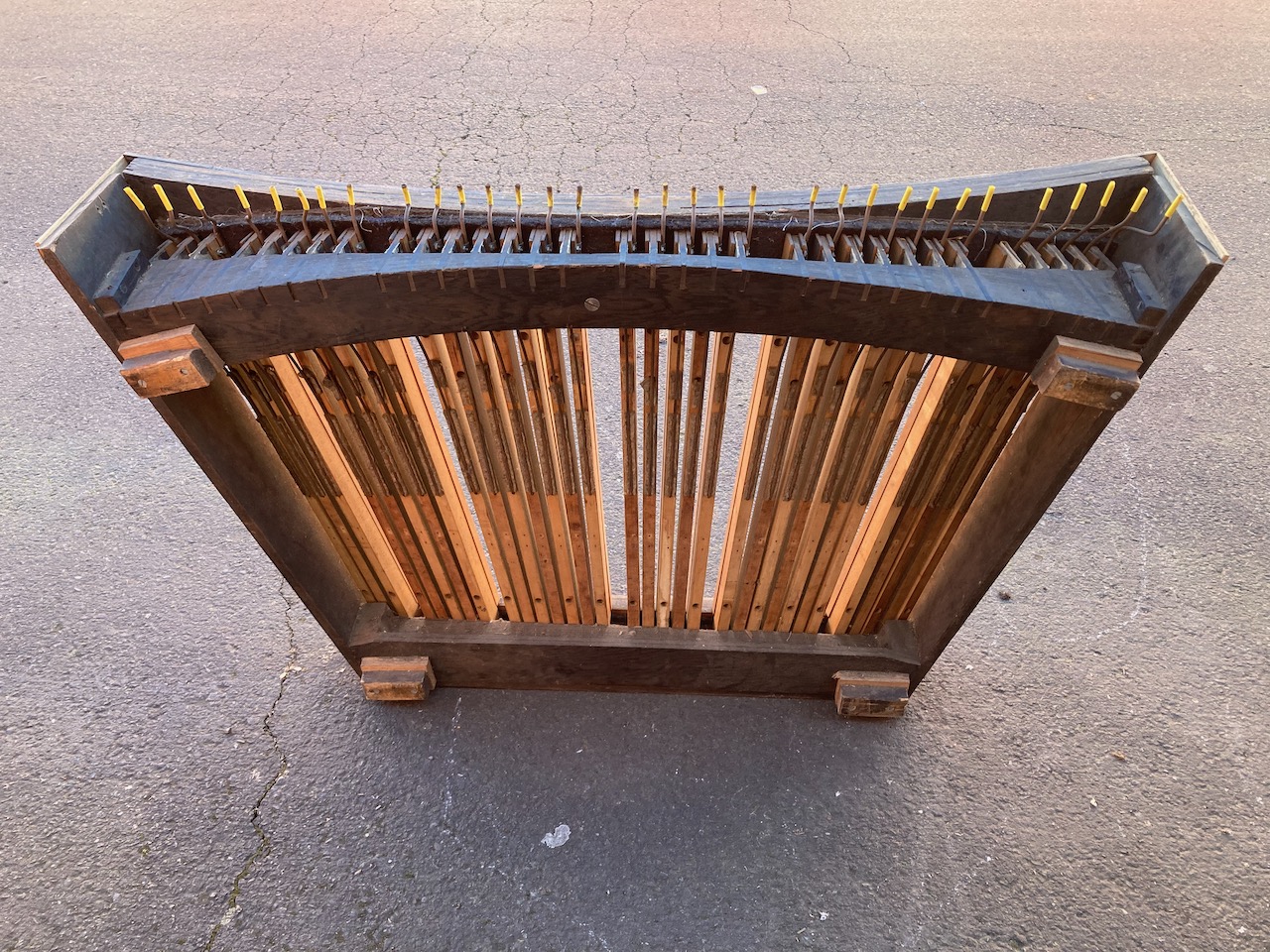
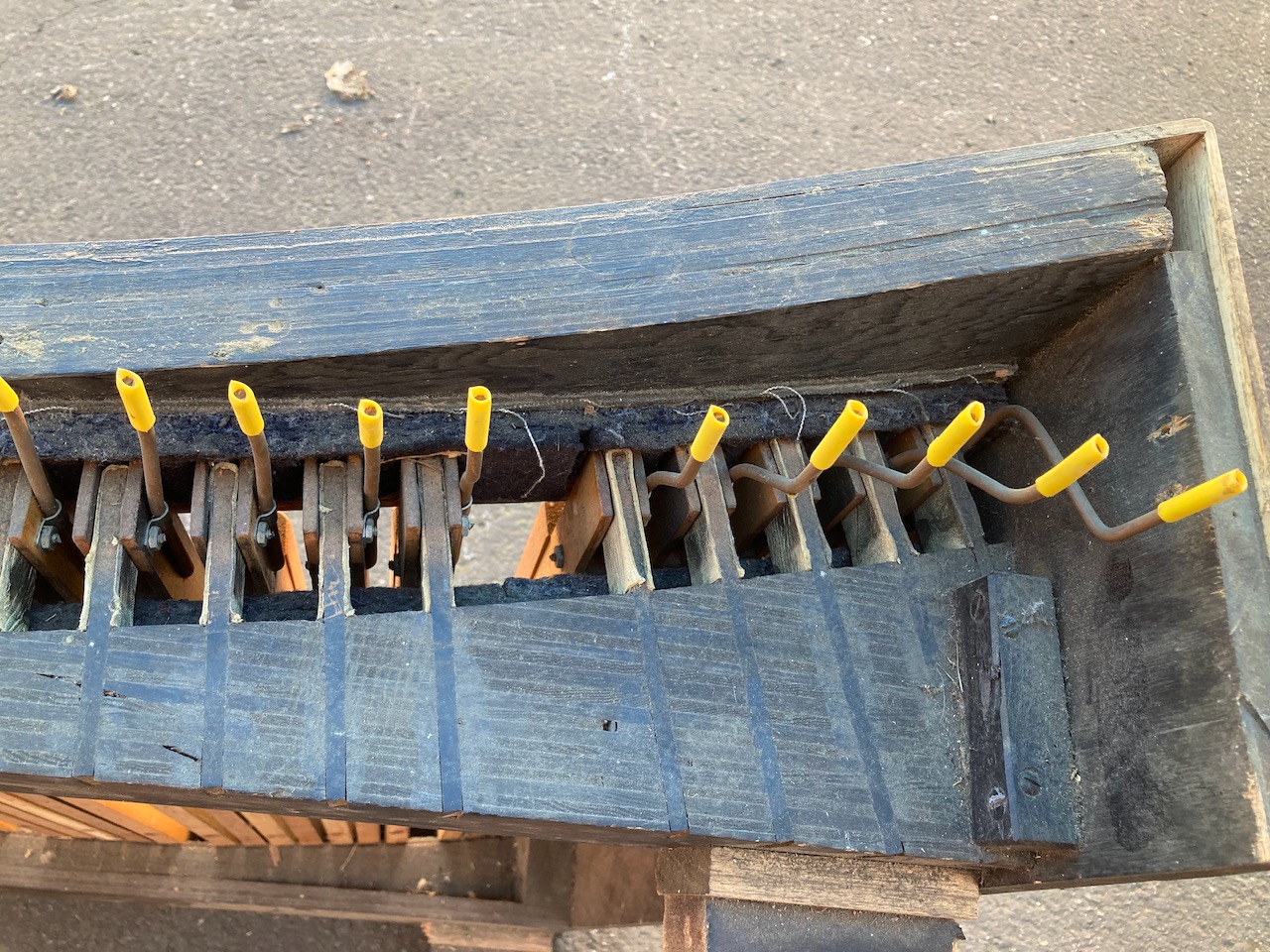
This is a 32-note pedalboard from an unknown builder. It is missing its sharps, but the underlying pedal supporting the sharp is present. There are no electrical contacts. This might make a good starting place for adding contacts/detectors and a MIDI interface for a Hauptwerk project.
Other Items
Leslie Model 44W Speaker
Status: Sold – Picked-up
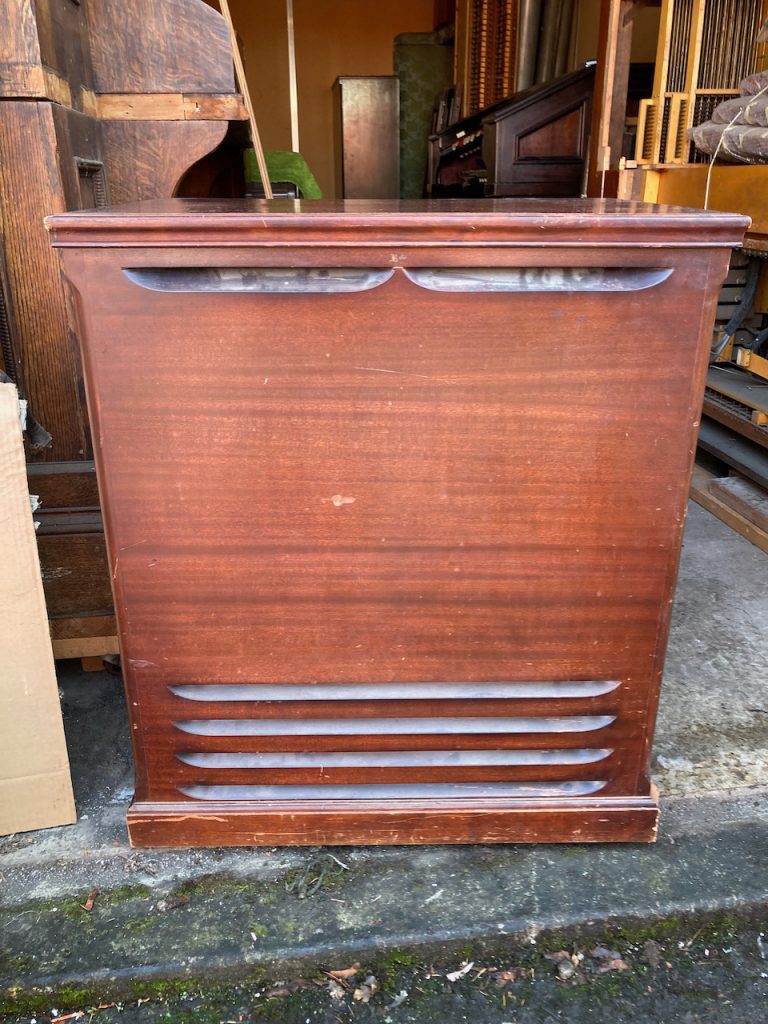
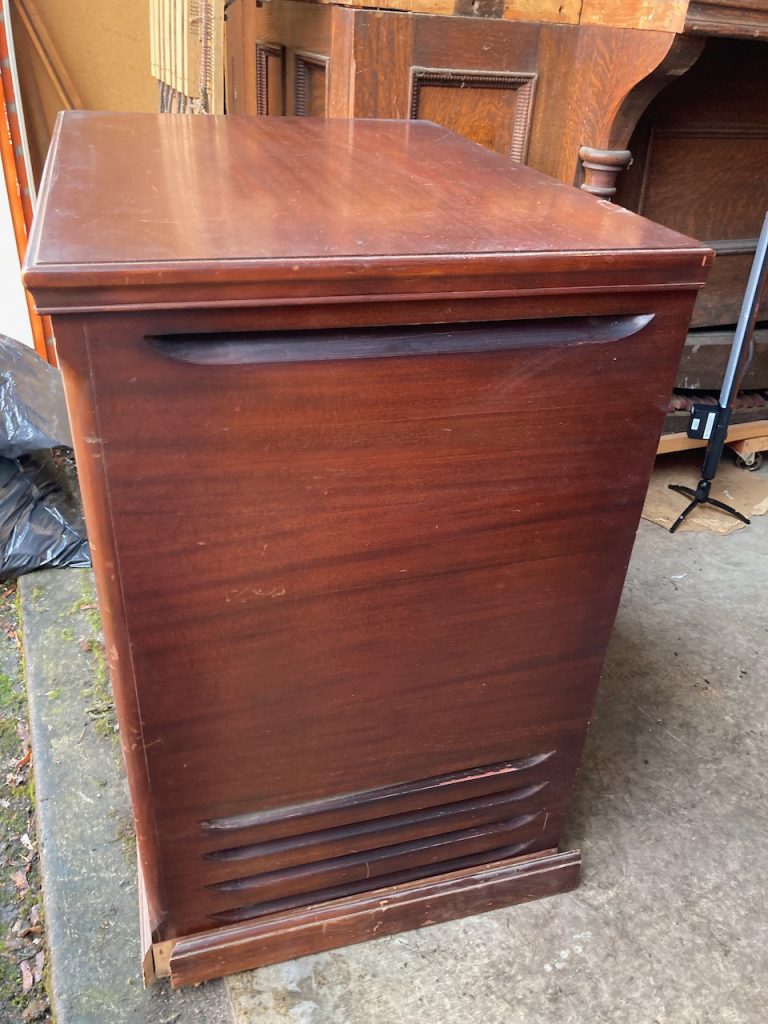
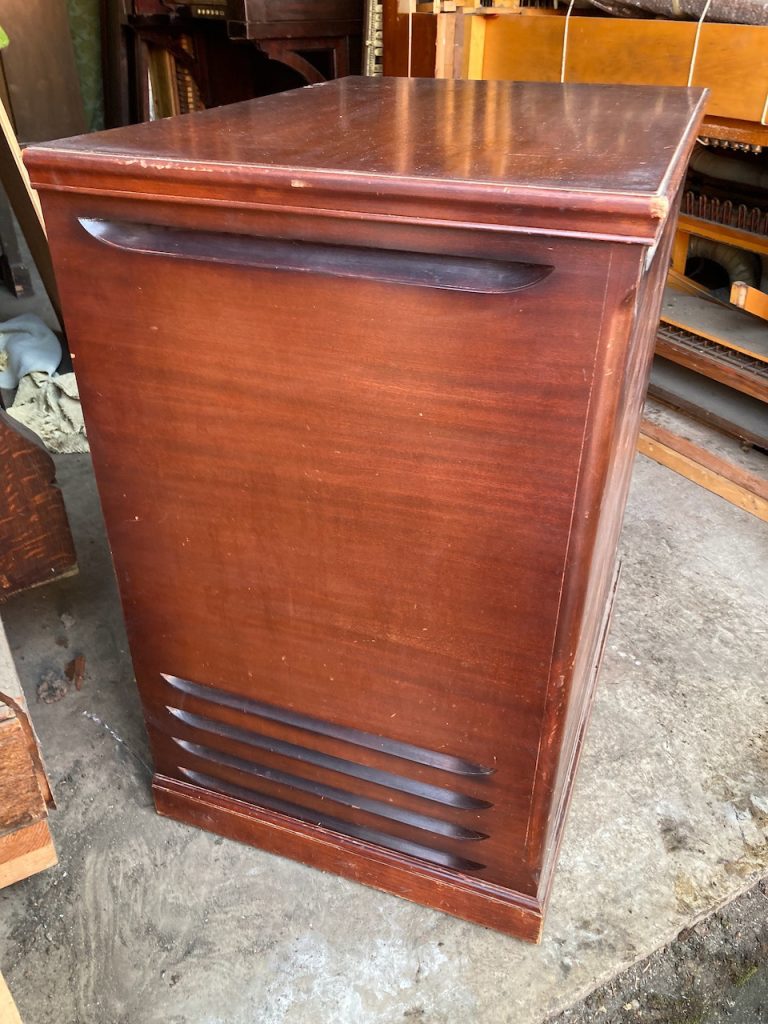
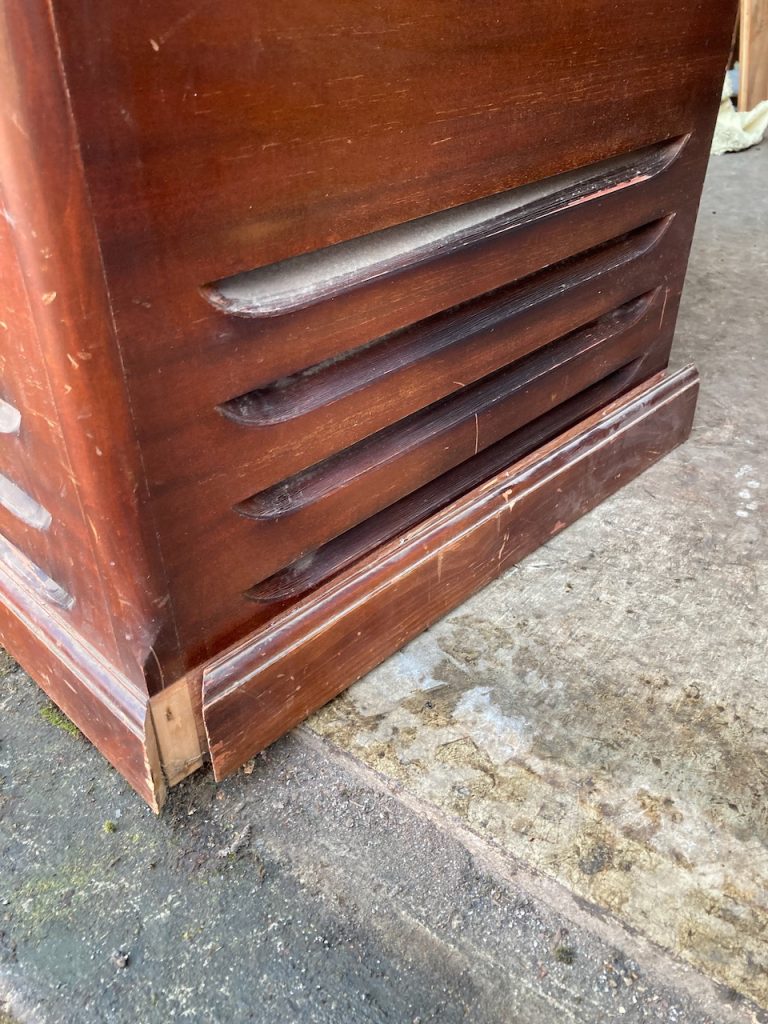
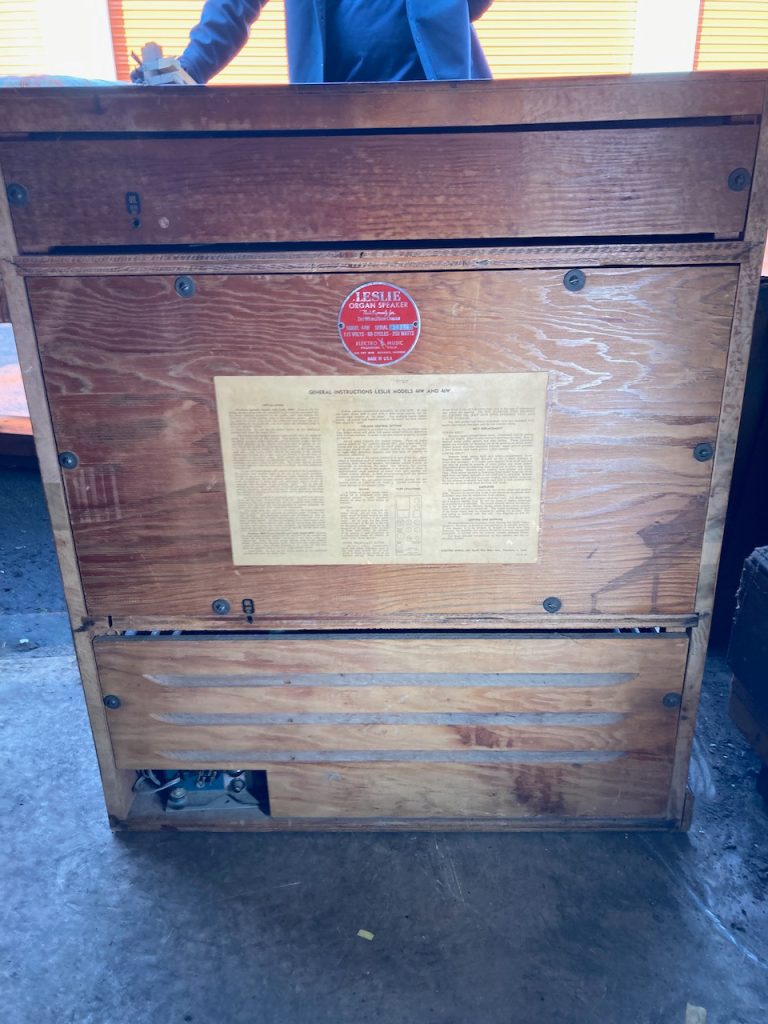
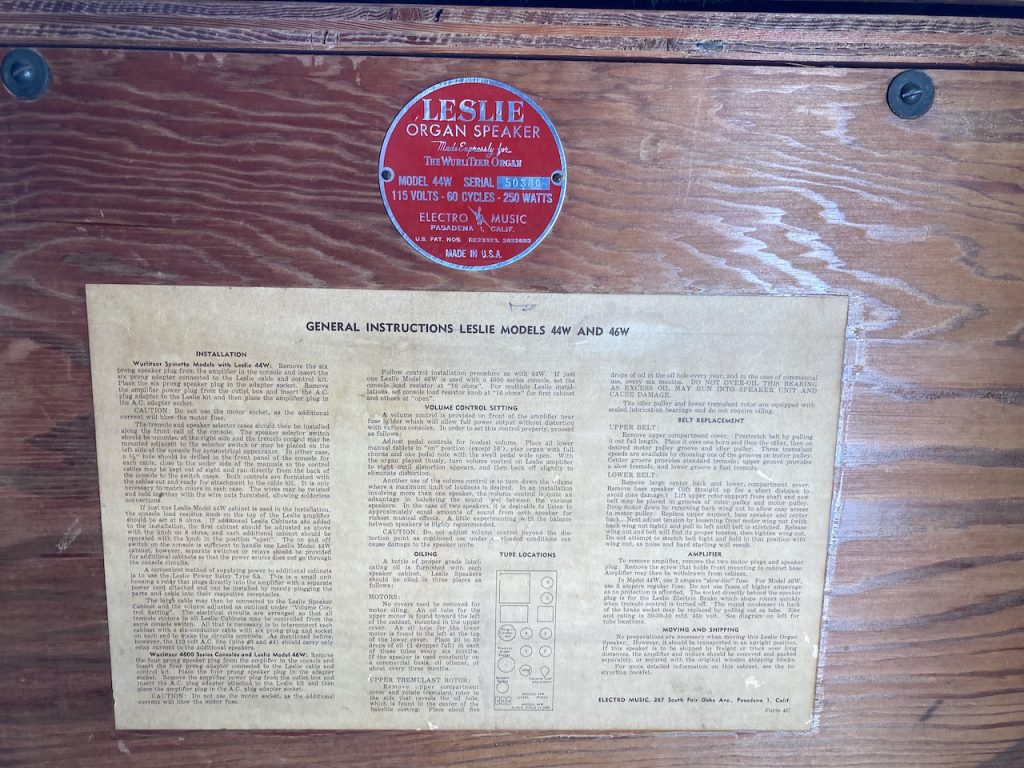
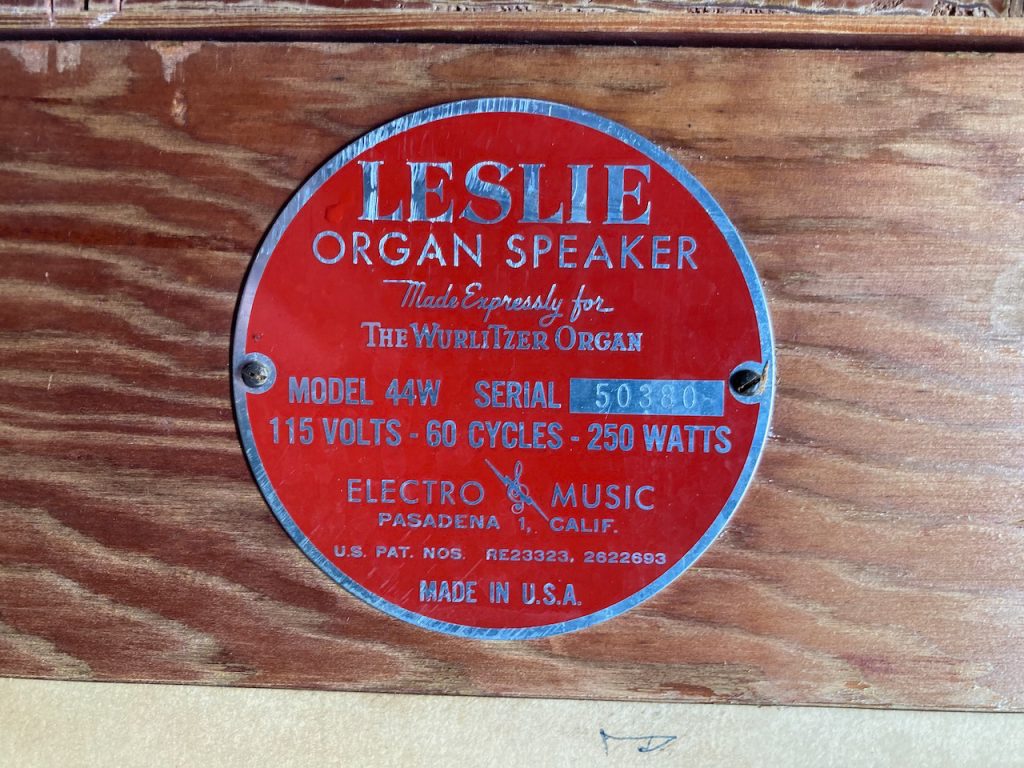
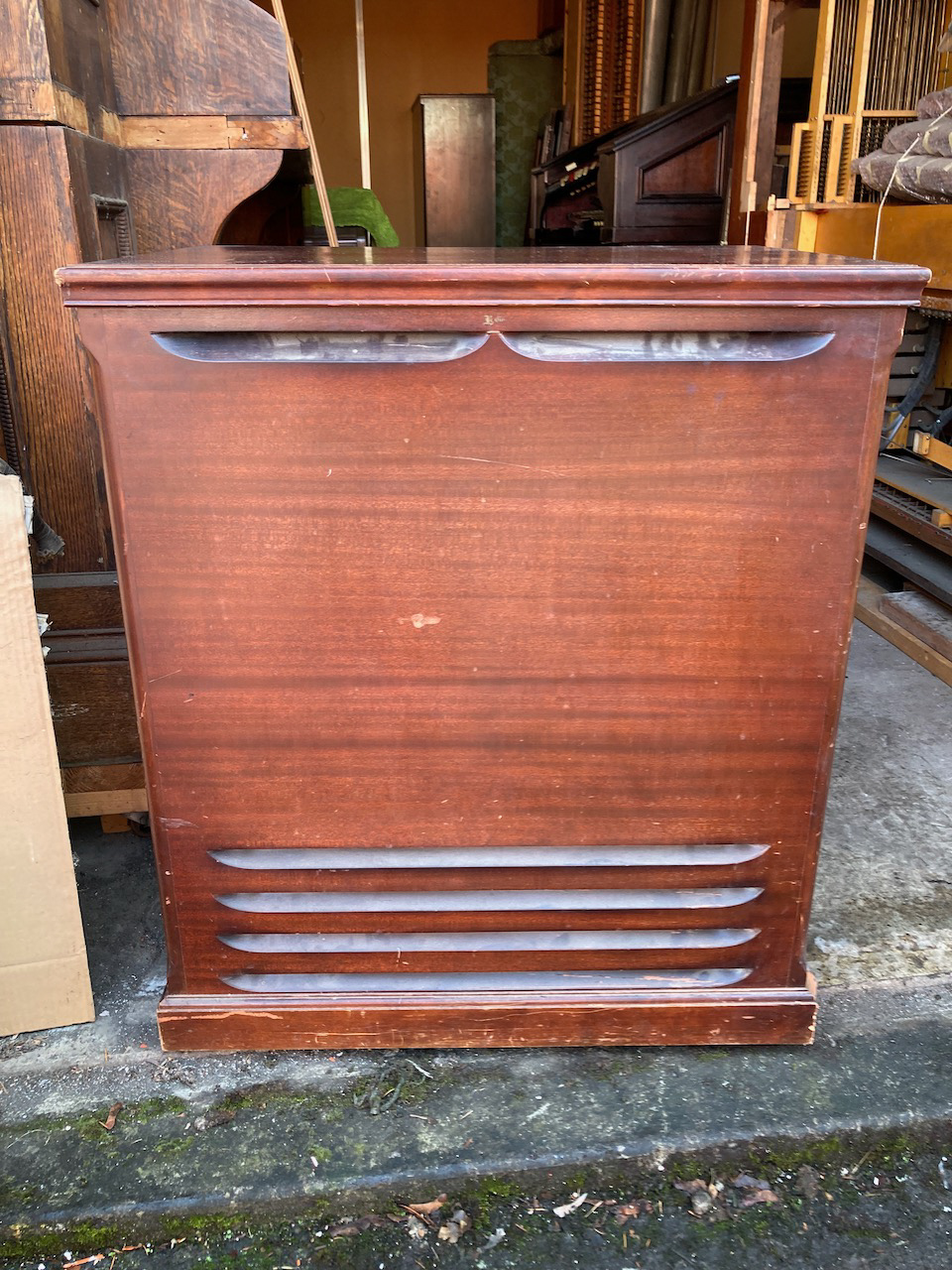
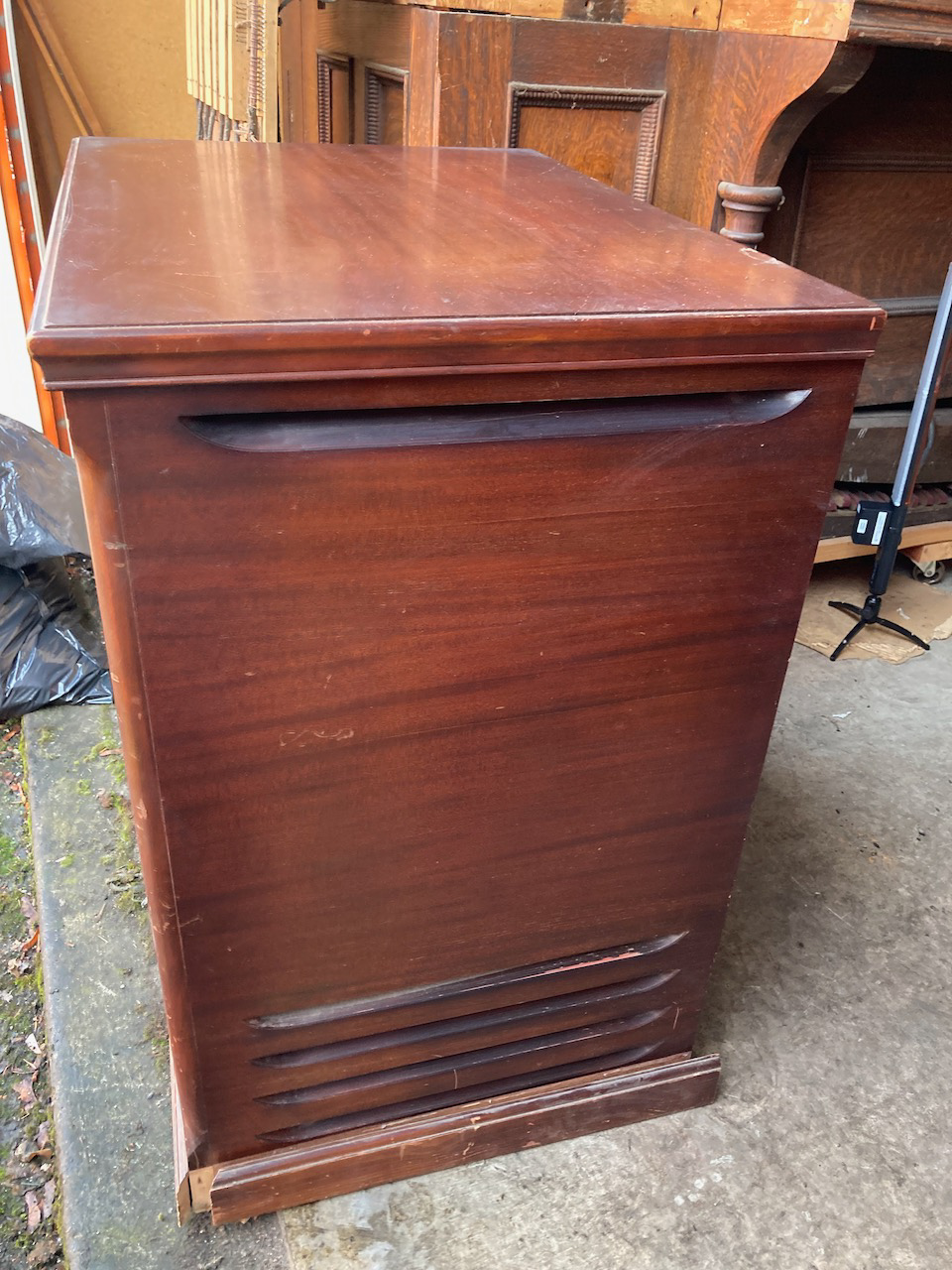
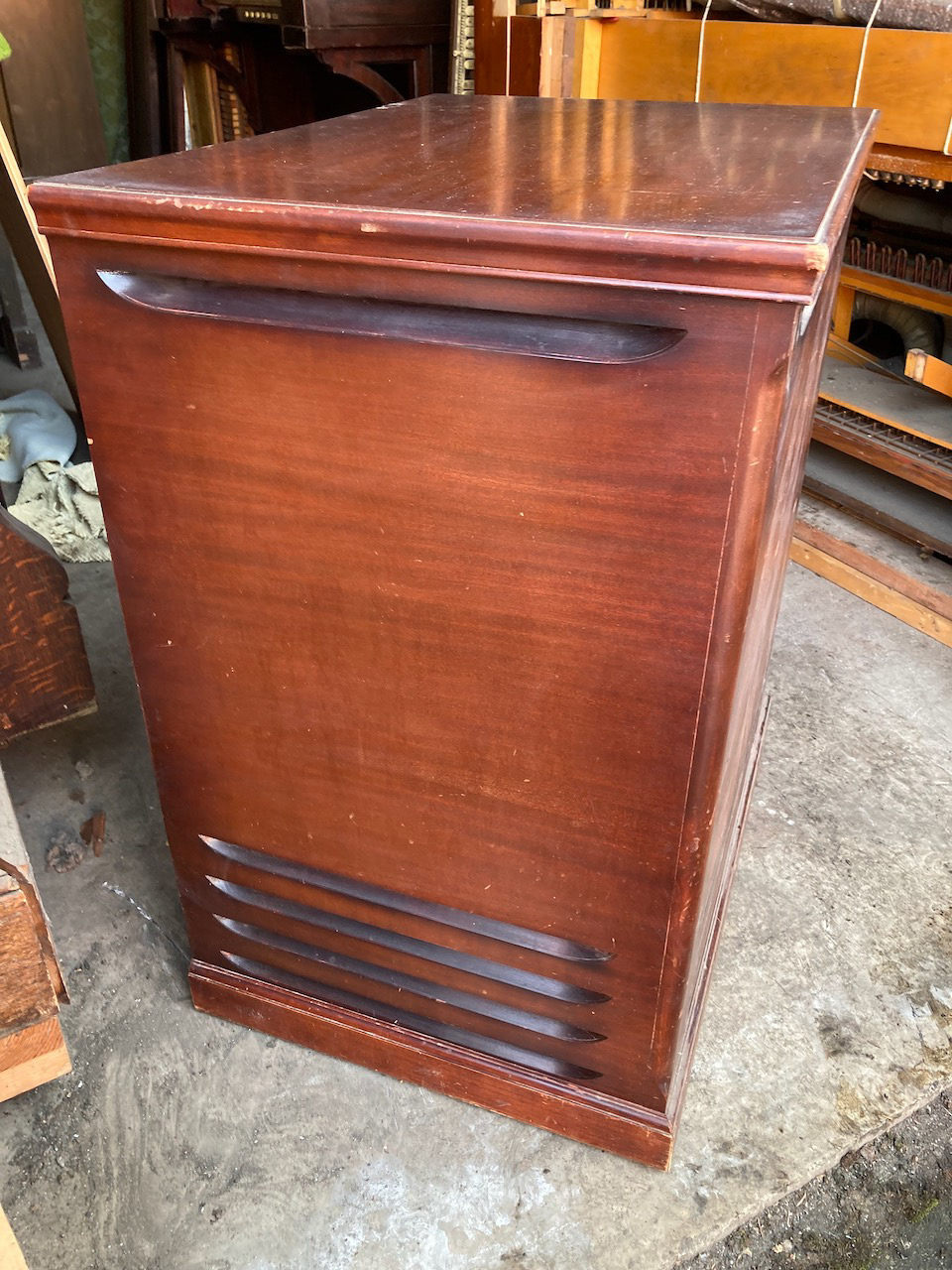
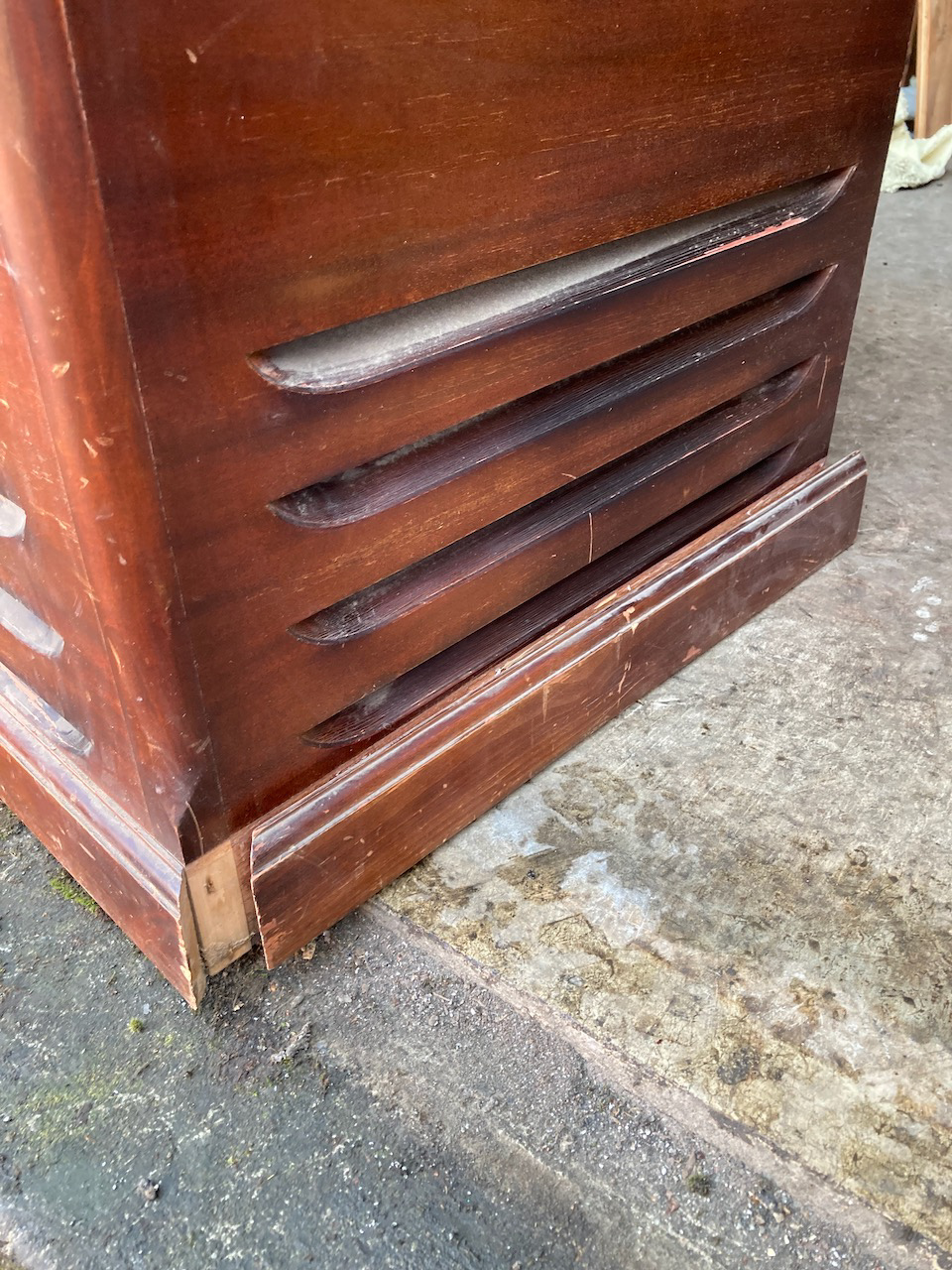

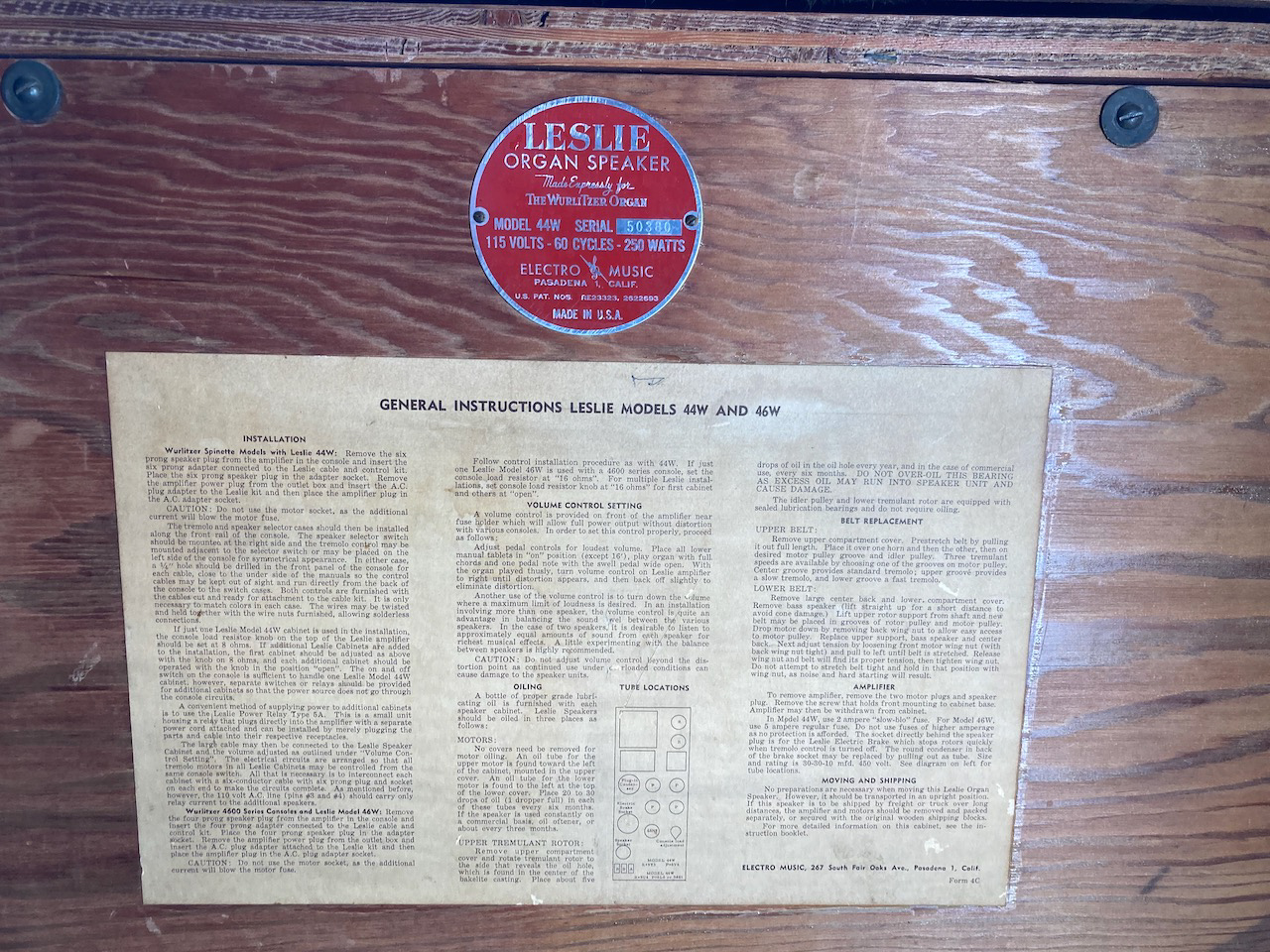

Paul had this set up with the Model G, but it can be used with any Hammond. The Leslie 44W was a “universal” model that can be adapted for use with a variety of instruments. It is a single-speed (tremolo, no chorus) model, but conversion kits are available for dual-speed.
A trim piece at the bottom of the Leslie has come loose but appears to be undamaged, can be reattached.
Miscellaneous
Antique Hand Saws / Buck Saws
Status: Claimed – Picked Up
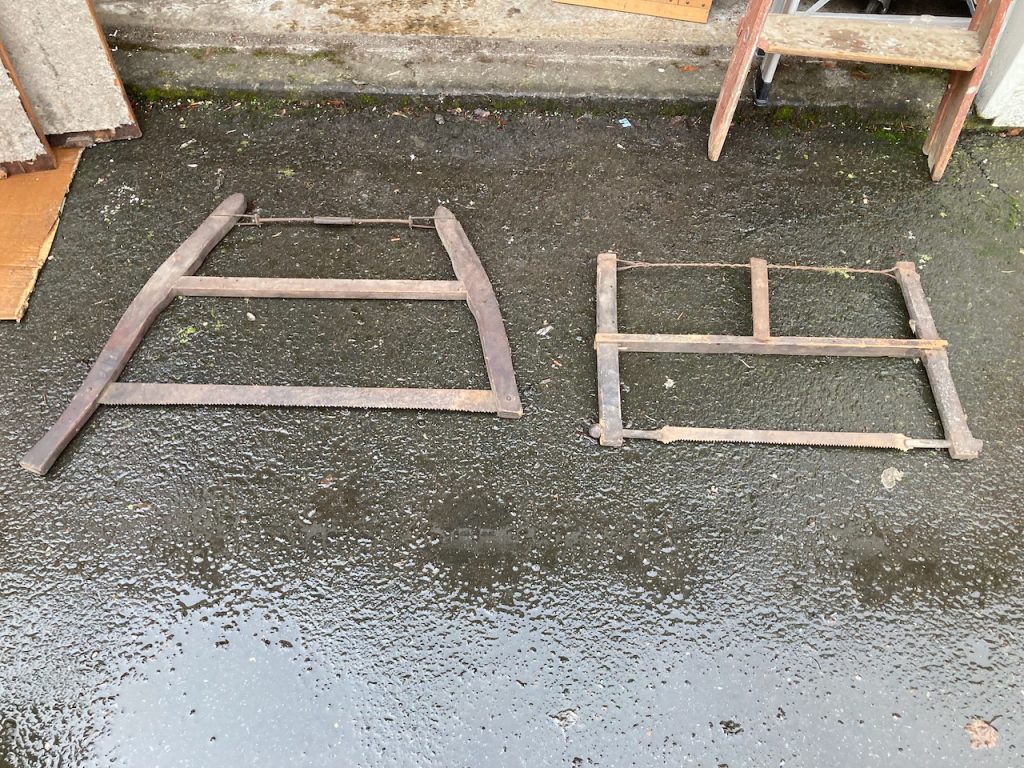
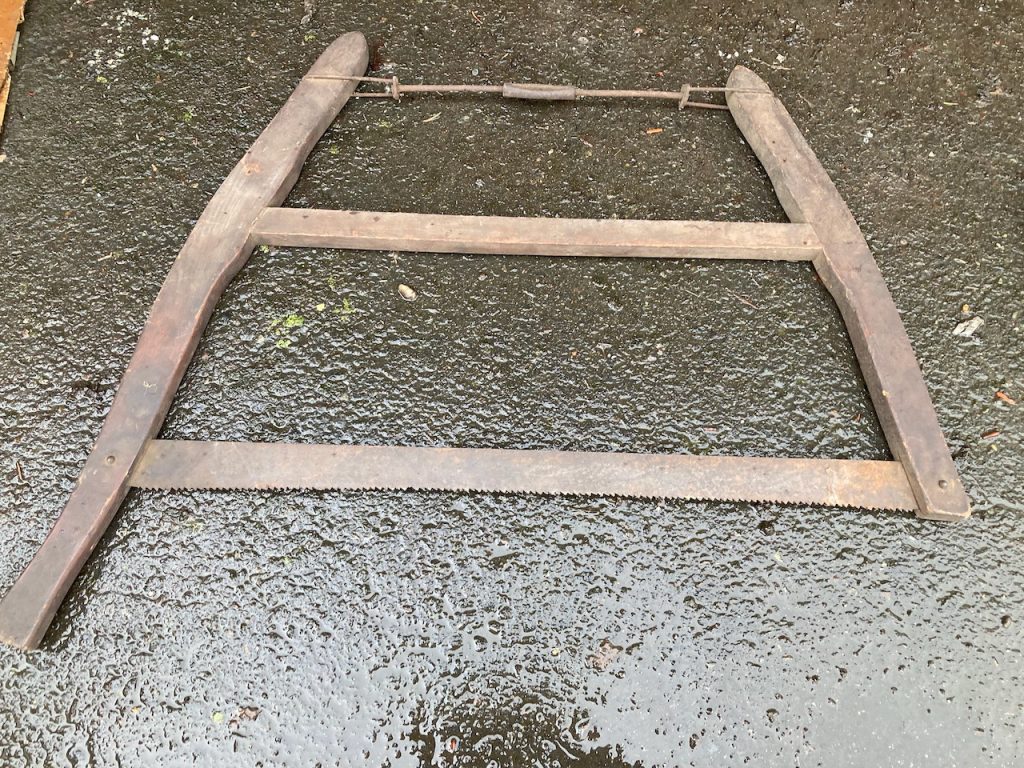
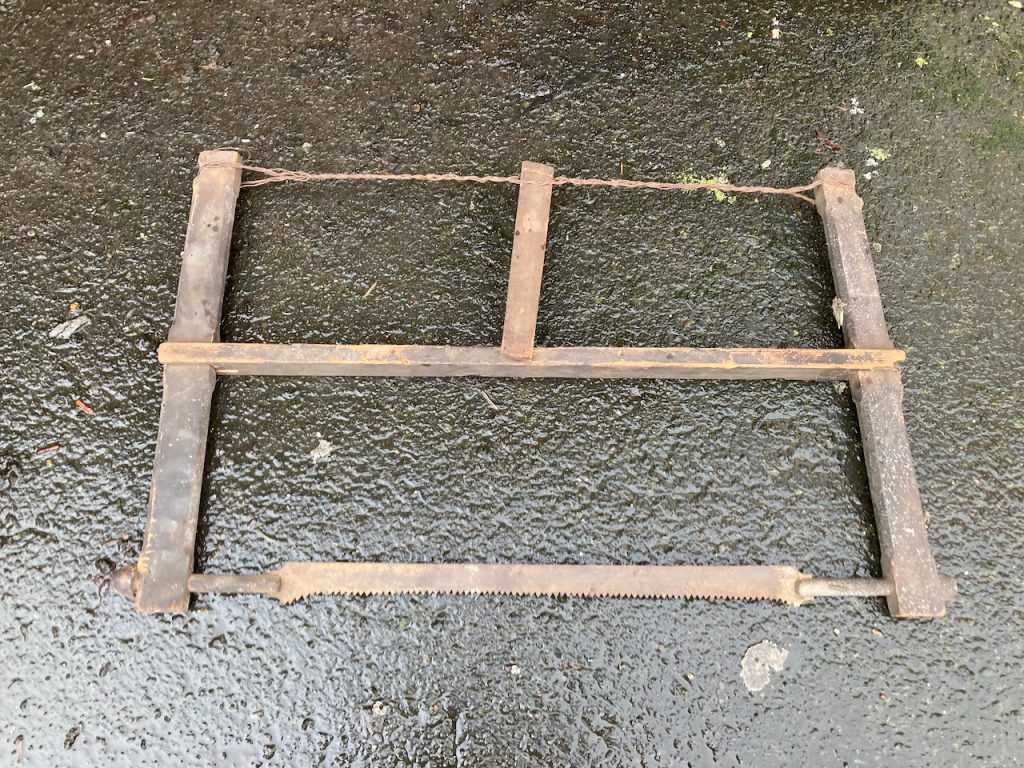


Notes: Two available. No charge. These types of saws have been going for about $40 each on eBay in recent auctions: https://www.ebay.com/sch/i.html?_from=R40&_nkw=antique+buck+saw&_sacat=0&rt=nc&LH_Sold=1&LH_Complete=1
Living Room Furniture
Status: Claimed – Picked Up
Notes: Paul’s 1960s/1970s living room set, consisting of a teal sofa (likely to go to the landfill, not in good condition), octagonal end table with beige tile/granite top, and matching coffee table with tile insets in the same color as the end table.
You can help support the project by purchasing from the Crowdfunding Shop.
Sign up for our email newsletter and receive updates about the project.