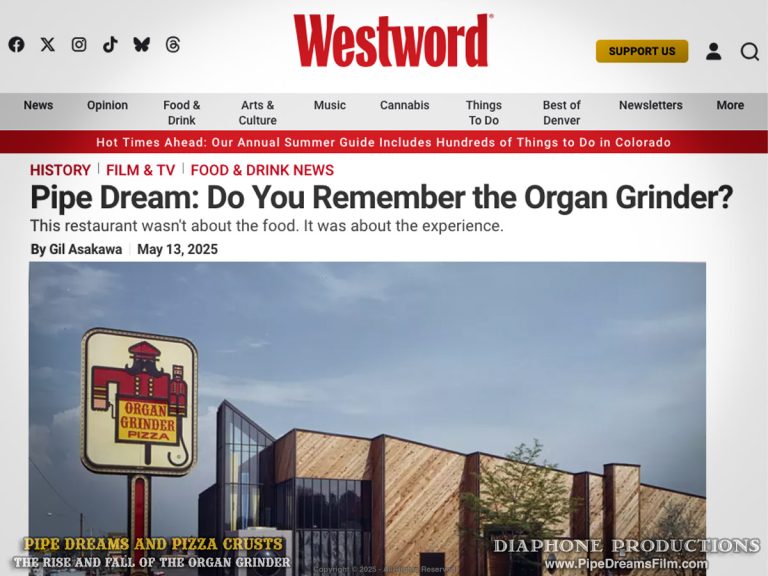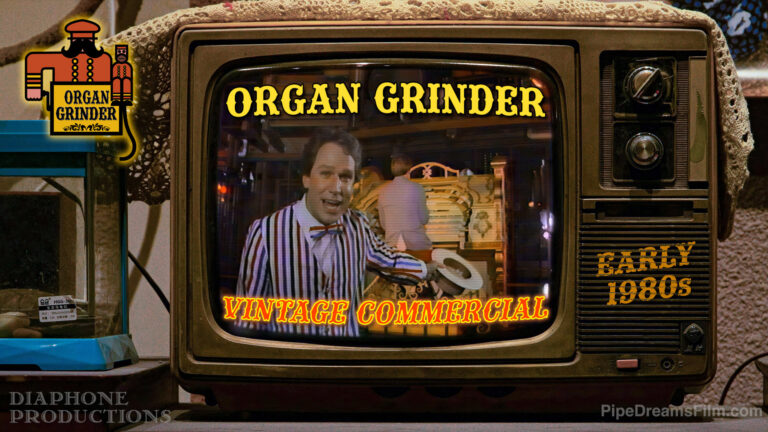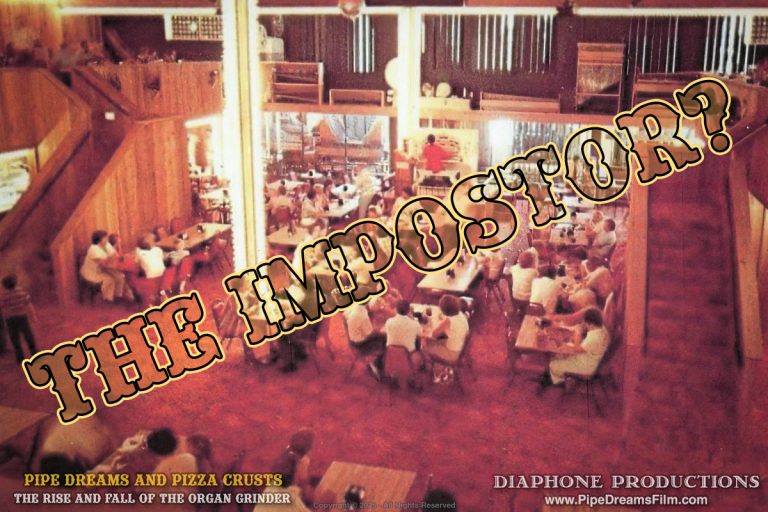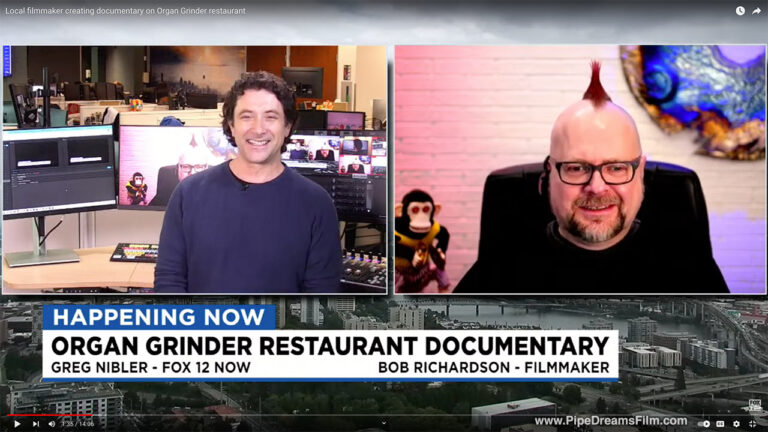
The following article was published in the May-June 2026 issue of the Theatre Organ Journal, a publication of the American Theatre Organ Society. Reposted here with permission.
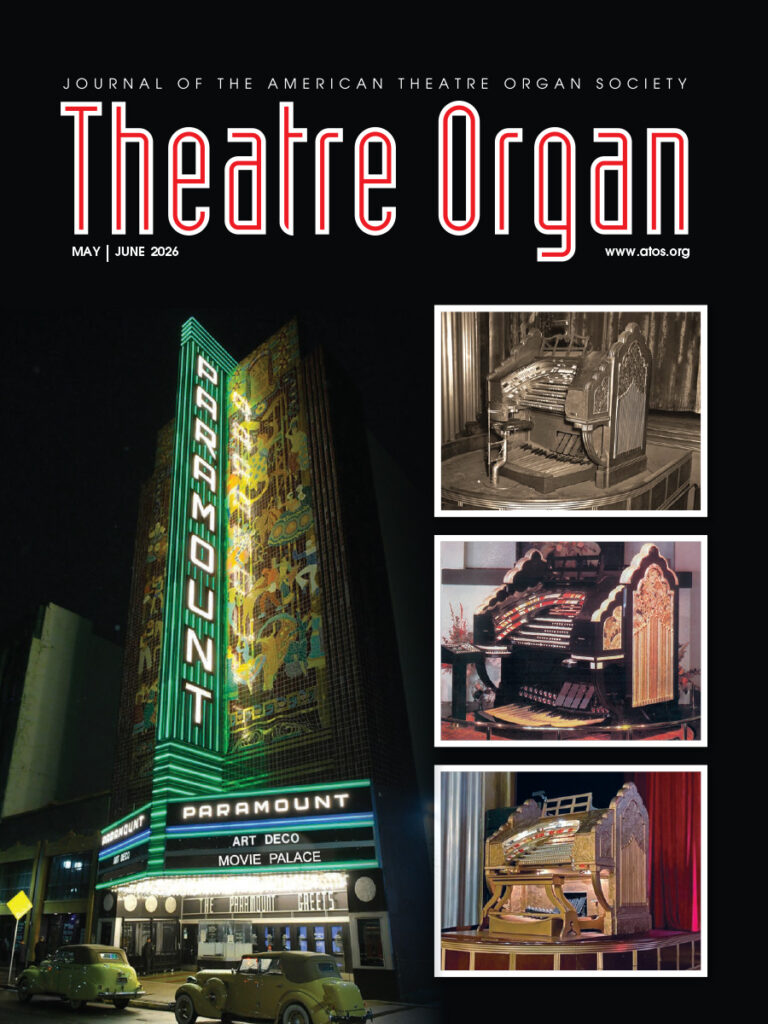
View the article with its original layout in this PDF:
A Weekend Project
by Bob Richardson
Just over two years ago, I interviewed Dennis Hedberg, man of pizza and pipe organ legend, for what was supposed to be a relatively simple weekend project: to create a YouTube video about the Organ Grinder restaurants that once entertained diners in Portland, Oregon
and Denver, Colorado. Eleven states, sixty-six locations, and eighty-five people later (and counting!), I now know that the goal of a short, straightforward task was unattainable.
Author Douglas Adams’s character, Dirk Gently, based his detective methods on “the fundamental interconnectedness of all things.”
I think of that phrase often, as the story of the “pizza and pipe organ” restaurants has ample connective tissue — or steaming strands of melted mozzarella — between past and present, people and places, art and technology.
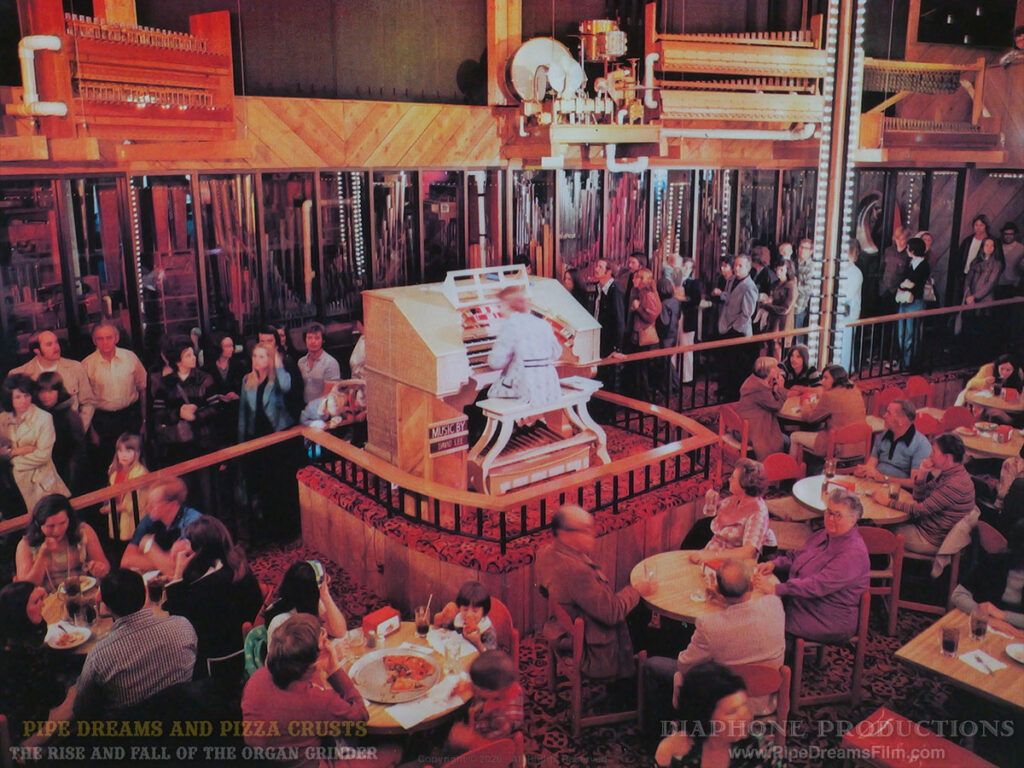
I was just four in 1973, when the first Organ Grinder opened in Portland. My parents took me there, and I was instantly hooked. Like many in my generation and after, my introduction to the theatre pipe organ was not in a movie palace watching a photoplay, but at a table with a pitcher and a pie.
The experience made me a childhood organ nerd, and I demanded lessons. I’m sure that no matter what, music would’ve been a big part of my life — my parents had a love of music. My mother played piano, and my father built his own hi-fi system, but the Organ Grinder made the pipe organ my main love.
Although my taste in the organ music would evolve to be more classical — Virgil Fox was my childhood idol rather than George Wright — our monthly visits to the Organ Grinder were a soul-affirming experience.
Sadly, like many such establishments, the Portland Organ Grinder closed in 1996 (the Denver location had met its demise in 1988). I lived 100 miles away, and when I heard the news, we were in the midst of a snowstorm. Undeterred by the weather, I roped my reluctant life-partner at that time, and a visiting guest, into making the drive with me to a place they had never heard of. One last time for me—first and last for them.
On the journey, there was just no way to describe the place adequately to my driving companions. But once we walked in — the crowds from the Organ Grinder’s heyday had temporarily returned — they began to get it and wound up having a thoroughly enjoyable experience.
Fast forward twenty-seven years, to the fall of 2023.
A friend told me of an “Organ Grinder 50th Anniversary Benefit Concert” at Cleveland High School in Portland, which housed a Kimball pipe organ that had been maintained and expanded by the Columbia River Theatre Organ Society. The concert was a fundraiser for the school’s choral music program.
(The fate of the Cleveland instrument is now a matter of concern — but that’s a whole story in and of itself.)
After the concert, Dennis Hedberg, a founding partner of the Organ Grinder and the man responsible for the pipe organ installation, gave a short PowerPoint presentation about the restaurant’s creation. Dennis hadn’t spoken much publicly in the years since the closure, as the experience of losing the restaurant and the Wurlitzer was quite traumatic.
When I saw his presentation, I knew there was much more behind the scenes that the public didn’t know. And the public wanted
to know! If you peruse Portland and Denver online nostalgia forums, questions about the Organ Grinder come up on a weekly basis. Some
moderators even ban Organ Grinder posts unless they have new information to add!
Thus began a quest to get Dennis to comment on camera. What can only be described as a three-month pestering campaign ensued until Dennis finally relented.
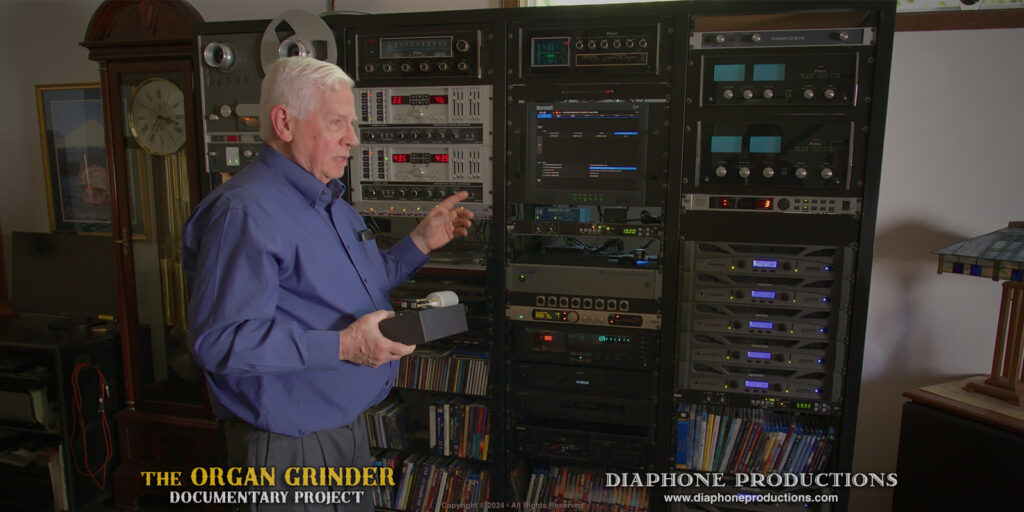
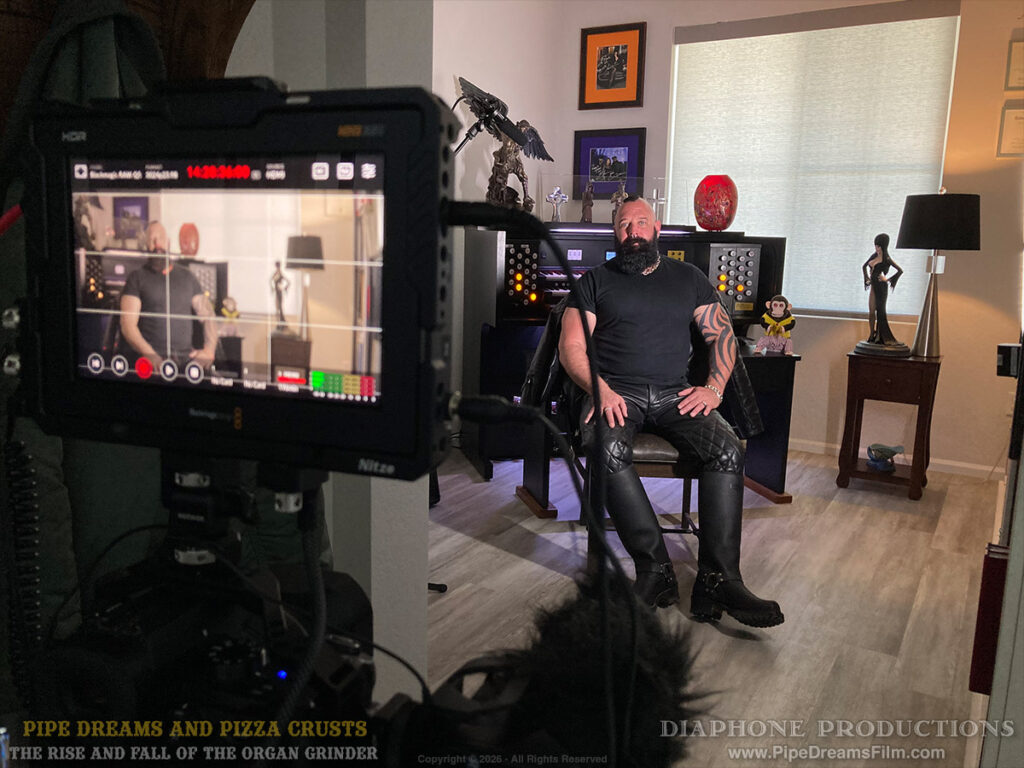
Our first meeting included a demonstration of his house-shaking, yet perfectly clear, sound system.
The plan was to have him tell his story, combine that with his presentation and extensive photographic archive, and interview a
couple of performers.
Then, put it on YouTube. Simple.
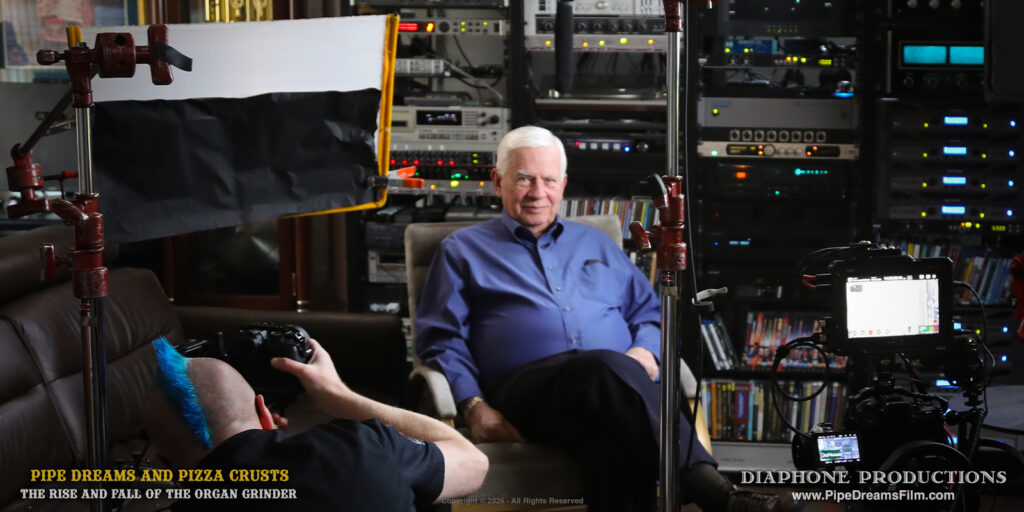
But over time, the project spiraled out of control, becoming a near-full-time obsession for me.
With each person I interviewed, there were new revelations, amazing stories, and new people to track down. There were multiple celebrity connections (you’ll have to wait for the film to get the juicy details), and among the many positive stories, tales of harrowing incidents and alleged underhanded activities. But a collection of anecdotes and factoids is not a story. A documentary fails if it doesn’t have a narrative. I was in need of a structure, and I had to travel further back in time to find one.
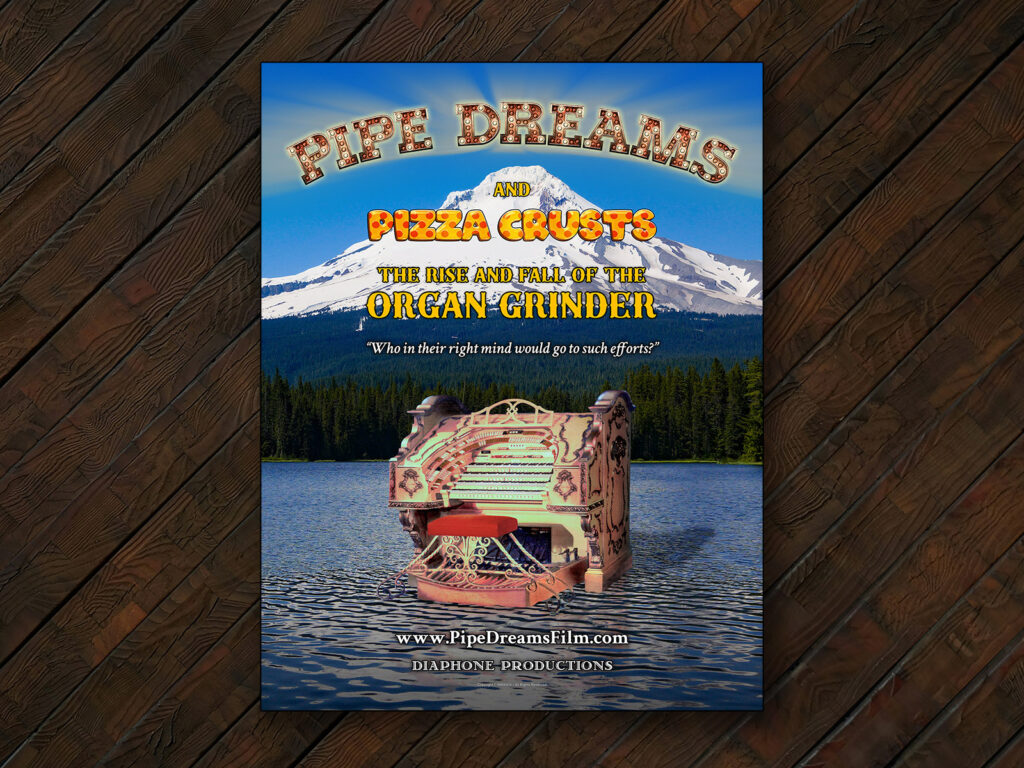
The pizza-and-pipe-organ format swept North America from the 1960s to the 1980s, with over 100 establishments of all sizes opened by large and small operators alike. The fad didn’t escape containment across the oceans (although there was almost one in Hawaii) — it was uniquely a
US/Canada thing.
And you can’t tell the story of the pizza restaurants to a general audience without explaining where the organs came from, and why they existed, which means exploring the history of the silent-film and movie-palace era.
This led me to interview Jeff Baas, who purchased the derelict Kenosha Theatre in Wisconsin in the 1980s, and has been raising heaven and
earth to pursue his dream of restoring it.
Along the way, I’ve interviewed veteran theatre organists such as John Ledwon, Lance Luce, and Dave Moreno (who himself is the subject of
another documentary).
Next, we find the early “collectors.” The people who rescued pipe organs from the landfill, as they were being discarded by theater operators—or worse — when movie palaces were being knocked down.
I’ve interviewed Fred Hermes Jr., who helped his father build the Basement Bijou — which contains the largest 5-manual Wurlitzer to leave the factory, still very much in its original configuration. (By the time this issue comes out, there may be more to report on the Basement Bijou.)
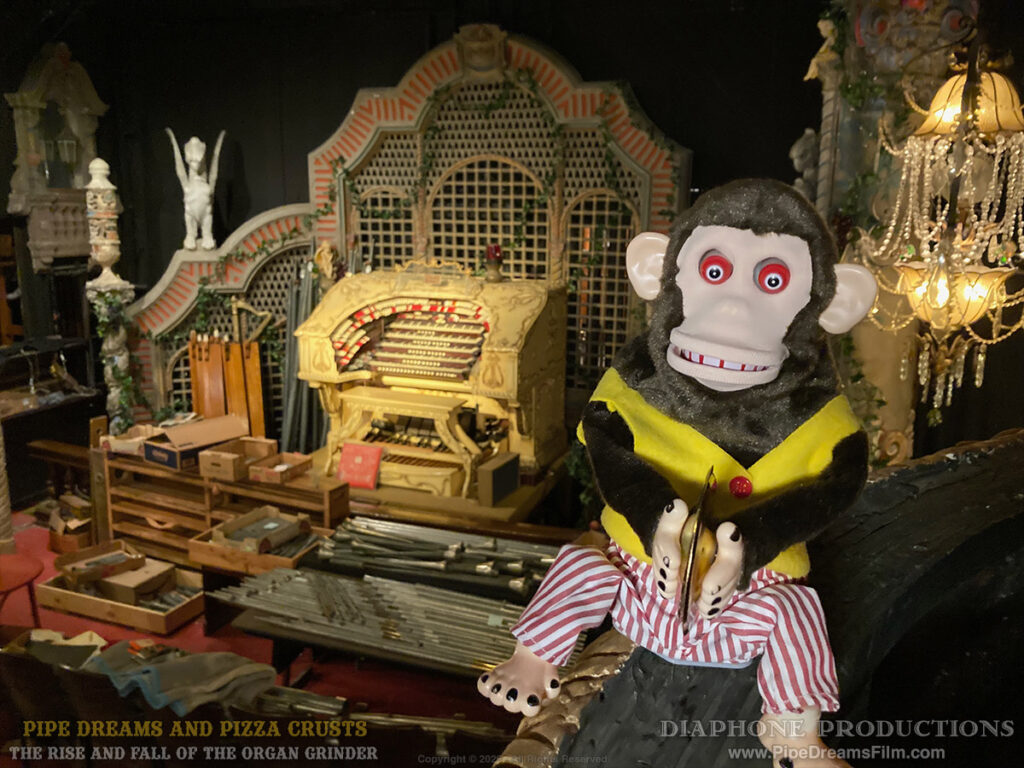
I also checked out the home installation of the new ATOS CEO, Shawn Kenney, in Ohio — a good example of how much pipe organ you can fit into a home without taking it over completely.
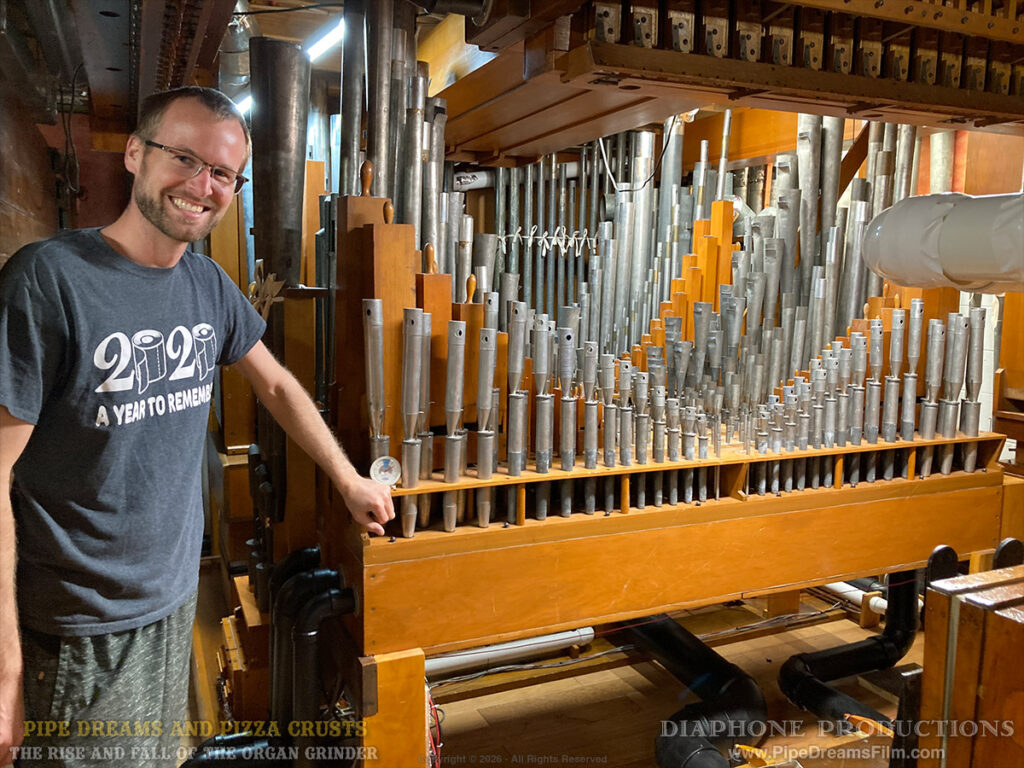
Many collectors experimented with finding places to install their instruments, while many organs simply languished in storage.
But, who first had the idea to put one in a pizza parlor? There were already restaurants, ballrooms, and clubs with pipe organs, but none served pizza.
That distinction belongs to Ye Olde Pizza Joynt in Hayward, California.
In 1962, co-founder Carsten Henningsen was inspired by the success of the Shakey’s Pizza chain and its old-time piano and banjo act. Carsten put a Wurlitzer acquired from San Francisco’s Warfield Theatre into his already-established eatery. It was an instant hit, with lines stretching around the block to experience Dave Quinlan — the world’s first “pizza organist.”
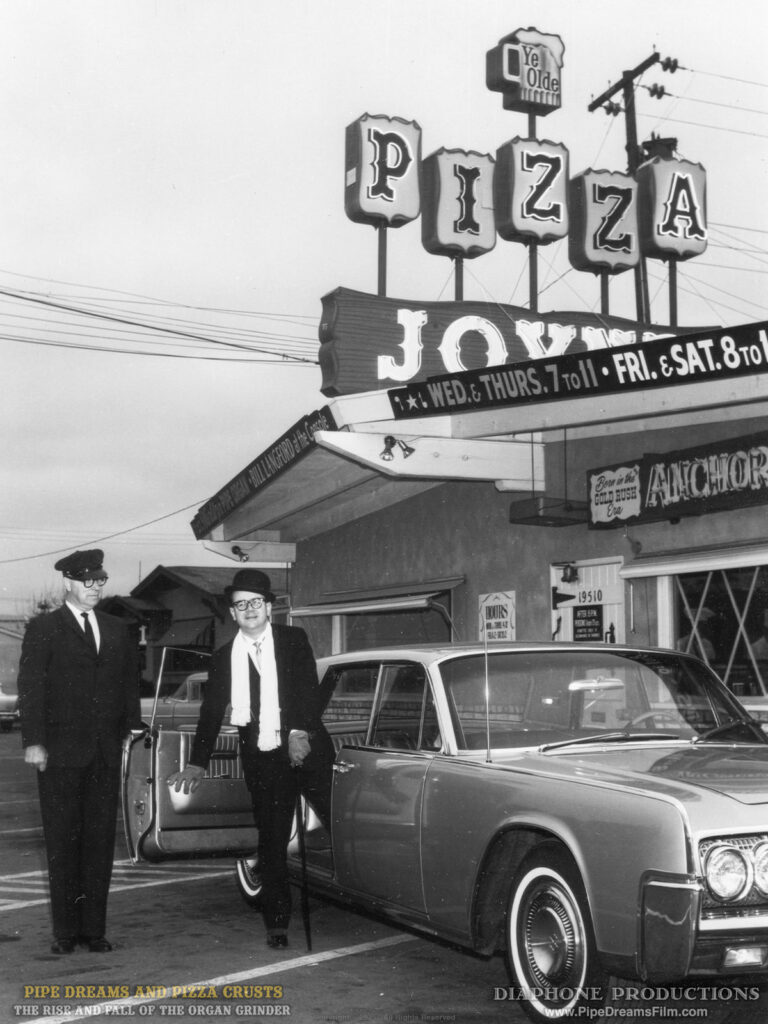
Many more were to come, including Bill Langford, whose wacky antics frequently left the crowd breathless with laughter. I had the privilege of interviewing Mary Ann Henningsen Frankenfeld, daughter of Carsten and Joyce, and Susan Langford, Pizza Joynt staffer and eventual wife of Bill Langford, as well as Rik DeRose, who performed there in later years.
From the Organ Grinder gang, I’ve interviewed not only Dennis and his wife Judy, who co-managed the place after Dennis bought it outright in 1984 (Dennis and Judy’s kids were raised in the restaurant), but also Jerry Forchuk, who, with his brother Paul, were the entrepreneurs who started the business.
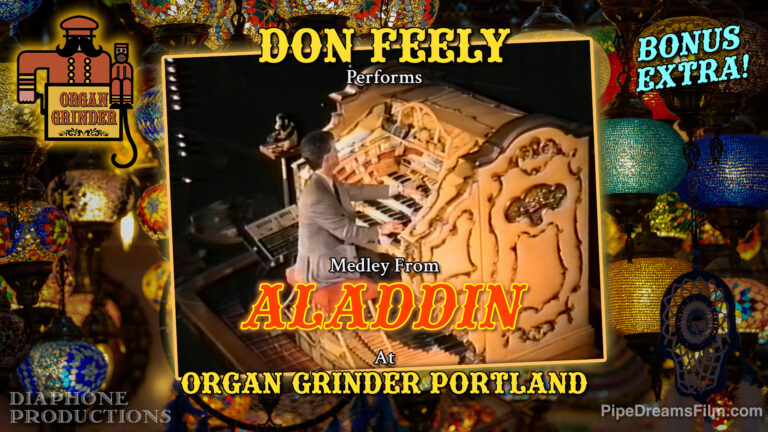
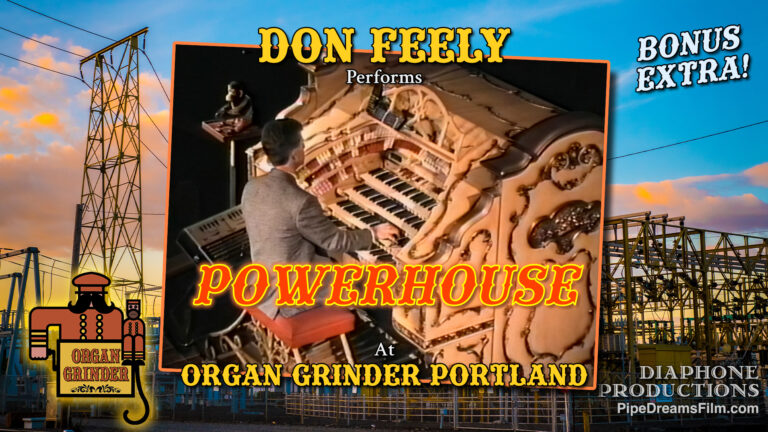
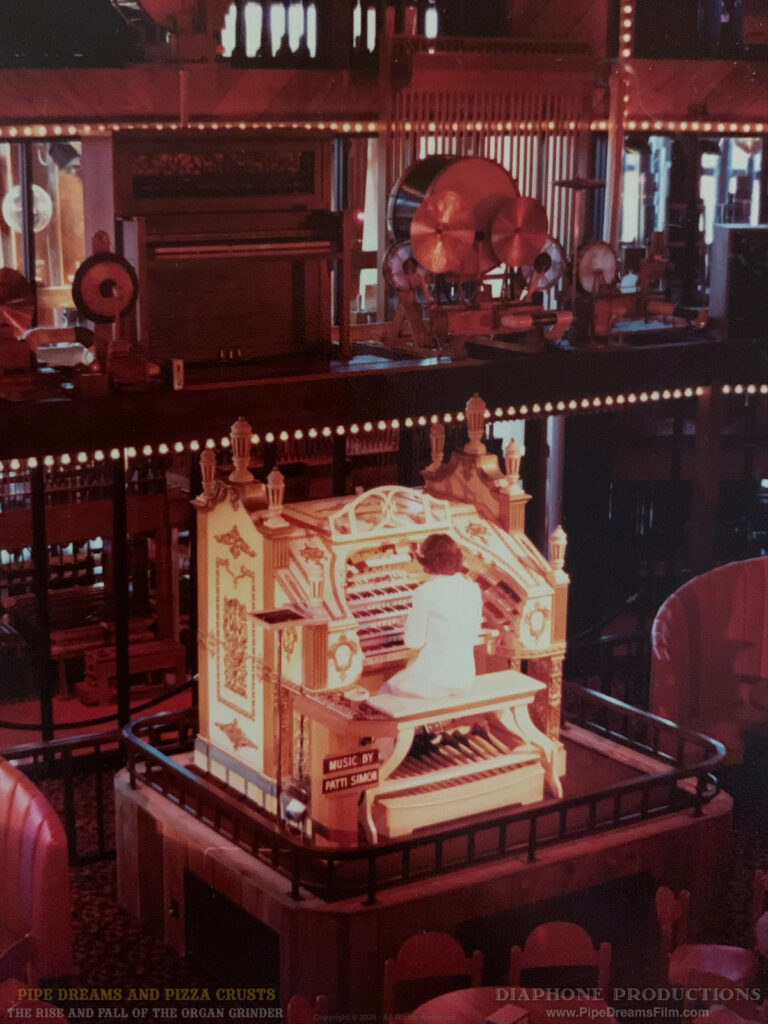
And of course, the organists—Jim Calm, Don Feely, DeLoy Goeglein, Jonas Nordwall, Donna Parker, Patti Simon, and John West. (The late, great Paul Quarino also makes an appearance thanks to recent file footage.)
I’ve even interviewed the youngest three Organ Grinder performers: Frank Perko, Justin Adams, and David Lee, who began as staff at ages 11, 12, and 14 respectively.
Then there’s Vicki Buck, the “monkey lady,” and teenage magician Steve Spangler.
None of these places would have existed without the fans, and I’ve talked to many. Notably, Nathan Avakian who, like me, was introduced to the Organ Grinder at four years old (albeit quite a few years after I was four). Nathan has gone on to have a noteworthy career as an organist and composer. Nathan is also collaborating on the soundtrack for the documentary.
Another famous and massive establishment was Paramount Music Palace in Indianapolis. Co-founder Bob MacNeur sat with me for an afternoon to tell the full story, in his workshop where he restores classic AMC vehicles and where his newest Wurlitzer project is underway.
But what next? I didn’t want to leave the audience feeling depressed at the end, “Here’s all these wonderful places and now they’re gone.” The Organ Grinder’s end couldn’t be the film’s end.
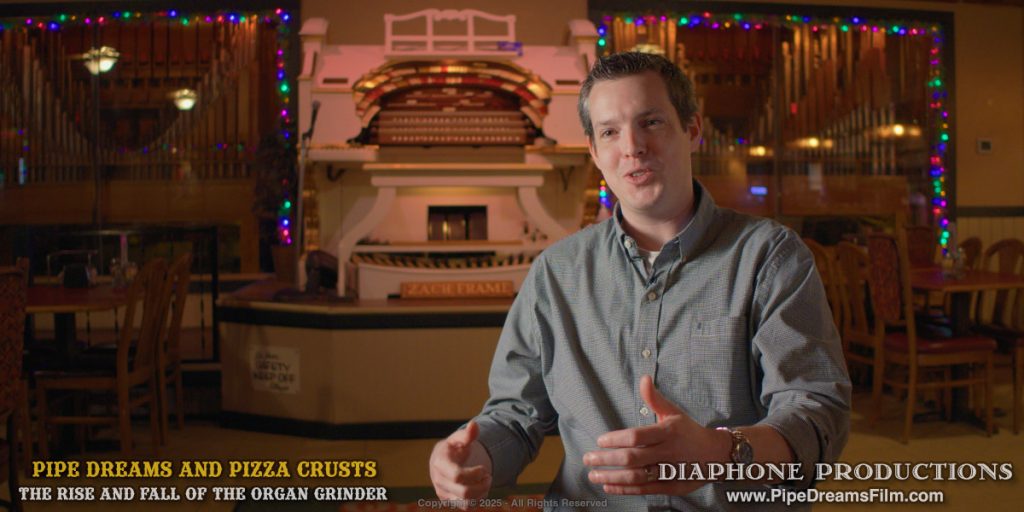
Fortunately, the Pizza and Pipe Organ era isn’t quite over. I have coverage of two well-known establishments, Organ Piper Pizza in Greenfield, Wisconsin — in operation since the 1970s, with organist Zach Frame the current master of ceremonies — and the mammoth Organ Stop Pizza in Mesa, Arizona.
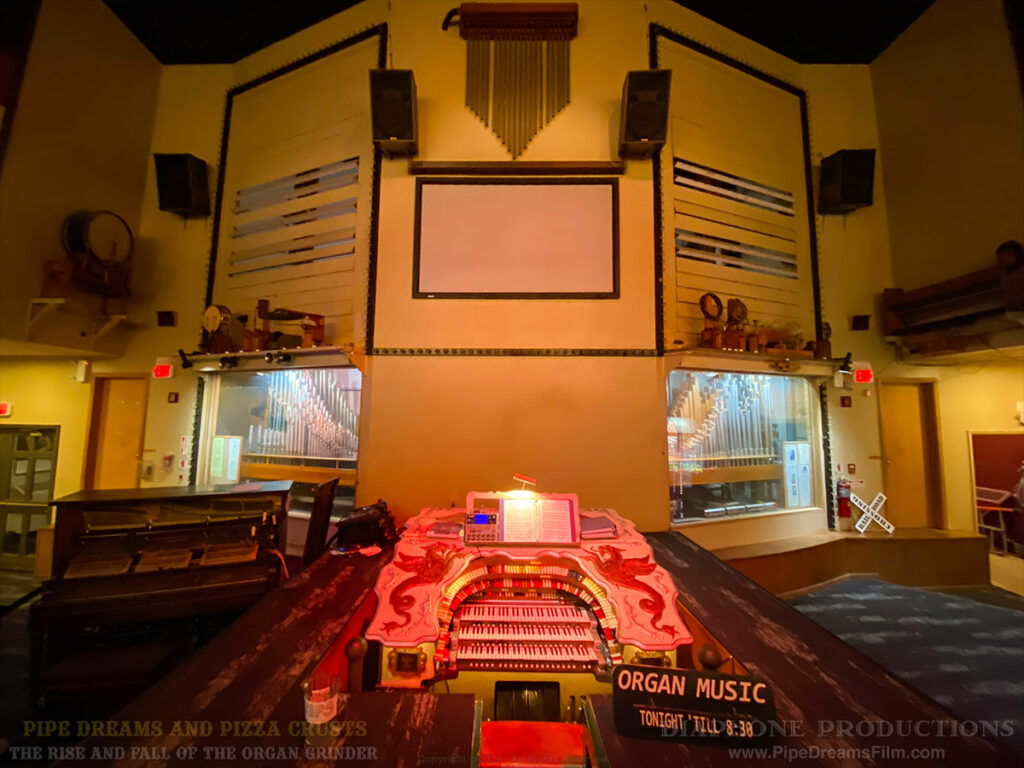
Plus, there’s a “little engine that could” story in Lansing, Illinois — Beggars Pizza, a regional chain with a location in a former Pipes and Pizza restaurant, where enthusiasts, including Christian Schoop, who was 17 at the time, have helped coax the instrument back to life.
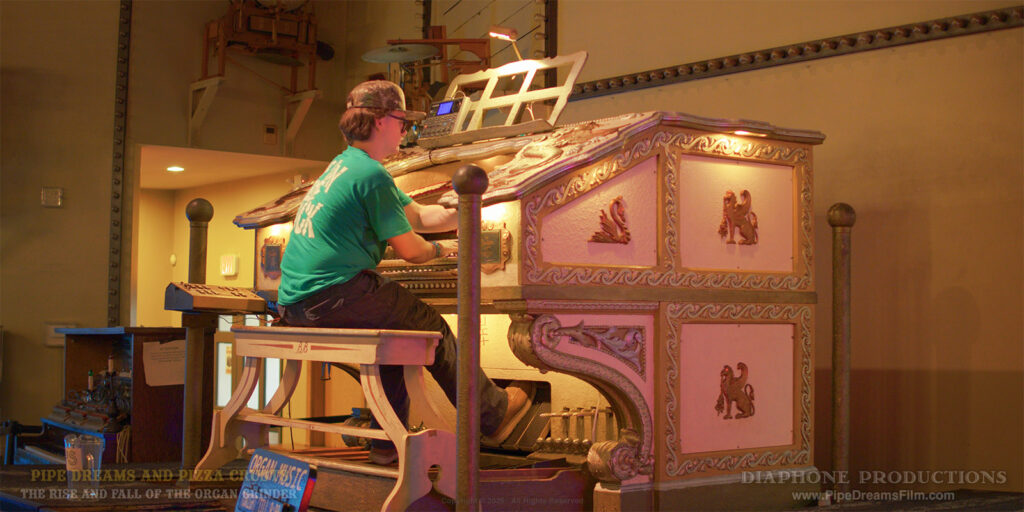
With management’s support, the organ is played a couple of nights a week during dinner service by Dennis Peters.
From there, the film covers The Next Generation — exploring how young people come to discover and love pipe organs. We follow multiple students at the ATOS Summer Youth Adventure in Portland.
Looking across the pond, there’s an interview with popular YouTuber Sam Battle in England, who racked up millions of views restoring a residential organ that was being tossed out after the owner had passed away (an all-too-common occurrence). Sam made many initial mistakes and employed techniques that made organ techs cringe, but he went on to introduce tens of thousands of hobbyists to the idea that you can rescue and restore pipe organs in your own home. (Sam is now representing the UK in this year’s Eurovision song competition—which is
sure to bring him and his projects more attention.)
Finally, the film explores amazing things being done with theatre pipe organs today—from Paul Woelbing’s ginormous Carma Labs organ (expertly demonstrated by Toby Washburn)…
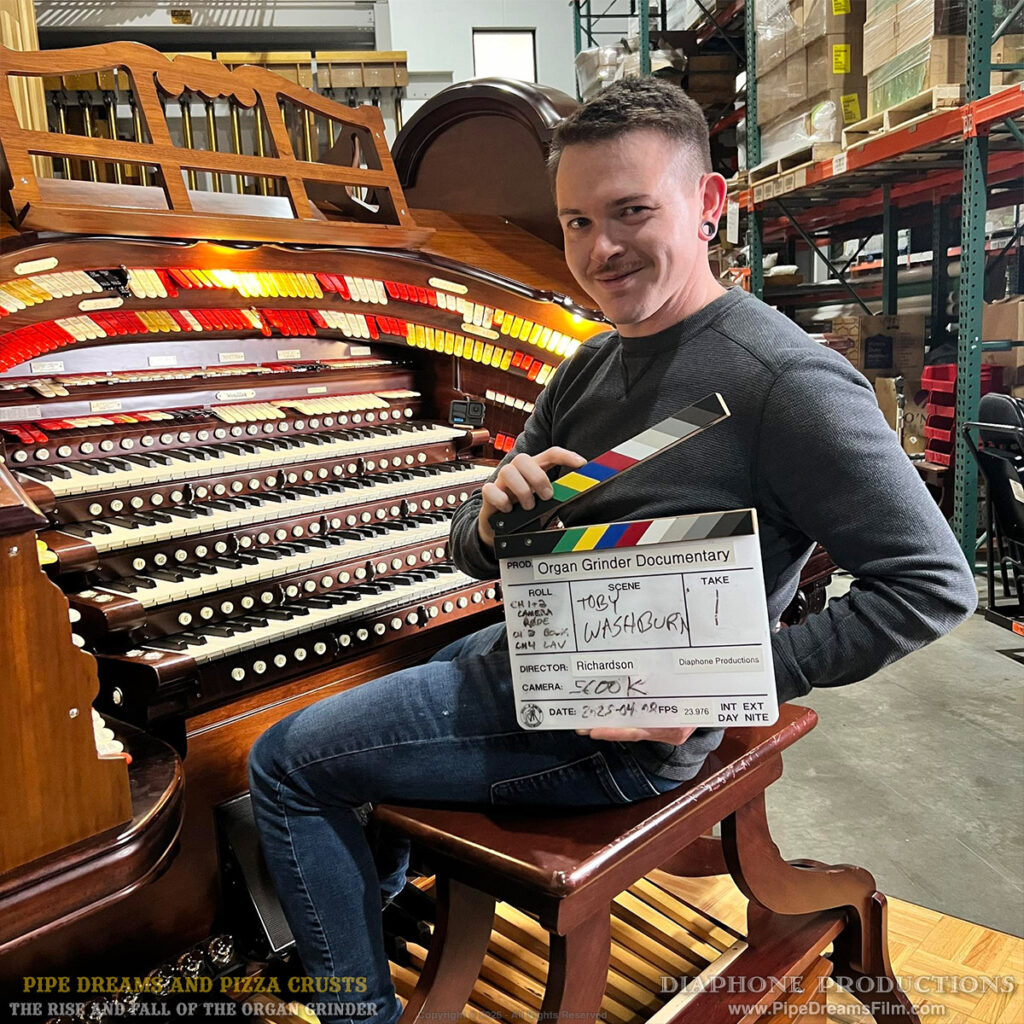
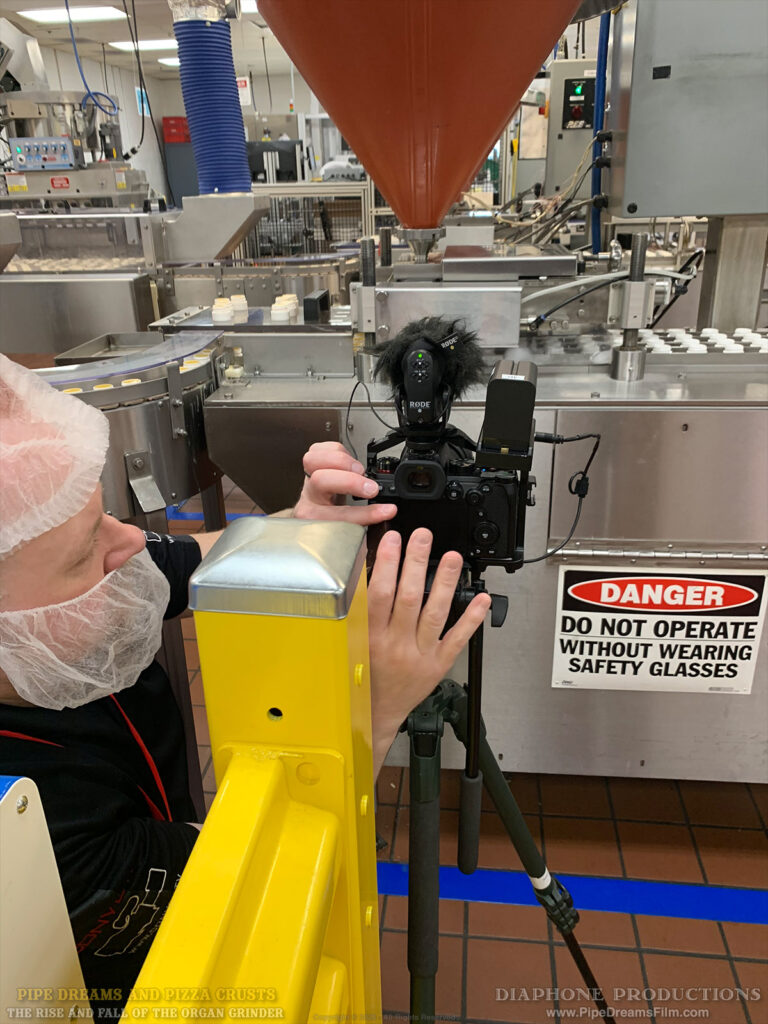
…to the exquisite Sanfilippo estate, and most recently to Nathan Barr’s Bandrika Studios in Hollywood, where the Fox Studios Wurlitzer heard in many classic films has a new custom-built home, and is making recordings once again.
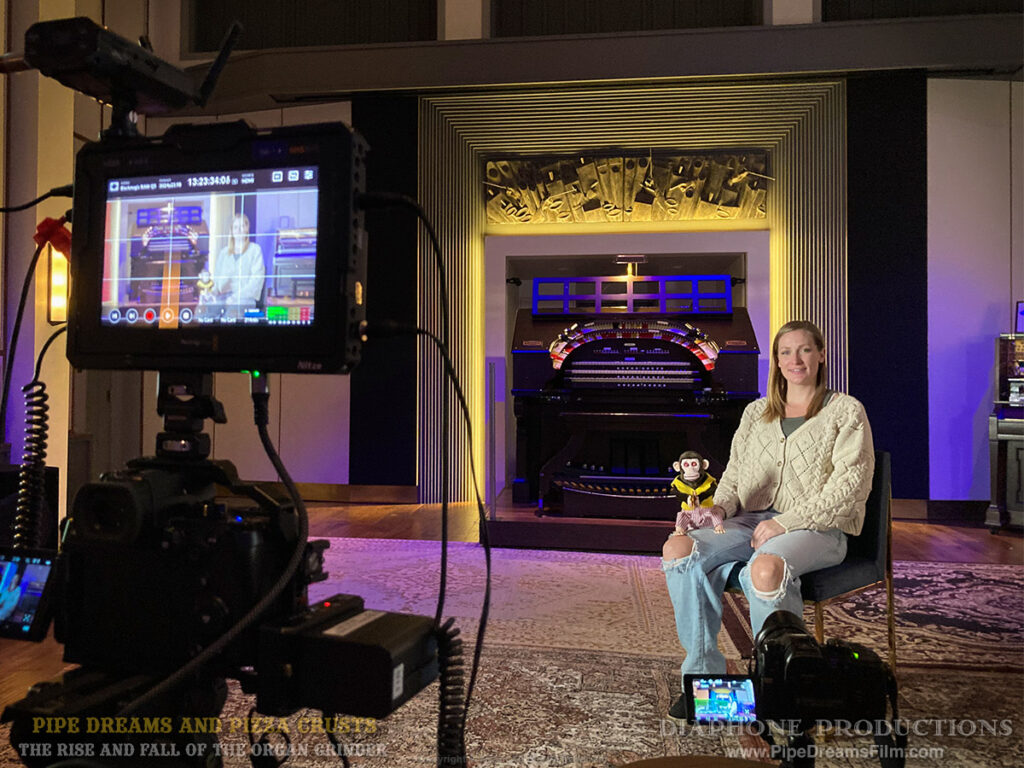
I don’t want to leave anyone out — there are many behind-the-scenes people, but there are too many names to include in this article. An up-to-date list is on the project web site.
Throughout this process, I have received advice, support, and volunteer help from many people, all of whom are eager to see this story on the big screen. Thus far, the project has been entirely crowdfunded and self-funded by me, my friends, and family.
You can help, too — please visit the website for details — there’s merch, including remastered Organ Grinder CDs (with a portion of CD proceeds going to ATOS youth programs).
I am now entering the film’s editing phase (with a few more shoots planned here and there). I have the unusual but enviable problem of possessing too much material. How will I cram all of this into a single film?
Fortunately, through the miracle of YouTube, people and topics that don’t make the cut in the main film will be in extended features posted online. It is my goal to present the finished film theatrically, in venues that have theatre organs. It’d be wonderful to have a live overture, intermission, or short concert after.
After all that I’ve learned and experienced on this quest, I am astonished that no documentary has covered this cultural phenomenon in-
depth — something that was a part of the lives of hundreds of thousands, perhaps millions of people — but I feel so lucky and honored to be the one who gets to tell the tale.
The film is called Pipe Dreams and Pizza Crusts — The Rise and Fall of the Organ Grinder.
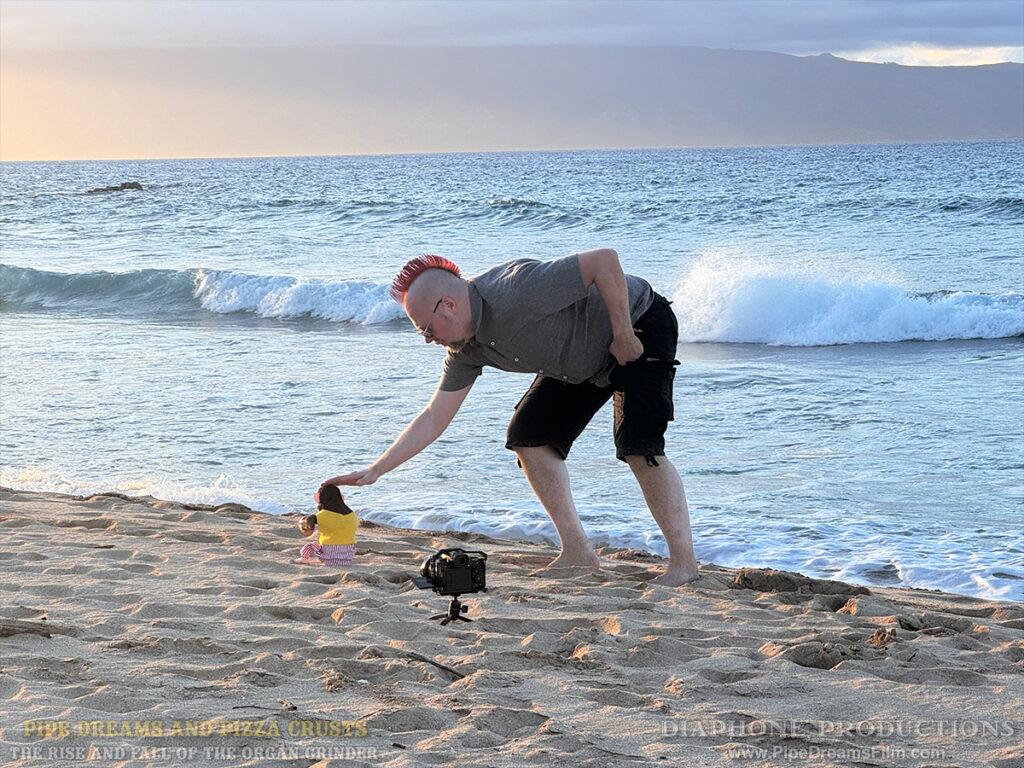
Bob is a videographer and web/app developer in Portland, Oregon. He lives with his ever-patient husband Jason, in a fixer-upper Victorian they have been fix-uppering perpetually since 2002. Bob’s previous pipe organ claim-to-fame was a “portable” digital classical organ which he built with his father and took to Burning Man. That organ is now the basis of an ever-expanding, yet constantly neglected home Hauptwerk installation.
You can help support the project by purchasing from the Crowdfunding Shop.
Sign up for our email newsletter and receive updates about the project.