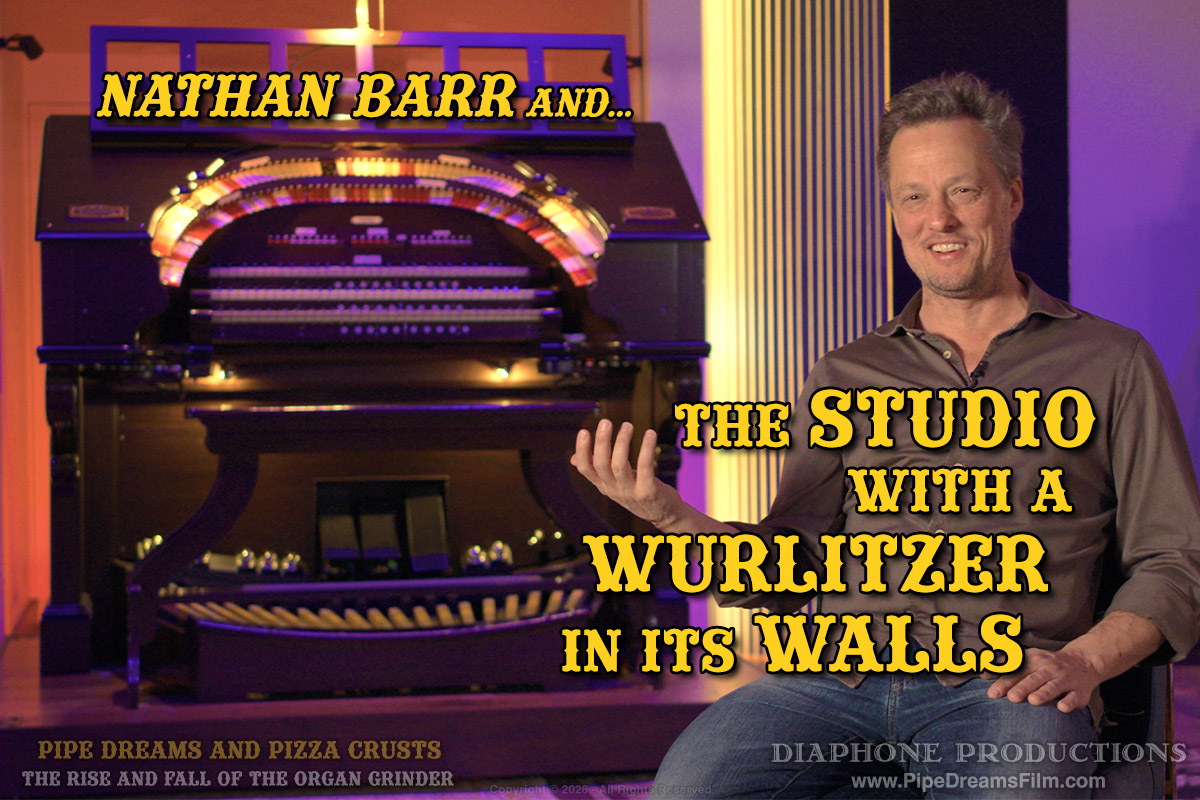
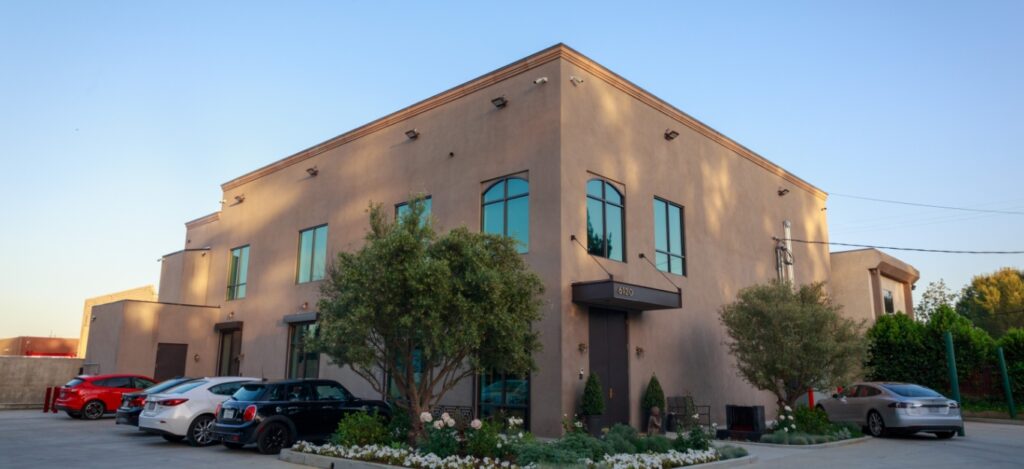
Tucked away in a modest light-industrial district in Tarzana, California, just off the Orange Line Busway, sits a warehouse with a special secret inside. (OK, it’s not a big secret – but most people in the area don’t know it’s there.)
The building is the home of Bandrika Studios, custom-built by composer Nathan Barr, to be more than an ordinary recording studio. Extraordinary, in fact, because it houses a very special and historic Wurlitzer pipe organ – an organ you very likely have heard many times before, without knowing it!
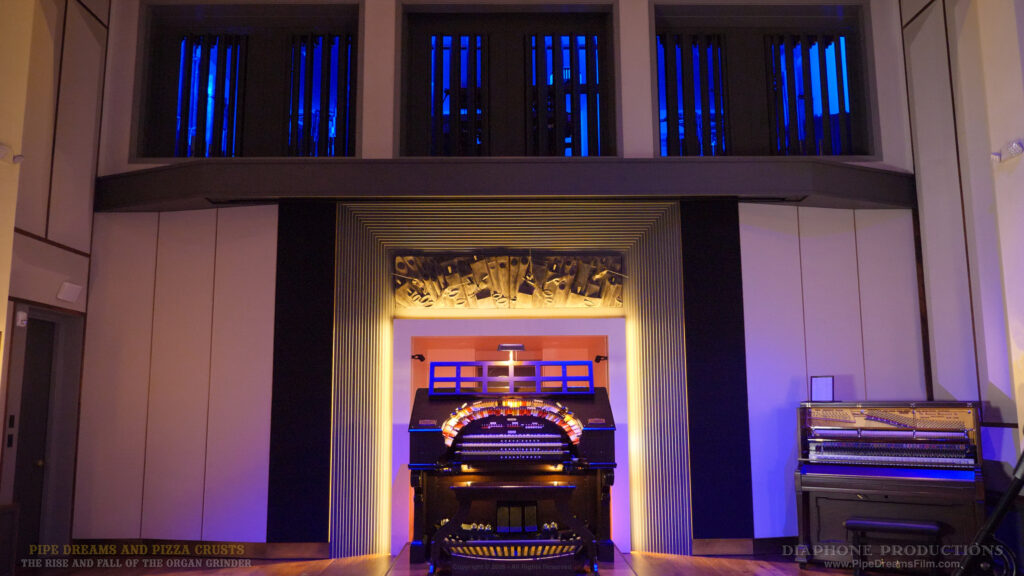
While there is indeed a Wurlitzer within the studio’s walls, this article’s title is a reference to the film The House with a Clock in its Walls, for which Nathan wrote the score, and utilized the Wurlitzer along with an orchestra and several custom-built instruments.
Nathan began his musical journey at an early age, around five years old, while his family was living in Japan. His parents enrolled him in the Suzuki violin method. When the family moved back to the US, Nathan switched to cello, and instrument which he describes as his “love affair”. Young Nathan’s home contained several unusual instruments, including a Koto and a Shakuhachi from Japan, an old Ovation mandolin, and a harpsichord.
It wasn’t long before Nathan had his first introduction to a theatre pipe organ, when his family went to Radio City Music Hall to see the Christmas Spectacular.
“I loved the sound in that theater. It’s not a particular big sound, but it’s a very warm sound. I loved seeing the two consoles on either side of the stage. I didn’t quite understand how two people were playing the organ at the same time. I’m not sure the players did either! It was a really big part of the holiday season for me, and something that really stayed with me.”
“When I moved to LA in the mid-90s, I heard a theatre organ again, kind of for the first time since Radio City, at the Orpheum Theatre here in downtown Los Angeles, and that sort of brought all that back for me, and really lodged itself in my head. Little did I know where it would lead.”
Nathan was only in L.A. a short time before he met the well-accomplished film and television composer, Hans Zimmer (also famous for using a classical pipe organ in his score for Interstellar), and became his assistant.
“I spent about eight months with him, learning the ropes, very much thrown into the deep end of the pool – with no prior experience. I got an agent while I was there, and after eight months broke off to go out on my own – and I’ve been working ever since.”
Nathan had been collecting unusual instruments to weave into his distinctive scores, but his work didn’t include a pipe organ – at first – but then opportunity struck.
“I was at the Sanfilippo Collection in Barrington, Illinois. And someone there said, ‘Hey, I heard you’re looking for a theatre organ. Do you know who Kenny Crome is?’ And I didn’t know who that was. And they said, ‘Oh, he’s in Reno, but he has the Wurlitzer theatre organ that was at Fox Studios’. And I said, ‘What do you mean the Wurlitzer theatre organ that was at Fox Studios?'”
It turns out that saying “THE Wurlitzer” is no understatement. Fox Studios, from 1928 to 1997, had a 3-manual, 19-rank Wurlitzer on its lot, originally used on its scoring stage, and later to record music (often in combination with an orchestra) for a number of classic films.
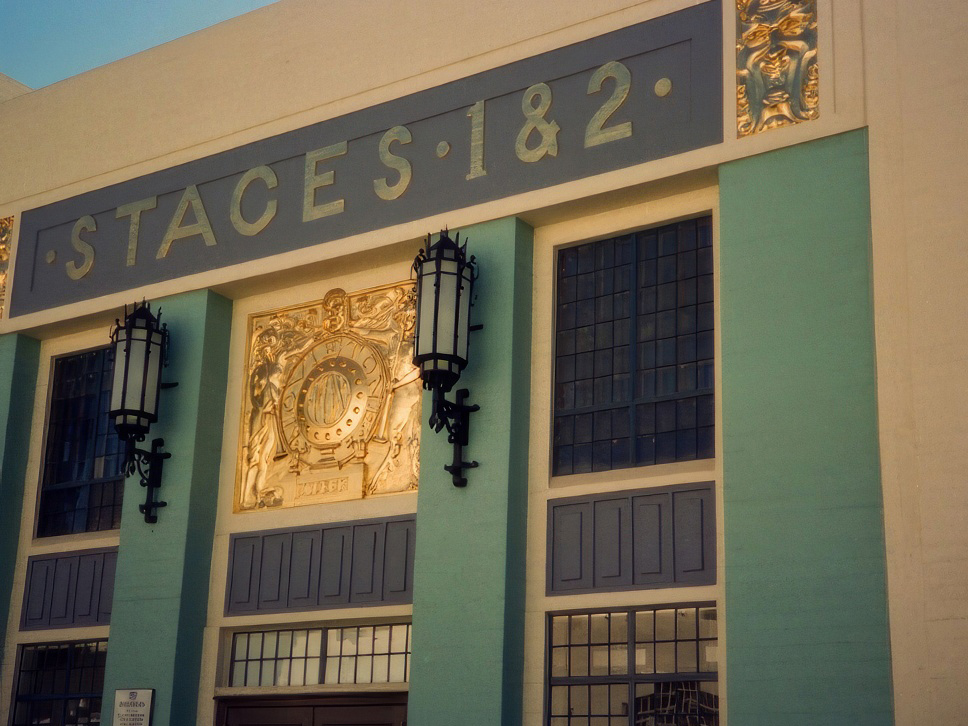
“Depending on who you talk to, this pipe organ may or may not have been used in the earliest days to accompany silent film actors. They would give some mood music for the actors to emote to.”
“Of course, this was installed in 1928, just as silent film goes away. And then it just became a part of the scoring stage.”
“It’s ongoing research to figure out the entire history of this instrument when it was at Fox, but we know Bernard Herrmann used it on several films where it can be very clearly heard – such as Journey to the Center of the Earth and The Day the Earth Stood Still. We know that it was most likely the organ used in The Sound of Music.”
“There’s some controversy out there. There was a Robert Morton pipe organ that some people claim was the organ that was used in The Sound of Music. But we’ve done some research recently into studio logs. And based on our research, it’s this organ in The Sound of Music. That was maybe its biggest starring role.”
“It was played by Buddy Cole in ’64. And that was the last session he played. And, unfortunately, he went home that night and passed away of a heart attack, in his 40s. He was a famous band leader for Bing Crosby and Shelley Winters and also a phenomenal pipe organist. So that was a really interesting piece of history for this instrument”
“It was used by Bruce Broughton, in Monster Squad.”
“John Williams used it in Empire of the Sun, Witches of Eastwick, The Fury, and Home Alone. John was very excited to hear that the organ had found a new home given its particular history with his music over the years.”
Quite the new home indeed – With all of that history, Nathan not only jumped at the chance to acquire this storied instrument, but to create a space that would showcase the organ in an environment where its sound could be captured with a level of dynamics and audio quality rarely achieved before – and sing once again in the soundtracks of new films.
“Fox got rid of the Wurlitzer, which had been there since 1928, in 1997 when they restored the stage. I think it was purely a business bottom line – they said ‘Hey, we’ve got these two chambers, those could be offices, it’s gonna take how much to restore? Just get rid of it.”
“So there was a man named Bill Schutz who came in and took the organ out of Fox and, to his credit, he had an organ company come in and remove the pipe organ, because as you may know, many pipe organs are destroyed when they’re removed by hobbyists or people who don’t know how to remove a pipe organ.”
“And so they brought in Ed Stout and Dick Taylor, who were both legends in the theatre organ restoration community, and they did the most stunning job of removing the pipe organ. That organ was then sold to Ken Crome and I bought it from him in 2013.”
[Editor’s note – there is scant information about Bill Schutz online, but he was also a consultant on the El Capitan Theatre Wurlitzer restoration. Likewise for Dick Taylor, who had his personal Wurlitzer, made up of parts from a number of organs, installed at the Castro Theatre for many years.]
Nathan called his new facility Bandrika Studios, dubbing it “A Sanctuary for the Musically Obsessed”.
“Bandrika is the fictitious country in one of my favorite early Hitchcock films called The Lady Vanishes, and that whole story takes place in Bandrika. There’s a very musical story line in that film specific to Bandrika, and so I love that name for this place. Because when people come here, I think like they’re traveling somewhere else they’ve never been – another country, another world – and that’s why I named it that.”
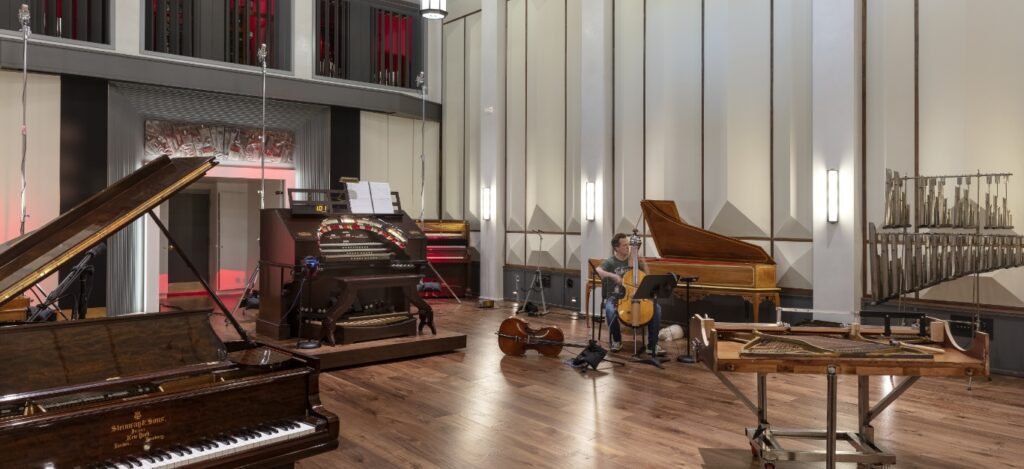
“Ken restored it, and it was installed in this building in 2018. Ken passed away a couple years ago… He had several historically interesting or important pipe organs in his warehouse and some of those would have been thrown out. And I think the best-case scenario for this organ would have been – an individual would have taken it and made it a home installation or something. Maybe it ends up in a theatre somewhere. But I think coming here, to be beautifully restored, and then given a new life and make contemporary music was not on the list of things for its future until I came along. So it was really a perfect marriage of time and interest and passion, and that this organ literally fell into my lap when I was looking.”
Nathan put a lot of thought (and investment) into creating a proper space for the instrument –
“This is an 8,500 square foot building, and I wanted to create a beautiful room within which the organ could speak. Many organists and organ enthusiasts say the most important stop on a pipe organ is the room you listen to it in. So, it was imperative that the room had really gorgeous, stellar, clear acoustics.”
“And what I discovered is in the process of designing a room to be perfect for a pipe organ, you set up a room to be beautifully designed for just about any instrument you can imagine. Pipe organs represent a whole range of frequency from almost below human hearing to almost above human hearing. And if you find someone who knows what they’re doing to design the studio properly, suddenly you can put a flute, harp, strings, brass, whatever you want into the room and it’s going to sound spectacular. And that’s certainly been the case here.”
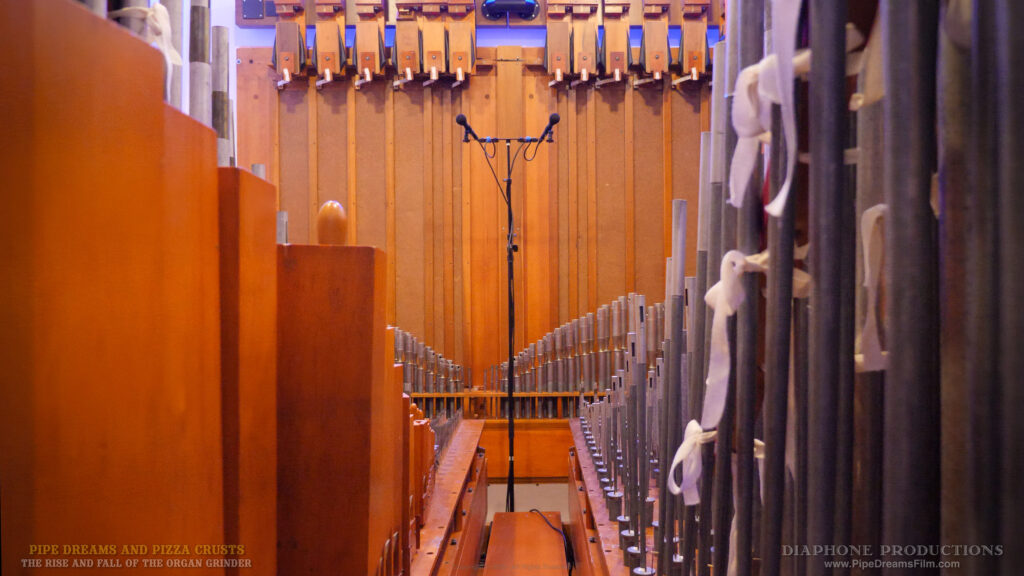
“Because this was a recording studio, and the organ was just one of the elements here, I wanted to make sure we could record the pipe organ in this room with an orchestra, and not deal with any of the sort of unnecessary mechanical noise that you get with a lot of pipe organs. As people who visit pipe organs in homes will know, in many cases the minute the tremulants are activated on the console, every door and window in the place starts shaking.”
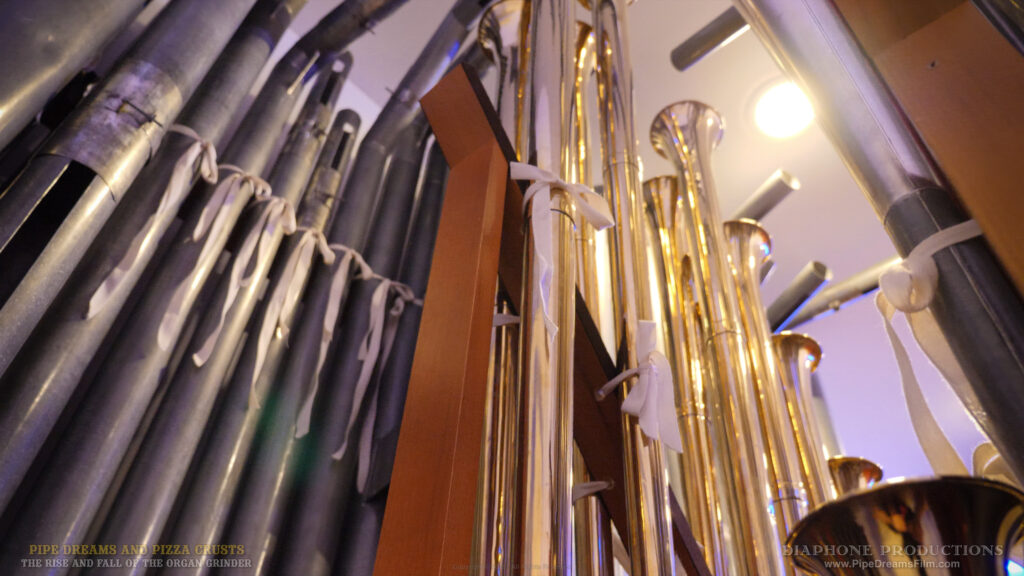
“That meant taking the noisier mechanical elements, like your tremulants, and putting them in sub-chambers that were soundproofed, and then moving the blower that provides the wind into a separate room – also soundproofed – outside.”
“And then putting all the musical elements, not between two chambers, but three chambers. So, all the percussion went into a separate middle chamber, and then you have the main chamber, and the solo chamber. It’s really about maximizing the musicality of the instrument, and making it a very recording-friendly instrument.”
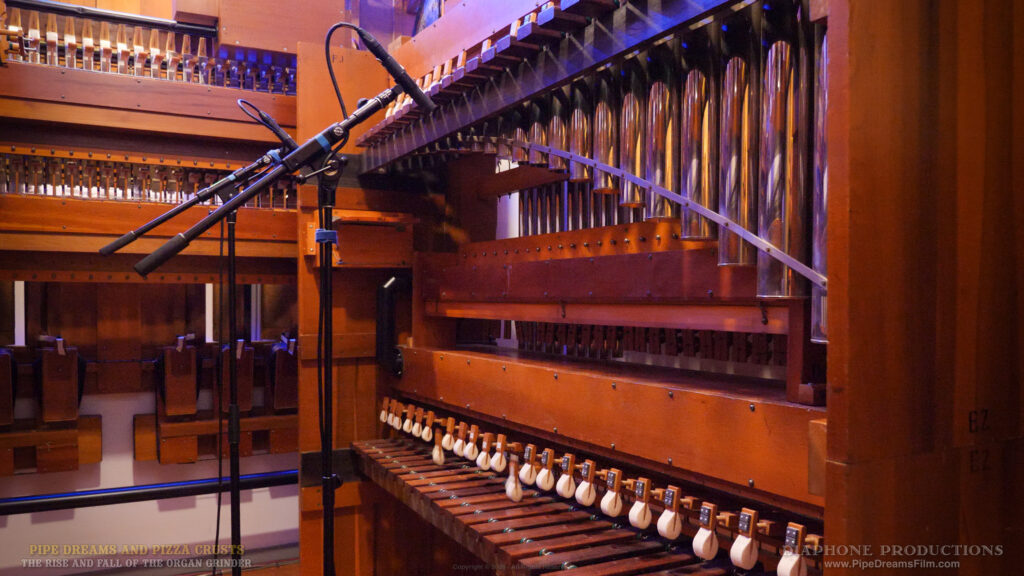
“It was a pleasure of mine to work with Ken Crome and with my acoustician Jay Kaufman to really look at this and say, ‘Hey, how can we make this kind of the best theatre organ installation ever?’ And that’s certainly what we aimed for – whether we got there or not. But we have years now of experience recording this instrument in this space very successfully, and that’s been really exciting.”
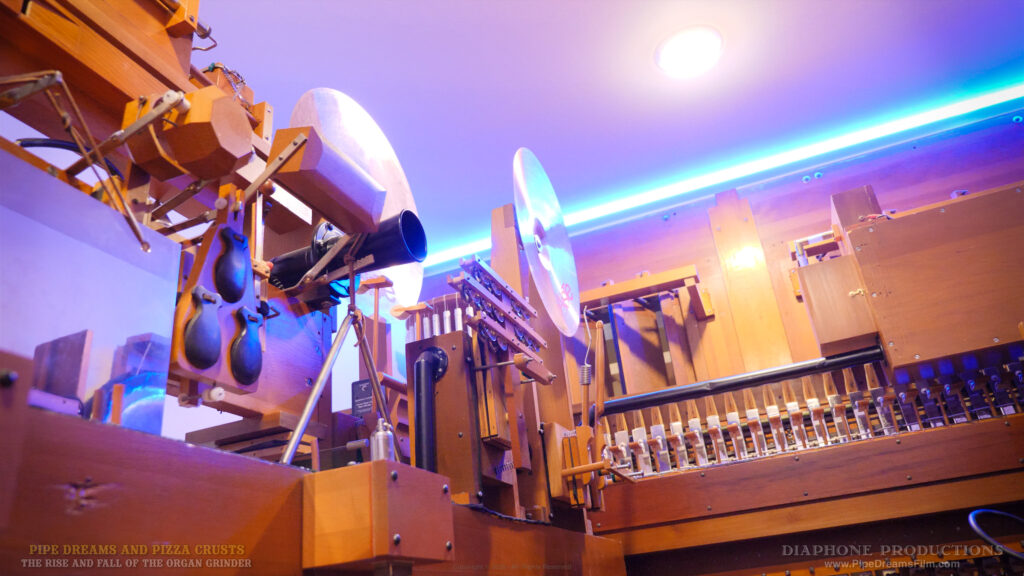
“Since opening the studio in 2018, I spent the first couple years just enjoying the space, recording myself here, and then I opened it to other composers occasionally. Danny Elfman, who was a favorite of mine ever since I was a kid, and I became friends, and he came here and recorded the recent remake of The Grinch, and Beetlejuice 2.”
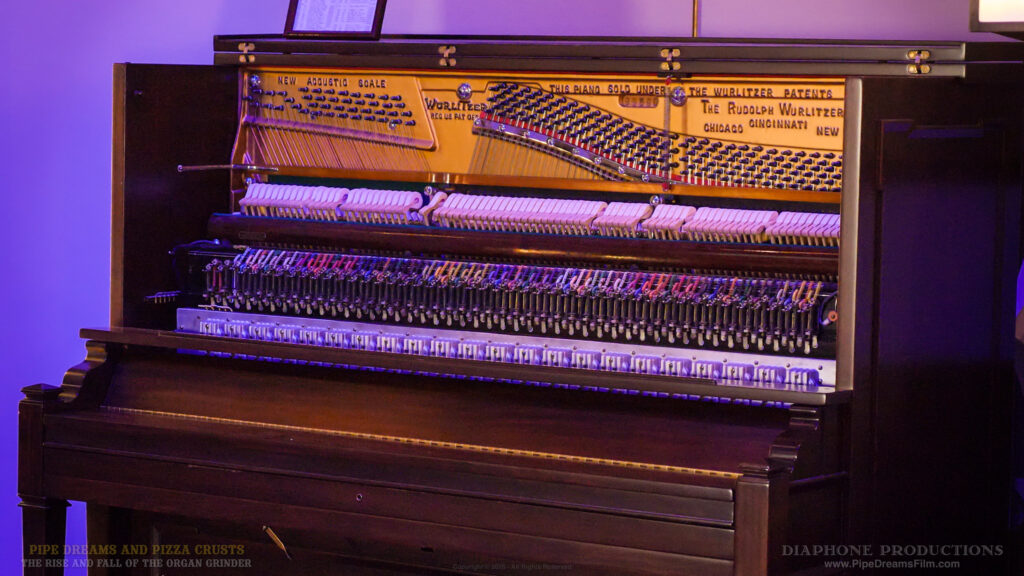
The Wurlitzer features a piano that can be engaged by the organist. This model of piano was Wurlitzer’s higher-end design, which had a mandolin mechanism, and ran on a vacuum system instead of positive air pressure.
There is a connection to the Organ Grinder here – According to Nathan’s sources, this piano was originally from Portland’s Paramount Theatre. The Paramount Wurlitzer was purchased by the Organ Grinder company at auction, and became the core of the Denver Organ Grinder instrument – although the piano that was installed in Denver did not come from the Paramount, but rather from the Metropolitan Theatre in Boston. (Here’s a list of Portland and Denver Organ Grinder ranks and their origins.) The paramount piano was said to be on its last legs when acquired. By the time it got to Nathan, it was in quite a state –
“The piano was in very poor shape when I got it – completely unplayable. It was located in a storage shed outside Salt Lake City. I arranged to fly out to Salt Lake City, then rented a U-Haul and drove the piano back to L.A., where it was then rebuilt from the ground up. [The colorful, coiled wiring] was done by Steve Hansen, and is part of the restored original solenoids that engage the piano hammers.”
Getting back to the organ…
Composer Michael Giacchino used it in a score for a film called Jojo Rabbit. Jeff and Mike Danna used it in The Addams Family.
“It’s also an instrument you hear recently on Miley Cyrus‘s new record. So the instrument is really finding its way into film, TV, and pop music in a way that is very exciting to me. Because whether it’s a pizza parlor or a theatre, you’ve got a limited audience in a specific moment who will come and hear that.”
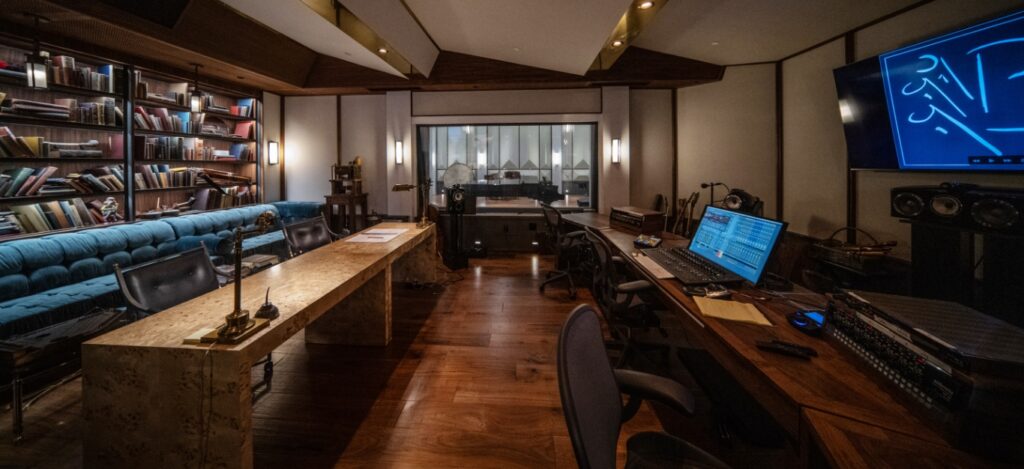
“But you know, for posterity’s sake, this instrument is ending up being recorded with some very big films and very big artists. And so it’s very much living on, I think as it was intended, and I think it will have a better second life here since leaving Fox, than it would have had at Fox – because I’m willing and able to devote the resources and time and interest in letting other people use it and enjoy it and learn about it.”
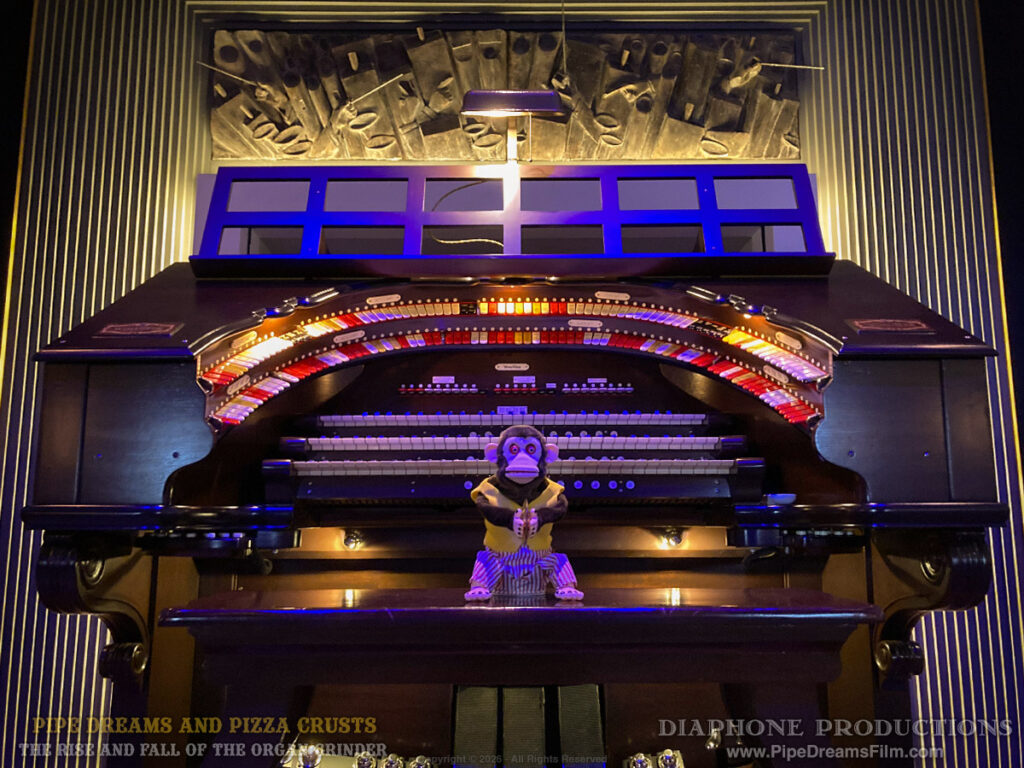
Here’s a video from Bandrika about the Wurlitzer, featuring several composers and performers, including organist Mark Herman, who regularly plays at Bandrika:
Although Hollywood insiders and facilities can have a reputation for being inaccessible for all but an elite few, Nathan isn’t exceedingly protective –
“One of the things that’s special about this place is I am not overly precious about the pipe organ and letting people actually step into the chambers and experience the instrument from the inside. I think in a lot of places, whether it’s a theatre or a pizza parlor, sometimes to access the pipe organs it’s quite dangerous because there’s 50-foot ladders with no safety, or sometimes, and not without, uh, reason, they like to keep the doors closed and people out so nothing gets damaged.”
“I’ve had thousands of people walk through this pipe organ since it opened in 2018, and I’m happy to say it’s never been damaged by someone walking through. I think letting people experience the instrument, walk in and begin to understand the mechanical genius that went into building these contraptions that then make music at the hands of a fine organist, is really special. As you’ll see when you tour this organ, I have Robert Hope Jones on the wall, the genius behind a lot of the things that make Wurlitzer special today.”
“At Bandrika, while the main purpose of this facility, this studio, is to record music for albums, television, and film, it’s also what I call a ‘working museum'”.
“It’s full of very unusual, interesting instruments that are ready to play. So, bringing schools in, whether it’s my niece’s third grade class, or high school students, to come in here and sort of blow their minds with all of these musical instruments they’ve never seen before, and watch them get excited about just how interesting and crazy music can be beyond the most traditional instruments we think of, is one of the sort of mission statements of Bandrika – Furthering music education.”
“We’ve done several fundraisers here for Education Through Music Los Angeles, which is a very, very important organization here in L.A. that makes sure that music education continues in schools, when budgets are slashed, and they do an incredible job of that. And so I love sharing, particularly with those students, this facility and all it has to, to offer.”
You can view a short clip of a school group visiting Bandrika on Instagram.
Nathan has implemented some upgrades to this vintage instrument – beyond restoration – to facilitate new, modern musical uses.
“In the spirit of wanting to push the boundaries of what theatre organs are capable of, I’ve spent years working with a couple of really brilliant programmers, hacking into the computer brains of this pipe organ, so that it’s not only completely triggerable by MIDI (Musical Instrument Digital Interface – a widespread standard which allows keyboard instruments to communicate with each other, regardless of manufacturer). We can also ask it to do mechanically many things that most pipe organ players wouldn’t be able to do, because it’s physically impossible.”
“The next step for me is to start to really explore what these instruments are capable of when you remove it from the hands of a player, and start to think about it through the lens of a computer. And that’s a very exciting journey that we’re gonna take here.”
“But beyond that, I’m a bit of a purist, and I believe the instrument should be presented as-built. I have no plans to ever add any further ranks or percussion necessarily. And, you know, a 19-rank pipe organ is a decent-sized pipe organ, especially for this room.”
We look forward to hearing the results of those experiments in upcoming films and albums!
A big thank-you to Nathan for spending a full day with us at his busy studio!
And one more thank-you to give out…
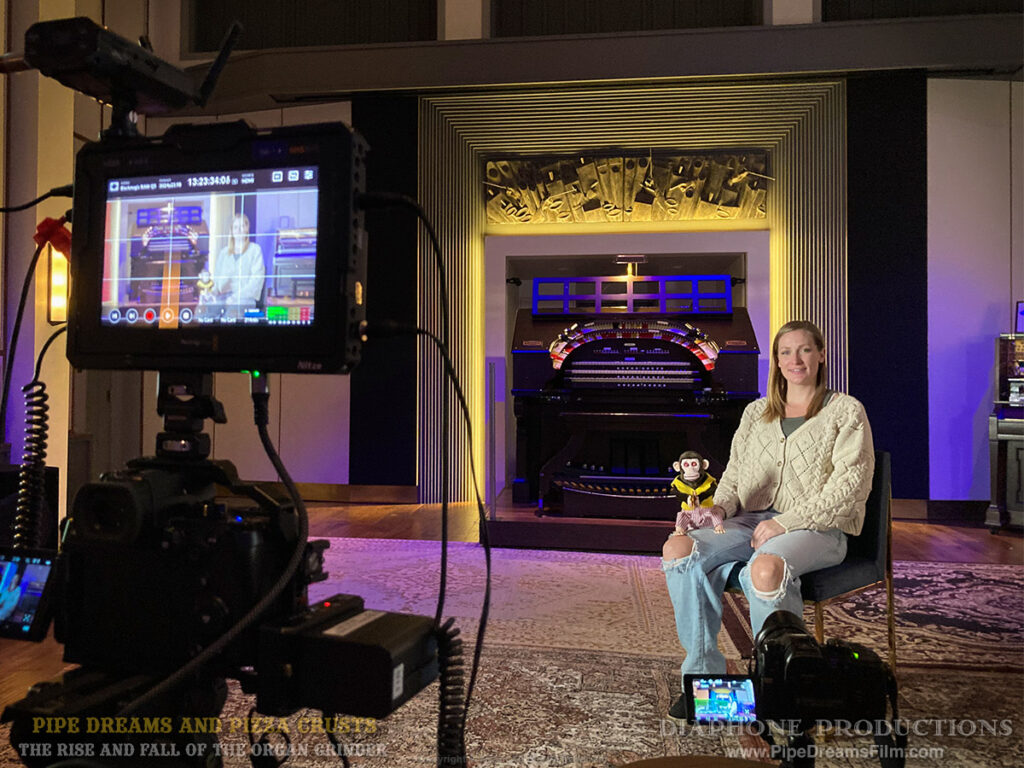
Actor and producer Kate Holdaway worked on multiple productions with “Pipe Dreams and Pizza Crusts” filmmaker Bob Richardson when she lived in Portland. Now working in Los Angeles, Kate volunteered to assist at the Bandrika Studios shoot, helping everything run smoothly. Kate got a very rapid and thorough introduction to theatre pipe organs, and immensely enjoyed the experience. Thank you, Kate!
You can help support the project by purchasing from the Crowdfunding Shop.
Sign up for our email newsletter and receive updates about the project.